ESWL
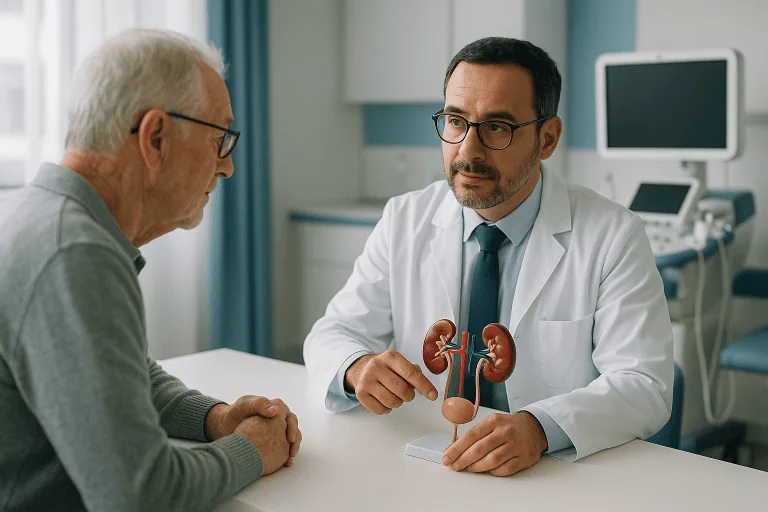
ESWL is a non-invasive treatment that uses focused shock waves to break kidney stones into small fragments that can pass naturally through urine.
Quick answer
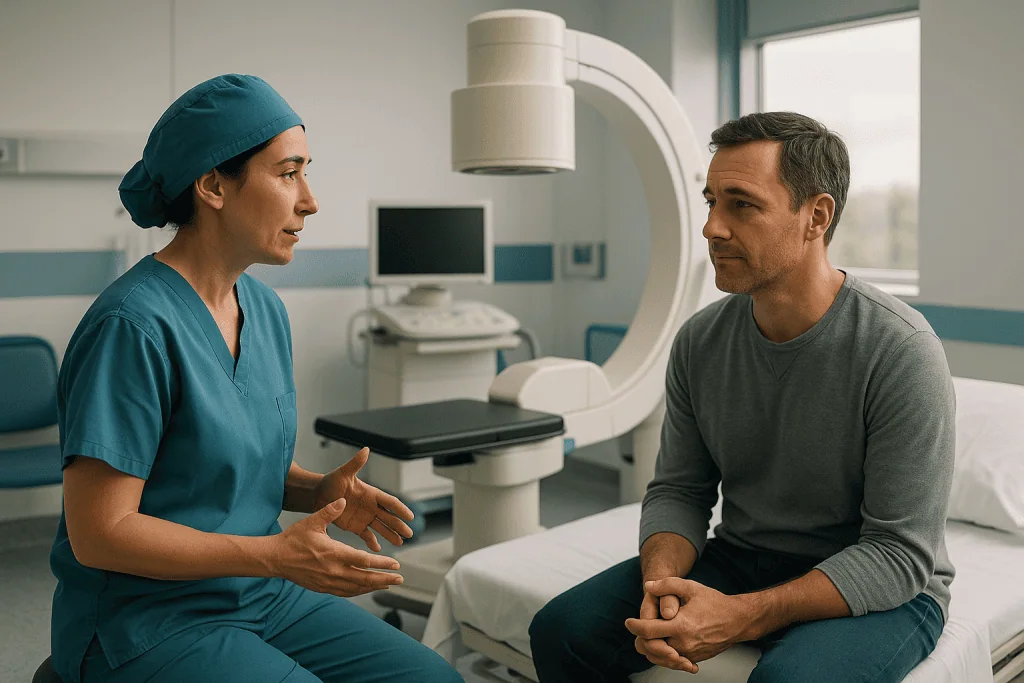
Extracorporeal shock wave lithotripsy (ESWL) is a non-invasive treatment for kidney stones. Focused shock waves are aimed at the stone from outside the body, breaking it into fragments small enough to pass naturally in the urine over days to weeks. It needs no incision, is usually done as a day case under sedation or anaesthesia, and suits stones of the right size, location and hardness.
Lithotripsy for Kidney Stones: The Non-Invasive Option Explained
Extracorporeal shock wave lithotripsy, ESWL, is a non-invasive treatment that uses focused shock waves, delivered from outside the body, to break selected kidney stones into fragments small enough to pass naturally in the urine. There is no incision, and no instrument enters the kidney. It is intended for people whose stones have the right size, location and hardness, and whose urinary tract can clear the resulting fragments on its own. Lithotripsy is not the right answer for every stone, and understanding when it is, and when it is not, is the most useful thing this page can do for you.
A kidney stone can change from a distant concern into an urgent problem very quickly. For some people it begins as a vague ache in the back or side. For others it arrives suddenly, as severe flank pain, nausea, urinary urgency or blood in the urine. Even when the pain comes and goes, the uncertainty is unsettling. Will the stone pass on its own? Could it block the kidney? Is surgery necessary? How long will recovery take, particularly if you are travelling for care? These are exactly the questions a stone assessment is designed to answer before any treatment is chosen.
Lithotripsy sits at the gentler end of the treatment spectrum for urinary stones, but that does not make it the automatic first choice. Its results depend heavily on matching the technique to the stone: size, position, density and the patient’s own anatomy all influence whether shock waves will do the job or whether another approach would serve you better. At Acibadem, kidney stone care is planned through modern diagnostic pathways and specialist evaluation, with attention to the medical details as well as the practical needs of patients who travel for treatment. The rest of this page explains what ESWL involves, how the decision is made, what recovery genuinely looks like, and what determines whether the treatment works.
What Is Extracorporeal Shock Wave Lithotripsy?
Extracorporeal shock wave lithotripsy is the full treatment name behind the abbreviation ESWL, and each word describes part of the method. “Extracorporeal” means the treatment is delivered from outside the body. “Shock wave” describes the controlled pulses of acoustic energy generated by a machine called a lithotripter. “Lithotripsy” means breaking a stone into smaller pieces. During the treatment, the lithotripter generates focused shock waves that travel harmlessly through skin and soft tissue and concentrate their energy precisely at the stone, creating cracks that grow with each pulse until the stone fragments.
The goal is not to remove the stone in one piece. ESWL aims to reduce the stone to sand-like particles or small fragments that can pass through the urine over the days and weeks that follow. Because the urinary tract must clear those fragments naturally, patient selection is central: the treatment tends to work best for stones of appropriate size, location and composition, in patients with a clear pathway for fragments to travel down and out.
What does lithotripsy mean?
The lithotripsy meaning comes directly from Greek roots: lithos means stone, and tripsis means crushing or rubbing, so lithotripsy is, literally, stone-crushing. The word is an umbrella term covering more than one technique. Shock wave lithotripsy (ESWL) breaks the stone from outside the body. Laser lithotripsy, by contrast, is performed from inside the urinary tract: a thin telescope is passed up to the stone and a laser fibre fragments it under direct vision. When people say “lithotripsy” on its own in the context of kidney stones, they usually mean ESWL, but the distinction matters when you are comparing treatment options, because the two methods suit different stones and involve different recovery paths.
How does ESWL work?
ESWL works by focusing acoustic energy at a single point in space and positioning the stone exactly at that point. A water cushion or gel interface couples the machine to your skin so the shock waves enter the body efficiently. The waves pass through soft tissue with relatively little effect, because tissue and water have similar densities. When they reach the stone, the abrupt change in density creates mechanical stress at the stone’s surface and inside its structure. Repeated pulses, delivered over the course of a session, propagate cracks through the stone until it breaks apart.
What happens next is just as important as the fragmentation itself. The pieces do not disappear; they must travel down the ureter and leave the body in the urine. This is why urologists think of ESWL as a treatment in two halves: the machine handles the breaking, and your urinary tract handles the clearing. Hydration, mobility, time and, in selected patients, medication all support the second half.
What ESWL is not
ESWL is not a universal stone treatment, and honest counselling starts by saying so. It does not remove the stone immediately: fragments take days to weeks to pass, and some patients feel echoes of stone pain during that period. It is usually not the best option for very large stones, very hard stones, stones in certain lower kidney locations, stones associated with infection or obstruction, or stones in patients with particular anatomical or medical factors. In those situations, ureteroscopy with laser fragmentation or percutaneous nephrolithotomy, a keyhole procedure through the back, may be safer or more effective. ESWL belongs to the family of non-surgical procedures, and its great appeal is exactly that: no incision, no instrument inside the kidney, and typically a quicker return to ordinary life. A high-quality ESWL programme does not simply offer the procedure; it evaluates whether ESWL is the right procedure for the individual patient in front of it.
Who May Need ESWL
You may be considered for ESWL when imaging shows a kidney stone, or a selected upper ureteral stone, that is unlikely to pass comfortably on its own, is causing symptoms, or may create complications in future. Many patients arrive at this conversation after an emergency visit for renal colic. Others are diagnosed during evaluation for recurrent urinary symptoms, visible blood in the urine, or an incidental finding on an ultrasound or CT scan performed for another reason.
Common symptoms that lead to stone evaluation include:
- Flank pain, often on one side, sometimes radiating toward the lower abdomen or groin.
- Blood in the urine, which may be visible or detected only on laboratory testing.
- Nausea or vomiting, especially during intense episodes of stone pain.
- Frequent or urgent urination, particularly when a stone is moving down the urinary tract.
- Burning during urination, which may also suggest infection.
- Recurrent urinary tract infections, which in selected cases are related to stones.
Diagnosis usually begins with a clinical history, physical examination, urine testing and blood tests that assess kidney function and infection markers, followed by imaging. Ultrasound identifies many kidney stones and shows whether the kidney is swollen. A non-contrast CT scan is often the most detailed test, because it establishes the stone’s size, density, number and exact location: the four facts that shape almost every treatment decision. In some patients, additional imaging is used to map urinary anatomy or plan treatment more precisely.
ESWL for nephrolithiasis: who is a good candidate?
In referral letters and clinic notes you may see the shorthand nephrolithiasis ESWL: it simply means shock wave treatment planned for nephrolithiasis, the medical name for kidney stone disease. Broadly, you are a reasonable candidate when the stone is visible on the imaging method used during treatment, when its size and density make fragmentation likely, and when you can safely undergo the procedure itself. Not everyone meets those conditions straight away. Patients taking blood thinners, people with certain bleeding disorders, pregnant patients, and some patients with untreated urinary infection or significant obstruction may not be immediate candidates. In these situations the care team may plan medication adjustments: a decision that always belongs to the treating doctors, never to the patient alone, treat the infection first, place a temporary stent, or recommend a different stone treatment altogether. None of these steps closes the door on ESWL; they simply change the order in which things happen.
Conditions and Indications ESWL Addresses
ESWL is used primarily for urinary stones located in the kidney and, in selected cases, in the upper ureter. The urinary tract includes the kidneys, the ureters that drain them, the bladder and the urethra. Stones form when minerals and salts in the urine crystallise and grow. The most common types include calcium oxalate, calcium phosphate, uric acid, struvite and cystine stones, and the composition matters twice over: it influences how well the stone will fragment under shock waves, and it shapes the prevention plan after treatment.
Typical indications for ESWL include:
- Kidney stones of suitable size that are causing pain, bleeding, recurrent symptoms or a risk of future obstruction.
- Upper ureteral stones that are appropriately located and clearly visible for targeting.
- Stones in patients who prefer a non-incisional approach, when that preference is medically sound.
- Recurrent stone disease, where ESWL is suitable and prevention planning is needed alongside it.
- Stones that have not passed with observation or medication-supported passage.
The procedure tends to be less effective for very large stones, stones with high density on CT, cystine stones, some calcium oxalate monohydrate stones, and stones sitting in the lower pole calyces of the kidney, where gravity and drainage anatomy make it harder for fragments to escape. In these cases, ureteroscopy or percutaneous nephrolithotomy may be recommended instead, and sometimes a staged plan is appropriate, particularly for patients with multiple stones or complex stone disease. Stones that have already migrated further down the urinary tract are assessed differently: ureteral stones lower in the ureter are often treated endoscopically, and bladder stones are generally managed by other means, because they form and behave differently from kidney stones.
For patients travelling internationally, this distinction matters more than any brochure will admit. The ideal treatment is not always the least invasive treatment; it is the treatment that best matches the stone and the patient. A careful review of recent imaging before travel helps establish whether ESWL is reasonable, whether another procedure should be planned instead, and whether additional tests are needed before arrival, which prevents the frustrating scenario of flying for one procedure and being advised into another on arrival.
The Lithotripsy Procedure, Step by Step
The lithotripsy procedure is usually a day-case or short-stay treatment performed by a urologist, and it follows a predictable sequence from preparation through shock wave delivery to recovery and follow-up. Knowing the sequence in advance takes much of the anxiety out of the day.
Preparation before the procedure
Preparation begins with confirming that ESWL is genuinely appropriate. The urologist reviews the stone’s size, location, density and visibility on imaging. Blood and urine tests assess kidney function, bleeding risk and signs of infection. If bacteria are present in the urine, antibiotics are typically required before any stone procedure, because treating an infected urinary system under pressure can be dangerous.
You will be asked in detail about medications, especially blood thinners, aspirin-containing products, anti-inflammatory drugs, supplements that may increase bleeding risk, and medicines for diabetes or blood pressure. Some medications may need to be paused or adjusted before treatment, but any such change is planned and approved by the treating doctors, particularly for patients with a heart valve, atrial fibrillation, a prior stroke or a history of blood clots. Fasting instructions depend on the type of anaesthesia or sedation planned, and are confirmed before the treatment day.
Are you put to sleep for a lithotripsy?
Not necessarily. ESWL can be performed with simple pain relief, sedation, regional anaesthesia or general anaesthesia, depending on the hospital’s clinical protocol, your comfort, the stone’s characteristics and your medical history. The purpose of whichever option is chosen is twofold: to keep you comfortable, and to keep you still enough for accurate targeting, since a stone that moves with every flinch is harder to hit. An anaesthesia team assesses you beforehand, paying particular attention to heart disease, lung disease, obesity, sleep apnoea, diabetes and any previous anaesthesia concerns.
What happens during ESWL
On the day of treatment, the session generally unfolds in this order:
- Positioning. You lie on the ESWL table so that the stone can be aligned with the focal point of the shock wave generator.
- Localisation. The team locates the stone using imaging guidance, commonly ultrasound, X-ray fluoroscopy or a combination of the two.
- Coupling. A water cushion, gel interface or similar coupling system is placed against your skin so the shock waves travel efficiently into the body.
- Gradual ramp-up. Many protocols begin with lower-energy pulses and increase the intensity gradually as tolerated.
- Continuous monitoring. The urologist and technical team check the stone’s position throughout, adjusting for breathing movement or shifts in stone position.
- Completion and recovery. The shock wave delivery itself often takes less than an hour, with additional time for preparation, anaesthesia, monitoring and recovery.
Expect the machine to make repetitive clicking or tapping sounds. If you are awake or lightly sedated, you may feel a rhythmic tapping sensation in the back or flank. The total number of shock waves and the treatment time vary with the stone, your tolerance and the clinical plan.
Is ESWL painful?
For most people, the treatment itself is kept comfortable with pain relief, sedation or anaesthesia, so ESWL should not be an ordeal, though it is not free of sensation either. Patients treated awake or lightly sedated typically describe a tapping or flicking feeling that can become sharp at higher energy levels, which is one reason the intensity is increased gradually and adjusted to what you can tolerate. Afterwards, mild flank soreness and skin bruising over the treatment area are common for a short period. The discomfort many patients notice most actually comes later, when fragments move down the ureter: this can cause cramping, colicky pain similar to a mild stone episode. Your team will give you a pain-relief plan for exactly this phase, so the question worth asking is not only “will the treatment hurt?” but “how will the days afterwards be managed?”
Technology used in planning and treatment
Modern ESWL care relies on more than the shock wave generator itself. CT imaging before treatment helps estimate stone density and identify features that predict how well a stone will fragment. Ultrasound and fluoroscopic guidance keep the stone in the crosshairs during the session, while digital imaging systems and real-time monitoring support targeting precision. Anaesthesia monitoring maintains your safety throughout sedation or anaesthesia.
In some patients, a ureteral stent is placed before or after ESWL. A stent is a thin internal tube that keeps urine draining from the kidney to the bladder. It may be recommended when there is kidney swelling, an infection risk, a solitary kidney, a larger stone burden, or concern that fragments could temporarily block the ureter. Not every ESWL patient needs one; the decision is made case by case, and if a stent is placed you will be told when and how it will be removed.
Immediately after the procedure
After ESWL you are monitored while sedation or anaesthesia wears off. Mild flank soreness, skin redness or bruising, urinary frequency and blood-tinged urine are all common for a short period and usually settle on their own. Before discharge, the medical team gives you written and verbal guidance covering pain control, hydration, activity levels and the specific warning signs that would need urgent attention. Many patients are given a urine strainer, because catching fragments allows the laboratory to analyse the stone’s composition, information that becomes the foundation of your prevention plan, especially if you have formed stones before.
What to Expect After ESWL
What to expect after ESWL, in one sentence: a few days of flank soreness and changed urine, followed by a period of weeks in which fragments pass gradually, with follow-up imaging to confirm the kidney has cleared. The detail behind that sentence is worth knowing before you plan work, travel or family commitments around the treatment.
Is it normal to pass kidney stone fragments after lithotripsy?
Yes, passing fragments after lithotripsy is the intended outcome, not a complication. Some patients notice fine, sandy particles in the urine within days. Others pass small fragments over several weeks, sometimes with cramping discomfort as each piece moves through the ureter. Straining the urine and collecting fragments for analysis is genuinely useful, so persist with it even when it feels tedious. Occasionally, fragments cluster together and temporarily obstruct the ureter, which can cause significant pain or kidney swelling; the discharge instructions you receive will spell out the symptoms that require urgent evaluation, typically fever, severe persistent pain, an inability to urinate, or ongoing vomiting, so that this uncommon scenario is caught early rather than late.
How long does it take to recover from lithotripsy?
Most people return to light daily activities within a few days of an uncomplicated ESWL session, while complete clearance of the fragments can take several weeks. Recovery is genuinely individual: a larger initial stone, a stent, a history of urinary infection or complex stone disease can all extend the timeline. If you are travelling for treatment, build in enough time for post-procedure monitoring and an early follow-up review before your return journey, and agree in advance how imaging and results will be handled once you are home.
| Time Period | What Patients Can Expect |
|---|---|
| Day 1 | Observation after sedation or anaesthesia, mild flank discomfort, possible blood in the urine, and instructions covering hydration, pain control and activity. |
| First Week | Sand-like particles or small fragments may begin to pass. Some cramping, urinary urgency or intermittent discomfort can occur as fragments move. |
| First Month | Follow-up imaging may be arranged to assess fragmentation and clearance. Ongoing symptoms may require medication, stent review or additional treatment planning. |
| Longer Term | Prevention becomes the focus: fluid intake, dietary changes, stone analysis, metabolic evaluation when indicated, and monitoring for recurrence. |
Follow-up imaging shows whether the stone has fragmented and whether the pieces are clearing. Its timing and type depend on the stone and your symptoms. Some patients need nothing further beyond observation and prevention counselling. Others may need medication to support fragment passage, a repeat ESWL session, ureteroscopy, or stent management if fragments remain or an obstruction develops. None of these next steps means the first treatment failed; they are part of how stone care is staged when the anatomy or stone burden demands it.
Why Acting Early Matters
Not every kidney stone requires immediate treatment. Small stones may pass on their own, and some non-obstructing stones can simply be monitored. But delaying evaluation carries real risk when a stone is causing obstruction, infection, recurrent severe pain, declining kidney function or repeated emergency visits. A stone blocking urine flow allows pressure to build inside the kidney, and persistent obstruction can, over time, impair kidney function. An infection trapped behind an obstruction is one of the few genuinely urgent situations in stone disease, which is why treatment teams treat the combination of fever and a blocking stone as a priority rather than a routine appointment.
Early specialist evaluation also keeps your options open. A stone that is well suited to ESWL at one stage may become more complicated if it moves, grows, triggers infection or causes the kidney to swell. Timely imaging and laboratory testing establish whether observation, ESWL, ureteroscopy, percutaneous treatment or urgent drainage is the safest path: a decision that becomes narrower, not wider, the longer it is postponed.
For international patients, early planning carries an additional benefit. When recent imaging and laboratory results are reviewed before travel, the treating team can confirm suitability, identify red flags and sequence the care correctly, which shortens the visit, reduces avoidable delays and means you travel with a clear medical plan rather than an open question.
Benefits of Lithotripsy for Kidney Stones
Lithotripsy for kidney stones offers a distinct set of advantages when the stone and the patient are well matched, and it is worth seeing them side by side with what each one means in practice.
| Benefit | What It Means for You |
|---|---|
| No surgical incision | Shock waves are delivered from outside the body, which usually means less tissue trauma than incisional or percutaneous procedures. |
| Short recovery for many patients | Many people resume light daily activities within a few days, depending on pain, fragment passage and overall health. |
| Outpatient or short-stay treatment | ESWL can often be planned without a long hospital stay, although monitoring and follow-up remain important. |
| Preserves other options | If fragments do not clear completely, additional treatments such as repeat ESWL or ureteroscopy can still be considered. |
| Useful for selected kidney stones | For appropriately sized and located stones, ESWL reduces the stone burden while avoiding instruments inside the kidney. |
| Supports stone prevention planning | Passing and collecting fragments allows laboratory analysis, helping guide diet, hydration and medication strategies to reduce recurrence risk. |
What Influences the Success of ESWL
ESWL has been used for decades and can be highly effective in carefully selected patients, but outcomes vary, and the honest way to think about success is as a chain: the stone, the anatomy, the targeting technology, the experience of the treatment team, and the body’s ability to clear fragments afterwards. A weak link anywhere in that chain changes the result.
Stone size is one of the most important factors. Smaller stones generally fragment and clear more easily than larger ones; a larger stone burden may require staged treatment or a different technique from the outset. Stone location matters almost as much. Stones in the renal pelvis or the upper portions of the kidney tend to clear more readily than lower pole stones, where fragments can settle in a dependent calyx and stay there.
Stone density and composition determine how the stone responds to shock wave energy. CT imaging offers clues about how hard a stone is likely to be. Some stones break apart readily; others, cystine stones and some calcium oxalate monohydrate stones among them, resist fragmentation. When a stone is known or strongly suspected to be very hard, ureteroscopy with laser fragmentation or another approach is usually the more sensible plan, and a good urologist will say so rather than persist with an unpromising technique.
Patient anatomy and body habitus influence both targeting and energy delivery. The distance between the skin and the stone, skeletal anatomy, the position of the kidney and the pattern of urinary drainage can all affect treatment, and certain anatomical variations make fragment clearance more difficult regardless of how well the stone breaks.
Accurate imaging during treatment is essential. If the stone cannot be clearly seen or consistently held in the focal zone, ESWL loses effectiveness. Respiratory movement, bowel gas and stone visibility all play a role, which is why pre-treatment imaging review and continuous intra-procedure monitoring are marks of a careful programme rather than optional extras.
Fragment passage is the final step, and it belongs to your body rather than the machine. Even a stone that fragments beautifully must have its pieces travel down the ureter and exit in the urine. Hydration, movement, time and, in selected patients, medication all help. Occasionally fragments cluster and obstruct the ureter, causing pain or kidney swelling, which is why patients leave with clear instructions on the symptoms that need urgent evaluation.
Prevention after treatment is part of a successful outcome, not an afterthought. Kidney stones commonly recur when the underlying cause goes unaddressed. Depending on your history, evaluation may include stone analysis, blood tests, urine studies and a 24-hour urine collection. Prevention may involve increasing fluid intake, reducing excess salt, adjusting animal protein intake, maintaining normal dietary calcium, treating uric acid abnormalities, or using medication when a physician judges it appropriate. Treating the stone without asking why it formed leaves half the job undone.
How Much Does ESWL Cost?
There is no single answer, because the cost of ESWL depends on where you are treated and on the details of your individual plan rather than on a standard tariff for the procedure alone. Several elements move the total in either direction: the type of anaesthesia or sedation used; whether the treatment is a day case or involves an overnight stay; the imaging performed before and after the session; whether a ureteral stent is placed and later removed; whether the stone requires one session or a staged series; and the pre-treatment blood, urine and infection tests your situation calls for. Health systems and insurance arrangements handle each of these components differently.
The practical consequence is that a meaningful cost estimate only follows a review of your imaging, because the scan is what determines the number of sessions, the anaesthesia approach and the likelihood of a stent: the three variables that shape most ESWL treatment plans. Any figure quoted before that review is a guess dressed up as a price.
How Acibadem Approaches ESWL and Kidney Stone Care
At Acibadem, ESWL is treated as part of a broader kidney stone programme rather than an isolated procedure. The aim of that programme is straightforward: confirm the diagnosis, choose the treatment that genuinely fits the stone and the patient, manage symptoms safely, and reduce the risk of the next stone. Sometimes the right recommendation is ESWL. Sometimes it is antibiotics first, a temporary stent, ureteroscopy, observation, or a prevention plan alone, and a programme is only as trustworthy as its willingness to say which.
Urology teams work alongside radiology, anaesthesiology, nephrology, emergency medicine and laboratory specialists as each case requires. More complex situations, recurrent stones, a solitary kidney, impaired kidney function, infection risk, unusual anatomy, or several competing treatment options, may be reviewed through multidisciplinary discussion, so that ESWL is recommended when it is medically suitable and alternatives are put on the table when another option offers a better balance of effectiveness and safety.
Diagnostic pathways support individualised planning: ultrasound, CT-based stone assessment, urine and blood testing, infection evaluation, and metabolic assessment when indicated. During treatment, imaging guidance localises and monitors the stone, and anaesthesia teams evaluate comfort and safety with particular care in patients who have heart disease, lung disease, obesity, sleep apnoea, diabetes or previous anaesthesia concerns.
For patients who travel for care, Acibadem International coordinates the practical side of the visit, organising medical records, scheduling appointments, providing language interpretation, assisting with hospital logistics and keeping communication flowing between the patient and the clinical teams. For ESWL specifically, this coordination has a clinical purpose: when imaging is reviewed before arrival, it becomes clear whether the patient is likely to benefit from the procedure or should be evaluated for a different treatment, and the visit can be planned around that answer. Equally important is plain communication about what will happen, how long the stay may need to be, which symptoms are expected and which are urgent, and how follow-up will be handled after returning home, with the medical decisions always resting with the treating physicians and the patient together.
After the Stone: Prevention and the Longer View
ESWL can be an effective, non-invasive option for selected kidney stones, but the right decision always begins with an accurate diagnosis and a careful review of the stone’s characteristics. It also does not end when the last fragment passes. Stones recur often enough that prevention deserves the same attention as treatment: analysing the collected fragments, completing metabolic testing where indicated, and adjusting fluids and diet accordingly turns a single treatment into a long-term plan.
If you are weighing options or seeking a second opinion on stone treatment, it helps to know what such a review actually rests on: recent CT or ultrasound images and their reports, laboratory results, a current medication list, and a clear summary of symptoms and any previous stone treatments. With that information, a urology team can assess whether ESWL appears appropriate, what additional tests might be needed, and how treatment and follow-up could realistically be sequenced, including around travel, where relevant.
Kidney stone pain can be frightening, but stone disease is a condition with well-established diagnostic and treatment pathways. With timely evaluation, careful patient selection and structured follow-up, most patients can deal with the current stone and put a practical plan in place to lower the risk of the next one.
Preparation
- Before ESWL, imaging tests such as ultrasound, X-ray, or CT may be used to confirm the stone size and location. Blood and urine tests may be requested, and patients may need to stop blood-thinning medications as advised by the doctor. Fasting may be required if sedation or anesthesia is planned.
Aftercare
- Patients are encouraged to drink plenty of water to help pass stone fragments after the procedure. Mild pain, bruising, or blood in the urine can occur temporarily, and prescribed pain medication may be used if needed. Follow-up imaging may be scheduled to confirm that the stone has cleared.
Frequently Asked Questions
What affects the cost of ESWL?
The cost is influenced by stone location and density, required imaging, specialist consultation, pain control or sedation needs, hospital setting, follow-up tests and whether repeat sessions or additional procedures are needed.
How can I get a personalised ESWL quote from Acibadem?
You can request a free consultation and share your medical records, imaging reports and current symptoms. A urology team can review suitability and provide a personalised treatment plan and quotation based on what your care requires.
Is ESWL always the lowest-cost kidney stone treatment?
Not necessarily. ESWL can be cost-effective for suitable stones, but if the stone is unlikely to fragment or pass, another option may be more appropriate. A specialist decides suitability after reviewing imaging and clinical factors.
What should I check before comparing ESWL packages?
Ask whether the quote includes consultation, imaging review, the ESWL session, medications, anaesthesia or sedation support, interpreter services, follow-up imaging and management of possible additional procedures.
Can travel and accommodation change the total cost?
Yes. Flights, hotel stays, transfers, companion travel, interpreter support and the length of stay can affect the total budget. International patient teams can help coordinate these logistics and clarify what is included.
Medically reviewed by the Acıbadem International Medical Board September 1, 2026
See our medical review board →
Update history
- PublishedJune 8, 2026
- Medical review approvedSeptember 1, 2026
- Last content updateSeptember 1, 2026
Trusted care for international patients
From the Acibadem Blog
Passing Stone Fragments After ESWL: What the First Days Feel Like and How Fluids Help
After ESWL, the crushed stone leaves the body as sand-like grit and small fragments in the urine, usually over the following days to weeks.…