Norwood Stage 3 Hair Loss: Signs, Progression, and Treatment Options
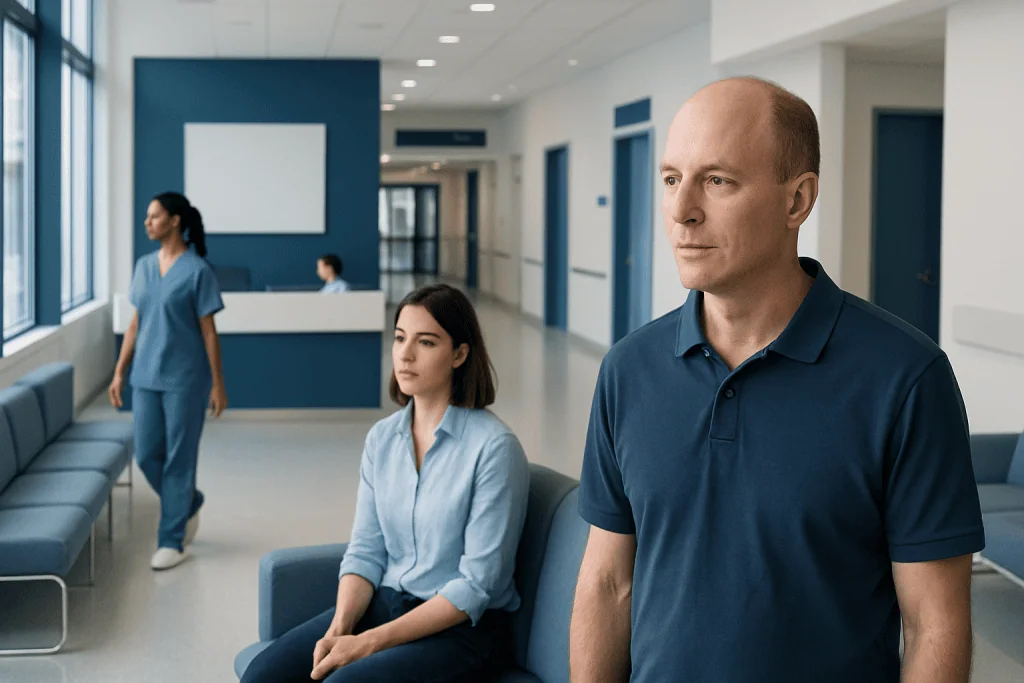
Norwood 3 usually means noticeable temple recession, with or without early thinning at the crown. It is part of the Norwood scale, which doctors use to describe the pattern and stage of male pattern hair loss.
Key Takeaways
- Norwood 3 usually means noticeable temple recession, with or without early thinning at the crown.
- It is part of the Norwood scale, which doctors use to describe the pattern and stage of male pattern hair loss.
- Early assessment can help distinguish androgenetic alopecia from other causes of shedding or scalp disease.
- Treatment may include medicines, lifestyle support, and in selected cases, hair transplant surgery.
- Progression varies widely from person to person, so treatment planning is individualized.
Norwood 3 is an early but clearly visible stage of male pattern hair loss, usually marked by deeper recession at the temples and a more defined M-shaped hairline. It does not always progress at the same speed, and several medical and surgical treatment options may help slow further loss or improve hair density.
Overview: What Norwood 3 Means
Norwood 3 is a commonly used term for an early established stage of male pattern hair loss. At this point, hair loss is usually more than a mature hairline. The temples recede more deeply, creating a clearer M-shaped pattern, and some people also begin to notice reduced density in the frontal scalp.
Doctors use the Norwood scale to describe how androgenetic alopecia develops over time. On this scale, stage 3 is often the point where hair loss becomes clinically obvious. For many men, it is the stage that prompts them to seek advice because the change is visible in photographs, styling becomes harder, or the frontal hairline looks uneven.
Norwood 3 does not mean complete baldness is inevitable in the near future. Hair loss progression is highly individual. Some people remain at this stage for years, while others progress more quickly depending on genetics, age, hormone sensitivity, and overall scalp health.
Because stage-based articles are often compared side by side, it can help to understand how Norwood 3 fits into the broader pattern of the Norwood scale and how it differs from a naturally maturing adult hairline.
Signs and How It Differs From a Mature Hairline

The main sign of Norwood 3 is deeper recession at both temples. Instead of a mild, age-related shift in the front hairline, the corners move farther back and form more distinct triangular recessions. The center of the frontal hairline may remain lower, which makes the M shape more noticeable.
Some people with Norwood 3 also have diffuse thinning in the frontal area, while others have stronger density behind the receding corners. A related pattern, sometimes called Norwood 3 Vertex, includes early thinning at the crown in addition to the frontal changes. This can be easier to miss without overhead photos or careful scalp examination.
A mature hairline usually sits slightly higher than an adolescent hairline but remains relatively even and stable. In Norwood 3, the recession is more pronounced, often progressive, and usually follows a typical male pattern distribution. Family history can offer clues, but it is not the only factor.
- Temple recession that is clearly deeper than a mature hairline
- An M-shaped or V-shaped frontal contour
- Possible early thinning at the crown
- Reduced styling coverage in the front corners
- Gradual progression over months or years rather than sudden shedding alone
Why Norwood 3 Happens: Causes and Risk Factors

The usual cause of Norwood 3 is androgenetic alopecia, also known as male pattern hair loss. In this condition, genetically susceptible hair follicles gradually shrink under the influence of androgens, especially dihydrotestosterone. Over time, affected hairs become finer, shorter, and less pigmented until visible scalp exposure develops.
Genetics is the strongest risk factor. A family history of patterned hair loss on either side of the family can increase the likelihood, but inheritance is complex and does not follow a simple rule. Age also matters, since male pattern hair loss often becomes more apparent in adulthood, though some people notice changes in their 20s.
Other factors do not usually cause Norwood 3 on their own, but they can influence how noticeable hair loss becomes. Stress, nutritional deficiencies, chronic illness, scalp inflammation, smoking, and harsh hair practices may worsen shedding or make existing pattern loss more apparent. That is why a scalp and hair evaluation can be helpful even when the pattern seems typical.
Doctors may also consider other conditions if the pattern is unusual or the hair loss is sudden. These may include alopecia areata, telogen effluvium, fungal scalp infections, or scarring scalp disorders. Proper diagnosis matters because treatment differs depending on the cause.
How Norwood 3 Progresses Over Time
Progression from Norwood 3 is not the same for everyone. Some individuals remain stable for long periods, especially if the change is primarily at the temples. Others develop further frontal thinning, crown thinning, or both, moving gradually into more advanced stages of the Norwood classification.
One reason progression is hard to predict is that hair loss tends to occur in cycles. A person may feel their hairline changed quickly over one year and then seemed stable for the next. Lighting, hairstyle, hair length, and seasonal shedding can also affect how severe the thinning appears.
Tracking the pattern with standardized photographs can be useful. Monthly or quarterly images taken in the same lighting and angle often provide a clearer sense of change than memory alone. This can also help a doctor assess whether treatment is stabilizing the condition.
For patients considering future restoration, understanding progression is important. Planning too early without accounting for ongoing loss may lead to an unnatural result later. This is one reason specialists often evaluate donor hair quality, expected future loss, and overall long-term strategy before recommending hair transplant surgery.
Diagnosis and Medical Evaluation
Diagnosis of Norwood 3 usually begins with a clinical history and scalp examination. A doctor asks when the hair loss started, how it has changed over time, whether there is increased shedding, and whether close relatives have similar hair loss. They also review medications, recent illnesses, diet, and scalp symptoms such as itching, pain, scaling, or redness.
During the exam, the doctor assesses the pattern of recession, the density of miniaturized hairs, the crown, and the donor area at the back and sides of the scalp. In many cases, the appearance is enough to diagnose androgenetic alopecia. Dermoscopy or trichoscopy may be used to look more closely at hair shaft thickness and miniaturization.
If the presentation is atypical, the doctor may recommend additional tests. These might include blood tests to look for nutritional deficiency or thyroid problems, or less commonly a scalp biopsy when scarring alopecia is suspected. Sudden patchy loss, inflamed scalp changes, or rapid diffuse shedding deserve a broader workup.
People comparing options may also benefit from reading related overviews such as male pattern baldness and stage-based guidance on Norwood 2 or Norwood 4 to understand whether their pattern appears stable, early, or more advanced.
Treatment Options for Norwood 3
Treatment depends on the pattern, the pace of progression, age, expectations, and whether the goal is to slow further loss, improve density, or restore the hairline. For many people with Norwood 3, early treatment is useful because more existing hair can often be preserved. A specialist may recommend medical therapy, procedural options, or a combination approach.
Common medical treatments include approved or commonly used therapies that help reduce ongoing miniaturization and support regrowth in some patients. Results vary, and these treatments usually need continued use to maintain benefit. A doctor can explain expected timelines, likely response, and possible side effects in a safe, individualized way.
When recession is well established and the donor area is suitable, hair restoration surgery may be considered. Modern techniques such as FUE hair transplant aim to redistribute permanent donor hairs into the hairline or thinning frontal areas. Surgical planning should account for future hair loss, hair caliber, donor density, and the need to keep the hairline age-appropriate rather than overly low.
Some patients are also evaluated for supportive non-surgical approaches that may complement medical care, such as PRP treatment for hair loss in selected cases. Not every option is right for every person, and no treatment can fully stop genetic predisposition. Realistic expectations and long-term follow-up are important parts of care.
Self-care, Prevention, and Long-Term Planning
There is no guaranteed way to prevent genetically driven male pattern hair loss, but early attention may help reduce the impact of progression. People who notice temple recession or crown thinning often benefit from seeking assessment sooner rather than waiting until the loss is more advanced. Preserving existing hair is usually easier than rebuilding density later.
General scalp and hair care can support overall hair health. This includes avoiding frequent tight hairstyles, minimizing harsh chemical or heat damage, treating dandruff or scalp inflammation when present, and following a balanced diet that supports normal hair growth. Self-care alone cannot reverse androgenetic alopecia, but it can reduce additional stress on the hair and scalp.
Long-term planning matters because Norwood 3 can remain stable or progress. Someone considering medical treatment or surgery should think beyond the current hairline and discuss how future loss may affect appearance over time. Consistent follow-up helps adjust the plan if the pattern changes.
Near the end of the decision process, some international patients choose evaluation at centers with dermatology and hair restoration expertise. Acibadem International’s multidisciplinary specialists and JCI-accredited hospitals diagnose and treat hair loss conditions for international patients, with treatment plans based on individual findings and goals.
When to Seek Medical Care
Medical evaluation is advisable when temple recession becomes noticeable, the crown seems thinner, or there is uncertainty about whether the change is a mature hairline or true pattern hair loss. Early assessment can help confirm the diagnosis and discuss options before thinning becomes more advanced.
More urgent medical review is sensible if hair loss is sudden, patchy, associated with scalp pain or inflammation, or accompanied by flaking, pustules, or scarring. These features are less typical of straightforward androgenetic alopecia and may point to another scalp condition that needs specific treatment.
A doctor should also be consulted if hair loss is causing significant stress, affecting self-image, or if over-the-counter products have not helped. Professional guidance can prevent wasted time on ineffective approaches and provide a more realistic long-term plan.
Anyone considering prescription treatment or surgery should speak with a qualified dermatologist or hair restoration specialist. Individual assessment is especially important for younger patients, because future progression may influence the best timing and type of treatment.
Frequently asked questions
Is Norwood 3 considered bald?
Norwood 3 is usually considered an early established stage of male pattern hair loss rather than complete baldness. Most people still have significant hair coverage, but the temple recession is clearly more pronounced than a mature hairline.
Can Norwood 3 grow back naturally?
Natural regrowth is usually limited when Norwood 3 is caused by androgenetic alopecia. Some people may notice temporary improvement in hair quality or shedding, but established pattern recession often needs medical treatment to slow progression or improve density.
Does Norwood 3 always progress to more severe hair loss?
No, progression is variable. Some people remain at Norwood 3 for many years, while others gradually develop more frontal or crown thinning. Genetics, age, and response to treatment all play a role.
What is the difference between a mature hairline and Norwood 3?
A mature hairline usually shifts slightly upward in adulthood and then stays relatively stable. Norwood 3 involves deeper recession at the temples and a clearer pattern of ongoing male pattern hair loss.
Is a hair transplant a good option for Norwood 3?
It can be a good option for selected patients, especially when temple recession is established and donor hair is strong. However, doctors usually also consider future hair loss, age, and whether medical treatment is needed to stabilize ongoing thinning.
Should someone with Norwood 3 see a dermatologist?
Yes, especially if the diagnosis is uncertain or the hair loss seems to be progressing. A dermatologist can confirm whether the pattern fits androgenetic alopecia and rule out other scalp or hair disorders that may need different treatment.
References
- American Academy of Dermatology
- British Association of Dermatologists
- National Health Service
- American Hair Research Society
- Mayo Clinic
This article is for general information only and is not a substitute for professional medical advice. Please consult a qualified doctor about your individual situation.
Hair transplant in Turkey — costs, graft counts & a free assessment
JCI-accredited · board-certified surgeons · reply within 24h
Add us as a Preferred Source to see more of our trusted health content across Google Search, AI Overviews and Discover.

More from the Health Library



Related Specialists

Prof. Dr. Ayten Ferahbaş Kesikoğlu
Dermatology
Prof. Dr. Yasemin Ersoy
Clinical Laboratory
Dr. Hande Aygün
Infectious Diseases & Clinical Microbiology
Prof. Dr. Sertaç Arslan
Pulmonology