4500 Grafts Hair Transplant: Coverage, Cost Factors, and What to Expect

A 4500 grafts hair transplant is usually considered a large session and may suit moderate to advanced hair loss. Coverage depends on more than graft count, including hair caliber, curl, color contrast, and donor density.
Key Takeaways
- A 4500 grafts hair transplant is usually considered a large session and may suit moderate to advanced hair loss.
- Coverage depends on more than graft count, including hair caliber, curl, color contrast, and donor density.
- Cost factors vary by technique, surgical complexity, clinic standards, and whether treatment is done in one or more sessions.
- A medical assessment is important to confirm candidacy and to plan a natural-looking hairline and density.
- Recovery is gradual, and final results typically take months to develop as transplanted hairs cycle and regrow.
A 4500 grafts hair transplant can often cover a larger area of hair loss, but the final result depends on donor hair quality, the size of the balding area, and the treatment plan. Rather than focusing on graft number alone, doctors assess scalp pattern, hair characteristics, and long-term hair loss stability to decide whether 4500 grafts is appropriate.
Overview: What 4500 Grafts Can Realistically Cover
A 4500 grafts hair transplant is generally used for people who need broader restoration than a small hairline procedure can provide. In many cases, this graft number may address the frontal hairline, mid-scalp, and part of the crown, but exact coverage varies from person to person. The main question is not only how many grafts are placed, but how strategically they are distributed to create a balanced, natural result.
Each graft is a naturally occurring follicular unit that may contain one to several hairs. Because of this, 4500 grafts does not mean 4500 individual hairs. The visible outcome depends on the total hairs transplanted, hair thickness, texture, curl, and contrast between hair and scalp color. Coarse or curly hair often creates more visual fullness than fine, straight hair with similar graft numbers.
Doctors usually evaluate the pattern and stage of hair loss before recommending a large session. For some patients, 4500 grafts is enough for meaningful cosmetic improvement; for others with wider loss, it may need to be prioritized toward the front and mid-scalp to preserve a natural look. This is why graft planning is often discussed alongside the pattern seen in Norwood scale hair loss stages and the long-term risk of further thinning.
How Doctors Decide If 4500 Grafts Is Suitable
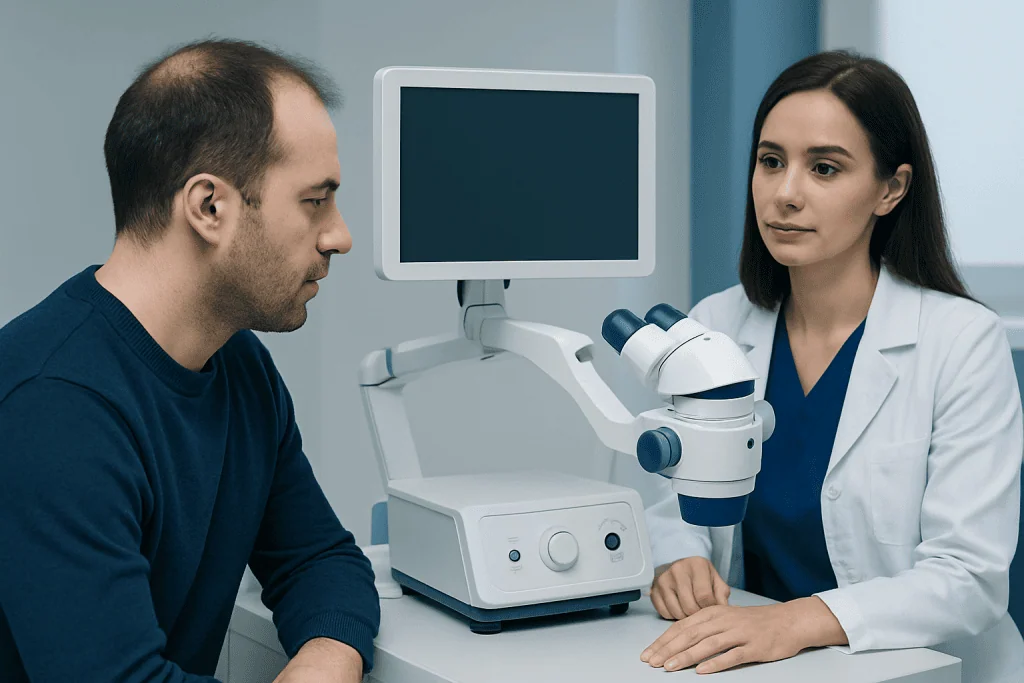
Suitability depends first on the donor area, usually the back and sides of the scalp. A surgeon checks donor density, hair shaft quality, scalp flexibility, and whether harvesting 4500 grafts can be done safely without making the donor area look thin. Even if a person wants maximum coverage, donor preservation remains one of the most important parts of planning.
Doctors also consider the recipient area. A lower, denser hairline may use many grafts, leaving fewer available for the mid-scalp or crown. In contrast, a more conservative design can make better use of 4500 grafts across a wider area. The patient’s age, family pattern of hair loss, and whether thinning is still progressing all influence this decision.
Medical evaluation matters because not all hair loss should be treated with transplantation. Some forms are temporary or inflammatory and need medical treatment first. A specialist may assess for conditions such as alopecia areata or diffuse shedding patterns before recommending surgery. If the diagnosis is stable androgenetic hair loss and the donor supply is adequate, a personalized plan can then be created.
Coverage Expectations by Hair Loss Pattern

Coverage with 4500 grafts is best understood in terms of priority zones. In many patients, the frontal hairline and frontal scalp receive priority because these areas frame the face and have the greatest visual impact. If grafts remain after rebuilding the front, they may be used in the mid-scalp and, in some cases, the crown. This often produces a more natural appearance than spreading grafts too thinly everywhere.
Patients with moderate hair loss may achieve good frontal and mid-scalp coverage with 4500 grafts, while those with more advanced loss may need to accept lighter density or staged treatment. Crown restoration usually requires many grafts because it covers a broad surface area and has a swirling growth pattern. For this reason, some treatment plans intentionally defer the crown until later.
The term coverage can be misleading because it does not always mean full density. Transplantation is often about creating the appearance of fullness, not replacing every lost follicle. This is why graft planning overlaps with broader questions covered in how many grafts for a hair transplant and the expected progression of ongoing hair loss over time.
- Best visual impact usually comes from restoring the hairline and front first.
- Mid-scalp coverage is often possible in the same session, depending on the size of the area.
- Crown coverage may be partial, delayed, or planned as a second stage.
- Natural density is influenced by donor quality as much as by graft number.
Cost Factors and Treatment Planning
The cost of a 4500 grafts hair transplant depends on several clinical and operational factors rather than graft count alone. Important considerations include the harvesting method, the complexity of the case, the number of surgical staff involved, the extent of preoperative evaluation, and the standards of the operating environment. A large session may also require more time, more detailed graft sorting, and more careful postoperative planning.
Technique plays a major role. Follicular unit extraction and other modern methods differ in how grafts are harvested, prepared, and implanted. Some patients may be candidates for a single long session, while others may benefit from a staged plan to protect graft quality and donor integrity. In many cases, the most appropriate approach is determined during consultation rather than by a fixed package model.
Patients often benefit from understanding the overall process before making decisions. Helpful topics include surgical candidacy, realistic density goals, expected aftercare, and whether medical therapies should be used to help preserve existing hair. General information about hair transplant treatment and, when relevant, hair transplant recovery timeline can help patients prepare for both the procedure and the months that follow.
What to Expect During the Procedure and Recovery
A large-session transplant usually begins with scalp assessment, hairline marking, donor preparation, and local anesthesia. Grafts are then harvested and implanted according to the agreed design. The procedure may take many hours because each graft needs to be handled carefully to protect survival and support natural direction and density.
After surgery, mild swelling, redness, tenderness, and scab formation are common for a short period. Transplanted hairs often shed in the first weeks, which can surprise patients but is usually a normal part of the growth cycle. New growth tends to appear gradually over several months, and the final cosmetic result takes time to mature.
Recovery advice typically includes gentle washing instructions, avoiding friction or trauma to the grafted area, and pausing strenuous activity for a period recommended by the treating team. Some patients are also advised to continue or start medical therapy to support native hair, especially if non-transplanted follicles remain vulnerable to future miniaturization. Following aftercare closely can help optimize healing and the overall appearance of the result.
Risks, Limits, and Long-Term Self-Care
Hair transplantation is generally safe when performed by qualified professionals, but it still has limits and potential risks. These can include temporary swelling, bleeding, discomfort, numbness, folliculitis, uneven growth, or an unnatural look if planning is poor. The quality of donor management is especially important in large sessions because overharvesting can reduce future options.
Another key limitation is that a transplant does not stop the underlying tendency toward ongoing hair loss. Native hair around the transplanted area may continue to thin over time, which can change the overall appearance. This is why long-term planning matters, particularly in younger patients or those with strong family histories of progressive baldness.
Self-care may include regular follow-up, scalp health management, and medical treatments recommended by a doctor to help preserve existing hair. Patients should also protect the scalp from excessive sun exposure during healing and avoid unverified products or aggressive routines. In selected cases, a future touch-up or second session may be considered if hair loss progresses or if additional density is desired.
When to Seek Medical Care
Medical care should be sought before surgery if hair loss is sudden, patchy, associated with itching, scaling, pain, or scarring, or if there is uncertainty about the diagnosis. These features may suggest a condition that needs medical treatment rather than immediate transplantation. A dermatologist or hair restoration specialist can help identify the cause and advise on the safest next step.
After a transplant, patients should contact their care team if they have increasing pain, significant swelling beyond the expected early period, fever, pus, spreading redness, or bleeding that does not settle with routine advice. It is also sensible to ask for review if healing seems delayed or if there are concerns about donor area changes.
For people considering treatment abroad or seeking multidisciplinary evaluation, Acibadem International’s specialists in JCI-accredited hospitals diagnose and treat hair loss conditions and perform hair restoration procedures for international patients. A proper consultation helps clarify whether 4500 grafts is medically appropriate, cosmetically realistic, and aligned with long-term scalp health.
Frequently asked questions
Is 4500 grafts a lot for a hair transplant?
Yes, 4500 grafts is generally considered a large hair transplant session. Whether it is appropriate depends on donor density, scalp characteristics, and the size of the balding area.
Can 4500 grafts cover the whole scalp?
Usually not with full density, especially in advanced hair loss. In many cases, doctors focus first on the hairline and frontal scalp, then extend coverage to the mid-scalp and sometimes part of the crown.
How many hairs are in 4500 grafts?
A graft is a follicular unit that may contain one, two, three, or sometimes more hairs. This means 4500 grafts can represent a much higher total number of individual hairs, depending on the patient's natural follicular unit composition.
Does a higher graft count always mean a better result?
No. A natural-looking result depends on careful design, donor preservation, hair characteristics, and proper placement as much as graft number. More grafts are not always better if they are spread too thinly or harvested too aggressively.
How long does it take to see results after a 4500 grafts hair transplant?
Most patients do not see immediate final growth because transplanted hairs commonly shed before regrowing. Noticeable improvement often develops gradually over several months, with the result continuing to mature over time.
Will transplanted hair fall out again?
Transplanted follicles are usually selected from more stable donor areas, so they often remain more resistant to pattern hair loss. However, existing non-transplanted hair can continue to thin, which is why long-term follow-up and medical management may still be helpful.
References
- American Academy of Dermatology
- International Society of Hair Restoration Surgery
- National Health Service
- Mayo Clinic
- DermNet
This article is for general information only and is not a substitute for professional medical advice. Please consult a qualified doctor about your individual situation.
Hair transplant in Turkey — costs, graft counts & a free assessment
JCI-accredited · board-certified surgeons · reply within 24h
Add us as a Preferred Source to see more of our trusted health content across Google Search, AI Overviews and Discover.

More from the Health Library



Related Specialists

Dr. Mehmet Gürcan
Orthopedic Surgery & Traumatology
Assoc. Prof. Dr. Tuna Bilecik
General Surgery
Dt. İrem Güllerci
Oral Dental & Maxillofacial Surgery
Prof. Dr. Koptagel İlgün
Internal Medicine