After Ureteral Tumor Surgery: Stents, Catheters and the Return to Normal Activity
After surgery for a ureteral tumor, a temporary ureteral stent (a soft tube keeping the ureter open) and a bladder catheter are common. The…
Read article

Articles for patients and families facing cancer: how screening and diagnosis work, what staging means, how the main treatment types differ and how to prepare for appointments. General information; treatment decisions belong to your oncology team.
After surgery for a ureteral tumor, a temporary ureteral stent (a soft tube keeping the ureter open) and a bladder catheter are common. The…
In multiple myeloma, a stem cell transplant is usually considered for people whose overall fitness, organ function and other health conditions suggest they can…
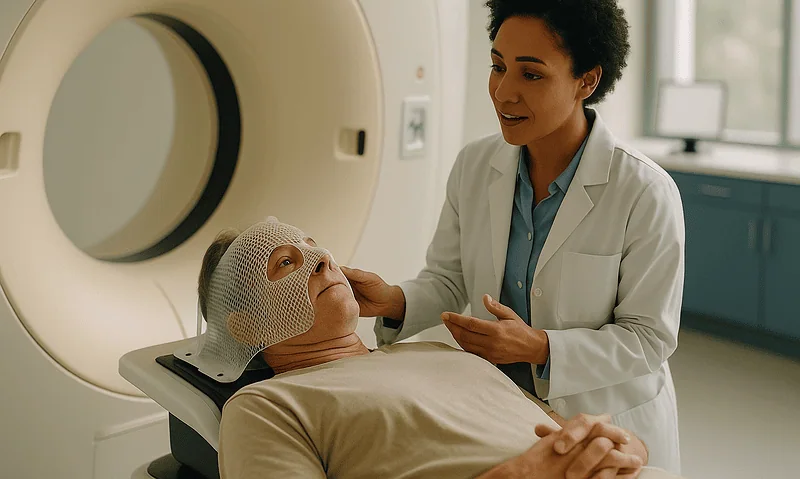
Most people describe a CyberKnife session as uneventful: you lie still on a padded table, often in a soft mesh mask or body cradle,…
To prepare for brachytherapy, most people are asked to stop eating for roughly six hours and clear fluids for about two hours before anesthesia,…
A stem cell transplant is usually considered for acute lymphocytic leukemia when chemotherapy alone is unlikely to keep the disease away: high-risk genetic features,…
After a TURBT, it is usually normal to have a urinary catheter for hours to a few days, mild burning or urgency when passing…
Preparing for head and neck cancer surgery usually means a second look at your biopsy by a specialist pathologist, staging scans such as CT,…
Radioiodine is usually chosen for an overactive thyroid when antithyroid tablets have not kept the condition controlled, when hyperthyroidism returns after a course of…
Surgeons remove a rim of healthy-looking skin around a melanoma, usually between 0.5 and 2 centimeters wide depending on how thick the tumor is,…
A lutetium-177 PSMA treatment session is an outpatient visit of several hours in which a radioactive medicine is given through an intravenous line, usually…
Exercise during hormone therapy for cancer is generally encouraged because these treatments lower estrogen or testosterone, which speeds bone loss, muscle loss and fat…
Surgeons usually choose Mohs surgery over standard excision when a basal cell or squamous cell skin cancer sits in a cosmetically or functionally sensitive…
Scans after CyberKnife, a form of stereotactic radiosurgery, usually change slowly. Cancerous tumors often begin to shrink over a few months, while benign tumors…
A proton therapy session is usually an outpatient visit of about 15 to 45 minutes, and most of that time goes to positioning you…
After testicular cancer, follow-up typically continues for five years or longer because most relapses appear within the first two years but a small number…
Preparing for TURBT usually involves three checks: a urine test to rule out infection, a cystoscopy (camera look inside the bladder) to map the…
Cancer treatment sometimes includes a neck dissection because many head and neck cancers spread first to the lymph nodes of the neck, and those…
To prepare for plasmapheresis, drink normally the day before and the morning of the session, eat a light meal a few hours ahead rather…
Choose which cookies you allow. Essential cookies are always on because the site cannot work without them.