

Cervical Cancer Treatment When You Hope to Have Children: Fertility-Sparing Options
Key Takeaways
- Fertility-sparing options for cervical cancer are generally reserved for tumors confined to the cervix and measuring about 2 cm or less with no lymph node involvement.
- A cone biopsy can be the entire treatment for the earliest microscopic (stage IA1) cancers when the margins are clear.
- A radical trachelectomy removes the cervix, surrounding parametrium and upper vagina but leaves the uterus and ovaries, so periods and hormones usually continue.
- Lymph node assessment, often by sentinel node biopsy, is built into the operation, and finding cancer in a node typically changes the plan to hysterectomy or chemoradiation.
- Pregnancy after trachelectomy is possible but carries higher risks of miscarriage and preterm birth and requires cesarean delivery because of the cerclage stitch.
- When the uterus cannot be kept, egg or embryo freezing and ovarian transposition before radiation can still protect future reproductive and hormonal options.
Fertility-sparing cervical cancer surgery removes the cancer while leaving the uterus in place, so pregnancy may remain possible. Options range from a cone biopsy for very small, early cancers to a trachelectomy, which removes the cervix but keeps the womb. Suitability depends on tumor size, stage, cell type and lymph node findings, and the treating team weighs cancer control against future fertility for each person.
The appointment was supposed to be about a biopsy result. Instead, a 31-year-old sitting in a gynecologic oncology clinic finds herself answering a question she did not expect: do you want to have children? She and her partner had talked about trying next year. Now the word cancer sits between that plan and the present, and the conversation has to cover both at once.
This is the position many people are in when fertility sparing cervical cancer surgery comes up. Cervical cancer is often found young. Screening catches many cases while the tumor is still small and confined to the cervix, which is exactly the window where surgeons can sometimes remove the cancer without removing the uterus.
What follows is a plain explanation of how those operations work, who is usually offered them, what the evidence shows about pregnancy afterward, and the questions worth bringing to your care team. None of it replaces that team; it is meant to make the conversation easier.
How does fertility sparing cervical cancer surgery actually work?
The cervix is the lower, narrow part of the uterus that opens into the vagina. Almost all cervical cancers begin in the thin layer of cells covering it, usually after years of persistent infection with high-risk types of human papillomavirus, or HPV, according to the NHS. Because the disease starts at the surface and tends to grow slowly, an early tumor can often be removed with a margin of healthy tissue while the body of the uterus, where a pregnancy grows, stays untouched.
That is the whole idea behind fertility sparing cervical cancer surgery: take out the cancer and enough surrounding tissue to be confident it is gone, and leave the organ needed to carry a child. A margin is simply the rim of normal tissue around the tumor that the pathologist checks under a microscope; a clear margin means no cancer cells reached the edge of what was removed.
The amount of tissue removed scales with the risk. For the smallest cancers, a cone-shaped piece of the cervix may be enough. For somewhat larger tumors, surgeons remove most or all of the cervix together with nearby supporting tissue, then stitch the remaining uterus to the top of the vagina. In both cases the ovaries are usually left alone, so hormone production and egg supply are not affected by the operation itself.
Two things decide whether this approach is safe. The first is whether the cancer is truly confined to the cervix and small enough that removing the cervix alone clears it. The second is whether cancer has reached the pelvic lymph nodes, the small filters that drain the cervix. Imaging and lymph node sampling answer those questions before and during surgery. If either answer comes back unfavorable, the plan usually changes, and the National Cancer Institute notes that in those situations treatment shifts toward hysterectomy or chemoradiation.
Who is usually offered it, and who is usually asked to wait?
Fertility-sparing surgery is considered for people who want the option of a future pregnancy and whose cancer is at an early stage. Cervical cancer is staged using the FIGO system, which describes how far the tumor has spread. The National Cancer Institute explains that stage IA cancers are microscopic and only visible under a microscope, while stage IB cancers are larger but still limited to the cervix. Fertility-sparing options are generally discussed for stage IA and the smaller stage IB tumors, typically those measuring 2 cm or less, as described by both the NCI and the Mayo Clinic.

Beyond size, teams look at several other factors:
- Cell type. The common squamous cell and usual adenocarcinoma types are generally eligible; rarer aggressive types, such as neuroendocrine tumors, usually are not.
- Lymph node status. Any evidence of cancer in the nodes generally rules out a uterus-preserving plan.
- Lymphovascular space invasion, meaning cancer cells seen inside tiny blood or lymph vessels on the biopsy, which raises the risk of spread and may change the choice of operation.
- Overall health and the ability to attend close follow-up afterward.
Who is usually asked to wait? Sometimes the honest answer is that more information is needed first. A person whose tumor is at the upper edge of the size range may be asked to have an MRI, a pelvic examination under anesthesia, or lymph node assessment before anyone commits to a plan. Others may be advised that a tumor is simply too large or too deep for the uterus to be safely kept.
That conversation is hard. It helps to know that being told fertility-sparing surgery is not advisable is not a judgment about how much you want children; it is a statement about where the cancer is. The decision sits with the treating team, and a second opinion within standard care is a reasonable thing to ask for.
Cone biopsy for cervical cancer: when the smallest operation is enough
A cone biopsy, also called conization, removes a cone-shaped wedge of tissue from the cervix that includes the surface and part of the canal. It can be done with a scalpel (a cold knife cone) or with a thin electrically heated wire loop, a procedure known as LEEP in the United States and LLETZ in the United Kingdom. The NHS describes both as treatments that can be done under local or general anesthetic, often as a day procedure.
For the earliest cancers, those classed as stage IA1 with no lymphovascular space invasion, the National Cancer Institute lists conization as a standard treatment option for people who wish to preserve fertility. The logic is that the tumor is so small and shallow that the cone removes it entirely, and the risk of lymph node involvement is very low. If the pathologist confirms clear margins, further surgery may not be needed, though follow-up is essential.
Margins matter here. If cancer cells reach the cut edge of the cone, the tumor may extend beyond what was removed. In that case the team may suggest a repeat cone or a different operation. This is one reason surgeons are precise about the shape and depth of the cone: enough tissue to be confident, not so much that the cervix is weakened unnecessarily.
Does a cone biopsy affect pregnancy? It can. The NHS notes that cervical treatments carry a small increase in the risk of a baby being born early in a later pregnancy, and the risk is thought to rise with the amount of cervix removed. For most people who have a single cone biopsy, the cervix retains enough length and strength to support a pregnancy, and obstetric teams routinely monitor cervical length in those who have had one. Mention your history to anyone caring for you in pregnancy.
A cone biopsy is also often the first step in diagnosis, because it tells the team the exact depth and width of invasion. Those measurements decide whether the cone itself was the treatment or whether a larger operation is needed.
What is a radical trachelectomy, and how is it different from a hysterectomy?
A trachelectomy is an operation that removes the cervix while leaving the body of the uterus in place. In a radical trachelectomy, the surgeon also removes the upper part of the vagina and the parametrium, the band of connective tissue on either side of the cervix where cancer can spread. A hysterectomy, by contrast, removes the entire uterus including the cervix, which ends the possibility of pregnancy.
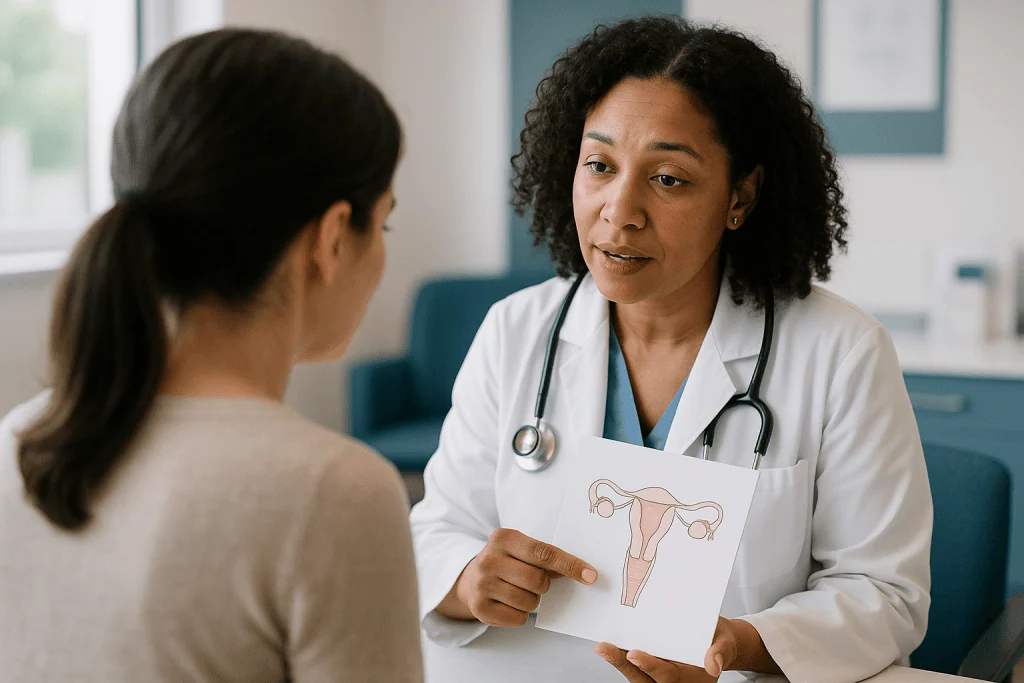
The Mayo Clinic describes radical trachelectomy as an option for small early-stage cervical cancers in people who want to keep the ability to become pregnant. Cleveland Clinic explains that the operation can be performed through the vagina, through an abdominal incision, or with minimally invasive techniques using small incisions and a camera. The approach is chosen by the surgeon based on tumor features, anatomy and experience.
Here is what usually happens, step by step:
- Pelvic lymph nodes are assessed first, often by sentinel node biopsy or a fuller node removal, and sent for rapid examination. If cancer is found, the operation is typically converted to a hysterectomy, a possibility that is discussed and consented to beforehand.
- The cervix, parametrium and a cuff of upper vagina are removed.
- The lower uterus is checked for a clear margin.
- A cerclage, a permanent stitch that acts as a substitute for the cervix’s closing function, is usually placed around the lower uterus.
- The uterus is sewn to the top of the vagina, re-establishing a channel for menstruation and, later, for conception.
A simple trachelectomy removes the cervix without the parametrium. Guideline bodies increasingly consider less radical surgery for the smallest tumors with low-risk features, because the parametrium is rarely involved in those cases and leaving it reduces bladder and nerve injury. Whether a simple or radical procedure is appropriate is a judgment the surgical team makes from the biopsy, imaging and node findings.
After a trachelectomy, periods usually continue, hormones are unchanged, and the uterus can carry a pregnancy, with important caveats covered later.
Fertility sparing cervical cancer surgery options compared
Seeing the options side by side helps make sense of why one person is offered a day procedure and another a multi-day hospital stay. The table below summarizes the typical pattern described by the NHS, Mayo Clinic, Cleveland Clinic and the National Cancer Institute. It is a guide to the categories, not a decision tool; staging details, cell type and node findings shift people between rows.
| Option | What is removed | Usually considered for | Uterus kept? | Typical setting |
|---|---|---|---|---|
| Cone biopsy (cold knife or LEEP) | Cone of cervical tissue | Stage IA1, microscopic cancer, clear margins achievable | Yes | Day procedure |
| Simple trachelectomy | Cervix, with lymph node assessment | Small early tumors with low-risk features | Yes | Short hospital stay |
| Radical trachelectomy | Cervix, parametrium, upper vagina, with lymph nodes | Stage IA2 to small IB tumors, generally 2 cm or less | Yes | Hospital stay of a few days |
| Chemotherapy first, then fertility-sparing surgery | Tumor shrunk before cervix removal | Selected larger tumors, under specialist protocols | Possibly | Weeks of treatment plus surgery |
| Radical hysterectomy or chemoradiation | Uterus and cervix, or radiation to the pelvis | Larger tumors, node-positive disease, or when margins cannot be cleared | No | Varies |
Two patterns stand out. First, the amount of tissue removed rises with the size and depth of the tumor, and so does the impact on the cervix’s ability to hold a pregnancy. Second, every uterus-preserving row depends on the lymph nodes being clear. That is why node assessment is built into the surgery rather than done as an afterthought.
The final row is not a failure of the others. It is where people land when the cancer’s position makes keeping the uterus unsafe, and it is also where fertility preservation shifts from surgery to egg or embryo freezing and protecting the ovaries, discussed below. Ask your team which row they believe fits your situation and why.
What happens to the lymph nodes during fertility-sparing surgery?
Lymph nodes are small bean-shaped filters along the vessels that drain fluid from tissues. The cervix drains to nodes along the pelvic blood vessels, and cervical cancer, when it spreads, tends to go there first. Finding cancer in a node changes the picture: it means disease has traveled beyond the cervix, and the National Cancer Institute explains that node-positive cancers are generally treated with chemoradiation rather than surgery alone.
For that reason, almost every fertility-sparing operation beyond a simple cone biopsy includes some form of lymph node check. There are two main approaches.
A full pelvic lymphadenectomy removes the nodes along the pelvic vessels on both sides. It is thorough, but it carries a risk of lymphedema, chronic swelling of the legs caused by disrupted lymph drainage, and of fluid collections called lymphoceles.
A sentinel lymph node biopsy takes a different route. A tracer, usually a dye or a mildly radioactive marker, is injected into the cervix before surgery. It travels along the same lymph channels cancer would use and collects in the first node or nodes it reaches: the sentinel nodes. The surgeon removes only those, and the pathologist examines them closely. If they are clear, the remaining nodes are very likely clear too. Mayo Clinic describes sentinel node biopsy as a way to detect spread while removing fewer nodes, which lowers the chance of lymphedema.
The nodes are often examined during the operation using a rapid technique called frozen section. If cancer is seen, the team may stop the fertility-sparing plan and proceed differently, which is why consent for a possible hysterectomy is usually discussed in advance. Occasionally, the final detailed pathology after surgery finds node involvement that the frozen section missed; in that case additional treatment, usually radiation with chemotherapy, is recommended afterward. It is a hard outcome, and it is worth knowing it is possible before the day of surgery.
Larger tumors: can chemotherapy first make fertility-sparing surgery possible?
Some tumors are confined to the cervix but larger than the usual size limit for trachelectomy, in the 2 to 4 cm range that FIGO calls stage IB2. For these, some specialist centers use neoadjuvant chemotherapy, which means chemotherapy given before surgery with the aim of shrinking the tumor enough that a fertility-sparing operation becomes feasible.
The idea is straightforward. Chemotherapy drugs that interfere with cell division are given over several cycles, typically spanning a number of weeks, and the tumor is re-imaged. If it has shrunk substantially, a trachelectomy may be offered. If it has not responded, the plan reverts to standard treatment, usually radical hysterectomy or chemoradiation.
How good is the evidence? Honest answer: it is still developing. The National Cancer Institute’s treatment summary lists this approach as under clinical evaluation rather than as a standard, and most published data come from relatively small series rather than large randomized trials. The approach is therefore usually offered within a specialist protocol, with careful counseling that the long-term cancer outcomes are less certain than for surgery on smaller tumors.
A few practical points follow from that:
- Chemotherapy can affect the ovaries, so egg or embryo freezing before treatment is often discussed, even though the uterus may be kept.
- The drugs used are chosen by the oncology team, and their mechanism, cycle timing and side effects should be explained to you by the prescribing clinician.
- Response to chemotherapy is judged by scans and examination, not by how you feel.
This pathway is a good example of a decision that cannot be made from general reading. It depends on tumor size measured on MRI, cell type, the presence of lymphovascular space invasion and the experience of the team. If you are told your tumor is a little too large for standard fertility-sparing surgery, asking whether chemotherapy first is being considered, and what the team thinks of the evidence, is entirely reasonable.
Pregnancy after trachelectomy: what the evidence shows
The point of the operation is to keep pregnancy possible, so this is the question nearly everyone asks first. The evidence supports a measured answer: many people conceive after a trachelectomy, naturally or with assistance, and many go on to deliver a baby, but the pregnancies carry higher risks than average and need specialist obstetric care from the start.
Cleveland Clinic and Mayo Clinic both describe the main issues. Without a cervix, the natural barrier between the vagina and the uterine cavity is shortened, which raises the risk of infection reaching the membranes and of the membranes rupturing early. The cerclage stitch placed at surgery helps hold the lower uterus closed, but it does not fully replicate a cervix. As a result, miscarriage in the second trimester and preterm birth are more common after trachelectomy than in the general population, and delivery is by planned cesarean section because the stitch and the scarred lower uterus make vaginal birth unsafe.
Conceiving can also take longer. Scarring may narrow the opening into the uterus, and reduced cervical mucus can make it harder for sperm to pass. Some people need the opening widened in a minor procedure, and some use fertility treatment such as intrauterine insemination or IVF. Periods often continue normally, though a narrowed opening can cause painful or scanty bleeding that needs attention.
Timing is commonly discussed too. Teams generally advise waiting until healing is complete and early follow-up has been reassuring before trying to conceive; Cleveland Clinic notes this is often several months to around a year, and the exact interval is set by the treating team. During pregnancy, expect regular ultrasound checks, discussion about reducing activity in the later months, and possibly preventive antibiotics or progesterone, prescribed and timed by the obstetric team according to their assessment.
Published pregnancy and live birth figures vary widely between series and depend heavily on how many people actually tried to conceive, so be cautious of any single percentage. What is consistent is the pattern: pregnancy is achievable, high-risk, and best managed by a maternity team that knows your surgical history.
Recovery: what the first days and weeks usually look like
Recovery depends on which procedure you had. After a cone biopsy or LEEP, the NHS describes a short recovery: most people go home the same day, and light bleeding or brownish discharge can continue for a few weeks as the cervix heals. The NHS advises avoiding sex, tampons and swimming for about four weeks after LLETZ to reduce the risk of infection while the surface heals. Mild cramping is common; heavy bleeding, fever or foul-smelling discharge is not.
After a trachelectomy, the picture is closer to any major pelvic operation. Cleveland Clinic describes a hospital stay of a few days, with a urinary catheter for a period afterward because the nerves to the bladder run through the tissue removed in a radical procedure. Some people find bladder sensation is dulled for weeks and need to empty on a schedule rather than waiting for the urge. Bowel function may be slow to return. Pain is usually manageable with medicines chosen by the team.
In the weeks that follow:
- Walking from the first day helps prevent blood clots in the legs, a known risk after pelvic surgery and cancer; compression stockings or a short course of injectable anticoagulant may be used, prescribed by the surgical team.
- Vaginal bleeding or discharge is expected for several weeks as the join between uterus and vagina heals.
- Lifting and strenuous exercise are typically restricted for about six weeks, with the exact guidance set by the surgeon.
- Pelvic examination and sometimes imaging confirm healing before sexual activity resumes.
The final pathology report usually arrives one to two weeks after surgery and is the moment the plan is confirmed. Clear margins and negative nodes mean follow-up only; unexpected findings may mean further treatment. That wait is often the hardest part of recovery, and it is reasonable to ask in advance when and how results will be shared.
Emotionally, the weeks after surgery can be unsettled. Fear of recurrence, grief about a changed body and uncertainty about fertility coexist with relief. Many cancer services offer counseling or peer support; using it is a sign of good self-care, not weakness.
When the uterus cannot be kept: ovarian transposition, egg and embryo freezing
Not everyone who hopes for children can have a uterus-preserving operation. When the recommended treatment is a hysterectomy or chemoradiation, fertility preservation does not disappear; it changes form. Three approaches come up, and the National Cancer Institute and MedlinePlus both point to fertility counseling before treatment begins.
Egg or embryo freezing. Eggs can be collected after a short course of hormonal stimulation, then frozen as eggs or fertilized and frozen as embryos. Because a pregnancy can no longer be carried in one’s own uterus after hysterectomy, using those eggs or embryos later involves a gestational carrier, where legally available. The stimulation cycle takes roughly two weeks, and cancer teams weigh whether a brief delay to treatment is safe.
Ovarian transposition. Radiation to the pelvis damages the ovaries, bringing on early menopause and ending egg production. In ovarian transposition, a surgeon moves the ovaries higher in the abdomen, outside the planned radiation field, usually through keyhole surgery. This can preserve hormone function and sometimes egg supply; it does not restore the ability to carry a pregnancy if the uterus is removed or irradiated, but it can matter a great deal for long-term bone and heart health and for the option of egg retrieval later.
Keeping the ovaries at hysterectomy. For most cervical cancers, the ovaries are not a common site of spread, and in younger people they are often left in place during hysterectomy to avoid surgical menopause. Whether this is appropriate depends on cell type; it is discussed more cautiously for some adenocarcinomas.
None of these options is automatic. They require a referral to a reproductive specialist, often at short notice, and a frank conversation about what each can and cannot offer. If fertility matters to you and no one has raised it, raise it yourself before treatment starts; that is the window in which these choices exist.
What people often get wrong about fertility-sparing cervical cancer surgery
Myths cluster around this topic, partly because it is rarely talked about openly. Here are the ones that cause the most confusion, corrected against mainstream evidence.
Myth: Keeping the uterus means accepting a worse cancer outcome. For properly selected small, node-negative tumors, the National Cancer Institute lists radical trachelectomy as a standard option alongside hysterectomy, not as a compromise. The key phrase is properly selected. The caution applies to tumors that fall outside those criteria, which is exactly why selection is strict.
Myth: After a trachelectomy, pregnancy will be like anyone else’s. It will not. Mayo Clinic and Cleveland Clinic both describe higher risks of miscarriage and preterm birth, and delivery is by cesarean section. Knowing this early allows planning rather than surprise.
Myth: A cone biopsy is only a diagnostic test. For the very earliest cancers with clear margins, conization can be the entire treatment, according to the NCI. Equally, a cone that shows deeper invasion than expected can be the reason for a larger operation.
Myth: Chemotherapy or radiation always follows surgery. Most people with clear margins and negative nodes after fertility-sparing surgery need follow-up only. Additional treatment is reserved for unexpected findings on the final pathology.
Myth: Fertility-sparing surgery is only for people in a relationship or planning a pregnancy soon. Eligibility rests on the cancer, not relationship status or a timeline. Wanting to keep the option open is reason enough to discuss it.
Myth: Having had the HPV vaccine means this cannot happen. Vaccination substantially lowers risk but does not cover every cancer-causing HPV type, and it cannot clear an infection already present, as the CDC and NHS note. Screening remains important.
Myth: If the ovaries are kept, fertility is unaffected. The ovaries supply eggs and hormones, but a pregnancy also needs an intact passage into the uterus and a lower uterus strong enough to hold it. Scarring after surgery can affect both, which is why conception sometimes needs assistance even when ovarian function is normal.
Early stage cervical cancer treatment: follow-up after fertility-sparing surgery
Follow-up after fertility-sparing surgery serves two purposes: catching any recurrence early, and looking after the pelvic health that future pregnancy depends on. The schedule is set by the treating team and usually tapers over time, with visits more frequent in the first two years, when most recurrences of early stage cervical cancer tend to occur, as described in the National Cancer Institute’s treatment summary.
A typical visit includes a pelvic examination and, after a trachelectomy, a cytology sample from the join between uterus and vagina, sometimes with HPV testing. Imaging is not usually routine without symptoms but may be used if the examination is difficult or if there are concerns. Because the normal cervix is absent, the sample can be harder to interpret, and some teams use colposcopy, a magnified examination of the tissue, alongside it.
Between visits, symptoms worth reporting rather than waiting for the next appointment include new or persistent bleeding, particularly after sex, pelvic or back pain that does not settle, unusual discharge, or leg swelling on one side. Most such symptoms have benign explanations such as scarring or infection, but they need checking.
Follow-up is also where fertility planning picks up again. Once early visits have been reassuring, the team can advise on when trying to conceive is reasonable, whether the opening into the uterus needs assessment, and which maternity service should be involved from early pregnancy. Mentioning your intentions at each visit keeps that thread alive.
Longer term, people who have had cervical treatment should keep the HPV vaccination status and screening history of the wider household in mind too, since HPV is common and transmissible. And because the ovaries are retained, there is no surgical menopause to manage; hormonal health follows its usual course.
One practical habit helps: keep a copy of your operation note and final pathology report. They describe exactly what was removed, including the cerclage and any node findings, and future clinicians, especially in pregnancy, will want to see them.
Questions to ask your care team before deciding
A good consultation leaves you knowing what is being recommended and why. The questions below are drawn from what people commonly ask gynecologic oncologists and fertility specialists. Bring a written list, bring someone to take notes, and expect that some answers will be we need more information first.
- What is the exact stage and cell type of my cancer, and how large is the tumor on imaging?
- Was lymphovascular space invasion seen on the biopsy, and how does that change the options?
- Am I a candidate for a cone biopsy alone, a simple trachelectomy or a radical trachelectomy, and what makes you choose one over another?
- How will the lymph nodes be checked, and what happens during the operation if cancer is found in them?
- Have I consented to a possible hysterectomy if the findings during surgery require it, and what would that decision be based on?
- How many of these operations does the team perform, and what is their approach if complications occur?
- What are the specific risks of this surgery for bladder, bowel and sexual function, and for lymphedema?
- Should I see a fertility specialist before treatment to discuss egg or embryo freezing, even if the plan is to keep my uterus?
- How long after surgery would you suggest waiting before trying to conceive, and which maternity service would look after a pregnancy?
- What will follow-up involve, and for how long?
- If the final pathology shows something unexpected, what would the next steps be?
- Is there any role for chemotherapy before surgery in my case, and what does the evidence show?
- Who do I contact if I have symptoms between appointments?
It is reasonable to ask for time to think, and to ask for a second opinion within standard care. A cancer diagnosis creates urgency, but a few days to understand the plan rarely changes the outcome and often changes how confident you feel going into it. The treating team makes the recommendation; the decision to proceed is one you make with them.
When to call your doctor
Most recovery after fertility-sparing cervical cancer surgery is uneventful, but some symptoms need prompt attention rather than a wait for the next clinic visit. The NHS, Mayo Clinic and Cleveland Clinic list similar warning signs, summarized here.
Contact your surgical team or seek urgent care the same day if you notice:
- Heavy vaginal bleeding, such as soaking a pad in an hour or passing large clots, at any point after a cone biopsy or trachelectomy.
- Fever, chills or feeling generally unwell, which can signal infection in the pelvis or urinary tract.
- Foul-smelling or discolored vaginal discharge.
- Worsening abdominal or pelvic pain, especially if it is not controlled by the medicines you were given.
- Difficulty passing urine, or burning and urgency after the catheter is removed.
- Redness, swelling or discharge at an incision site.
Call emergency services or go to an emergency department if you develop:
- Swelling, pain or warmth in one calf or thigh, which can indicate a blood clot.
- Sudden shortness of breath, chest pain or coughing up blood, which can indicate a clot that has traveled to the lungs.
- Fainting, a racing heartbeat or dizziness together with bleeding.
Beyond the recovery period, report new bleeding after sex, persistent pelvic or back pain, unexplained leg swelling on one side, or unexpected weight loss to your follow-up team. These usually have benign causes, but they are the symptoms the team wants to hear about between visits.
If you become pregnant after a trachelectomy, contact your maternity team early and urgently for any vaginal bleeding, fluid leakage, regular tightenings or reduced fetal movements, since pregnancies after this surgery are managed as high risk. In every one of these situations, the people who know your operation and pathology are best placed to judge what is going on, so keep their contact details where you can find them.
Frequently asked questions
What is fertility sparing cervical cancer surgery?
It is surgery that removes the cancer while leaving the uterus in place so that pregnancy may remain possible. The main options are a cone biopsy for the smallest, earliest cancers and a trachelectomy, which removes the cervix but keeps the body of the uterus. Eligibility depends on tumor size, stage, cell type and whether the pelvic lymph nodes are free of cancer, all assessed by the treating team.
Is a radical trachelectomy as safe as a hysterectomy for early cervical cancer?
For carefully selected small, node-negative tumors, the National Cancer Institute lists radical trachelectomy as a standard treatment option alongside hysterectomy. The reassurance depends on strict selection: tumors generally 2 cm or smaller, confined to the cervix, with clear margins and negative nodes. For cancers outside those criteria, the evidence does not support keeping the uterus, and the team will usually recommend other treatment.
Can a cone biopsy for cervical cancer be the only treatment I need?
Sometimes, yes. For stage IA1 cancers, where invasion is microscopic and there is no lymphovascular space invasion, conization with clear margins is a recognized fertility-preserving treatment according to the National Cancer Institute. If the margins contain cancer cells or the cone reveals deeper invasion than expected, further surgery is usually recommended. Follow-up examinations remain essential either way.
What are the chances of pregnancy after trachelectomy?
Published figures vary widely between studies and depend on how many people actually tried to conceive, so no single percentage is reliable. What the evidence consistently shows is that pregnancy is achievable, sometimes with fertility assistance because the opening into the uterus can narrow, and that such pregnancies carry higher risks of miscarriage and preterm birth. Ask your team about their own experience and follow-up.
Why does delivery have to be by cesarean section after a trachelectomy?
During the operation a permanent stitch, called a cerclage, is placed around the lower uterus to take over the cervix’s job of holding a pregnancy closed. That stitch does not open for labor, and the lower uterus is scarred where it was joined to the vagina. Vaginal birth would risk tearing, so Mayo Clinic and Cleveland Clinic describe planned cesarean delivery as standard.
Will I still have periods after fertility-sparing surgery?
Usually, yes. The ovaries are left in place, so hormone cycles continue and the lining of the uterus still sheds each month. After a trachelectomy, the blood passes through the new join between uterus and vagina. Occasionally scarring narrows that opening, causing painful, scanty or absent periods; this can be treated with a minor procedure, so report any change to your follow-up team.
What is the difference between a simple and a radical trachelectomy?
A simple trachelectomy removes the cervix alone, while a radical trachelectomy also removes the parametrium, the supporting tissue beside the cervix, and a cuff of upper vagina. The radical version clears a wider margin but has a higher chance of affecting bladder nerves. Guideline bodies increasingly consider the simpler operation for the smallest low-risk tumors, a judgment the surgical team makes from biopsy, imaging and node findings.
How long does recovery take after early stage cervical cancer treatment that preserves fertility?
It depends on the procedure. After a cone biopsy or LEEP, most people go home the same day and the NHS advises avoiding sex, tampons and swimming for about four weeks while the cervix heals. After a trachelectomy, Cleveland Clinic describes a hospital stay of a few days, a period with a urinary catheter, and typically around six weeks before strenuous activity, with the exact guidance set by the surgeon.
Can I have fertility-sparing surgery if my tumor is larger than 2 cm?
Standard fertility-sparing surgery is generally limited to tumors 2 cm or smaller. For selected larger tumors still confined to the cervix, some specialist teams give chemotherapy first to shrink the tumor and then consider a trachelectomy. The National Cancer Institute lists this approach as under clinical evaluation rather than standard, so it is usually offered within a protocol with careful counseling about the less certain evidence.
What if cancer is found in a lymph node during the operation?
If rapid examination of the nodes during surgery shows cancer, the fertility-sparing plan is usually stopped, because node-positive disease is generally treated with chemoradiation rather than surgery alone. Some teams convert to a hysterectomy during the same operation; others close and plan chemoradiation. This possibility is discussed and consented to beforehand, and ovarian transposition may be offered to protect hormone function before radiation.
References
This article is for general information only and is not a substitute for professional medical advice. Please consult a qualified doctor about your individual situation.

More from the Blog

How Long to Stay Near the Hospital After CAR-T Infusion: Planning as an International Patient
After a CAR-T infusion, most programs keep patients in hospital for roughly one to two weeks of monitoring, then ask them to remain within…

Infection Risk During Multiple Myeloma Treatment: Vaccines, Precautions and Urgent Signs
Multiple myeloma raises infection risk in two ways: the disease itself suppresses normal antibody production, and treatments such as steroids, proteasome inhibitors, anti-CD38 antibodies,…

Infection Precautions During Acute Lymphocytic Leukemia Treatment and Why Fever Is Urgent
During acute lymphocytic leukemia treatment, chemotherapy lowers neutrophils, the white cells that fight bacteria, so ordinary germs can become serious within hours. Careful hand…

What a Skin Cancer Biopsy Report Tells Your Team and How It Shapes Treatment
A skin cancer biopsy report names the cancer type (most often basal cell carcinoma, squamous cell carcinoma or melanoma), describes how deeply it grows,…

The Low-Iodine Diet Before Radioiodine Treatment: What to Eat and What to Avoid
A low-iodine diet before radioiodine treatment lowers the iodine in your body so thyroid tissue takes up more of the radioactive iodine. It is…

Is a Second Opinion Worth Seeking for a Testicular Cancer Plan? What to Ask First
A second opinion is usually reasonable before a testicular cancer plan begins, and most care teams expect the request. It is most useful when…