

Does Chemotherapy Come Before or After Surgery? What Neoadjuvant and Adjuvant Mean

Key Takeaways
- Neoadjuvant means chemotherapy before surgery and adjuvant means chemotherapy after it; the drugs are frequently the same, only the sequence differs.
- Chemotherapy is systemic, reaching microscopic cancer clusters that no scan can show and no surgeon can remove, which is why it is added to surgery at all.
- Giving chemotherapy first lets the team watch the tumor respond and may allow a smaller operation, at the cost of delaying surgery.
- Giving surgery first provides the full, untreated pathology specimen, which for many cancers is what decides whether chemotherapy is needed.
- In breast cancer, pooled randomized trials found similar long-term outcomes with either order, while the chemotherapy-first sequence allowed more breast-conserving surgery.
- A temperature of 38°C (100.4°F) or higher during chemotherapy is an urgent sign that should prompt an immediate call to your team's emergency line.
Chemotherapy can come either before or after cancer surgery, and the timing is a deliberate choice by the treating team. Neoadjuvant chemotherapy is given before an operation, usually to shrink a tumor or treat hidden cancer cells early. Adjuvant chemotherapy is given after surgery to lower the chance of the cancer returning. Neither order is universally better; the decision depends on the cancer type, its stage, and the individual person.
The surgeon has finished explaining the operation, the drawing is still on the whiteboard, and then the oncologist leans forward and says something unexpected: they would like to start chemotherapy first and operate later. For many people that sentence lands hard. Does it mean the cancer is worse than they thought? Why not just take it out now?
Sit in enough of those consultations and you notice the same two words doing most of the work: neoadjuvant and adjuvant. The debate over neoadjuvant vs adjuvant chemotherapy is really a debate about sequence, and sequence in cancer care is chosen for concrete reasons, not by habit.
This explainer walks through what each term means, why a team might pick one order over the other, what the weeks actually look like, and which myths deserve retiring. The one constant: the order that is right for you is worked out by your treating team, using your scan results, your pathology, and your own priorities.
Neoadjuvant vs adjuvant chemotherapy: what the two words actually mean
Both words come from the same Latin root, adjuvare, meaning to help. In cancer care, an adjuvant treatment is one that helps the main treatment, which for many solid tumors is surgery. The prefix neo simply means new, or first. So the vocabulary is less mysterious than it sounds.
Adjuvant chemotherapy is chemotherapy given after the tumor has been surgically removed, with the aim of destroying any cancer cells that may have escaped and cannot yet be seen on scans. Neoadjuvant chemotherapy is the same kind of treatment given before the operation, with the aim of shrinking the tumor, treating hidden spread early, and learning how the cancer responds. The National Cancer Institute uses exactly these definitions, and you will find them repeated in surgical and oncology guidelines around the world.
Chemotherapy itself is a systemic treatment, meaning it travels through the bloodstream and reaches cells everywhere in the body, not just at the tumor site. That property is the whole reason timing matters. Surgery is local: it removes what the surgeon can see and feel. Chemotherapy is global: it goes looking for what nobody can see. The question of neoadjuvant vs adjuvant chemotherapy is really a question about when the global search should begin relative to the local removal.
A few related terms tend to travel alongside these two. Perioperative chemotherapy means some treatment before surgery and some after, a pattern used in several stomach and esophageal cancer protocols. Chemoradiation means chemotherapy given alongside radiation therapy, often in the neoadjuvant setting for rectal cancer. And adjuvant therapy as a broader phrase can include hormone therapy, targeted drugs, immunotherapy, or radiation, not just chemotherapy. When your team uses the word, it is worth asking which treatment they mean.
How chemotherapy works, whichever side of surgery it falls on
Chemotherapy drugs interfere with the machinery cells use to copy their DNA and divide. Cancer cells tend to divide faster and repair themselves less reliably than healthy cells, so they are hit harder. Some healthy tissues that also renew quickly, such as the lining of the mouth and gut, hair follicles, and the bone marrow that manufactures blood cells, are affected too. That overlap explains the familiar side effects rather than being a sign the treatment is failing.
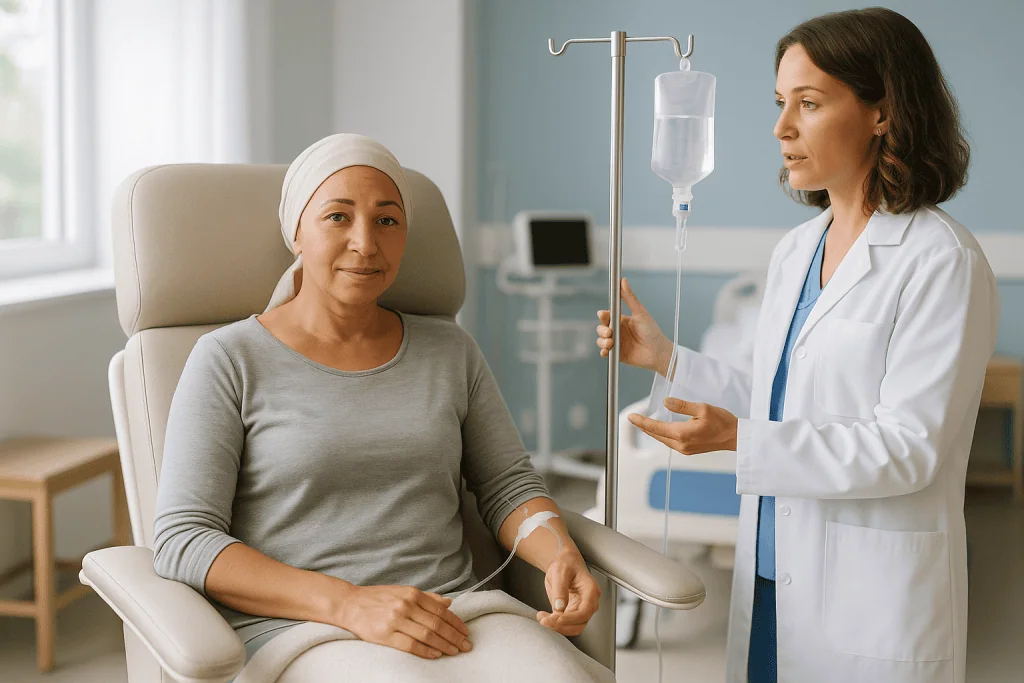
Most regimens are delivered in cycles. A cycle is one dose or a short run of doses followed by a rest period, which gives healthy cells time to recover before the next round. The NHS describes courses that typically run over months, with the exact number of cycles and the spacing between them set by the specific protocol and how the person tolerates it. Your oncologist chooses the drugs and schedule; this article deliberately does not, because those decisions depend on details only your team has.
The concept that ties the whole neoadjuvant versus adjuvant discussion together is the micrometastasis: a tiny cluster of cancer cells that has already traveled away from the primary tumor but is far too small to show on a CT or MRI scan. Surgery cannot remove what it cannot see. Chemotherapy, being systemic, can reach those clusters wherever they sit. Whether you deliver it before or after the operation, the goal is the same.
What changes with timing is what else you gain. Give the drugs first and you can watch the tumor respond on scans and under the microscope. Give them afterward and you have full pathology from the removed tissue to guide the choice of drugs. Each order buys a different kind of information, and clinicians weigh that trade constantly.
Why would a care team give chemo before surgery?
Being told you will have chemo before surgery is not, on its own, a statement about how serious the cancer is. Teams choose the neoadjuvant route for several practical reasons, and the reasons differ from one cancer to another.
Shrinking the tumor is the most intuitive one. A smaller tumor can sometimes be removed with a less extensive operation. In breast cancer, for example, a tumor that would otherwise require removal of the whole breast may shrink enough to allow a lumpectomy, an operation that removes the tumor with a rim of surrounding tissue. In rectal cancer, shrinking the tumor with chemoradiation can sometimes spare the sphincter muscles that control bowel function. This shrinking is called downstaging.
Treating hidden spread early is the second reason. If a cancer has a known tendency to seed distant sites, starting systemic treatment on day one rather than after weeks of surgical recovery may matter. This is part of the logic behind neoadjuvant approaches in some pancreatic, esophageal, and bladder cancers.
The third reason is information. When the tumor is removed after chemotherapy, the pathologist can see exactly how much of it survived. A tumor that has largely disappeared under the microscope tells the team the drugs worked well; a tumor that barely changed tells them to consider a different plan afterward. Surgery-first sequencing cannot offer this live test of drug response.
Finally, a tumor that is technically difficult to remove safely, perhaps because it wraps around a blood vessel, may become operable after shrinking. Your surgeon and oncologist judge that together, usually in a multidisciplinary team meeting where surgeons, oncologists, radiologists, and pathologists review each case.
Why give adjuvant chemotherapy after surgery instead?
For many cancers, surgery first remains the standard sequence, and the reasoning is just as deliberate. Removing the tumor immediately eliminates the largest visible source of cancer cells and gives the pathologist the entire specimen, untouched by drugs, to examine.
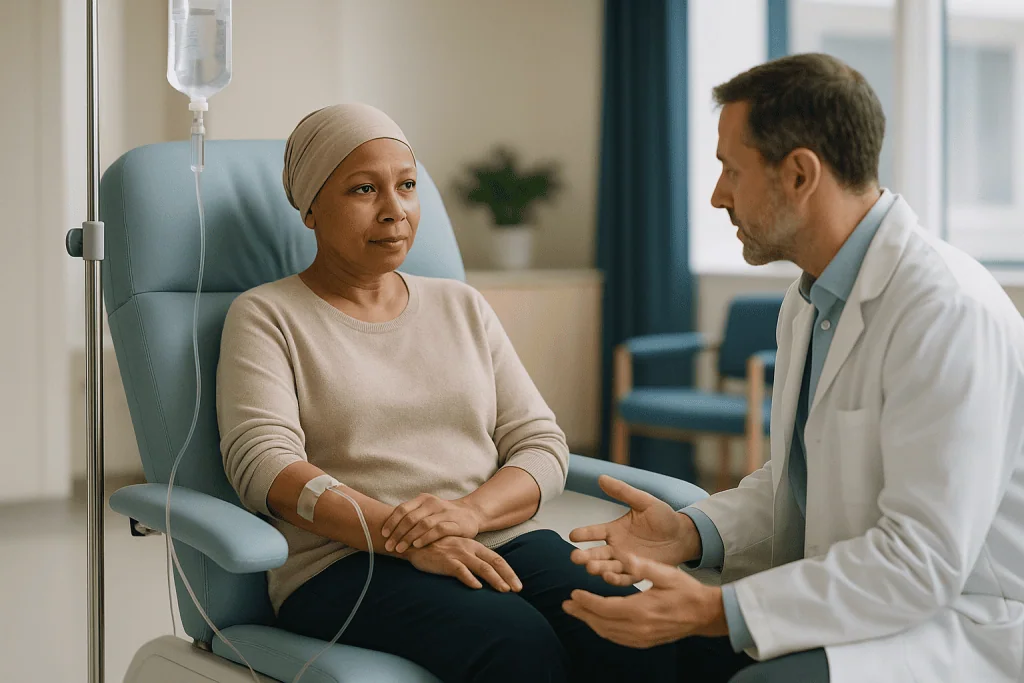
That untouched specimen matters. Pathology after surgery reveals the true size of the tumor, whether cancer has reached nearby lymph nodes, whether the surgical margins are clear, and molecular features that may steer drug selection. Margins are the edges of the removed tissue; clear margins mean no cancer cells were found at the boundary. Lymph nodes are small filters in the immune system that cancer often reaches first. A colon cancer with cancer in several nodes and one with none may be treated very differently after surgery, and only the operation can settle which situation applies.
Adjuvant chemotherapy after surgery is then offered when the pathology suggests a meaningful chance that microscopic cells remain. Mayo Clinic frames it plainly: adjuvant therapy aims to lower the chance of the cancer returning, though it cannot guarantee that outcome. Some people with very early, low-risk cancers are told they do not need it at all, because the expected benefit would be too small to justify the side effects.
There is also a timing advantage in some situations. When a tumor is causing a problem right now, such as a bowel blockage or heavy bleeding, waiting weeks for chemotherapy to shrink it is not realistic. Surgery resolves the immediate crisis; systemic treatment follows once the person has recovered.
The surgery-first order does carry one trade-off worth naming honestly: the team never gets to see how the tumor responded to the drugs, because the tumor is already gone. They are treating a risk they can estimate but not watch.
Who is usually offered neoadjuvant treatment, and who is usually asked to wait?
Patterns exist, but they are patterns, not rules. Guidelines from oncology societies describe situations where chemotherapy first is common, and your team maps your individual case onto them.
Neoadjuvant chemotherapy is frequently considered when the tumor is large relative to the organ it sits in, when lymph nodes are already involved on imaging, when the tumor’s biology is known to respond briskly to drugs, or when downstaging could allow a smaller operation. Certain breast cancer subtypes, muscle-invasive bladder cancer, locally advanced rectal cancer, and some stomach, esophageal, and pancreatic cancers are settings where a chemotherapy-first plan is routinely discussed.
Surgery first, with adjuvant chemotherapy decided afterward, is typical when the tumor is small and easily removed, when the exact stage cannot be judged without the specimen, or when the cancer type has limited evidence supporting a neoadjuvant approach. Many early colon cancers and many small, node-negative breast cancers fall here.
Some people are asked to wait for reasons that have nothing to do with the tumor. A recent heart attack, an active infection, poorly controlled diabetes, or very low blood counts may need attention before either chemotherapy or a long anesthetic is safe. In those cases the wait is protective, not a downgrade.
- Your team will weigh the tumor’s size, location, and stage on imaging.
- They will consider the tumor’s subtype and how such tumors typically respond to drugs.
- They will assess your overall fitness for surgery and for chemotherapy.
- They will factor in your own preferences, including how you feel about a larger versus smaller operation.
If you are unsure which category you fall into, that is a fair question for your next appointment, and a good team will welcome it.
Neoadjuvant vs adjuvant chemotherapy at a glance
Seeing the two approaches side by side often clears up more confusion than paragraphs can. The table below summarizes how they differ in purpose, information, and trade-offs. None of these rows is a promise about your own case; they describe the general logic clinicians use.
| Feature | Neoadjuvant chemotherapy | Adjuvant chemotherapy |
|---|---|---|
| When it is given | Before the operation | After the operation, once recovered |
| Main aims | Shrink the tumor, treat hidden spread early, test drug response | Destroy remaining microscopic cells, lower recurrence risk |
| What guides drug choice | Biopsy sample and imaging | Full pathology from the removed tumor and nodes |
| Can the team watch the tumor respond? | Yes, on scans and in the final specimen | No, the tumor is already removed |
| Possible surgical benefit | May allow a smaller or less complex operation | None; operation planned from original size |
| Main trade-off | Surgery is delayed; a tumor that does not respond may grow | Systemic treatment starts later; no live test of response |
| Common settings | Some breast, bladder, rectal, stomach, esophageal, pancreatic cancers | Many colon, early breast, lung, and ovarian cancers |
Two points deserve emphasis. First, the same drugs are often used in either setting; what differs is the sequence, not the pharmacy. Second, the presence of a cancer type in one column does not exclude it from the other. Breast cancer, for instance, appears in both, because subtype and stage push individual cases one way or the other.
A useful way to hold the comparison in mind: neoadjuvant treatment trades a delay in surgery for information about response, while adjuvant treatment trades a delay in systemic therapy for information from the specimen. Your team decides which information is more valuable in your situation.
What actually happens when chemotherapy comes first
A neoadjuvant pathway usually starts with confirmation, not treatment. A biopsy, a small tissue sample taken with a needle, establishes the diagnosis and subtype. Imaging such as CT, MRI, or PET scans records the tumor’s size and checks for spread. Many teams then place a small marker clip inside the tumor, because a tumor that shrinks dramatically can become hard for the surgeon to find later.
Before the first dose, you will have blood tests to check your bone marrow, liver, and kidneys, and sometimes a heart scan if the planned drugs can affect heart muscle. Some people have a small device called a port placed under the skin of the chest to make repeated infusions easier; this is optional in many protocols and worth asking about.
Treatment then proceeds in cycles. Between cycles you are monitored for side effects and blood counts. Partway through, and again at the end, repeat imaging or a physical exam measures how the tumor is responding. Response is usually described in plain categories: shrinking, stable, or growing. A tumor that grows despite treatment prompts an early conversation about switching drugs or moving to surgery sooner.
Once the chemotherapy course finishes, there is a recovery interval before the operation so that blood counts and general strength can rebuild. The surgeon then removes the tumor bed, the area where the tumor sat, along with any planned lymph nodes. The pathologist examines everything and reports how much viable cancer remains. That report, called the pathologic response, is one of the most informative documents in the entire journey, because it shows exactly what the drugs accomplished. It also shapes whatever treatment, if any, is recommended afterward.
What actually happens when surgery comes first
In the surgery-first pathway, the operation is scheduled once staging is complete and you are judged fit for anesthesia. The removed tissue goes to the pathology laboratory, where it is measured, sliced, stained, and read under a microscope. This process typically takes days to a week or more depending on how many tests are needed, and the wait can feel long. It is not a sign of bad news; thorough pathology simply takes time.
When the report arrives, your team meets to decide whether adjuvant chemotherapy is warranted. They look at tumor size, grade (how abnormal the cells appear), whether cancer reached the lymph nodes, whether it invaded blood or lymph vessels, and molecular markers specific to the cancer type. For some cancers, a genomic test on the tumor tissue estimates how much benefit chemotherapy is likely to offer, helping identify people who can reasonably skip it.
If chemotherapy is recommended, it begins after you have healed sufficiently from surgery. The exact interval depends on the type of operation, how the wound is healing, and your overall recovery; your team sets that timing rather than a fixed calendar. Blood tests, and sometimes heart tests, are repeated before the first dose, just as they would be in the neoadjuvant setting.
The course then runs in cycles with rest periods, monitored in the same way. When it ends, follow-up shifts to surveillance: periodic visits, examinations, and imaging tailored to the cancer type. Some people also move on to longer-term adjuvant treatments, such as hormone therapy for hormone-sensitive breast cancer, which works through a different mechanism, lowering or blocking the hormones that feed certain tumors, and is taken over a much longer period than chemotherapy. Your oncologist will explain which, if any, of these apply to you.
What do the following weeks usually look like?
Whichever order your team chooses, the rhythm of chemotherapy weeks tends to feel similar. The days right after an infusion are often the roughest for nausea and fatigue. Anti-nausea medicines have improved this considerably, and MedlinePlus notes that many side effects can be prevented or eased with supportive medicines your team can prescribe. Reporting symptoms early, rather than enduring them, is what allows those adjustments.
Blood counts typically fall in the days after each cycle and recover before the next one. The white cells that fight infection are the ones clinicians watch most closely, because a low count, called neutropenia, makes ordinary infections potentially serious. This is why every chemotherapy unit hands out a card or number to call for fever. Hair thinning, if it happens with your regimen, usually begins a few weeks into treatment and regrows after the course ends, according to Mayo Clinic; not every regimen causes it.
In the neoadjuvant pathway, the weeks also include repeat imaging and, sometimes, a physical exam where the clinician measures the tumor by hand. People often describe this as a strange mix of dread and hope. Hearing that the tumor is shrinking can be a real morale lift; hearing that it is stable is not failure, since stable disease still means the drugs are holding it in check.
In the adjuvant pathway, the weeks after surgery focus first on wound healing, movement, and rebuilding strength before chemotherapy starts. Once it begins, the schedule follows the same cycle-and-rest pattern.
Across both pathways, appetite, energy, and mood fluctuate. Many centers offer dietitians, physical therapists, social workers, and counselors as part of routine care. Asking who is on your supportive team is one of the most practical questions you can raise early.
Does the order change side effects or surgical risk?
The chemotherapy side effects themselves are largely the same regardless of timing, because they come from the drugs, not the sequence. Fatigue, nausea, mouth soreness, changes in taste, hair thinning, tingling in the hands and feet with certain drugs, and lowered blood counts are described consistently across the Mayo Clinic, NHS, and MedlinePlus patient resources. What the order changes is how those effects interact with an operation.
When chemotherapy comes first, surgeons want blood counts, nutrition, and general fitness to recover before operating, which is why a rest interval separates the last cycle from surgery. Some chemotherapy drugs can slow wound healing or affect the heart, and anesthesiologists account for that in planning. Tissue that has been treated can also change in texture, which surgeons are trained to anticipate.
When surgery comes first, the concern runs the other way: chemotherapy should not begin until the wound has healed enough to withstand a temporary drop in immune function. A person recovering slowly from a complicated operation may have their chemotherapy start pushed back, and that delay is a clinical judgment, not neglect.
Emotional side effects deserve equal billing. People on a neoadjuvant pathway sometimes describe the wait for surgery as living with the cancer still inside them, which can be distressing even when scans show shrinkage. People on an adjuvant pathway sometimes describe the opposite frustration: the tumor is out, they feel physically recovered, and now months of treatment loom for an enemy nobody can see. Both reactions are common and legitimate, and both are reasons to ask about psychological support as part of standard care rather than an afterthought.
Is one order better than the other? What the evidence actually shows
The honest answer is that it depends on the cancer, and for some cancers the two orders appear roughly equivalent on the outcomes that matter most.
Breast cancer is the best-studied example. Large randomized trials, and pooled analyses combining them, have compared giving the same chemotherapy before versus after surgery. These analyses have generally found no meaningful difference in long-term survival between the two sequences. What did differ was surgery: chemotherapy first allowed more people to have breast-conserving operations, while some analyses also noted a somewhat higher rate of the cancer returning in the breast itself with the neoadjuvant order, a finding that has influenced how radiation and surgical margins are handled. The lesson clinicians drew was that sequence can be chosen for surgical and informational reasons without sacrificing the bigger picture.
In other cancers the evidence points more firmly toward one order. For muscle-invasive bladder cancer, guideline bodies recommend chemotherapy before removal of the bladder in suitable people, based on trials showing benefit. For locally advanced rectal cancer, chemoradiation before surgery became standard because it lowered local recurrence compared with surgery alone. For early colon cancer, the surgery-first approach with adjuvant chemotherapy guided by node status remains the norm, because the specimen is needed to decide who benefits.
What the evidence does not support is the idea that either order is universally superior, or that being offered one rather than the other signals a better or worse prognosis. It also does not support choosing a sequence outside a guideline framework simply because it sounds more aggressive or more cautious. If your team recommends an order, asking which guideline or evidence base underpins it is reasonable, and most oncologists will be glad to explain.
What people often get wrong about adjuvant therapy and its meaning
Misunderstandings about these words cause real anxiety, so a few deserve direct correction.
Being told you need chemo first means the cancer is more dangerous. Not necessarily. Neoadjuvant treatment is often chosen precisely because a cancer subtype responds well to drugs, or because shrinking the tumor could allow a smaller operation. The order reflects strategy, not a verdict.
If the tumor disappears on scans, surgery is no longer needed. In most current practice, surgery still follows, because scans cannot confirm that every cell is gone; only the pathologist can, and only after the tissue is removed. Research into skipping surgery after an excellent response is active in some cancers, but it remains investigational for most, and your team will tell you if it applies to you.
Adjuvant therapy means the surgeon left something behind. The adjuvant therapy meaning is the opposite: it assumes the visible tumor was fully removed and targets cells too small for anyone to see. Clear margins on the pathology report and a recommendation for chemotherapy are entirely compatible.
Adjuvant therapy is always chemotherapy. The term covers any treatment given after the main one: radiation, hormone therapy, targeted drugs, or immunotherapy, which works by helping the immune system recognize cancer cells. Ask which is meant.
Adjuvant vaccine adjuvants are the same thing. Vaccine adjuvants are ingredients that boost the immune response to a vaccine. Same Latin root, different field, no connection to cancer treatment. Search engines mix them up constantly.
Skipping adjuvant chemotherapy is reckless. Sometimes the estimated benefit is small enough that declining is a reasonable, guideline-supported choice. That conversation belongs with your oncologist, who can put the numbers for your specific case in front of you.
Questions to ask your care team
A consultation about treatment sequence moves quickly, and the questions you wish you had asked tend to surface in the parking lot. Writing a few down beforehand changes the dynamic. These are the ones oncologists and surgeons most often say they wish people would raise.
- Why are you recommending this order for my cancer, and what guideline or evidence supports it?
- If chemotherapy comes first, how will you measure whether it is working, and what happens if the tumor does not shrink?
- If surgery comes first, what in the pathology report would lead you to recommend chemotherapy afterward, and what would let me avoid it?
- Could the order change the type or extent of the operation I need?
- Roughly how long is the whole plan expected to take from start to finish, and where are the decision points along the way?
- Which side effects are most likely with the drugs you have in mind, and which ones should prompt me to call immediately?
- Will I need a port, a marker clip, heart tests, or fertility counseling before treatment starts?
- Who is on my supportive team, such as dietitians, physical therapists, or counselors, and how do I reach them?
- Is there a clinical trial relevant to my situation that I should know about?
- Whom do I call after hours, and what number do I use for a fever?
Bring someone with you if you can, or ask whether you may record the conversation; many clinics allow it. Ask for a written summary of the plan, including the sequence and the reasoning behind it. And remember that asking for a second opinion is routine in cancer care and is not an insult to your team; most clinicians actively encourage it for major sequencing decisions.
When to call your doctor
Chemotherapy in either sequence can lower your defenses against infection, and surgery adds its own set of warning signs. Your team will give you a direct number to call at any hour. Use it without hesitation for the following.
Call immediately, day or night, if you have:
- A temperature of 38°C (100.4°F) or higher, or shaking chills even without a measured fever; the NHS lists this as an urgent sign during chemotherapy because it may signal infection while white cell counts are low.
- Sudden shortness of breath, chest pain, or a fast, pounding heartbeat.
- Uncontrolled vomiting or diarrhea that prevents you from keeping fluids down, or signs of dehydration such as dizziness and very little urine.
- Unusual bleeding or bruising, blood in urine or stool, or a nosebleed that will not stop.
- New confusion, severe headache, or a seizure.
- A swollen, painful, or red calf, or sudden swelling of one arm or leg, which can signal a blood clot.
After surgery, also call for: increasing redness, warmth, swelling, or pus at the wound; a wound that opens; pain that worsens rather than eases; or a fever in the days following the operation.
Call during clinic hours for: mouth sores that make eating hard, persistent nausea despite your prescribed medicines, new numbness or tingling in the hands or feet, or side effects that are simply wearing you down. These are not emergencies, but they are exactly what your team wants to adjust for, and early reporting often prevents a small problem from becoming a large one.
None of this replaces the individualized instructions your own team gives you. If they have told you to call for something not listed here, follow their guidance. And if you are ever unsure whether a symptom counts, calling is always the right choice.
Frequently asked questions
What is neoadjuvant therapy in simple terms?
Neoadjuvant therapy is any treatment given before the main treatment, usually before surgery, to make that main treatment more effective. In cancer care it most often means chemotherapy, sometimes with radiation, hormone therapy, or immunotherapy, given to shrink a tumor and treat hidden cancer cells early. The word neo means new or first, and adjuvant means helping.
Does needing chemo before surgery mean my cancer is advanced?
Not necessarily. Teams often choose chemotherapy first because a cancer subtype tends to respond well to drugs, or because shrinking the tumor could allow a smaller operation. It is also used for some larger or node-positive tumors, so the sequence alone does not tell you the stage. Ask your oncologist directly why this order was chosen for your case.
Can I skip surgery if the tumor disappears after neoadjuvant chemotherapy?
In most current practice, surgery still follows, because scans cannot confirm that every cancer cell is gone; only examination of the removed tissue can. Research into avoiding surgery after an excellent response is ongoing in a few cancers, but it remains investigational for most. Your team will tell you if such an approach applies to your situation.
How long after surgery does adjuvant chemotherapy usually start?
It starts once you have healed enough from the operation to tolerate a temporary drop in immune function, and the interval depends on the type of surgery and how recovery is going. Your team sets that timing individually rather than by a fixed calendar. If your start is delayed, it is usually to protect wound healing, not a sign of a problem with your plan.
Are the same chemotherapy drugs used before and after surgery?
Often, yes. Many regimens can be given in either the neoadjuvant or adjuvant setting, and the choice of sequence is about strategy rather than a different pharmacy. What may change is the plan afterward: a poor response to chemotherapy given first can prompt a switch to different drugs after surgery, guided by what the pathologist finds in the removed tissue.
What does adjuvant therapy mean if my surgeon says the margins were clear?
Clear margins mean no cancer cells were found at the edges of the removed tissue, and adjuvant therapy assumes exactly that. Its target is microscopic cells that may have traveled beyond the surgical field and cannot be seen on scans or under the surgeon’s eye. A recommendation for adjuvant treatment is not a sign that anything was left behind.
Is neoadjuvant or adjuvant chemotherapy more effective?
For some cancers, notably breast cancer, randomized trials comparing the two sequences have found similar long-term survival, with the chemotherapy-first order allowing more breast-conserving surgery. For others, such as muscle-invasive bladder cancer or locally advanced rectal cancer, guidelines favor treatment before surgery based on trial evidence. Neither order is universally superior; the right one depends on the cancer type and stage.
What is perioperative chemotherapy?
Perioperative chemotherapy means some cycles are given before surgery and some after, combining features of both the neoadjuvant and adjuvant approaches. It is used in several stomach and esophageal cancer protocols. The pre-surgery portion aims to shrink the tumor and treat hidden spread, while the post-surgery portion targets any remaining microscopic cells identified or suspected after the operation.
Does chemotherapy before surgery make the operation riskier?
Some chemotherapy drugs can lower blood counts, slow wound healing, or affect the heart, so surgeons schedule a recovery interval after the last cycle and anesthesiologists plan accordingly. With that preparation, chemotherapy-first sequencing is routine in many cancers. Your surgical team will assess your fitness before operating and will explain any specific risks that apply to your regimen.
Who decides whether I get adjuvant chemotherapy after surgery?
The decision is made with you by a multidisciplinary team, typically including your surgeon, medical oncologist, pathologist, and radiologist, after reviewing the pathology report from your operation. Factors include tumor size, grade, lymph node involvement, and molecular markers. For some cancers a genomic test on the tumor helps estimate benefit. Your own priorities and health are part of the discussion.
References
This article is for general information only and is not a substitute for professional medical advice. Please consult a qualified doctor about your individual situation.

More from the Blog
Recovering From Endometrial Cancer Surgery: Activity, Wound Care and Follow-Up Timing
Endometrial cancer surgery recovery time is usually measured in weeks, not days. Most people leave the hospital within one to five days, feel steadier…
Parotidectomy Surgery Step by Step: How Surgeons Protect the Facial Nerve
During a parotidectomy, surgeons protect the facial nerve by locating its main trunk with fixed anatomical landmarks near the ear, then tracing each branch…

How Lymphoma Treatment Is Planned: Hodgkin Versus Non-Hodgkin and What Subtype Changes
Hodgkin and non-Hodgkin lymphoma are treated differently because they are different diseases under a microscope. Hodgkin lymphoma is usually planned around a small number…
What Robotic Surgery Changes for Kidney Cancer Patients: Incisions, Precision, Recovery
Robotic kidney cancer surgery is keyhole surgery in which the surgeon removes part or all of a kidney using instruments controlled from a console…

When Is Mohs Surgery Chosen Over Standard Excision for Basal Cell Carcinoma?
Mohs surgery is usually chosen over standard excision for basal cell carcinoma when the tumor sits where skin is scarce or cosmetically and functionally…
Building Strength Before Esophageal Cancer Treatment: Nutrition and Swallowing Checks
Nutrition before esophageal cancer surgery means keeping weight, muscle and swallowing as stable as possible in the weeks before an esophagectomy. Care teams usually…