

What Robotic Surgery Changes for Kidney Cancer Patients: Incisions, Precision, Recovery
Key Takeaways
- Robotic kidney cancer surgery is keyhole surgery controlled entirely by a surgeon at a console; the system has no independent movement.
- Partial nephrectomy preserves healthy kidney tissue and is generally considered for tumors under about 4 cm when position allows, according to the NHS.
- Robotic assistance adds the most in partial nephrectomy, where wristed instruments help the surgeon suture the kidney quickly while its artery is clamped.
- Cancer-removal goals are identical across open, laparoscopic and robotic approaches; the minimally invasive routes mainly change pain, incision size and hospital stay.
- MedlinePlus gives a hospital stay of 1 to 7 days after kidney removal, and Mayo Clinic advises avoiding heavy lifting for about six weeks.
- A single healthy kidney can sustain normal life, but long-term protection of its function, and years of surveillance scans, are part of the plan after surgery.
Robotic kidney cancer surgery is keyhole surgery in which the surgeon removes part or all of a kidney using instruments controlled from a console beside the patient. Compared with a long open flank incision, it usually means several small cuts, less postoperative pain and a shorter hospital stay, while cancer-control results appear similar across approaches. It suits many localized tumors; the treating team decides whether partial or radical removal, or another option, fits.
The scan was ordered for something else entirely: a nagging pain under the ribs, a possible gallstone. Instead, the radiology report used two words nobody had been looking for: renal mass. A week later, in a consulting room, the urologist sketched a kidney on a notepad, circled a lump the size of a walnut, and said the phrase that sends most people straight to their phones that evening: robotic kidney cancer surgery.
It sounds like science fiction, and the marketing around it often leans that way. The reality is more grounded and, in some respects, more reassuring. A robot does not operate on anyone. A surgeon does, sitting a few feet away, working through instruments thinner than a pencil.
What follows is an honest tour of what actually changes when a kidney tumor is removed this way: where the cuts go, what precision really means when a kidney is being sewn closed against a clock, and what the days and weeks afterward tend to look like.
How robotic kidney cancer surgery actually works, step by step
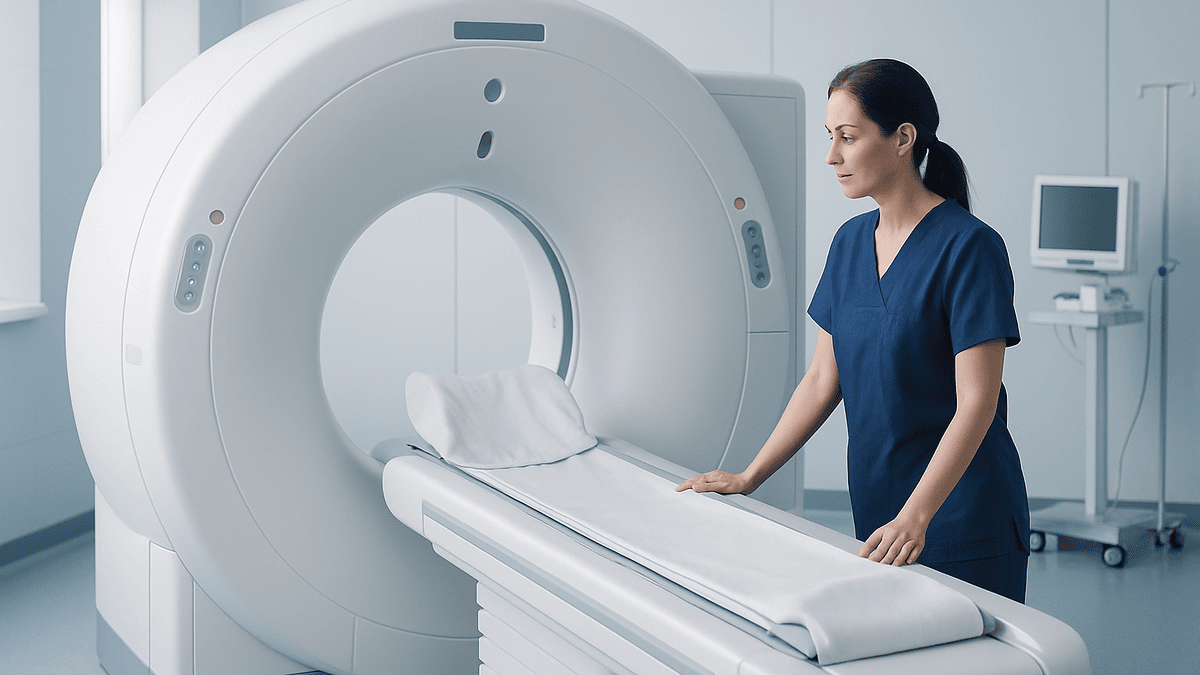
Robotic surgery is a form of laparoscopic, or keyhole, surgery: the operation happens inside the body through small openings rather than one long incision. The difference is that the surgeon does not hold the instruments directly. They sit at a console in the same room, looking into a magnified three-dimensional view, and their hand and finger movements are translated in real time to slim instruments held by mechanical arms. The Cleveland Clinic describes the system plainly as a tool the surgeon controls at every moment; it has no independent movement.
On the day itself, the sequence is fairly consistent. Under general anesthesia, the patient is positioned on their side so the affected kidney faces upward. Carbon dioxide gas is introduced to gently lift the abdominal wall and create working space. Four or five small ports, each a hollow tube, are placed through the skin. A camera goes through one; wristed instruments go through the others. A second surgeon or trained assistant stays at the bedside to swap instruments, apply suction and pass sutures.
From the console, the surgeon frees the kidney from surrounding fat, identifies the artery and vein that supply it, and exposes the tumor. In a partial removal the artery is briefly clamped, the tumor is cut away with a rim of healthy tissue, and the raw surface is stitched closed. In a full removal the vessels are sealed and divided and the whole organ is freed. Whatever is removed goes into a sealed bag and comes out through one of the port sites, which is lengthened just enough to allow it. A small drain is sometimes left for a day or two. The whole procedure usually takes a few hours; how many depends on the tumor’s position and the person’s anatomy.
Partial or radical: which part of the kidney is removed, and why it matters
Two operations sit under the umbrella of nephrectomy, the medical word for kidney removal. A radical nephrectomy takes the entire kidney, often with the fatty layer around it and occasionally the adrenal gland that sits on top. A partial nephrectomy removes only the tumor plus a margin of normal tissue, leaving the rest of the organ in place. Surgeons call the second approach nephron-sparing, a nephron being one of the kidney’s microscopic filtering units.

Why does the distinction matter so much? Kidneys do not regenerate lost filtering capacity. The more healthy tissue preserved, the better the long-term filtering reserve, which matters for blood pressure control, for tolerating future illnesses, and for anyone who may one day develop diabetes or a second kidney problem. The NHS notes that partial nephrectomy is generally the approach considered for smaller tumors, commonly those under about 4 cm, when the position allows it.
Radical removal remains the right operation in many situations: large tumors, tumors sitting deep in the center of the kidney near the main vessels, tumors growing into the renal vein, or a kidney already so damaged that saving part of it would offer little. Mayo Clinic describes both as standard options, with the choice resting on tumor size, location, number of tumors, the health of the opposite kidney and the person’s overall condition.
Robotic technology has shifted the balance mostly at the partial end. Sewing a bleeding kidney surface closed deep inside the body, quickly, is one of the hardest things to do through conventional keyhole instruments. Wristed robotic instruments make that suturing more manageable, which is why many surgeons reserve robotic assistance particularly for partial nephrectomy.
Is nephrectomy a common treatment for kidney cancer?
Yes. For kidney cancer that has not spread beyond the kidney, surgery to remove the tumor or the whole organ is the main treatment offered, according to both the NHS and Mayo Clinic. Unlike some cancers where chemotherapy or radiation lead the way, the most common form of kidney cancer, renal cell carcinoma, responds poorly to conventional chemotherapy, so physically removing the tumor has long been the foundation of care when it is confined.
Part of what makes nephrectomy so common is how kidney cancer is found. Mayo Clinic notes that many kidney tumors are discovered incidentally on imaging done for unrelated reasons, exactly like the scan in the opening story. That means a growing share of people arrive with small, early tumors that are very much operable, often by partial nephrectomy.
Not every kidney mass is cancer. Some are benign growths such as oncocytomas or angiomyolipomas, and imaging cannot always tell them apart from cancer with certainty. Sometimes a needle biopsy is done first; sometimes the decision is made on scan appearance and the tissue is examined after removal. This is one reason the pathology report a couple of weeks after surgery matters so much: it confirms what the mass actually was, its grade, and whether the margins were clear.
Surgery is not the only path. For very small tumors, or for people whose other health problems make an operation risky, the NHS lists options including active surveillance (monitoring with regular scans), cryotherapy (freezing the tumor) and radiofrequency ablation (heating it) as alternatives. And when cancer has already spread, treatment shifts toward medicines such as immunotherapy or targeted drugs, sometimes with surgery still playing a role. The pattern, though, holds: for localized disease, an operation of some kind is usually the first conversation.
Who robotic kidney cancer surgery is usually for, and who is usually asked to wait
The typical candidate has a tumor confined to one kidney, is well enough for a general anesthetic lasting a few hours, and can tolerate lying on one side with the abdomen inflated with gas. That describes a large proportion of people with newly diagnosed kidney cancer, which is why the robotic approach has spread widely for both partial and radical nephrectomy.

Tumor features shape the choice more than age does. A small tumor on the outer edge of the kidney is often a straightforward partial nephrectomy. A tumor wedged against the collecting system, where urine gathers, or wrapped around the main artery, demands more complex reconstruction; robotic assistance is frequently used precisely for these, though some surgeons will still recommend an open approach. Very large tumors, or those extending into the renal vein or the large vein returning blood to the heart, are more often treated with open surgery because the surgeon needs direct hand control over major vessels.
Who is asked to wait, or steered elsewhere? The NHS notes that active surveillance may be recommended for small, slow-growing tumors, particularly in older adults or people with other significant illnesses, because such tumors may never cause harm in their lifetime and the risks of surgery could outweigh the benefit. Someone with an unstable heart condition, an active infection or poorly controlled diabetes may be asked to have those addressed first. People taking blood-thinning medicines need a plan agreed between the surgeon and the prescribing clinician; nobody should adjust those medicines on their own.
Previous extensive abdominal surgery, severe obesity or a solitary kidney do not rule the robotic route out, but they change the calculus. In each case the decision belongs to the treating team, weighing the tumor, the person and the alternatives together.
Incisions and precision: what small ports change, and what they do not
Start with the incisions, because they are the most visible change. A traditional open nephrectomy uses a long cut along the flank or across the upper abdomen, through muscle, sometimes with a portion of rib removed for access. That wound is what drives much of the pain, the slow return of deep breathing and the weeks of lifting restrictions after open surgery. The robotic version substitutes several ports of roughly a centimeter each, plus one site lengthened to lift the specimen out. After a partial nephrectomy that extraction site can stay small. After a radical nephrectomy the whole kidney must exit, so one incision is inevitably longer, though still typically shorter than an open flank wound.
Smaller wounds mean less muscle cut, and Mayo Clinic and MedlinePlus both describe minimally invasive kidney surgery as generally associated with less pain and a quicker return to normal activity than open surgery. What small incisions do not change is the operation happening inside. The same amount of tissue is removed. The same vessels are clamped. The body still registers a major procedure.
Now the word precision, which deserves scrutiny. The robotic console gives a magnified, three-dimensional, high-definition view; instruments that rotate at the tip beyond what a human wrist can do; and filtering of natural hand tremor. Those features matter most during the tense stretch of a partial nephrectomy when the artery is clamped, blood flow to the kidney is paused, and the surgeon must excise the tumor and stitch the kidney closed quickly. That interval is called warm ischemia time, and keeping it short protects kidney function. Wristed instruments help a surgeon sew in tight spaces faster.
The honest caveat: most robotic systems give no sense of touch. The surgeon judges tissue tension by sight alone. Precision, in the end, still lives in the person at the console, not the machine.
Robotic vs laparoscopic vs open kidney surgery: what the evidence actually shows
People often assume the newest approach must remove cancer more completely. The evidence does not support that framing. Across open, conventional laparoscopic and robotic nephrectomy, the goal is identical: remove the tumor with clear margins. Mayo Clinic notes that the surgical approach is chosen based on the tumor and the patient, and that the minimally invasive methods offer recovery advantages over open surgery rather than superior cancer removal.
| Feature | Open nephrectomy | Conventional laparoscopic | Robotic-assisted |
|---|---|---|---|
| Incision | One long flank or abdominal cut | Several small ports, one enlarged to remove specimen | Several small ports, one enlarged to remove specimen |
| Surgeon’s view | Direct, with hands inside | Two-dimensional screen | Magnified three-dimensional console view |
| Instrument movement | Full hand dexterity and touch | Straight, rigid instruments; limited angles | Wristed instruments; no touch feedback |
| Typical hospital stay | Toward the longer end of the 1–7 day range (MedlinePlus) | Often shorter within that range | Often shorter within that range |
| Where it is often preferred | Very large tumors, vein involvement, complex cases | Straightforward radical removal | Partial nephrectomy, especially complex tumors |
Where robotic assistance appears to add something is the technical feasibility of partial nephrectomy for tumors that would once have prompted removing the whole kidney. That is a meaningful shift, because preserving kidney tissue has long-term value. Between robotic and conventional laparoscopic radical nephrectomy, differences in outcomes are small; some surgeons remain equally comfortable with either.
What none of the comparisons can tell you is which approach is right for your tumor. That answer depends on where it sits, how big it is, how your other kidney is working and what your surgeon does regularly. Experience with a technique consistently matters more than the technique’s label.
How long does it take to recover from kidney tumor removal surgery? The first days
Recovery begins the moment the anesthetic wears off, and the first surprise for many people is being asked to sit up and walk within hours. Early movement reduces the risk of blood clots and pneumonia and helps the bowel wake up. Expect a urinary catheter for a day or so, an intravenous line, and possibly a small drain near one port site. Blood tests will check kidney function and blood counts.
Pain after robotic surgery is real but usually manageable. Much of it is not at the incisions at all: carbon dioxide gas irritates the diaphragm and produces an aching shoulder tip that walking and time relieve. Pain relief is typically layered, combining a simple non-opioid analgesic with a short course of stronger medicine if needed. After a partial nephrectomy, some teams limit anti-inflammatory drugs because of their effect on kidney blood flow; the prescribing clinician decides what fits each person.
MedlinePlus gives a hospital stay range of 1 to 7 days after kidney removal depending on the type of surgery, with minimally invasive approaches generally sitting toward the shorter end. Going home usually requires walking independently, eating, passing urine after the catheter is out, and having pain controlled by tablets rather than a drip.
The first week at home is about small victories. Appetite returns before energy does. Bowel habits are often sluggish for a few days, partly from the anesthetic and partly from pain medicine; fluids, walking and a fiber-rich diet help. Incisions are commonly closed with dissolving stitches under skin glue or small adhesive strips, so there is usually little to do beyond keeping them clean and dry. Fatigue that seems out of proportion to a few small cuts is normal; the body is repairing a major internal wound.
Recovery after robotic partial nephrectomy: weeks one to six at home
By the end of the first week most people are walking around the house and short distances outside. The second and third weeks bring a steadier rhythm: longer walks, a return to light household tasks, and often a sense of turning a corner. Desk-based work is frequently possible within a couple of weeks, though concentration and stamina lag behind physical comfort, and anyone whose job involves lifting will need longer.
Mayo Clinic advises avoiding strenuous activity and heavy lifting for about six weeks after nephrectomy while the deeper tissues heal. That restriction applies even when the skin incisions look healed, because the muscle layer and the internal surgical site repair more slowly. Driving is generally considered reasonable once a person is no longer taking opioid pain medicine and can brake sharply without hesitation, a test worth doing in a parked car first.
After a partial nephrectomy specifically, two things merit awareness. The first is that a small amount of blood in the urine can appear in the early weeks as the cut surface of the kidney heals; light pink is common, whereas heavy bleeding or clots is not. The second is a delayed bleed or a urine leak from the repaired area, uncommon but real, which is why the red-flag list at the end of this article matters.
The follow-up appointment, usually a few weeks after surgery, is where the pathology result is discussed: what the tumor was, its grade, and whether margins were clear. Kidney function is rechecked with a blood test. From there, a surveillance schedule of periodic scans is set according to stage and grade, typically stretching over years. Emotional recovery runs on its own timeline; the wait for pathology in particular is a hard fortnight for many people, and saying so to the care team is not a weakness.
What is the best way to sleep after kidney removal?
Nobody warns you that sleep becomes a logistics problem. The operation was on one side of the body, the incisions run along the abdomen or flank, and your usual position may be off limits for a while. There is no single correct posture, but a few principles help most people.
Sleeping on the back with a pillow under the knees takes strain off the abdominal wall and is the position many find easiest in the first week. A wedge or an adjustable bed to raise the upper body slightly can ease the pressure that lying flat puts on fresh incisions and can reduce reflux, which anesthesia and pain medicines sometimes provoke. Some people simply sleep in a recliner for several nights; there is nothing wrong with that.
Lying on the non-operated side is usually comfortable sooner than the operated side, especially if a pillow is tucked against the abdomen for support. Lying on the operated side often comes last, over a couple of weeks, and should be guided by comfort rather than a date. Getting in and out of bed hurts less using a log roll: bend the knees, roll the whole body as a unit onto one side, then push up with the arms while swinging the legs down, keeping a hand or a folded pillow pressed gently against the incisions.
Small details matter. Avoid twisting to reach a bedside lamp or phone; put them within straight reach. Take any prescribed pain relief as directed so that it covers the night, since pain that wakes you fragments sleep more than the surgery itself. And if sleeplessness persists beyond the first couple of weeks, mention it at follow-up; it is a common, fixable part of recovery rather than a sign that something has gone wrong.
What is the life expectancy after kidney removal?
This question really contains two separate ones, and untangling them helps.
The first is about living with one kidney. Here the news is straightforward and well established: a single healthy kidney can do the work of two. People are born with one kidney, donate one to a relative, or lose one to surgery and go on to live full, ordinary lives. MedlinePlus and Mayo Clinic both describe the remaining kidney as adapting over time to handle the body’s filtering needs, though overall filtering capacity is somewhat lower than with two, and that reserve deserves protection. Practical protection means keeping blood pressure in a healthy range, managing blood sugar if diabetes is present, staying hydrated, and being cautious with medicines that stress the kidneys, particularly the anti-inflammatory painkiller class, which should be discussed with a clinician before regular use. An annual blood and urine check is typically recommended.
The second question is about the cancer, and this is where honesty requires restraint. Outcomes after kidney cancer surgery depend heavily on the stage (how far the tumor had extended), the grade (how abnormal the cells look under the microscope), the exact cell type and whether margins were clear. Mayo Clinic notes that kidney cancer found early, while confined to the kidney, is treated with the intention of removing it completely, and that many such tumors are discovered incidentally at an early stage. Beyond that, no general article can responsibly attach a number to an individual. Your treating team, holding your pathology report in hand, can give a personalized picture and explain what your surveillance scans are watching for.
What the evidence does support is this: partial nephrectomy, when feasible, preserves kidney function without compromising cancer control for suitable tumors, which is why guidelines steer toward it for small tumors.
Risks, complications and alternatives, in neutral terms
Every operation carries risk, and a small incision does not cancel it. The honest list for robotic kidney surgery overlaps almost entirely with the list for open surgery, differing mainly in frequency and in the wound-related problems that smaller incisions reduce.
Bleeding is the most significant surgical risk. The kidney receives a large share of the blood the heart pumps, and its vessels are large. Most bleeding is controlled during surgery; occasionally a transfusion is needed, and rarely a delayed bleed after a partial nephrectomy requires a return to the hospital. Urine leak from the repaired kidney surface is specific to partial nephrectomy and usually settles with a drain or a temporary internal tube. Injury to neighboring organs such as the bowel, spleen or pancreas is uncommon but possible given how close they lie. Infection, blood clots in the legs or lungs, pneumonia, hernia at a port site, and the general risks of anesthesia round out the list. Mayo Clinic and MedlinePlus describe these as the recognized complications of nephrectomy in any form.
Two risks are particular to the keyhole approach. Conversion to open surgery happens when bleeding, scar tissue or anatomy makes it unsafe to continue robotically; it is a judgment call rather than a failure. Positioning injuries, such as nerve pressure from lying on one side for several hours, are uncommon and usually temporary.
Alternatives deserve equal airtime. Active surveillance suits some small, slow-growing tumors. Ablation, whether by freezing or heating, is used by the NHS for small tumors in people unsuited to surgery, though follow-up imaging is needed and repeat treatment is sometimes required. Open or conventional laparoscopic surgery remains fully valid. For cancer that has spread, treatment centers on medicines rather than surgery alone. Weighing these against each other is exactly what the consultation is for.
What people often get wrong about robotic kidney cancer surgery
The first misunderstanding is built into the name. The robot does not perform the operation, make decisions or move without instruction. It is a sophisticated set of instruments moved by a surgeon in real time. If that surgeon stops, everything stops. Asking about the surgeon’s experience with the procedure is a far better use of a consultation than asking about the machine’s model.
The second is that small incisions mean a small operation. Internally, a robotic nephrectomy removes exactly what an open nephrectomy removes. Fatigue, lifting restrictions and the six-week healing window described by Mayo Clinic exist because the body is recovering from major surgery, however tidy the skin looks.
Third, that robotic always beats everything else. For many complex partial nephrectomies it offers genuine technical advantages. For some very large or vein-involving tumors, open surgery is safer. For a straightforward radical nephrectomy, conventional laparoscopy performs comparably in experienced hands. Better is situational.
Fourth, that losing a kidney means dialysis. It does not, provided the remaining kidney is healthy. Dialysis becomes relevant only when total filtering function falls to a critical level, which one sound kidney does not cause on its own.
Fifth, that once the tumor is out, the story is over. Surveillance imaging continues for years because kidney cancer can recur, sometimes long after surgery. Skipping scans because you feel well removes the safety net at exactly the moment it is useful.
Sixth, that every kidney mass is cancer. Some are benign; the NHS and Mayo Clinic both note that imaging alone cannot always distinguish them. Occasionally the pathology report after surgery brings unexpectedly good news.
And finally, that a scar-conscious approach is somehow vain. Less pain, earlier walking and fewer wound complications are clinical outcomes, not cosmetic ones.
Questions to ask your care team
Consultations move quickly, and the questions that matter most are easily forgotten under stress. Writing them down beforehand, and bringing someone to take notes, changes the quality of the conversation. These are the ones that tend to unlock the most useful answers.
- Based on my scans, are you recommending a partial or a radical nephrectomy, and what about my tumor drives that choice?
- Is the robotic approach the one you would use for me, and how does it compare with open or conventional laparoscopic surgery for a tumor in this position?
- How often do you perform this specific operation, and how often does it need to be converted to open surgery?
- What is the estimated function of my other kidney now, and what do you expect it to be afterward?
- Is active surveillance or ablation a reasonable option in my case, and what would monitoring involve?
- Which of my current medicines need a plan before surgery, and who will coordinate that with the doctors who prescribe them?
- How long do you expect me to stay in the hospital, and what needs to be true for me to go home?
- What restrictions on lifting, driving and work should I plan for, and for roughly how long?
- When will I get the pathology result, who will explain it, and what would change if the margins were not clear?
- What will the follow-up scan schedule look like over the next few years?
- Who do I call, at any hour, if something worries me at home?
Notice that none of these ask for guarantees. Good surgeons will not offer them, and a consultation that leaves you with realistic expectations serves you far better than one that leaves you with promises. If an answer is unclear, ask for it in plainer words. That is not rudeness; it is exactly what the appointment is for.
When to call your doctor
Most recoveries are uneventful, marked by steady, slightly boring improvement. The complications that do occur tend to announce themselves, and knowing what to watch for turns a frightening night into a quick phone call. Your surgical team should have given you a direct number; use it without hesitation for any of the following.
- A temperature of 38 C (100.4 F) or higher, shaking chills, or feeling suddenly and markedly unwell.
- Bleeding that soaks a dressing, or urine that turns dark red or contains clots, particularly after a partial nephrectomy.
- Pain that is escalating rather than easing, or pain not controlled by the medicines you were sent home with.
- An incision that becomes increasingly red, hot, swollen, or leaks cloudy or foul-smelling fluid.
- A swollen, warm or painful calf, which can signal a blood clot in the leg.
- Persistent vomiting, a swollen tense abdomen, or no bowel movement for several days accompanied by pain.
- Passing very little urine over a day despite drinking normally.
- Dizziness or fainting when standing, or a racing heartbeat at rest.
Some symptoms should bypass the clinic phone line and go straight to emergency services: sudden shortness of breath, chest pain, coughing up blood, or collapse. These can indicate a clot that has traveled to the lungs or significant internal bleeding, both of which need immediate assessment.
Less dramatic concerns still deserve a call rather than a week of worry: a low mood that will not lift, sleep that will not come, or simply the sense that recovery has stalled. MedlinePlus and Mayo Clinic both list fever, heavy bleeding, worsening pain and wound changes as the reasons to contact the surgical team promptly after nephrectomy. Trust that instinct. Every decision about what happens next belongs to the clinicians who know your operation, and they would rather hear from you early than late.
Frequently asked questions
How long does it take to recover from kidney tumor removal surgery?
Most people are home within a few days and back to light activity within two to three weeks after robotic kidney surgery. MedlinePlus gives a hospital stay of 1 to 7 days depending on the approach, and Mayo Clinic advises avoiding strenuous activity and heavy lifting for about six weeks. Energy and stamina often take longer to return than physical comfort, and recovery timelines vary with age, health and whether a partial or radical operation was done.
What is the life expectancy after kidney removal?
Living with one healthy kidney is compatible with a normal lifespan; the remaining kidney adapts to handle the body’s filtering needs, as Mayo Clinic and MedlinePlus describe. The cancer outlook is a separate question that depends on stage, grade, cell type and margins, and only your treating team, with your pathology report, can give you a personalized picture. Protecting the remaining kidney through blood pressure control and sensible medicine use supports long-term health.
What is the best way to sleep after kidney removal?
Sleeping on your back with a pillow under the knees, or slightly propped up on a wedge, is usually most comfortable in the first week. Lying on the non-operated side with a pillow against the abdomen often comes next, and the operated side last, guided by comfort. Use a log roll to get in and out of bed and keep essentials within straight reach to avoid twisting. A recliner for a few nights is perfectly reasonable.
Is nephrectomy a common treatment for kidney cancer?
Yes. Surgery to remove the tumor or the whole kidney is the main treatment for kidney cancer that has not spread, according to the NHS and Mayo Clinic. Because many kidney tumors are found incidentally on scans done for other reasons, a growing share are small and suitable for partial nephrectomy. Alternatives such as active surveillance and ablation exist for selected small tumors or for people unsuited to surgery.
What is robotic partial nephrectomy recovery like compared with a radical operation?
The early recovery is broadly similar: a short hospital stay, walking from day one, and gradual return to activity over several weeks. After partial nephrectomy, the extraction incision can stay smaller, and the preserved kidney tissue benefits long-term function. Two partial-specific issues to watch are light blood in the urine in early weeks and, uncommonly, delayed bleeding or urine leak from the repaired surface, which is why red-flag symptoms deserve a prompt call.
Robotic nephrectomy vs laparoscopic: does the robot remove cancer better?
No. The evidence does not show that robotic assistance removes cancer more completely than conventional laparoscopy or open surgery; the goal of clear margins is the same. Robotic instruments give a magnified three-dimensional view and wristed movement that make complex reconstruction, particularly in partial nephrectomy, technically easier. For straightforward radical nephrectomy, experienced surgeons achieve comparable results with either keyhole method. The surgeon’s experience matters more than the platform.
What is the kidney tumor removal recovery time before driving and working?
Driving is generally considered reasonable once you are off opioid pain medicine and can brake hard without hesitation, often within one to two weeks for keyhole surgery, though your team should confirm. Desk work is frequently possible within a couple of weeks; physically demanding jobs need longer, in line with Mayo Clinic’s advice to avoid heavy lifting for about six weeks. Fatigue may limit full days at work for a while longer.
Will I need dialysis after having one kidney removed?
Not if the remaining kidney is healthy. One functioning kidney can carry out the body’s filtering needs, and dialysis becomes relevant only when total kidney function falls to a critically low level. Your team will check kidney function with blood tests before and after surgery and may recommend annual monitoring afterward. Keeping blood pressure and blood sugar well managed and avoiding regular use of kidney-stressing medicines without medical advice helps protect that reserve.
Why might a surgeon recommend open surgery instead of robotic kidney cancer surgery?
Very large tumors, tumors growing into the renal vein or the large vein returning blood to the heart, extensive scar tissue from earlier operations, or the need for direct hand control over major vessels can all make open surgery the safer choice. This is a judgment about your specific anatomy rather than a downgrade. Occasionally a robotic operation is converted to open during surgery for the same safety reasons.
What happens if the pathology report shows the tumor was benign or the margins were not clear?
A benign result means the mass was not cancer; follow-up is usually light, and no further cancer treatment is needed. An unclear or positive margin means tumor cells reached the edge of the removed tissue; your team may recommend closer imaging surveillance, and in some cases further treatment is discussed. Both scenarios are explained at the follow-up visit, and decisions about next steps rest with the treating team.
References
This article is for general information only and is not a substitute for professional medical advice. Please consult a qualified doctor about your individual situation.

More from the Blog
Esophagectomy for Esophageal Cancer: What Happens in the Operating Room and After
An esophagectomy removes part or most of the esophagus, usually along with nearby lymph nodes, and rebuilds the swallowing tube by pulling the stomach…
Surveillance or Chemotherapy After Testicular Cancer Surgery: How the Choice Is Made
After an orchiectomy for stage I testicular cancer, teams choose between active surveillance and adjuvant chemotherapy by weighing the tumor type (seminoma or nonseminoma),…
Who Is Eligible for CAR-T Cell Therapy? Prior Treatments, Cancer Type and Fitness Checks
Eligibility for CAR T-cell therapy rests on three things: a cancer type and target protein the approved treatments are designed for (currently certain B-cell…

What Is Normal After Brachytherapy: Soreness, Bruising and Urinary Irritation vs When to Call
After brachytherapy, mild to moderate soreness and bruising between the legs, a pink tinge to the urine for a few days, and weeks to…

How Hormone Therapy for Prostate Cancer Is Given and What the First Months Feel Like
Hormone therapy for prostate cancer lowers testosterone, the hormone most prostate cancers need to grow, or blocks its action on cancer cells. It is…
Life After Cervical Cancer Treatment: Pelvic Health, Intimacy and Ongoing Support
Life after cervical cancer treatment usually means a long stretch of scheduled check-ups, gradual physical recovery, and managing changes to the pelvis, bladder, bowel,…