

Full-Body MRI Scans: What They Find, What They Overcall: an Honest Review
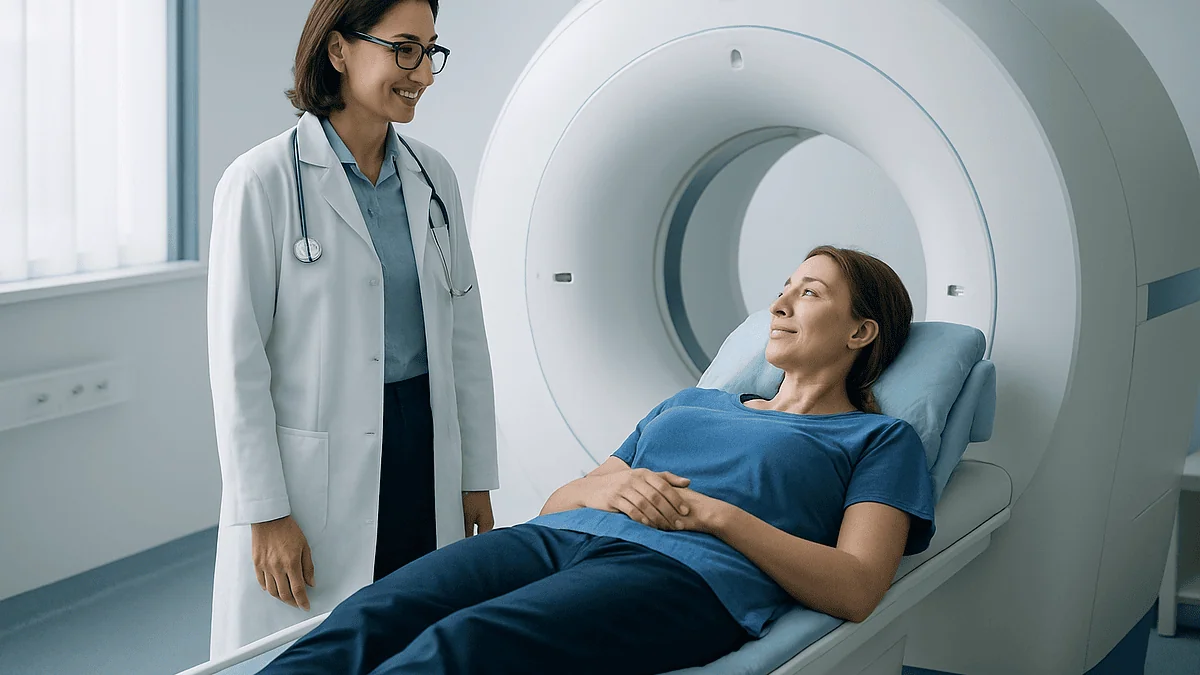
Key Takeaways
- MRI uses magnets and radio waves rather than X-rays, so a full-body scan adds zero ionizing radiation to your lifetime dose.
- Studies of whole-body MRI in healthy adults report incidental findings in roughly a third of scans, the vast majority benign but many requiring follow-up testing.
- No major US medical organization recommends whole-body MRI screening for average-risk adults, and no randomized trial has shown it extends lives in that group.
- Whole-body MRI is guideline-recommended for specific high-risk groups, such as people with Li-Fraumeni syndrome, where annual scans are standard care.
- The scan's blind spots overlap with proven screenings' strengths: small lung nodules (low-dose CT), colon polyps (colonoscopy), and breast microcalcifications (mammography).
- Consumer full-body MRIs typically cost $1,000–$2,500 out of pocket and are not covered by insurance, while guideline-backed cancer screenings usually are.
A full-body MRI scan can detect some tumors, aneurysms, cysts, and structural abnormalities without radiation, but no major medical organization recommends it for screening average-risk adults. Studies find incidental abnormalities in roughly a third of healthy people scanned, most of them harmless, which can trigger anxiety and follow-up testing. It genuinely helps certain high-risk groups, such as people with inherited cancer syndromes.
The pitch usually arrives through a podcast ad or a celebrity’s post: lie still for an hour, and a machine will read your whole body like a book, catching cancer before it whispers. Then comes the story that seals it, someone’s cousin whose scan found a kidney mass early. It’s a persuasive genre. It’s also only half the story.
Here is the half you rarely hear. Radiologists have a word for the shadows these scans turn up in healthy people: incidentalomas. Most are cysts, benign nodules, and anatomical quirks that would never have caused trouble. But once seen, they can’t be unseen, and the follow-up biopsies, repeat scans, and months of worry are real costs the ads never mention.
So let’s do what a good magazine should: weigh what a full-body MRI actually finds, what it misses, what it overcalls, and who, according to mainstream evidence rather than marketing, genuinely stands to benefit.
What is a full-body MRI scan, exactly?
Magnetic resonance imaging builds pictures of your insides using a powerful magnet and radio waves, no X-rays, no ionizing radiation. Hydrogen atoms in your tissues line up with the magnetic field, radio pulses knock them briefly out of alignment, and the energy they release as they snap back is converted into remarkably detailed images of soft tissue, according to MedlinePlus.
A standard clinical MRI targets one region: a knee, the brain, the liverbecause a doctor suspects something specific. A full-body MRI stitches together sequences from head to pelvis (sometimes to the thighs) in a single session, typically 40 to 60 minutes, usually without contrast dye. The goal isn’t to answer a question; it’s to look everywhere at once in someone who feels fine.
That distinction matters more than it sounds. Diagnostic imaging starts with a probability: your symptoms and history make certain findings likely, so anything the scan shows gets interpreted in that context. Screening a healthy body flips the math. When the odds of serious disease are low, a large share of what the scan flags will turn out to be noise. Statisticians call this the low pretest probability problem, and it’s the single most important idea for understanding both the appeal and the limits of these scans.
One more nuance: the whole-body protocols sold directly to consumers are often faster, lower-resolution versions of what a hospital would use to investigate a known problem. Covering more territory in the same hour means each organ gets a briefer, less detailed look.
What will a full-body MRI show you?
MRI is genuinely superb at soft tissue. A whole-body screening study can reveal solid masses in the brain, liver, kidneys, and pancreas; enlarged lymph nodes; some aneurysms; spinal disc degeneration and stenosis; fatty liver; ovarian and uterine abnormalities; and bone lesions. When companies publish stories of scans catching an early kidney cancer or a brain aneurysm, those cases are real: MRI can and occasionally does find serious disease in people with no symptoms.
The honest question is how often. In published research on whole-body MRI screening of asymptomatic adults, findings that ultimately proved to be serious, treatable disease turn up in a small minority of scans, typically single-digit percentages, and often lower once follow-up testing sorts true disease from false alarms. Meanwhile, findings of some kind appear on most scans, because human bodies past age 35 are full of benign variation: liver hemangiomas, thyroid nodules, renal cysts, degenerating discs.
Think of it as panning a river. Yes, there is occasionally gold. But the pan comes up full of glittering pyrite far more often, and every fleck has to be tested before you know which is which. The scan itself can’t tell you whether a 9-millimeter kidney lesion is a harmless cyst with slightly unusual features or an early cancer: that determination often requires more imaging, sometimes with contrast, sometimes a biopsy, sometimes a year of watchful waiting.
So a full-body MRI will almost certainly show you something. Whether it shows you anything that matters is a different, and much narrower, question.
What a full-body MRI quietly misses
The marketing emphasizes what MRI sees. A fair review has to spend equal time on its blind spots, because several of the deadliest common cancers live in exactly those blind spots.
- Lung cancer. Air-filled lung tissue gives a weak MRI signal, and small nodules, the kind you want to catch early, are far better seen on low-dose CT, which is the evidence-backed screening test for people with significant smoking history.
- Colon cancer. MRI cannot reliably see small polyps on the inner colon wall, and it certainly can’t remove them. Colonoscopy both finds and removes precancerous polyps in one visit; stool-based tests offer another validated route.
- Early breast cancer. Whole-body protocols lack the dedicated breast coils and technique of a proper breast MRI, and they miss the microcalcifications that mammography detects.
- Blood cancers and many early-stage tumors. Leukemia doesn’t form a mass to photograph. Very small or flat tumors, early stomach, esophageal, and cervical cancers among them, routinely evade whole-body imaging.
- Heart disease. A screening MRI is not a substitute for blood pressure checks, cholesterol testing, and cardiovascular risk assessment, which predict the events that actually kill the most Americans.
The danger here is subtle: a clean report can feel like a clean bill of health. If that reassurance leads someone to skip a colonoscopy or ignore a new symptom, “my scan was fine in March”, the scan has actively done harm. False reassurance is the quietest risk on this list, and arguably the most consequential.
The overcall problem: meet the incidentaloma
Radiologists coined “incidentaloma” decades ago, half in jest, for the abnormality found while looking for something else. Whole-body screening turns the incidentaloma from an occasional visitor into the main event.
Published studies of whole-body MRI in asymptomatic adults consistently report incidental findings in roughly 30 percent or more of participants, with some series higher, depending on how findings are counted. The overwhelming majority are benign: simple cysts in the kidney or liver, thyroid nodules (present in a large share of adults by middle age), small meningiomas, disc bulges in people with zero back pain.
Benign, however, doesn’t mean cost-free. Each indeterminate finding sets a cascade in motion: a follow-up scan in six months, perhaps a contrast study, occasionally a biopsy with its own small risks of bleeding and infection. Researchers call this the diagnostic cascade, and it carries three distinct harms: physical (procedures on healthy tissue), financial (follow-up testing that may run to thousands of dollars), and psychological. Studies of patients awaiting resolution of incidental findings document measurable anxiety that can persist even after the all-clear.
There’s also overdiagnosis in the strict sense: finding a real but indolent cancer, a slow-growing kidney or thyroid tumor, say, that would never have caused symptoms in the person’s lifetime, yet now gets treated, with all of treatment’s side effects. Autopsy studies have long shown that many people die with small cancers rather than of them. A screening tool that surfaces those cancers isn’t automatically saving lives; sometimes it’s just starting clocks that never needed to run.
Are whole-body MRIs worth it? What the evidence actually says
Here is the plainest way to put it: no major medical organization, not the American Cancer Society, not the US Preventive Services Task Force, not the American College of Radiology, recommends whole-body MRI screening for adults at average risk. The American College of Radiology has stated explicitly that there is no documented evidence that whole-body screening of asymptomatic people is cost-effective or extends life.
Why such unanimity? Because the question that matters isn’t “can this scan find things?”, it demonstrably can, but “does scanning healthy people lead to longer, healthier lives once you subtract the harms of overcalling?” Answering that requires large randomized trials tracking mortality over many years. For mammography, colonoscopy, and low-dose lung CT, those trials exist and show benefit in defined groups. For whole-body MRI in average-risk adults, they simply haven’t been done.
Absence of trial evidence isn’t proof of uselessness, and it’s fair to say the honest verdict is “unproven” rather than “worthless.” But the burden of proof sits with the intervention, especially one that costs four figures and reliably generates follow-up testing in a third of customers. Screening history offers cautionary tales: several once-promising screening approaches, when finally tested rigorously, turned out to find plenty of disease without saving lives, because they found the slow disease and missed the fast.
If you’re weighing the purchase, the evidence-first framing is this: for the average-risk adult, the same money and attention directed toward proven screenings, blood pressure control, and not smoking has a mountain of mortality data behind it. The full-body scan has anecdotes.
Who might genuinely benefit from a whole-body MRI
The honest review cuts both ways, and here the scan earns real credit: for certain high-risk groups, whole-body MRI isn’t fringe at all: it’s guideline-recommended medicine.
People with Li-Fraumeni syndrome, an inherited mutation that raises lifetime cancer risk dramatically, are advised by major cancer guidelines to undergo annual whole-body MRI, because their pretest probability of finding a real tumor is high enough that the math flips: the scan’s sensitivity becomes an asset rather than a false-alarm generator. Similar logic applies in hereditary paraganglioma-pheochromocytoma syndromes and some other genetic cancer predispositions.
Beyond screening, whole-body MRI has established diagnostic roles: staging multiple myeloma, where it outperforms older bone surveys at finding marrow lesions; evaluating suspected widespread bone metastases; and assessing certain inflammatory conditions in children, where avoiding radiation matters most.
Notice the pattern. In every legitimate use, the person scanned already has an elevated probability of disease: a known mutation, a diagnosed cancer, a clinical suspicion. The scan is answering a specific question posed by a physician, and the findings are interpreted against that backdrop.
This is why “it’s recommended for people with Li-Fraumeni” cannot be stretched into “it’s wise for everyone.” A test’s value isn’t a fixed property; it depends on who’s being tested. The same MRI that meaningfully protects someone with a 70-plus percent lifetime cancer risk mostly generates incidentalomas in a healthy 42-year-old. If you suspect your family history is unusual, multiple relatives with cancer at young ages, rare tumor types, the higher-yield first step is genetic counseling, not imaging.
Do you leave your clothes on for an MRI?
Usually not, and the reason is the magnet, not modesty. Most imaging centers ask you to change into a gown or scrubs because everyday clothing is full of surprises: metal zippers, bra underwires and clasps, rivets on jeans, and increasingly, metallic microfibers woven into athletic wear. Even small metal items can heat up, distort the images, or in rare cases be yanked toward the magnet, which runs continuously and is thousands of times stronger than a refrigerator magnet.
Some facilities allow you to keep your own clothes if they’re verifiably metal-free, plain cotton sweatpants and a T-shirt with no prints containing metallic ink, but policies vary, and for a long full-body protocol most centers default to gowns. Per NHS guidance, you’ll also remove watches, jewelry, piercings, hearing aids, dentures with metal, hairpins, and glasses. Leave anything with a magnetic strip, credit cards, hotel keys, in the locker, because the field can wipe them.
Before you enter the scanner room, a technologist will run through a safety checklist covering implants: pacemakers, cochlear implants, aneurysm clips, artificial joints, insulin pumps, retained metal fragments (a real concern for welders and veterans), and even some tattoos with metallic pigments, which can occasionally cause skin warming. Many modern implants are MRI-conditional, safe under specific scanner settings, but the center needs the exact make and model, so bring your implant card if you have one.
Practical tip: dress simply that day, skip the jewelry, and you’ll spend less time in the changing room than reading this section took.
What if I have to pee during an MRI?
It happens, it’s manageable, and you will not be trapped. Every MRI patient is given a squeeze bulb, a call button that works from inside the scanner, and the technologist can hear you through an intercom and see you throughout the exam. Squeeze it, and they’ll pause the sequence and slide you out. The tradeoff is time: sequences interrupted mid-acquisition often have to be repeated, so a bathroom break can add ten or fifteen minutes to an already long appointment.
Better to outmaneuver the problem. Use the restroom immediately before the scan, most technologists will remind you, precisely because full-body protocols run 40 to 60 minutes or longer. Go easy on coffee and tea that morning; caffeine is a mild diuretic and a bladder irritant, a double penalty when you’re strapped to a table. You don’t need to dehydrate yourself, normal sips of water are fine, just skip the venti.
A wrinkle worth knowing: some pelvic imaging protocols actually ask for a partially full bladder because it lifts and separates pelvic organs for clearer pictures. If your scan includes dedicated pelvic sequences, the center will give you specific instructions, follow theirs over any general advice, including this article’s.
If you have an overactive bladder, take a diuretic medication, or simply know your limits, tell the scheduler in advance. Centers can often sequence the exam so pelvic images come first, build in a planned break between stations, or book you for the first morning slot when you can control your fluid timing best. Nobody in the building will be surprised by the request.
What is the scan like if you're claustrophobic?
The tube is the part people dread, so let’s describe it honestly. A conventional MRI bore is roughly 60 centimeters across, about two feet, and for a full-body protocol you’ll pass through it slowly, station by station, for the better part of an hour. The machine is loud: rhythmic knocking and buzzing that can exceed 100 decibels, which is why you’ll wear earplugs or headphones, often with music. Many people find the rhythm oddly soporific and doze off. Others find the first five minutes genuinely hard.
If you’re in the second group, you have real options. Wide-bore scanners (about 70 centimeters) offer noticeably more headroom and are increasingly common. Some centers position mirrors so you can see out of the tube, or let you go in feet-first for portions of the exam. A few simple techniques carry surprising weight: closing your eyes before the table moves and keeping them closed, slow paced breathing, counting the knocking pulses, and remembering that the squeeze bulb in your hand ends the exam the moment you decide it should. Mayo Clinic notes that for significant claustrophobia, a physician can discuss options to help you relax through the exam: a conversation to have before scan day, not in the waiting room.
One honest caveat about “open” MRI machines: their more comfortable design often comes with lower magnetic field strength, which can mean less detailed images. For a screening exam whose entire value rests on image quality, that tradeoff deserves a frank conversation with the imaging center before you book.
Is a full-body MRI safe? Radiation, magnets, and contrast
Start with the good news, because it’s genuinely good: MRI uses no ionizing radiation. Unlike CT scans, an MRI adds nothing to your lifetime radiation dose, which is why it’s the preferred repeat-imaging tool for children and for people who need surveillance scans for years. On this specific point, the marketing is accurate.
The risks that do exist are specific and mostly preventable. The magnetic field is always on, and ferromagnetic objects, an overlooked hairpin, an oxygen tank wheeled in by mistake, become projectiles near the bore. This is why the screening questionnaire is exhaustive and why the technologist asks about implants twice. Certain devices, including some older pacemakers and cochlear implants, remain contraindications; many modern implants are MRI-conditional and safe under documented settings, per Cleveland Clinic. Pregnant people should tell the center; MRI without contrast is generally considered acceptable when medically needed, but elective screening is a different calculus worth discussing with your obstetric clinician.
Contrast deserves its own paragraph. Most consumer full-body screenings skip gadolinium-based contrast, which sidesteps the small risks of allergic-type reactions and the questions researchers are still studying about trace gadolinium retention in tissues. But skipping contrast also reduces the scan’s ability to characterize what it finds, contrast is often exactly what distinguishes a worrying lesion from a benign one. The result is a quiet irony: the safety choice that makes the screening easier to sell also makes its findings more ambiguous, feeding the very follow-up cascade described earlier.
Net verdict: physically, a non-contrast MRI is among the safest tests in medicine. The meaningful risks are downstream, what happens because of what it finds.
How much does a full-body MRI cost, and will insurance pay?
Plan on paying out of pocket. Elective whole-body screening in asymptomatic, average-risk adults is not covered by Medicare or by typical commercial insurance in the United States, because coverage follows medical necessity and professional guidelines, and, as covered above, no major guideline endorses it for the general population. Consumer prices commonly run from roughly $1,000 to $2,500 or more per scan, and the business model frequently encourages repeat scans every year or two, turning a purchase into a subscription.
The sticker price is only the opening bid. If your scan flags an indeterminate finding, statistically likely, the follow-up imaging, specialist visits, and possible biopsy enter the ordinary healthcare system, where they’ll be billed to your insurance as diagnostic workup. Deductibles and coinsurance apply, so a $1,500 scan can quietly become a $4,000 season. It’s fair to note the mirror-image possibility: in the uncommon case where the scan finds real, early, treatable disease, the economics can look very different. But budgeting on the likely outcome, not the lottery outcome, is the sober approach.
Two comparisons put the number in perspective. First, the screenings with proven mortality benefit, mammography, colonoscopy, cervical screening, low-dose lung CT for eligible smokers, are covered by most insurance plans at no out-of-pocket cost as preventive care. Second, $1,500 annually buys a lot of the unglamorous interventions with the strongest evidence: a gym membership, a blood pressure cuff, better food. If the motivation behind the scan is “I want to invest in my health,” it’s worth asking whether this is the highest-yield place for the money, or merely the most technological.
How does a full-body MRI compare with proven screening tests?
The clearest way to see the gap between marketing and evidence is side by side. Every test in this table except the full-body MRI is backed by randomized trials or decades of outcome data and is recommended by major US guidelines for the groups listed.
| Test | What it screens for | Who it’s recommended for | Evidence status |
|---|---|---|---|
| Mammography | Breast cancer | Women, generally starting at 40 | Proven mortality benefit; guideline-recommended |
| Colonoscopy / stool tests | Colorectal cancer and precancerous polyps | Adults 45–75 | Proven benefit; can prevent cancer, not just detect it |
| Low-dose CT | Lung cancer | Adults 50–80 with significant smoking history | Proven mortality benefit in trials |
| Pap / HPV testing | Cervical cancer | Women 21–65 | Proven; among screening’s biggest success stories |
| Blood pressure & cholesterol checks | Cardiovascular risk | Essentially all adults | Proven; targets the leading cause of death |
| Full-body MRI | Broad structural abnormalities | Specific high-risk genetic syndromes only | Unproven for average-risk screening; no guideline support |
Notice what the proven tests share: each targets one disease, in a defined age and risk group, with a method tuned to that disease’s biology, and each was validated by tracking whether screened people actually lived longer. The full-body MRI inverts every one of those principles: all diseases, all comers, one generic method, no outcome trials. That inversion is precisely what makes it feel comprehensive and what makes it, by screening science’s standards, unvalidated. Completing the boring list on the left does far more for your odds than anything the scanner can offer.
Questions to ask before you book a full-body MRI
If you’ve weighed the evidence and still want the scan, a defensible choice for an informed adult spending their own money, go in as a sharp consumer. The quality gap between imaging operations is wide, and these questions expose it quickly.
- Who reads the scan? Ask whether a board-certified radiologist interprets every study, whether subspecialists (neuroradiology, body imaging) review relevant sections, and whether AI-generated findings are always checked by a human.
- What’s the magnet strength and protocol time? A 3-Tesla scanner with a 60-minute protocol sees more than a rushed 30-minute pass. Shorter and cheaper usually means lower resolution.
- What happens after a finding? Will a physician explain results to you, or do you receive a report and a goodbye? Who coordinates follow-up, and do they help transfer images to your own doctor?
- What’s the incidental-finding rate at this center, and what fraction lead to biopsies? A center that tracks and shares these numbers takes overcalling seriously. One that can’t answer is telling you something too.
- What does the scan explicitly not cover? Get the blind-spot list, lungs, colon, breast detail, heart risk, in writing, so a clean report can’t lull you into skipping proven screenings.
One firm piece of advice: loop in your primary care clinician before, not after. A doctor who knows your history can pre-plan how an ambiguous finding will be handled, sparing you the 2 a.m. search spiral between the results email and your next appointment. The scan is optional; the interpretation infrastructure around it shouldn’t be.
When to see a doctor instead of booking a scan
A screening scan is, by definition, for people without symptoms. If something specific is driving your worry, you don’t need a $2,000 fishing expedition: you need a medical evaluation, where targeted testing will answer your actual question faster, more accurately, and usually with insurance coverage.
See a doctor promptly, rather than booking imaging on your own, if you have any of the following:
- Unintentional weight loss (roughly 10 pounds or more without trying)
- A new lump anywhere, or a mole that’s changing in size, shape, or color
- Blood in urine or stool, or unexplained persistent bleeding of any kind
- A persistent cough, hoarseness, or difficulty swallowing lasting more than a few weeks
- Night sweats that soak bedding, recurring fevers, or profound fatigue that doesn’t lift
- New, persistent pain, especially headache, back, bone, or abdominal pain that wakes you at night
- Changes in bowel or bladder habits lasting more than a few weeks
Seek emergency care immediately for sudden severe headache, chest pain or pressure, sudden weakness or numbness on one side, trouble speaking, or sudden vision loss: these minutes-matter symptoms are evaluated in an ER, not scheduled at an imaging boutique.
There’s also a quieter category: health anxiety itself. If worry about undetected disease occupies your thoughts most days, a full-body MRI is a poor treatment, research on incidental findings suggests scans often feed the anxiety loop rather than closing it, since “indeterminate, recheck in six months” is the modal result. A candid conversation with a primary care clinician, and sometimes a therapist, addresses the actual condition. That’s not a consolation prize; for this problem, it’s the evidence-based intervention.
Frequently asked questions
Are whole-body MRIs worth it?
For average-risk adults, the evidence says no, no major medical organization recommends them, and no trial has shown they extend lives. They find incidental abnormalities in roughly a third of healthy people, most harmless, triggering follow-up tests and anxiety. They are worthwhile for specific high-risk groups, such as people with inherited cancer syndromes like Li-Fraumeni, where guidelines recommend annual whole-body MRI. For everyone else, proven screenings deliver far more benefit per dollar.
What will a full-body MRI show you?
It can reveal solid tumors in soft-tissue organs like the brain, liver, and kidneys, plus some aneurysms, cysts, enlarged lymph nodes, spinal degeneration, and bone lesions. It cannot reliably detect small lung nodules, colon polyps, early breast cancer, blood cancers, or heart disease risk. In practice, most scans of healthy adults show benign findings, cysts, nodules, disc bulges, rather than serious disease, and distinguishing the two often requires additional testing.
Do you leave your clothes on for an MRI?
Usually you change into a gown, because everyday clothing often contains metal, zippers, underwires, rivets, even metallic microfibers in athletic wear, that can heat up or distort images in the strong magnetic field. You’ll also remove jewelry, watches, hairpins, piercings, and anything with a magnetic strip. Some centers permit verifiably metal-free clothing like plain cotton sweatpants, but policies vary, so ask when you book and dress simply that day.
What if I have to pee during an MRI?
Squeeze the call bulb placed in your hand and the technologist will pause the scan and slide you out: you’re never trapped. It does cost time, since interrupted sequences often need repeating. Prevention works better: use the restroom right before the exam, limit coffee and tea that morning, and tell the scheduler in advance if you have bladder concerns so they can sequence the scan or plan a break.
How long does a full-body MRI take?
Typically 40 to 60 minutes inside the scanner, sometimes longer depending on the protocol and how many body regions and sequences are included. Add time for check-in, the safety questionnaire, and changing into a gown, so plan on roughly 90 minutes at the facility. Faster, cheaper protocols exist, but shorter scan times generally mean lower-resolution images: a meaningful tradeoff when the entire purpose is spotting subtle abnormalities.
Does a full-body MRI use radiation?
No. MRI creates images with a strong magnetic field and radio waves, not X-rays, so it adds no ionizing radiation whatsoever: a genuine advantage over CT scans. The safety considerations are different: metal objects and certain implants can be hazardous near the magnet, which is why screening questionnaires are thorough. Most consumer full-body screenings also skip contrast dye, avoiding its small risks, though that makes ambiguous findings harder to characterize.
Can a full-body MRI detect all cancers?
No, and this is its most important limitation. It performs poorly for lung cancer (low-dose CT is better), cannot see small colon polyps (colonoscopy’s territory), misses the microcalcifications of early breast cancer (mammography’s strength), and cannot detect blood cancers like leukemia, which form no mass. Very small or flat tumors also routinely evade it. A clean full-body MRI is not a clean bill of health and never replaces guideline-recommended screenings.
How much does a full-body MRI cost, and does insurance cover it?
Consumer full-body screening scans typically cost $1,000 to $2,500 or more, paid entirely out of pocket, because insurers and Medicare don’t cover screening that medical guidelines don’t recommend. Budget beyond the sticker price: if the scan flags an indeterminate finding, statistically common, follow-up imaging, specialist visits, and possible biopsies generate additional bills subject to your deductible. By contrast, proven screenings like mammography and colonoscopy are usually covered as preventive care.
Who should actually consider a whole-body MRI?
People with certain inherited cancer syndromes, most notably Li-Fraumeni syndrome, for whom major guidelines recommend annual whole-body MRI because their high baseline risk makes the scan’s math favorable. It also has established diagnostic roles in staging multiple myeloma and evaluating suspected bone metastases. If your family history includes multiple relatives with cancer at young ages or rare tumors, the smarter first step is genetic counseling to determine whether you belong in a high-risk category.
What happens if a full-body MRI finds something?
Usually a cascade of follow-up: additional targeted imaging, often with contrast, sometimes a specialist referral, occasionally a biopsy, or a plan to rescan in several months and watch for change. Most flagged findings prove benign, cysts, nodules, anatomical variants, but resolving the uncertainty can take months and cost thousands, and studies document real anxiety during the wait. Before booking, ask the center exactly how findings are communicated and who coordinates your follow-up care.
References
- MRI Scans: MedlinePlus, National Library of Medicine
- MRI Scan: NHS
- Magnetic Resonance Imaging (MRI): Cleveland Clinic
This article is for general information only and is not a substitute for professional medical advice. Please consult a qualified doctor about your individual situation.

More from the Blog
What a CT Scan Shows, and Why Doctors Order One
A CT scan shows detailed cross-sectional images of bones, organs, blood vessels and soft tissue by combining many X-ray views into slices. Doctors most…
Can an Ultrasound Detect Cancer? What It Can Show, Its Limits and the Next Steps
An ultrasound can detect abnormal lumps, masses and changes in organs that may be cancer, and it is especially good at telling a fluid-filled…
What a PET-CT Scan Shows That a CT Alone Cannot: Metabolic Activity in Cancer Staging
A PET-CT scan shows how actively tissues are using energy, mapped onto a detailed anatomical picture. The PET part tracks a mildly radioactive sugar…
When Does a Brain Lesion Need a Stereotactic Biopsy Instead of Open Surgery?
A brain lesion is usually sampled with a stereotactic needle biopsy when the tissue diagnosis will change treatment but removing the lesion is not…

Stereotactic Brain Biopsy Step by Step: Planning Scans, Coordinates and the Needle Path
A stereotactic brain biopsy uses a detailed MRI or CT scan, a three-dimensional coordinate system and a thin needle to remove a tiny sample…
What Happens During an EMG Test? Nerve Conduction Study, Needle Electrodes and Timing
During an EMG test, a clinician first performs a nerve conduction study, placing sticky surface electrodes on the skin and delivering brief electrical pulses…