

Gallbladder Surgery Recovery Milestones: Walking, Light Meals, Driving and Going Back to Work

Key Takeaways
- Keyhole gallbladder removal usually means going home the same day or next morning, while open surgery typically involves a three-to-five-day stay (NHS).
- Walking starts within hours of surgery because moving the calf muscles is the simplest way to reduce blood-clot risk and helps the bowel restart.
- Shoulder-tip pain after keyhole surgery is referred pain from carbon dioxide gas irritating the diaphragm and usually fades within a few days.
- Driving is generally considered after about a week, only once you are off opioid painkillers and can perform an emergency stop without pain (NHS, MedlinePlus).
- Desk workers commonly return in one to two weeks after keyhole surgery, but lifting more than roughly 10 to 15 pounds should wait until the surgeon clears it to protect the port-site wounds.
- No special long-term diet is required after gallbladder removal; a gentle low-fat start simply helps the gut adapt to bile arriving in a steady trickle rather than a pulse.
After keyhole (laparoscopic) gallbladder removal, most people walk within hours, eat light meals the same or next day, drive after about a week once they can do an emergency stop and are off sedating painkillers, and return to desk work in one to two weeks. Open surgery typically means a longer stay and six to eight weeks of recovery. Your surgical team sets your personal timeline.
The first thing many people notice when they get home from gallbladder surgery is the staircase. Yesterday it was furniture. Today it is a decision. Do you take it now, slowly, hand on the rail, or wait until the soreness under your ribs eases? The discharge sheet says to keep moving. Your body is voting for the sofa.
That small standoff is really the whole gallbladder surgery recovery timeline in miniature: a series of ordinary acts, walking, eating, driving, going back to work, each of which needs a sensible moment to restart. Get the timing roughly right and recovery tends to feel like a steady climb. Rush it, or freeze, and the week drags.
What follows lays out the typical ranges from mainstream surgical guidance, explains why each milestone lands where it does, and is honest about where the evidence thins out. It is not a schedule to hold yourself to. Your treating team knows what they saw inside and what they closed; their instructions override any general article, including this one.
What actually happens during laparoscopic gallbladder removal
A cholecystectomy is the surgical removal of the gallbladder, the small pear-shaped pouch tucked under the liver that stores bile. Bile is the digestive fluid the liver makes to help break down fat. The gallbladder does not produce it; it holds and concentrates it, then squeezes it into the small intestine after a meal. Take the pouch away and the liver simply drips bile into the gut continuously instead.
Most operations today are laparoscopic, often called keyhole surgery. Under general anesthesia, the surgeon makes a few small cuts in the abdomen, usually four, each roughly the width of a fingertip. Carbon dioxide gas is pumped in to lift the abdominal wall away from the organs, creating room to work. A thin camera goes through one port and slim instruments through the others. The surgeon frees the gallbladder from the liver, places clips across the cystic duct and cystic artery, the tube and vessel feeding the gallbladder, then lifts the whole organ out through one of the incisions. According to the Mayo Clinic, the operation usually takes one to two hours.
Sometimes the surgeon cannot see the anatomy safely through the camera, perhaps because of scarring or heavy inflammation, and converts to an open operation through a single larger cut below the right ribs. This is a safety decision, not a failure. Bile duct injury, where the main duct carrying bile to the intestine is damaged, is the complication surgeons work hardest to avoid, and the Mayo Clinic describes it as rare.
Why does this matter for recovery? Because almost every milestone that follows is really about two things: how much the abdominal wall was disturbed, and how much gas and anesthesia your body has to clear. Keyhole disturbs less of both, which is why its timeline is shorter.
Gallbladder surgery recovery timeline at a glance
The ranges below come from published patient guidance rather than promises. Individual surgeons adjust them for age, other health conditions, how inflamed the gallbladder was, and what they found. Treat the table as a map, not a contract.
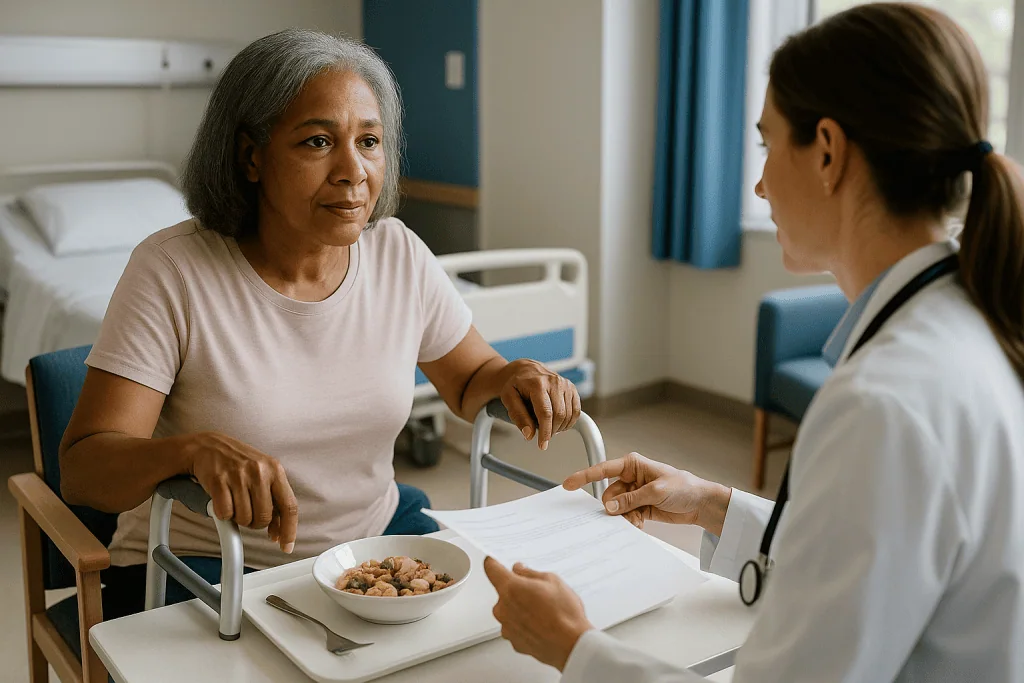
| Milestone | Laparoscopic (keyhole) | Open surgery | Source |
|---|---|---|---|
| Leaving hospital | Same day or next morning | Usually 3 to 5 days | NHS |
| First walk | Within hours of waking | Usually within the first day, with help | MedlinePlus |
| Light meals | Same day or next day | As bowel function returns, often within a day or two | Mayo Clinic |
| Showering | About 1 to 2 days after surgery unless told otherwise | Per surgical team | MedlinePlus |
| Driving | About a week, once off sedating painkillers and able to do an emergency stop | Later, when the wound allows a hard brake and seatbelt | NHS |
| Desk work | About 1 to 2 weeks | Several weeks | NHS |
| Heavy lifting | Avoid more than about 10 to 15 pounds until cleared | Longer restriction, set by surgeon | MedlinePlus |
| Back to normal activity | About 2 weeks | About 6 to 8 weeks | NHS |
Two patterns stand out. First, the early milestones, walking, sips, light food, arrive fast regardless of approach, because they depend on the anesthesia wearing off rather than the wound healing. Second, the late milestones, driving, lifting, full work, stretch out with an open incision because a long cut through abdominal muscle needs weeks to regain strength, while four small punctures need days.
The Mayo Clinic gives a slightly brisker estimate for keyhole surgery, describing many people as back to normal within about a week. The gap between one week and two is not a contradiction; it reflects the spread between a healthy adult with a planned operation and someone whose gallbladder was acutely inflamed when it came out.
Who is usually offered gallbladder removal, and who is usually asked to wait
Surgery is typically offered when gallstones are causing trouble. That means biliary colic, the cramping upper-abdominal pain that arrives after meals when a stone blocks the gallbladder outlet, or cholecystitis, inflammation of the gallbladder wall, often with fever. It is also commonly recommended after gallstone pancreatitis, inflammation of the pancreas triggered by a stone lodging in the shared duct, and for some gallbladder polyps or a gallbladder that has stopped functioning.
Silent stones are a different story. The Mayo Clinic notes that gallstones that cause no symptoms usually do not need treatment at all. Many people carry them for life without knowing. Removing a healthy gallbladder because a scan happened to show stones is not standard practice, and the treating team weighs the small but real risks of any operation against the likelihood that symptoms ever appear.
Who is asked to wait, or offered something else first?
- People who are acutely unwell with severe infection may be stabilised with intravenous fluids and antibiotics before an operation, or, if too frail for anesthesia, may have a drainage tube placed through the skin into the gallbladder (a cholecystostomy) as a bridge.
- Someone with a stone stuck in the main bile duct may first need an endoscopic procedure called ERCP, in which a flexible scope passed through the mouth clears the duct, with gallbladder removal following.
- Pregnancy, uncontrolled heart or lung disease, and recent blood-thinner changes can all shift the timing.
None of these is a permanent no. They are sequencing decisions. The alternative to surgery for symptomatic stones, watchful waiting with a low-fat diet, is a legitimate choice for some people, particularly those with rare, mild attacks, but stones do not dissolve on their own in most cases and attacks may recur. Which path fits your situation is a conversation to have with your surgeon, not a conclusion to reach from an article.
What is the hardest day after gallbladder surgery? Usually the first 48 hours
Ask a room of people who have had keyhole gallbladder surgery which day was worst, and most will point to the first evening or the morning after. The pattern has a clear logic. Anesthetic drugs wear off within hours, and with them the numbness. The carbon dioxide used to inflate the abdomen has not yet been fully absorbed, so the belly feels bloated and tight. Some of that gas irritates the diaphragm, which shares a nerve pathway with the shoulder, producing an ache at the tip of the shoulder that seems to have nothing to do with the operation. The breathing tube can leave a scratchy throat. Nausea from anesthesia is common on day one.
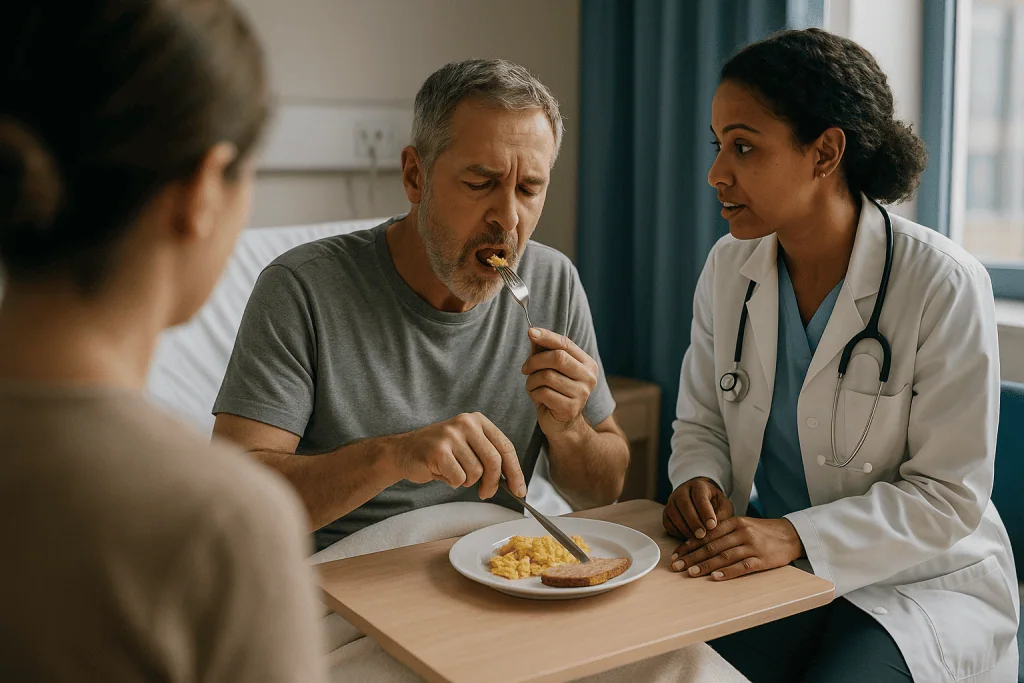
Cleveland Clinic guidance describes this early soreness and bloating as expected and short-lived. By the second or third day, people typically notice a shift: the gas pain fades as the body absorbs the carbon dioxide, appetite returns, and walking becomes easier than lying still.
A few things make the first two days more manageable, none of them dramatic:
- Take pain relief on the schedule your team set rather than waiting for pain to peak; it is easier to keep discomfort low than to bring it down.
- Get up and move for a few minutes every hour or two while awake. Movement helps the gut restart and helps disperse trapped gas.
- Sleep propped up on pillows if lying flat pulls on the incisions.
- Keep meals small and bland; a full stomach pressing on a sore abdomen is uncomfortable.
What the first 48 hours should not feel like is a steady worsening. Pain that climbs rather than plateaus, a rising temperature, or repeated vomiting are not part of the normal curve and belong in the red-flag section later in this article.
Walking after gallbladder surgery: why the first lap matters more than the distance
Walking is the first milestone on the gallbladder surgery recovery timeline and the one with the strongest rationale behind it. Lying still after any operation slows blood flow in the leg veins, and sluggish blood is more prone to clotting. A clot that forms in the calf, a deep vein thrombosis, can travel to the lungs. Moving the calf muscles pumps blood upward and is the simplest clot-prevention measure there is. Walking also encourages deeper breathing, which helps re-expand the lower parts of the lungs that anesthesia and shallow breathing let sag, and it nudges the bowel back into rhythm after the gas and drugs put it to sleep.
MedlinePlus discharge guidance for laparoscopic gallbladder removal advises walking several times a day and gradually increasing how far you go. The first laps are short: to the bathroom, along the ward, around the kitchen. Nobody is timing you. What matters is frequency, a few minutes every waking hour or two, more than distance.
Over the first week, most people build naturally from indoor loops to a walk around the block. Gentle walking is also the safest form of exercise while the incisions knit, because it does not load the abdominal wall the way lifting, twisting or sit-ups do. The NHS advises avoiding strenuous activity for around two weeks after keyhole surgery; walking does not count as strenuous.
Two practical notes. Stand up in stages, sitting on the edge of the bed for a moment before rising, because anesthesia and pain medicine can drop blood pressure briefly and make you light-headed. And if you have been given compression stockings or a short course of an injectable anticoagulant, a blood-thinning medicine that reduces clot risk, use them as instructed even though you are walking; the two measures are complementary, not alternatives.
Diet after gallbladder removal: light meals in the first week
Once you are awake and not nauseated, drinking comes first, usually water or clear fluids within hours. Solid food follows the same day or the next, depending on how your stomach feels. There is no strict medical diet you must follow, but there is a practical one.
The reason has to do with bile flow. With the gallbladder gone, bile no longer arrives in a concentrated pulse when you eat a fatty meal; it trickles into the intestine steadily. Fat digestion still works, but a large greasy plate can outrun the supply and leave you bloated or with loose stools. The Mayo Clinic and NHS both note that most people can eventually eat normally, while a gentler start helps.
In the first days, people tend to do well with:
- Small portions eaten more often rather than three large meals.
- Plain, lower-fat choices: toast, rice, oatmeal, bananas, poached or grilled chicken or fish, cooked vegetables, yogurt.
- Plenty of fluids, particularly if stools are loose.
Foods that commonly provoke symptoms early are fried or heavily processed dishes, rich desserts, very spicy meals, and large amounts of caffeine or alcohol. Fiber is worth reintroducing gradually rather than all at once; a sudden switch to a high-fiber diet on a sensitive gut can increase bloating before it settles things.
Over the following weeks, most people widen their diet back toward what they ate before, testing one richer food at a time. The NHS states that you do not need to follow a special diet long term after gallbladder removal. A minority find that particular fatty foods continue to trigger loose stools and choose to limit them; that is a personal adjustment, not a medical restriction. If bowel changes persist beyond a few weeks, mention it at follow-up rather than assuming it is permanent, because there are treatable causes.
When can I drive after gallbladder surgery?
The NHS puts driving after keyhole gallbladder removal at about a week for most people, with an important qualification: you should be able to wear a seatbelt comfortably and perform an emergency stop without hesitating because of pain. Both matter. A belt sits across the upper abdomen, near the incisions, and a hard brake demands a sudden brace of the core muscles. If either would make you flinch, you are not ready, whatever the calendar says.
There is a second, non-negotiable condition. MedlinePlus discharge guidance is explicit that you should not drive while taking opioid pain medicine, the class of stronger painkillers that act on receptors in the brain and can slow reaction time and judgment. Many people are off these within a few days; some never needed them. Until you have gone at least a full day without a dose and feel clear-headed, the wheel is off limits.
Practical points people often overlook:
- Check with your insurer. Some policies require that you are medically fit to drive, and a surgeon’s advice can be part of that judgment.
- Start with a short, familiar route in daylight.
- Fatigue after surgery is real and can hit mid-journey; plan for a passenger on the first trips if you can.
- You will need someone else to drive you home from hospital regardless, and most teams ask that an adult stays with you the first night.
After open surgery, driving comes later, often several weeks, because the larger incision under the ribs takes longer to tolerate a belt and a sharp brake. Your surgeon will give a specific steer at follow-up. Whatever the approach, the honest test is not a date but a question: could you stop this car hard, right now, without thinking about your abdomen?
How many days should I rest for gallbladder surgery, and when can I go back to work?
The word rest is doing two jobs here, and separating them clears up most confusion. Rest from bed-bound recovery lasts hours, not days; you should be up and moving from the first afternoon. Rest from work and heavy exertion lasts longer and depends on what your work involves.
For keyhole surgery, the NHS advises that most people can return to normal activities, including work, in about two weeks, and MedlinePlus notes that people with desk jobs often go back within about a week. The Mayo Clinic frames the same range from the other end: a week or so to feel largely back to normal. If your job involves sitting, phone calls and a screen, a return between one and two weeks is typical, and many people find a half-day or work-from-home start easier than a full commute on day one.
Physical jobs are different. MedlinePlus advises avoiding lifting anything heavier than roughly 10 to 15 pounds, about the weight of a full grocery bag or a small toddler, until your surgeon clears you. The concern is not the skin, which seals within days, but the deeper layers of the abdominal wall at each port site, particularly the one at the navel where the gallbladder came out. Straining before those layers strengthen raises the chance of a hernia, a weak spot where tissue can bulge through. Jobs involving lifting, repeated bending, ladders or long shifts on your feet often need a phased return over several weeks, and the timing belongs with your surgeon, not your manager.
Two things surprise people. Tiredness outlasts pain; a full day can feel long even when nothing hurts. And concentration dips for a week or so after general anesthesia, which is worth factoring in if your work involves fine judgment. Neither means anything has gone wrong.
Wound care, showering and that odd pain in your shoulder
Keyhole incisions are usually closed with dissolvable stitches under the skin, surgical glue, or small adhesive strips, sometimes with a light dressing on top. They need less fuss than most people expect. MedlinePlus discharge guidance allows showering about one to two days after surgery unless your team says otherwise; let water run over the sites, pat them dry, and avoid rubbing. Baths, pools and hot tubs are a different matter, because soaking softens healing skin and lets water pool in the navel wound; most teams ask you to wait until the incisions are fully sealed.
Dressings, if present, generally come off within a few days, and adhesive strips are left to peel away on their own. Some bruising around each port site is normal, as is mild redness immediately at the edges. What is not normal is spreading redness, increasing warmth, thick discharge or a wound edge that gapes; those signs appear in the red-flag section below.
Then there is the shoulder. A surprising number of people wake from gallbladder surgery with an ache at the tip of one shoulder, usually the right, and wonder whether they were positioned awkwardly. The cause is the carbon dioxide gas. Cleveland Clinic guidance explains that leftover gas irritates the underside of the diaphragm, the sheet of muscle beneath the lungs, and the diaphragm shares its nerve supply with the shoulder, so the brain reads the signal as shoulder pain. It typically fades over a few days as the body absorbs the gas. Walking, gentle position changes and warmth over the shoulder tend to help; it does not respond to shoulder stretches because the shoulder is not the problem.
Scars from keyhole surgery are small and usually fade to faint lines over months. Sun protection on the scars during the first year helps them fade rather than darken.
Pain relief after gallbladder surgery: what the medicines do and how long people usually need them
Most people leave hospital with a short plan for pain relief, and understanding how the pieces work makes it easier to follow. Simple analgesics such as acetaminophen (paracetamol) act centrally to dampen pain signals and are usually the foundation, taken regularly for the first few days. Non-steroidal anti-inflammatory drugs, the class that includes ibuprofen, reduce the inflammatory chemicals released by disturbed tissue; they are often added when kidneys, stomach and blood pressure allow, and your team will say whether they are suitable for you. Opioids, a class of stronger painkillers, are sometimes supplied in small quantity for the first day or two for pain that breaks through, at the cost of drowsiness, nausea and constipation.
How long? The typical pattern after keyhole surgery is that pain is most noticeable for two to three days, then subsides to a soreness that responds to simple analgesics alone, and most people need little or nothing by the end of the first week. That matches the NHS description of a recovery measured in days to about two weeks. Open surgery follows a longer arc.
A few points that matter:
- Regular timing in the first days works better than chasing pain once it is severe.
- Opioids and driving do not mix, as covered above, and opioids slow the bowel; fluids, fiber and walking counter the constipation, and some teams add a gentle laxative.
- Pain that increases after day three, rather than easing, is a reason to call, not to add more tablets.
Whatever you were prescribed, the decision to change, stop early or extend a medicine belongs with the prescribing clinician. If you are on other regular medicines, particularly blood thinners, diabetes medicines or anything for blood pressure, ask specifically when to restart them; the answer is often the day you get home, but it should come from your team.
Do you lose weight after having your gallbladder removed? Bowel changes explained
The short answer is that removing the gallbladder does not, in itself, cause weight loss. Bile production is unchanged, fat absorption is largely unchanged, and calories are handled as before. What people often notice in the first week or two is a modest dip on the scale, and that has ordinary explanations: a smaller appetite after anesthesia, cautious low-fat eating, and less fluid retention as the body recovers. It usually reverses as eating normalises.
The longer-term picture is murkier and worth stating honestly. Some observational studies have reported weight gain in the years after gallbladder removal, but these studies cannot separate the effect of the operation from the effect of finally being able to eat rich food without triggering an attack. The evidence is not strong enough to say the surgery changes metabolism. If weight matters to you, the same principles apply after surgery as before, and there is no gallbladder-specific diet that makes a difference.
Bowel changes are the more common conversation. Because bile now trickles steadily into the intestine rather than arriving in a pulse, a proportion of people notice looser or more frequent stools, especially after fatty meals, in the first weeks. The Mayo Clinic describes long-term digestive problems after cholecystectomy as uncommon, and for most people the gut adapts. When loose stools persist for months, the culprit can be bile acid malabsorption, in which excess bile reaching the large bowel draws in water; this is identifiable and treatable, so it is worth raising at follow-up rather than tolerating.
Constipation is the opposite early complaint and is usually driven by opioid painkillers, reduced movement and less fiber. Walking, fluids and a gradual return to fruit, vegetables and whole grains typically resolve it. Persistent constipation with bloating and vomiting, however, is a red flag, not a diet problem.
Why the gallbladder surgery recovery timeline is longer after open surgery
Open cholecystectomy is less common than it once was but remains the right choice in particular situations: when scarring or severe inflammation makes keyhole views unsafe, when the surgeon converts mid-operation, or when other surgery is happening at the same time. The gallbladder surgery recovery timeline that follows is measured in weeks rather than days, and the reasons are mechanical.
The incision runs several inches below the right ribs and passes through skin, fat and the layered muscles of the abdominal wall. Those muscles are involved in almost everything: sitting up, coughing, laughing, rolling over in bed, reaching a shelf. Every one of those movements tugs on a healing wound in a way that four small punctures simply do not. The NHS describes a typical hospital stay of three to five days and a return to normal activities in about six to eight weeks; the Mayo Clinic gives a similar range of four to six weeks.
What that looks like in practice:
- Walking still begins in the first day, usually with a nurse or physiotherapist alongside, and remains the core of recovery.
- Coughing and deep breathing are actively encouraged to protect the lungs; holding a folded towel or pillow firmly against the wound (splinting) makes both far more comfortable.
- A drain, a thin tube from the wound to a bag, is sometimes left for a day or two and removed on the ward.
- Driving, lifting and physical work resume later, often several weeks in, and the surgeon sets each step at follow-up.
Scars are longer and take a year or more to fade fully. Numbness or tingling along the scar is common and reflects small skin nerves that were cut; it often improves slowly and is rarely a problem. If you were expecting keyhole surgery and woke to an open wound, ask your surgeon to explain what they found; understanding the reason usually makes the longer road easier to accept.
What people often get wrong about recovering from gallbladder removal
Recovery advice travels by word of mouth, and some of what travels is out of date or simply wrong. Here are the corrections that matter most.
Rest means staying in bed. It does not. Prolonged lying still after surgery raises the risk of blood clots and chest infections, and guidance from MedlinePlus explicitly calls for walking several times a day from the start. The body heals better upright and moving.
You will need a low-fat diet for life. The NHS is clear that no special long-term diet is required. A gentle start helps the gut adapt; after that, most people eat what they ate before. A minority choose to limit particular rich foods that upset them, which is a preference, not a prescription.
Any pain means something has gone wrong. Soreness at the incisions, bloating and shoulder-tip ache are expected in the first days. The signal to worry about is the trajectory: pain that worsens after the first few days, or pain paired with fever, vomiting or jaundice.
Loose stools after surgery are permanent. For most people they settle within weeks as bile flow adapts. When they do not, there is a recognised, treatable cause to look for.
Gallstones can come back. Stones cannot re-form in a gallbladder that is no longer there. Rarely, a stone left behind in the bile duct can cause symptoms later, which is one reason new pain, jaundice or fever after recovery deserve prompt attention.
Everyone gains weight afterwards. The evidence for a direct effect of the operation on weight is weak and confounded by changes in eating once attacks stop. The gallbladder is not a metabolic organ.
Once the wounds are closed, lifting is fine. Skin seals in days; the deeper abdominal layers take weeks. The lifting limit exists to prevent hernias at the port sites and should be lifted by your surgeon, not by how the scars look.
Questions to ask your care team before you go home
Discharge conversations are short and happen when you are tired. Writing questions down beforehand, or handing the list to whoever is collecting you, means the answers actually get heard. These are the ones that shape the weeks ahead.
- Was my operation keyhole throughout, or was any part done open? What did you find, and does it change my recovery?
- How were the incisions closed, and do any stitches or dressings need removing? When can I shower, and when can I bathe or swim?
- Which pain medicines am I going home with, how long do you expect I will need them, and which of my regular medicines should I restart, and when?
- Is there anything I should take or wear to reduce clot risk, and for how long?
- What is my personal lifting limit, and for how many weeks? When can I resume my specific job or sport?
- When do you consider it safe for me to drive, and is there anything I should tell my insurer?
- What bowel changes are normal for me, and at what point should I report loose stools or constipation?
- Are there any foods you would like me to avoid in the first weeks, or is a gradual return to normal eating fine?
- Will I have a follow-up appointment, and who do I call in the meantime, including out of hours?
- Were there any incidental findings, for example on the pathology of the gallbladder, that I should know about or that will be discussed later?
- Is there a hernia risk at the navel wound that I should watch for, and what would that look like?
One more, often skipped: who is the named contact if something feels wrong at 2 a.m.? Knowing the number before you need it is worth more than any pamphlet. If the answers you get are vague, it is reasonable to ask again; you are not being difficult, you are being a good custodian of your own recovery.
When to call your doctor
Most recoveries follow the arc described above: worst on the first day or two, then steadily better. The signs below break that pattern and should prompt a call to your surgical team or, where indicated, emergency services. Guidance from MedlinePlus, the Mayo Clinic and the NHS converges on the same list.
Seek emergency care without delay if you have:
- Chest pain, sudden breathlessness, or coughing up blood, which can indicate a clot that has travelled to the lungs.
- Severe abdominal pain that is escalating rather than easing, especially with a rigid or very tender belly.
- Fainting, confusion, or a racing heartbeat with fever.
Call your surgical team the same day if you notice:
- A temperature above 100.4°F (38°C), or chills and shaking.
- Yellowing of the skin or the whites of the eyes (jaundice), dark urine or pale, clay-coloured stools, which can signal a problem with bile flow such as a leak or a retained duct stone.
- Repeated vomiting or an inability to keep fluids down.
- Spreading redness, increasing warmth or swelling around an incision, thick or foul-smelling discharge, or a wound that opens.
- Swelling, pain or tenderness in one calf or thigh, a possible deep vein thrombosis.
- No bowel movement and no passing of gas several days after surgery, together with bloating and nausea.
- Bleeding from a wound that does not stop with gentle pressure.
- Pain that is not controlled by the medicines you were given, or that is getting worse after the third day.
None of these signs diagnoses anything on its own; several have benign explanations. The point of calling is to let people who know your operation decide, quickly, whether you need to be seen. A recovery that has been going well for a week and then changes direction, new pain, new fever, new jaundice, deserves the same prompt call as a problem on day one.
Frequently asked questions
What is the hardest day after gallbladder surgery?
For most people the first evening or the morning after surgery is the low point. Anesthesia has worn off, carbon dioxide gas is still bloating the abdomen and irritating the diaphragm, and nausea from the anesthetic is common. By the second or third day the gas is absorbed, appetite returns, and walking becomes easier. Pain that climbs after day three, rather than easing, is not part of this pattern and warrants a call to your team.
How many days should I rest for gallbladder surgery?
Bed rest is measured in hours, not days; you should be walking short distances the same day. Rest from work is different: after keyhole surgery the NHS suggests about one to two weeks before normal activities, and desk workers often return within a week. Physically demanding jobs need longer, with heavy lifting restricted until your surgeon clears it. Open surgery typically involves six to eight weeks of recovery.
Do you lose weight after having your gallbladder removed?
Not as a direct effect of the operation. Bile production and fat absorption are largely unchanged, so calories are handled as before. Any early dip on the scale usually reflects reduced appetite and cautious eating after anesthesia and reverses as meals normalise. Some observational studies report later weight gain, but they cannot separate the surgery from the fact that people can finally eat rich food without triggering an attack, so the evidence is weak.
What are the do's and don'ts after gallbladder removal?
Do walk several times a day, take pain relief as scheduled, keep meals small and lower in fat at first, shower after a day or two as advised, and keep follow-up appointments. Don’t drive while on opioid painkillers or before you can brake hard comfortably, don’t lift more than about 10 to 15 pounds until cleared, don’t soak the wounds in baths or pools until sealed, and don’t ignore fever, jaundice or worsening pain.
What is the typical laparoscopic cholecystectomy recovery time?
Most people are back to normal activities within about two weeks according to NHS guidance, and the Mayo Clinic describes many feeling largely recovered within a week. Pain is most noticeable for the first two or three days, driving is usually possible after about a week, and desk work resumes in one to two weeks. Full clearance for heavy lifting or strenuous sport comes from your surgeon, often a few weeks later.
What can I expect after gallbladder removal in the first month?
Expect soreness at the small incisions and some bloating for a few days, possibly an ache at the shoulder tip from leftover gas, and tiredness that outlasts the pain. Appetite returns within a day or two, and most people widen their diet back to normal over the following weeks. Some notice looser stools after fatty meals early on, which usually settles. By the end of the month most people have resumed ordinary life.
When can I drive after gallbladder surgery?
Usually after about a week following keyhole surgery, according to the NHS, but only when two conditions are met: you are no longer taking opioid painkillers, which slow reaction time, and you can wear a seatbelt and perform an emergency stop without pain making you hesitate. After open surgery it is generally several weeks. Check with your insurer, and start with short daytime drives.
Is a special diet after gallbladder removal necessary for life?
No. The NHS states that no special long-term diet is needed after gallbladder removal. A gentle start with smaller, lower-fat meals for the first week or two helps the intestine adapt to bile arriving as a steady trickle rather than a concentrated pulse. After that, most people eat normally. If certain rich foods continue to cause loose stools, limiting them is a personal choice; persistent symptoms should be discussed at follow-up.
Why does my shoulder hurt after gallbladder surgery?
The carbon dioxide gas used to inflate the abdomen during keyhole surgery can linger and irritate the underside of the diaphragm. The diaphragm shares its nerve supply with the shoulder, so the brain interprets that irritation as shoulder-tip pain. It typically fades over a few days as the body absorbs the gas; walking, changing position and warmth over the shoulder often help. It is not a sign of injury to the shoulder itself.
When can I exercise or lift weights again after gallbladder removal?
Walking can start immediately and increase daily. Strenuous exercise, lifting, twisting and core work should wait until your surgeon clears you, because the deeper layers of the abdominal wall at the port sites, particularly the navel, take weeks to regain strength and straining early raises hernia risk. MedlinePlus advises limiting lifting to roughly 10 to 15 pounds until then. Ask for a specific timeline for your sport at follow-up.
References
- NHS – Gallbladder removal: Recovery
- MedlinePlus – Laparoscopic gallbladder removal: Discharge
- Cleveland Clinic – Gallbladder Removal (Cholecystectomy)
This article is for general information only and is not a substitute for professional medical advice. Please consult a qualified doctor about your individual situation.

More from the Blog

Is Gallbladder Surgery Different for Older Adults? How Age and Heart Conditions Shape the Plan
Gallbladder surgery is not fundamentally different for older adults, but the planning around it is. Surgeons weigh frailty, heart and lung conditions, medicines such…

Why Fecal Incontinence Happens: Muscle, Nerve and Stool Factors Specialists Look For
Fecal incontinence usually happens when one or more of three systems fails: the sphincter muscles that close the anus, the nerves that sense stool…

Laparoscopic Appendectomy Step by Step: Anesthesia, Three Small Incisions and Closing Up
A laparoscopic appendectomy removes the appendix through three small abdominal incisions under general anesthesia. The surgeon inflates the abdomen with carbon dioxide, inserts a…

Keeping a Bowel Diary Before Your Fecal Incontinence Appointment: What to Record and Why
A bowel diary before a fecal incontinence appointment is a dated record, usually kept for one to several weeks, of every bowel movement, leak…

What to Expect After Hemorrhoid Banding: The Falling-Off Stage and How Relief Builds
After hemorrhoid banding, most people feel a dull sense of fullness or pressure in the rectum for one to three days rather than sharp…

Hemorrhoidectomy Step by Step: Anesthesia, Removing the Hemorrhoid and the Dressing After
A hemorrhoidectomy is a same-day operation in which a surgeon removes swollen hemorrhoid tissue through the anus, usually under general or spinal anesthesia. The…