

Gallstone Surgery Recovery: Walking the Same Day, Light Activity Within Days, Then Normal Life

Key Takeaways
- The NHS reports that most people resume normal activities about two weeks after keyhole gallbladder surgery, compared with six to eight weeks after open surgery.
- Walking on the day of surgery lowers the risk of blood clots and chest infection and helps trapped gas pass, which is why teams encourage it over bed rest.
- Right shoulder pain after keyhole surgery is referred pain from carbon dioxide gas irritating the diaphragm and typically fades within one to two days.
- Mainstream guidance does not require a lifelong low-fat diet; smaller, less greasy meals in the first few weeks are usually enough while digestion adjusts.
- Looser stools after surgery affect a minority of people and, according to the Mayo Clinic, usually improve over weeks to months as the body adapts.
- Jaundice, fever, worsening pain, calf swelling or sudden breathlessness after surgery are red flags that need a same-day call or emergency care, not a wait-and-see approach.
After keyhole gallbladder surgery, most people are walking within hours, go home the same day or the next, and manage light activity within a few days. The NHS notes it usually takes about two weeks to return to normal activities after keyhole surgery and six to eight weeks after open surgery. Pain, energy and bowel habits vary from person to person, so your surgical team's advice sets the pace for each step.
The overnight bag is packed, the fasting instructions are stuck to the fridge, and the question that keeps circling is not really about the operation at all. It is about afterward. Can I climb the stairs tonight? Who walks the dog on Thursday? When does life feel ordinary again? Anyone searching for gallstone surgery recovery week by week is usually asking those small, practical questions, and they deserve straighter answers than a leaflet gives.
Here is the honest shape of it. Removing a gallbladder is one of the most common operations in the world, and the recovery has become remarkably quick for most people. Quick, though, is not the same as effortless. There is a first evening that feels heavier than expected, a shoulder ache that seems to come from nowhere, and a week of wanting to do more than the body agrees to.
This guide walks through what typically happens on day one, in the first week, and in the weeks after, drawing on national health service guidance and major academic medical centers. Your surgeon’s instructions always come first; think of this as the context that makes those instructions easier to follow.
What actually happens during gallbladder removal surgery?
The gallbladder is a small, pear-shaped pouch tucked under the liver. Its job is to store bile, the greenish fluid the liver produces to help break down fat in food. When cholesterol or bile pigments harden into gallstones and start blocking the outflow, the pouch becomes a source of pain rather than a helper. The operation to remove it is called a cholecystectomy, which is simply the medical term for gallbladder removal.
Most people have the keyhole version, known as laparoscopic cholecystectomy. Under a general anesthetic, which means you are fully asleep, the surgeon makes three or four small cuts in the abdomen. Carbon dioxide gas is pumped in to lift the abdominal wall away from the organs, creating room to work. A thin camera goes through one cut, and slender instruments go through the others. The surgeon places small clips on the duct and artery that feed the gallbladder, frees it from the liver, and removes it through one of the openings, usually the one near the navel. The NHS describes the procedure as taking around one to two hours, and most people can leave hospital the same day or the day after.
Open cholecystectomy uses a single larger incision, typically 10 to 15 centimeters long according to the NHS, below the ribs on the right. It is used when keyhole surgery is not suitable, or when a keyhole operation has to be converted partway through because of scarring, inflammation or bleeding that is hard to control with a camera view.
Once the gallbladder is gone, bile no longer has a storage tank. It flows directly from the liver into the small intestine in a steady trickle rather than in meal-triggered bursts. For the vast majority of people, the Mayo Clinic notes, digestion adjusts and the organ is not missed.
Gallstone surgery recovery week by week: the short version
Before the detail, here is the map. Every recovery has its own weather, and the ranges below are typical patterns reported by the NHS and MedlinePlus, not promises. Your team may set stricter limits based on what they found during your operation.

| Timeframe | Typical after keyhole surgery | Typical after open surgery |
|---|---|---|
| Day 0 | Awake within an hour or two; sitting up, sipping fluids, walking to the bathroom with help; home the same day or next morning | Awake but sore; walking short distances with support; hospital stay usually 3 to 5 days |
| Days 1–3 | Tiredness, tender wounds, bloating and shoulder ache; gentle walking around the home several times a day | Pain managed with prescribed medicines; slow walks on the ward; deep-breathing exercises encouraged |
| Week 1 | Showering, light household tasks, short outdoor walks; desk-based work sometimes possible toward the end of the week | Still in early healing; mobility improving, heavy tasks off-limits |
| Week 2 | Most people back to usual daily activities, per NHS guidance; driving once braking is comfortable and confident | Wound healing continues; energy gradually returning |
| Weeks 3–8 | Gradual return to exercise and heavier lifting as advised | Return to normal activities typically within 6 to 8 weeks, per NHS guidance |
Two things stand out in that table. First, the gap between keyhole and open recovery is large, roughly two weeks versus six to eight, which is why surgeons favor the keyhole approach whenever it is safe. Second, even the fast track is not instant. Feeling flattened on day two is not a sign that something has gone wrong; it is the anesthetic, the gas and the body’s repair work all asking for rest at once.
What does the first day after gallstone surgery feel like?
The first sensation on waking is often confusion about how much time has passed, followed by dryness in the throat from the breathing tube used during anesthesia. Nurses check blood pressure, oxygen and pain regularly in the recovery area, and most people are moved to a ward or day-unit chair within an hour or two.
Then comes the part people rarely expect: the effort of sitting up. Four small cuts sound trivial, but the abdominal muscles were stretched by the gas and worked on from the inside. Rolling to the side and pushing up with the arms, rather than folding straight forward, spares the wounds. Nursing staff will show the technique before the first trip to the bathroom.
Pain is real but usually manageable. According to MedlinePlus discharge guidance, wound soreness and a bruised feeling around the incisions are expected, and pain relief prescribed by the surgical team is designed to keep you comfortable enough to move. How that medicine is chosen and adjusted is entirely a decision for your prescriber, who knows your history, your kidneys and your other medicines.
Nausea can linger from the anesthetic for a few hours. Small sips of water, then clear fluids, then light food are the usual ladder. The NHS notes that most people can eat a normal diet straight after surgery, though many prefer to keep the first meals small and plain.
Before discharge, the team typically confirms three things: that you can pass urine, that you can walk to the toilet safely, and that your pain is controlled on the medicines you will take home. Someone should drive you home and ideally stay with you the first night, because judgment and reflexes stay dulled by anesthesia for up to 24 hours.
Why walking the same day matters more than resting in bed
It feels counterintuitive. The body has just been operated on, so surely the kindest thing is to lie still? Surgical teams have moved firmly in the other direction, and for good reasons grounded in physiology rather than fashion.
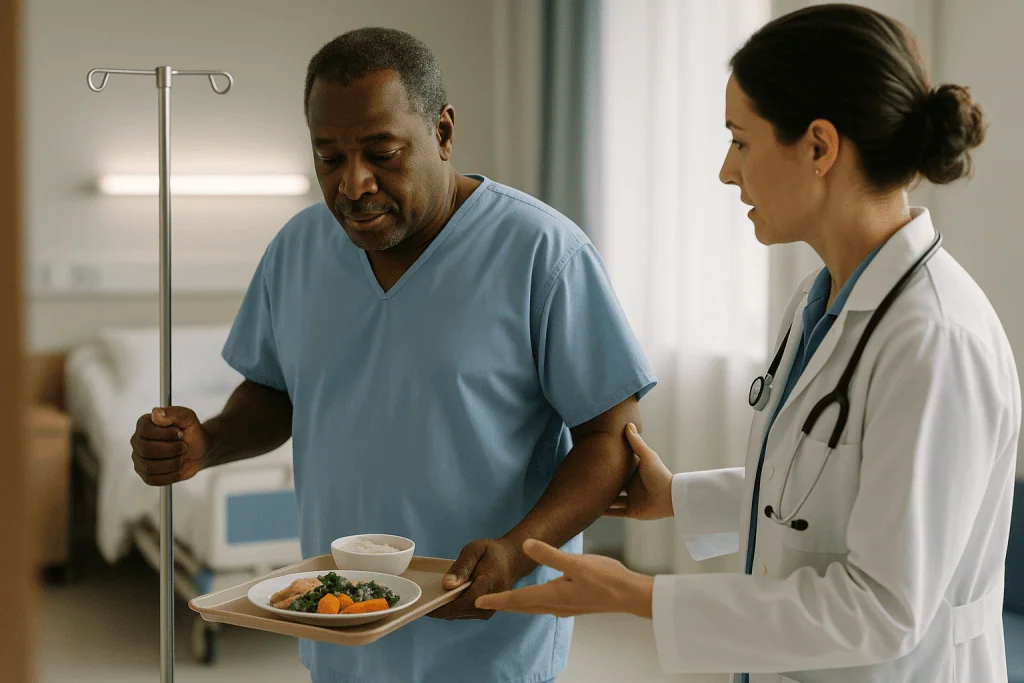
The first reason is blood clots. Lying still after surgery slows blood flow in the deep veins of the legs, and slow blood is more likely to clot. A clot there is called a deep vein thrombosis; if a piece breaks off and travels to the lungs it becomes a pulmonary embolism, which can be life-threatening. Calf muscles act as a pump every time you take a step, which is why MedlinePlus and the NHS both encourage getting up and walking as soon as you safely can, and why compression stockings or an injection to thin the blood are sometimes used in hospital for people at higher risk.
The second reason is the lungs. Shallow breathing after abdominal surgery lets the tiny air sacs at the base of the lungs collapse slightly, which raises the risk of chest infection. Standing upright and walking makes you breathe more deeply without thinking about it. Deep-breathing exercises, ten slow breaths every hour while awake, do the same job when you are sitting.
The third reason is the gut. Anesthetic and handling of the abdomen make the bowel sluggish for a day or two. Movement wakes it up, which helps trapped gas pass and eases the bloated, drum-tight feeling many people describe.
Same-day walking does not mean a hike. It means a slow lap of the ward or the living room, a few times, with someone nearby the first time. Distance grows from there. The point is rhythm, not pace.
Days 2 to 7: light activity, wound care and what counts as normal
Day two is often the low point. The hospital adrenaline has worn off, the anesthetic hangover has arrived, and the wounds have stiffened overnight. This is normal and it passes, usually noticeably by day three or four.
Wound care is simpler than most people fear. The cuts are typically closed with dissolvable stitches, surgical glue, or small strips, and covered with a dressing. MedlinePlus advises that most people can shower within a day or two, letting water run over the dressings and patting them dry, while avoiding baths, swimming and hot tubs until the wounds have sealed. Your team will tell you when dressings can come off entirely. A little redness at the edges and some bruising are expected; spreading redness, heat, or fluid leaking from a wound are not, and those belong in the call-your-doctor list further down.
Light activity in this week means exactly that: making a cup of tea, walking to the end of the street and back, folding laundry, climbing stairs slowly. Anything that makes you brace your abdominal muscles, such as lifting a full kettle from a low shelf or carrying groceries, tends to remind you sharply that healing is in progress.
Fatigue surprises people. The body is running a repair project, and the energy has to come from somewhere. A nap in the afternoon during the first week is not laziness; it is part of the work. Sleeping propped on pillows can ease pressure on the wounds and the shoulder ache described later.
Bowels may be slow for a few days, partly from anesthesia and partly from pain medicines. Fluids, fiber-rich food and walking help. If constipation drags on, ask your team rather than reaching for something off the shelf, because they can advise based on what you have already been prescribed.
When can I drive after gallbladder surgery, lift heavy things and go back to work?
These are the three questions every surgeon hears in the follow-up call, and the honest answer to each is a range, not a date.
Driving comes down to safety, not the calendar. You need to be able to sit comfortably, turn to check mirrors, and perform an emergency stop without hesitating because of pain. The NHS suggests most people are able to drive again after about a week following keyhole surgery, provided they are no longer taking medicines that cause drowsiness and they feel confident behind the wheel. Insurance policies sometimes have their own conditions after surgery, so checking with your insurer is sensible. After open surgery the wait is longer, in line with the slower healing of a larger wound.
Lifting is where people most often overreach. The MedlinePlus discharge guidance advises avoiding heavy lifting and strenuous activity for a period set by your surgeon, and many teams frame this as roughly one to two weeks for keyhole surgery and considerably longer for open surgery. The reason is not the skin cuts but the deeper layers of muscle and fascia, the tough connective sheet that holds the abdominal wall together. Straining before it has knitted raises the risk of a hernia, a bulge where tissue pushes through a weak point.
Work depends on what work is. The NHS notes that people in desk-based roles often return within about two weeks of keyhole surgery, while jobs involving manual labor or heavy lifting usually need longer, and open surgery pushes everything toward the six-to-eight-week mark. A phased return, with shorter days at first, suits many people. Ask your team for a fit note that spells out any restrictions so your employer has something concrete to work with.
Open gallbladder surgery recovery time compared with keyhole
Around one in every twenty or so keyhole operations has to be converted to open surgery, though the exact figure varies with how inflamed the gallbladder is and how much previous surgery the person has had. Some people are booked for open surgery from the start. Either way, knowing how the two recoveries differ helps set realistic expectations.
The gap begins in hospital. The NHS reports that people having keyhole surgery usually go home the same day or the next, while open surgery typically means a stay of three to five days. The reasons are mechanical: a longer incision means more tissue to heal, more pain when moving, and a higher chance of needing help with mobility and breathing exercises in the first days.
At home, the timeline stretches accordingly. The NHS gives around two weeks to resume normal activities after keyhole surgery and six to eight weeks after open surgery. Johns Hopkins describes a similar pattern, with open surgery requiring several weeks before heavy activity is sensible. Lifting restrictions last longer after open surgery because the abdominal wall has been cut through rather than punctured, and hernias at the scar site are a recognized risk if strain comes too early.
Scarring differs too. Keyhole surgery leaves small marks that fade considerably within a year. Open surgery leaves a visible line under the ribs, which softens and pales over time but remains.
What does not differ is the destination. Both operations remove the same organ, and long-term digestion is the same afterward. If your surgeon recommends open surgery, or converts during the operation, it is because that approach was judged safer for you in that moment, not a sign of a worse outcome overall.
What should I eat? Diet after gallbladder removal, week by week
The most persistent myth about life without a gallbladder is that it demands a permanent low-fat diet. Mainstream guidance says otherwise. The NHS states plainly that most people can return to a normal, healthy diet after surgery. The nuance is in the first few weeks, when digestion is adjusting to bile arriving in a steady drip rather than a burst.
In the first two or three days, small, plain meals suit most people best: toast, rice, soup, bananas, yogurt, plain chicken or fish. Nausea from the anesthetic and bloating from the gas both settle faster when the stomach is not overloaded. Fluids matter more than food at this stage.
During the first week or two, eating smaller portions more often tends to sit better than three large meals. Without the gallbladder’s stored reserve, a very fatty meal can overwhelm the trickle of bile available to digest it, and the result is urgency or loose stools. The Cleveland Clinic and the NHS both suggest going gentle on greasy takeaway food, rich sauces and large amounts of cream or butter in the early weeks, then reintroducing foods gradually and noticing how each one lands.
Beyond the first month, most people find they can eat what they ate before. Fiber, from vegetables, fruit, oats and whole grains, helps steady bowel habits and is a reasonable long-term focus for anyone, gallbladder or not. Some people notice that particular triggers, often very fatty or very spicy food, continue to bother them, and they simply moderate those.
Alcohol does not need permanent avoidance, though it is wise to leave it out entirely while taking pain medicines and until you feel fully recovered. If your appetite has not returned after two weeks, or you are losing weight without trying, mention it at your follow-up appointment.
Who is usually offered gallstone surgery, and who is asked to wait?
Gallstones are common. The National Institute of Diabetes and Digestive and Kidney Diseases estimates that they affect roughly 10 to 15 percent of adults in the United States, and most of those people never know. Stones that sit quietly, discovered by chance on a scan done for another reason, are usually left alone. Surgery is generally reserved for stones that cause trouble.
Trouble typically means biliary colic, the sharp pain under the right ribs or in the upper abdomen that follows a meal and can last from minutes to a few hours. It may also mean cholecystitis, which is inflammation of the gallbladder itself, or complications such as a stone slipping into the bile duct and causing jaundice, or pancreatitis, inflammation of the pancreas triggered by a blocked duct. Once stones have caused one of these episodes, the Mayo Clinic notes that they tend to cause more, which is why surgeons often recommend removal rather than watchful waiting.
Who is asked to wait, or to consider other options first? People in the middle of a severe acute infection are sometimes treated with antibiotics and fluids first, with surgery either during the same admission or a few weeks later once inflammation has calmed, depending on local guidance and the individual case. Pregnancy changes the calculation, with timing chosen carefully around the trimester. Serious heart or lung disease may make a general anesthetic riskier than the stones, in which case the team weighs the balance openly with the patient. Very frail older adults sometimes choose to manage symptoms without an operation.
None of these are rules. They are the factors your surgeon is weighing when they recommend, delay or advise against surgery, and the final decision sits with you and that team together.
Shoulder pain after gallbladder surgery: why it happens and what usually helps
Few things puzzle people more than waking from abdominal surgery with a sore right shoulder. Nothing was done to the shoulder. The explanation is a quirk of nerve wiring.
During keyhole surgery, carbon dioxide gas is used to inflate the abdomen. When the operation ends, most of it is released, but a small amount stays trapped, often collecting under the diaphragm, the dome-shaped muscle that separates chest from abdomen. The diaphragm is supplied by the phrenic nerve, which shares its origin in the neck with nerves that serve the shoulder. Irritation of the diaphragm is therefore felt in the shoulder, a phenomenon doctors call referred pain. The Cleveland Clinic and MedlinePlus both describe this as a common, expected part of keyhole recovery.
The ache is usually worst in the first one to two days and fades as the gas is absorbed by the body and breathed out. Walking helps, because movement shifts the gas and speeds absorption. Lying on the left side with the hips slightly raised can move the bubble away from the diaphragm. A warm pack on the shoulder, gentle shoulder rolls, and the pain relief your team prescribed all have a place. If the shoulder pain is severe, worsening after day three, or accompanied by breathlessness, that is a different picture and warrants a call.
Bloating belongs to the same story. The abdomen can look and feel distended for several days, and clothes that fit before surgery may feel tight. Peppermint tea, small meals and walking are the everyday tools. Trapped wind passes on its own; it does not need forcing.
Incision pain behaves differently. It is sharpest with coughing, laughing and getting out of bed, and improves steadily day by day. Holding a folded towel or small pillow against the abdomen when you cough splints the wounds and takes the edge off.
Will my bowels change after gallbladder removal? What the evidence shows
Some people notice nothing. Others find their bowel habit shifts, and it helps to know what is typical and what is worth raising with a clinician.
Looser or more frequent stools in the first weeks are the commonest change. The mechanism is straightforward: bile that once waited in the gallbladder now enters the intestine continuously, including between meals, and bile acids that reach the large bowel unabsorbed draw in water and speed up transit. The Mayo Clinic notes that this post-cholecystectomy diarrhea affects a minority of people and usually improves over weeks to months as the body adapts. Precise figures vary between studies and the evidence base is not tidy, so any clinician who quotes an exact percentage is choosing one estimate among several.
For most, the practical response is enough: smaller portions, going gently on fatty food while things settle, keeping fiber steady, and staying hydrated. When diarrhea persists beyond a few weeks or interferes with daily life, doctors have options, including a class of medicines called bile acid binders that soak up excess bile acids in the gut. Whether one is appropriate, and which, is a decision for the treating team after ruling out other causes.
Constipation is the other direction, and it is more often a side effect of pain medicines and reduced movement in the first week than of the surgery itself. It usually resolves as medicines are stopped and activity resumes.
Bloating, mild indigestion and a sense of fullness after meals can also linger for a time. Persistent upper-abdominal pain resembling the pre-surgery attacks is a different matter. It can signal a stone left in the bile duct or another cause, and it should be assessed rather than waited out.
What people often get wrong about gallstone surgery recovery
Recovery advice travels by word of mouth, and some of what travels is out of date or simply wrong. A few corrections, each grounded in current guidance.
“You have to rest in bed for a week.” The opposite is closer to the truth. The NHS and MedlinePlus encourage walking from the first day to reduce clot risk, wake the bowel and protect the lungs. Rest matters, but rest between walks, not instead of them.
“You can never eat fat again.” The NHS is explicit that most people return to a normal, healthy diet. Going easy on very greasy meals for the first few weeks is sensible; a lifelong ban is not supported by evidence.
“Keyhole surgery means no real recovery.” Small scars hide the fact that an organ has been removed from inside the abdomen. Fatigue for a week or two is normal, and lifting restrictions exist for a reason.
“Shoulder pain means something went wrong.” Referred pain from residual gas under the diaphragm is one of the most common and expected sensations after keyhole surgery, as explained above.
“Diarrhea afterward is permanent.” For most people who experience it, the Mayo Clinic notes that it settles over weeks to months. Persistent cases have treatment options that a clinician can discuss.
“If the gallbladder is gone, the pain must be gone.” Usually yes, but not always. A stone remaining in the bile duct, or a separate condition that was causing similar symptoms, can produce ongoing pain. This is why new or returning pain after surgery should be assessed rather than assumed to be normal.
“Open surgery means the surgeon made a mistake.” Conversion happens when the view or the anatomy makes keyhole surgery unsafe. It is a judgment in favor of safety, not a failure.
Risks and alternatives to gallbladder surgery in plain language
Every operation carries risk, and a fair explainer names them without alarm. The Mayo Clinic and the NHS list the main ones for cholecystectomy: bleeding, infection of a wound or inside the abdomen, injury to nearby structures including the bile duct, bowel or liver, bile leaking from where the gallbladder was attached, blood clots in the legs or lungs, and the general risks of anesthesia. Bile duct injury is the complication surgeons think about most, because repairing it can require further surgery; it is uncommon, and the keyhole technique has been refined specifically to reduce it. Your surgeon will discuss the risks that apply to your situation as part of informed consent, the conversation in which you agree to surgery having understood what it involves.
Alternatives exist, though none is a like-for-like substitute. For people whose stones cause no symptoms, watchful waiting is the mainstream choice. Medicines that slowly dissolve cholesterol stones are available, but the NIDDK notes they work only for certain small stones, take months to years, and stones frequently return once treatment stops, so they are rarely first choice. Shock-wave therapy to fragment stones, once explored, is now seldom used because fragments tend to re-form. Endoscopic retrograde cholangiopancreatography, a procedure using a flexible scope passed through the mouth to reach the bile duct, can remove stones that have escaped into the duct but does not remove the gallbladder itself, so it is often used alongside surgery rather than instead of it.
Dietary change can reduce the frequency of painful attacks for some people, but it does not remove stones or prevent complications such as infection or pancreatitis. This is why, once stones have caused symptoms, most guidelines lean toward surgery as the definitive way to prevent recurrence. The choice, weighed against your health and preferences, remains yours to make with the team.
Questions to ask your care team before and after surgery
Consultations are short and memory under stress is unreliable. Writing questions down beforehand, and bringing someone to listen, turns a rushed ten minutes into a useful one. These are the questions that tend to shape recovery most.
Before the operation, ask which approach is planned, keyhole or open, and how likely a conversion is in your particular case. Ask whether you are expected to go home the same day or stay overnight, and what would change that plan. Ask what pain relief you will be sent home with, how long you should expect to need it, and who to contact if it is not enough. Ask whether you will need anything to reduce clot risk at home. Ask about your own medicines: which ones to pause, which to continue, and when to restart, particularly blood thinners, diabetes medicines and anything for blood pressure.
Ask about the specifics of your life. When can I drive, given my job and my car? When can I lift my toddler, or my toolbox, or my suitcase? Is there anything about my work that changes the usual timeline? How will I get a fit note, and what will it say?
After the operation, ask what was found. Was the gallbladder very inflamed? Were there any surprises? Is there any concern about a stone in the bile duct? Will there be a follow-up appointment, and when? What symptoms should prompt an urgent call, and which number do I use out of hours?
Finally, ask what the team would consider a normal recovery for someone like you. A surgeon who has seen thousands of these operations can often tell you, honestly, where your own path is likely to be smoother or bumpier than the average.
When to call your doctor after gallstone surgery
Most recoveries are uneventful, and knowing the difference between ordinary discomfort and a warning sign is what lets you relax into the ordinary. The NHS, MedlinePlus and the Mayo Clinic agree on the signs that should prompt a same-day call to your surgical team or, where noted, emergency care.
Call your surgical team promptly if you notice a fever or chills; a wound that is increasingly red, hot, swollen, or leaking pus or fluid; pain that is getting worse rather than better after the first two or three days, or that is not controlled by the medicines you were given; persistent vomiting or an inability to keep fluids down; yellowing of the skin or the whites of the eyes, which is jaundice and can signal a blocked bile duct; dark urine or pale, clay-colored stools, which point the same way; severe or worsening bloating with a hard, tender abdomen; or no bowel movement for several days accompanied by pain or vomiting.
Seek emergency care without waiting if you develop chest pain, sudden breathlessness, or coughing up blood, which can indicate a clot in the lungs; a swollen, painful or hot calf, which can indicate a clot in the leg; heavy bleeding from a wound that does not stop with firm pressure; or confusion, fainting, or a rapid heartbeat with fever, which can be signs of a serious infection.
Trust your instinct. Surgical teams would far rather take a call about something that turns out to be trapped wind than miss a bile leak or a clot because a patient did not want to bother anyone. Keep the ward or clinic number where you can find it, and make sure whoever is staying with you knows where it is too.
Frequently asked questions
How long does gallstone surgery recovery take week by week?
Most people recover from keyhole gallbladder surgery in about two weeks and from open surgery in six to eight weeks, according to NHS guidance. Day one involves waking, walking short distances and often going home. The first week brings tiredness, wound soreness and light activity. By week two, everyday tasks and driving are usually possible after keyhole surgery. Heavier lifting and vigorous exercise wait for your surgeon’s go-ahead.
When can I drive after gallbladder surgery?
The NHS suggests many people can drive again after about a week following keyhole surgery, provided they can sit comfortably, check mirrors and perform an emergency stop without pain, and are no longer taking medicines that cause drowsiness. Open surgery requires a longer wait. Insurance policies may have their own conditions after an operation, so checking with your insurer before driving is sensible.
Is it normal to have shoulder pain after gallbladder surgery?
Yes, shoulder pain after keyhole gallbladder surgery is common and expected. It is referred pain caused by residual carbon dioxide gas irritating the diaphragm, which shares nerve pathways with the shoulder. The ache usually peaks in the first day or two and fades as the gas is absorbed. Walking, warmth and changing position help. Severe or worsening shoulder pain with breathlessness needs medical assessment.
What is the open gallbladder surgery recovery time compared with keyhole?
Open gallbladder surgery typically involves a hospital stay of three to five days and a return to normal activities within six to eight weeks, according to the NHS. Keyhole surgery usually means going home the same day or the next and resuming normal activities in about two weeks. The longer recovery reflects the larger incision through the abdominal wall, which needs more time to heal safely before heavy lifting.
What should my diet after gallbladder removal look like?
Most people can return to a normal, healthy diet after gallbladder removal, according to the NHS. In the first few weeks, smaller and more frequent meals with less greasy food tend to sit better while digestion adjusts to bile arriving continuously. Fiber from vegetables, fruit and whole grains helps steady bowel habits. Foods can be reintroduced gradually, and a permanent low-fat diet is not required for most people.
Why do I have diarrhea after gallbladder removal, and will it stop?
Diarrhea after gallbladder removal happens because bile now flows steadily into the intestine rather than being released with meals, and unabsorbed bile acids draw water into the bowel. The Mayo Clinic notes it affects a minority of people and usually improves over weeks to months. If it persists or disrupts daily life, a clinician can assess for other causes and discuss treatment options.
How soon can I lift heavy things after gallstone surgery?
Heavy lifting should wait until your surgeon clears it, which for keyhole surgery is commonly around one to two weeks and for open surgery considerably longer. The concern is not the skin wounds but the deeper muscle and connective tissue, which can develop a hernia if strained before healing. Light lifting, such as a kettle or a small bag, is usually fine within days.
Can I shower or bathe after gallbladder surgery?
Most people can shower within a day or two of gallbladder surgery, according to MedlinePlus discharge guidance, letting water run over the dressings and patting them dry afterward. Baths, swimming and hot tubs are usually avoided until the wounds have fully sealed, which your surgical team will confirm. Redness spreading from a wound, heat, or leaking fluid should be reported rather than soaked.
When can I go back to work after gallbladder surgery?
People in desk-based jobs often return to work within about two weeks of keyhole gallbladder surgery, per NHS guidance, while manual or heavy-lifting roles usually need longer. Open surgery extends the timeline toward six to eight weeks. A phased return with shorter days suits many people. Ask your team for a fit note that specifies any restrictions so your employer can plan around them.
What are the warning signs after gallstone surgery that need a doctor?
Call your surgical team the same day for fever, a wound that is increasingly red, hot or leaking, pain that worsens after the first few days, persistent vomiting, or yellowing of the skin or eyes. Seek emergency care for chest pain, sudden breathlessness, a swollen painful calf, heavy bleeding, or confusion with fever. These can indicate infection, a bile leak or a blood clot and should never be waited out.
References
- NHS: Gallbladder removal, recovery
- MedlinePlus: Laparoscopic gallbladder removal, discharge
- Cleveland Clinic: Gallbladder removal (cholecystectomy)
- NIH NIDDK: Treatment for gallstones
This article is for general information only and is not a substitute for professional medical advice. Please consult a qualified doctor about your individual situation.

More from the Blog

Pain or Fever After ERCP: The Warning Signs That Need a Same-Day Call
Pain that builds rather than fades in the hours after ERCP, especially pain spreading to the back with nausea or vomiting, can signal pancreatitis…

Hepatitis A Warning Signs: When Worsening Jaundice or Confusion Needs Urgent Care
Most people with hepatitis A recover with rest and fluids, but seek urgent care the same day if jaundice keeps deepening after the first…

Eating and Drinking During Hepatitis A Recovery: Fluids, Nutrition and Alcohol Rules
During hepatitis A recovery, eat small, plain meals built around easily digested carbohydrates, lean protein and cooked vegetables, drink enough fluid to keep urine…

Celiac Disease in Children: How Diagnosis, Diet Teaching and Growth Checks Are Planned
Celiac disease in children is treated with a strict, lifelong gluten-free diet, planned and taught with a registered dietitian rather than with medicines. Diagnosis…

The Acid Reflux Diet: Foods That Trigger GERD and the Eating Habits That Calm It
An acid reflux diet is less a fixed menu than a set of habits: smaller meals, finishing dinner at least three hours before lying…

Before Hepatitis Treatment Starts: The Questions Worth Asking Your Liver Specialist
Before hepatitis treatment starts, ask your liver specialist which type of hepatitis you have, how much liver scarring is present, whether treatment is recommended…