

Helping a Family Member After Gallbladder Surgery: Meals, Movement and the First Night Home

Key Takeaways
- Most people go home the same day or the morning after keyhole gallbladder surgery, and NHS guidance puts a typical return to normal activity at about two weeks, versus six to eight after open surgery.
- Shoulder-tip pain in the first days is referred pain from carbon dioxide gas under the diaphragm, not a shoulder problem, and walking and position changes ease it faster than rubbing.
- There is no mandatory lifelong diet after gallbladder removal; low-fat, small, frequent meals for the first week or two match the new steady trickle of bile while the gut adapts.
- Short walks every couple of hours from day one lower the risk of leg clots and chest infection and help shift trapped gas, which is why rest in bed is the wrong instinct.
- A temperature above about 101°F (38.3°C), yellowing skin or eyes, pale stools, worsening abdominal pain or a wound leaking pus are the signs that need a same-day call to the surgical team.
- Mayo Clinic notes that a minority of people, possibly up to one in five, have looser stools after surgery, and these usually improve over weeks to months rather than requiring ever-stricter diets.
Helping someone after gallbladder surgery mostly means covering three things for the first few days: small, low-fat meals that are easy to digest, short walks every couple of hours to protect the lungs and legs, and a watchful first night for pain, nausea and fever. Most people recover at home within about two weeks after keyhole surgery, and any warning sign goes to the surgical team, not to guesswork.
The discharge nurse hands over a folded sheet of instructions, a bag with a few dressings, and a patient who is still a little glassy from the anesthetic. Then the automatic doors open and, suddenly, you are the care team. The drive home is quiet. Every speed bump makes someone wince.
That handover moment is where most families realize that helping someone after gallbladder surgery is less about medical skill and more about logistics: what goes on the plate tonight, how to get out of a low sofa, whether that shoulder ache is something to worry about, and who to ring if it is.
Gallbladder removal, which surgeons call a cholecystectomy, is one of the most common operations performed, and most people now go home the same day or the next morning. That speed is good news. It also means the first 48 hours, which used to happen on a ward, now happen in your kitchen and spare room. This guide walks through them in the order you will meet them.
What actually happens in gallbladder surgery
The gallbladder is a small pouch tucked under the liver that stores bile, the greenish fluid the liver makes to help digest fat. When gallstones form inside it and start causing pain or inflammation, the usual treatment is to remove the whole organ rather than the stones alone, because stones tend to come back.
Most operations today are laparoscopic, often called keyhole surgery. The surgeon makes a few small cuts in the abdomen, usually three or four, inflates the belly with carbon dioxide gas to create working space, and removes the gallbladder through one of the openings while watching on a screen. The operation itself commonly takes around an hour, and the whole trip from check-in to discharge can fit inside a single day, according to NHS guidance on gallbladder removal.
A smaller number of people have an open cholecystectomy, which uses one larger incision below the ribs. Surgeons choose this route when scarring from previous operations, severe inflammation or anatomy makes the keyhole approach unsafe, and occasionally a planned keyhole operation is converted to open partway through for the same reasons. Open surgery means a hospital stay of several days and a longer recovery at home.
Once the gallbladder is gone, bile flows straight from the liver into the small intestine instead of being stored and released in bursts at mealtimes. The body copes with this well; the gallbladder is not essential. The early-week digestive quirks you may notice, such as looser stools or bloating after a rich meal, come from this change in plumbing and usually settle as the gut adapts.
Knowing this much helps you make sense of the instructions you were given. Low-fat meals are not a punishment; they are simply easier for a bile supply that is now a steady trickle rather than a well-timed squeeze.
Who usually goes home the same day, and who is asked to stay
Same-day discharge after keyhole gallbladder surgery is now routine for healthy adults whose operation went smoothly. Before the team lets someone leave, they generally want to see that the person can walk, pass urine, drink fluids without vomiting, and that pain is controlled with tablets rather than injections. A responsible adult must take them home and stay with them overnight; that is where you come in.

Some people are asked to stay one or more nights, and it is worth understanding why, so you can plan realistically rather than feeling that something has gone wrong. Reasons the surgical team commonly give include:
- Open surgery, or a keyhole operation that was converted to open, where the NHS and Mayo Clinic both describe hospital stays of several days.
- Emergency surgery for an inflamed gallbladder, where infection and inflammation make close observation sensible.
- Heart, lung or kidney conditions, or diabetes that is hard to control, which raise the stakes of any anesthetic.
- Persistent nausea, pain that is not settling, or any concern about bleeding or injury to the bile duct, the tube that carries bile to the intestine.
- Living alone or far from the hospital, with nobody able to stay the first night.
Age by itself is not a reason to keep someone in, but older adults are more likely to tick one of the boxes above and are also more prone to confusion after anesthesia, which is easier to manage on a ward.
If your family member is in the stay-overnight group, your job shifts: pack a phone charger, comfortable clothes with a loose waistband, and ask the nurses what time discharge rounds happen so you are not waiting in a car park all afternoon. Every one of these decisions sits with the treating team, and it is entirely reasonable to ask them to explain their reasoning.
Helping someone after gallbladder surgery starts before they come home
An hour of preparation before the hospital run saves a great deal of fumbling later, when the patient is tired and you are tired too. Think of the house from the point of view of someone who cannot bend, twist or push up on their abdominal muscles without discomfort.
Start with the bed. If the bedroom is upstairs, that is fine for most keyhole patients, who can usually manage stairs slowly on day one, but a downstairs sleeping spot for the first night or two spares them repeated climbs. Add an extra pillow or two; many people find it easier to sleep slightly propped up for the first few nights because lying flat pulls on the incisions and the gas left in the abdomen.
Next, the chair. A firm chair with arms is far easier to rise from than a soft, low sofa. Put it where the person will spend their daytime hours, with a small table in reach for water, the phone and the instruction sheet.
In the kitchen, stock things that need no effort: clear soups, plain crackers, bananas, applesauce, yogurt, cooked rice, skinless chicken, oatmeal. Fill a jug with water and keep it visible, since fluids are the first thing people forget.
Then the bathroom. Clear a path, check the lighting for night trips, and lay out loose clothing that does not press on the belly: drawstring trousers, a soft shirt, slip-on shoes. Anything with a tight waistband will sit exactly on the incision below the navel.
Finally, information. Write the surgical team’s contact number and the hospital’s out-of-hours line on the fridge, note any allergies, and keep the discharge paperwork in one place. MedlinePlus discharge guidance assumes a helper is on hand for at least the first night; being organized is the simplest form of help.
The first night after gallbladder surgery: what to expect hour by hour
The first evening is usually the hardest, and knowing what is normal keeps everyone calmer.
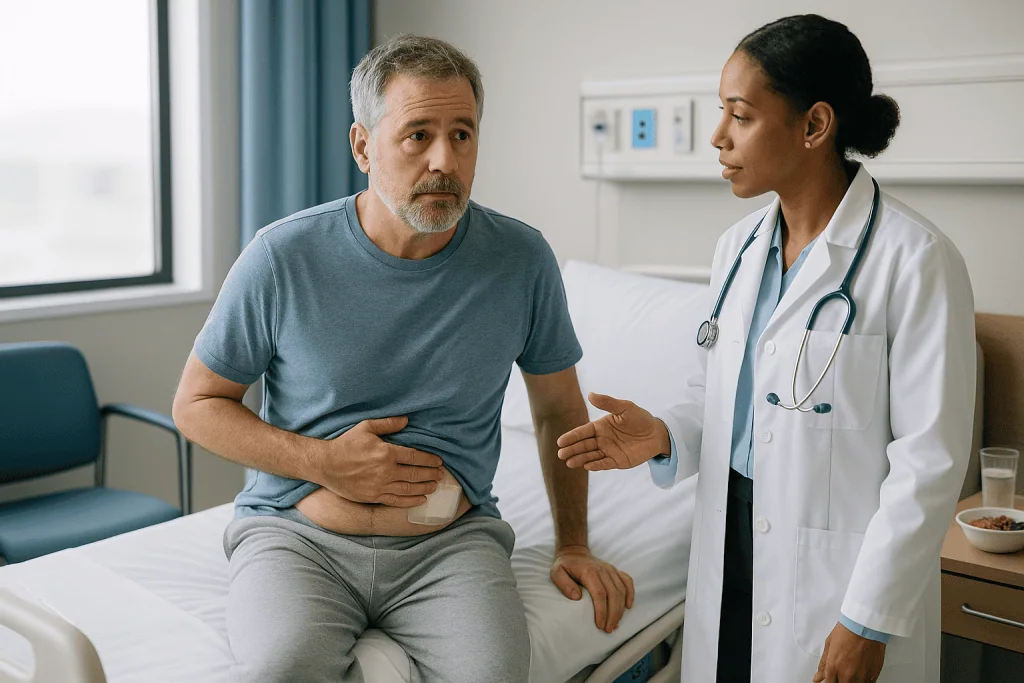
In the first hours home, expect drowsiness, a dry mouth and a sore throat from the breathing tube used during the anesthetic. Encourage small sips of water or diluted juice rather than a large glass, which can bring on nausea. A light, bland snack is fine if they want it; nobody needs a full meal tonight.
By early evening, as the anesthetic drugs clear, pain tends to climb. This is the window where the prescribed pain medicine does its job best if taken as the team directed, before pain becomes severe. Your role is to keep track of what was taken and when, on paper, because a sleepy patient and a worried relative are both poor historians.
Two sensations surprise families most. The first is pain in the right shoulder or collarbone. It has nothing to do with the shoulder: carbon dioxide gas left under the diaphragm irritates a nerve that shares a pathway with the shoulder, and the brain misplaces the signal. NHS guidance describes this as common and short-lived, easing over a day or two as the gas is absorbed. Walking and changing position help. The second is a bloated, tight belly for the same reason.
Overnight, help them settle propped up, and leave a light on for bathroom trips. Getting out of bed is easier by rolling onto the side first, then pushing up with the arms while swinging the legs down. Stay within earshot.
Through the night, check in gently a couple of times. You are looking for things that need a phone call: vomiting that does not stop, a high temperature, bleeding through a dressing, breathlessness, or pain that keeps climbing despite medication. Those are covered in detail in the red-flag section later. Mild soreness, a few groans turning over, and a poor night’s sleep are all simply night one.
What to eat after gallbladder removal in the first three days
Food is where helpers can make the most visible difference, and where the most worrying happens. The reassuring fact first: there is no strict post-cholecystectomy diet that everyone must follow. Mayo Clinic and NHS guidance both advise a gradual return to normal eating, with low-fat choices while the digestive system adjusts.
On day one, appetite is often absent, and that is fine. Fluids come first. Water, weak tea, clear broth and diluted fruit juice keep the person hydrated and reduce the headache and nausea that dehydration adds to anesthetic hangover. If a drink stays down for an hour, offer something plain: toast, crackers, a banana, a small bowl of oatmeal.
Days two and three are about small, frequent, gentle meals rather than three large ones. The stomach has been handled, the bowels have been sluggish from anesthesia and pain medicine, and bile is now arriving in a steady drip rather than a mealtime surge. A big fatty plate at this stage tends to cause cramping, bloating or an urgent dash to the bathroom.
Good early choices are lean protein (poached fish, skinless chicken, eggs, tofu), cooked vegetables, white rice or pasta, potatoes without butter, low-fat yogurt and soft fruit. Fried foods, creamy sauces, fatty meats, pastry and very spicy dishes are the usual culprits for an upset gut and are best left for later in the recovery.
Watch fiber too. Fiber is important for the long run, but a sudden load of bran or raw salad on day two can worsen bloating. Build it back over the first couple of weeks.
Caffeine and alcohol are worth holding off while prescribed pain medicine is being used, both because of interactions and because both irritate a gut that is already touchy. The treating team’s written advice overrides anything here if the two differ.
Meals in weeks one and two: rebuilding a normal plate
After the first few days, the question changes from “what can they keep down” to “how do we get back to real food without upsetting things.” The answer is in stages, and a short table makes the pattern easy to follow.
| Stage | Typical foods | Usually worth waiting on |
|---|---|---|
| Day 1 | Water, broth, weak tea, toast, crackers, banana | Anything fatty, fizzy or spicy |
| Days 2–4 | Oatmeal, rice, poached fish, chicken, eggs, cooked vegetables, low-fat yogurt | Fried foods, cream sauces, large portions, raw bran |
| Week 1–2 | Normal meals in smaller portions, gradually more fiber and healthy fats such as olive oil or avocado | Very rich meals, large amounts of alcohol |
| After week 2 | Usual diet, trimmed of whatever still triggers symptoms | Individual trigger foods only |
Two principles do most of the work. First, portion size matters more than any single ingredient. Four or five modest meals spread across the day are gentler than two large ones, because a steady stream of food matches a steady stream of bile. Second, add fat back gradually. Healthy fats are not the enemy; the sudden arrival of a lot of fat is.
Keep a loose note of what was eaten before any bout of cramping or diarrhea. Patterns appear quickly and save guesswork. Common offenders in the first fortnight are fried breakfasts, pizza, ice cream and heavily buttered dishes.
Fiber returns in the same stepwise way: cooked vegetables first, then whole grains, then raw salads and beans. Soluble fiber, the kind in oats, apples and barley, tends to firm loose stools and is a sensible early addition.
By the end of week two, most people are eating normally, with perhaps one or two foods they have decided to avoid for now. If diarrhea, pain after eating or nausea is still a daily event beyond that point, it belongs on the list for the follow-up appointment rather than being managed with ever-stricter home diets.
Movement after gallbladder surgery: why walking matters more than rest
The instinct of a loving helper is to tell the patient to lie still. The evidence points the other way. Early, gentle walking is one of the most useful things a person can do after any abdominal operation, and your job is to make it easy and expected rather than heroic.
Three mechanisms explain why. Walking squeezes the calf muscles, which pumps blood back up the legs and lowers the risk of a deep vein thrombosis, a clot in the deep leg veins that can travel to the lungs. It also encourages deeper breathing, which opens up the small air sacs at the base of the lungs that collapse under anesthesia and can breed infection. And it helps the bowel wake up, which eases bloating and shifts the trapped gas that causes shoulder pain.
A realistic rhythm for keyhole patients, consistent with NHS and MedlinePlus discharge advice, looks like this: short walks around the house every couple of hours on day one, a walk to the end of the street on day two or three, and a daily walk of increasing length over the first week. Stairs are allowed; take them slowly.
What to avoid in the first couple of weeks, per NHS guidance, is heavy lifting and strenuous exercise, including vigorous sport, carrying shopping bags, lifting small children and vacuuming. The incisions through the abdominal wall need time to knit, and straining raises the risk of a hernia, a weakness where tissue pushes through.
Driving is a question families ask constantly. The person needs to be able to perform an emergency stop without hesitation and must not be drowsy from medication; NHS guidance suggests this often takes about a week after keyhole surgery, and insurers may have their own rules. Let the person decide once they can brake hard and twist comfortably.
Sitting still in a chair all day, by contrast, is the one thing to gently discourage.
Managing pain and medicine safely when you are the helper
Pain after keyhole gallbladder surgery is usually moderate and improves steadily over the first week. Managing it well is not about toughness; good pain control lets a person walk, breathe deeply and sleep, all of which speed recovery.
Surgical teams typically send patients home with a plan built around non-opioid pain relievers, such as acetaminophen or an anti-inflammatory, and sometimes a short supply of an opioid for breakthrough pain in the first days. Each class works differently. Acetaminophen acts centrally on pain signaling. Anti-inflammatories reduce the chemical messengers that make tissue swollen and sore, though they are not suitable for everyone, which is why the team decides. Opioids blunt pain perception in the brain but also cause drowsiness, nausea and constipation, which is one reason they are used sparingly and briefly.
Your role as helper is practical, not prescribing:
- Keep a simple written log of what was taken and when, so doses are neither missed nor doubled.
- Follow the schedule the team wrote down, exactly as written, and ask them rather than adjusting anything yourself.
- Give pain relief before activity, such as a walk or a shower, rather than after.
- Watch for drowsiness, confusion or slow breathing on any opioid, and call the team if these appear.
- Pair any opioid with the bowel plan the team suggested, since constipation on top of a sore abdomen is miserable.
Ice is not usually recommended on the incisions, but a warm, not hot, pack on the shoulder can soothe referred gas pain. Position changes and walking do more for that particular ache than any tablet.
If pain is climbing rather than easing after day two or three, or a new pain appears in a different place, that is information for the surgical team. Never increase, stop or swap a medicine on your own initiative; a quick phone call is always the better route.
Caring for incisions, showering and spotting trouble early
Keyhole gallbladder surgery leaves three or four small wounds, each usually under an inch long, closed with dissolvable stitches, surgical glue or small adhesive strips. They need less fuss than most helpers expect, but they do need a daily look.
Showering is generally allowed within a day or two, provided the team has said so; MedlinePlus discharge guidance describes letting water run over the wounds, avoiding scrubbing, and patting them dry with a clean towel. Baths, swimming and hot tubs wait until the wounds are fully closed, usually a couple of weeks, because soaking softens the skin edges and invites bacteria.
If dressings were applied, the discharge sheet will say when to remove or change them. Most can come off after a day or two, and adhesive strips are left to peel away on their own over about a week. Glue flakes off by itself. The person should avoid picking at any of it.
Each day, with clean hands, glance at every incision. A little redness at the edges, mild bruising and a small amount of clear or pinkish fluid in the first days are ordinary. What is not ordinary, and should prompt a call, is spreading redness, warmth, swelling, thick yellow or green drainage, a wound that opens, or bleeding that soaks a dressing.
Loose clothing protects the sites from rubbing, and a small folded towel held against the belly when coughing, laughing or sneezing takes the sting out of those moments. That trick alone makes a noticeable difference to how willing someone is to cough and clear their chest.
Scars fade over months, from red to pink to pale. Sun protection once healed helps them fade further. There is nothing to apply in the early weeks beyond keeping things clean and dry, and the team will tell you if that changes.
Bowels, bloating and the shoulder pain nobody warned them about
Three complaints dominate the first week and all three are usually harmless, which does not stop them being unpleasant.
Shoulder-tip pain comes from the carbon dioxide gas used to inflate the abdomen during surgery. Some of it lingers under the diaphragm, irritating the phrenic nerve, which carries sensation from that area and from the shoulder along the same route. The brain reads the signal as a shoulder ache. NHS guidance notes it typically fades within a few days as the gas is absorbed. Walking, changing position, lying on the side rather than the back, and warmth all help. Rubbing the shoulder does nothing, which is the clue that it is referred pain.
Bloating has two causes: the same gas, and a bowel slowed by anesthesia and pain medicine. Small meals, warm drinks, peppermint tea if the person likes it, and gentle walking are the practical levers. Fizzy drinks and chewing gum add swallowed air and are worth skipping for a few days.
Constipation is common when opioids are involved, and straining on a freshly operated abdomen is both painful and unhelpful for the incisions. Fluids, fruit, oats and walking are first-line; the team may also have suggested a stool softener, and that is the point to use it as directed rather than waiting until day four of no bowel movement.
Diarrhea is the opposite problem and reflects bile reaching the intestine continuously. Mayo Clinic notes that estimates vary, but a minority of people, possibly up to one in five, experience looser or more frequent stools after surgery, usually improving over weeks to months as the gut adapts. Low-fat meals, soluble fiber and smaller portions help. Persistent, watery diarrhea lasting beyond a few weeks is a follow-up conversation, because treatments exist and the team can rule out other causes.
Gallbladder surgery recovery at home: what the weeks usually look like
Timelines reassure anxious families, as long as they are read as typical ranges rather than deadlines. The figures below reflect NHS and MedlinePlus guidance for an uncomplicated keyhole operation; open surgery runs roughly three times longer at every stage.
Days one to three are the sore, sleepy phase. Pain peaks on the first evening and eases daily. Appetite returns slowly. Walks are short and frequent. Most people need help with meals and prefer not to be alone.
Days four to seven bring a visible turn. Pain medicine use drops, usually to the non-opioid options alone. Showering is routine, dressings are mostly off, and walks reach the end of the street and back. Many people manage light desk work or study from home by the end of the week, though concentration lags behind the body.
Week two is when NHS guidance says most people after keyhole surgery can return to normal activities, including work that does not involve heavy lifting. Driving has usually resumed once the person can brake hard without hesitation. Normal meals are back, with perhaps one or two foods still on hold. Tiredness in the afternoons is common and worth planning around rather than fighting.
Weeks three to six cover the return to heavier activity. Lifting, vigorous exercise and physically demanding jobs generally wait for the team’s go-ahead, which often comes at the follow-up appointment. The incisions are closed and fading; the deeper abdominal wall is still strengthening.
Beyond six weeks, most people have stopped thinking about the surgery at all. Occasional looser stools after a rich meal may persist in some, and a small number continue to have digestive symptoms that deserve a proper review.
For open surgery, the NHS describes a recovery of around six to eight weeks before a full return to normal activity, with heavy lifting restricted for longer. Your helper role lasts correspondingly longer, and planning for that early prevents burnout on both sides.
What people often get wrong about caring for someone after laparoscopic cholecystectomy
Well-meaning myths travel fast on family group chats. These are the ones that cause the most trouble.
“They must lie flat and rest.” Rest matters, but immobility is the real risk. Clots, chest infections and stubborn bloating all get worse with bed rest. Short, regular walks from day one are what the evidence supports.
“No fat ever again.” Not true. Mayo Clinic advice is to ease back toward a normal diet, keeping fat modest while the gut adjusts. Healthy fats return within a couple of weeks for most people. A permanent no-fat diet is unnecessary and nutritionally poor.
“Shoulder pain means something has gone wrong in the shoulder.” It is referred pain from gas under the diaphragm, and it fades within days. Climbing abdominal pain is the one to worry about, not the shoulder.
“The strongest painkiller is the best painkiller.” Opioids have the most side effects: constipation, nausea, drowsiness. Teams deliberately build plans around non-opioid options and use opioids briefly. Sticking to the written plan, not escalating, is the goal.
“Keyhole means trivial.” The scars are small; the operation inside is the same. Fatigue for two weeks is normal, and pushing to full activity in days invites a setback.
“Any diarrhea means they are intolerant of food now.” Looser stools after surgery usually reflect the new bile flow and improve over weeks. Cutting food group after food group rarely helps and often leaves someone undernourished during healing.
“A bit of fever is fine.” A low-grade rise on the first evening can happen, but a temperature above the threshold on the discharge sheet, commonly around 101°F or 38.3°C per MedlinePlus, needs a call, not a wait-and-see.
“They should not shower until the stitches are out.” Dissolvable stitches do not come out, and showering is usually allowed within a day or two once the team confirms it. Soaking is what waits.
Questions to ask the care team before and after discharge
Discharge conversations are rushed and patients remember little of them. A helper with a short list of questions, and a pen, is worth a great deal. These are the ones that matter most for the first fortnight.
- Was the operation keyhole or open, and did anything during surgery change the usual recovery plan?
- Exactly which pain medicines are prescribed, in what order, and what is the written schedule? Which one should we try first if pain breaks through?
- What is the fever threshold at which we should call, and which number do we call out of hours?
- When can they shower, and when can they bathe or swim?
- When should dressings or adhesive strips come off, and what should the wounds look like at day three and day seven?
- Are there any foods or drinks to avoid, beyond keeping meals low in fat for now?
- How far should they walk on day one, day three and day seven, and when can they lift, carry shopping or exercise?
- When can they drive, and does the hospital have a written policy we can show the insurer?
- When is the follow-up appointment, and is there anything we should track and bring to it, such as bowel habits or pain scores?
- If they have other conditions, such as diabetes or a blood-thinning prescription, how do those plans change this week?
- Is there anything in the operation note, such as a spilled stone or a drain, that we should know about?
Write the answers on the same sheet as the emergency number and keep it on the fridge. If an answer was missing or unclear, a daytime call to the surgical secretary or ward is a normal, expected thing to do; teams would rather answer a simple question than manage a preventable problem later.
When to call your doctor: red-flag signs after gallbladder surgery
Most recoveries are uneventful. The point of a helper is to notice the few that are not, early, and to hand the decision to the surgical team rather than to the internet. Contact the surgical team, the hospital’s out-of-hours line, or emergency services promptly if you see any of the following, which mirror MedlinePlus and NHS discharge guidance:
- A temperature above the threshold on the discharge sheet, commonly 101°F (38.3°C), or shaking chills.
- Abdominal pain that is getting worse rather than better, or severe pain not eased by the prescribed medicine.
- Yellowing of the skin or the whites of the eyes, dark urine, or pale, clay-colored stools, which can signal a problem with bile flow.
- Persistent vomiting, or inability to keep fluids down for more than a few hours.
- A swollen, hard or very tender belly.
- Bleeding that soaks through a dressing, or a wound that is spreading red, hot, swollen, leaking pus or coming apart.
- Shortness of breath, chest pain, or a cough that does not settle.
- Pain, swelling or redness in one calf, which can indicate a clot.
- No bowel movement for three days together with bloating and discomfort.
- New confusion, extreme drowsiness or very slow breathing, especially on opioid pain relief.
Chest pain, sudden breathlessness, heavy bleeding or collapse are emergencies and warrant an immediate emergency call rather than a message to the ward.
If you are unsure whether something counts, that uncertainty is itself a reason to call. Describe what you see plainly: the temperature reading, the time the symptom started, what medicine was taken and when. The team will decide whether it is reassurance over the phone, a wound check, or a return to hospital. None of those outcomes reflects badly on you or on the person recovering; they are exactly what the number on the fridge is for.
Frequently asked questions
What should I cook for someone on the first night after gallbladder surgery?
Keep it light and optional: broth, toast, crackers, a banana, plain rice or a small bowl of oatmeal, with plenty of water alongside. Appetite is often absent on the first evening and that is normal. Avoid anything fried, creamy or spicy, which can trigger nausea or cramping while the gut is still sluggish from anesthesia and pain medicine.
How long does gallbladder surgery recovery at home usually take?
NHS guidance describes most people returning to normal activities within about two weeks after keyhole surgery, and six to eight weeks after open surgery. Heavier lifting and strenuous exercise typically wait longer, until the surgical team confirms the abdominal wall has healed. These are typical ranges, not deadlines, and the follow-up appointment is where the team adjusts them for the individual.
What can they eat after gallbladder removal in the first week?
Small, frequent, low-fat meals: lean protein such as fish, chicken or eggs, cooked vegetables, rice, potatoes, oats and low-fat yogurt. Add fiber and healthy fats back gradually over the first two weeks. Mayo Clinic advises easing toward a normal diet rather than following any strict rule, trimming only the foods that clearly cause cramping or loose stools.
Is shoulder pain after keyhole gallbladder surgery normal?
Yes, and it is one of the most common surprises. Carbon dioxide gas used during the operation lingers under the diaphragm and irritates a nerve that shares a pathway with the shoulder, so the brain misplaces the pain. It usually fades within a few days. Walking, lying on the side and warmth help; worsening abdominal pain, not shoulder pain, is the sign to report.
How much should they walk after gallbladder surgery?
Short, frequent walks around the house from day one, lengthening to a walk down the street by day two or three, then a daily walk of growing distance over the first week. Walking lowers clot and chest infection risk and eases bloating. Heavy lifting and vigorous exercise wait for the team’s go-ahead, often around two weeks after keyhole surgery.
When can someone shower after laparoscopic cholecystectomy?
Usually within a day or two, if the surgical team has said so. Let water run over the incisions, avoid scrubbing, and pat them dry with a clean towel. Baths, swimming and hot tubs wait until the wounds have fully closed, generally a couple of weeks, because soaking softens the skin edges and raises the risk of infection.
What are the warning signs after gallbladder surgery that need a call?
A temperature above about 101°F (38.3°C), worsening or severe abdominal pain, yellow skin or eyes, pale stools or dark urine, persistent vomiting, a wound that is spreading red or leaking pus, heavy bleeding, breathlessness, chest pain, or calf pain and swelling. Any of these warrants a prompt call to the surgical team or emergency services rather than waiting to see.
Why does my relative have diarrhea after gallbladder removal?
Without a gallbladder, bile flows continuously into the intestine instead of being released at mealtimes, and that steady flow can loosen stools. Mayo Clinic notes a minority of people are affected, possibly up to one in five, and most improve over weeks to months. Smaller, lower-fat meals and soluble fiber help; persistent watery diarrhea beyond a few weeks should be raised at follow-up.
When can they drive after gallbladder surgery?
When they can perform an emergency stop without hesitation, twist to check mirrors comfortably, and are no longer drowsy from pain medication. NHS guidance suggests this often takes about a week after keyhole surgery, longer after open surgery. Insurers sometimes have their own conditions, so it is worth checking the policy before the first drive.
How do I help someone get out of bed after abdominal surgery?
Teach the log-roll: lie on the side facing the edge of the bed, swing the legs over while pushing up with the arms, and sit for a moment before standing. This avoids using the abdominal muscles that pull on the incisions. A firm chair with arms is easier to rise from than a soft sofa, and a folded towel pressed against the belly makes coughing and laughing far less painful.
References
- NHS: Gallbladder removal, recovery
- MedlinePlus: Gallbladder removal, laparoscopic, discharge
- Cleveland Clinic: Gallbladder removal (cholecystectomy)
- NIH NIDDK: Treatment for gallstones
This article is for general information only and is not a substitute for professional medical advice. Please consult a qualified doctor about your individual situation.

More from the Blog

What Is Normal After Robotic Hernia Repair and What Signals Infection or Recurrence?
After robotic hernia repair, mild swelling, bruising, a firm ridge under the incisions, shoulder-tip gas pain and tiredness are common for one to two…
Hepatopancreatobiliary Surgery Explained: Liver Resection, Whipple and Bile Duct Operations
Hepatopancreatobiliary surgery procedures are operations on the liver, pancreas, gallbladder and bile ducts, most often for tumors, blockages or injuries. The main types are…

Before a Hemorrhoid Procedure: Blood Thinners, Bowel Preparation and Fasting Instructions
Preparing for hemorrhoid surgery usually means three things: a plan for any blood-thinning medicine made with the prescribing clinician, never on your own; a…

What to Expect After Appendicitis Surgery: Scars, Energy Levels and the Return of Appetite
After appendix removal, most people go home within a day or two and feel close to normal within about two weeks after keyhole surgery,…
POEM for Achalasia Step by Step: The Endoscopic Tunnel, the Myotomy and the Overnight Stay
The POEM procedure for achalasia (peroral endoscopic myotomy) is a minimally invasive treatment done through the mouth with a flexible endoscope. The doctor creates…

Recovery After Achalasia Treatment: Liquids First, Then Advancing Your Diet as Advised
Recovery after achalasia treatment usually begins with clear liquids for the first day or so, then full liquids and pureed or very soft foods…