

J Plasma Recovery Timeline: Tightness, Swelling and How Long Compression Continues

Key Takeaways
- J plasma is almost always added to liposuction, so its recovery is liposuction recovery plus the healing of a deliberate thermal injury, which typically means firmer tissue that settles more slowly.
- The NHS puts time off work after liposuction at around one to two weeks and holds strenuous exercise for roughly four to six weeks; final contour is judged at up to about six months.
- Compression after liposuction is measured in weeks according to MedlinePlus and the NHS, and surgeons who add plasma commonly extend it, with the step-down decision made at follow-up rather than by the patient.
- The intense tightness of the first week is largely swelling against heated skin; the skin contraction people hope for arrives through collagen remodeling over months.
- No large randomized trial has compared plasma-assisted liposuction with liposuction alone, so the size of the tightening benefit remains uncertain and is generally described as modest.
- Helium plasma carries device-specific risks including internal and skin burns, prolonged firmness, nerve injury and trapped gas under the skin, alongside the standard liposuction risks of seroma, infection and blood clots.
J plasma recovery time is usually described in stages rather than in days. Most people return to desk work within about one to two weeks, swelling builds in the first week and settles over several weeks, compression garments are typically worn for several weeks, and firmness or tightness under the skin can linger for months. Final skin contraction is generally judged around six months, and timelines vary by treated area and individual.
Around day nine, the garment starts to feel like a decision you make several times an hour. It is snug where the abdomen was treated, it itches at the seams, and every time you loosen it to breathe you feel the skin underneath pull back against you like a wetsuit half a size too small. You check the mirror, see swelling where you hoped to see definition, and wonder whether that pulling sensation is the treatment working or something you should worry about.
That feeling of not knowing which sensations are normal is the most common reason people search for j plasma recovery time. The surgeon told you weeks, maybe months. What nobody quite explains is what each of those weeks feels like from the inside, why the tightness changes character, or why the compression garment seems to go on far longer than you expected.
This explainer walks through the timeline honestly: what the heat does to tissue, why swelling behaves the way it does, how long compression usually continues and what the evidence actually shows about skin tightening. It also covers the signs that mean a phone call rather than patience.
What is J plasma and what actually happens under the skin?
Plasma is a gas that has been energized until it conducts electricity, the same state of matter that lights up a neon sign. In the procedure commonly called J plasma, a surgeon passes a thin wand through the small incisions already made for liposuction and releases a stream of helium that has been converted into plasma. The wand sits in the layer just beneath the skin, and the plasma delivers a brief burst of heat to the tissue it touches.
The target is the fibroseptal network, the web of collagen bands that tether skin to the deeper tissue like the strings of a hammock. Collagen fibers shorten when heated past a certain threshold, so the intention is to contract those bands and encourage the skin to sit flatter against the newly slimmer contour. The helium itself is cool, and the device is designed to heat quickly and then let the surrounding tissue return toward normal temperature, which is why manufacturers describe the effect as controlled.
Two facts about this matter enormously for recovery. First, J plasma is almost always an addition to liposuction rather than a standalone treatment, so everything true of liposuction recovery, the bruising, fluid, swelling and garments described by the NHS and Mayo Clinic, still applies. Second, deliberately heating tissue creates a controlled thermal injury. The body responds to injury with inflammation and, over months, with remodeling of collagen. That biology explains why the tightness you feel at week two and the tightness you may see at month five are two different processes.
Who is J plasma usually for, and who is usually asked to wait?
The typical candidate has mild to moderate skin laxity: skin that has lost some snap but does not hang in folds. Someone with a soft lower abdomen after modest weight change, or a neck where the jawline has blurred, is the sort of person surgeons tend to describe. The appeal is avoiding an excisional operation, meaning one that cuts away excess skin and leaves a long scar, such as an abdominoplasty or arm lift.

People are commonly asked to wait, or steered toward a different option, in several situations. Significant excess skin, the kind that drapes, generally responds poorly to any energy device because there is simply more skin than heat can shrink; excision is usually discussed instead. Planned pregnancy or further substantial weight change means the result would be reshaped anyway. Smoking impairs blood supply to healing skin, and most surgeons ask for a period of abstinence around any body contouring procedure. Poorly controlled diabetes, bleeding disorders, active infection anywhere in the body, and a history of dense or raised scarring all raise the risk side of the ledger. Mayo Clinic notes that liposuction is generally offered to people at or near a stable weight with good overall health, and the same threshold applies here because the liposuction component does not change.
Regulatory clearance for helium plasma devices is limited to specific uses, and the device has a documented history of being used more broadly than its clearance. A candid pre-operative conversation about which body area is being treated, and on what evidence, belongs on your list. The decision about candidacy rests with the treating surgeon after examination, not with a website or a consultation checklist.
J plasma recovery time at a glance
Recovery from J plasma follows the shape of liposuction recovery with an extra layer of firmness and slower-settling tissue. The ranges below draw on published guidance for liposuction from the NHS, Mayo Clinic and MedlinePlus; no large clinical trial has defined a separate, validated timeline specific to helium plasma, so treat the plasma-related rows as clinical experience rather than established data.
| Phase | What people usually notice | Typical range in the evidence |
|---|---|---|
| Days 0 to 3 | Fluid leaking from incisions, heavy swelling, tight skin, soreness, fatigue | First few days after liposuction (MedlinePlus, Mayo Clinic) |
| Weeks 1 to 2 | Bruising colors change, swelling begins to ease, most people manage desk work | About 1 to 2 weeks off work (NHS) |
| Weeks 3 to 6 | Firm, sometimes lumpy areas; numbness; return to strenuous activity | Strenuous exercise usually held for roughly 4 to 6 weeks (NHS) |
| Months 2 to 6 | Contour clarifies, skin gradually sits flatter, residual firmness softens | Final appearance judged up to about 6 months (NHS, Mayo Clinic) |
Two patterns are worth holding onto. Swelling is not linear; it can rise and fall with activity, salt intake and how consistently the garment is worn. Firmness, which surgeons call induration, meaning tissue that feels hardened, tends to arrive after the acute swelling has begun to fade and can persist longer than people expect, particularly in areas that received heat. Neck treatment often follows a shorter version of this arc, while abdomen and flanks tend to occupy the full range.
The first 72 hours: leaking fluid, drains and why the skin feels so tight
The earliest surprise is usually the fluid. Liposuction is performed after tumescent fluid, a large volume of dilute salt water containing local anesthetic and a medicine that narrows blood vessels, is infused into the treated area. Not all of it is removed, and over the first day or two the excess drains out through the small incisions, often tinged pink. MedlinePlus describes this drainage as expected, and many surgeons leave incisions open or place small drains to help it escape. Absorbent pads inside the garment are a practical necessity rather than a sign of trouble.
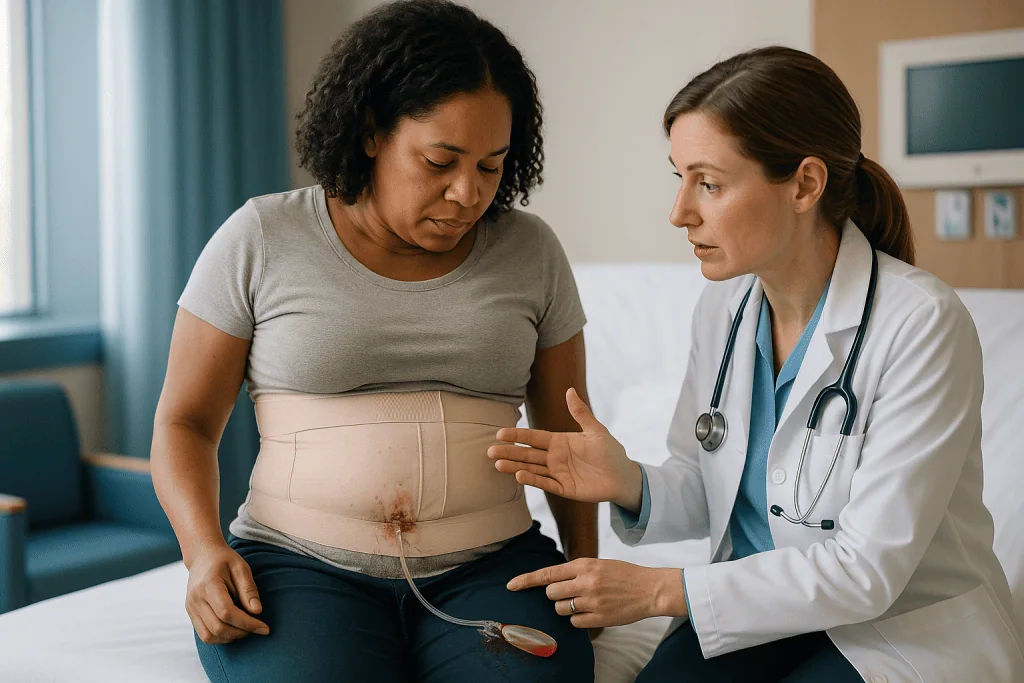
Tightness in this window has three sources stacked together. Swelling stretches the skin from beneath. The compression garment presses from outside. Between them sits tissue that has just been heated, and heated collagen contracts immediately, so the skin may genuinely feel shorter than it did the day before. The combination produces a sensation many people describe as being shrink-wrapped, sometimes with a burning or sunburn-like quality over the treated zone.
Movement matters even now. Any procedure that involves anesthesia, reduced mobility and injury to tissue raises the risk of a blood clot forming in a deep leg vein, a condition called deep vein thrombosis. MedlinePlus lists surgery and prolonged immobility among its main risk factors. Short, frequent walks around the home from the first evening, staying well hydrated and avoiding long stretches sitting with bent knees are the basics your team will likely emphasize. If you were prescribed a clot-preventing medicine, it works by slowing the blood’s clotting cascade; how long to take it is a decision for the prescribing clinician.
Weeks one and two: the swelling peak and going back to work
Swelling generally builds over the first several days before it begins to recede, which catches people off guard when they look worse on day four than on day one. Bruises move through their familiar palette, purple to green to yellow, and may appear in places that were not treated, because blood tracks downward under gravity. Bruising on the inner thigh after abdominal treatment, or along the collarbone after a neck procedure, is a common example.
The NHS advises that most people need around one to two weeks away from work after liposuction, and that range holds for most J plasma cases in desk-based jobs. Physical work, anything involving lifting, bending or standing for long hours, usually takes longer. The limiting factor at this stage is rarely pain; it is stiffness, fatigue and the awkwardness of managing a garment and drainage pads in a professional setting.
Sleep position becomes a small daily puzzle. People treated on the abdomen and flanks often find a slightly reclined position with knees supported more comfortable than lying flat. After neck treatment, keeping the head elevated on an extra pillow is commonly recommended to help swelling drain.
Toward the end of week two, many notice the first shift in the character of the tightness. The acute, stretched-balloon feeling starts giving way to something firmer and more localized. Numbness over the treated area is also typical here; Mayo Clinic lists temporary numbness among the expected effects of liposuction, and the added heat can extend it. Keep an eye on the incisions during this period. They should look progressively quieter, not angrier.
Weeks three to six: firmness, lumps, numbness and getting active again
This is the stretch where the word induration earns its place in your vocabulary. Induration describes tissue that has become firm or hardened, and after liposuction it reflects healing fat, scar formation and residual fluid. When heat has been added, surgeons commonly report that this firmness is more pronounced and lasts longer than after liposuction alone, though no controlled study has measured the difference precisely. Areas may feel like a thick belt beneath the skin, sometimes with small ridges or lumps that shift week to week.
Lumpiness in this window is usually part of the process rather than a verdict on the result. Mayo Clinic notes that the skin over treated areas can look uneven or bumpy while healing and that contour typically smooths as swelling resolves. That said, a lump that is growing, painful, warm or fluctuant, meaning it feels like it contains liquid, is different and should be assessed, because it may represent a seroma, a pocket of fluid collecting in the space where fat was removed.
Manual lymphatic drainage, a gentle massage technique aimed at moving fluid through the lymphatic vessels, is widely recommended by cosmetic surgeons during this phase. The honest position on evidence is that it is popular and low-risk when performed appropriately, but well-designed trials proving it shortens recovery are lacking. Ask your team whether they want it, when, and by whom.
The NHS suggests avoiding strenuous exercise for roughly four to six weeks after liposuction. Gentle walking is encouraged throughout. Returning to heavy lifting, running or core work is a graduated process best agreed at a follow-up visit, because vigorous activity too early tends to bring swelling straight back.
Months two to six: when skin tightening actually becomes visible
The tightening most people are waiting for is not the same tightness they felt in week one. Early contraction comes from heated collagen shortening on the spot, then being masked almost completely by swelling. Later change comes from collagen remodeling, the slow process by which the body breaks down damaged fibers and lays down new ones in response to injury. That process unfolds over months, which is why the NHS and Mayo Clinic both describe waiting up to around six months to judge the final appearance after liposuction, and why surgeons who add plasma generally ask for the same patience.
What you may notice during this stretch is subtle. The firm belt softens from the edges inward. The skin that felt thick and inert begins to move more naturally. Contour that looked flat or slightly boxy in the early weeks starts to show the definition the liposuction was intended to create. Photographs taken monthly under the same lighting are far more informative than a daily mirror check, because the changes are gradual enough to be invisible day to day.
Numbness typically improves through this period as small sensory nerves recover, though patches of altered sensation can persist longer; Mayo Clinic notes that nerve irritation after liposuction is usually temporary. Areas treated with heat sometimes feel oddly sensitive, tingly or itchy as nerves wake up. Those sensations are generally a sign of recovery rather than damage, but persistent burning pain deserves a conversation.
Skin discoloration over treated zones, particularly a brownish tint in people with deeper skin tones, can also appear and may take months to fade. Sun protection over healing skin is a reasonable precaution your team will likely reinforce.
How long does J plasma compression continue?
Compression is the part of recovery that people most often want to abandon early, so it helps to understand what the garment is doing. It limits the space into which fluid can accumulate, which is why it is used to reduce swelling and to lower the chance of a seroma. It also holds the loosened skin in contact with the underlying tissue while the two knit back together, which matters even more when the goal is skin retraction. Both MedlinePlus and the NHS describe compression after liposuction as lasting weeks rather than days.
Surgeons who add plasma commonly extend their compression protocol beyond what they would ask after liposuction alone, on the reasoning that heated tissue swells more and the skin-to-tissue bond takes longer to form. There is no standardized schedule validated in trials, so protocols vary considerably between practices. Many use a two-stage approach: a firmer first garment worn almost continuously in the early weeks, then a lighter second garment worn for daytime or part-time in the weeks that follow. The exact transition point is a judgment your surgeon makes at follow-up, based on how your swelling is behaving.
Fit deserves attention. A garment that is too tight can leave deep creases, cause skin breakdown at seams or restrict breathing; one that is too loose does little. Persistent indentations that do not fade within an hour of removing the garment, numbness in a limb below the garment edge or any area of skin turning dusky or blistered should be reported.
Do not shorten or extend compression on your own. Stopping early is a common reason for prolonged swelling; the decision about when to step down belongs to the treating team, who can see and feel what is happening.
How painful is J plasma, and what do the medicines actually do?
Most people describe the first week as soreness rather than sharp pain: a deep, bruised ache similar to the day after an unusually hard workout, overlaid with a burning or sunburn-like sensation across the heated area. Movement that stretches the treated skin, such as reaching overhead after arm treatment or twisting after flank treatment, tends to hurt most. Pain usually eases substantially within the first couple of weeks, though brief electric zings as nerves recover can appear for weeks afterward.
Pain medicines work in different ways, and your team chooses among them for reasons specific to you. Acetaminophen, also called paracetamol, acts centrally on how the brain processes pain signals and is often the backbone of post-procedure comfort. Non-steroidal anti-inflammatory drugs reduce the production of prostaglandins, chemicals that drive inflammation and pain; some surgeons limit them in the early days because they can affect platelet function and bruising. Short courses of opioid medicines act on receptors in the nervous system to dull pain perception and are increasingly reserved for the first days, if used at all, because of constipation, drowsiness and dependence concerns. Muscle relaxants are sometimes chosen when spasm contributes to discomfort.
Which of these you take, in what combination, and for how long are decisions for the prescribing clinician, who knows your history and the extent of your procedure. If pain is not controlled by what you were given, or if it is getting worse rather than better after the first few days, that pattern itself is information your team needs rather than something to manage by taking more.
Comfort measures beyond medicines are underrated: gentle walking, keeping the treated area elevated where possible, loose clothing over the garment and patience with the itching that arrives as nerves recover.
Does J plasma tighten skin? What the evidence shows
The mechanism is real. Collagen contracts when heated to a sufficient temperature, and heating the fibroseptal network beneath the skin produces measurable, immediate shortening in laboratory and surgical settings. The question that matters to a patient is different: how much visible tightening persists at six months, how it compares with liposuction alone, and in whom.
Here the evidence base is thin. Published studies are mostly small case series and observational reports, often with manufacturer involvement, frequently without a comparison group that received liposuction alone in the same body area. That design cannot separate the effect of the plasma from the effect of removing fat, which by itself allows skin to redrape. Large randomized trials comparing plasma-assisted liposuction with liposuction alone, using standardized measurement of skin laxity, have not been published in the mainstream literature. Regulatory clearances for these devices are specific and limited, and the marketing claims made for body areas outside those clearances rest on weaker footing.
What clinicians who use the technology tend to report, and what the available series suggest, is modest additional tightening in people with mild to moderate laxity. Modest is the operative word. No energy device replaces excision for skin that hangs, and any promise of a result equivalent to a surgical lift should prompt skepticism.
A fair summary: J plasma plausibly adds some skin contraction to liposuction in appropriately selected people, the size of that benefit is uncertain because good comparative data are lacking, and it comes with a longer, firmer recovery and a set of device-specific risks discussed in the next section. Whether that trade is worthwhile depends on your anatomy and priorities, which is a conversation for the examining surgeon.
J plasma side effects and the risks specific to helium plasma
Start with the risks that belong to liposuction, because they do not disappear when a device is added. The NHS lists bruising, swelling, numbness, scarring, uneven or lumpy contour, infection, fluid collection under the skin, bleeding and, rarely, more serious events including blood clots and fat embolism, where fat enters the bloodstream. Mayo Clinic adds contour irregularities, skin discoloration and internal puncture from the cannula as recognized complications.
Helium plasma introduces its own category. Because the procedure deliberately heats tissue from beneath, burns can occur, both to the deeper tissue and, if the heat travels too close to the surface, to the skin itself. Regulator safety communications and published case reports have described full-thickness skin burns, prolonged firmness and contour deformity, nerve injury with persistent altered sensation, and infection at treated sites. A less intuitive problem is gas tracking: helium released under the skin can become trapped and spread, producing a crackling feeling when the area is pressed, known as subcutaneous emphysema. In rare reports gas has tracked to spaces around the lungs. Surgeons manage this by allowing gas to escape through open incisions, which is one reason incisions are sometimes left unsutured.
Seroma deserves specific mention because heat increases the inflammatory fluid a wound produces. A seroma may need to be drained with a needle in clinic, sometimes more than once, and prolonged compression is part of both prevention and management.
None of this means the procedure is unusually dangerous in experienced hands. It means the risk profile is different from liposuction alone, and that a surgeon who explains these specific complications before you sign anything is demonstrating exactly the candor you want. Ask how often each has occurred in their own practice and how they were handled.
J plasma vs radiofrequency skin tightening: how the recoveries compare
The most common alternative energy device used alongside liposuction relies on bipolar radiofrequency rather than helium plasma. Radiofrequency-assisted lipolysis passes an electrical current between an internal probe and an external electrode gliding over the skin, heating the tissue between them. Plasma delivers heat as a directed stream from a single internal wand. Both aim at the same target, contraction of the collagen network beneath the skin, and both are typically added at the end of liposuction through the same incisions.
Recovery is broadly similar because the liposuction component dominates. Fluid drainage, bruising, garments and the multi-month wait for final contour apply to both. Surgeons often observe that radiofrequency devices, which monitor skin temperature with an external sensor, are somewhat more predictable in their heating, while plasma heats faster and can reach tissue the external electrode would struggle to follow, such as around the neck. Whether those differences translate into different swelling duration or firmness has not been tested head-to-head in randomized trials.
Risk profiles overlap and diverge. Both can cause burns and prolonged firmness. Gas tracking is specific to plasma; radiofrequency devices carry their own concerns about electrode-related skin burns. Neither has a large, independent body of evidence proving superiority in skin tightening.
Which is better is therefore the wrong question. The more useful one is which device your surgeon has used extensively, in which body areas, with what complication experience. Outcomes with any energy device depend heavily on technique, on realistic patient selection and on the quality of the liposuction beneath it. A surgeon fluent with one device and honest about its limits is generally a safer choice than a novice with the newest one.
What people often get wrong about j plasma recovery time
The first misreading is that the intense tightness of week one is the result. It is mostly swelling pressing against contracted, inflamed skin. As swelling recedes the tightness eases, and some people mistake that softening for the tightening wearing off. The real change arrives later and more quietly, through collagen remodeling over months.
The second is stopping compression once the visible swelling improves. Fluid that is no longer obvious from the outside may still be accumulating in the potential space under the skin, and the bond between skin and deeper tissue is still forming. Both MedlinePlus and the NHS frame compression in weeks; surgeons adding plasma often go longer. Ending early on your own initiative is a frequent, avoidable reason for prolonged swelling or a seroma.
Third, lumps mean failure. Firm, uneven areas between weeks three and eight are the norm as tissue heals. Mayo Clinic notes that contour typically smooths as swelling resolves. Lumps that are growing, hot or fluid-filled are the exception and warrant assessment; ordinary firmness warrants time.
Fourth, more heat gives more tightening. Beyond a point, additional heat produces burns and scarring, not smoother skin. Conservative treatment by an experienced surgeon is the safer path, even if it sounds less impressive in a consultation.
Fifth, comparing your day-ten photograph with someone else’s month-eight result. Marketing images almost always show late results under favorable lighting. Your early recovery will not resemble them, and that mismatch is the source of a great deal of unnecessary distress.
Last, that a neck procedure and a full abdominal procedure follow the same clock. Smaller areas generally settle sooner; larger, more mobile areas take the full six months to declare themselves.
Is J plasma worth it? How to weigh the question honestly
No article can answer this for you, because worth depends on what you are trading against. What a fair-minded assessment can do is lay out the columns.
On one side sits the potential benefit: some additional skin contraction in mild to moderate laxity, without the long scar of an excisional procedure. The size of that benefit is uncertain because comparative evidence is weak, and it is smaller in people with more excess skin. On the other side sits a recovery that is usually longer and firmer than liposuction alone, extended compression, a set of device-specific risks including burns, gas tracking and prolonged induration, and the possibility that the visible difference at six months will be subtle.
The alternatives deserve equal airtime. Liposuction alone allows skin to redrape and may be sufficient when laxity is mild. Excisional surgery, such as abdominoplasty, removes excess skin definitively at the cost of a substantial scar and a longer recovery. Radiofrequency-based devices occupy similar territory with a different risk profile. Doing nothing is also a legitimate option; skin laxity is not a medical problem, and the calculus is entirely about personal priorities.
Questions that help clarify your own position: How much would a modest improvement matter to me, honestly? Would I regret a long scar more than I would regret residual looseness? Can I commit to weeks of compression and months of patience? Do I understand that an outcome I dislike may not be reversible?
The surgeon who examines you can tell you which category your skin falls into and what they would realistically expect. The judgment about whether that expectation is worth the recovery is yours, made with them, and it should never feel rushed.
Questions to ask your care team before and after J plasma
Good consultations are conversations, and the questions below are meant to open them rather than to test anyone. Bring a written list; it is easy to forget the important ones when the discussion turns to photographs.
- Which body areas are you planning to treat, and is this device cleared for use in each of them?
- Looking at my skin specifically, how much tightening do you realistically expect, and how would my result differ with liposuction alone?
- How many of these procedures have you performed, and which complications have you personally seen? How were they managed?
- What is your compression protocol, in stages, and what would make you extend or shorten it for me?
- Will incisions be left open for drainage or gas release, and how should I care for them?
- What swelling pattern do you expect for my treated areas, and at what point would swelling worry you?
- Which pain medicines do you use, why those, and what should I do if pain is not controlled?
- Do you recommend lymphatic massage, and if so, when and with whom?
- When can I return to my particular job, drive, lift my children, and resume exercise?
- What is your follow-up schedule, and how do I reach someone after hours if something feels wrong?
- If a seroma or a burn occurred, what would treatment involve, and would there be additional procedures?
- At what point will you consider the result final, and what happens if we are both unhappy with it?
After the procedure, keep a simple daily note of swelling, drainage, garment hours and anything unusual. Concrete observations make follow-up appointments far more productive than a vague sense that things are going slowly.
When to call your doctor
Most of what you feel in the weeks after J plasma is uncomfortable rather than dangerous, but a handful of signs should move you from patience to a phone call, and a few should send you to emergency services without waiting.
Call your surgical team promptly if you notice a fever, spreading redness or warmth around an incision, pus or foul-smelling drainage, a lump that is rapidly enlarging or feels fluid-filled, pain that is escalating rather than easing after the first few days, or pain that your prescribed medicines no longer touch. A patch of skin over the treated area that turns dark, white, blistered or leathery can indicate a burn and needs assessment. A crackling or popping sensation when you press on the skin may mean trapped gas and should be reported the same day. Numbness that is worsening or spreading, rather than slowly improving, also warrants a conversation.
Seek emergency care immediately for chest pain, sudden shortness of breath, coughing up blood, fainting or feeling faint, a racing heartbeat, or new pain and swelling in one calf or thigh. MedlinePlus describes these as warning signs of a blood clot in the leg or lung, both of which are recognized risks after surgery and both of which are treatable when caught quickly. Heavy bleeding that soaks through dressings, or confusion and severe drowsiness, are likewise emergencies.
If you are unsure whether something qualifies, call. Surgical teams would far rather hear about a false alarm than about a complication that waited until the next scheduled visit. Every decision about how to respond, from reassurance to reassessment to treatment, sits with the clinicians who know your case.
Frequently asked questions
Does J plasma really tighten skin?
It can produce some skin contraction, but the amount is uncertain. Heat contracts collagen immediately, and remodeling over months may add further tightening. The published evidence is mostly small case series without a liposuction-only comparison group, so no one can say precisely how much of the visible change comes from the plasma rather than from fat removal. Clinicians generally describe the added benefit as modest and limited to mild or moderate laxity; skin that hangs usually requires excision.
How painful is J plasma compared with liposuction alone?
Most people describe deep, bruise-like soreness with a burning or sunburn quality over the heated area, generally worst in the first week and easing over the second. Surgeons often report that plasma adds more burning and a longer period of firmness than liposuction alone, though this has not been measured in trials. Pain that escalates after the first few days, or that prescribed medicines no longer control, is a reason to contact your team rather than something to wait out.
How long does J plasma swelling last?
Swelling usually builds over the first several days, improves noticeably across the first few weeks, and then recedes gradually. The NHS and Mayo Clinic both describe waiting up to about six months after liposuction for swelling to fully settle and the final contour to appear, and surgeons who add plasma generally ask for the same patience. Swelling fluctuates with activity and garment wear, so a worse day is not necessarily a setback.
How long do you wear a J plasma compression garment?
Compression after liposuction is described in weeks rather than days by MedlinePlus and the NHS, and surgeons adding plasma commonly extend their protocol because heated tissue swells more and the skin takes longer to re-adhere. Many use a firmer first-stage garment followed by a lighter second-stage garment. The exact duration varies between practices and body areas, and the decision to step down belongs to your surgeon at follow-up, not to the calendar.
Is J plasma really worth it?
That depends on how much a modest improvement in skin laxity matters to you against a longer, firmer recovery and a set of device-specific risks. People with mild to moderate laxity who want to avoid a long excisional scar are the group most likely to consider the trade reasonable. Those with substantial excess skin are usually better served by excision, and doing nothing is a legitimate choice. An examining surgeon can tell you which category you fall into.
Which is better, J plasma or radiofrequency skin tightening?
Neither has been shown superior in head-to-head randomized trials. Both heat the collagen network under the skin after liposuction, both carry burn and firmness risks, and both produce broadly similar recoveries because the liposuction component dominates. Plasma adds the specific risk of trapped gas; radiofrequency devices carry electrode-related concerns. The more useful question is which device your surgeon has used extensively, in your body area, with what complication history.
What are the most common J plasma side effects?
The common ones are those of liposuction: bruising, swelling, numbness, firmness, lumpy contour and small scars, as listed by the NHS and Mayo Clinic. Plasma adds a higher likelihood of prolonged induration and the risk of internal or skin burns, nerve irritation and gas trapped under the skin. Fluid collections called seromas may also be more frequent because heat increases inflammatory fluid. Serious events such as blood clots are uncommon but recognized after any body contouring surgery.
Why does my skin feel so tight after J plasma?
Three things stack together: swelling stretches the skin from beneath, the compression garment presses from outside, and heated collagen has genuinely shortened on the spot. Early on the sensation is dominated by swelling and inflammation, which is why it eases over the first weeks. The later, subtler tightening comes from collagen remodeling over months. A feeling of tightness that is accompanied by darkening skin, blistering or crackling under pressure should be reported.
When can I exercise after J plasma?
Gentle walking is encouraged from the first day because it lowers the risk of blood clots. The NHS suggests avoiding strenuous activity for roughly four to six weeks after liposuction, and most surgeons apply a similar or slightly longer window when plasma has been added. Returning to running, heavy lifting or core work is usually staged and agreed at a follow-up visit, because vigorous activity too early tends to bring swelling back.
Are lumps and hard areas after J plasma normal?
Firm, uneven areas between roughly weeks three and eight are typical as healing fat, scar tissue and residual fluid organize under the skin, and Mayo Clinic notes that contour generally smooths as swelling resolves. Heat tends to make this firmness more pronounced. A lump that is growing quickly, hot, painful or feels fluid-filled is different and may be a seroma or infection, which your team should assess rather than wait on.
References
This article is for general information only and is not a substitute for professional medical advice. Please consult a qualified doctor about your individual situation.

More from the Blog
Is CoolSculpting for Weight Loss? Why It Only Suits Pinchable Fat and a Stable Weight
No. CoolSculpting, the brand name for a technique called cryolipolysis, is not a weight loss treatment. It cools a small, pinchable pocket of fat…
J Plasma vs Tummy Tuck: When Skin Tightening Energy Is Enough and When It Is Not
Energy-based skin tightening, including helium plasma devices sold under the J Plasma name, heats the underside of the skin to shrink mild to moderate…

How a Buttock Lift Is Performed: Where the Incision Runs and How Tissue Is Lifted
A buttock lift is performed under general anesthesia. The surgeon marks and removes a crescent of loose skin and fat along the upper buttock,…

Preparing for Labiaplasty: Stopping Smoking, Pausing Blood Thinners and Planning Time Off
Preparing for labiaplasty usually means stopping smoking and nicotine several weeks ahead, reviewing every medicine and supplement with your surgeon so any blood-thinning drug…
How Long After Your Last Pregnancy Can You Have a Mommy Makeover? Timing Explained
Most surgeons suggest waiting at least 6 to 12 months after your last delivery before a mommy makeover, and longer if you are still…

Liposuction Recovery Time: Swelling, Compression and When Results Actually Show
Most people return to desk work within one to two weeks after liposuction, but complete recovery takes far longer than many expect. Swelling peaks…