

Laser Eye Surgery Recovery Timeline: Day One Blur, the First Week and Returning to Screens
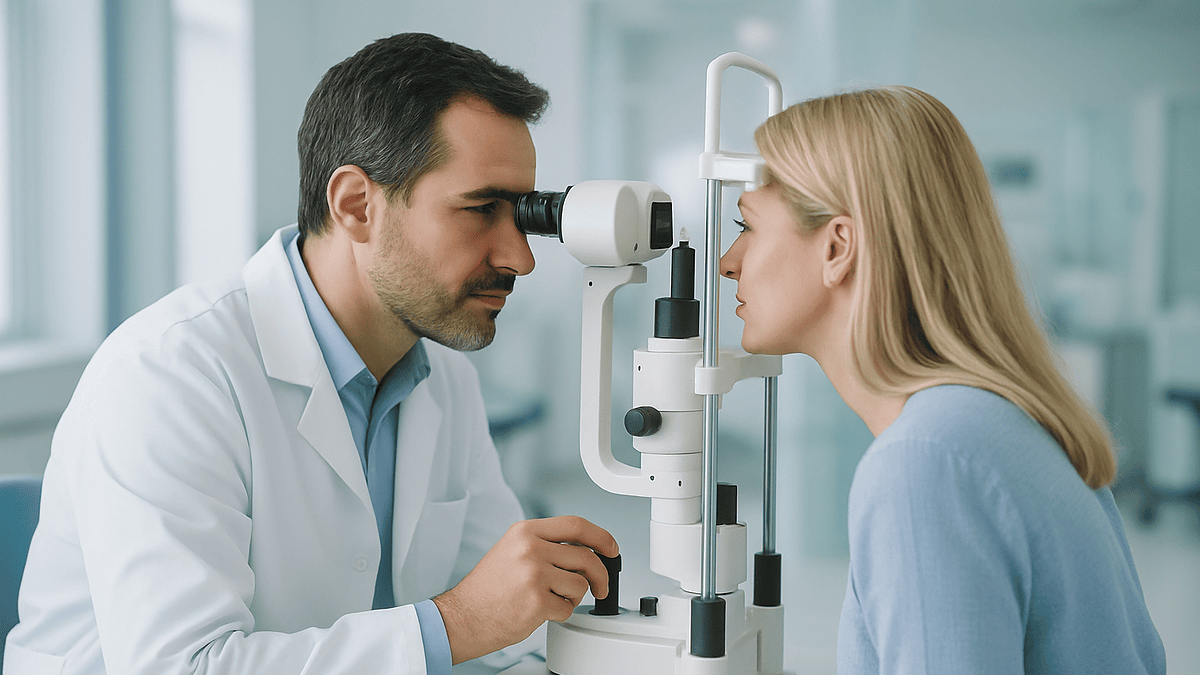
Key Takeaways
- Mayo Clinic describes vision after LASIK as blurry on the first day and typically much clearer within one to two days, while full stabilization takes around two to three months.
- Screens do not harm the healing cornea; they cut your blink rate and dry a tear film that is already depleted, so breaks and lubricating drops matter more than avoidance.
- Rubbing the eye is the single most avoidable cause of early flap problems, which is why rigid shields are worn during sleep for the first several nights.
- Dry eye is the most common LASIK side effect because the surgery cuts corneal nerves that drive tear production, and it usually improves over the first few months.
- Swimming, hot tubs and eye makeup are typically held back for one to two weeks, and contact sports for several weeks, according to Mayo Clinic guidance.
- PRK removes the corneal surface rather than lifting a flap, so its visual recovery takes days to weeks instead of the one to two days typical of LASIK.
A typical LASIK recovery timeline runs in stages: hazy, watery vision for the first several hours, noticeably clearer sight within one to two days, most everyday activities including screens and work back within a few days to a week, and vision settling over roughly two to three months. Dry eye and night glare often linger longest. Your surgeon's follow-up schedule and instructions determine what is safe for you.
The ride home is the part nobody warns you about. You are sitting in the passenger seat with plastic shields taped over both eyes, the world reduced to a milky glow, and a strange thought arrives: you can already see the dashboard clock without glasses. Blurry, yes. Watery, certainly. But there.
That mix of disbelief and impatience is where most people’s questions about the lasik recovery timeline begin. Can I look at my phone tonight? How many days off work is realistic? When does the halo around every streetlight go away, and is it normal that my eyes feel like I have been chopping onions?
What follows is the honest version of that timeline, drawn from mainstream medical guidance rather than clinic brochures. The pattern is broadly predictable. The pace is personal, and only the team that operated on your eyes can tell you where you sit on it.
What actually happens during LASIK, and why the first hours are blurry
LASIK stands for laser-assisted in situ keratomileusis, which is a long way of saying the surgeon reshapes the cornea with a laser. The cornea is the clear dome at the front of the eye that does most of the eye’s focusing. If it is too steep, too flat or unevenly curved, light lands in the wrong place on the retina and you get nearsightedness, farsightedness or astigmatism.
The procedure has two steps. First, a thin hinged flap is created in the surface of the cornea, using either a fine blade or a femtosecond laser, and folded back like the cover of a book. Second, an excimer laser removes microscopic amounts of tissue from the exposed layer underneath, changing the curve. The flap is then laid back into place, where it seals itself without stitches. Mayo Clinic describes the whole thing as taking about 30 minutes or less for both eyes, with the laser itself firing for well under a minute per eye.
Understanding that flap explains almost everything about the first day. It has been lifted and repositioned, so the surface is swollen and the tear film, the thin liquid layer that keeps the cornea optically smooth, is disrupted. Light scatters through a slightly cloudy window. The numbing drops wear off after an hour or so, and the eye reports what has happened as burning, grittiness or the feeling of an eyelash that will not come out. MedlinePlus notes that vision is usually blurry or hazy on the first day and that patients are asked to rest with their eyes closed for several hours afterward.
None of this is a sign that something went wrong. It is the expected response of a tissue that has just been reshaped. What matters in these first hours is protecting the flap while it begins to adhere, which is why the shields, the ban on rubbing and the early follow-up visit exist.
LASIK recovery timeline at a glance
Every surgeon adjusts these windows to the individual eye, the amount of correction and how the surface is healing at each check. Treat the table as the usual pattern described by Mayo Clinic, MedlinePlus and the NHS, not a schedule to hold your own eyes against.

| Stage | What most people notice | What is usually allowed or restricted |
|---|---|---|
| First 4 to 6 hours | Haze, tearing, burning, light sensitivity as numbing wears off | Eyes closed and resting; shields on; no rubbing; someone else drives |
| Day 1 (follow-up visit) | Vision markedly clearer, still fluctuating; grittiness fading | Surgeon checks flap; light screen use often permitted with frequent breaks |
| Days 2 to 7 | Functional vision for most tasks; dryness; mild glare | Return to desk work; driving once cleared; no eye makeup, no swimming, no rubbing; shields at night |
| Weeks 2 to 4 | Sharper, steadier vision; night halos easing | Most sport resumes; swimming and hot tubs usually held back until cleared |
| Months 1 to 3 | Vision stabilizes; dry eye improving for most | Contact sports with eye protection; final prescription check |
| Months 3 to 6 | Residual dryness or glare resolving in most people | Discussion of any enhancement if correction is off target |
Two things stand out. The dramatic change happens early: Mayo Clinic notes that vision often improves within a day or two, which is why people describe LASIK recovery as fast. The quiet part takes far longer, because the cornea keeps settling for two to three months and the tear film can take even longer to normalize. Both halves are the timeline. Judging the operation by week one alone, in either direction, tends to mislead.
Day one after LASIK: what the blur, stinging and light sensitivity usually mean
Think of the first day as the eye’s swelling phase. The corneal flap has been lifted and replaced, the surface cells at its edge are knitting back together, and the whole structure is holding extra fluid. Fluid in a lens means scatter, and scatter means haze. That is why the clock on the dashboard is visible but soft, and why a lamp across the room wears a fuzzy corona.
The stinging is a separate mechanism. Anesthetic drops keep the eye quiet during surgery, and as they wear off the exposed nerve endings around the flap edge start reporting. Cleveland Clinic lists burning, itching and a foreign-body sensation among the most common day-one experiences, along with watery eyes and sensitivity to light. Most people find the worst of it passes within the first evening, particularly if they follow the almost universal advice to go home, draw the curtains and sleep.
Sleep is not just comfort. Closed lids keep the flap bathed in tears, stop you blinking against a dry surface and remove the temptation to rub, which is the one action that can physically shift a flap in these early hours. The rigid shields taped over the eyes exist for exactly that reason, and most surgeons ask that they stay on for sleep for the first several nights.
Drops start on day one too. Typically there is an antibiotic to reduce infection risk, an anti-inflammatory such as a corticosteroid to calm the healing response, and preservative-free lubricants to replace a tear film that has temporarily stopped doing its job. The schedule for each is set by the operating surgeon and varies with the eye; the point here is only that the drops are part of the healing, not an optional extra.
By the first-morning check, MedlinePlus says, most people can already see well enough to notice how much has changed. The fluctuation will continue, though, so a sharp hour followed by a hazy one is expected rather than alarming.
How many days should I rest after LASIK?
The honest answer splits into two kinds of rest. There is the enforced kind, which is short, and the protective kind, which stretches longer than most people plan for.

The enforced rest is the day of surgery itself. MedlinePlus advises resting with eyes closed for several hours immediately afterward and having someone else drive, and Mayo Clinic describes the first day as one for sleeping and staying indoors. Bright light, wind and screens are all uncomfortable at this stage, and the flap benefits from a quiet, closed-lid environment while its edges begin to seal.
After the morning follow-up, most surgeons allow a return to light daily activity. Cleveland Clinic notes that many people go back to work within a day or two, especially to desk-based jobs, though the recommendation often stretches to a few days for anyone whose work involves dust, fumes, heavy exertion or a lot of driving. The deciding factor is not how the vision feels, which can be misleadingly good, but whether the environment puts the healing surface at risk.
The protective rest is about specific activities rather than lying down. Rubbing the eyes is off limits for weeks. Eye makeup, swimming, hot tubs and contact sport are typically held back for one to several weeks, according to Mayo Clinic, because each brings either bacteria or a blow to the surface. Strenuous gym sessions are usually paused for at least the first few days, partly because sweat running into the eye stings and partly because straining raises pressure in the head and eye.
A practical approach many patients settle on is to book the surgery late in the week, take the following day fully off, and treat the weekend as a gentle re-entry. Then check with the care team before resuming anything that involves water, impact or grime. Whatever plan you make, the surgeon’s instructions override it.
Can I watch TV 3 days after LASIK? Screens, blinking and the dry-eye trap
By day three the answer for most people is yes, with a caveat that has less to do with the flap than with blinking. Screens do not damage a healing cornea. What they do is cut your blink rate, and a surface that is already producing fewer tears than usual dries out fast when you stare.
Here is the mechanism. LASIK cuts through some of the corneal nerves that tell the brain to blink and to produce tears. Cleveland Clinic and Mayo Clinic both list dry eye as the most common side effect in the weeks after surgery for this reason. Watching a screen, whether a television across the room or a phone held close, narrows the field of attention and drops blinking to a fraction of its normal rate. The tear film breaks up, the image blurs, the eye stings, and people conclude that the screen is harming them. It is the dryness talking.
Television is the gentlest screen because it is far away and large. A phone or laptop demands close focus, which fatigues the still-settling eye more quickly. Many surgeons permit brief checking of a phone on the evening of surgery and more normal use from day one or two, with a strong emphasis on frequent breaks and liberal lubricating drops.
Simple habits make the difference. Turn the brightness down. Enlarge the text rather than leaning in. Every twenty minutes, look across the room and blink deliberately several times. Keep the preservative-free lubricant your surgeon recommended within reach and use it before the eye feels dry rather than after. If a screen session leaves the eye red and gritty, that is the signal to stop for a while, not to push through.
The question people rarely ask is when screens stop being a problem at all. For most it is a matter of weeks as the tear film recovers, though Mayo Clinic notes dryness can persist for months in some people.
Can I go out 2 days after LASIK? Driving, weather and why sunglasses matter
Going out is usually fine by day two, provided a few conditions are met. Driving is the one that needs the surgeon’s explicit clearance, because it depends on measured vision rather than how confident you feel.
Most people are assessed at the day-one check and told whether their vision meets the legal standard for driving. Mayo Clinic advises that you must not drive until your eye doctor confirms your sight has improved enough. Even once cleared, night driving is often uncomfortable for the first few weeks because halos and starbursts around headlights are a normal part of early healing. A sensible first week involves daytime trips on familiar roads, with a companion where possible.
Weather matters more than people expect. Wind strips the tear film and carries grit; bright sunlight is painful to a light-sensitive eye and increases squinting, which people then relieve by rubbing. Sunglasses with good coverage solve both problems and are worth wearing outdoors for at least the first couple of weeks. Cleveland Clinic suggests a wide-brimmed hat or wraparound lenses on bright days.
Environments to approach carefully in the first week include anywhere dusty, smoky or crowded. Construction sites, barns, garden work and kitchens with airborne flour or oil bring particles to a surface that cannot yet flush them out efficiently. Steamy rooms fog the vision temporarily but do no harm. Air-conditioned offices and airplane cabins are dry environments that intensify the grittiness; travel is not forbidden, but lubricating drops become non-negotiable.
Social outings, walks, shopping and a meal out are all reasonable from day two for most people. The deciding question is whether the outing involves something touching, blowing into or splashing the eye. If it does, ask first.
The first week of LASIK aftercare: shields, showers, makeup and the no-rubbing rule
The first week has a small set of rules, and each one traces back to the flap. Until its edges have fully sealed, which takes days for the surface layer and weeks for the deeper bond, the priorities are keeping it in place, keeping it clean and keeping it wet.
Keeping it in place means no rubbing, no pressing, and shields over the eyes during sleep for the period your surgeon specifies, often the first several nights. People rub their eyes without noticing, especially half-asleep, and a firm knuckle across a fresh flap is the single most avoidable cause of early complications. If something itches, a lubricating drop and a closed eye are the response.
Keeping it clean means keeping water and cosmetics out. Showering is fine from the next day, with the face turned away from the spray and eyes closed while washing hair. Mayo Clinic advises avoiding eye makeup for about a week and skipping creams or lotions around the eye for the same period. Swimming pools, lakes, hot tubs and the sea carry organisms that a healing surface cannot defend against, and are usually off limits for one to two weeks or longer at the surgeon’s discretion. Cleveland Clinic gives similar guidance.
Keeping it wet is the drops schedule. The antibiotic protects against infection while the surface seals; the anti-inflammatory calms the healing response so the cornea does not haze; the lubricant does the job the tear film has temporarily stopped doing. Washing hands before each drop and not letting the bottle tip touch the eye or lashes both matter. How long each drop continues is the prescribing clinician’s decision and varies between patients.
Follow-up visits punctuate the week. Expect one at roughly 24 hours, per MedlinePlus, and another within the first week or two. Missing them removes the chance to catch problems while they are still easily managed.
How long does it take to see normally after LASIK?
Normal is a moving target after LASIK, and it helps to separate three different milestones that people bundle together.
The first is functional vision: seeing well enough to walk around, read a menu and recognize faces without glasses. For most people this arrives within one to two days, according to Mayo Clinic and MedlinePlus. It is the milestone that makes LASIK recovery feel astonishingly quick.
The second is stable vision: the point at which the image is sharp all day and does not swing between good and hazy hours. This takes longer because the cornea continues to remodel and the tear film continues to recover. Mayo Clinic puts full stabilization at around two to three months, and the NHS describes final results taking weeks to settle. During this window it is common for one eye to seem ahead of the other, for near focus to lag behind distance, and for the morning to be sharper than the evening.
The third is comfortable vision: the absence of grittiness, glare and halos. This is the slowest, and it is where honest expectations matter most. Dryness and night glare typically ease over the first few months, but Mayo Clinic notes they can persist beyond that in some people, and a minority experience longer-lasting dry eye.
Two further points deserve plain statement. Not everyone reaches the target correction on the first pass; Mayo Clinic describes undercorrection and overcorrection as recognized outcomes, and some surgeons discuss a second treatment, called an enhancement, once vision has fully stabilized. And LASIK does not stop the eye from aging. Presbyopia, the loss of near focus in middle age, arrives on its own schedule regardless, so reading glasses later in life are not a sign that the surgery failed.
Dry eye, halos and night glare: how long LASIK side effects usually last
Three side effects account for most of the frustration in LASIK recovery, and each has its own clock.
Dry eye is the most common. As described earlier, the surgery cuts some of the corneal nerves that drive tear production and blinking, and it takes months for them to regrow. The result is a gritty, tired, sometimes blurry eye that worsens with screens, wind, air conditioning and late evenings. Mayo Clinic reports that dryness is usual for the first few months and that most people improve substantially in that time, while a smaller group has symptoms that last longer. Preservative-free lubricants are the mainstay; if dryness is severe, the surgeon may discuss other options, from tiny plugs placed in the tear ducts to prescription drops that act on inflammation. Those decisions rest with the treating team.
Halos and starbursts are rings or spikes of light around headlights and streetlamps. They arise because the treated zone of the cornea and the untreated periphery focus light slightly differently, and at night the pupil widens enough to use both. Swelling in the early weeks exaggerates the effect. Cleveland Clinic and Mayo Clinic describe glare and halos as common in the first weeks and typically fading over one to several months, though a minority notice them longer, particularly people with large pupils or high corrections.
Fluctuating vision is the third. The image sharpens and softens through the day as the tear film and corneal swelling shift. It settles as the other two improve.
Rarer effects deserve a mention without alarm. A temporary drop in contrast sensitivity, meaning difficulty distinguishing shades of grey in dim light, can occur. Regression, where the eye drifts partway back toward its original prescription, is more likely with high corrections. Each of these is a conversation for the follow-up visits, where the surgeon can measure rather than guess.
Weeks two to twelve: sport, swimming, the gym and when the cornea is truly settled
Once the first week’s rules relax, the recovery becomes a question of impact and immersion. The flap’s surface seals quickly, but the deeper bond between flap and underlying cornea strengthens over weeks, and the tissue never regains quite the same tensile strength as an uncut cornea. That is why the return to activity is staged.
Gentle exercise such as walking, stationary cycling and light weights is usually fine within the first few days, with sweatbands or a towel to stop perspiration running into the eyes. Running, yoga and most gym classes typically follow within one to two weeks. Mayo Clinic advises avoiding strenuous contact sports for at least a few weeks after surgery; many surgeons ask for a month or more for boxing, martial arts, rugby and similar activities, and recommend protective eyewear indefinitely for anything with a real risk of a blow to the face.
Water is its own category. Chlorinated pools irritate and can carry bacteria; natural water can carry organisms that cause serious corneal infections. Mayo Clinic and Cleveland Clinic both place swimming and hot tubs off limits for roughly two weeks, and some surgeons prefer longer. Goggles afterward reduce both irritation and risk. Scuba diving and surfing generally wait longer still because of pressure changes and salt spray.
Dusty or airborne-particle environments such as woodworking, gardening and construction return once the surface is fully healed, again with eye protection. Air travel is not restricted for healing reasons, though cabin dryness makes lubricants essential.
Around the three-month mark most surgeons carry out a final refraction, the measurement of the eye’s focusing power, to confirm the result has stabilized. This is the point at which any residual prescription is discussed, an updated eyeglass check is done if needed for night driving or reading, and the recovery is considered complete for most people, even if dryness lingers a little longer.
Who LASIK is usually for, and who is typically asked to wait or consider another option
The recovery timeline above assumes a suitable candidate, and suitability is a large part of why the pattern is so consistent. The assessment before surgery is as important as anything that happens after it.
Candidates are usually adults whose glasses or contact lens prescription has been stable for at least a year, whose corneas are thick enough to spare tissue safely, and who have healthy eyes otherwise. The NHS notes that laser eye surgery is generally offered to people over 18 with a stable prescription, and Mayo Clinic lists moderate nearsightedness, farsightedness and astigmatism within measurable limits as the typical range treated.
People commonly asked to wait include those whose prescription is still changing, which is why many surgeons prefer patients in their twenties or older; anyone pregnant or breastfeeding, because hormonal shifts alter corneal shape and tear production; and those recovering from an eye infection or injury. Contact lens wearers are asked to stop lenses for a period before assessment so the cornea returns to its natural shape and can be measured accurately.
People for whom LASIK is often not recommended, and who may be steered toward a different procedure or none, include those with thin or irregularly shaped corneas, a condition called keratoconus in which the cornea bulges into a cone, significant pre-existing dry eye, uncontrolled diabetes or autoimmune disease that impairs healing, and very high prescriptions beyond what the laser can safely correct. Mayo Clinic also flags large pupils as raising the risk of troublesome night glare.
Alternatives exist across a spectrum: surface laser treatments such as PRK, small-incision lenticule extraction, implantable lenses placed inside the eye, and the entirely reasonable choice of continuing with glasses or contact lenses. None is universally better. The right option depends on measurements taken by the treating team, and the decision belongs with them and the patient together.
LASIK vs PRK vs SMILE: how long each laser eye surgery takes to heal
People searching for a laser eye surgery timeline sometimes discover that the procedure they are booked for is not LASIK at all, and the difference matters because recovery diverges sharply.
LASIK creates a flap and reshapes the tissue beneath it. Because the surface layer is folded back rather than removed, it heals quickly, and functional vision returns within a day or two.
PRK, or photorefractive keratectomy, removes the surface layer of cells entirely and applies the laser directly to the exposed cornea. There is no flap to dislodge, which makes it a common choice for thinner corneas or for people in contact sports, but the surface must regrow. That takes several days of significant discomfort and blur, and MedlinePlus and Mayo Clinic describe visual recovery over weeks rather than days. A soft bandage contact lens is often placed for the first few days.
SMILE, or small-incision lenticule extraction, uses a femtosecond laser to carve a thin disc of tissue inside the cornea and remove it through a small opening, with no full flap. Early recovery is broadly similar to LASIK, and some reports suggest less early dryness because fewer surface nerves are cut, though evidence is still developing and it is not offered for every prescription.
| Procedure | How the surface is handled | Typical functional vision | Distinctive recovery feature |
|---|---|---|---|
| LASIK | Hinged flap lifted and replaced | 1 to 2 days | Flap must be protected from rubbing and impact |
| PRK | Surface layer removed, regrows | Several days to weeks | More early pain and blur; no flap risk |
| SMILE | Small opening, inner disc removed | 1 to several days | No flap; possibly less early dryness |
Long-term outcomes across the three are described by mainstream sources as broadly comparable for suitable candidates. The choice is driven by corneal thickness, prescription, lifestyle and the surgeon’s assessment rather than by speed of recovery alone.
What people often get wrong about LASIK recovery
Several beliefs circulate about recovery that are either outdated or simply inverted, and each one can shape decisions in the wrong direction.
The first is that good vision on day two means healing is finished. It means the swelling has settled and the flap is where it should be, which is excellent. The cornea continues to remodel and the tear film continues to recover for two to three months, per Mayo Clinic. Abandoning the drops or the no-rubbing rule because everything looks clear is the most common way an easy recovery becomes a complicated one.
The second is that screens damage the healing eye. They do not. They reduce blinking, which dries a surface that is already short of tears. The remedy is breaks and lubricant, not a screen ban.
The third is that dryness and halos are signs the surgery went wrong. They are the expected consequences of cutting corneal nerves and altering the cornea’s curve, and they improve over months for most people. Persistent or worsening symptoms warrant a conversation with the surgeon, but their presence in the early weeks is normal.
The fourth is that LASIK is permanent in the sense of freezing the eye in time. The correction to the cornea is lasting, but the eye keeps aging. Presbyopia will arrive in middle age regardless, and cataracts later still. Reading glasses at fifty are not a failure of surgery at thirty.
The fifth is that any residual blur means a botched operation. Undercorrection and overcorrection are recognized outcomes, described by Mayo Clinic, and are assessed once vision stabilizes. Some are left alone; some are treated with a second procedure. Neither is decided in week one.
The last is that everyone recovers on the same clock. Higher prescriptions, older eyes, pre-existing dryness and individual healing all shift the pace. The surgeon’s checks, not a friend’s experience, are the reference point.
Questions to ask your care team before and after LASIK
A good consultation leaves you knowing what your own recovery is likely to look like, not the average one. These questions help get there, and none of them should feel unwelcome.
Before surgery, ask which procedure is being recommended for your eyes and why, including how corneal thickness and prescription shaped that choice. Ask what the realistic target is: full independence from glasses, or good distance vision with reading glasses later. Ask how your risk of dry eye has been assessed and whether anything about your eyes, such as large pupils or a high prescription, raises the chance of lasting glare. Ask what happens if the correction falls short, and how long after surgery that would be judged.
About the immediate recovery, ask exactly how long the shields are to be worn, which drops are being prescribed, what each one does and how long each continues. Ask when you can shower, wash your face, use a screen, drive, exercise and swim, since surgeons vary and the honest answer is the one for your eye. Ask who to contact out of hours and what symptoms should prompt that call.
At follow-up visits, ask what was measured and what it means. Is the flap sitting well? Is the surface healing as expected? Is the prescription tracking toward the target? Ask when the next check is and what would bring it forward. If dryness or halos are troubling you, say so plainly and ask what the options are and when they would be considered.
Finally, ask what the team would want to know from you between visits. Recovery is a shared project, and the surgeon can only act on what is reported. Writing questions down beforehand, and bringing someone to the first visits when vision is still soft, makes the answers easier to hold onto.
When to call your doctor: red flags after LASIK
Serious complications after LASIK are uncommon, and the follow-up schedule exists to catch most problems early. A few signs should not wait for the next appointment. Contact your surgeon or the emergency number you were given the same day if any of these occur.
- Pain that is severe, increasing, or returns after having settled. Early discomfort should fade over the first day or two; new or worsening pain, especially with light sensitivity, can indicate infection or inflammation under the flap.
- A sudden drop in vision, or vision that was improving and then becomes markedly worse. Mayo Clinic and Cleveland Clinic both flag this as a reason for urgent assessment.
- Any blow to the eye, a poke, or firm rubbing followed by a change in vision or a sensation of something moving on the surface. These can shift the flap, which is treatable but time-sensitive.
- Increasing redness, thick discharge, or a white or grey spot visible on the cornea. Infection after LASIK is rare but progresses quickly and needs prompt treatment.
- New flashes of light, a shower of floaters, or a curtain or shadow across part of the vision. These are not typical LASIK effects and can signal a problem at the back of the eye that needs urgent evaluation.
- Persistent double vision in one eye, or vision that fluctuates dramatically beyond the first week.
Mild grittiness, watering, glare and fluctuating clarity in the first days and weeks are expected and do not need an urgent call, though they are worth mentioning at scheduled visits. Trust the pattern: things should be slowly getting better. When they are clearly getting worse, or when something feels wrong in a way you cannot explain, the treating team would far rather hear from you than not. Every decision about what to do next belongs with them.
Frequently asked questions
How many days should I rest after LASIK?
Most people need one full day of genuine rest, meaning eyes closed as much as possible on the day of surgery, followed by a return to light activity after the day-one check. MedlinePlus and Cleveland Clinic note that many return to desk work within one to two days. Activities involving water, impact, dust or heavy exertion are usually paused for one to several weeks. Your surgeon’s instructions take precedence over any general timeline.
Can I watch TV 3 days after LASIK?
Yes, for most people television is fine by day three and often from the day after surgery. The issue is not the screen but reduced blinking, which dries an already depleted tear film and causes stinging and blur. Keep the room dimly lit, take a break every twenty minutes to blink and look away, and use the lubricating drops your surgeon recommended. Stop if the eyes become red or gritty.
Can I go out 2 days after LASIK?
Going out is usually fine by day two, with sunglasses to manage light sensitivity and wind, and while avoiding dusty, smoky or crowded settings that could bring particles to the eye. Driving is different: Mayo Clinic advises not driving until your eye doctor confirms your vision meets the required standard, which is usually assessed at the first follow-up. Night driving often remains uncomfortable for a few weeks because of halos.
How long does it take to see normally after LASIK?
Functional vision typically returns within one to two days, according to Mayo Clinic and MedlinePlus, but stable, comfortable vision takes longer. The cornea keeps settling for around two to three months, during which clarity can fluctuate and near focus may lag. Dryness and night glare usually ease over the same period, though some people notice them longer. The final result is generally judged at the three-month check.
When can I use my phone after LASIK?
Brief phone use is often permitted the evening of surgery, and more normal use from the following day, though many surgeons suggest limiting close-up screen time for the first few days. Phones are more tiring than television because they demand near focus from an eye that is still settling. Enlarge the text, lower the brightness, blink deliberately and keep lubricating drops nearby. Ask your care team for their specific guidance.
How long does LASIK take to heal completely?
The surface of the corneal flap seals within days, the deeper bond strengthens over weeks, and vision stabilizes over roughly two to three months, per Mayo Clinic. Dry eye and glare typically resolve within that window for most people, though a minority experience them for longer. The three-month follow-up is usually where surgeons confirm the result and discuss anything that remains off target.
What is the most important part of LASIK aftercare in the first week?
Protecting the flap. That means no rubbing or pressing on the eye, wearing the shields during sleep for as long as instructed, keeping water and cosmetics away from the eye, and using every prescribed drop on schedule. The antibiotic guards against infection, the anti-inflammatory calms healing and the lubricant replaces a temporarily failing tear film. Attending the day-one and first-week follow-ups matters just as much.
Is LASIK recovery time different from PRK recovery time?
Yes, substantially. LASIK lifts a flap and replaces it, so functional vision usually returns within one to two days. PRK removes the surface layer of the cornea entirely and it must regrow, which means several days of discomfort and blur and visual recovery over weeks, according to Mayo Clinic and MedlinePlus. PRK avoids flap-related risks, which is why it is sometimes chosen for thinner corneas or contact sports.
Why is my vision fluctuating a week after LASIK?
Fluctuation is expected in the first weeks. Corneal swelling shifts through the day, the tear film is unstable because some corneal nerves were cut, and one eye often settles faster than the other. Mornings are frequently sharper than evenings. This normally settles as the cornea stabilizes over two to three months. A sudden, marked drop in vision is different and should prompt a same-day call to your surgeon.
Will I need glasses again after LASIK?
Possibly, and not necessarily because anything went wrong. LASIK reshapes the cornea but does not stop the eye aging, so presbyopia, the loss of near focus in middle age, arrives on its own schedule and often requires reading glasses. Some people also have a small residual prescription, which Mayo Clinic describes as undercorrection or overcorrection; the surgeon assesses this once vision stabilizes and discusses whether anything further is appropriate.
References
This article is for general information only and is not a substitute for professional medical advice. Please consult a qualified doctor about your individual situation.

More from the Blog

Scar Treatment Results: What Realistic Improvement Looks Like and Why Sessions Repeat
Realistic scar treatment results mean a scar that is flatter, softer, paler and less noticeable, not a scar that vanishes. Scar tissue is permanent,…

Neck Lift Recovery Time: Healing Stages, Scars and Results That Settle
Most people look socially presentable about two to three weeks after a neck lift, once visible bruising fades and swelling starts to settle. Full…

How to Prepare for Microneedling: Sun, Retinoids and the Two Weeks Before Your Session
Preparing for microneedling usually means keeping the skin out of strong sun and free of sunburn or tan for the two weeks beforehand, pausing…
IPL Photorejuvenation Results: Why Spots Darken Before They Fade and How Sessions Build
IPL photorejuvenation results usually appear gradually. Treated brown spots often turn darker and coffee-ground-like for several days before flaking away over one to two…

Surface Reconstruction Recovery: Early Supervised Walking, Physical Therapy and Milestones
Surface reconstruction recovery after ocular surface surgery usually unfolds in stages: the corneal surface layer re-covers over days, comfort and light sensitivity settle over…

Before Aesthetic Filling: Blood Thinners, Alcohol and Supplements Your Doctor Will Review
Before dermal fillers, clinicians typically review anything that increases bruising or bleeding: prescribed anticoagulants and antiplatelet drugs, over-the-counter anti-inflammatory painkillers, supplements such as fish…