

Plexr Plasma Exeresis vs Surgical Blepharoplasty: Which Eyelids Suit a Non-Surgical Lift?
Key Takeaways
- Plasma exeresis vaporizes pinpoints of the outer skin so it contracts, while blepharoplasty removes skin and often fat, so the two treat different layers of the eyelid.
- Hooding has four possible causes, loose skin, fat prolapse, a weak lid muscle and a descended brow, and a plasma pen addresses only the first.
- Mayo Clinic describes bruising and swelling after blepharoplasty settling over about 10–14 days, with scars continuing to fade for months.
- The closest documented benchmark for plasma healing is ablative resurfacing, where Mayo Clinic notes new skin covers the wound in roughly 1–2 weeks and redness can persist for months.
- Post-inflammatory hyperpigmentation is the most common lasting complication of plasma treatment and is more likely in darker skin tones and with sun exposure during healing.
- Published evidence for plasma exeresis consists of small case series with follow-up measured in months, and no randomized comparison against surgery exists.
Plasma exeresis and surgical blepharoplasty address different problems. Plasma exeresis vaporizes tiny points of eyelid skin so it contracts, which suits mild skin laxity without fat bulging or a drooping lid margin. Blepharoplasty removes excess skin, and sometimes muscle and fat, and remains the evidence-based option for heavier hooding, fat prolapse or vision obstruction. Anatomy, skin type and expectations decide which fits, together with a qualified clinician.
There is a gesture almost everyone with hooded eyes knows. Two fingers on the brow, a small lift, and for a second the lid crease reappears in the bathroom mirror. Let go, and the fold settles back. The eyeliner you drew ten minutes ago has migrated onto the skin above. Somewhere, a browser tab is open on plasma exeresis vs blepharoplasty, and the two options could not sound more different: a handheld pen that promises to shrink skin without a blade, or an operation with stitches and a fortnight of bruising.
The honest answer is that neither is universally better. They treat different layers of the eyelid, they rest on very different amounts of evidence, and they suit different faces. A pen cannot lift a fallen brow or repair a weak lid muscle. Surgery cannot be undone if too much is taken.
This explainer walks through what each procedure actually does to the tissue, who tends to be a good candidate for a non-surgical lift, what the recovery weeks look like, and the questions worth asking before anyone touches your eyelids.
Plasma exeresis vs blepharoplasty: two very different answers to the same mirror
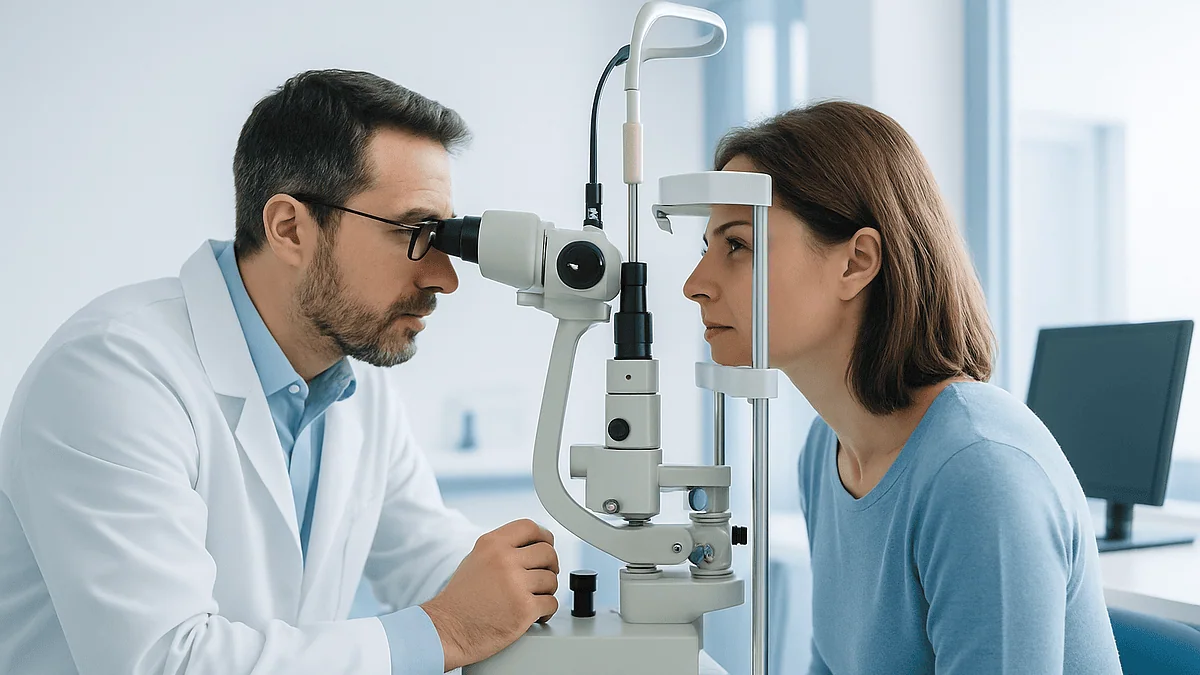
Blepharoplasty is eyelid surgery. A surgeon removes excess skin from the upper or lower lid, and often trims or repositions muscle and fat at the same time, then closes the incision with fine sutures. It has been performed for decades, and mainstream references such as Mayo Clinic and the NHS describe its steps, risks and recovery in detail.
Plasma exeresis is a non-surgical skin-tightening technique. A handheld device ionizes the air between its tip and the skin, producing a tiny electrical arc that vaporizes a pinpoint of the outermost skin. Nothing is cut. The skin around each point contracts from the heat, and over the following weeks the healing response remodels the surface. In marketing it is often called a plasma pen, a fibroblast treatment or a non-surgical blepharoplasty, though the last term is misleading because no tissue is excised.
That single distinction, removing tissue versus shrinking its surface, decides almost everything else: how much change is possible, how long it lasts, what can go wrong and who is a sensible candidate. Surgery can take away a centimeter of redundant skin and a bulging fat pad. Plasma exeresis works only on the skin layer, and only to the degree that the skin itself will contract.
The two also differ in how much we actually know about them. Blepharoplasty has long-term outcome data, standardized surgical training and well-documented complications. Plasma exeresis is supported mainly by small case series with short follow-up, usually assessed by photographs and clinician grading rather than controlled comparison. None of this makes the pen useless. It does mean that claims for it deserve a more skeptical reading, and that the first job is not choosing a tool but working out what is actually sagging.
What is actually drooping? Skin, fat, muscle or brow
Four separate things can make an eye look hooded, and they are easy to confuse in a mirror.
Dermatochalasis is the medical term for excess, loose eyelid skin. With age, skin loses collagen and elastic fibers, becomes thinner and stretches more easily, a process the National Institute on Aging describes as a normal part of skin aging accelerated by sun exposure and smoking. On the upper lid, that stretched skin folds over the crease and, in heavier cases, rests on the lashes.
Ptosis is different. The lid margin itself sits low over the iris because the levator muscle that raises the eyelid has weakened or slipped from its attachment. The skin may be perfectly firm; the problem is mechanical. Ptosis is treated by tightening or reattaching that muscle, not by removing skin or shrinking it.
Brow ptosis means the eyebrow has descended. When the brow drops, it pushes forehead skin down onto the lid and creates hooding that looks like an eyelid problem but originates several centimeters higher. This is why clinicians gently lift the brow to a neutral position during an exam and look at what remains.
Fat prolapse, sometimes called steatoblepharon, is puffiness caused by the fat pads that cushion the eye pushing forward through a weakened membrane. It shows as a bulge in the inner upper lid or as bags beneath the lower lid.
Most people over fifty have some blend of these. A pen only ever touches the first. Surgery can address the first and fourth, and different operations exist for the second and third. Before comparing procedures, ask the examining clinician to name which of the four is driving your hooding. Everything downstream depends on that answer.
How plasma exeresis actually works, in plain language
Picture the tip of a very fine metal probe held a hair’s breadth above the eyelid. An electrical current passes between the tip and the skin, and the thin layer of air in that gap becomes plasma: gas that has been energized until its atoms shed electrons. The result is a small, visible spark.
Where the spark lands, the outermost skin does not burn in the ordinary sense; it sublimates, turning from solid to vapor almost instantly. What is left is a brown dot roughly the size of a pinhead. The heat that spreads a fraction of a millimeter sideways causes collagen fibers in the upper dermis to contract, which is why the skin visibly tightens during the session itself. The depth is deliberately shallow, reaching the epidermis and the top of the dermis and not the muscle or fat beneath.
The practitioner places these dots in a grid across the redundant skin, typically in the fold above the crease, spacing them so that untreated skin remains between each point. That untreated skin is the reservoir from which healing begins. Over the following weeks the body repairs each micro-wound, laying down new collagen and gradually shrinking the treated surface.
Several practical points follow from this. The procedure is done under a numbing cream or a local anesthetic, not general anesthesia. There is no incision, no bleeding and no stitch. Protective eye shields are placed because an arc near an unprotected cornea is dangerous. Because each session can only contract the skin so far, clinicians often plan more than one session, spaced apart to let healing finish. The result depends heavily on the operator: dot depth, spacing and the total energy delivered are judgment calls, and too much in one area is what produces scars and pigment change.
What happens during surgical blepharoplasty, and what can go wrong
Upper blepharoplasty begins with a pen, not a scalpel. The surgeon marks how much skin to remove with you sitting upright, because eyelids drape differently lying down. Mayo Clinic describes the operation as usually done in an outpatient setting, most often with local anesthetic and sedation, and typically completed within about two hours when both upper and lower lids are treated.
The incision follows the natural crease so the scar hides in the fold. Excess skin is removed; a strip of the orbicularis muscle may be trimmed, and bulging fat is either removed or repositioned. Fine sutures close the wound. For lower lids, the cut is placed just beneath the lash line or, when only fat needs addressing, on the inside of the lid so no skin scar is visible at all.
Mayo Clinic and the NHS list the recognized risks in plain terms: infection and bleeding; dry, irritated eyes; difficulty closing the eyes fully; noticeable scarring; injury to the muscles that move the eye; skin discoloration; temporary blurred vision; asymmetry between the two sides; and the possibility of needing a further operation. Very rarely, bleeding behind the eye can threaten sight, which is why sudden severe pain or vision change after surgery is an emergency.
Two complications deserve particular attention because they are largely about judgment rather than bad luck. Removing too much upper-lid skin can leave the eye unable to close comfortably at night. Removing too much fat can hollow the lid and make the eye look sunken rather than refreshed. Good surgeons are conservative for exactly these reasons.
When hooding is heavy enough to block the upper field of vision, an assessment may classify the surgery as functional rather than cosmetic. That is a clinical determination made by the treating team, usually with visual field testing, and it changes the conversation from preference to medical need.
Which eyelids suit a non-surgical lift, and who is usually asked to wait
The eyelids that respond best to plasma exeresis share a profile. The excess is skin alone, mild to moderate, with a visible crease still present when the brow is held neutral. There is no fat bulge. The lid margin sits at a normal height, so there is no ptosis to fix. The brow has not descended far. The skin is relatively thin and lighter in tone, which lowers the risk of the pigment changes that ablative procedures can leave behind. And the person is comfortable with a week or more of visible crusting, possibly repeated across more than one session, in exchange for a softening rather than a dramatic lift.
Clinicians usually steer other people toward a different plan, or ask them to wait. Common reasons include:
- Skin resting on the lashes or narrowing the visual field, where only excision removes enough tissue.
- Bulging fat pads, which no surface treatment can flatten.
- True ptosis, which needs muscle repair, not skin treatment.
- Significant brow descent, where treating the lid alone can leave the brow looking lower.
- Darker skin types, where the risk of prolonged dark or pale marks after ablative treatment is higher and requires frank counseling.
- A history of keloid or raised scarring.
- Active skin infection, uncontrolled diabetes, active thyroid eye disease or recent use of certain acne medicines that affect healing, all of which a prescribing clinician would review.
- Pregnancy, when elective procedures are generally deferred.
- Expectations of a surgical result from a non-surgical tool.
None of these lists is a verdict. They are the starting points for a conversation in which the treating team weighs anatomy, skin, health and goals together, and where the final decision belongs to that team and to you.
Plasma pen for hooded eyes: what the evidence actually shows
Type the question into a search engine and the results split neatly into enthusiastic clinic pages and a handful of academic papers. The papers are worth understanding, because they are the only evidence that exists.
Published studies of plasma exeresis for the upper eyelid are mostly small case series: a few dozen people, treated at a single center, photographed before and after, and graded by the treating clinicians. Some have used skin imaging to document changes in the epidermis and upper dermis after treatment, which confirms that the technique does remodel tissue. Follow-up in these reports is generally measured in months rather than years. There is no large randomized trial, and no head-to-head comparison against surgery.
What that body of evidence supports is modest and specific: in people with mild excess skin, plasma exeresis produces measurable tightening that patients and clinicians can see. What it does not support is any claim about permanence, any percentage of satisfaction that can be generalized, or any suggestion that the pen substitutes for surgery in heavier hooding. When a website quotes a success figure without a named study, treat it as marketing rather than evidence.
Two further cautions. Inexpensive consumer devices sold online under the same name are not the same instruments studied in clinics; power output, tip design and safety features vary widely, and there is no published evidence for home use near the eye. And the eyelid is unforgiving: the skin is among the thinnest on the body, so the margin between an effective dot and a scar-forming one is narrow.
An evidence-first summary would read like this: the plasma pen can soften mild hooding caused by loose skin. It cannot lift a brow, raise a lid margin or remove fat. If your hooding comes from anything other than skin, the evidence points elsewhere.
Plasma exeresis vs blepharoplasty side by side
Numbers and timelines are easier to weigh in one place. The table below draws on Mayo Clinic and NHS descriptions of blepharoplasty, and on Mayo Clinic’s description of healing after ablative skin resurfacing as the closest well-documented comparator for plasma exeresis, since dedicated long-term data for the pen are limited.
| Feature | Plasma exeresis | Surgical blepharoplasty |
|---|---|---|
| What it treats | Mild to moderate loose skin only | Excess skin, fat prolapse, muscle laxity |
| Tissue removed | None; surface vaporized in pinpoint dots | Skin, with or without muscle and fat |
| Anesthesia | Numbing cream or local anesthetic | Local anesthetic with sedation, or general |
| Session length | Usually under an hour, clinician dependent | Typically within about two hours for upper and lower lids (Mayo Clinic) |
| Visible healing | Crusted dots; new skin covers ablative wounds in roughly 1–2 weeks (Mayo Clinic, laser resurfacing) | Bruising and swelling settle over about 10–14 days (Mayo Clinic) |
| Scar | Possible dot marks or pigment change; no linear scar | Linear scar hidden in crease, fading over months |
| Repeat treatment | Often more than one session planned | Usually a single operation; revision possible |
| Durability | Not established in long-term studies | Long lasting, though drooping can recur with aging (Mayo Clinic) |
| Evidence base | Small case series, short follow-up | Decades of surgical outcome data |
| Key risks | Hyper- or hypopigmentation, scarring, prolonged redness, eye injury if unshielded | Bleeding, infection, dry eye, incomplete closure, asymmetry, rare sight-threatening bleeding |
Read across a row and the pattern is consistent: the pen trades a smaller, less certain result for a smaller, less certain set of risks. Surgery offers a larger and more predictable change at the price of an operation and a scar. Neither column is right for everyone, which is precisely why the exam comes before the decision.
Plasma pen downsides: hyperpigmentation, scarring and the eye itself
Because plasma exeresis is sold as gentle, its complications are often underplayed. They are real, and some are stubborn.
Post-inflammatory hyperpigmentation is the most common lasting problem. Any injury that reaches the dermis can trigger pigment cells to overproduce melanin as they heal, leaving brown patches or a visible grid of dots that outlast the intended tightening. The risk rises sharply in medium and darker skin tones and with any sun exposure during healing. The reverse, hypopigmentation, can also occur when pigment cells are destroyed, producing pale spots that are harder to treat. Mayo Clinic notes both outcomes as recognized risks of ablative resurfacing, and the mechanism is the same for plasma.
Scarring follows overtreatment. Dots placed too deep, too close together or repeated too soon can heal as small pits or as a firm, shiny patch. On skin as thin as the upper eyelid, the therapeutic window is narrow.
Swelling is universal and often dramatic on the first two or three mornings; eyelids swell readily and the treated area can look far worse than expected. Redness commonly persists after the crusts fall away, and Mayo Clinic describes pinkness after ablative treatments lasting months in some people.
The eye itself is the risk that matters most. A plasma arc, a topical anesthetic and a numbed lid within millimeters of the cornea demand proper eye shields and trained hands. Infection can follow if crusts are picked or contaminated.
Finally there is disappointment. The commonest outcome of a pen used on the wrong eyelid is not harm but no meaningful change, sometimes after several sessions. That is a downside too, and an avoidable one when the anatomy is assessed honestly first.
Plasma pen eyelid recovery vs surgical recovery: the following days and weeks
The two timelines feel different in kind, not just in length.
After plasma exeresis, the first sensation is heat and tightness, like mild sunburn. By the next morning the lids are usually swollen, sometimes enough to narrow the eye, and the treated area is covered in small brown crusts. Those crusts are the vaporized skin; they should be left to fall away on their own. Mayo Clinic’s description of ablative resurfacing gives the closest documented benchmark: new skin generally covers the treated area within about one to two weeks, and redness can persist for weeks to months. Makeup is usually held until every crust has gone, and strict sun protection continues for the whole healing period because ultraviolet light is the main driver of pigment change. If further sessions are planned, the clinician spaces them to allow full recovery in between, on a schedule they set.
After blepharoplasty, Mayo Clinic describes a different arc. The first days bring bruising, swelling, watering, light sensitivity and sometimes double or blurred vision from the ointment used to protect the eye. Cold compresses, sleeping with the head raised and avoiding strenuous activity are standard advice. The NHS notes that stitches are removed or dissolve within about a week. Bruising and swelling usually subside over roughly 10–14 days, when most people feel comfortable in public. The incision line stays pink and slightly firm for longer and fades over months. Contact lenses, eye makeup and heavy exercise are reintroduced when the surgeon agrees.
In both cases, the final appearance is not the one you see at two weeks. Skin continues to remodel and swelling continues to leave for months. Judging either procedure before that point is the most common way people frighten themselves unnecessarily, or return for more treatment sooner than is wise.
Why do I look older after blepharoplasty?
It is a distressing search to have to type, and the answer usually falls into one of a few patterns.
The first is simply time. In the early weeks, swelling flattens the natural contour, bruising discolors the skin and the incision line looks angry. Faces in this phase often look tired rather than lifted. Mayo Clinic advises that it takes months for scars to fade and for the final shape to settle, so an assessment at three weeks is premature.
The second pattern is hollowing. If too much fat was removed from the upper lid, the eye can appear sunken, with a deep groove beneath the brow. A youthful upper lid is gently full; a skeletonized one reads as older, and it is one of the reasons modern technique favors preserving or repositioning fat over removing it.
The third is the brow. When hooding was partly caused by a descended eyebrow and only lid skin was removed, the lid now sits closer to a brow that has not moved. Some people also stop unconsciously raising their brows once they can see more easily, so the brow drops to its true resting position and looks lower than before surgery.
The fourth involves the lower lid. Skin removed too generously can pull the lower lid down, rounding the eye and exposing more white beneath the iris, a change strongly associated with looking older and tired.
Asymmetry, dryness that makes the eyes look red, and the simple experience of studying your face more closely than ever before all contribute. Revision surgery exists for genuine over-correction, but surgeons typically wait until healing is complete before judging. If you are in this situation, the right first step is a frank conversation with the operating team, not a second procedure elsewhere.
What can I do instead of an upper blepharoplasty?
The honest range of alternatives is wider than the pen, and narrower than advertising suggests.
Doing nothing is a legitimate option. Hooding from loose skin is not a disease. When it does not obstruct vision or cause irritation, watchful observation is a choice many people make, especially once they understand that no treatment stops aging from continuing.
If the problem is really the brow, options address the brow. Surgical brow lifts reposition the eyebrow and can reduce upper-lid hooding without touching the lid. Injectable neuromodulators of the botulinum toxin class relax the muscles that pull the outer brow down, allowing a small, temporary lift that fades over months; whether this suits a given face is a decision for the treating clinician, who also sets the plan.
If the problem is a low lid margin, ptosis repair is the relevant operation. It tightens the levator muscle and is fundamentally different from skin removal, which is why correct diagnosis matters so much.
For mild skin laxity alone, energy-based tightening is the category that includes plasma exeresis, along with radiofrequency and fractional laser devices. All work by controlled injury and collagen remodeling, all are operator dependent, and all offer softening rather than surgical change. The evidence for each on eyelid skin specifically is limited to small studies.
Everyday measures protect what you have. The National Institute on Aging identifies sun exposure and smoking as the major accelerators of skin aging; daily sun protection and not smoking will not lift a lid, but they slow the loosening that brings people to this question in the first place.
None of these is a substitute for surgery when skin rests on the lashes or fat is bulging. They are alternatives for the right anatomy, chosen with a clinician who has examined all four layers.
What people often get wrong
Some misunderstandings come up in almost every consultation about eyelids.
“A plasma pen is surgery without the surgery.” It is not. Surgery removes tissue; the pen shrinks the surface of the skin that remains. The ceiling on what it can achieve is set by how far eyelid skin will contract, which is modest.
“Non-surgical means no downtime.” Plasma exeresis produces swelling and a week or more of visible crusting, and possibly lingering redness. It is less invasive, not invisible.
“One session and you’re done.” Clinicians commonly plan more than one session because each can safely deliver only so much energy to such thin skin.
“Home pens are the same thing.” Consumer devices vary in output and safety, and there is no clinical evidence for using them near the eye. The cornea is millimeters away.
“Surgery is permanent.” Mayo Clinic is careful to say that while results often last many years, droopy eyelids can recur as aging continues. Surgery resets the clock; it does not stop it.
“Hooded eyes are always an eyelid problem.” A descended brow or a weak lid muscle can produce the same look and need entirely different treatment.
“Darker skin can’t have anything done.” Ablative treatments carry higher pigment risk in darker skin, which changes the conversation and the technique, but it is a matter for careful counseling rather than an absolute bar, and surgery is not affected in the same way.
“More aggressive means better results.” On eyelids, over-treatment is the direct cause of scarring, pigment change and the hollow, over-operated look. Conservatism is the mark of experience, not timidity.
Questions to ask your care team
A good consultation should leave you able to answer each of these. If one is brushed aside, that is information too.
- Which of the four causes, loose skin, fat, a weak lid muscle or a low brow, is producing my hooding, and how did you determine that?
- Does my hooding affect my field of vision, and has that been formally tested?
- Based on my anatomy and skin type, what degree of change is realistic with each option, and what would you expect to remain?
- What is your training and experience specifically with eyelids, and how many of this exact procedure do you perform?
- For plasma exeresis: how will my eyes be protected, how many sessions are you planning, what spacing between them, and what is my personal risk of pigment change or scarring?
- For surgery: will fat be removed or repositioned, how much skin will be taken, and how do you avoid an over-corrected or hollow look?
- What does the first two weeks look like day by day, and when can I return to work, screens, contact lenses and exercise?
- What complications have you seen with this procedure, and what would you do if one happened to me?
- What symptoms should make me call you the same day, and how do I reach you out of hours?
- If I am not happy with the result, what are the options and when would you assess that?
- What happens if I choose to do nothing for now?
Bring photographs of yourself from ten or fifteen years ago. They anchor the discussion in what your eyes actually looked like, rather than in an idea of youth borrowed from someone else’s face. And take the answers home before deciding; no reputable clinician expects a same-day commitment to a procedure near your eyes.
When to call your doctor
Most recovery from either procedure is uncomfortable rather than dangerous, but a short list of signs should never be waited out.
After surgical blepharoplasty, Mayo Clinic advises seeking immediate medical care for shortness of breath, chest pain, an unusual heart rate, severe new eye pain, bleeding or vision problems. Sudden, severe pain with rapidly increasing swelling or bulging of the eye can indicate bleeding behind the eye, which is a sight-threatening emergency. Call the treating team the same day for a fever, spreading redness or warmth around the incision, pus or an opening wound, an inability to close the eye that is worsening rather than improving, or double vision that persists beyond the first day.
After plasma exeresis, contact the clinician urgently for any change in vision, eye pain, a sensation of something in the eye that does not clear, or a discharge from the eye itself. Call promptly for swelling that closes the eye or worsens after the third day, increasing pain, yellow crusting or pus around the treated dots, spreading redness beyond the treated area, or fever. Dark or pale patches that appear as the crusts fall off, or any area healing as a pit or raised line, warrant early review because pigment and scar changes are easier to manage when caught soon.
For either procedure, a headache with a stiff neck, confusion, or a rash with fever is a reason to seek emergency care regardless of the eyelid.
Trust the instinct that something is not right. The treating team would rather hear from you about a false alarm than learn of a complication a week late. Keep their contact details and any written aftercare instructions where you can find them in a hurry, and follow their guidance over anything you read here or elsewhere.
Frequently asked questions
Does a plasma pen work for hooded eyes?
It can soften mild hooding caused by loose upper-lid skin, and small clinical studies document measurable tightening in that group. It does not work for hooding caused by bulging fat, a low lid margin from a weak muscle, or a descended brow, and it cannot remove skin that rests on the lashes. Whether your hooding is the kind that responds is a question for an in-person examination.
Is non surgical blepharoplasty the same as plasma exeresis?
Usually the phrase refers to plasma exeresis, sometimes to radiofrequency or laser tightening of eyelid skin. The term is misleading because blepharoplasty means surgical removal of eyelid tissue, and none of these techniques remove anything. They contract the skin surface through controlled micro-injury and healing. Treat the label as marketing and ask exactly which device and technique are being proposed.
What are the downsides of using a plasma pen on the eyelids?
The main risks are dark or pale pigment changes, visible dot marks or scarring from over-treatment, marked swelling for several days, redness that can last weeks or longer, and eye injury if shields are not used. Results are modest, may need more than one session, and long-term durability has not been established. An outcome of little visible change is also common when the anatomy is wrong for it.
Why do I look older after blepharoplasty?
Early on, swelling and bruising make most faces look tired, and Mayo Clinic notes the final result takes months to settle. Persisting older appearance usually comes from over-removal of fat producing a hollow lid, a low brow that was not addressed, lower-lid pulling that rounds the eye, or asymmetry. Discuss concerns with the operating surgeon once healing is complete rather than seeking a second procedure quickly.
What can I do instead of an upper blepharoplasty?
Options depend on the cause. Mild skin laxity may respond to energy-based tightening such as plasma, radiofrequency or fractional laser. A descended brow may suit a brow lift or, temporarily, botulinum toxin class injections chosen by a clinician. A low lid margin needs ptosis repair. Observation is also reasonable when vision is unaffected. None replaces surgery for heavy hooding or fat bulging.
How long does plasma pen eyelid recovery take?
Swelling is typically most noticeable in the first two or three days, and brown crusts remain until they fall away on their own. Dedicated long-term data for plasma are limited, but Mayo Clinic’s description of ablative resurfacing, the closest documented comparator, gives roughly one to two weeks for new skin to cover the area and notes redness can persist for months. Your clinician sets your individual timeline.
How long does blepharoplasty recovery take?
Mayo Clinic describes bruising and swelling generally subsiding over about 10–14 days, when most people feel comfortable returning to public activities. The NHS notes stitches are removed or dissolve within about a week. The incision line stays pink and slightly firm for longer and fades over months, and the surgeon advises when contact lenses, makeup and strenuous exercise can resume.
Can plasma exeresis be done on darker skin?
It can be, but the risk of post-inflammatory hyperpigmentation and hypopigmentation is higher in medium and darker skin tones, as with any ablative treatment. This means more cautious settings, test patches, rigorous sun protection and frank discussion of the trade-off. Some clinicians advise against it for eyelids in higher-risk skin. Surgery is not affected in the same way. The decision rests with the treating clinician.
Are blepharoplasty results permanent?
They are long lasting but not permanent. Mayo Clinic notes that for many people results last a lifetime, while others find droopy eyelids recur as aging continues. Surgery removes the excess present at the time; it does not stop skin from loosening afterward. Sun protection and not smoking slow that process, and a later revision is possible if needed.
Can hooded eyelids block vision?
Yes. When upper-lid skin drapes far enough, it can narrow the upper field of vision and cause brow fatigue from constantly raising the eyebrows. Clinicians can measure this with visual field testing, and a documented obstruction may classify surgery as functional rather than cosmetic. Plasma exeresis is not a treatment for vision-limiting hooding because it removes no tissue.
References
This article is for general information only and is not a substitute for professional medical advice. Please consult a qualified doctor about your individual situation.

More from the Blog

When Pigmentation Returns After Treatment: Sun, Hormones and What the Next Step Looks Like
Pigmentation often comes back after treatment because creams, peels and lasers reduce or remove existing pigment without switching off the pigment-making cells underneath. Ultraviolet…
Who Should Wait Before Mesotherapy: Health Factors Your Dermatologist Will Ask About
People usually asked to wait before mesotherapy include anyone who is pregnant or breastfeeding, taking blood thinners or living with a bleeding disorder, carrying…

How Long Does a Facelift Last? Longevity by Technique, Honestly Assessed
A full facelift that repositions the deeper SMAS layer typically keeps the jawline and neck visibly firmer for about seven to ten years, though…
Vascular Lesion Laser Recovery: Cool Compresses, Bruising and the Crusts You Must Not Pick
After vascular laser treatment, expect redness, swelling and sometimes a deep purple bruise-like mark called purpura that typically fades over one to two weeks.…
Is Masseter Botox Right for Teeth Grinding? Who Tends to Benefit and Who Should Wait
Masseter Botox, meaning botulinum toxin injected into the main chewing muscle, is generally considered for adults whose grinding or clenching causes jaw pain, muscle…

Who Is a Candidate for LASIK? Corneal Thickness, Stable Prescription and Eye Pressure
A typical LASIK candidate is an adult whose glasses or contact lens prescription has stayed stable for at least a year, whose cornea is…