

Preparing for a Root Canal: X-Rays, Medical History and What to Eat Beforehand

Key Takeaways
- For a root canal under local anesthetic alone, eating a normal meal one to two hours beforehand is usually advised, because numbness afterward makes chewing unsafe for several hours.
- A periapical X-ray showing the whole tooth and root tip is the first step in planning, and one or two further small X-rays during the procedure are routine, not a sign of trouble.
- The American Heart Association recommends preventive antibiotics before dental procedures only for a narrow group at highest risk of infective endocarditis, decided jointly by cardiologist and dentist.
- Never stop blood thinners or other prescribed medicines before a root canal on your own; the procedure involves very little bleeding, and any change must come from the prescribing clinician.
- A tooth that suddenly stops hurting may mean the pulp has died rather than healed, so the appointment should still be kept.
- The NHS describes modern root canal treatment as no more uncomfortable than a large filling, and typical post-treatment tenderness settles over a few days rather than building.
Root canal preparation is mostly practical. Bring a complete list of your medicines and health conditions, expect one or more small dental X-rays to map the tooth's roots, and eat a normal meal a couple of hours beforehand if you are having local anesthetic alone, because your mouth stays numb for several hours afterward. Take prescribed medicines as usual unless your dental team advises otherwise, and ask about fasting if sedation is planned.
The appointment card is stuck to the refrigerator, and the tooth has stopped being a background hum. It wakes you at 3 a.m. It complains about ice water and then, oddly, about warm soup. You have booked the root canal, and now a second, quieter worry has arrived: what are you supposed to do between now and then?
Most of the advice floating around is either too vague (“just relax”) or too dramatic (“stock the freezer, clear your week”). The honest picture sits in the middle. Root canal preparation is a short list of sensible steps, a few conversations your dentist genuinely needs to have with you, and a clear idea of what the numb, slightly tender hours afterward will feel like.
This article walks through the three things the title promises, X-rays, medical history and food, plus the parts people rarely think to ask about until the chair is already tilted back.
What does root canal preparation actually involve?
Start with the procedure itself, because every preparation step follows from it. A root canal, more precisely root canal treatment, removes the pulp, the soft tissue of nerves and blood vessels in the center of a tooth, when that pulp has become inflamed or infected. The dentist or endodontist (a dentist who specializes in the inside of teeth) numbs the area, isolates the tooth with a small rubber sheet called a rubber dam, opens the top of the tooth, cleans and shapes the thin canals running down each root, disinfects them, and seals them with a rubber-like filling material. A temporary or permanent filling closes the tooth, and a crown, a cap that covers the whole tooth, often follows later to protect it.
According to the NHS, treatment may be completed in one visit or spread across two or more, depending on the tooth and whether infection needs time to settle. Cleveland Clinic describes a typical appointment lasting roughly 30 to 60 minutes, with multi-rooted molars sometimes closer to 90.
Three facts drive nearly everything you do beforehand. First, you will be numb for hours afterward, which shapes when you eat. Second, the clinician needs a clear picture of the roots, which is why imaging comes first. Third, the treatment involves local anesthetic, possible sedation, and sometimes antibiotics, so your medical history and medicine list matter more than for a routine cleaning.
Everything else, the night-before routine, what to wear, what to skip, is detail layered on those three points. None of it requires special purchases or a week off work. It does require a little honesty with your dental team about what you take, what you have, and how anxious you are.
Why does a root canal X-ray come before anything else?
Roots are invisible from the chair. A molar can have two, three, or occasionally four roots, and each root can hold more than one canal, some curving sharply or splitting near the tip. The clinician cannot clean what they cannot find, so imaging is the first real act of root canal preparation, usually done at the consultation rather than on the day.
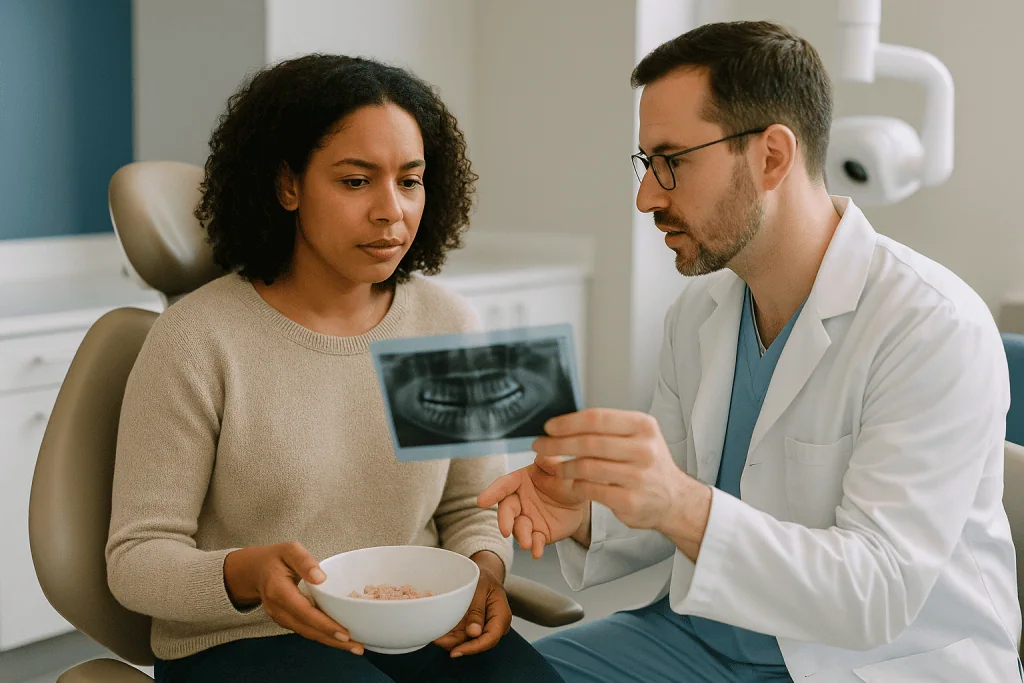
The standard image is a periapical radiograph, a small X-ray that captures the whole tooth from crown to root tip along with the surrounding bone. On it, the dentist looks for a dark shadow at the root tip, which suggests bone loss from infection, for the number and shape of the canals, for cracks, and for how deep existing fillings or decay run. The NHS notes that these X-rays also help confirm the diagnosis, since tooth pain can come from a neighboring tooth, the gum, or even the sinus.
When two-dimensional images leave questions, some clinicians request a cone beam CT, often shortened to CBCT, a three-dimensional dental scan that shows root anatomy in slices. It is not routine for every tooth; it is reserved for complex cases, retreatments, or suspected hidden canals.
Two things are worth mentioning before the picture is taken. Tell the team if you are or might be pregnant, so they can decide on timing and shielding. Tell them if you have had recent dental imaging elsewhere, because existing films can sometimes be shared rather than repeated. During the procedure itself, expect one or two more small X-rays to check that the instruments and filling reach the right length. That is normal, not a sign that something has gone wrong.
What should I tell my dentist about my medical history?
Dental teams ask about medical history for reasons that are specific, not bureaucratic. A root canal involves injected local anesthetic, sometimes a vasoconstrictor (a drug that narrows blood vessels to keep the anesthetic in place), possibly sedation, and occasionally antibiotics. Each of those interacts with the body you bring into the room.
The list they most need is straightforward. Every medicine you take, prescription or otherwise, including inhalers, injections, supplements and herbal products. Allergies, especially to any anesthetic, latex, or antibiotic, and what the reaction looked like. Heart conditions, including valve problems, previous endocarditis, pacemakers, or a heart attack or stroke within recent months. Bleeding disorders or bruising more easily than you used to. Diabetes and how well controlled it is. Autoimmune conditions or medicines that suppress the immune system. Any history of radiotherapy to the head or neck. Pregnancy or breastfeeding. Past bad experiences with dental treatment, fainting, or panic.
A few of these change the plan in concrete ways. Poorly controlled diabetes can slow healing and raise infection risk, so the team may want to know your recent readings. Certain bone-strengthening medicines used for osteoporosis or cancer carry a small risk to jawbone healing, which matters more for extractions than root canals but still belongs in the conversation. A recent heart attack may lead the team to postpone elective treatment or coordinate with your physician.
Write the list down or photograph your medicine bottles the night before; memory under mild stress is unreliable. If you see several specialists, one contact number for your primary doctor saves time. Nothing on this list disqualifies you from treatment on its own. It simply tells the clinician which of several safe routes to take.
Heart conditions, blood thinners and the antibiotic question
Two medical-history topics generate more anxious questions than all the others combined, so they deserve their own space.

The first is antibiotics before dental work. Root canal treatment can push oral bacteria into the bloodstream briefly, and for most people the immune system clears them without incident. The American Heart Association advises preventive antibiotics only for a small group at highest risk of infective endocarditis, an infection of the heart’s inner lining or valves. That group includes people with prosthetic heart valves or repaired valves using prosthetic material, a previous episode of endocarditis, certain congenital heart defects, and heart transplant recipients with valve disease. If you fall into one of these categories, your cardiologist and dentist decide together whether a single preventive dose is appropriate; the choice is theirs, not something to arrange yourself. For everyone else, guidelines have moved away from routine antibiotics, partly because of resistance and side effects. An antibiotic is not a substitute for the root canal; it may calm an acute abscess temporarily, but only removing the infected pulp addresses the source.
The second topic is anticoagulants and antiplatelet medicines, drugs that reduce clotting, prescribed after strokes, clots, stents, or for atrial fibrillation. The instinct to stop them before a dental procedure is understandable and usually wrong. Root canal treatment involves very little bleeding, since the work happens inside the tooth, and stopping these medicines can expose you to serious clot risk. Do not pause or adjust them on your own. Tell your dental team what you take, and if any change were ever considered, it would come from the clinician who prescribed the drug, with the dentist’s input. In most cases the answer is simply to continue as normal.
What to eat before a root canal, and what to skip
Here is where common sense and dental reality briefly disagree. Many people arrive hungry, having skipped food out of nerves or a vague sense that surgery means fasting. For a root canal done under local anesthetic alone, the opposite is usually better.
The reasoning is about the hours after, not during. Cleveland Clinic notes that numbness from the anesthetic typically lasts a few hours once treatment ends. Chewing on a numb lip or tongue is an easy way to bite yourself without knowing, so most clinicians suggest waiting until sensation returns before eating solid food. Combine that with a 60- to 90-minute appointment and you can see how a skipped breakfast becomes six or seven hours without food, low blood sugar, light-headedness, and a harder time sitting still.
A sensible plan for an anesthetic-only appointment: eat a normal, balanced meal one to two hours before you leave. Include some protein and slow-release carbohydrate so it lasts. Drink water. Then brush and floss, because a clean mouth is a courtesy to the team and reduces the bacterial load around the tooth.
Foods worth skipping in that pre-appointment meal are the ones that leave residue or irritate: very sticky sweets, hard nuts or chips that could aggravate the sore tooth, and anything hot enough to make a temperature-sensitive tooth flare. Alcohol is best avoided; it can interact with sedatives and does nothing for steadiness.
The rule flips entirely if sedation is planned. Intravenous or oral sedation, and general anesthesia, come with fasting instructions from the team, typically restricting food and drink for a set window beforehand to protect the airway. Follow those exactly, and if you are unsure whether sedation is part of your plan, phone and ask before the day.
What should I do the night before a root canal?
The night before is less about ritual and more about removing small frictions that make a stressful morning worse.
Confirm the practical details: appointment time, location, whether you are expected early for paperwork, and how you are getting home. If sedation is scheduled, arrange a companion to drive you and note the fasting cut-off. Set out the written medicine list and your insurance or identification documents so nothing gets hunted for at 8 a.m.
Take your usual medicines at their usual times unless the dental team or your prescribing doctor has told you otherwise. This applies to blood pressure medicines, inhalers, thyroid tablets, insulin and blood thinners alike. Consistency keeps you physiologically boring, which is exactly what a clinician wants.
If the tooth is keeping you awake, tell the team when you arrive; a night of poor sleep is worth mentioning. Over-the-counter pain relievers are widely used before dental treatment, but the type and timing depend on your other medicines and conditions, so ask the dentist or pharmacist rather than guessing. This article does not offer dosing, and neither should any website.
Brush and floss thoroughly, including around the painful tooth if you can manage it gently. Skip alcohol, which disrupts sleep and interacts with sedatives. Try not to smoke; it irritates the gums and slows healing generally. Lay out comfortable clothes with sleeves that roll up in case a blood pressure cuff or intravenous line is needed.
Then do something ordinary. Anxiety before dental treatment is common, and the NHS points out that most people find root canal treatment no more uncomfortable than a large filling. A walk, a book, or a phone call to someone who has been through it is more useful than another hour of searching.
What not to do before getting a root canal
Some pre-appointment mistakes are harmless; a few can genuinely complicate the day. In rough order of how often they cause trouble:
- Do not stop a prescribed medicine on your own. Blood thinners are the classic example, but the same applies to steroids, diabetes medicines and blood pressure tablets. Abrupt changes carry their own risks, and your dental team has almost certainly treated people on the same drugs.
- Do not arrive on an empty stomach unless you have been told to fast. For local anesthetic, food beforehand is the norm; for sedation, the fasting instructions come from the team, not from a general article.
- Do not drink alcohol the night before or on the day. It can interact with sedatives, thin the blood modestly, and blunt your ability to follow instructions.
- Do not take a leftover antibiotic to “get ahead” of the infection. Partial courses breed resistance and can mask signs the clinician needs to see. Antibiotics for dental infection are a clinical decision, made case by case.
- Do not withhold information out of embarrassment. Recreational drug use, needle fear, a history of fainting, or a previous panic attack in a dental chair all change how the team approaches you, safely and without judgment.
- Do not skip the appointment because the pain has faded. A tooth that suddenly stops hurting may mean the nerve has died, not that the problem has resolved. Infection can continue silently into the bone.
One more, smaller point: avoid strenuous exercise immediately beforehand. A raised heart rate makes some people feel the injection more sharply and can leave you feeling shaky in the chair. Arrive calm, fed, and honest, and you have done the hard part.
Who is treated right away, and who is asked to wait?
Root canal treatment is offered when the pulp is irreversibly inflamed or dead and the tooth is worth keeping. The NHS lists typical triggers: deep decay, a leaking or repeatedly replaced filling, a crack or trauma, and the infection at the root tip that follows. If the tooth has enough sound structure to support a filling or crown afterward, and the gum and bone around it are healthy enough to hold it, treatment usually goes ahead as planned.
The alternative is extraction, removing the tooth, followed by nothing, a bridge, a denture, or an implant. Clinicians present both options; root canal treatment keeps your own tooth and its root, which preserves bite and bone, while extraction ends the problem in a single step but starts a new conversation about the gap. Neither is universally right, and the choice belongs to you and your treating team.
A smaller group is asked to wait, or to see another clinician first. Someone with a large facial swelling, fever, or difficulty opening the mouth may need the acute infection managed, sometimes with drainage or antibiotics, before the tooth can be worked on comfortably. A person who has had a heart attack or stroke within the past several weeks, or who has uncontrolled high blood pressure on the day, may have elective treatment postponed while their physician is consulted. Poorly controlled diabetes, active chemotherapy, or recent radiotherapy to the jaw can each prompt a pause for coordination rather than a refusal.
Pregnancy is not a reason to avoid necessary dental treatment; untreated infection carries its own risks. Many clinicians simply prefer to schedule non-urgent work in the second trimester and adjust imaging and positioning accordingly. Tell the team, and let them plan around it.
How painful is a tooth before a root canal, and what does that pain mean?
People searching this question are usually asking two things at once: is my pain typical, and does its severity predict how the procedure will feel? The answers are more reassuring than the throbbing suggests.
Pulp pain has a recognizable pattern. Early inflammation often shows up as a sharp jolt to cold that lingers longer than it should. As inflammation progresses, heat starts to hurt too, and pain may arrive unprompted, particularly when lying down, because blood pressure in the head rises and the pulp, trapped in a rigid chamber, has nowhere to swell. Once the pulp dies, the tooth may go quiet for days or weeks, and then a different pain appears: a dull, pressure-like ache when biting, as infection reaches the bone at the root tip. Mayo Clinic describes this as the classic sign of a developing abscess, a pocket of pus.
The severity varies enormously between people, from a mild nagging awareness to pain that stops sleep. Neither extreme tells the dentist much about how difficult the treatment will be; anatomy determines that, not symptoms.
What matters more is that the pain you feel before is largely the pain the procedure removes. The NHS is direct on this point: with modern local anesthetic, root canal treatment should not be painful, and it is the untreated tooth that hurts. An acutely inflamed tooth can occasionally be harder to numb fully, which is one reason clinicians sometimes prefer to settle an angry tooth before the main appointment, and why they ask you to report any sensation honestly during the work.
If pain is severe now, ask the practice about an earlier or interim visit. Waiting in agony is not a required part of the process.
Root canal preparation on the day: a morning checklist
The morning itself is short. Most of what you need has been decided already; the table below simply sorts the day-of details by the type of appointment you are having, since sedation changes several of them.
| Detail | Local anesthetic only | With oral or IV sedation |
|---|---|---|
| Food and drink | Normal meal one to two hours before; water is fine | Follow the team’s fasting instructions exactly |
| Usual medicines | Take as normal unless told otherwise | Take as normal unless told otherwise; confirm with the team |
| Getting home | Driving is usually possible; some people prefer a lift | An adult companion must drive and stay with you |
| Clothing | Comfortable; avoid heavy lipstick or bright dental-area makeup | Loose sleeves for a blood pressure cuff or IV line |
| Documents | Written medicine list, allergies, insurance or ID | Same, plus any consent forms sent in advance |
| Time to allow | Roughly 30 to 90 minutes in the chair (Cleveland Clinic) | Longer, including recovery observation |
| Work afterward | Many return to desk work the same day | Rest of the day off is usual |
A few small additions. Brush and floss before leaving. Bring headphones if music helps you, and ask whether the practice allows them; many do. Arrive ten minutes early so paperwork does not eat into treatment time. If you have a cold sore, a heavy cold, or feel feverish, phone the practice first, since they may prefer to reschedule.
Once you sit down, expect the sequence to be predictable: a brief chat, a check of your medical form, the X-ray if not already taken, topical numbing gel, the injection, a wait of several minutes, and a test to confirm the tooth is numb before anything else begins. Raising a hand is the universal signal to pause. Clinicians would far rather stop and top up the anesthetic than have you endure discomfort silently.
What do the days after a root canal usually look like?
Preparation is easier when you can picture the other side, so here is the typical arc, with the caveat that individual experiences vary and your team’s specific instructions override any general description.
The first few hours are dominated by numbness. Lips, tongue and cheek feel thick; speech is slightly clumsy. Cleveland Clinic advises waiting until sensation fully returns before chewing, to avoid biting the soft tissues. Soft, lukewarm food, yogurt, soup that is not hot, scrambled eggs, mashed vegetables, is the usual first meal, chewed on the opposite side.
Over the next few days, the NHS describes the tooth and surrounding gum as often feeling tender or sensitive, particularly to biting, as the inflamed tissue around the root tip settles. This is different from the pulp pain you had before; it tends to be a dull soreness that improves rather than a spontaneous ache that builds. Over-the-counter pain relievers are commonly used in this window, chosen with your other medicines in mind and at the direction of your dental team or pharmacist.
If a temporary filling was placed, it is designed to last until your next visit, not forever. Avoid very sticky or hard foods on that side, and if a piece breaks away or the tooth feels open, phone the practice. Where a second visit is planned to complete the filling, it usually follows within a few weeks. A crown, when recommended, is often placed after that, and the NHS notes that a root-treated tooth is more brittle and benefits from this protection. Until the final restoration is in, the tooth remains vulnerable to fracture, so treat it gently.
Brush and floss normally from the first day, including the treated tooth. Good hygiene protects the seal you have just invested a morning in.
What people often get wrong about root canals
Root canals carry more folklore than almost any other routine dental procedure. A few corrections, grounded in what mainstream sources actually say.
“The procedure is agonizing.” This reputation dates from an era before reliable local anesthetics and rotary instruments. The NHS states plainly that root canal treatment should not be painful with modern anesthesia and is usually no more uncomfortable than a filling. The pain people remember is typically the infected tooth before treatment, not the treatment itself.
“Root canals cause disease elsewhere in the body.” This idea traces to research from roughly a century ago that has not held up. No major health authority supports a link between root-treated teeth and systemic illness. What does affect the body is untreated dental infection, which Mayo Clinic notes can spread to the jaw, neck and beyond.
“If the pain stops, the tooth has healed.” A pulp that dies stops signaling. Bacteria carry on regardless. Silence is not resolution.
“Antibiotics alone will fix it.” They may reduce swelling temporarily, but antibiotics cannot reach dead pulp tissue inside a tooth that has no blood supply. Only removing that tissue addresses the source.
“Pulling the tooth is always simpler.” Extraction is faster on the day but starts a longer story about the gap: shifting neighbors, bone loss, and replacement decisions. Both are valid choices, and your clinician should walk you through each.
“You must fast before any dental procedure.” Only for sedation or general anesthesia, and only as instructed. For local anesthetic, eating beforehand is generally the sensible choice.
One more, gentler misconception: that fear is a character flaw. Dental anxiety is common enough that practices have standard ways to help. Mentioning it is part of good preparation, not a confession.
Questions to ask your care team
A good consultation leaves you with a plan you understand. If the conversation moves quickly, these questions bring it back to what you need to know. Write them down; recall in the chair is famously poor.
- How many visits do you expect this tooth to need, and what happens at each?
- Is this a tooth you think is worth saving, and what would extraction mean for me if not?
- Do I need any additional imaging beyond the X-rays already taken?
- Given my medicines and conditions, is there anything you want me to do differently before the appointment?
- Do I need antibiotics beforehand? If so, who is prescribing them and why?
- Will I have local anesthetic only, or is sedation an option or a recommendation for me? If sedation, what are the fasting rules?
- What should I eat before the appointment, and when?
- How long will I be numb, and when can I eat afterward?
- What level of soreness is normal in the following days, and what should prompt a call?
- Will I have a temporary filling, and what should I avoid while it is in place?
- Will this tooth need a crown, and when would that be placed?
- What is the plan if the tooth does not settle as expected?
Notice what is not on the list: nothing about specific drug amounts, brands or where to buy anything. Those belong entirely to the clinician and pharmacist. Your job is to understand the sequence, know what to watch for, and feel comfortable calling if something seems off.
If English is not your first language, or you process information better in writing, ask for written instructions. Most practices provide them, and having the post-treatment guidance on paper at home is more useful than trying to remember it through a numb lip.
When to call your doctor
Most root canal journeys involve nothing more alarming than a few days of tenderness. A small number of situations, before or after treatment, need prompt attention rather than patience.
Before the appointment, contact your dental practice the same day, or seek urgent care if you cannot reach them, for any of the following: swelling of the face, jaw or neck that is visibly growing; fever alongside tooth pain; difficulty opening your mouth fully; or pain that no longer responds to what you have been advised to take. Mayo Clinic identifies fever, facial swelling and trouble breathing or swallowing as signs that an abscess may be spreading and warrants emergency evaluation. Difficulty breathing or swallowing, in particular, is an emergency department situation, not a wait-until-morning one.
After the appointment, call your dental team if pain increases rather than eases after the first two or three days, if swelling appears or worsens, if you develop a fever, if the temporary filling falls out or the tooth feels open, if your bite feels noticeably high on the treated tooth, or if numbness persists well beyond the expected few hours. A rash, hives, or swelling of the lips or tongue after any medicine given during treatment should be reported immediately.
If you have a heart condition that placed you in the antibiotic-prophylaxis group, tell your physician about any unexplained fever, night sweats or fatigue in the weeks after dental work, since these can be early signs of endocarditis, which the American Heart Association notes needs urgent assessment.
None of this is meant to alarm. It is a short list, and most people never need it. Knowing it exists is simply the last step in preparing well: you go in informed, and you know exactly whom to call if the ordinary path turns.
Frequently asked questions
Is there anything I should do before a root canal?
Yes, but the list is short. Bring a written record of every medicine, supplement and allergy, eat a normal meal a couple of hours before if you are having local anesthetic only, and confirm whether sedation is planned so you know the fasting rules. Take usual medicines unless told otherwise, brush and floss, and tell the team about any heart condition, pregnancy, diabetes or dental anxiety.
What not to do before getting a root canal?
Do not stop prescribed medicines on your own, especially blood thinners, and do not take leftover antibiotics to pre-empt infection. Avoid alcohol the night before and on the day, do not skip food unless fasting for sedation has been instructed, and do not cancel because the pain has faded, since a quiet tooth can mean a dead pulp rather than a healed one.
What should I do the night before a root canal?
Confirm the time, location and transport, arrange a driver if sedation is scheduled, and set out your medicine list and documents. Take your usual medicines at the usual times, brush and floss thoroughly, avoid alcohol and smoking, and aim for a normal night’s sleep. If the tooth is disturbing your rest, note it so you can tell the team in the morning.
How painful is a tooth before a root canal?
It varies from a mild ache to pain that interrupts sleep. Early pulp inflammation typically causes lingering sensitivity to cold, then heat, and spontaneous throbbing when lying down; once the pulp dies, pain often shifts to a dull pressure on biting as infection reaches the bone. Severity does not predict how difficult the procedure will be, and the treatment itself, under local anesthetic, is what removes the pain.
What to eat before a root canal with local anesthetic?
A balanced, ordinary meal with some protein and slow-release carbohydrate, eaten one to two hours before, works well because you will be numb for a few hours afterward and unable to chew safely. Skip very hot, hard, or sticky foods that might aggravate the sore tooth, avoid alcohol, and drink water. If sedation is planned, follow the team’s fasting instructions instead.
Do I need a root canal X-ray if I already had one recently?
Often not, if the earlier image is recent, shows the whole root, and can be shared with your treating clinician. Ask the practice that took it to forward the file. Expect one or two additional small X-rays during treatment regardless, since the clinician uses them to check that instruments and filling material reach the correct length in each canal.
Should I take antibiotics before a root canal?
Only if your dental team or cardiologist prescribes them. The American Heart Association reserves preventive antibiotics for people at highest risk of infective endocarditis, such as those with prosthetic valves or previous endocarditis. For most patients they are not recommended, and antibiotics cannot resolve infection inside a tooth on their own; removing the infected pulp is what treats the source.
Can I have a root canal if I take blood thinners?
Usually yes, and without stopping the medicine. Root canal treatment involves minimal bleeding because the work is inside the tooth, while pausing anticoagulants can raise the risk of a dangerous clot. Tell your dental team exactly what you take. Any adjustment, in the rare case one is considered, comes from the prescribing clinician, never from your own decision.
How long does a root canal appointment take?
Cleveland Clinic describes a typical session lasting about 30 to 60 minutes, with multi-rooted molars sometimes taking up to 90. The NHS notes that treatment may be completed in one visit or spread over two or more, particularly if infection needs time to settle or the tooth is complex. Your clinician can estimate more precisely once the X-rays have been reviewed.
Can I drive myself home after a root canal?
With local anesthetic alone, most people can drive, although numbness in the lip and cheek feels strange and some prefer a lift. With oral or intravenous sedation, driving is not safe, and practices require an adult companion to take you home and stay with you. Confirm which applies to you before the appointment so transport is arranged in advance.
References
- NHS – Root canal treatment: Overview
- NHS – Root canal treatment: What happens
- Cleveland Clinic – Root Canal
- MedlinePlus – Tooth Disorders
This article is for general information only and is not a substitute for professional medical advice. Please consult a qualified doctor about your individual situation.

More from the Blog

Tooth Extraction Healing Timeline: The Socket From the First Day to the Fourth Week
After a tooth extraction, a blood clot forms in the socket within the first day, soft granulation tissue replaces it over the following week,…
Bringing Old X-Rays and Records to a Dental Anatomy Assessment: Why History Helps Planning
Bringing old X-rays and records to a dental anatomy assessment gives the clinician a timeline rather than a single snapshot. Prior radiographs, periodontal charts,…
How Periodontal Disease Develops Below the Gumline and Why SRP Deep Cleaning Is Planned
Periodontal disease begins when bacterial plaque collects along the gumline, inflames the gums (gingivitis) and, if it persists, spreads below the gum to destroy…
Before Clear Aligners Start: Digital Scans, Cavities to Treat and the Aligner Plan
Before starting clear aligners, an orthodontist or dentist usually completes a full dental exam, X-rays, photographs and a digital scan of both jaws. Any…

Canker Sore vs Cold Sore: How to Tell Them Apart in Ten Seconds
Location is the fastest clue. Canker sores are shallow, round ulcers with a white or yellow center that form inside the mouth, on the…
Is a Dental Spa Right for Anxious Patients? Comfort Care Without Cutting Corners
A dental spa can suit many anxious patients when the comfort features sit on top of standard clinical care rather than replacing it. Warm…