

Preparing for Breast Augmentation: Imaging, Medication Review and the Final Sizing Visit

Key Takeaways
- The CDC recommends screening mammography every two years for average-risk women aged 40 to 74, and many surgeons ask for a recent baseline before an implant is placed behind the tissue.
- Implants block X-rays, so future mammograms need implant displacement views; behind-the-muscle placement generally leaves more tissue visible than placement in front of it.
- Silicone implant rupture can be silent, which is why US regulators recommend periodic MRI or ultrasound checks on a schedule your surgeon can explain.
- Non-steroidal anti-inflammatory drugs, several common supplements including fish oil and vitamin E, and prescribed anticoagulants all affect bleeding, but any change must be agreed with the clinician who prescribed them.
- Surgeons choose implants by base width and projection first and volume last, because an implant wider than the natural breast footprint tends to look and feel unnatural over time.
- Both Mayo Clinic and the NHS state that breast implants are not lifetime devices and that further surgery is likely at some point, so preparation includes planning for long-term follow-up.
Preparing for breast augmentation usually involves three steps spread over several weeks: a baseline breast imaging review if you are of screening age or have risk factors, a full medication and supplement review with your surgeon and prescribing clinician, and a final sizing visit where implant width and volume are matched to your chest measurements. Stopping nicotine, arranging help at home and following your team's fasting instructions complete the preparation.
Two weeks out, the folder on her kitchen table has grown thicker than the one she kept for her mortgage. Consent forms, a list of every vitamin in the bathroom cabinet, a mammogram appointment card, and a sticky note that just says sizing, Thursday. She knows what she wants the result to look like. What she is less sure about is why all this paperwork has to happen first.
That gap between wanting the operation and understanding the run-up to it is where most anxiety lives. Working out how to prepare for breast augmentation is less about a checklist and more about understanding three conversations: one about your breasts as they are now, one about what is already circulating in your bloodstream, and one about the shape you are choosing to live with.
This explainer walks through each of those conversations in the order they usually happen, with the evidence attached and the decisions left where they belong, with you and your treating team.
What actually happens during breast augmentation surgery
Breast augmentation is a surgical operation in which a silicone shell filled with saline or silicone gel is placed behind the breast tissue, or behind the chest muscle, to increase breast size or restore volume. It is usually performed under general anesthesia, meaning you are fully asleep, and most people go home the same day, according to Mayo Clinic and MedlinePlus.
The surgeon makes an incision in one of a few places: in the fold under the breast, around the edge of the nipple, or in the armpit. Through that opening a pocket is created either directly behind the glandular tissue (subglandular) or behind the pectoralis major muscle (submuscular or dual-plane). The implant is slid in, checked for position and symmetry, and the incision is closed with layered stitches. The whole operation typically takes one to two hours, as Mayo Clinic describes.
Why does this matter for preparation? Because almost every pre-operative step traces back to something that happens in that room. A mammogram beforehand gives the radiologist a picture of the breast before an implant sits behind it. The medication review exists because the surgeon is creating a pocket inside living tissue that needs to stop bleeding and heal cleanly. The sizing visit exists because once the implant is in, the only way to change it is another operation.
Think of the implant pocket the way you might think of a new foundation under an existing house. The builder wants to know what the ground looks like, what is already buried there, and precisely how wide the footprint should be before anyone picks up a tool. Each of the following sections is one of those surveys.
Who breast augmentation is usually for, and who is asked to wait
Most people who ask about augmentation are physically well adults who feel their breasts are smaller than they would like, have lost volume after pregnancy, weight loss or aging, or have a noticeable asymmetry. Others are seeking reconstruction after mastectomy, which follows a different pathway and is not the focus here.

Surgeons generally look for three things at the first visit: stable health, realistic expectations and a stable body. Mayo Clinic notes that implants are not guaranteed to last a lifetime and that future surgery is likely at some point, so candidates should be comfortable with that longer-term picture rather than viewing the operation as a single event.
Certain situations commonly lead to a pause rather than a no. Someone who is pregnant, breastfeeding or planning a pregnancy soon is usually asked to wait, because breast volume and skin will change again. Someone in the middle of significant weight change is often asked to reach a stable weight first, since the sizing decision depends on the chest as it will be, not as it is this month. A recent breast finding that has not yet been fully worked up needs resolving before any cosmetic operation, and a current smoker is typically asked to stop for a period the team specifies, because nicotine narrows blood vessels and slows wound healing, as the NHS explains.
Age is also a factor. In the United States, regulators set minimum ages that differ by implant type, and your surgeon will confirm which options apply to you. Uncontrolled diabetes, a bleeding disorder, an active infection anywhere in the body, or a mental health condition that is not currently well supported are all reasons a careful team may recommend delaying. None of these are judgments. They are attempts to make sure the operation happens on the safest possible day.
How to prepare for breast augmentation: what the first consultation covers
The first appointment is less a sales conversation than a medical history taken in reverse. Rather than starting with what you want, a good surgeon usually starts with what has already happened to your body: previous operations, anesthetic reactions, bleeding after dental work, a family history of breast cancer, any lumps or discharge you have noticed.
You can expect a physical examination. The surgeon will measure the width of each breast at its base, the distance from nipple to fold, the thickness of the tissue you can pinch at the upper pole, and how much the skin stretches. Mayo Clinic describes these measurements as the backbone of implant selection because an implant wider than the natural base tends to look and feel unnatural. Photographs are taken for the medical record, and asymmetries you may never have noticed are pointed out, because almost everyone has some.
Bring a written list of every medicine, vitamin, herbal product and protein powder you take, with the exact names on the containers. Bring the dates of any previous breast imaging and where it was performed. If you have had a mammogram or ultrasound elsewhere, ask that facility to release the images, not just the written report; radiologists comparing future scans will want the pictures.
This is also where the calendar is set. Your team will tell you which imaging, if any, they want before surgery, whether a pre-operative blood test or an anesthesia review is needed, and roughly when the medication review and sizing visit will fall. Write those dates down together and ask which ones you can reschedule and which are fixed. Knowing the sequence removes much of the fog that surrounds the phrase how to prepare for breast augmentation.
Do you need a mammogram before breast augmentation?
A mammogram is a low-dose X-ray of the breast used to look for early signs of cancer. Whether you need one before augmentation depends mostly on your age and risk profile, and secondarily on your surgeon’s practice.
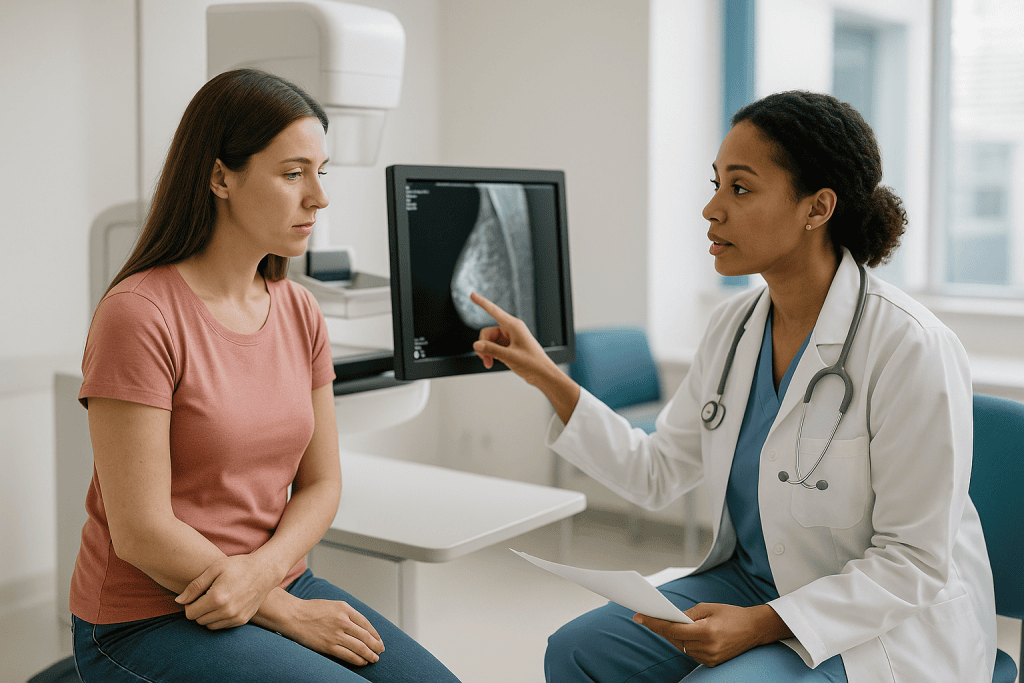
The CDC states that women aged 40 to 74 at average risk should have a screening mammogram every two years, and that women with a family history or other risk factors should talk with a clinician about starting earlier. If you fall inside that group and have not had a recent screening, most surgeons will ask you to have one before surgery. The logic is simple: it is far better to find and characterize any abnormality before an implant sits behind the breast tissue, when the anatomy is unaltered and the picture is easiest to read.
For younger people at average risk, routine mammography is not recommended by the CDC, and many surgeons rely on the clinical examination alone. Some request a baseline ultrasound instead, particularly if the examination finds something worth a second look or if the person has dense breast tissue. Ultrasound uses sound waves rather than radiation and is good at distinguishing fluid-filled cysts from solid areas.
The other reason imaging matters is comparison. Radiologists read mammograms by looking for change over time. A pre-implant image gives them a starting point, so that in five or ten years they are comparing like with like rather than guessing what the breast looked like before the pocket was created.
If your surgeon does not raise imaging, ask. If you have a first-degree relative diagnosed with breast cancer, or a known genetic risk, say so early; it may change the imaging plan and, occasionally, the timing of the operation.
How implants change future breast screening
This is the part of preparation that is often skipped in glossy brochures and matters for decades. Both saline and silicone implants are radio-opaque, meaning X-rays do not pass through them, so an implant can hide part of the breast tissue on a standard mammogram. Mayo Clinic notes that implants can make mammograms more difficult and that you should tell the imaging facility you have them so specialized views can be taken.
Those specialized views are called implant displacement views, in which the technologist gently pushes the implant back toward the chest wall and pulls the breast tissue forward. They add images and time to a screening appointment but recover most of the tissue that would otherwise be obscured. Placement behind the muscle generally leaves more tissue visible than placement in front of it, which is one reason surgeons discuss pocket position with people who have a family history of breast cancer.
There is a second layer of imaging that is specific to silicone gel implants. A rupture of a silicone implant can be silent, with no change in shape or feel, because the cohesive gel tends to stay within the scar capsule. US regulators recommend periodic imaging with MRI or ultrasound to check for silent rupture, on a schedule your surgeon can explain, and the NHS notes that implants are not lifetime devices and may need replacing.
None of this is a reason to avoid augmentation. It is a reason to leave the operation with a plan: know your implant type, keep the device card you are given, tell every future mammography facility about your implants, and ask your team how screening will be organized for you. Preparation, in this sense, extends past surgery day.
The medication review: what your surgeon needs to know
A medication review is a structured conversation in which your surgeon, and often an anesthesia clinician, goes through everything you take and decides what should continue, pause or be adjusted around the operation. It sits near the center of any honest answer to how to prepare for breast augmentation, because most avoidable complications in the first days after surgery trace back either to bleeding or to interactions with anesthesia.
Bring the containers or clear photographs of the labels. The review usually covers four groups. Prescription medicines, including hormonal contraception and hormone therapy, which can affect clotting risk. Over-the-counter painkillers, particularly the class known as non-steroidal anti-inflammatory drugs, which interfere with platelets, the cell fragments that plug small bleeding vessels. Supplements and herbal products, several of which have effects on bleeding or blood pressure that people rarely think of as pharmacological. And recreational substances, including cannabis and nicotine, which affect anesthesia and healing respectively.
Two rules keep this review safe. First, nothing gets stopped or started without the clinician who prescribed it agreeing. A blood pressure medicine, an antidepressant or an anticoagulant may be far more important to your overall health than the timing of a cosmetic operation, and the surgeon’s job is to coordinate, not override. Second, honesty beats tidiness. Surgeons have seen every supplement and every habit; what they cannot manage is the one they do not know about.
Expect the review to happen in the weeks before surgery rather than the day before, because some adjustments need time to take effect and others need a conversation with a second prescriber. Ask for the outcome in writing: what continues as normal, what pauses and from when, and what you may take for discomfort afterward. That single sheet prevents a great deal of confusion.
Medications to avoid before breast augmentation: mechanisms, not a list
People search for a list of medications to avoid before breast augmentation, and it is worth being clear about why this article does not give one. The right instruction depends on what you take, why you take it, and your individual bleeding and clotting risk. What follows is the reasoning surgeons apply, so that the instruction you receive makes sense.
Bleeding into the implant pocket, called a hematoma, is one of the more common early complications described by Mayo Clinic and MedlinePlus. Anything that makes platelets less sticky or slows the clotting cascade raises that risk. Aspirin and other non-steroidal anti-inflammatory drugs block an enzyme platelets need to clump together, and the effect persists for some days after the last dose. Prescription anticoagulants and antiplatelet drugs act on different steps of the same process and are prescribed for serious reasons such as atrial fibrillation or previous clots, so any change around surgery is a joint decision between surgeon and prescriber. Some supplements, including fish oil, vitamin E, ginkgo and garlic extracts, have measurable effects on platelets or clotting in laboratory and clinical studies, and the NIH Office of Dietary Supplements notes bleeding interactions for several of them.
A second concern is anesthesia. Certain herbal products, notably St. John’s wort and kava, alter how the liver processes anesthetic and sedative drugs. Weight-loss and stimulant products can raise heart rate and blood pressure under anesthesia.
The third group is subtler: medicines that thin the skin or slow healing, such as long-term oral corticosteroids, and hormonal therapies that influence clotting risk in the opposite direction, toward clots in the leg veins.
Your team will translate all of this into a personal plan. Follow theirs, not a forum post.
Smoking, nicotine, alcohol and weight: the lifestyle side of preparing for breast augmentation
If a surgeon could change one thing about a patient before augmentation, most would choose nicotine. Nicotine, whether from cigarettes, vapes, patches or gum, causes small blood vessels to constrict, which reduces oxygen delivery to the skin edges of a fresh incision. Carbon monoxide from combustible tobacco compounds the problem by displacing oxygen in the blood. The result is a higher risk of poor wound healing, infection and, in the worst cases, skin breakdown over the implant. The NHS lists stopping smoking as a standard pre-operative instruction, and Mayo Clinic notes that surgeons may ask you to stop for a period before and after surgery.
How long is a question for your team, who will set a window based on their protocol and your health. If you are struggling, say so. Stop-smoking support, including counseling and pharmacological options, is something your primary care clinician can arrange, and the decision about which approach suits you belongs there.
Alcohol matters for two reasons. Heavy intake affects liver function and therefore how anesthetic drugs are cleared, and it can worsen bleeding and swelling in the days after surgery. Most teams ask for a period of abstinence before and after the operation.
Weight stability is about sizing rather than safety in most cases. Breast tissue is partly fat, so a meaningful loss or gain after the sizing visit can shift the proportions you chose. Surgeons generally prefer to operate when weight has been steady for a while, and will say so if they think a pause is wise.
Finally, sleep and general fitness. You do not need to train for this operation, but arriving rested, hydrated and with any chronic conditions well controlled gives your body the best conditions to heal. Preparation, in the end, is mostly about giving healing an easy job.
The breast implant sizing appointment: what really happens
The sizing appointment is where the abstract becomes concrete, and it is often the visit people remember most. Its purpose is to choose an implant whose width, projection and volume fit the measurements taken at the first consultation and the look you are hoping for.
You will usually be asked to bring a fitted, unpadded bra and a plain, close-fitting top. The surgeon or a trained nurse places sizers, which are soft implant-shaped shells of varying volume, inside the bra so you can see the effect in a mirror and, more importantly, in your own clothes. Some practices add three-dimensional imaging that projects a simulated result onto a scan of your torso. This is a visualization tool, not a promise; the NHS and Mayo Clinic are clear that final appearance depends on your tissue, healing and time.
Implant volume is measured in cubic centimeters, which are essentially milliliters, and it is the number people fixate on. Surgeons, by contrast, start with base width. An implant wider than the natural footprint of your breast pushes into the armpit or toward the midline and tends to look and feel less natural over time. Projection, meaning how far the implant stands forward from the chest, and profile, the relationship between width and projection, are chosen next. Volume falls out of those choices rather than driving them.
Expect to be talked out of the largest sizer. Larger implants place more weight on the skin envelope, and Mayo Clinic notes that heavier implants can increase sagging over the years. Expect, too, to be asked about your lifestyle: running, weight training and future pregnancy all bear on the decision.
Leave with the chosen size, width and style written down, and a clear statement of how much the surgeon may adjust on the day for symmetry.
Implant choices at a glance: what you are actually deciding
The number of decisions inside a single sizing conversation surprises people. The table below summarizes the main ones in neutral terms; none is universally better, and your surgeon will explain which trade-offs matter for your anatomy.
| Decision | Options | What the evidence and guidance say |
|---|---|---|
| Fill material | Saline (sterile salt water) or silicone gel | Saline rupture is obvious as the breast deflates and the body absorbs the fluid; silicone rupture can be silent, so periodic imaging is recommended (Mayo Clinic, NHS). |
| Shell surface | Smooth or textured | Textured shells have been associated with a rare lymphoma called breast implant-associated anaplastic large cell lymphoma, or BIA-ALCL (Mayo Clinic, NHS). |
| Shape | Round or anatomical (teardrop) | Round implants cannot look wrong if they rotate; shaped implants require a textured or stable pocket to avoid rotation. |
| Pocket position | Above the muscle, below it, or dual-plane | Submuscular placement generally leaves more tissue visible on mammograms and offers more soft-tissue cover in thin patients; subglandular may involve less early discomfort. |
| Incision | Under the fold, around the nipple, or armpit | Scar location and any effect on nipple sensation differ; your surgeon will explain which suits your anatomy. |
Two threads run through every row. First, no implant is permanent. Mayo Clinic states that implants are not guaranteed to last a lifetime and that additional surgery is likely at some point, whether for rupture, capsular contracture (a tightening of the scar tissue around the implant that can make the breast feel firm or look distorted), or simply a change in preference. Second, the same choice can be right for one person and wrong for another because of skin thickness, chest shape and screening needs. The table is a map, not a menu; the route is chosen with your team.
Breast augmentation pre op checklist: the week before and the night before
By the final week the medical decisions are made, and preparation becomes logistical. A useful breast augmentation pre op checklist is short and practical rather than exhaustive.
Confirm the medication plan you were given in writing and follow it exactly, including anything you were asked to pause. If a new prescriber has started something in the meantime, tell the surgical team; a course of antibiotics for a chest infection or a new blood pressure tablet can change the plan. If you develop a cold, a cough, a fever or a skin infection anywhere, call. Operating through an active infection raises the risk of infection around the implant, and most teams would rather reschedule.
Arrange a responsible adult to take you home and stay the first night. Mayo Clinic notes that you will not be able to drive yourself after general anesthesia and that lifting will be restricted for a period. Move anything you use daily to waist or shoulder height so you are not reaching overhead. Prepare simple meals, and if you have young children or pets, organize help with lifting them.
Buy or borrow front-fastening tops and the supportive garment your team recommends; many will supply a surgical bra and ask you to wear it continuously at first. Fill any prescriptions you have been given in advance, so you are not visiting a pharmacy on the way home.
The night before, follow the fasting instructions precisely. An empty stomach reduces the risk of stomach contents entering the lungs during anesthesia, and the cut-off times for food and clear fluids differ. Shower with the wash you were given if one was prescribed, skip lotions and deodorant on the morning, remove nail polish and jewelry, and bring your list of medicines and your identification. Then try to sleep. The hard thinking is already done.
What the first days and weeks after surgery usually look like
Understanding recovery is part of preparing, because it shapes what you arrange at home and at work. The pattern below reflects typical ranges described by Mayo Clinic and the NHS; your own timeline may differ, and your team’s advice always takes precedence.
The first two or three days are the hardest. Expect tightness across the chest, especially with submuscular placement, along with swelling and bruising. Mayo Clinic notes that soreness and swelling are likely for a few weeks. Pain is usually managed with medicines your team prescribes or recommends; take only what they have approved, since some over-the-counter options affect bleeding. Sleeping propped up on your back is commonly advised. Short, gentle walks around the house from the first day help circulation and lower the risk of blood clots in the legs.
By the end of the first week, most people are moving more freely and many return to desk-based work within one to two weeks, according to NHS guidance, though anything involving lifting or reaching takes longer. Incisions are usually checked at a follow-up visit in this window, and any drains, if used, are removed.
Strenuous activity, including running, upper-body exercise and heavy lifting, is generally restricted for several weeks; Mayo Clinic advises avoiding strenuous activity for at least two weeks and following your surgeon’s advice on when to resume specific exercise. Implants often sit high at first and settle over the following weeks and months as the muscle relaxes and swelling resolves, so the early appearance is not the final one.
Scars fade over many months and can take a year or more to reach their final appearance. Nipple sensation may be altered, sometimes temporarily, occasionally permanently. Knowing this in advance makes the early weeks feel less alarming and more like a process you were told about.
What people often get wrong about preparing for breast augmentation
Several beliefs circulate widely enough to deserve direct correction.
Myth: a mammogram is only for older women, so it has nothing to do with my surgery. The CDC does recommend routine screening from age 40 for average-risk women, but family history or genetic risk can lower that age, and a pre-implant baseline is useful at any age when there is something to compare later. The right imaging is a conversation, not a rule of thumb.
Myth: supplements are natural, so they do not count. Fish oil, vitamin E, ginkgo, garlic extract and St. John’s wort all have documented interactions with bleeding or anesthesia, as the NIH Office of Dietary Supplements describes. Natural is a marketing term, not a pharmacological one.
Myth: I should stop my regular prescriptions to be safe. Stopping a blood pressure medicine, an antidepressant or an anticoagulant without the prescriber’s agreement can be far riskier than the operation itself. Every change goes through the clinician who started it.
Myth: bigger is easier to reduce later than smaller is to increase. Both directions require another operation, and heavier implants place more strain on skin over the years, which Mayo Clinic links to sagging.
Myth: implants are for life. Both Mayo Clinic and the NHS state plainly that implants are not lifetime devices and that further surgery is likely at some point.
Myth: cutting down on smoking is enough. Nicotine in any form constricts blood vessels; the healing tissue does not distinguish between a full pack and a few cigarettes or a vape. Your team will specify the window, and it is a window of zero, not less.
Myth: the sizer I liked in the mirror is the implant I will get. Sizers sit on top of the breast; the implant sits behind it, partly under muscle. Surgeons adjust for that difference, which is why the written plan matters more than the mirror.
Questions to ask your care team before you say yes
Good preparation leaves you with fewer surprises, and the fastest route there is a short list of direct questions. Take it to the consultation and the sizing visit, and write the answers down.
- What imaging, if any, do you want before surgery, and why for me specifically?
- Which of my medicines and supplements will you want paused, who will coordinate that with my prescriber, and can I have the plan in writing?
- How long do you want me nicotine-free before and after the operation?
- Which implant type, surface, shape and pocket position are you recommending, and what are the trade-offs for my anatomy and my screening needs?
- How will my future mammograms be organized, and what is the plan for checking silicone implants over the years?
- What is your approach if you find asymmetry or a different pocket size than expected on the day?
- What complications do you see most often, and how are they managed?
- How will pain be managed, and which over-the-counter medicines should I avoid afterward?
- When can I drive, return to my type of work, lift my children and exercise?
- What follow-up visits are scheduled, and how do I reach the team after hours?
Notice that none of these questions asks the surgeon to promise a result. Reputable teams will not, and the NHS explicitly advises caution around anyone who does. What you are looking for is a clear account of reasoning: why this implant, why this pocket, why this imaging. If the answers are specific to your measurements and history rather than generic, you are in the right conversation.
One further question is worth asking yourself rather than the surgeon: would I still want this if I knew I would need another operation in the future? If the answer is yes, the preparation you are doing now is the foundation for that longer relationship with your own body.
When to call your doctor
Preparation includes knowing when the ordinary discomfort of recovery has become something that needs a clinician. Mayo Clinic and MedlinePlus describe the early complications most likely to need prompt attention, and the pattern is consistent: sudden change, one-sidedness, and signs of infection or clotting.
Call your surgical team the same day if you notice a breast that becomes suddenly larger, tighter or more painful than the other, especially in the first days; this can indicate bleeding into the pocket. Spreading redness, increasing warmth, pus or a foul smell at an incision, or a fever, may indicate infection around the implant and should not wait for a routine appointment. An incision that opens or through which the implant becomes visible needs urgent assessment.
Seek emergency care immediately, rather than waiting for a call back, if you develop chest pain, sudden shortness of breath, coughing up blood, or a calf that is swollen, warm and painful on one side. These can signal a blood clot in the leg or lung, a recognized risk after any surgery under general anesthesia, and time matters.
Before surgery, contact the team if you develop any illness, infection or new prescription in the final two weeks, or if you have any bleeding or bruising that seems unusual for you. It is always easier to reschedule than to manage a complication.
In the longer term, report a breast that becomes firm, misshapen or painful, a change in size or shape, new swelling or fluid around an implant, or a lump. Some of these point to capsular contracture or rupture; a persistent fluid collection years after surgery is one of the presentations the NHS and Mayo Clinic associate with the rare lymphoma BIA-ALCL, and it warrants evaluation. Your team would rather hear about a false alarm than miss a real one.
Frequently asked questions
Do I need a mammogram before breast augmentation if I am under 40?
Not routinely, if you are at average risk. The CDC recommends screening mammography from age 40 for average-risk women, so younger candidates are usually assessed by clinical examination, sometimes with a baseline ultrasound. If you have a first-degree relative with breast cancer, a known genetic risk, or a lump or discharge on examination, your surgeon may request imaging earlier. Ask directly what imaging is planned for you and why.
What are the medications to avoid before breast augmentation?
There is no single safe list, because it depends on what you take and why. Surgeons focus on anything that affects bleeding, such as aspirin, other non-steroidal anti-inflammatory drugs, prescription anticoagulants and supplements like fish oil, vitamin E and ginkgo, and on products that interact with anesthesia, such as St. John’s wort. Any pause or change is agreed jointly with the clinician who prescribed the medicine, and you should follow their written plan rather than a generic list.
How long do I need to stop smoking before breast augmentation?
Your surgical team sets the window, and it applies to all nicotine, including vapes and patches, not just cigarettes. Nicotine constricts small blood vessels and reduces oxygen delivery to healing incisions, which the NHS and Mayo Clinic link to poorer wound healing and infection risk. If stopping is hard, tell your primary care clinician early; stop-smoking support exists and the timing of surgery can be planned around it.
What happens at the breast implant sizing appointment?
You try sizers, which are soft implant-shaped shells of different volumes, inside a fitted bra and under your own clothes, sometimes alongside three-dimensional imaging. The surgeon matches implant width to your measured breast base, then chooses projection, and volume follows from those choices. You should leave with the chosen size, width and style written down, plus a clear statement of how much the surgeon may adjust on the day for symmetry.
Can I keep taking my birth control or hormone therapy before surgery?
Often yes, but it is a decision for your surgeon and prescriber together. Estrogen-containing contraception and some hormone therapies modestly raise the risk of blood clots, which is also a recognized risk after surgery under general anesthesia. Some teams continue them and add clot-prevention measures; others prefer a pause. Do not stop or change anything on your own; raise it at the medication review and ask for the plan in writing.
Will breast implants affect future mammograms?
Yes, and this is manageable with planning. Implants block X-rays and can hide part of the breast tissue, so Mayo Clinic advises telling every imaging facility about your implants so implant displacement views can be taken. Placement behind the muscle generally leaves more tissue visible. Silicone implants also need periodic MRI or ultrasound to detect silent rupture. Keep the device card you receive and ask your team how your screening will be organized.
How long does recovery from breast augmentation usually take?
Soreness and swelling typically last a few weeks, according to Mayo Clinic, with the first few days the most uncomfortable. Many people return to desk-based work within one to two weeks per NHS guidance, while strenuous activity and heavy lifting are restricted for several weeks. Implants often sit high initially and settle over weeks to months. Your surgeon’s timeline for driving, exercise and lifting takes precedence over any general range.
What is on a breast augmentation pre op checklist for the final week?
Confirm your written medication plan, report any new illness, infection or prescription, and arrange an adult to drive you home and stay the first night. Move daily items to waist height, prepare front-fastening tops and the recommended supportive garment, and fill any prescriptions in advance. Follow fasting instructions exactly, skip lotions and deodorant on the morning, and bring your medicine list and identification. Then rest.
Should I choose the largest implant I like in the sizer?
Surgeons generally advise against it. Sizers sit on top of the breast while the implant sits behind it, often partly under muscle, so the visual comparison is imperfect. Heavier implants place more strain on the skin envelope, which Mayo Clinic links to sagging over time, and an implant wider than your natural breast base tends to look less natural. Width and projection matched to your measurements are usually a better guide than volume.
Are breast implants permanent?
No. Mayo Clinic and the NHS both state that implants are not guaranteed to last a lifetime and that further surgery is likely at some point, whether for rupture, capsular contracture, a change in the breast with age or pregnancy, or simply a change in preference. Preparing well means accepting that longer-term picture, keeping your implant details, and knowing which changes in the breast should prompt a call to your team.
References
This article is for general information only and is not a substitute for professional medical advice. Please consult a qualified doctor about your individual situation.

More from the Blog
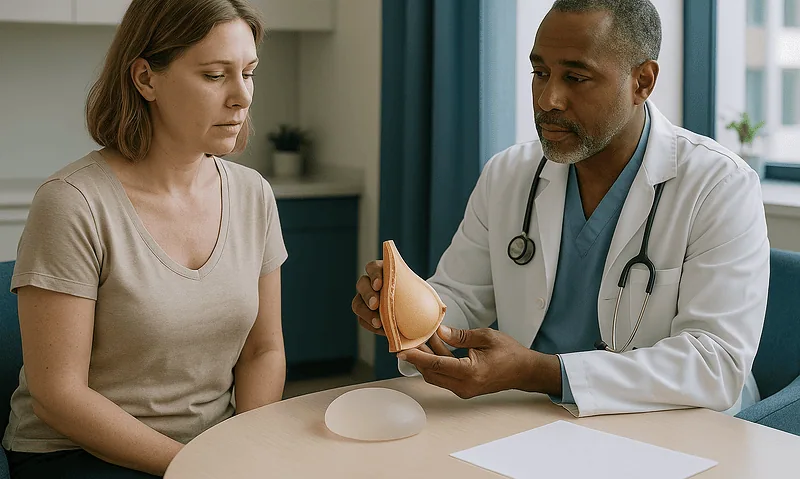
Combined Procedures in Breast Aesthetics: When a Lift and Implants Happen in One Operation
A combined breast lift and augmentation, also called augmentation mastopexy, reshapes and raises sagging breast tissue while placing an implant for volume, all under…

Reading a Breast Aesthetics Surgical Plan: Measurements, Options and Questions to Raise
A breast aesthetics surgical plan usually lists your chest and breast measurements, the surgeon's proposed technique, and the alternatives that were considered. Reading it…

How Long Do Breast Implants Last? Lifespan, Monitoring and When Replacement Is Discussed
Breast implants are not lifetime devices, but they do not expire on a fixed schedule. Many last 10 to 20 years or more, and…

How DIEP Flap Breast Reconstruction Works: Abdominal Tissue, Microsurgery and Operating Time
DIEP flap breast reconstruction rebuilds a breast using skin and fat from the lower abdomen while leaving the abdominal muscle in place. Surgeons trace…

When Is Gynaecomastia Treatment Considered? Watchful Waiting, Causes Checked and Surgery
Gynecomastia treatment is usually considered only after three things have happened: a doctor has confirmed the swelling is glandular breast tissue rather than fat,…

Questions to Ask Before Breast Reconstruction: Stages, Symmetry Surgery and Nipple Options
Before breast reconstruction, ask your plastic surgeon which technique suits your body and cancer treatment (implant or your own tissue), whether reconstruction should happen…