

Preparing for Robotic Lung Surgery: Breathing Tests, Heart Checks and Stopping Smoking Early

Key Takeaways
- Robotic lung surgery removes the same amount of lung tissue as an open operation, so the breathing and heart tests beforehand are identical in purpose and scope.
- Spirometry measures FEV1, the air forced out in one second, while the DLCO gas transfer test measures oxygen uptake; both are used to predict what function will remain after a lobe is removed.
- The WHO reports that stopping smoking at least four weeks before surgery lowers complication risk, with each extra tobacco-free week improving outcomes by roughly 19 percent.
- Heart assessment is stepped: an ECG for nearly everyone, an echocardiogram if questions arise, and a stress test only when history or findings point to possible coronary disease.
- The 2 week rule is an NHS referral standard for getting a suspected lung cancer seen by a specialist quickly, not a deadline for when surgery must take place.
- MedlinePlus places lung surgery in a range of roughly two to six hours, and the NHS describes a return to normal activities several weeks after a lung operation, with wide individual variation.
Preparing for robotic lung surgery usually means several weeks of assessment and conditioning before the operation. Breathing tests such as spirometry and a gas transfer test check how much lung function you can spare, heart checks such as an ECG or echocardiogram look for hidden risk, and stopping smoking, ideally four or more weeks beforehand, lowers the chance of chest and wound complications.
The letter arrives with a list: a lung function appointment on one date, a heart tracing on another, a nurse-led clinic in between. Somewhere on the second page is a sentence about not smoking. For many people this is the moment the diagnosis stops being abstract. Someone has looked at the scan, decided that an operation is possible, and now wants to know whether your body is ready for it.
Preparing for robotic lung surgery is not busywork. Each test answers a specific question the surgical and anesthesia teams need to settle before they agree to remove part of a lung: how much breathing reserve will remain, whether the heart can cope with several hours under anesthesia and a lung deliberately deflated, and how quickly airways will clear afterward.
This explainer walks through what those weeks typically involve, what the evidence says about each step, and where the uncertainties honestly lie. Every decision remains with your treating team; the aim here is to help you understand their reasoning.
What actually happens in robotic lung surgery
Robotic lung surgery is a form of minimally invasive chest surgery in which the surgeon operates through several small incisions using instruments held by robotic arms that they control from a console in the same room. The robot does nothing on its own; it translates the surgeon’s hand movements into finer, steadier motions inside the chest, and a magnified three-dimensional camera shows the operating field.
The most common operation is a lobectomy, the removal of one of the five lobes that make up the two lungs. Smaller procedures remove a wedge or a segment of a lobe; larger ones remove a whole lung, though that is now less common. Whatever the extent, the steps are similar. You are given a general anesthetic, meaning you are fully asleep. A special breathing tube lets the anesthesiologist keep the healthy lung ventilated while the lung being operated on is allowed to collapse, creating working space. The surgeon divides the blood vessels and airway to the target lobe, removes the tissue through one slightly larger incision, and usually samples nearby lymph nodes so pathologists can check whether cancer has spread.
Before closing, a chest tube is placed: a flexible drain that lets air and fluid escape while the remaining lung re-expands against the chest wall. Johns Hopkins describes this sequence for minimally invasive lung operations in its patient guide, and notes that the surgeon may convert to an open operation through a larger incision if bleeding or scarring makes the keyhole approach unsafe. That is a planned safety option, not a failure.
Why does this matter for preparation? Because the tests you are sent for are built around these specific stresses: one-lung ventilation, several hours of anesthesia, and the permanent loss of some lung tissue.
Why preparing for robotic lung surgery starts weeks, not days, before
A smaller incision does not mean a smaller operation inside the chest. The lobe removed is the same size whether the surgeon uses a robot, a video camera, or an open approach. The body’s response to losing lung tissue, and its need to clear secretions and re-expand what remains, is the same too. That is why surgical teams treat preparation for robotic lung surgery as a project measured in weeks.
Three questions drive the schedule. First, is the operation safe for this person’s lungs? Breathing tests estimate how much function will remain after a lobe is gone. Second, is it safe for the heart? Lung surgery raises the heart’s workload, and pre-existing heart disease is a leading cause of serious complications after chest operations. Third, can the risk be lowered before the day? Stopping smoking, building fitness, correcting anemia and stabilizing blood sugar all take time to pay off.
There is also a practical thread. The pre-assessment clinic reviews every medicine you take, checks kidney and liver blood tests, screens for infection, and explains fasting rules and what to bring. Many centers now run structured programs, often called enhanced recovery or prehabilitation, that bundle these steps and set expectations for getting out of bed on the first day after surgery.
Think of the weeks before as part of the treatment rather than a waiting room. The NHS lung cancer treatment guidance stresses that fitness, lung function and other health conditions shape which treatment is offered at all. Turning up prepared can genuinely change what options are on the table, and it is one of the few parts of the process you actively influence.
Who is usually offered robotic lung surgery, and who is asked to wait
Surgery of any kind is generally considered for people whose lung cancer is confined to one lung and nearby lymph nodes, and who are fit enough to lose part of a lung. The NHS treatment pathway describes this group as early-stage disease in someone whose general health and breathing allow an operation. Robotic surgery is one technique for delivering that operation; it is chosen by surgeons based on training, tumor location and what the individual chest looks like on imaging.
People are commonly steered toward a robotic or video-assisted approach when the tumor is peripheral and reachable, when there has been no previous major chest surgery, and when lymph nodes look sampleable through small ports. Very large tumors, tumors fused to the chest wall or great vessels, or dense scarring from earlier infection may make an open operation the safer first choice. That is a judgment for the surgeon, and it can change on the day.
Who is asked to wait? Anyone with an active chest infection, an uncontrolled heart rhythm, a recent heart attack or stroke, or dangerously high blood sugar will usually have surgery postponed until the problem is treated. Current smokers may be given a short, defined window to stop. People whose breathing tests suggest they would be left with too little reserve may be offered a smaller operation, or a non-surgical treatment such as radiotherapy, rather than a lobectomy.
A delay for these reasons is a safety measure. In a two-week or four-week pause, the tumor is unlikely to change in a way that alters the plan, while an untreated infection or an unstable heart can change the outcome of the operation itself. Your team weighs both sides and should explain that balance to you.
What breathing tests before lung surgery actually measure
Breathing tests before lung surgery answer one central question: after a lobe is removed, will enough function remain to breathe comfortably and recover? MedlinePlus groups these tests under the heading pulmonary function tests. Most people have two, and some need a third.
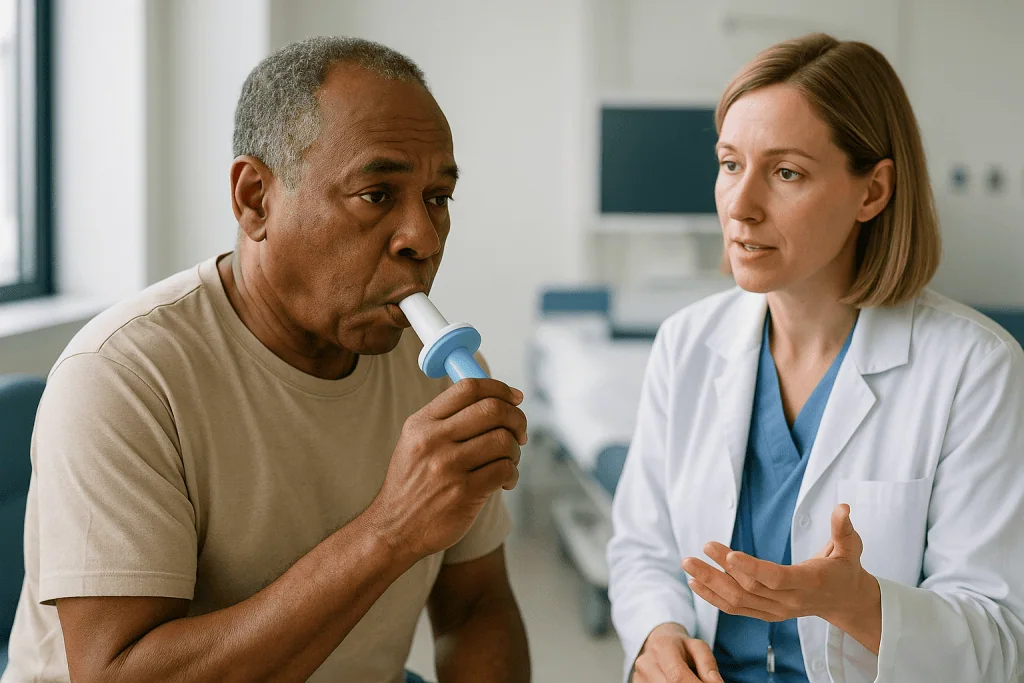
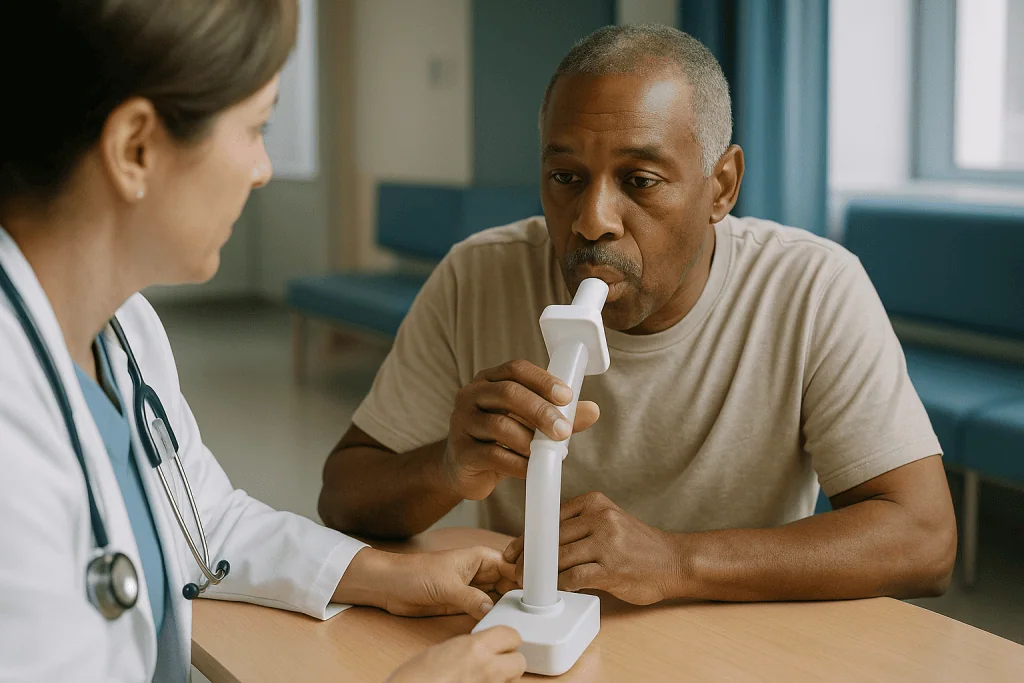
Spirometry is the first. You breathe out as hard and fast as you can into a tube attached to a machine. The key result is FEV1, the volume of air forced out in the first second, which reflects how open the airways are. The gas transfer test, usually written DLCO, measures how well oxygen moves from the air sacs into the blood; you inhale a harmless tracer gas, hold your breath briefly, and exhale. A low DLCO can flag damage that spirometry misses, particularly in longtime smokers.
Doctors then estimate a predicted postoperative value, working out what fraction of each result would remain after the planned lobe is removed. When those predictions are borderline, a cardiopulmonary exercise test may be added: you pedal a stationary bike while the equipment measures oxygen uptake, the most direct gauge of how heart and lungs perform together under load.
| Test | What you do | What it tells the team |
|---|---|---|
| Spirometry (FEV1) | Forced hard breath out, repeated three times | Airway narrowing; baseline reserve |
| Gas transfer (DLCO) | Inhale tracer gas, hold, exhale | Oxygen uptake across lung tissue |
| Exercise test (CPET) | Cycle at rising effort with mask on | Combined heart and lung capacity |
| Arterial blood gas | Small blood sample from the wrist | Resting oxygen and carbon dioxide levels |
Mayo Clinic notes that results are compared against values expected for your age, height and sex, so a number is never judged in isolation. Ask for yours to be explained in those terms.
Heart checks before lung surgery: what the ECG, echo and stress test are looking for
Lung and heart problems travel together. The same decades of smoking that lead to lung cancer narrow coronary arteries, and an operation that deflates one lung temporarily raises pressure in the vessels of the other, making the right side of the heart work harder. Preoperative heart checks exist to catch trouble before that stress is applied.
Nearly everyone has an electrocardiogram, or ECG, a painless recording of the heart’s electrical activity through stickers on the chest. It shows rhythm, signs of a past heart attack, and strain patterns. If your history or ECG raises questions, an echocardiogram may follow: an ultrasound scan of the heart that shows how well the chambers pump and whether valves leak or narrow.
A stress test comes next for a smaller group. The American Heart Association describes it as monitoring the heart while it is made to work, either on a treadmill or with a medicine that mimics exercise, to reveal blood-flow shortfalls that only appear under load. If a significant blockage is found, the team may recommend treating the heart first, which can delay the lung operation. That sequencing is deliberate and follows cardiology guideline logic: fix the problem most likely to cause harm on the operating table before adding a second major stress.
Two practical points. Bring a list of any heart medicines and the name of your cardiologist if you have one; the anesthesia team may want to speak with them. And expect to be asked about your everyday exertion tolerance, such as whether you can climb two flights of stairs without stopping. That simple question correlates well with formal exercise testing and is often the starting point for deciding how far the heart work-up needs to go.
Why you should quit smoking before lung surgery, and how early it needs to happen
If one part of preparing for robotic lung surgery deserves an opinion, it is this. Stopping smoking is the single modifiable step with the clearest evidence behind it, and the benefit grows with every smoke-free week before the operation.
The mechanisms are concrete. Carbon monoxide from cigarette smoke binds to hemoglobin and reduces oxygen delivery to healing tissue; it clears within a day or two of quitting. Nicotine narrows small blood vessels in skin and muscle, slowing wound repair. Smoke paralyzes the tiny hairs, called cilia, that sweep mucus out of the airways, so secretions pool after surgery and invite pneumonia. Cilia recover over weeks, which is why timing matters.
The World Health Organization, drawing on a review with a university surgical group, concluded that people who stop smoking at least four weeks before an operation have a lower risk of complications and better results at six months, and that every additional tobacco-free week improves outcomes by roughly 19 percent. The NHS makes the same point in its lung cancer treatment guidance: stopping smoking before surgery reduces complications and speeds recovery.
What about quitting only a few days before? Older advice suggested that stopping very close to surgery might temporarily increase cough as the airways clear. Current guideline bodies do not regard this as a reason to keep smoking; the consensus is that any period without smoke is better than none, and four weeks or more is the goal.
Support matters because willpower alone often fails under the stress of a cancer diagnosis. Nicotine replacement products, prescription medicines that reduce craving, and behavioral counseling all have evidence behind them. Which combination suits you is a conversation for your doctor or a stop-smoking service, not a decision to make alone.
Prehabilitation: building fitness, fixing anemia and steadying blood sugar
Prehabilitation means using the weeks before surgery to make the body more resilient, the way an athlete trains before a season. For lung operations the focus falls on three areas.
Exercise comes first. Aerobic activity such as brisk walking or cycling improves how efficiently muscles use oxygen, so the lungs that remain after surgery have less demand placed on them. Breathing exercises, sometimes taught with a handheld device that gives visual feedback as you inhale slowly, train the deep breaths that help re-expand the lung and clear secretions afterward. Many teams ask you to practice these daily before admission so the technique is automatic when the chest is sore. Start gently, progress gradually, and let your team know if a new activity provokes chest pain or unusual breathlessness.
Nutrition is second. Cancer and worry can both suppress appetite, and unintended weight loss weakens the muscles used for breathing and coughing. Protein-rich meals and regular eating patterns are the general advice; a dietitian may be involved if weight has already fallen.
Blood work is third. Anemia, a low red blood cell count, reduces oxygen-carrying capacity and is checked in almost every pre-assessment. Iron deficiency found early can be treated before surgery. Diabetes control matters because high blood sugar impairs white cell function and wound healing; the team may adjust targets with your usual prescriber and will give specific instructions for the day of surgery, when fasting changes your needs.
None of this is about perfection. Evidence for prehabilitation programs is still maturing, and the size of the benefit varies between studies. What is consistent is the direction: fitter, better-nourished people tend to leave hospital sooner and have fewer chest infections. Cleveland Clinic describes this preparation phase as an ordinary part of planning for any major operation.
Your medicines before surgery: what usually changes and why
The pre-assessment nurse or pharmacist will go through everything you take, including supplements and over-the-counter products. Bring the packaging or an up-to-date list. Some categories prompt specific discussion, and in every case the instruction comes from your surgical and anesthesia team in consultation with whoever prescribed the medicine. Nothing here is a recommendation to change what you take.
Blood thinners are the most important group. Anticoagulants, which slow the clotting cascade, and antiplatelet medicines, which stop platelets sticking together, both raise bleeding risk during surgery. Stopping them, however, can raise the risk of a clot, stroke or stent blockage. The decision about whether to pause, for how long, and whether a temporary substitute is needed is individual and is often made jointly with a cardiologist or hematologist. Do not stop these on your own.
Diabetes medicines are usually adjusted around the fasting period because their effect changes when you are not eating. Some blood pressure medicines are continued to the morning of surgery; others may be held that day depending on the anesthesia team’s protocol. Inhalers for asthma or COPD are typically continued and may be optimized in the weeks before; bring them to hospital.
Herbal and dietary supplements deserve a mention because people often omit them. Several common products affect clotting or interact with anesthetic drugs, and the NIH Office of Dietary Supplements advises telling your surgical team about everything you take. Expect to be asked to stop many supplements for a period before the operation.
Write down the instructions you are given, including exact timings for the last dose of anything, and ask for them in writing if they are only given verbally. Confusion about medicines is a frequent reason for a same-day cancellation.
What is the 2 week rule for lung cancer, and does it apply to surgery timing?
The phrase comes from the UK. Under NHS guidance, a general practitioner who suspects lung cancer, for example because of a chest X-ray abnormality or persistent symptoms in a smoker, refers the patient urgently so that a specialist appointment happens within two weeks. The rule is about getting into the diagnostic system quickly; it is not a rule about when surgery must happen.
After that first appointment, a sequence follows: a CT scan, often a PET-CT scan to look for spread elsewhere, a biopsy to confirm the cancer type, and a multidisciplinary meeting where surgeons, oncologists, radiologists and specialist nurses agree a recommendation. Only then does surgical preparation begin in earnest. Health systems set targets for the total time from referral to first treatment, and the NHS publishes such standards, but the exact interval varies with how many tests are needed and whether heart or lung findings require attention first.
People understandably worry that every week of preparation is a week the tumor grows. Early-stage lung cancers detected on imaging typically change slowly over the interval of a normal work-up, and guideline bodies accept a period of weeks for staging and optimization because it reduces the risk of a serious complication or an operation that turns out to be inappropriate. Skipping heart checks to save a week is not a trade most teams would make.
What you can do is keep the process moving from your side: attend every appointment, complete the stop-smoking plan, get blood tests done promptly, and tell your specialist nurse straight away if a date is missed or a result seems to have gone astray. In many centers that nurse is the person who tracks the pathway; use them.
How long does a robotic lung surgery take, and what happens on the day?
You will usually be asked to arrive early in the morning having fasted as instructed, typically no solid food for six hours and clear fluids permitted until a stated time closer to surgery. A nurse checks your identity, allergies and consent form; the anesthesiologist confirms the plan and may place a small catheter near the spine or between the ribs to deliver local anesthetic for pain control afterward. Compression stockings or leg pumps are fitted to reduce clot risk.
The operation itself takes several hours. MedlinePlus states that lung surgery commonly lasts in the range of two to six hours depending on what is removed and how complex the anatomy proves. Robotic lobectomy usually falls in the earlier part of that window, but setup, positioning and the careful lymph node sampling that accompanies cancer surgery all add time. Families waiting outside should expect a longer interval than the incision time alone, because it includes anesthesia induction beforehand and waking up afterward.
You will wake in a recovery area with oxygen through a mask or nasal prongs, a chest tube, an intravenous line and often a urinary catheter for the first day. Some people spend the first night in a high-dependency or intensive care unit for close monitoring; this is a routine precaution in many centers, not a sign that something has gone wrong.
The surgeon will usually speak to you or your family soon after the operation to describe what was found and whether the plan was completed as intended. Formal pathology results on the removed tissue and lymph nodes take longer, typically a week or two, and determine whether any further treatment is recommended. Ask when and how you will receive those results before you leave hospital.
The first days after surgery: chest tube, walking and breathing exercises
Recovery begins within hours. Enhanced recovery programs aim to have you sitting out of bed, and often taking a short walk with support, on the day of surgery or the morning after. Early movement matters for three reasons: it opens the lower parts of the lung, it reduces the risk of blood clots in the legs, and it restores bowel function that anesthesia slows.
The chest tube is the item most people ask about. It sits between the ribs and connects to a drainage container that collects fluid and lets air escape while the lung reseals. Staff check it daily, and it is removed once the fluid volume falls and no air leak remains, most often within a few days. Removal takes seconds and feels like a brief tug. A persistent air leak, where the raw lung surface keeps letting air through, is a common reason for a longer stay and usually settles on its own with time.
Pain is managed with a combination of the local anesthetic catheter placed at surgery, regular tablets and, for the first day or two, stronger medicines as needed. Good pain control is not an indulgence; it is what lets you take the deep breaths and coughs that prevent pneumonia. Tell staff early if breathing exercises are limited by discomfort.
Physiotherapists will coach the exercises you practiced before admission, along with a technique of hugging a rolled towel to the chest while coughing to brace the incisions. Expect to feel tired, to have a dry cough for a while, and to be short of breath on exertion in a way that eases over weeks. Johns Hopkins notes that hospital stays after minimally invasive lung surgery are typically shorter than after open operations, and MedlinePlus gives a general range of a few days to about a week depending on the extent of surgery and any complications.
How long does it take to recover from robotic lung surgery?
Recovery from robotic lung surgery unfolds in stages rather than a single date. The NHS lung cancer treatment guidance says most people are able to return to normal activities several weeks after a lung operation, with full recovery taking longer for larger procedures, and emphasizes that the timeline varies with age, fitness and what was removed. Treat any figure as a typical range rather than a target you have failed to meet.
In the first two weeks at home, the priority is walking a little further each day, continuing the breathing exercises, eating well and keeping the incisions clean and dry. Fatigue can be profound and is normal; the body is healing a chest wall and adapting to less lung tissue. Many people find they need a rest in the afternoon.
Between roughly two and six weeks, stamina usually improves noticeably. Driving is generally discouraged until you can perform an emergency stop without pain and are no longer taking strong painkillers that impair reaction time; the NHS suggests checking with your team and, if relevant, your insurer. Light desk work may become possible in this window. Lifting anything heavy, and activities that strain the chest wall, are usually held back for longer.
By around six to twelve weeks, most people who were reasonably fit beforehand are close to their new baseline, though breathlessness on hills or stairs may persist and some never fully return to pre-surgery capacity, particularly after removal of a whole lung. Nerve-related soreness along the ribs can linger for months and gradually fades.
Two things shorten the road in the evidence: not smoking, and keeping active within your limits. Two things lengthen it: chest infection and a fall in mood. Both are treatable, and both are worth raising with your team rather than waiting out.
How do you sleep after lung surgery?
Sleep is one of the most common frustrations in the first weeks, and it rarely appears on discharge leaflets. The incisions are sore, lying flat can make breathing feel harder as abdominal organs press upward on the diaphragm, and the dry cough that follows lung surgery tends to worsen when you lie down.
Most people find a propped position most comfortable at first. Several pillows behind the back, or a wedge pillow, keep the chest raised; a recliner works well for some. Lying on the operated side is usually permitted once the chest tube is out and may even ease pressure on the drain site, but many prefer the unoperated side or their back initially. There is no evidence that one side is medically better, so choose what hurts least, and expect that to change from night to night.
Time pain medicines so that a scheduled dose falls shortly before bed, following the schedule your team has written rather than adjusting it yourself. A small pillow hugged to the chest when turning or coughing braces the ribs. Keep water within reach for the cough.
Daytime habits help. A walk in daylight anchors the body clock; a long nap late in the afternoon steals from the night. Caffeine after midday and screens late in the evening make settling harder for anyone, and more so when the chest is uncomfortable.
Two warning signs deserve attention rather than adjustment. Waking suddenly and severely short of breath, or being unable to lie down at all because of breathlessness, is not normal post-surgical discomfort and should prompt a call to your team the same day. So should new swelling of the legs or ankles. Ordinary poor sleep for a few weeks, on the other hand, is expected and improves as the chest wall heals.
What people often get wrong about preparing for robotic lung surgery
Myth one: the robot does the operation. It does not. A surgeon controls every movement from a console, and the machine offers precision and visibility rather than autonomy. Asking how many of these procedures your surgeon performs is more informative than asking about the equipment.
Myth two: because the cuts are small, the surgery is minor. The lobe removed is the same size as in an open operation, and the risks that matter most, such as pneumonia, air leak, irregular heart rhythm and blood clots, are related to the internal operation and to your baseline health, not the incision length. The preoperative tests are the same for that reason.
Myth three: it is too late to stop smoking. The WHO evidence summary is clear that benefit rises with each week of abstinence before surgery, and there is no threshold below which stopping is pointless. Even people who stop close to the date reduce carbon monoxide levels in their blood within days.
Myth four: resting completely before surgery saves energy for recovery. The opposite is closer to the truth. Deconditioning happens quickly, and fitter people tolerate one-lung ventilation and early mobilization better.
Myth five: breathing tests can fail you and you will never be told why. Results are interpreted as predicted postoperative values against your own expected norms, and a borderline number usually triggers a further test or a discussion of a smaller operation rather than a flat refusal. You are entitled to hear the numbers and the reasoning.
Myth six: everyone needs a stress test. Heart work-up is stepped; many people with a normal ECG and good exertion tolerance need nothing further. The absence of extra heart tests is often a reassuring sign rather than an oversight, though it is reasonable to ask why a test was or was not ordered.
Questions to ask your care team before robotic lung surgery
A consultation moves fast, and the questions that matter most are easy to forget. Write these down, bring someone with you, and ask for answers you do not understand to be repeated in plainer words.
- What exactly will be removed, and why that extent rather than a smaller or larger operation?
- What did my breathing tests show, and what lung function do you expect me to have afterward?
- Do my heart checks change the plan in any way, and is anything being treated first?
- How many weeks before surgery should I have stopped smoking, and what support is available to me?
- Which of my medicines and supplements need to change, when, and who is responsible for telling me?
- What is the chance the operation is converted to an open approach, and what would that mean for recovery?
- What are the most common complications you see after this procedure, and how are they managed?
- How long do you expect me to stay in hospital, and what has to be true before I go home?
- Who do I call, at any hour, if something worries me after discharge?
- When and from whom will I hear the pathology results, and what are the possible next steps depending on what they show?
- Are there non-surgical alternatives for my situation, and how do the trade-offs compare?
- Is there a prehabilitation or exercise program I should join, and who coordinates it?
Notice the pattern. Most of these questions are about the plan for you, not about the technology. A team that answers them clearly is giving you the information you need to consent properly and to prepare well. If the answers arrive only as reassurance without specifics, it is fair to ask again. The Mayo Clinic’s lung cancer guidance encourages patients to bring a written list to every treatment discussion for precisely this reason.
When to call your doctor before or after robotic lung surgery
Before surgery, contact the pre-assessment team promptly if you develop a cough with colored phlegm, fever, a new chest infection, chest pain, palpitations, or any bleeding or bruising after a change to blood-thinning medicines. Tell them if you have started or stopped any medicine or supplement, or if you have been unable to stop smoking as planned. None of these means the operation will be canceled, but each may change the timing or the plan, and finding out on the day is worse for everyone.
After surgery, most days bring small improvements. Call your surgical team or specialist nurse the same day if you notice a fever, increasing redness, warmth, swelling or discharge at any incision, breathlessness that is worsening rather than easing, a cough producing green or bloody sputum, or new pain and swelling in one calf. Confusion, a racing or irregular heartbeat, or feeling faint on standing also warrant a call.
Seek emergency care immediately, by calling your local emergency number, for sudden severe shortness of breath, chest pain that is different from your wound pain or spreads to the arm, jaw or back, coughing up more than a streak of blood, blue or gray lips, or collapse. These can indicate a lung collapse, a blood clot in the lung or a heart problem, all of which need urgent assessment.
Low mood, persistent poor sleep and appetite loss are also reasons to reach out, not signs of weakness. They are common after cancer surgery and respond to help. Your care team would rather hear from you ten times about nothing than miss the one call that mattered. Keep the after-hours number somewhere you can find it without searching.
Frequently asked questions
How long does it take to recover from robotic lung surgery?
Most people return to normal daily activities several weeks after a lung operation, according to NHS treatment guidance, with full stamina taking longer and varying with age, fitness and how much lung was removed. The first two weeks are dominated by fatigue and wound soreness, driving is usually resumed once an emergency stop is painless and strong painkillers have stopped, and breathlessness on exertion eases gradually over two to three months.
What is the 2 week rule for lung cancer?
It is a UK referral standard: when a general practitioner suspects lung cancer, the patient is referred urgently so that a specialist appointment happens within two weeks. The rule speeds entry into diagnostic testing such as CT scans and biopsy. It does not set a deadline for surgery, which follows staging, multidisciplinary review and the preparation described in this article, a process that typically takes several further weeks.
How do you sleep after lung surgery?
Most people sleep best propped up on pillows or a wedge for the first weeks, because lying flat can make breathing feel harder and worsens the post-surgical cough. Lie on whichever side hurts least; there is no evidence one side is medically better. Take scheduled pain relief before bed as prescribed, hug a small pillow when turning, and call your team if you wake severely breathless or cannot lie down at all.
How long does a robotic lung surgery take?
The operation itself typically lasts several hours. MedlinePlus gives a general range of about two to six hours for lung surgery, with robotic lobectomy often in the earlier part of that window depending on the anatomy and how many lymph nodes are sampled. Families should expect a longer total wait, because anesthesia induction, positioning and recovery-room time are added on either side of the surgical time.
Which breathing tests before lung surgery are standard?
Nearly everyone has spirometry, which measures FEV1, and a gas transfer test, written DLCO, which measures how well oxygen crosses into the blood. From these the team predicts postoperative lung function. If predictions are borderline, a cardiopulmonary exercise test on a stationary bike measures oxygen uptake under load. An arterial blood gas from the wrist is sometimes added to check resting oxygen and carbon dioxide levels.
How early should I quit smoking before lung surgery?
The World Health Organization’s evidence summary indicates that stopping at least four weeks before an operation lowers complication risk, and that each additional smoke-free week improves outcomes by roughly 19 percent. Carbon monoxide clears within days, while the airway-clearing cilia recover over weeks. There is no point at which stopping becomes useless, so start as soon as possible and ask your team about nicotine replacement, prescription options and counseling support.
Will I need a heart stress test before robotic lung surgery?
Not necessarily. Heart assessment is stepped: an ECG is near universal, an echocardiogram follows if your history or ECG raises questions, and a stress test is reserved for people with symptoms, known coronary disease, or poor exertion tolerance such as being unable to climb two flights of stairs. Many people with a normal ECG and good fitness need nothing further, which is reassuring rather than an omission.
Should I stop my blood thinners before lung surgery?
Only on the explicit instruction of your surgical team, usually agreed with the doctor who prescribed them. Anticoagulants and antiplatelet medicines raise bleeding risk during surgery, but stopping them can raise the risk of a clot, stroke or stent blockage. The decision about whether to pause, for how long, and whether a temporary alternative is needed is individual. Never stop these medicines on your own initiative.
What is the chest tube for after robotic lung surgery?
A chest tube is a flexible drain placed between the ribs at the end of surgery. It lets air and fluid escape so the remaining lung can re-expand fully against the chest wall. Staff monitor the drainage daily and remove the tube once fluid output has fallen and any air leak has sealed, most often within a few days. A persistent air leak is a common reason for a longer hospital stay and usually resolves with time.
Can the surgeon switch from robotic to open surgery during the operation?
Yes, and it is a planned safety option rather than a failure. If bleeding, dense scarring or unexpected anatomy makes the keyhole approach unsafe, the surgeon makes a larger incision to complete the operation directly. Johns Hopkins describes this possibility in its guide to minimally invasive lung surgery. Recovery after conversion is usually closer to that of a standard open operation, so ask your surgeon how likely it is in your case.
References
- NHS: Lung cancer, Treatment
- MedlinePlus: Lung surgery
- MedlinePlus: Pulmonary function tests
- WHO: Smoking greatly increases risk of complications after surgery
This article is for general information only and is not a substitute for professional medical advice. Please consult a qualified doctor about your individual situation.

More from the Blog

What Does Lung Infection Recovery Look Like? The First Two Weeks of Treatment
Lung infection recovery time is measured in weeks, not days. With appropriate treatment, fever from pneumonia usually settles within about a week, chest pain…

Why Is Lung Infection Treatment Planned Differently for Older Adults?
Lung infection treatment is planned differently for older adults because aging changes how infections present, how the body clears them, and how medicines behave.…

When Does a Lung Infection Need Hospital Care? Oxygen Levels and Other Signals Doctors Use
A lung infection usually needs hospital care when the body can no longer keep up on its own: a blood oxygen reading that stays…

What Can a Bronchoscopy Find That a Chest CT Cannot? Washings, Brushings and Biopsies
A bronchoscopy detects things a chest CT can only suggest: it shows the inside surface of the airways directly and collects samples. Washings and…

Who Is a Candidate for Robotic Lung Surgery? Tumor Size, Lung Function and Heart Health
Robotic lung surgery candidates are usually people with an early-stage lung tumor that has not spread beyond nearby lymph nodes, enough breathing reserve on…

What Is an Asthma Action Plan and How Does Your Doctor Build One With You?
An asthma action plan is a written, personalized set of instructions that you and your clinician create together during a visit. It uses color-coded…