

Robotic Gallbladder Surgery Recovery: Day-One Walks, Showering and When Baths Are Allowed

Key Takeaways
- Robotic gallbladder removal is keyhole surgery, and systematic reviews have not shown it to reduce pain, complications or recovery time compared with standard laparoscopy.
- Walking within hours of surgery lowers the risk of blood clots and chest complications and helps clear the gas that causes shoulder-tip pain.
- Showering is usually allowed from the day after surgery or once dressings come off at about 48 hours, but soaking in a bath, hot tub or pool waits until the incisions are fully sealed, typically one to two weeks.
- Shoulder-tip pain after keyhole surgery is referred pain from carbon dioxide irritating the diaphragm and normally fades within a few days.
- The NHS estimates about two weeks to return to normal activities after keyhole gallbladder removal, against six to eight weeks after an open operation.
- Worsening abdominal pain after day two, fever, jaundice or a swollen calf are red flags that need same-day medical assessment, not a wait-and-see approach.
After robotic gallbladder surgery, most people are encouraged to walk within hours, shower from the day after surgery once the team confirms the dressings allow it, and avoid soaking in a bath, hot tub or pool until the small incisions have sealed, which the care team usually checks at around one to two weeks. Light activity typically resumes within days and normal routines within about two weeks, but your own surgeon's written instructions take priority.
The discharge nurse has finished her checklist and the printed sheet is already folded into a coat pocket. What actually gets asked, standing by the door with a small suitcase, is something smaller and more practical: can I shower tomorrow, when can I sit in a proper bath, and is it really fine to go for a walk tonight?
Those three questions come up so often after gallbladder removal that they deserve a straight, evidence-based answer rather than a shrug. Robotic gallbladder surgery recovery is, in most respects, the recovery from keyhole surgery: four or five small incisions, a night at home rather than in a ward, and a body that heals faster than it feels it should. The robot changes how the surgeon holds the instruments, not how your skin knits together.
This explainer walks through what happens in theater, what the first fortnight usually looks like, where the water rules come from, and which signs mean you should pick up the phone.
What actually happens during robotic gallbladder surgery
A cholecystectomy is the surgical removal of the gallbladder, the small pear-shaped pouch tucked under the liver that stores bile, the fluid that helps digest fat. When stones or inflammation make the gallbladder a source of repeated pain, removing it is the standard treatment, because the liver keeps making bile whether the storage pouch is there or not.
In a robotic cholecystectomy the operation is still keyhole surgery. Carbon dioxide gas is pumped into the abdomen to lift the wall away from the organs and create working room. Through small incisions, usually at the navel and along the right upper abdomen, thin instruments and a high-definition camera are inserted. The difference from standard laparoscopy is where the surgeon sits: at a console a few feet away, controlling robotic arms that translate hand and wrist movements into the instrument tips inside the body. The robot does nothing on its own; every motion is the surgeon’s.
Inside, the steps mirror the conventional operation described by Mayo Clinic and MedlinePlus. The duct and artery feeding the gallbladder are identified and sealed with small clips, the gallbladder is peeled off the liver surface, placed in a bag and drawn out through one of the incisions. The gas is released, and the wounds are closed with dissolvable stitches, skin glue or small dressings. Some centers use a single larger incision hidden in the navel rather than several small ones; your team will tell you which approach applies to you.
The whole procedure typically takes under two hours, and because the incisions are small, most people are up and walking the same day. That is the practical point that matters most: your recovery follows the pattern of minimally invasive surgery, whatever instrument platform the surgeon prefers.
Is robotic surgery better for the gallbladder? What the evidence shows
The honest answer is that for routine gallbladder removal, robotic assistance has not been shown to give patients a consistently better result than conventional laparoscopy. Systematic reviews comparing the two approaches have generally found similar rates of complications, similar length of hospital stay and similar recovery, with the robotic approach tending to take longer in the operating room. Where differences appear in individual studies, they are small and inconsistent, which is why major patient-information sources such as Mayo Clinic and the NHS describe cholecystectomy largely in terms of laparoscopic versus open surgery rather than robotic versus laparoscopic.
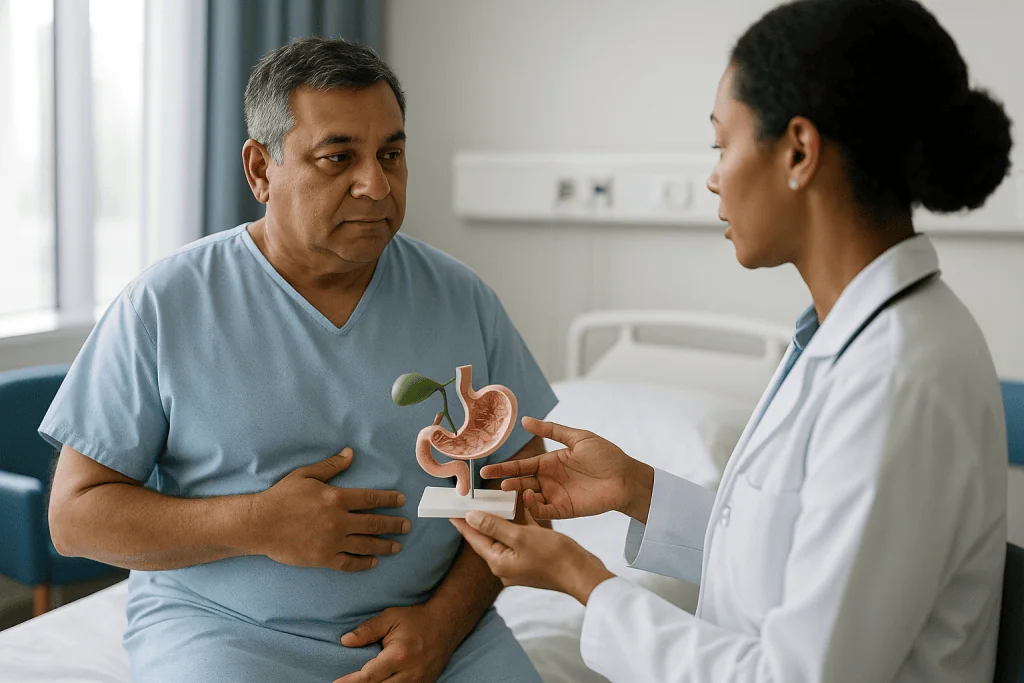
That does not make the robot pointless. Surgeons value it for several reasons that are real but hard to measure in trials: a stable three-dimensional view, instruments that rotate more freely than a human wrist, and reduced tremor. These may matter more in technically difficult cases, such as a badly inflamed gallbladder, scarring from previous operations, or when the surgeon anticipates needing to explore the bile duct at the same time. For a straightforward case in a person of average build, the advantage is mostly the surgeon’s comfort and familiarity.
What the evidence does support strongly is the choice of keyhole surgery over open surgery whenever it is safe. The NHS notes that people usually return to normal activities within about two weeks after laparoscopic removal, compared with six to eight weeks after an open operation. Robotic surgery sits firmly in that first category.
So when someone asks whether robotic surgery is better for the gallbladder, the evidence-graded reply is: it is equivalent for most people, potentially helpful in complex cases, and the surgeon’s experience with whichever method they use matters more than the label on the equipment.
Who robotic cholecystectomy is usually for, and who is asked to wait
The reasons for removing a gallbladder do not change with the technique. According to Mayo Clinic, cholecystectomy is most often recommended for gallstones causing pain, gallbladder inflammation (cholecystitis), stones that have slipped into the bile duct, gallbladder polyps of concern, and pancreatitis triggered by stones. If any of those apply, the robotic route is simply one way of doing the same operation.
Surgeons may lean toward robotic assistance in particular situations: a history of abdominal surgery with likely adhesions, a higher body weight where instrument reach and view are harder with standard tools, or when the team already performs most of its keyhole work robotically and knows the platform well. None of these is a rule; they are practical judgments made case by case.
Some people are usually asked to wait, or offered a different plan first. Active severe inflammation with an unstable patient may be managed with antibiotics and a drainage tube before any operation. Someone with an uncorrected bleeding tendency, a recent heart attack, or poorly controlled lung disease may need optimization by their physician before general anesthesia is safe. Pregnancy changes the timing conversation, with surgery often planned around the second trimester if it cannot be postponed, a decision made jointly with obstetric colleagues. Very frail patients or those who cannot tolerate the head-up position and gas pressure required for keyhole surgery may be steered toward a different approach altogether.
Robotic surgery also requires the operating room and team to be set up for it, and not every hospital has the equipment on every list. If your surgeon proposes standard laparoscopy instead, that is not a downgrade; it is the same operation by the method they are most practiced in. Either way, the decision belongs to you and the treating team together.
What are the potential downsides of robotic cholecystectomy?
Every operation carries risk, and the robotic approach shares the risks of laparoscopic gallbladder removal listed by the NHS and MedlinePlus: bleeding, wound infection, a leak of bile from the liver bed or duct stump, injury to the bile duct or nearby organs, blood clots in the legs, and reactions to anesthesia. Bile duct injury is the complication surgeons worry about most because it can require further surgery; it is described as rare across all keyhole techniques.
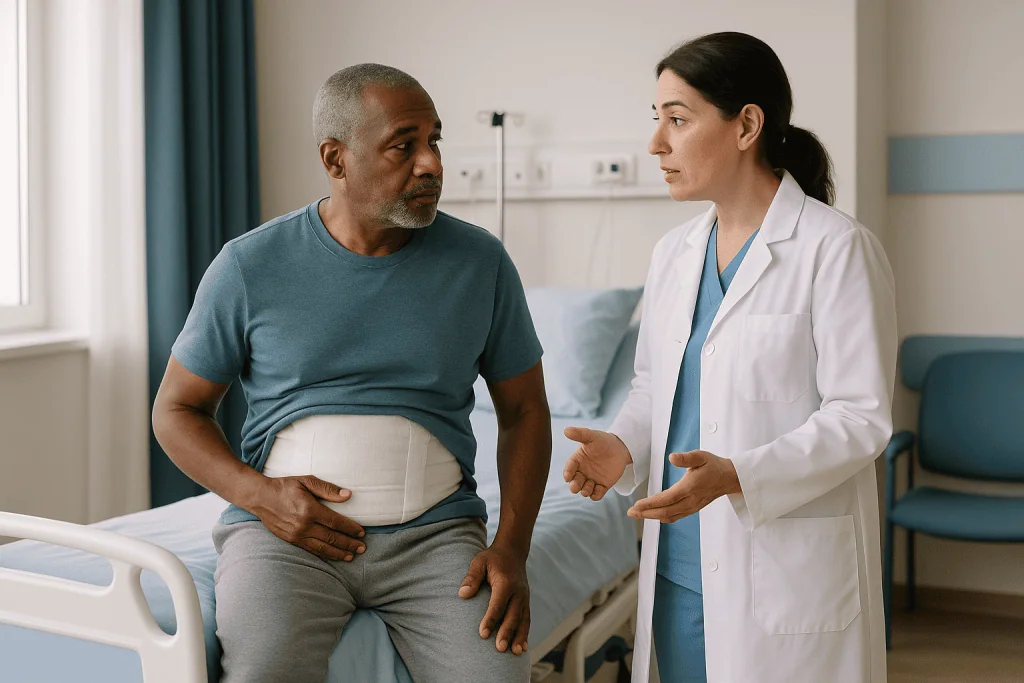
A few concerns are specific to, or more pronounced with, the robotic set-up. Operating times tend to be longer, partly because of docking the machine and positioning the arms, and longer anesthesia is a modest extra load for people with heart or lung conditions. The surgeon has no direct sense of touch through the console, relying on visual cues instead, which is why experience with the platform matters. Where a single incision through the navel is used rather than several small ports, some studies have reported a higher chance of an incisional hernia at that site later on, a weakness in the abdominal wall where tissue can bulge. Ask which incision pattern your surgeon plans and why.
There is also the possibility of conversion: if the anatomy is unclear or bleeding is difficult to control, the surgeon may switch to a standard laparoscopic or an open operation for safety. That is a sound judgment, not a failure, but it changes your recovery timeline, so it should be discussed in advance.
A downside people rarely think about is expectation. Marketing language around robotics can suggest a gentler experience than the evidence supports. Your incisions, gas discomfort and tiredness will feel much the same as after conventional keyhole surgery, and knowing that ahead of time prevents disappointment.
How painful is robotic gallbladder surgery?
Most people describe the first two or three days as sore rather than agonizing, with the discomfort concentrated in three places. The incisions themselves feel bruised and pull when you sit up or cough. The right upper abdomen, where the gallbladder was peeled away from the liver, aches in a dull, deep way. And, surprisingly for many, the tip of the right shoulder hurts.
That shoulder pain has nothing to do with your shoulder. The NHS explains that it comes from the gas used to inflate the abdomen irritating the underside of the diaphragm, the sheet of muscle beneath the lungs, which shares nerve pathways with the shoulder. The brain misreads the signal. It usually eases within a few days as the remaining gas is absorbed, and gentle walking, warm packs and changing position help more than lying still.
Pain relief after cholecystectomy typically follows a stepped approach. Local anesthetic is often injected around the incisions in theater, giving several hours of numbness. Simple analgesics such as paracetamol and, where appropriate, anti-inflammatory medicines form the backbone at home, with stronger opioid medicines reserved for short-term breakthrough pain if the surgical team prescribes them. What you take, how much and for how long is set by your prescriber and should not be changed without asking them.
Pain generally improves day by day, with most people needing little or nothing for discomfort by the end of the first week. What should not happen is pain that gets steadily worse after day two, pain that spreads across the whole abdomen, or pain accompanied by fever or yellowing of the eyes. Those patterns are covered in the red-flag section below, because they can signal a bile leak or infection that needs prompt assessment rather than another dose.
Day-one walks: why getting up within hours matters
The single most useful thing you can do on the day of surgery is stand up and walk, even if it is only to the bathroom and back. MedlinePlus discharge guidance for laparoscopic gallbladder removal puts it plainly: start walking soon after surgery, because it helps prevent blood clots and lung complications and speeds the return of normal bowel function.
Here is the mechanism. General anesthesia and lying flat slow the flow of blood in the deep veins of the calves, and surgery itself makes blood more prone to clot for a few days. Calf muscles act as pumps; each step squeezes blood back toward the heart. Walking also expands the lungs fully, clearing the small collapsed airways that anesthesia leaves behind and lowering the chance of a chest infection. And movement stirs a sluggish gut, which is why the first few laps around the ward often bring the first relief from gas bloating.
A sensible day-one plan looks like this: sit on the edge of the bed for a minute before standing, walk with someone nearby the first time, and aim for a short walk every hour or two while awake rather than one heroic trek. Ten minutes on a flat surface counts. Stairs are allowed if you take them slowly and hold the rail. Some surgical teams also fit compression stockings or give a short course of a blood-thinning injection for people at higher clot risk; whether you need either is their call, based on your history.
Walking will pull on the incisions and stir up the shoulder-tip ache; that is expected and not harmful. What you are building over the first week is a gradual increase in distance, not speed. By the end of the first week, a brisk stroll around the block is a reasonable target for most people, which the timeline table later in this article puts in context.
Showering after gallbladder surgery: when can you get the incisions wet?
The fear that water will ruin a fresh wound is one of the most persistent worries after surgery, and it is largely misplaced. Running water over a closed incision does not open it or push bacteria inside; the seal formed by skin glue, dissolvable stitches or a waterproof dressing keeps the edges together while the deeper layers heal.
Guidance differs slightly between sources, which is worth knowing so you are not confused by conflicting advice. MedlinePlus discharge instructions state that you may shower the day after surgery unless your surgeon tells you otherwise. NHS guidance describes dressings that can usually be removed after about 48 hours, after which the wounds can be washed normally. The difference reflects local wound-closure habits rather than a medical disagreement, and it is why the sheet your own team gave you wins.
Practical points make the first shower easier. Keep it short and lukewarm rather than hot, because heat increases swelling and can make you lightheaded so soon after anesthesia. Let water run over the incisions rather than aiming a strong jet at them. Do not scrub, and avoid soaps with heavy fragrance directly on the wounds. Afterward, pat the area dry with a clean towel or let it air dry; rubbing can lift the edges of skin glue prematurely. If waterproof dressings are in place, leave them until the date the team specified.
Have someone within earshot the first time. The combination of warmth, standing still and a body that has just had a general anesthetic can cause a brief drop in blood pressure, and a shower stool is a cheap insurance policy. Once you are steady and the wounds are dry and closed, daily showering is not only allowed but helpful, keeping the skin clean while the incisions finish healing.
Bath after gallbladder surgery: when is soaking allowed?
Soaking is different from showering, and the distinction matters. A bath, hot tub or swimming pool keeps the wound submerged for many minutes, softening the skin and the glue or scab that seals it, and exposing the incision to water that is not sterile. MedlinePlus is explicit: do not soak in a bathtub or hot tub, and do not go swimming, until your doctor tells you it is okay.
The timeline for that green light depends on how the incisions were closed. Skin glue typically flakes off on its own over one to two weeks; dissolvable stitches sit below the surface and disappear over a similar period; the occasional non-dissolving stitch or staple is removed at a follow-up visit, usually around the same time. Surgeons commonly allow tub baths once the incisions are fully sealed, dry and free of scabs, which for most people is around one to two weeks after surgery. That range is a typical pattern, not a guarantee, and the person who has looked at your wounds should confirm it.
Hot tubs and public pools deserve extra patience. Warm communal water carries a higher bacterial load than a clean home tub, and hospital guidance generally suggests waiting until all wounds are completely healed with no open areas before using them. A sensible self-check before any soak: no scab, no oozing, no gap at the incision, no redness spreading outward. If any of those is present, wait and ask.
For people who find a bath essential to comfort, there is a middle path: a shallow bath with the water level kept below the lowest incision, which for many is the one at the navel. Ask your team whether that is acceptable in your case. Above all, resist the urge to pick at glue or scabs to hurry things along; they fall away when the skin beneath is ready.
Robotic gallbladder surgery recovery week by week
Recovery from keyhole gallbladder removal follows a fairly predictable arc, and knowing the shape of it makes the slow days less worrying. The ranges below are drawn from NHS, Mayo Clinic and MedlinePlus patient guidance for laparoscopic cholecystectomy, which applies equally to the robotic approach. They describe what is typical, not a schedule you must meet.
| Stage | What is typical | Water rules |
|---|---|---|
| Day of surgery | Home the same day or next morning; first walks within hours; sore incisions, shoulder-tip ache, drowsiness | Keep dressings dry |
| Days 1–3 | Short frequent walks; simple pain relief as prescribed; small light meals; gas bloating eases | Shower from day 1 or after 48 hours per your team |
| Days 4–7 | Pain noticeably easing; longer walks; light household tasks; bowel habit settling | Daily showers; no soaking |
| Weeks 1–2 | Return to desk work and driving when comfortable; glue flaking off; energy still below normal | Bath often allowed once wounds sealed and confirmed by team |
| Weeks 2–6 | Normal activities including gradual return to exercise; heavier lifting reintroduced on advice | Pools and hot tubs once fully healed |
Two patterns are worth flagging. Fatigue often lags behind pain: many people feel physically comfortable by the end of the first week yet need an afternoon rest for another week or two, which is a normal response to anesthesia and healing rather than a sign of trouble. And bowel habits can wobble in both directions, with constipation from pain medicines early on and looser stools once bile flows straight into the gut without a reservoir.
The NHS puts the headline figure at about two weeks to return to normal activities after keyhole gallbladder removal, against six to eight weeks for an open operation. If your recovery runs slower than the table, that is a conversation to have with your team, not a cause for alarm on its own.
Caring for the incisions: glue, dressings and what normal healing looks like
After robotic gallbladder removal you will usually have between one and five small incisions, each roughly the width of a fingertip. Knowing how they were closed tells you how to look after them.
Skin glue looks like a clear or slightly yellow film over the wound. Leave it alone; it waterproofs the incision and flakes away on its own over one to two weeks. Do not apply creams or ointments over it, because they dissolve the adhesive. Dissolvable stitches sit under the skin and need no attention. Small adhesive dressings, if used, are generally removed after about 48 hours according to NHS guidance, after which the wounds can be left uncovered unless they catch on clothing.
Normal healing has a recognizable look. The skin edges are pink or slightly red for a few millimeters on either side. There may be a little bruising, particularly around the navel, and a small amount of clear or pink-tinged fluid on the dressing in the first day or two. The area feels firm and tender under the fingertips for several weeks as scar tissue forms and then softens. Itching as the wound heals is common and is a sign of nerve endings recovering, not infection.
What does not fit the pattern: redness that spreads outward from the incision rather than fading, warmth and increasing swelling, thick yellow or green discharge, a bad smell, or the wound edges gaping apart. Any of these, particularly with a fever, warrants a same-day call to the surgical team.
Once the wounds have fully closed, usually after the second week, protecting the new scars from direct sun for the first several months helps them fade rather than darken. Sunscreen or clothing over the area is enough. Silicone gels or sheets are sometimes suggested for people prone to raised scars; whether they are worth it for you is a question for your team, as the evidence for their benefit is modest.
Eating after gallbladder removal: what changes and what doesn't
The liver produces bile continuously. The gallbladder’s job was to store and concentrate it, then squeeze it into the intestine when a fatty meal arrived. Without the reservoir, bile trickles into the gut steadily instead of in a well-timed surge. For most people the digestive system adapts to this within weeks, and Mayo Clinic notes that no special long-term diet is needed after cholecystectomy.
The early days are a different matter. Start with small, light meals: toast, rice, soup, yogurt, plain protein. Large or greasy meals in the first week can trigger bloating, cramping or loose stools because there is no concentrated bile pulse to handle a big fat load. Spreading food across five or six small meals rather than three large ones tends to be more comfortable. Fluids matter too, especially if pain medicines are causing constipation, which is a common and underdiscussed early complaint.
Looser stools after gallbladder removal are common and, as the NHS explains, usually temporary, often settling over a few weeks as the bowel adjusts. Cutting back on very fatty or fried foods, limiting caffeine and increasing soluble fiber from oats, bananas and root vegetables can help in the meantime. A minority of people have diarrhea that persists beyond a few months; that is worth reporting, because there are prescription options that bind bile acids in the gut, and because other causes should be excluded. Whether to try such a medicine is a decision for your physician.
Alcohol is best avoided while you are taking pain medicines and while the anesthesia is still clearing, and reintroduced gently afterward. There is no evidence that you must avoid particular foods forever after cholecystectomy; the goal is a gradual return to your normal diet over the first month, guided by how your body responds.
Robotic cholecystectomy recovery time for driving, work and exercise
The question behind most return-to-life questions is the same: when will a sudden movement stop hurting? Driving illustrates the point. The NHS advises not driving until you can comfortably wear a seatbelt and perform an emergency stop without pain, which for most people after keyhole gallbladder removal is around a week. Sedating pain medicines are a separate bar; you should not drive while taking them regardless of how the incisions feel. Some motor insurers also ask to be informed after surgery, so a quick check of your policy is sensible.
Work depends on what the job asks of your abdomen. Desk-based roles are often manageable within one to two weeks, in line with the NHS estimate of about two weeks to normal activities. Jobs involving lifting, bending or long periods on your feet usually need longer, and MedlinePlus advises avoiding heavy lifting for the first couple of weeks to protect the healing incisions, particularly the one at the navel where the gallbladder was removed and the abdominal wall is weakest. Your surgeon may extend that period if the navel incision was larger.
Exercise follows a graded path. Walking is unrestricted from day one and is the best rehabilitation available. Gentle stretching and stationary cycling are usually reasonable once walking is comfortable. Running, swimming, core work and weight training are typically reintroduced from around two weeks onward, once the wounds are sealed and there is no pulling sensation, building intensity over several more weeks. Contact sports and heavy lifting are the last to return.
Sexual activity can resume when it is comfortable, which for many people is within one to two weeks; there is no medical restriction beyond pain and common sense. Air travel is generally considered reasonable once you are mobile and pain is controlled, but ask your team, because long flights raise clot risk in the weeks after surgery and they may want a follow-up appointment completed first.
Laparoscopic vs robotic cholecystectomy: how painful is recovery from each?
People searching for how painful recovery from laparoscopic gallbladder surgery is, and whether the robot spares them any of it, deserve a clear answer: the two recoveries feel much the same. Both involve small incisions, gas inflation of the abdomen and the same internal steps. The sore navel, the bruised feeling along the ribs and the shoulder-tip gas ache appear in both, peak in the first two or three days and fade over the first week.
Where the approaches differ is at the margins. Robotic ports are sometimes slightly larger than the smallest laparoscopic instruments, which can mean marginally more tenderness at individual incision sites; conversely, the robotic camera port is often placed at the navel where a laparoscopic one would be too. Single-incision robotic surgery trades several small wounds for one larger one hidden in the navel, which some people prefer cosmetically but which can be more tender when sitting up and carries a somewhat higher long-term hernia risk in some studies. Neither approach has been shown in systematic reviews to reduce pain scores or analgesic use in a consistent, clinically meaningful way.
The comparison that genuinely changes recovery is keyhole versus open. An open cholecystectomy uses a single incision of several inches under the right ribs, cutting through muscle. The NHS describes a hospital stay of several days and a return to normal activities over six to eight weeks, versus about two weeks for keyhole surgery. Pain is greater and lasts longer because muscle, not just skin, has to heal. Open surgery is now reserved for cases where keyhole surgery is unsafe or has to be converted mid-operation.
So if you are choosing between laparoscopic and robotic approaches, choose the surgeon’s most practiced method and spend your energy on the things you control: walking early, following the wound instructions, and reporting the red flags promptly.
What people often get wrong about robotic gallbladder surgery recovery
Some myths survive because they sound cautious. Each of these is worth correcting with what the evidence actually shows.
“The robot means almost no recovery.” Robotic surgery is keyhole surgery. Reviews comparing it with standard laparoscopy find similar pain, similar hospital stay and similar time back to normal life. Expect the same two-week arc the NHS describes, not a weekend.
“Bed rest protects the incisions.” The opposite is closer to the truth. Lying still raises the risk of clots and chest complications, slows the gut and prolongs gas pain. MedlinePlus guidance is to start walking soon after surgery. Movement heals; only heavy lifting needs to wait.
“Water will infect the wound.” Showering over a closed incision from the day after surgery, or after 48 hours depending on your team’s wound closure, is standard advice. The restriction is on soaking, not on getting wet.
“Shoulder pain means something went wrong.” Shoulder-tip pain after keyhole surgery is referred pain from gas irritating the diaphragm. It is expected and fades over a few days. New pain in the abdomen that worsens after day two is the pattern to worry about, not the shoulder.
“I will never eat fat again.” Mayo Clinic notes no special long-term diet is required. Early small, low-fat meals are about comfort while the bowel adjusts, not a lifelong rule.
“Glue and scabs should be cleaned off.” Skin glue and scabs are the wound’s own dressing. They come away when the skin beneath has healed, usually within one to two weeks; peeling them early is the commonest self-inflicted cause of a gaping incision.
“If the surgeon switched to open surgery, they made a mistake.” Conversion is a safety decision made when anatomy is unclear or bleeding is hard to control. It lengthens recovery but reflects good judgment.
Questions to ask your care team before you go home
A short list, asked before the discharge sheet is signed, saves a great deal of second-guessing in the days that follow. Write the answers on the sheet itself.
- How were my incisions closed: glue, dissolvable stitches, or stitches or staples that need removing? When, if at all, should the dressings come off?
- When can I shower, and is there anything I should do or avoid when I do?
- When can I have a full bath, use a hot tub or swim? What should the wounds look like before I do?
- Was the operation completed as planned, or was anything different: a single navel incision, a drain, conversion to another approach, or stones found in the bile duct?
- What pain relief has been prescribed, how does each medicine work, and when should I expect to need less? Who do I ask if the plan is not enough?
- Do I need compression stockings or blood-thinning injections at home, and for how long?
- What is a reasonable walking plan for the first week, and when can I lift, drive, return to work and exercise?
- What signs mean I should call you today, and which number do I use out of hours?
- Is a follow-up appointment needed, and will the gallbladder be sent for examination? If so, when and how will I hear the result?
- Are there any of my regular medicines I should pause or restart differently after surgery?
Two of these deserve emphasis. The out-of-hours contact question is the one people most regret not asking at midnight on day two. And the question about what was found inside matters because the plan for a routine gallbladder differs from one where the duct also needed attention or where the tissue is being examined; knowing which applies to you frames every other expectation. The team will have the answers; the discharge conversation is the moment to collect them.
When to call your doctor
Most recoveries are uneventful, but a small number of complications after gallbladder removal, notably bile leak, infection and clots, are far easier to treat when caught early. The NHS and MedlinePlus both list warning signs that should prompt a same-day call to your surgical team or emergency care.
Contact your team the same day if you notice: abdominal pain that is getting worse rather than better after the second day, or pain spreading across the whole belly; a temperature above 100.4°F (38°C) or shaking chills; yellowing of the skin or the whites of the eyes, dark urine or pale, clay-colored stools, which can point to bile not draining properly; repeated vomiting or an inability to keep fluids down; a swollen, hard or increasingly tender abdomen; an incision that is spreading red, hot, oozing thick or foul-smelling fluid, or coming apart; or no bowel movement combined with vomiting and bloating.
Seek emergency care immediately for chest pain, sudden shortness of breath or coughing up blood, which can signal a clot in the lung; a calf that becomes painful, swollen or warm, which may be a clot in the leg vein; heavy bleeding from a wound that does not stop with pressure; fainting or confusion; or severe pain that is not touched by the prescribed pain relief.
Do not talk yourself out of calling because the hour is inconvenient or because you fear wasting anyone’s time. Surgical teams would far rather assess ten people whose pain turned out to be gas than miss the one with a bile leak. When in doubt, use the number on your discharge sheet, and describe what has changed since you left hospital; that history is the most useful thing you can give the person on the other end of the line.
Frequently asked questions
How painful is robotic gallbladder surgery?
Most people describe the first two or three days as sore rather than severe, with tenderness at the incisions, a deep ache under the right ribs and referred pain in the right shoulder tip from the gas used during surgery. Discomfort usually eases day by day, with many people needing little pain relief by the end of the first week. Pain that worsens after day two, spreads across the abdomen or comes with fever needs prompt assessment.
What are the potential downsides of robotic cholecystectomy?
The robotic approach shares the risks of any keyhole gallbladder removal: bleeding, infection, bile leak, rare bile duct injury and clots. Specific to the robot are longer operating times, the surgeon’s loss of direct touch feedback, and, when a single navel incision is used, a somewhat higher risk of a later hernia at that site reported in some studies. Reviews have not shown a consistent patient benefit over standard laparoscopy for routine cases.
Is robotic surgery better for the gallbladder?
For most routine cases, no clear advantage has been demonstrated. Systematic reviews find similar complication rates, hospital stay and recovery between robotic and conventional laparoscopic cholecystectomy. Surgeons may prefer robotic assistance for technically difficult cases, such as heavy scarring or severe inflammation, because of the stable three-dimensional view and flexible instruments. The surgeon’s experience with their chosen method matters more than the platform itself.
How painful is recovery from laparoscopic gallbladder surgery compared with robotic?
Recovery from the two approaches feels much the same, because both are keyhole operations using small incisions and gas inflation of the abdomen. The sore navel, bruised ribs and shoulder-tip ache appear in both and fade over the first week. The comparison that genuinely changes pain and recovery is keyhole versus open surgery, where a larger muscle-cutting incision means a longer, more uncomfortable recovery of six to eight weeks.
When can I start showering after gallbladder surgery?
Usually from the day after surgery, according to MedlinePlus discharge guidance, or after about 48 hours once dressings are removed, according to NHS advice; the difference reflects how wounds are closed locally, so your own team’s sheet takes priority. Keep the shower short and lukewarm, let water run over the incisions rather than scrubbing, and pat dry afterward. Have someone nearby the first time in case of lightheadedness.
When is a bath after gallbladder surgery allowed?
Soaking in a bath, hot tub or pool should wait until the incisions are fully sealed, dry and free of scabs, which for most people is around one to two weeks after surgery. MedlinePlus advises not soaking until your doctor confirms it is safe. Prolonged submersion softens the glue or scab that seals the wound and exposes it to non-sterile water. Hot tubs and public pools generally need the longest wait.
What is the typical robotic cholecystectomy recovery time before driving and work?
The NHS advises not driving until you can wear a seatbelt comfortably and perform an emergency stop without pain, often around a week, and never while taking sedating pain medicines. Desk work is often manageable within one to two weeks, in line with the NHS estimate of about two weeks to normal activities. Physical jobs involving lifting usually need longer, and heavy lifting is typically avoided for the first couple of weeks.
Why does my shoulder hurt after robotic gallbladder surgery?
The shoulder itself is fine. Carbon dioxide gas used to inflate the abdomen during keyhole surgery irritates the underside of the diaphragm, which shares nerve pathways with the shoulder, so the brain registers the pain there. This referred pain typically eases within a few days as the gas is absorbed. Walking, changing position and warmth help more than lying still. It is not a sign that something has gone wrong.
Will I need a special diet after gallbladder removal?
Not in the long term. Mayo Clinic notes that no specific diet is required after cholecystectomy because the liver keeps producing bile, which now flows steadily into the gut. In the first weeks, small, lower-fat meals are more comfortable while the bowel adjusts, and looser stools are common but usually temporary. Diarrhea persisting beyond a few months should be reported, as treatable causes and options exist.
What is the difference between laparoscopic vs robotic cholecystectomy in practice?
Both are keyhole operations with the same internal steps: sealing the gallbladder’s duct and artery, freeing it from the liver and removing it through a small incision. In laparoscopy the surgeon holds the instruments directly; in robotic surgery they control them from a console via robotic arms that follow every hand movement. The robot never acts independently. For the patient, incisions, pain and recovery are closely similar.
References
- NHS: Gallbladder removal, recovery
- NHS: Gallbladder removal, overview and risks
- MedlinePlus: Laparoscopic gallbladder removal, discharge instructions
- MedlinePlus: Gallbladder removal, laparoscopic
This article is for general information only and is not a substitute for professional medical advice. Please consult a qualified doctor about your individual situation.

More from the Blog

Is Gallbladder Surgery Different for Older Adults? How Age and Heart Conditions Shape the Plan
Gallbladder surgery is not fundamentally different for older adults, but the planning around it is. Surgeons weigh frailty, heart and lung conditions, medicines such…

Why Fecal Incontinence Happens: Muscle, Nerve and Stool Factors Specialists Look For
Fecal incontinence usually happens when one or more of three systems fails: the sphincter muscles that close the anus, the nerves that sense stool…

Laparoscopic Appendectomy Step by Step: Anesthesia, Three Small Incisions and Closing Up
A laparoscopic appendectomy removes the appendix through three small abdominal incisions under general anesthesia. The surgeon inflates the abdomen with carbon dioxide, inserts a…

Keeping a Bowel Diary Before Your Fecal Incontinence Appointment: What to Record and Why
A bowel diary before a fecal incontinence appointment is a dated record, usually kept for one to several weeks, of every bowel movement, leak…

What to Expect After Hemorrhoid Banding: The Falling-Off Stage and How Relief Builds
After hemorrhoid banding, most people feel a dull sense of fullness or pressure in the rectum for one to three days rather than sharp…

Hemorrhoidectomy Step by Step: Anesthesia, Removing the Hemorrhoid and the Dressing After
A hemorrhoidectomy is a same-day operation in which a surgeon removes swollen hemorrhoid tissue through the anus, usually under general or spinal anesthesia. The…