

What Are the Risks of a Brow Lift? Numbness, Hair Loss at Incisions and Uneven Brows
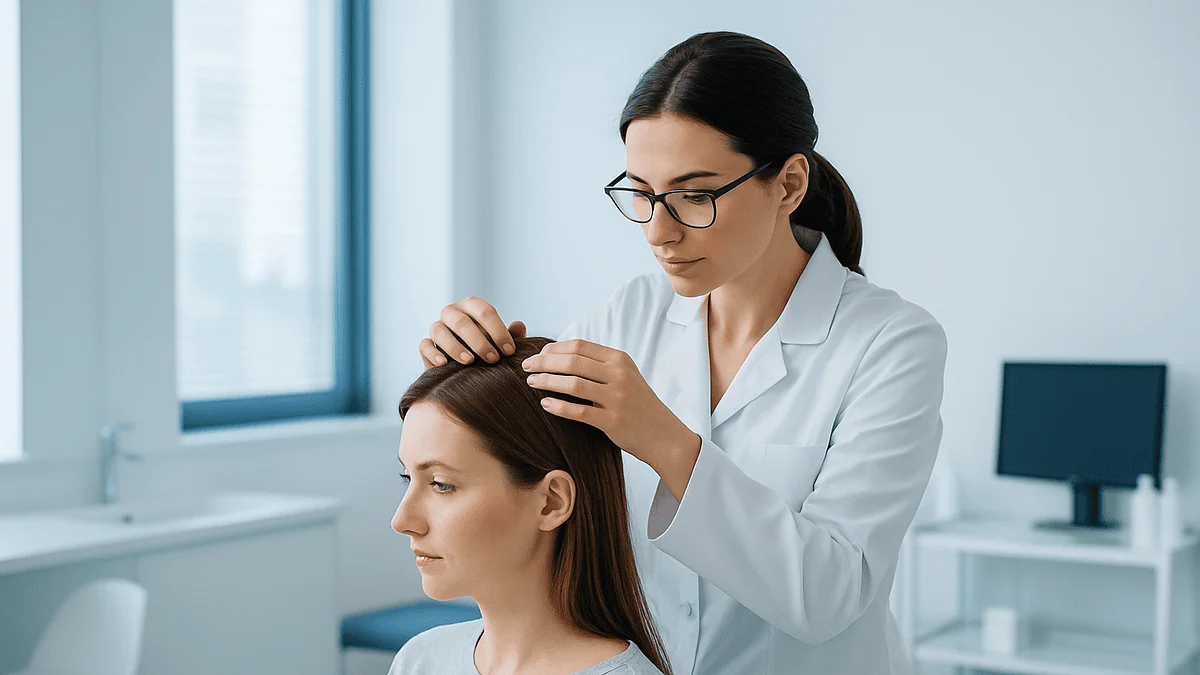
Key Takeaways
- Two sensory nerves exiting just above each eye socket supply feeling to the forehead and scalp, which is why lifting tissue off the bone so often leaves temporary or lasting numbness.
- Hair loss along a scalp incision comes in two kinds: temporary shock shedding that usually regrows, and permanent scar alopecia where follicles were cut or lost blood supply.
- Almost everyone starts with asymmetrical brows, so surgeons plan slightly different lifts on each side and judge final symmetry only after several months of settling.
- A fingertip test that lifts the brow and removes upper-eyelid hooding points to a brow problem; if hooding stays, eyelid surgery may be the more relevant conversation.
- Botulinum toxin injections can raise the outer brow modestly for around three to four months, according to the NHS, but they cannot remove excess skin.
- Stitches or clips are typically removed within about 7–10 days and visible bruising fades over roughly two weeks, but sensation and scar maturation run on a months-long clock.
The main brow lift risks are temporary or lasting numbness across the forehead and scalp, hair thinning or a bald strip along incisions hidden in the hair, and brows that heal at slightly different heights. Less common problems include bleeding, infection, visible scars, weakness in the muscles that raise the brow, and an over-lifted look. Most effects settle over weeks to months, but some can be permanent.
She had taken the photo without meaning to. A quick selfie at a family dinner, and there it was: the heavy hood over her eyes that made her look tired when she felt anything but. A week later she was sitting across a desk from a surgeon, nodding along, until the conversation reached the part about nerves and scalp incisions. That was where the nodding stopped.
That pause is the right instinct. Brow lift risks are not dramatic in the way people imagine surgery risks, but they are specific, and some of them are permanent. The three that matter most to daily life are a forehead that feels strange to the touch, hair that thins along a hidden scar, and two eyebrows that no longer quite agree with each other.
What follows is an honest map of those risks, what surgeons do to lower them, what recovery usually looks like, and the questions worth asking before anyone books a date.
What actually happens during a brow lift?
A brow lift, also called a forehead lift, is an operation that repositions the skin and soft tissue of the forehead so the eyebrows sit higher and the frown lines between them soften. The forehead itself is a sandwich: skin on top, a thin sheet of muscle and connective tissue in the middle, and the periosteum, the membrane that hugs the bone, underneath. Surgeons work in the layers between.
There are several ways in, and the route chosen shapes the risk profile more than any other single decision. In an endoscopic lift, the surgeon makes a handful of short incisions behind the hairline and threads a small camera and instruments beneath the skin, releasing the tissue from the bone and anchoring it higher. In a coronal lift, one long incision runs across the top of the scalp from ear to ear, a strip of scalp is removed, and the forehead is pulled upward before closing. A hairline (pretrichial) lift places the incision right along the edge of the hair so the forehead can be shortened rather than lengthened. A temporal lift works only on the outer third of the brow through incisions above the ears. A direct lift removes a sliver of skin just above the eyebrow itself, leaving a scar the brow hair is meant to camouflage.
The operation is usually done under general anesthesia or intravenous sedation with local anesthetic, and it is sometimes combined with eyelid surgery or a facelift. Mayo Clinic describes it as an outpatient procedure for most people, meaning they go home the same day with the forehead wrapped and often with small tubes draining fluid overnight. Understanding which layers are moved, and which nerves cross them, explains nearly everything about the brow lift risks discussed below.
Why brow lift risks depend on where the incision goes
The forehead is crowded with cables. Two sensory nerves, the supraorbital and supratrochlear nerves, exit the skull just above each eye socket and fan upward, carrying feeling from the forehead all the way to the crown. A third, the frontal branch of the facial nerve, runs from near the ear across the temple to power the muscle that raises the eyebrow. None of these can be seen from the surface, and all of them lie exactly where a brow lift works.
Sensory nerves are the reason for numbness. When tissue is lifted off the bone, these nerves are stretched, bruised, or occasionally cut. A coronal incision crosses their path directly, which is why the older, longer-incision techniques are more strongly associated with lasting numbness of the scalp behind the scar. Endoscopic approaches spare more of the small branches but still tug on the main trunks during release.
The motor nerve is a different worry. Injury to the frontal branch can leave one eyebrow unable to rise, producing the very asymmetry the surgery was meant to correct. Temporal approaches pass close to it, and surgeons plan their dissection plane specifically to stay beneath it.
Hair follicles are the third casualty of geography. Any incision through hair-bearing scalp interrupts blood supply to follicles at the edge, and tension on the closure makes that worse. MedlinePlus lists hair loss along the incision among the recognized problems of forehead lift surgery, alongside numbness, scarring, and uneven brows. The trade-off is blunt: hide the scar in the hair and accept some risk to the hair, or place it at the hairline or above the brow and accept a scar that skin has to conceal instead.
Forehead numbness after brow lift: what it feels like and how long it lasts
Ask people what surprised them most, and numbness usually wins. The forehead can feel like a mask, or as if a local anesthetic never fully wore off. Some describe the top of the scalp as woolly or thick when they brush their hair. Others get the opposite: itching, tingling, or brief electric jolts as nerves wake up. All of these are versions of the same event, a stretched or bruised nerve recovering at its own slow pace.
Mayo Clinic lists changes in skin sensation, including temporary or permanent numbness on the forehead or top of the scalp, among the standard risks of the procedure. The word permanent is not there for drama. Sensory nerves regrow slowly, and if a branch was divided rather than stretched, the patch it served may never fully recover. What tends to happen in practice is that feeling returns gradually over weeks to months, often starting at the edges of the numb area and moving inward, with the strip immediately behind a coronal scar the last to change and sometimes the only part that stays altered.
The practical consequences deserve a mention. A numb forehead cannot warn you about a hot hair dryer, a too-hot shower, or a hair straightener resting against the scalp, so burns are a genuine risk during the first months. Itching without normal sensation can also lead to scratching that damages healing skin.
Nothing reliably speeds nerve recovery, and clinicians do not treat this stage with medicines unless nerve pain becomes troublesome. What your surgical team can do is tell you honestly which technique they used and what pattern of recovery they typically see, so an odd sensation at week six is expected rather than alarming.
Hair loss at the incisions: temporary shedding or a permanent bald line?
Hair loss after a brow lift comes in two forms, and it matters which one you are looking at. The first is shock loss, a temporary shedding of hairs near the incision in the weeks after surgery. Follicles that were bruised, stretched, or briefly starved of blood supply drop their hair shafts but survive, and new growth usually appears over the following months. Seeing hairs on the pillow or a slightly thinner zone around the scar in the first two months is common and usually recovers.
The second form is scar alopecia: follicles that were cut through or lost their blood supply entirely and will not regrow. This shows up as a smooth, hairless line along the scar, and Mayo Clinic notes that hair problems at the incision site may be temporary or permanent. The width of that line depends on how much tension the closure was under and how the incision was angled. Surgeons who bevel the cut so that follicles beneath the scar can grow through it, and who avoid pulling the scalp tight, aim to keep this to a hairline-thin strip.
Who is most exposed? People with fine or thinning hair, those with a receding hairline, and anyone with a scalp condition that already affects follicles. A coronal incision also lifts the hairline upward, which can make a high forehead look higher; the hairline approach exists partly to avoid this, at the price of a scar that sits at the edge of the hair rather than inside it.
If regrowth has not occurred after many months, options such as scar revision or hair grafting exist, but they are separate procedures with their own considerations, and whether they are appropriate is a judgment for the treating team, not something to assume in advance.
Uneven brows after a brow lift: why symmetry is harder than it looks
Here is a fact that surprises many people at consultation: almost nobody starts with symmetrical eyebrows. One brow usually sits a little higher, one side of the forehead is often more active, and the eye sockets themselves are rarely mirror images. A brow lift does not start from zero, it starts from an existing imbalance and tries to correct or at least not worsen it.
Asymmetry after surgery has several sources. Swelling settles unevenly in the first weeks, so a lopsided look at day ten means very little. Tissue can also heal with different degrees of tightening on each side, or one anchoring point can loosen. The most concerning cause is weakness of the frontal branch of the facial nerve on one side, which leaves that eyebrow unable to lift when the other one does; Mayo Clinic notes that asymmetry in the position of the eyebrows may improve during healing but that persistent problems can require additional surgery.
Nerve-related weakness often recovers as bruising around the nerve resolves, typically over weeks to months, but it can be permanent if the nerve was cut. Positional asymmetry from healing may be adjusted with a smaller touch-up operation once everything has settled, which surgeons generally prefer to judge only after several months rather than in the fresh postoperative period.
Expectation setting is the best protection. Photographs taken before surgery, with the face at rest and while raising the brows, show what the baseline asymmetry was. Many surgeons deliberately plan a slightly different lift on each side to compensate. A useful question is simply: how will you handle the difference between my two brows, and what does a result that needs revising look like in your experience?
Which brow lift technique carries which risk? A side-by-side view
No technique is risk-free, and none is universally best. Each moves the same tissue by a different route and therefore trades one problem for another. The table below summarizes the characteristic concerns as described in mainstream patient resources such as Mayo Clinic and MedlinePlus; it is a guide to the conversation, not a ranking.
| Approach | Where the incision sits | Risk it tends to carry most | What it tends to avoid |
|---|---|---|---|
| Endoscopic | Several short cuts behind the hairline | Anchors loosening, brow settling back; some numbness | Long scars, large strips of hair loss |
| Coronal | One long cut across the top of the scalp | Lasting scalp numbness, a visible bald line, raised hairline | Reliance on internal anchors |
| Hairline (pretrichial) | Along the front edge of the hair | A scar at the hairline that must fade | Lengthening an already high forehead |
| Temporal | Above the ears, within the hair | Frontal nerve branch weakness; limited lift centrally | Work near the central forehead nerves |
| Direct | Just above the eyebrow | A scar the brow hair has to hide | Scalp numbness and hair loss |
A few patterns stand out. The more scalp that is cut, the more numbness and hair-related risk; the less that is cut, the more the result depends on internal fixation holding. Direct and hairline lifts move the scar into the open in exchange for leaving the scalp alone, which is why they are often chosen for people with sparse hair or heavy brows that need a strong, predictable lift. Whether any of these suits a particular face depends on hairline height, skin thickness, how much the brow needs to move, and what the person is willing to trade. That is precisely the decision that belongs with the surgeon and patient together.
The less common brow lift complications nobody should skip over
Beyond the big three, a short list of rarer problems belongs in any honest consent conversation. Bleeding under the skin, called a hematoma, can collect in the first day or two and usually announces itself as sudden one-sided swelling, tightness, or pain that is out of proportion to the other side. Drains and head elevation are used to lower the chance, and a hematoma that keeps growing is treated as an urgent problem because it can compromise the skin above it.
Infection is uncommon in forehead surgery because the scalp has a rich blood supply, but it can occur around incisions or fixation devices. Redness spreading beyond the wound edge, warmth, pus, or a fever are the signs clinicians look for, and antibiotics, if needed, are chosen and timed by the treating team.
Scarring varies with skin type and tension. Some people form raised or widened scars, and scars at the hairline or above the brow are more visible than those hidden in hair. Eyebrows can also be lifted too far, producing a startled expression, or lifted unevenly at the outer corners; the eyelids may not close fully for a time if a brow lift is combined with upper eyelid surgery and too much skin is taken overall. MedlinePlus also lists problems with eyebrow movement among recognized risks.
Finally, there are the risks that belong to every operation rather than to this one: reactions to anesthesia, blood clots in the legs after immobility, and slower healing in people who smoke, which is why Mayo Clinic advises stopping smoking well before surgery. Rare does not mean irrelevant; the point of listing these is so that a warning sign gets recognized quickly rather than waited out.
Who is a brow lift usually for, and who is usually asked to wait?
The typical candidate has brows that have drifted downward with age or genetics, a heavy, tired look around the eyes that is coming from above rather than from the eyelids themselves, deep horizontal forehead lines, or persistent frown lines between the brows. A simple test many surgeons use in the room: gently lift the brow with a fingertip and see whether the upper eyelid hooding disappears. If it does, the brow is the problem. If it does not, eyelid surgery may be the better conversation.
Good candidates are generally in stable health, do not smoke or are willing to stop for the period their team specifies, and have realistic expectations about a modest, natural change rather than a transformation. Skin quality, hairline height, and hair density all shape which technique is offered, and sometimes whether any technique is a good idea.
Who is asked to wait, or steered elsewhere? People who smoke and cannot pause, because nicotine narrows blood vessels and raises the risk of wound breakdown and hair loss along the scar. People with uncontrolled high blood pressure or bleeding disorders, because of hematoma risk. Anyone taking medicines that thin the blood needs a plan agreed with the prescribing clinician; nobody should stop such a medicine on their own. Active skin infections on the scalp or forehead, unstable thyroid or eye conditions that affect the eyelids, and recent major weight changes are also reasons to pause.
The NHS emphasizes that cosmetic surgery is a personal choice that should never be rushed and should be discussed thoroughly with a suitably qualified surgeon, with time to reflect between consultation and procedure. A surgeon who suggests waiting is usually protecting the result, not withholding it.
Brow lift vs blepharoplasty: which is better for hooded eyes?
This is one of the most searched questions, and the honest answer is that they fix different things and are often confused because the symptom looks the same. Hooding over the eyes can come from excess skin on the upper eyelid, from a brow that has slid down and is pushing the lid skin ahead of it, or from both. Blepharoplasty, meaning eyelid surgery, removes excess skin and sometimes fat from the eyelid itself. A brow lift raises the frame around the eye and takes tension off the lid without touching it.
Choosing the wrong one has consequences. If a low brow is the real cause and only the eyelid is trimmed, the surgeon has to remove more lid skin to get a result, the brow may drop further because the lid no longer supports it, and there is a risk the eyes cannot close comfortably. If the brow is fine and it is lifted anyway, the person can end up with an over-elevated, surprised look and the hooding still present.
Mayo Clinic describes blepharoplasty as an option when drooping upper lids or bags interfere with appearance or, in some cases, with peripheral vision, and notes it is sometimes combined with a brow lift. That combination is common precisely because many people over a certain age have both problems.
On risk, the two procedures differ in character. Eyelid surgery carries specific concerns about dry eyes, difficulty closing the eyes, and rare vision-threatening bleeding. A brow lift carries the numbness, hair, and nerve risks described above. Neither is inherently safer; the right choice is the one that addresses the actual anatomy in front of the surgeon, which is why the fingertip test in the consultation room matters more than any online comparison.
What can you do instead of a brow lift?
Not everyone with heavy brows wants or needs an operation, and the alternatives range from doing nothing to a menu of smaller interventions. Each has limits worth stating plainly.
Botulinum toxin injections are the most common non-surgical approach. Botulinum toxin is a protein that temporarily blocks the signal from nerve to muscle. Injected into the muscles that pull the brow down, it lets the muscle that lifts it win, producing a small rise at the outer brow and softening frown lines. The NHS notes that effects typically last around three to four months before the treatment needs repeating, and that side effects can include temporary drooping of the brow or eyelid if the product spreads to the wrong muscle. It does not remove excess skin, so it cannot match a surgical lift in someone with a genuinely low brow.
Dermal fillers can add volume to the temple and outer brow, subtly supporting a deflated area. They are also temporary and carry their own risks, including rare but serious problems if filler enters a blood vessel.
Energy-based skin tightening using radiofrequency or ultrasound heats the deeper skin to encourage collagen; changes are modest and evidence for meaningful brow elevation is limited. Thread lifts, which use dissolvable barbed sutures under the skin, are marketed for brow lifting, but the results tend to be short-lived and the evidence base is thin.
Eyelid surgery alone may be the correct alternative when the eyelid, not the brow, is the true culprit. And for some people, well-fitted glasses, a different hairstyle, or simply accepting a face that has earned its lines is a perfectly reasonable choice. None of these options is a recommendation; they are the range a treating team should walk through before anyone commits to surgery.
What do the days and weeks after a brow lift usually look like?
The first night is about pressure and elevation. The forehead is typically wrapped in a dressing to limit swelling, small drains may be in place, and the instruction is to sleep with the head raised. Discomfort is usually described as tightness and a dull ache rather than sharp pain, and it is managed with whatever the surgical team prescribes.
Days two through seven are the swollen, bruised stretch. Bruising often tracks downward into the eyelids and cheeks, which alarms people who did not expect their eyes to look worse before they look better. Numbness and itching of the scalp are at their peak, and the eyebrows may look too high or unequal because swelling is not symmetrical. Mayo Clinic advises keeping the head elevated, avoiding vigorous activity, and leaving dressings alone until the team removes them.
Stitches or clips are generally removed within about 7–10 days according to Mayo Clinic, and visible bruising and most swelling usually fade over roughly two weeks, though subtle puffiness can persist for several weeks longer. Many people return to desk work and light routine around this point, with hair covering the incisions.
Weeks three through eight are about the tissue settling. Sensation begins to return in patches, the brows relax into a more natural position, and scars start to soften from pink to pale. Heavier exercise, bending, and anything that raises blood pressure to the head are usually reintroduced gradually on the team’s advice.
Months three through twelve are the true endpoint. Scar maturation, final brow position, and the last of the sensory recovery all happen on this slower clock. A judgment about symmetry or the need for any adjustment is fairest made here, not before.
How long does a brow lift last?
People want a number of years, and no honest source can give one that applies to everyone. What can be said is this: the tissue that is lifted stays lifted, but the process that lowered it in the first place keeps running. Mayo Clinic states that brow lift results are not permanent, because skin and tissue continue to lose elasticity and the forehead may begin to droop again with age. The NHS makes the same point about facial cosmetic surgery generally.
Several factors set the pace. Skin quality and genetics determine how quickly elasticity fades. Sun exposure accelerates collagen breakdown, which is why sun protection is one of the few things the person can control after surgery. Smoking degrades skin and blood supply. Significant weight fluctuations change the soft tissue of the face. And the technique matters: lifts that rely on removing a strip of scalp generally hold differently from those that depend on internal anchors, though the trade-off is more scalp numbness and hair-related risk, as described earlier.
A useful way to frame the question is not how long until it wears off, but how long until you look as you did the day before surgery. Because aging continues on both sides of the ledger, most people never quite return to their starting point; they look like an older version of the lifted face rather than the pre-surgery one. Some choose a repeat or adjunct procedure years later; many do not.
Anyone quoting a precise lifespan, especially a long one, is usually reporting their own impressions rather than evidence. The fair expectation is a change that lasts years and then gradually softens, at a pace set by biology and habits rather than by the surgeon’s skill alone.
What people often get wrong about brow lift risks
The first myth is that a brow lift is minor because the incisions are small or hidden. Endoscopic cuts are indeed short, but the tissue is still lifted off the bone across the whole forehead, the nerves are still handled, and the recovery still involves swelling, numbness, and weeks of settling. Small scars are not the same as small surgery.
The second is that numbness means the surgery went wrong. Some altered sensation is expected after nearly every brow lift and is listed as a standard risk by Mayo Clinic and MedlinePlus. What distinguishes normal from concerning is the trajectory: gradual improvement over weeks to months is typical, while new numbness appearing later, or numbness accompanied by weakness of the eyebrow, deserves a call.
The third myth is that brow lifts are among the most dangerous cosmetic operations. When people ask about the highest-risk cosmetic surgery, the procedures that appear in safety discussions are generally those involving large volumes of fat transfer to the buttocks, long combined operations under anesthesia for many hours, and major body contouring, because of their association with fat embolism, blood clots, and wound problems. A brow lift is a comparatively contained procedure. Its risks are real but mostly about sensation, hair, and symmetry rather than life-threatening events, which is precisely why they are easy to underestimate in the other direction.
The fourth is that a brow lift will remove forehead wrinkles. It smooths the forehead by repositioning tissue and sometimes weakening frown muscles, but it is not a skin-resurfacing treatment, and lines etched into the skin itself usually remain in softer form.
Last, people assume that because friends were happy, the risks do not apply to them. Anatomy, hairline, and skin behave individually. Consent is about the person in the chair, not the average result.
Questions to ask your care team about brow lift side effects
A good consultation should leave you able to answer these yourself. If any remain unclear, they are worth asking directly, and the answers are worth writing down.
- Which technique are you recommending for my forehead, and why that one over the alternatives given my hairline and hair density?
- Where exactly will the incisions be, and how visible do you expect the scars to be once healed?
- What pattern of numbness do you typically see with this approach, and how much of it usually recovers?
- How do you protect the nerve that lifts the eyebrow, and what happens if one brow does not move afterward?
- How do you close the scalp to reduce hair loss along the incision, and what do you do if a bald line does develop?
- Looking at my photographs, which brow is currently higher, and how will you handle that difference?
- Do you think the heaviness I dislike is coming from my brow, my eyelids, or both, and would eyelid surgery instead or as well change your plan?
- What non-surgical options should I consider first, and what are their limits for someone with my anatomy?
- What is your policy if the result is uneven or the brows settle back down, and on what timescale would you judge that?
- Which of my current medicines or supplements need a plan before surgery, and who coordinates that with my prescribing clinician?
- What signs after surgery should make me contact you the same day, and how do I reach the team out of hours?
The NHS advises checking a surgeon’s registration and specialist qualifications, asking how often they perform the specific procedure, and never feeling pressured by time-limited offers. A team that welcomes these questions is telling you something about how they will handle the unexpected.
When to call your doctor after a brow lift
Most of what happens in the first two weeks, including swelling, bruising into the eyes, tightness, scalp numbness, and itching, is expected and improves on its own. A short list of signs should prompt a same-day call to the surgical team, or urgent care if the team cannot be reached.
Sudden swelling on one side of the forehead, especially with increasing pain, tightness, or a firm lump, may indicate bleeding under the skin and is treated as urgent because it can threaten the skin above it. Bleeding that soaks through dressings and does not stop with gentle pressure needs the same response.
Signs of infection include spreading redness around an incision, warmth, pus or a foul-smelling discharge, wound edges pulling apart, or a fever. Any of these should be assessed rather than waited out.
New weakness of an eyebrow that was moving normally in the first days, inability to close one or both eyes fully, or changes in vision such as blurring or double vision should be reported immediately. Severe headache that does not respond to the prescribed pain plan, or numbness that suddenly spreads or is accompanied by facial drooping elsewhere, also warrants a prompt call.
Outside the face, calf pain, swelling of one leg, chest pain, or sudden breathlessness after any operation can signal a blood clot and are emergencies; call emergency services rather than the clinic.
Less acute concerns, such as hair shedding around the scar, a numb patch that has not changed after several months, or a persistent difference in brow height, belong in a scheduled follow-up. The treating team is the right place for every one of these judgments, because they know what was done, what they expect, and what falls outside it.
Frequently asked questions
What can you do instead of a brow lift?
Alternatives include botulinum toxin injections to relax the muscles that pull the brow down, fillers to support the temple and outer brow, energy-based skin tightening, and, when the eyelid is the true problem, eyelid surgery alone. All non-surgical options are temporary and cannot remove excess skin. Which, if any, suits a particular face is a decision for the treating team after examining the anatomy.
What is the highest risk cosmetic surgery?
Safety discussions usually point to large-volume fat transfer to the buttocks and very long combined operations under anesthesia, because of fat embolism and blood clot risks. A brow lift is a comparatively contained procedure. Its risks are real but mainly concern numbness, hair loss at incisions, scarring, and uneven brows rather than life-threatening events, which is exactly why they are easy to underestimate.
How many years does a brow lift last?
There is no fixed number. Mayo Clinic notes that results are not permanent because skin keeps losing elasticity with age, so the brow gradually settles over years. Genetics, sun exposure, smoking, weight changes, and the technique used all affect the pace. Most people do not return to their pre-surgery appearance; they age from a higher starting point instead.
Which is better, blepharoplasty or brow lift?
Neither is better in general; they treat different causes of the same tired look. Blepharoplasty removes excess eyelid skin, while a brow lift raises a brow that has dropped and is pushing the lid downward. Choosing the wrong one can worsen the result. Many people need both, and the surgeon’s examination, not an online comparison, should settle it.
How long does forehead numbness after brow lift last?
Numbness typically improves gradually over weeks to months as stretched nerves recover, often starting at the edges of the numb area. The strip behind a long scalp incision may be the last to change and can remain altered permanently if a nerve branch was divided. Mayo Clinic lists both temporary and permanent numbness as recognized risks.
What are the most common brow lift side effects in the first two weeks?
Expect swelling, bruising that tracks down into the eyelids, a tight or aching forehead, scalp numbness, itching around the incisions, and brows that look too high or unequal while swelling settles. These are expected and improve on their own. Sudden one-sided swelling, spreading redness, fever, or new eyebrow weakness are not, and should be reported the same day.
Will hair grow back where the brow lift incisions were?
Often, but not always. Temporary shedding near the scar in the first weeks usually regrows over the following months. A smooth hairless line along the incision indicates follicles that were cut or lost blood supply and will not recover. Careful incision angling and low-tension closure reduce this; if a bald line persists, revision options can be discussed with the treating team.
Can a brow lift make your brows uneven?
Yes. Uneven brows can result from swelling that settles asymmetrically, tissue healing differently on each side, a fixation point loosening, or weakness of the nerve that lifts one eyebrow. Mayo Clinic notes asymmetry may improve during healing but sometimes needs additional surgery. Because most people start with unequal brows, surgeons compare against pre-surgery photographs before judging.
Is an endoscopic brow lift safer than a coronal brow lift?
It trades one set of risks for another rather than being safer overall. Endoscopic lifts use short incisions and cause less scalp numbness and hair loss, but depend on internal anchors that can loosen, letting the brow settle. Coronal lifts hold differently but carry more lasting numbness, a longer scar, and a raised hairline. Hairline and hair density guide the choice.
What should I stop or change before a brow lift?
Smoking is the most important, because nicotine narrows blood vessels and raises the risk of wound breakdown and hair loss along the scar; Mayo Clinic advises stopping well beforehand. Medicines and supplements that thin the blood need a plan agreed with the prescribing clinician; never stop a prescribed medicine on your own. Your surgical team will give specific instructions.
References
This article is for general information only and is not a substitute for professional medical advice. Please consult a qualified doctor about your individual situation.

More from the Blog

Are Lip Lift Results Long-Lasting? How the Upper Lip Ages After Surgery
A lip lift removes a narrow strip of skin beneath the nose, and because removed skin does not grow back, the shorter distance between…
Cheek Augmentation Risks: Implant Shifting, Asymmetry and Numbness Explained Honestly
Cheek augmentation risks include implant shifting or malposition, visible asymmetry, numbness or altered sensation in the cheek and upper lip, infection, bleeding, fluid collection,…
What Happens During Rhinoplasty? Anesthesia, Incisions and the Steps Inside the Operating Room
During rhinoplasty, you are given general anesthesia or intravenous sedation with local anesthetic, the surgeon makes incisions inside the nostrils (closed approach) or adds…

Why Is a Night Headband Worn After Prominent Ear Surgery? Duration, Sleep and Sports
After otoplasty, the surgery that sets prominent ears closer to the head, a soft headband is usually worn at night so that rolling over…
Which Noses Are Candidates for Revision Rhinoplasty? Breathing, Shape and What Is Assessed
A revision rhinoplasty candidate is usually someone whose nose has fully healed from a previous operation, typically around a year later, and who has…

What Scar Revision Surgery Can and Cannot Do: Realistic Results and the Year-Long Maturation
Scar revision surgery can make a scar narrower, flatter, better aligned with skin creases, or less tight, but it cannot erase a scar; it…