

What Happens in a Mesotherapy Session: Microinjections, Timing and How It Feels
Key Takeaways
- Mesotherapy is a technique of many shallow dermal injections, not a defined product, so the contents of the syringe can differ completely between two practitioners.
- The injection phase of a facial session is usually measured in minutes, but topical numbing often adds a twenty- to thirty-minute wait before it begins.
- Immediately afterward, skin is red with small raised bumps that flatten within hours, while any bruises follow the roughly two-week fading pattern MedlinePlus describes for ordinary bruises.
- Microneedling has a stronger evidence base than mesotherapy, and no robust trial has shown that adding a vitamin mixture improves on needling alone.
- No major health body gives a duration figure for mesotherapy results; the mainstream position is that non-surgical cosmetic procedures produce temporary effects.
- The most serious documented harms, including atypical mycobacterial infections, trace back to how products were handled, which is why asking to see sealed, labeled product matters.
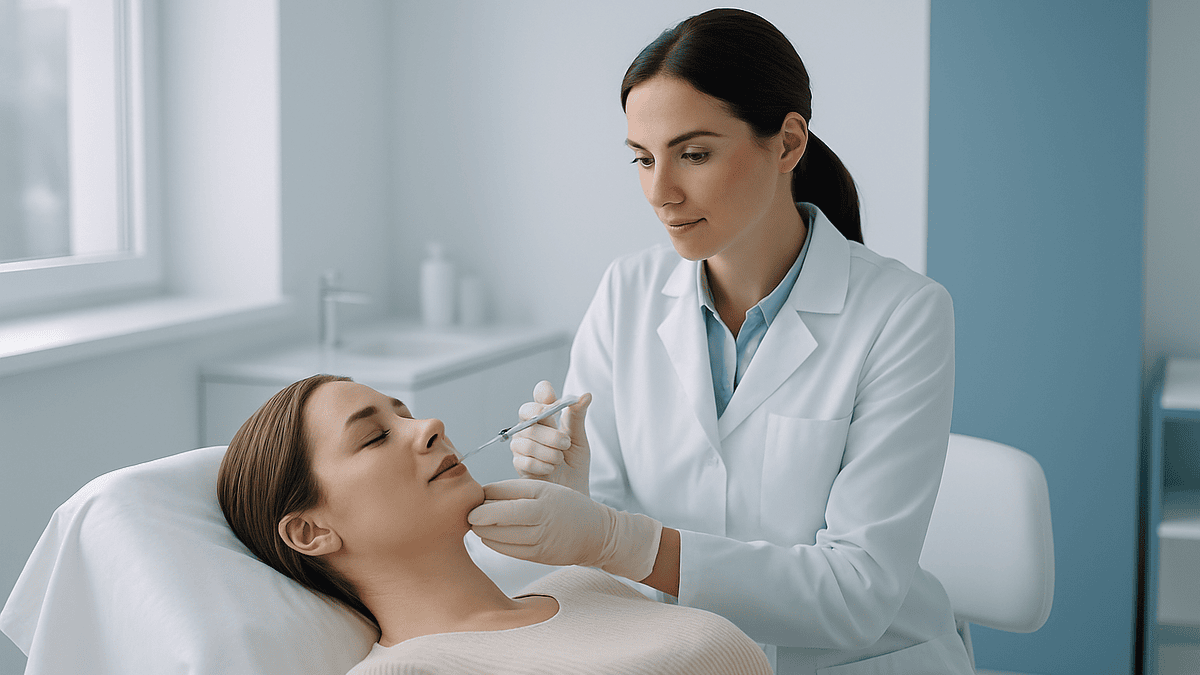
A mesotherapy session is a short cosmetic procedure in which a practitioner places many tiny, shallow injections of a liquid mixture, often containing hyaluronic acid, vitamins, minerals or amino acids, into the skin of the face, neck or scalp. After cleansing and optional numbing cream, the injection phase typically takes well under an hour, feels like repeated pinpricks, and leaves temporary redness and small bumps. Evidence for lasting benefit remains limited.
The appointment card says “mesotherapy, 45 minutes,” and that is about all you know. A friend mentioned it in passing, the photos online all show a gloved hand and a row of tiny needle marks, and now you are sitting in a waiting room wondering whether you will walk out looking polished or looking like you fell into a rosebush.
That uncertainty is reasonable. Mesotherapy sits in an odd corner of facial aesthetics: it has been practiced for decades, yet it has no single agreed recipe, no standard protocol and far less high-quality research than its popularity suggests. Clinics describe it with confidence; the published evidence describes it with caution.
This explainer walks through a mesotherapy session, what happens from the consultation to the last injection, how long each part takes, what it feels like, what your skin looks like afterward and where the science actually stands. The decisions remain with you and the treating team; the job here is to make sure you know what to ask.
What is mesotherapy, in plain language, and what goes into the syringe?
Mesotherapy is a technique, not a product. A French physician, Michel Pistor, began using it in the 1950s to deliver small amounts of medicine close to a problem area rather than into a vein or muscle. The name comes from the mesoderm, the embryonic layer that develops into skin and connective tissue. In practice the needle reaches the dermis, the living layer beneath the surface where collagen, blood vessels and hyaluronic acid live.
Modern cosmetic mesotherapy keeps the method and swaps the contents. Practitioners inject a mixture, sometimes called a cocktail, that may include hyaluronic acid (a water-binding sugar molecule the skin makes naturally), vitamins such as vitamin C or B-group vitamins, minerals, amino acids, antioxidants and occasionally plant extracts. For scalp treatments the mixture may be aimed at hair follicles; for the body, some practitioners have historically used fat-dissolving agents such as phosphatidylcholine or deoxycholate, an area that carries its own distinct risks and regulatory status.
Here is the honest problem. No national guideline specifies what should be in a mesotherapy mixture or how much of it. Mixtures are frequently compounded by the practitioner, which means two clinics offering “facial mesotherapy” may be injecting entirely different substances. Mayo Clinic, discussing cellulite, lists injection-based treatments among approaches whose results are modest at best and whose evidence is thin, and the same caution applies to the face.
The working theory is that microtrauma from the needles stimulates repair, while the delivered ingredients hydrate and support the dermis. Microneedling research supports the first half of that idea. Whether the ingredients add measurable benefit beyond the needling itself is exactly the question the current literature cannot answer with confidence, and a careful practitioner will tell you so before you lie down.
Mesotherapy session what happens: the step-by-step walk-through
Most sessions follow a recognizable sequence, even though the details vary from one practitioner to the next.

It starts with a conversation. A qualified practitioner reviews your medical history, current medicines, allergies, previous skin treatments and what you hope to change. Expect questions about pregnancy or breastfeeding, cold sores, acne flares, autoimmune conditions and whether you bruise easily. This is also when the practitioner should explain exactly what will be injected and show you the product packaging if you ask. The NHS advises that for any non-surgical cosmetic procedure you confirm the person’s training, insurance and experience before agreeing to anything.
Photographs usually come next, taken in consistent lighting so that any change can be judged against a baseline rather than memory.
Then the skin is cleansed. Makeup, sunscreen and skin oils are removed and an antiseptic is applied. Many practitioners then spread a topical anesthetic cream over the treatment area and leave it to take effect under a thin plastic film; this waiting period is often the longest single part of the appointment.
After the cream is wiped off, the injections begin. The practitioner works methodically across the area in a grid or along lines of the face, by hand or with a mechanical injector. Depth is shallow, typically measured in millimeters rather than centimeters.
Finally, the skin is cleaned again, a soothing or healing product may be applied, and you receive aftercare instructions: what to avoid, what is normal and when to make contact. A follow-up appointment is often booked before you leave. You walk out under your own steam; no one needs to collect you.
How are the microinjections actually given?
The word “microinjection” describes both the needle and the volume. Needles used in mesotherapy are very fine and very short, and each puncture delivers only a tiny droplet of liquid. Practitioners describe several distinct techniques, and knowing their names helps you understand what you are being offered.
Nappage, from the French for “to coat,” is the most superficial. The needle enters at a shallow angle in rapid, repeated strokes, almost brushing the skin, and droplets of fluid are released as it moves. The sensation is closer to a cat’s tongue than to a conventional shot.
Point-by-point injection places individual tiny deposits at regular intervals, often a centimeter or so apart, with the needle entering more vertically. Each deposit raises a small wheal, a pale blister-like bump that flattens over the following hours as the fluid disperses.
Papular technique is similar but deliberately creates slightly larger wheals in the superficial dermis, sometimes along defined facial lines.
Some practitioners use a mesotherapy gun, a handheld device that controls depth, speed and the amount released with each shot. The advantage is consistency; the disadvantage is that a machine does not feel the skin the way a hand does. Neither approach has been shown in good-quality trials to produce better outcomes than the other.
Whatever the method, sterile technique is non-negotiable. The CDC’s injection safety guidance exists because single-use needles, sterile fluids and clean preparation prevent infections that have genuinely followed cosmetic injections. Watch for a new needle opened in front of you and a product drawn from a sealed, labeled container. If either is missing, you are entitled to stop and ask.
How long does a mesotherapy session take, and how many sessions are typical?
Timing depends heavily on whether numbing cream is used. The consultation and photographs may take ten to fifteen minutes. Topical anesthetic generally needs time to work, often in the range of twenty to thirty minutes, and this waiting is simply built into the appointment. The injection phase for a full face is usually measured in minutes rather than hours; a practitioner working across cheeks, forehead and jawline typically finishes well within half an hour. Add aftercare and the whole visit often lands somewhere between forty-five minutes and an hour and a half. These are ranges reported by practitioners, not figures set by any guideline, and your own clinic’s estimate is the one that counts.

How many sessions you might be offered is a harder question, because there is no standard protocol. Practitioners commonly describe an initial course of several sessions spaced a few weeks apart, followed by occasional maintenance visits. That pattern mirrors microneedling, for which Cleveland Clinic notes that multiple treatments spaced weeks apart are typical, since the skin needs time to produce new collagen between sessions.
Treat any confident “you will need exactly this many” statement with polite skepticism. Without standardized ingredients or trials comparing one schedule with another, a proposed course is a clinical judgment rather than an evidence-based prescription. A reasonable practitioner will offer a starting plan, reassess after each visit and be willing to stop if your skin is not responding.
Timing also matters relative to your life. Because redness and small bumps are expected immediately afterward, people often avoid booking the day before an important event, and many practitioners suggest leaving at least a few days clear.
How does mesotherapy feel during the injections?
Ask ten people and you will hear ten versions, but a few themes recur.
With numbing cream, the dominant sensation is pressure and a faint scratch. Many describe it as a series of quick pinpricks, like a tattoo needle passing lightly over the skin, or a light flicking with a rubber band. Without numbing, the pricks are sharper and a stinging or burning feeling may follow each one, particularly when the mixture contains vitamin C or other acidic ingredients that irritate briefly on contact.
Location changes everything. The cheeks and forehead are relatively tolerant. The upper lip, the area around the nose and the thin skin beneath the eyes are more sensitive, and the neck can produce an odd, tickling discomfort that some people find harder to sit through than outright pain. Scalp mesotherapy tends to be felt more acutely because the skin is tightly bound to the skull and has little cushioning.
Nappage feels different from point-by-point work. Rapid superficial strokes blur into a continuous prickle; individual deeper injections are felt as distinct pokes, each followed by a small cold or stretching sensation as the fluid spreads.
Anxiety amplifies all of it. People who tense their shoulders and hold their breath report more discomfort than those who exhale slowly through each pass, which is why experienced practitioners talk as they work and warn before moving to a tender zone.
You remain fully awake and can speak at any point. If pain becomes more than you expected, say so; the practitioner can pause, reapply numbing or adjust technique. A session should never feel like something to be endured in silence.
What does your face look like after mesotherapy?
The immediate picture is not glamorous, and knowing that in advance prevents a shock in the mirror.
In the first hour, treated skin is pink to red, roughly the shade of a mild sunburn. Dozens of small raised bumps, the wheals left by each deposit of fluid, dot the surface in the pattern the practitioner followed. Pinpoint dots of blood may appear where the needle crossed a tiny capillary. Some areas, especially under the eyes and along the jaw, can look slightly puffy.
Over the following hours the wheals flatten as the fluid disperses into the dermis. Redness usually fades considerably by the next morning, though faint pinkness and a textured, slightly bumpy look can persist for a day or two. People with fair or easily flushed skin tend to stay red longer; people with deeper skin tones may notice less redness but should watch for any darkening of the injected spots, since post-inflammatory hyperpigmentation (lingering dark marks after irritation) is a recognized risk of any needling.
Bruising is the variable that most often decides whether you feel presentable. A few small bruises are common and generally harmless. MedlinePlus notes that ordinary bruises typically fade over about two weeks, moving through purple, green and yellow as the body breaks down the leaked blood, and mesotherapy bruises follow the same timeline.
Makeup is usually discouraged for the first day, so plan accordingly. Practitioners often suggest skipping intense exercise, saunas and direct sun for a short period as well. By the end of the first week most people look as they did before, with any difference in hydration or glow being subtle rather than dramatic.
Who is mesotherapy usually for, and who is usually asked to wait?
In facial aesthetics, mesotherapy is most often discussed for people who want a general improvement in skin hydration, texture and radiance rather than a change in shape or volume. It is pitched at dull, dehydrated or finely lined skin, and sometimes at the scalp for thinning hair. It is not a treatment for deep folds, sagging or significant volume loss; those are the territory of dermal fillers, energy-based devices or surgery, each with its own evidence and risks.
Practitioners generally ask some groups to wait or to choose something else:
- People who are pregnant or breastfeeding, because the injected ingredients have not been studied for safety in these situations.
- Anyone with an active skin infection, an acne flare, eczema or a cold sore in or near the treatment zone, since needling can spread infection.
- People taking medicines that affect clotting, including anticoagulants (medicines that slow blood clotting) and some supplements; the decision about any change rests entirely with the prescribing clinician, never with a cosmetic practitioner.
- Those with a history of keloid scarring, where even minor skin injury can produce raised scars.
- People with known allergy to any listed ingredient, or with a history of unexplained reactions to injections.
- Anyone with uncontrolled diabetes, an autoimmune skin disease or a condition that impairs healing.
- People who have recently used oral isotretinoin, a retinoid medicine for severe acne, since many practitioners wait several months before any needling procedure.
Age alone is not a reason to proceed or to decline. Expectations are. If you are hoping for a visible transformation, a candid practitioner will say that mesotherapy is unlikely to deliver it and will suggest alternatives or no treatment at all. That honesty is a good sign, not a sales failure.
Mesotherapy vs microneedling vs dermal fillers: a side-by-side look
These three are frequently confused because all involve needles in the face, yet they work in different ways and carry different evidence.
| Feature | Mesotherapy | Microneedling | Dermal fillers |
|---|---|---|---|
| What it does | Many shallow injections of a liquid mixture into the dermis | Many tiny punctures with no injected product, or with a topical applied after | Gel, usually hyaluronic acid, placed deeper to add volume or smooth folds |
| Main aim | Hydration, texture, glow | Collagen stimulation for texture, scars, fine lines | Restoring volume, reshaping, filling deeper lines |
| Standardization | Low; mixtures vary by practitioner | Moderate; devices and depths are defined | Higher; products are regulated medical devices in many countries |
| Evidence quality | Limited; small studies, few controlled trials | Moderate; reasonable trial evidence for scars and texture | Established for volume; well-documented risks |
| Typical downtime | Redness and bumps for hours to days | Redness for a few days, per Cleveland Clinic | Swelling and bruising for days to two weeks |
| Serious risks | Infection, allergy, pigmentation, nodules | Infection, pigmentation, scarring if overdone | Vascular occlusion, skin loss, rare blindness, per NHS |
The table clarifies why “is mesotherapy better than microneedling” has no clean answer. Microneedling has the stronger research base, particularly for acne scarring and skin texture, and its results come from the body’s own repair response rather than from an unstandardized mixture. Mesotherapy adds ingredients to a similar mechanical stimulus, but whether those ingredients contribute anything measurable has not been settled by well-designed comparative trials.
Dermal fillers do something else entirely. The NHS describes them as a way to fill wrinkles and add volume, with effects that are temporary and with serious, if uncommon, complications when gel enters a blood vessel. Choosing among the three should start with what you actually want changed, then move to what the evidence supports, with the treating team guiding the match.
How long does mesotherapy last? What the evidence actually shows
This is the question people most want answered and the one the literature answers least well.
Practitioners commonly describe results as temporary, with visible hydration or glow persisting for a period of months after a course and fading unless maintained. That expectation is biologically plausible: hyaluronic acid injected superficially is broken down by the skin’s own enzymes, and vitamins and amino acids are metabolized within days. Any longer-lasting effect would have to come from collagen produced in response to needling, the same mechanism microneedling relies on.
What the research base offers is modest. Published studies of facial mesotherapy tend to be small, often lack a control group, and frequently use different mixtures, depths and schedules, which makes pooling results impossible. Some report measurable increases in skin hydration or elasticity in the weeks after treatment; others find no difference compared with saline injections or with needling alone. No major health body provides a duration figure, and the NHS’s general statement that non-surgical cosmetic procedures produce temporary results is about as firm as the mainstream guidance gets.
Where you see a specific promise, such as “results last twelve months,” ask where the number comes from. If the answer is a manufacturer leaflet or the clinic’s own experience, that is useful anecdote, not evidence.
Several factors plausibly shorten or extend whatever benefit exists: sun exposure, smoking, baseline skin quality, age-related slowing of collagen production, and consistent skincare with sunscreen. Those same factors improve skin whether or not you have mesotherapy, which is one reason it is hard to separate the treatment’s effect from everything else a motivated person does at the same time.
A fair summary for your expectations: if you notice a change, it is likely to be subtle and to fade; if you notice nothing, that is also a documented outcome.
What the following days and weeks usually look like
Day of treatment. Skin is red, dotted with small bumps and possibly a few pinpoint scabs. Many practitioners suggest avoiding makeup, strenuous exercise, swimming, saunas and alcohol for the rest of the day, because heat and sweat irritate open micro-channels and increase flushing. Gentle cleansing and a bland moisturizer are typically all the skincare advised.
Days one to three. Wheals have flattened. Redness fades to pinkness, then to normal. Any bruises are at their darkest. Skin may feel tight, dry or mildly tender, and a faint roughness where the needle entered can persist. Active ingredients such as retinoids, exfoliating acids and vitamin C serums are usually paused during this window to avoid stinging and irritation; your practitioner will say when to restart.
Week one. Most people look as they did before treatment. Bruises are moving through their green and yellow stages, consistent with the roughly two-week fading pattern MedlinePlus describes for ordinary bruises. Sunscreen is strongly emphasized, since healing skin pigments more easily.
Weeks two to four. If hydration-related change is going to appear, it is often noticed around now, as a softer texture or a slight increase in surface glow. This is also when a practitioner may schedule the next session in a course, allowing the skin an interval to settle, similar to the spacing Cleveland Clinic describes for microneedling.
Beyond a month. Any collagen response, if it occurs, develops slowly. Judging the outcome of a course is usually done by comparing photographs taken under identical conditions, not by impressions in a bathroom mirror.
Throughout, any symptom that worsens rather than settles, new pain, spreading redness or a lump that grows should prompt a call rather than patience; the final section covers those signs in detail.
What is the downside of mesotherapy? Side effects and risks in plain terms
Expected effects and genuine complications are different categories, and both deserve naming.
Expected and short-lived: redness, small bumps, pinpoint bleeding, mild swelling, tenderness, itching and bruising. These follow from putting a needle through skin dozens of times and settle on their own.
Uncommon but recognized complications include:
- Infection. Bacterial skin infection (cellulitis) can follow any puncture if sterile technique lapses. More worrying are outbreaks of atypical mycobacterial infection reported after cosmetic injections prepared or stored without proper controls; these cause persistent, slow-healing nodules and abscesses that are difficult to treat. The CDC’s injection safety principles exist precisely because of such events.
- Allergic reaction. Multi-ingredient mixtures multiply the chance that one component triggers a reaction, from hives to, rarely, more serious systemic responses.
- Nodules and granulomas. Firm lumps can form as the body walls off an injected substance it does not recognize. Some resolve; some persist for months.
- Pigment change. Dark or, less often, light marks can appear at injection points, particularly in deeper skin tones or after sun exposure during healing.
- Scarring. Rare, but more likely in people prone to keloids.
- Skin surface irregularity. Historically reported with fat-dissolving body mesotherapy, where uneven injection produced dents or lumps.
The structural downside is regulatory. In many countries the mixtures are not approved for this use, practitioner qualifications vary enormously, and the NHS warns that non-surgical cosmetic procedures are often performed outside hospital settings with inconsistent oversight. A shiny treatment room says nothing about the sterility of what is inside the syringe.
None of this means the procedure is inherently dangerous when done properly. It means the margin for error sits with the person holding the needle and the quality of what they are injecting, two things you can and should ask about.
What people often get wrong about mesotherapy
“It is basically a vitamin facial.” A facial sits on the surface; mesotherapy breaks the skin dozens of times and places substances inside it. Whatever you think of its benefits, it is an invasive procedure with infection and allergy risks, and it should be treated with that seriousness.
“The vitamins are what make it work.” Possibly, but unproven. Needling alone triggers a repair response, which is why microneedling has evidence behind it. No robust trial has shown that adding a vitamin mixture does more than the needles do by themselves.
“It is natural, so it is safe.” Hyaluronic acid and vitamins occur in the body, yet anything injected can be contaminated, mis-compounded or allergenic. The infections that have followed cosmetic injections were caused by how products were handled, not by whether the ingredients sounded wholesome.
“Results are permanent after a course.” Nothing in mesotherapy permanently changes skin. Injected substances are cleared within days to weeks, and any collagen response is gradual, modest and subject to ongoing aging.
“It can replace fillers or a lift.” Mesotherapy does not add volume or reposition tissue. If those are your goals, it is the wrong tool, and a practitioner who suggests otherwise is overselling.
“Mesotherapy dissolves facial fat.” Fat-dissolving injections are a separate category with separate substances and different, more significant risks; conflating them with hydrating facial mesotherapy leads people to accept risks they did not intend to.
“If one session did nothing, more will.” Sometimes true for collagen-driven changes that develop slowly. Equally often a lack of response after a reasonable course simply indicates the treatment is not doing much for your skin, and continuing adds cost, needles and risk without benefit.
“Anyone trained in injections can do it.” Technical skill is part of the picture; recognizing a complication early and knowing how to manage it is the other part, and that requires medical training.
Questions to ask your care team before a mesotherapy session
A good consultation has room for questions, and the answers tell you as much about the practitioner as about the procedure. Consider asking:
- Exactly what will you inject, and may I see the labeled, sealed product before it is opened?
- Is this mixture approved or licensed for injection into skin where we are, or is it being used off-label or compounded? What does that mean for me if something goes wrong?
- What are your qualifications, and who would manage a complication such as infection or an allergic reaction? Is there a doctor involved in my care?
- Looking at my skin and my goals, what change do you realistically expect, and what change do you not expect?
- Why are you proposing this number of sessions, and how will we decide whether to continue or stop?
- Would microneedling alone, a topical regimen or simply no treatment be a reasonable alternative for me?
- Which of my medicines, supplements or skincare products matter here, and should I speak with my prescribing doctor before any change? (The answer to the second half should always be yes.)
- How will my skin look tonight, tomorrow and this weekend, and when can I wear makeup, exercise and use my usual products again?
- What signs mean I should contact you urgently, and how do I reach someone after hours?
- Do you take standardized photographs, and will I be able to see them?
- What is your sterile technique: single-use needles, fresh product per patient, hand hygiene and skin preparation?
Notice what is not on the list. Nothing about speed, discounts or packages. A practitioner who answers the clinical questions patiently and without irritation, who volunteers the limits of the evidence and who is comfortable with you taking time to decide is giving you the most important information of all. One who hurries past the ingredients question or cannot name who handles complications has answered a different question for you.
When to call your doctor after mesotherapy
Most sessions end with nothing more than redness and a few bruises that fade on schedule. Some signs, though, mean the normal course has been left behind and need prompt medical attention rather than watchful waiting.
Contact the practitioner or your doctor the same day if you notice redness that spreads outward or deepens after the first day instead of fading, increasing warmth, swelling or pain at the treated area, pus or cloudy fluid from any puncture point, or a fever and feeling generally unwell. These are the features of a developing skin infection, which MedlinePlus describes as needing medical assessment and, often, antibiotic treatment decided by a clinician.
Seek emergency care immediately for swelling of the lips, tongue or throat, difficulty breathing, wheezing, widespread hives, dizziness or faintness in the hours after treatment. These suggest a serious allergic reaction and do not wait for an appointment.
Also call if an area of skin turns white, dusky, blotchy purple or unusually painful, or if your vision changes in any way. These signs are rare with superficial injections but are recognized emergencies when any injected substance enters a blood vessel, and they need to be assessed the same day.
Over the following weeks, book a review for firm lumps that enlarge rather than soften, small sores or nodules that keep draining or fail to heal after two to three weeks, new dark or light patches that persist, or any symptom you simply find worrying. Slow-growing nodules in particular should be examined, because unusual infections can take weeks to declare themselves.
Bring details with you: what was injected, when, by whom, and any product labels or batch information you were given. The treating team, not the clinic receptionist and not an online forum, is the right place for every decision about next steps.
Frequently asked questions
How long do mesotherapy results last?
There is no reliable figure. Practitioners usually describe any benefit as temporary, lasting a period of months and fading without maintenance, and the NHS classes non-surgical cosmetic procedures as producing temporary results. Injected hyaluronic acid and vitamins are cleared by the body within days to weeks, so longer-lasting change would depend on a collagen response, which published studies have not consistently demonstrated.
What is the downside of mesotherapy?
The main downsides are weak evidence and poor standardization. Mixtures vary by practitioner and are often not approved for this use. Recognized complications include infection, including stubborn atypical mycobacterial infections linked to poor product handling, allergic reactions, firm nodules, pigment changes and, rarely, scarring. Expected effects such as redness, bumps and bruising are short-lived but can be inconvenient.
What does your face look like after mesotherapy?
Expect a mildly sunburned appearance with dozens of small raised bumps where fluid was deposited, plus occasional pinpoint bleeding and perhaps a few bruises. The bumps usually flatten within hours and redness fades considerably by the next day, though faint pinkness can linger for a day or two. Bruises darken over the first days and then fade over about two weeks.
Is mesotherapy better than microneedling?
Not according to current evidence. Microneedling has a more consistent research base, particularly for acne scarring and skin texture, and its effects come from the skin’s own repair response. Mesotherapy adds an unstandardized mixture to a similar needling stimulus, and well-designed trials showing that the mixture contributes additional benefit are lacking. Which suits you depends on your goals and your treating team’s assessment.
Does a mesotherapy session hurt?
Most people describe repeated pinpricks or a light scratching sensation, sharper without numbing cream and sometimes followed by brief stinging if acidic ingredients are used. The upper lip, under-eye area, neck and scalp are more sensitive than the cheeks and forehead. You stay awake throughout and can ask the practitioner to pause or reapply numbing at any point.
How many mesotherapy sessions are usually needed?
No guideline sets a number. Practitioners commonly propose an initial course of several sessions spaced weeks apart, mirroring the spacing Cleveland Clinic describes for microneedling, then occasional maintenance. Because ingredients and schedules are not standardized, any proposed course is a clinical judgment rather than evidence-based prescription, and a reasonable plan includes reassessing and stopping if your skin is not responding.
Can I wear makeup or exercise after mesotherapy?
Most practitioners advise waiting until the next day for makeup and avoiding strenuous exercise, swimming, saunas and alcohol for the rest of the treatment day. Heat and sweat irritate the fresh micro-channels and increase flushing, and makeup applied over open punctures raises infection risk. Follow the specific aftercare your practitioner gives you, since it reflects what was injected.
Who should avoid mesotherapy?
People who are pregnant or breastfeeding, anyone with an active infection, cold sore or acne flare in the area, those prone to keloid scars, people with known allergy to listed ingredients and those with uncontrolled diabetes or conditions that impair healing are usually asked to wait. Anyone on medicines affecting clotting should discuss this with their prescribing doctor first; a cosmetic practitioner should never advise changing them.
What are the mesotherapy side effects I should expect versus worry about?
Redness, small bumps, pinpoint bleeding, mild swelling, tenderness and bruising are expected and settle on their own. Spreading redness, increasing pain, pus, fever, enlarging lumps, sores that fail to heal, skin turning white or dusky, or any breathing difficulty and facial swelling are not expected and need same-day medical assessment, with breathing problems treated as an emergency.
Is mesotherapy the same as fat-dissolving injections?
No. Hydrating facial mesotherapy delivers substances such as hyaluronic acid and vitamins into the skin. Fat-dissolving injections use different agents, such as deoxycholate-type compounds, placed into fat beneath the skin, and carry distinct risks including swelling, nerve irritation and surface irregularity. The two are sometimes grouped under one name, which is a reason to ask exactly what is being proposed.
References
- NHS: Non-surgical cosmetic procedures
- NHS: Dermal fillers
- Cleveland Clinic: Microneedling
- MedlinePlus: Bruises
This article is for general information only and is not a substitute for professional medical advice. Please consult a qualified doctor about your individual situation.

More from the Blog

Lip Filler and Pregnancy, and What Not to Do Afterwards
Lip filler is not recommended during pregnancy. No controlled studies have tested hyaluronic acid fillers in pregnant people, so safety cannot be confirmed, and…
Reconstruction After Skin Disease: How Grafts, Flaps and Scar Revision Rebuild the Area
After a skin cancer is removed, surgeons rebuild the area in several ways: letting a small wound heal on its own, closing it directly…

How Often Can You Have a Gentle Chemical Peel? Spacing Sessions for Steady Results
For a gentle (superficial) chemical peel, clinicians typically space sessions about two to five weeks apart, often as a short series of several treatments…

Preparing for Masseter Botox: Fish Oil, Aspirin and the Questions to Answer Beforehand
Preparing for masseter botulinum toxin injections mostly means a frank conversation with the injector: list every prescribed medicine, supplement and recent illness, and never…

Flying Home After Laser Eye Surgery: Dry Cabin Air, Drops and Follow-Up Abroad
Flying after laser eye surgery is usually possible within days once the surgeon has examined the eye at the first follow-up visit, and normal…
Laser, Microneedling or Radiofrequency for Stretch Marks: How Dermatologists Choose the Method
Dermatologists choose between laser, microneedling and radiofrequency for stretch marks mainly on the mark's age and color, the person's skin tone, and how much…