

Which Patients Suit Fat Grafting? Donor Areas, Skin Quality and Volume Goals Explained
Key Takeaways
- Published fat graft retention ranges roughly from 25 to 80 percent across studies, so no surgeon can promise how much transferred fat will survive.
- Grafted fat keeps the metabolic habits of its donor site, which is why surgeons ask for a stable weight before surgery and why later weight change alters the result.
- The donor area is usually sorer than the recipient area, because harvesting fat is liposuction and involves bruising tissue over a wide zone.
- Fat grafting adds volume but does not tighten loose skin, so deflated and lax are different problems with different treatments.
- Fat injected beyond what the recipient tissue can nourish dies and can form oil cysts or lumps, so more fat does not mean a bigger result.
- After breast fat grafting, calcifications can appear on mammograms, and every future imaging provider should be told about the procedure.
A good fat grafting candidate is generally a healthy, non-smoking adult at a stable weight who has enough surplus fat in a donor area such as the abdomen or thighs, reasonably elastic skin at the recipient site, and modest, realistic volume goals. Because a portion of transferred fat is reabsorbed, surgeons usually favor people who understand that results vary and that a second session may be discussed.
She had lost a lot of weight, on purpose and with real effort, and the compliments kept coming. Then a photograph from a niece’s birthday landed in the family chat and she saw what the mirror had been hinting at for months: the cheeks had gone flat, the temples had hollowed, and her hands looked a decade older than the rest of her. A friend mentioned fat grafting. Her first question was not how it worked but whether she, specifically, made sense as a fat grafting candidate.
It is the right question. Fat transfer is one of the few procedures where the material comes from the patient, which means the answer depends as much on the person as on the technique. Three things carry most of the weight: whether there is fat to spare, what the skin at the destination is like, and how much volume is being asked of a single operation.
What follows is an honest tour of those three variables, plus the recovery, the risks and the numbers that hold up in the medical literature.
How does fat grafting work, and why doesn't all of the fat survive?
Fat grafting, also called autologous fat transfer, moves a person’s own fat from one part of the body to another. It happens in three steps, and each one shapes the result.
The first is harvesting. A surgeon removes fat with liposuction, a procedure that uses a thin hollow tube, called a cannula, to suction fat from beneath the skin. The tube used for grafting is usually smaller and the suction gentler than in standard liposuction, because the goal is living cells rather than fast removal.
The second is processing. Harvested fat arrives mixed with blood, anesthetic fluid and free oil from ruptured cells. Surgeons separate the useful fat by letting it settle, spinning it in a centrifuge, or washing and filtering it. There is no proven best method; a review of harvesting, processing and injection techniques in Plastic and Reconstructive Surgery found no consensus that any single approach reliably outperforms the others.
The third is placement, and this is where biology sets the rules. A fat graft has no blood supply when it is injected. For the first days it survives by soaking up nutrients from surrounding tissue, and it only lives long term if new capillaries grow into it. Cells buried in the middle of a large clump never get that supply; they die, and the body either absorbs them or walls them off as an oil cyst or firm nodule. So surgeons inject fat in fine threads, in many passes, across multiple tissue layers, the way you would drizzle rather than pour.
Even done well, some fat is lost. The same review reported retention across published studies ranging roughly from 25 to 80 percent, which is a wide enough spread to make one point clear: nobody can promise you how much will stay.
Who is a fat grafting candidate, and who is usually asked to wait?
Surgeons tend to describe the ideal fat grafting candidate in almost boring terms: an adult in good general health, at a weight that has been steady for a sustained period, who does not smoke, who has a clear and specific concern, and who has enough fat somewhere else to address it. Boring is good here. Predictable healing is what makes a graft take.
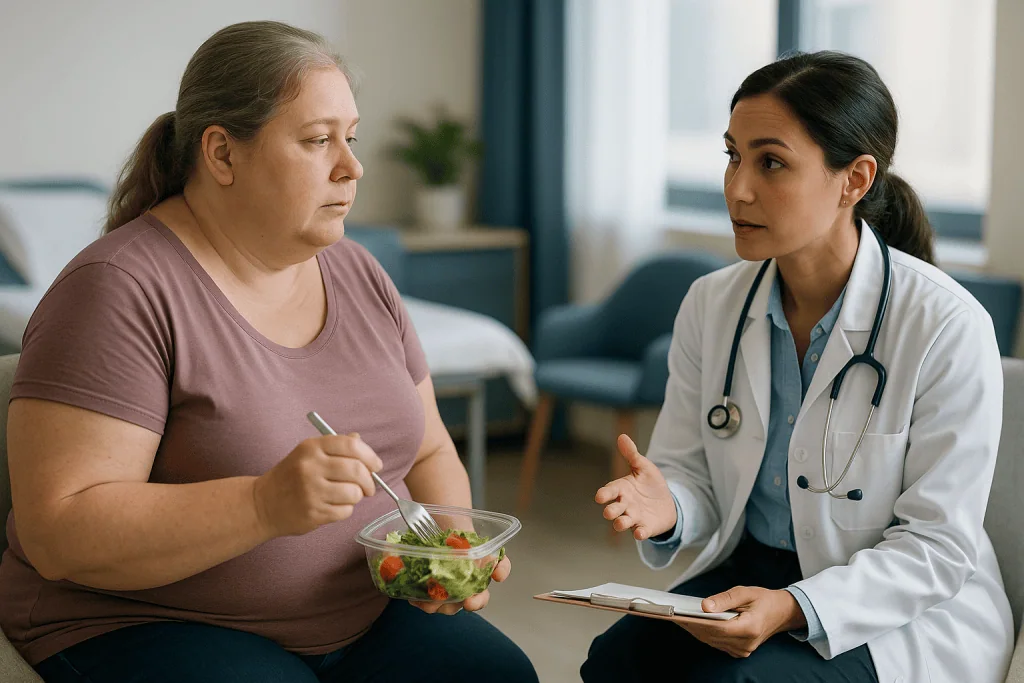
A few features strengthen candidacy further. Skin at the recipient site that is reasonably thick and elastic hides small irregularities and drapes well over new volume. Goals framed as “softer” or “less hollow” rather than “transformed” match what the procedure delivers. A willingness to accept that a second session might be discussed is realistic rather than pessimistic.
Some people are usually asked to wait rather than told no. Anyone actively losing weight is often deferred, because grafted fat behaves like the fat it came from and shrinks with the rest of the body. Pregnancy and breastfeeding are reasons to postpone. Current smokers are typically asked to stop for a period before and after surgery; the NHS notes that smoking slows wound healing and raises complication risk after cosmetic surgery. Poorly controlled diabetes, an active infection anywhere near the planned sites, or a bleeding disorder that has not been assessed will pause the conversation until they are addressed.
A smaller group is gently steered elsewhere. People with very little body fat may not have enough to harvest. People who describe a persistent, distressing preoccupation with a minor or unseen flaw are usually offered psychological support first, not because they are being judged but because surgery rarely relieves that kind of distress. In every case the decision rests with the treating team, who can weigh factors no article can see.
Fat transfer donor sites: where does the fat actually come from?
The abdomen, flanks, inner and outer thighs, knees and upper arms are the most common fat transfer donor sites, largely because they are where adults reliably store fat that is easy to reach with a cannula. The buttocks are used less often, since most people would rather keep that volume.
Does the source matter for survival? Surgeons have long argued about it, and the honest answer from the literature is that no donor site has been convincingly shown to produce fat that lives longer once transplanted. The review cited above found studies pointing in different directions and concluded that donor site choice is reasonably guided by practical factors rather than by proven biology. Those factors include how much fat is available, whether removing it improves the contour of the donor area, and what position the patient will be in on the operating table.
That last point is more than logistics. A face graft can be done with the patient lying on their back, harvesting from the abdomen or inner thighs without turning them. A buttock graft may require harvesting from the back and flanks with the patient face down, then repositioning.
Lean people face a genuine limitation. Because a portion of any graft is lost, a surgeon needs to harvest more than the final target volume, and someone with little surplus fat may not be able to supply enough for the breast or buttock even if they could for the face or hands. The team may suggest that fat grafting is not the right tool, or that goals be scaled to what the donor sites can offer.
Donor areas are not free of risk. Contour irregularities, numbness, bruising and fluid collections can occur wherever liposuction is performed, as the Mayo Clinic’s liposuction guidance describes.
Why skin quality at the recipient site matters as much as the fat
People come to a consultation thinking about the fat. Surgeons spend a surprising amount of time looking at the skin that will cover it.
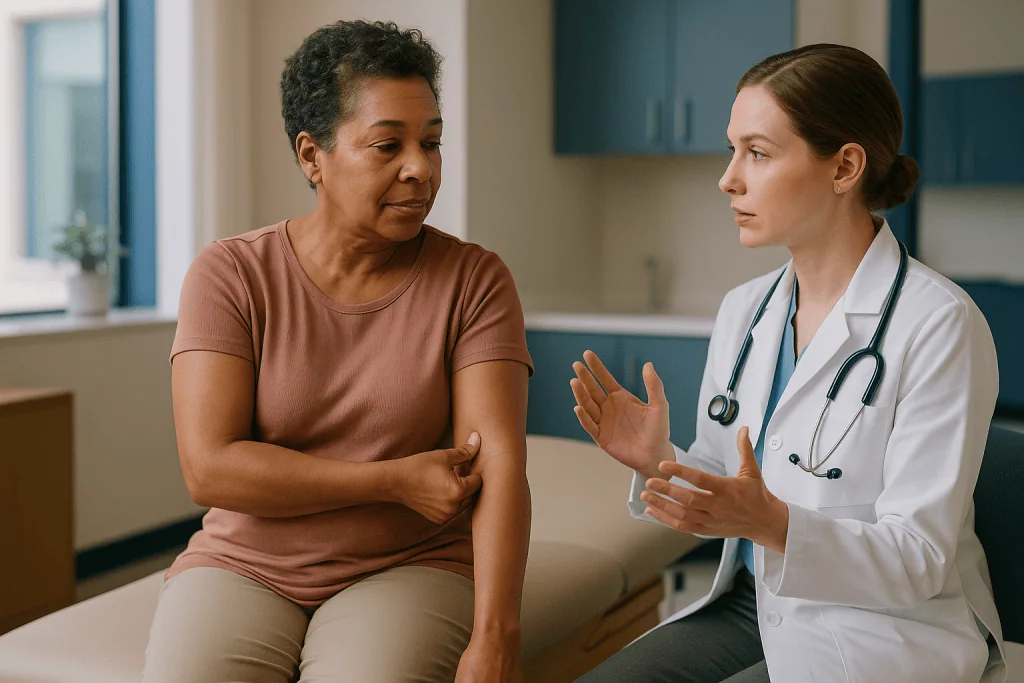
Skin elasticity is the ability of skin to stretch and snap back, and it decides how new volume will look. Elastic, moderately thick skin drapes over a graft the way fabric drapes over an armrest, smoothing the edges. Very thin skin, common under the eyes and on the backs of the hands, shows every small irregularity beneath it, so surgeons place less fat and place it deeper in those areas.
Scarring changes the equation in the opposite direction. Scar tissue is dense and inelastic, and a scarred pocket resists being filled the way a stiff envelope resists a thick letter. Surgeons sometimes release the scar with a needle through the skin before grafting, a step called percutaneous scar release, and may plan the correction in stages.
Skin that has been treated with radiotherapy, as after breast cancer surgery, is often tight, thin and poorly supplied with blood. Grafting into such tissue is possible and is used in reconstruction, but the team will usually expect lower retention and plan for more than one session.
Sun damage and smoking both degrade elastic fibers and the small vessels a graft depends on. Neither is an absolute barrier, but both push a surgeon toward conservative volumes.
One more distinction matters. Fat grafting adds volume; it does not tighten loose skin in any meaningful way. Someone whose main concern is excess, lax skin after major weight loss is usually better served by a lifting procedure, or by a lift combined with grafting, than by volume alone. A good consultation separates “deflated” from “loose,” because the treatments are different.
Volume goals: what one session can realistically add
Think in spoons for the face and cups for the body, and even the cups come with an asterisk.
Facial grafting works with small quantities distributed across many sites: temples, cheeks, the hollows under the eyes, the folds beside the mouth, the jawline. A little goes a long way because the tissue is thin and the changes people want are subtle. Overfilling a face to “allow for absorption” is a tempting shortcut that experienced surgeons resist, because the fat that does survive can leave a heavy, puffy look that is far harder to correct than a small deficit.
Body grafting, to the breast or buttock, asks for far larger volumes, and here the biology of survival becomes the ceiling. Oxygen and nutrients can only diffuse a short distance into tissue that has no blood supply yet, so a fixed area can accept only so much fat before the center of the graft starves. Injecting more than the recipient site can nourish does not produce a bigger result; it produces more oil cysts, more firm lumps and more absorbed fat. This is why a single breast fat transfer session is generally described as producing a modest change, and why people seeking a large change are usually offered either staged sessions or an implant-based alternative.
A useful way to frame your own goal is to ask what “enough” looks like. Softening a hollow, evening out an asymmetry, or restoring a contour that existed before weight loss or surgery are goals fat grafting is built for. Creating a proportion the body has never had is a heavier lift, and the team should say plainly how many sessions, if any, they think that would take, without promising the answer.
Face, breast, buttock or scar: how candidacy differs by region
The same procedure is used for very different purposes, and the ideal fat transfer candidate looks a little different in each case. The table summarizes the patterns surgeons commonly describe; none of it replaces an individual assessment.
| Region | Common donor sites | What it usually aims to do | Candidacy notes |
|---|---|---|---|
| Face and temples | Abdomen, inner thighs | Restore lost volume from aging or weight loss; soften hollows | Small volumes; thin skin under eyes needs conservative placement |
| Hands | Abdomen, flanks | Camouflage prominent veins and tendons | Very thin skin; lumps show easily |
| Breast (cosmetic) | Abdomen, flanks, thighs | Modest enlargement or correction of asymmetry | Needs ample donor fat; larger goals often staged or met with implants |
| Breast (after cancer surgery) | Abdomen, thighs | Fill contour defects, soften radiated tissue, refine reconstruction | Radiated skin lowers retention; oncology team involved in timing |
| Buttock and hips | Back, flanks, abdomen, thighs | Add projection or smooth contour | Large volumes; fat placed above the muscle because deep injection has been linked with fat embolism |
| Scars and depressions | Any available site | Level a dent, soften a tethered scar | Scar release often needed; staged approach common |
Two regional issues deserve a plain sentence each. After breast grafting, small calcifications or oil cysts can appear on mammograms; radiologists can usually distinguish them from suspicious findings, but you should tell every future imaging provider that you have had fat transferred to the breast. For buttock grafting, surgical societies have issued guidance that fat should be injected into the fatty layer and not into or beneath the muscle, after reports of fatal fat embolism, a condition in which fat enters large veins and travels to the lungs.
Weight stability, body mass index, smoking and medical conditions
Transferred fat keeps the habits of the place it came from. Abdominal fat moved to the cheeks still responds to the body’s overall energy balance, so gaining weight can plump a grafted area and losing weight can deflate it. That is why surgeons ask that weight be stable before the procedure and why a person midway through a diet or a new medication that changes appetite is often asked to come back once things have settled.
Body mass index, a rough ratio of weight to height, cuts both ways. At the low end there may be too little fat to harvest for larger goals. At the high end, general anesthesia and wound healing carry more risk, and the Mayo Clinic notes that liposuction is not a weight-loss method and works best in people close to their target weight. Most teams weigh the individual picture rather than applying a hard cutoff.
Smoking is the single modifiable factor surgeons mention most. Nicotine narrows small blood vessels and carbon monoxide reduces the oxygen blood can carry; a graft trying to grow new capillaries is exactly the tissue that suffers. The NHS advises stopping smoking before any cosmetic surgery to reduce complications. Nicotine replacement and vaping still deliver nicotine, so ask the team how they want that handled.
Medicines matter too. Anticoagulants and antiplatelet drugs, classes that reduce the blood’s ability to clot, increase bruising and bleeding at both donor and recipient sites. Some supplements, including high-dose fish oil and certain herbal products, can do the same. Never stop or adjust a prescribed medicine on your own; the surgical team and the prescribing clinician decide together whether and how to manage it around surgery.
Diabetes, autoimmune disease, connective tissue disorders and a history of blood clots do not automatically rule anyone out, but each changes the conversation and may involve another specialist.
How painful is a fat graft?
Most people are surprised by where it hurts. The place that received the fat is often merely tight or tender; the place that gave it up is the sore one.
That makes sense once you picture the harvest. Liposuction involves moving a cannula back and forth through fat beneath the skin, which bruises tissue over a wide area. MedlinePlus describes the aftermath of liposuction as soreness, swelling and bruising lasting weeks, with numbness in the treated area that can persist for a while. People often compare the donor area to the deep ache after an intense workout or a heavy fall, worst in the first few days and easing steadily.
The recipient site feels different. In the face, the usual descriptions are pressure, swelling and a stretched feeling, with bruising that is more visible than painful. Breast and buttock grafting produce a feeling of fullness and tenderness, and sitting or lying on the grafted area is typically restricted for a period to protect the fat, which many people find more inconvenient than painful.
Anesthesia depends on the scale of the procedure. Small facial grafts may be done under local anesthetic with sedation; larger body grafts are usually done under general anesthesia. The team will explain which applies and why.
Pain control afterward is planned by the surgical team and tailored to the person. Cold compresses, gentle positioning and a compression garment over the donor area, which the Mayo Clinic describes as standard after liposuction, all reduce discomfort. Any medicines are prescribed and adjusted by the team; this article deliberately does not discuss doses or products.
One caution worth stating: pain that escalates after the first few days, rather than fading, is not part of the normal pattern and should be reported.
Facial fat grafting recovery and body fat transfer: what the following weeks look like
Recovery has two tracks running at once, the donor site and the recipient site, and they move at different speeds.
In the first two or three days, swelling peaks. Faces can look startlingly round; bruises bloom around the eyes and along the jaw. Donor areas are tender and often leak a little pink fluid from the small incisions, which is expected. A compression garment is usually worn over the donor site to limit swelling and help the skin settle, as both the Mayo Clinic and the NHS describe for liposuction.
Across the first two weeks, bruising fades through the familiar purple-green-yellow sequence and most facial swelling recedes enough for people to feel presentable. MedlinePlus notes that many people return to desk work within days to a couple of weeks after liposuction, depending on how much was removed; a small facial graft sits at the shorter end and a large body graft at the longer one. Strenuous exercise is typically restricted for several weeks.
Between weeks two and six, the recipient area softens. Firm patches, which are usually swelling and early healing rather than lost fat, ease. People who had buttock grafting are commonly asked to avoid direct pressure on the area during this period, using special cushions or lying on their side or front.
The final result takes longer than most people expect. The NHS advises that after liposuction it can take up to six months for the treated area to settle completely, and grafting follows a similar arc as swelling resolves and the body decides which fat has taken. What you see at one month is not the finished picture, and neither is the fullness at one week, which includes swelling and fat that will not survive.
What is the fat graft survival rate, honestly?
People ask for a percentage, and the most truthful reply is a range so wide it barely qualifies as an answer. The technique review in Plastic and Reconstructive Surgery summarized reported retention as roughly 25 to 80 percent across studies. That is the published evidence, and it should reset expectations rather than reassure or alarm.
Why do studies disagree so much? Several reasons, each of which also explains why your own result cannot be predicted precisely. Studies measure retention differently, some by surgeon estimate, some by photographs, some by three-dimensional imaging or MRI. They follow patients for different lengths of time, and fat that looks retained at three months may still shrink. They graft into different tissues: a well-vascularized cheek is not a radiated chest wall. And the harvesting, processing and injection techniques vary from one operating room to the next without any single method proven superior.
Patient factors sit on top of all that. Smoking, weight change, the thickness and blood supply of the recipient tissue, and how much fat was placed relative to what the site could nourish all shift the outcome.
This is why the word “success” is slippery here. A graft that retains half its volume and produces exactly the softening a person wanted is a good result. A graft that retains most of its volume but was overfilled, or left a palpable lump, is not. Retention and satisfaction are different measures, and this article does not quote satisfaction figures because the published ones come from small, varied studies that are not comparable to one another.
What a candid surgeon can offer is their own typical experience, the likelihood that a touch-up is discussed, and an honest statement that retention varies from person to person. Anyone quoting a precise survival percentage as a guarantee is quoting something the evidence does not support.
Risks and alternatives in plain clinical language
Fat grafting is surgery, and it carries the risks of surgery plus a few of its own.
Shared with any operation are bleeding, infection, fluid collections called seromas, reactions to anesthesia, and blood clots in the legs that can travel to the lungs. The Mayo Clinic lists these among liposuction complications, and the donor half of a fat graft is liposuction. Numbness at the donor site, which can last months, and contour irregularities such as dents or waviness are specific to fat removal.
Particular to grafting are under-correction, over-correction and asymmetry, since retention cannot be predicted exactly. Fat that does not survive may become oil cysts or firm nodules, a process called fat necrosis, which sometimes needs to be drained or removed. In the breast, calcifications can appear on later mammograms. Rarely, fat can be injected into or near a blood vessel; in the face this has caused vision loss and stroke in isolated reports, and in the buttock deep injection into muscle has caused fatal fat embolism, which is why placement technique is now a central safety topic.
Alternatives depend on the goal. For facial volume, injectable dermal fillers, a class of gel products placed under the skin, offer a temporary, non-surgical option that can be reversed in some cases. For breast enlargement, implants provide larger and more predictable volume at the cost of a foreign device with its own long-term considerations. For loose skin, lifting procedures address a problem volume cannot. For scars and reconstruction, tissue flaps that move skin and fat with their own blood supply are an option for larger defects. And doing nothing remains a legitimate choice.
Which trade-offs suit you is a conversation for the treating team, who can lay the options side by side against your anatomy and health.
What people often get wrong about fat grafting
Several beliefs circulate widely enough to deserve a direct correction.
“It’s permanent, so it’s better than filler.” Fat that survives the first few months does tend to persist, but survival itself is unpredictable, and the surviving fat still ages and responds to weight change along with the rest of you. Permanent is not the same as fixed.
“Fat from the thighs stays soft; fat from the abdomen stays firm.” There is no reliable evidence that donor site determines how a graft feels or how well it lives. Practical factors, not fat personality, guide the choice.
“It tightens skin.” Grafting adds volume. Some people notice improved skin texture over grafted areas, and there is laboratory interest in why, but no one should undergo fat transfer expecting loose skin to shrink.
“More fat means a bigger result.” Beyond what the recipient tissue can nourish, extra fat dies. Overfilling produces lumps and oil cysts, not size.
“It’s a way to lose weight.” The volumes removed are small relative to total body fat, and MedlinePlus and the Mayo Clinic are explicit that liposuction is a contouring procedure, not a weight-loss treatment.
“It’s minimally invasive.” Small incisions, yes. Two surgical sites, anesthesia, weeks of bruising and a small but real risk of serious complications, also yes.
“What I see at one week is the result.” That early fullness is swelling plus fat that has not yet declared itself. The settled result appears over months.
“A good candidate is just someone who wants it.” Wanting a change is where the conversation starts. Weight stability, skin quality, donor supply, health and realistic goals are what turn a wish into a plan the team can stand behind.
Questions to ask your care team before deciding
A consultation is a two-way assessment. You are evaluating whether this procedure and this team fit your situation, and the questions below tend to draw out the answers that matter.
- Based on my skin, my donor fat and my goals, do you think I am a fat grafting candidate now, or is there something you would want to change first?
- Which donor sites would you use, and how would removing fat there change that area’s shape?
- How much volume would you place in one session, and why that amount rather than more?
- In your own practice, how often is a second session discussed for a goal like mine?
- What do you expect the skin in my recipient area to do with added volume? Would a lifting procedure serve me better, or alongside it?
- What type of anesthesia would I have, and where would the procedure take place?
- How do you place fat to reduce the risk of lumps, oil cysts and, for body grafting, fat embolism?
- Which of my medicines, supplements or health conditions need to be discussed with my other clinicians before surgery?
- What does recovery look like for someone with my job and home responsibilities, and when could I exercise again?
- If I have breast grafting, what should I tell future mammogram providers?
- What would make you cancel or postpone on the day?
- Who do I contact, and how quickly, if something worries me after I go home?
Write the answers down or ask permission to record them. Notice whether the team volunteers limitations without being pushed, whether they describe alternatives, and whether they are comfortable saying “I don’t know exactly” about retention. A surgeon who names the uncertainty is giving you accurate information, not a weaker sales pitch.
When to call your doctor
Most of what people notice after fat grafting is expected: swelling, bruising, tenderness, small amounts of pinkish fluid from donor incisions, and patches of numbness. A shorter list of signs is not expected, and the surgical team wants to hear about them promptly rather than at the next scheduled visit.
Contact your team the same day if you notice a donor or recipient area becoming increasingly red, hot, hard or painful after the first few days, particularly with fever or chills; fluid draining from an incision that is cloudy, foul-smelling or increasing; a rapidly enlarging, tense swelling or one side becoming much larger than the other; or bleeding that soaks through dressings.
Seek emergency care immediately, without waiting to reach the surgeon’s office, for sudden shortness of breath, chest pain, coughing up blood, a racing heartbeat, or confusion, which can signal a blood clot or fat reaching the lungs; for pain, swelling or warmth in one calf, which can indicate a deep vein clot; for any change in vision, new weakness, facial drooping or difficulty speaking after facial grafting; or for skin over a grafted area turning pale, dusky or blackened.
Call as well if pain is worsening rather than easing, if you cannot keep fluids down, or if anything simply feels wrong to you. People who have had surgery tend to know when something is off, and no team considers that call a nuisance.
Keep the after-hours number somewhere you can find it without your glasses, and make sure whoever is helping you at home knows where it is too. The judgment about what needs treatment, and how, always rests with the clinicians looking after you.
Frequently asked questions
How painful is a fat graft?
The donor site is usually the sore part, with an ache similar to a deep bruise or heavy workout that is worst in the first few days and fades over weeks, as MedlinePlus describes for liposuction. The grafted area more often feels tight, swollen and tender than painful. The surgical team plans pain control individually; escalating pain after the first few days is not typical and should be reported.
What is the fat graft survival rate?
Reported retention in published studies spans roughly 25 to 80 percent, according to a technique review in Plastic and Reconstructive Surgery, and no reliable single figure exists. The spread reflects different measurement methods, follow-up lengths, recipient tissues and techniques, plus patient factors such as smoking and weight change. Retention is also not the same as satisfaction; a graft that keeps half its volume may deliver exactly the softening a person wanted.
How long does it take to recover from fat graft surgery?
Swelling peaks in the first few days and most bruising fades over about two weeks. MedlinePlus notes that return to desk work after liposuction ranges from days to a couple of weeks depending on how much fat was removed, and the NHS advises that treated areas can take up to six months to settle fully. Strenuous exercise and pressure on grafted areas are typically restricted for several weeks; your team sets the specifics.
How much does fat grafting cost?
This magazine does not publish prices, because costs vary with the region grafted, the type of anesthesia, whether the procedure is combined with another operation, the facility, and whether more than one session is planned. Reconstruction after cancer surgery may be covered differently from cosmetic grafting. Ask the treating team for a written, itemized explanation of what any quoted figure includes and what a possible second session would involve.
Can a very lean person be a fat transfer candidate?
Sometimes, depending on the goal. Small facial or hand grafts need only modest volumes, which most people can supply from the abdomen or inner thighs. Breast or buttock grafting requires far more fat than the final target because a portion is reabsorbed, and a lean person may simply not have enough. The team will assess available donor sites and may suggest scaled-down goals or a different approach.
Which fat transfer donor sites give the best results?
None has been convincingly shown to produce fat that survives better once transplanted. The review of harvesting techniques found no consensus favoring any site. Surgeons choose based on how much fat is available, whether removing it improves the donor area’s contour, and how the patient will be positioned during surgery. The abdomen, flanks, thighs, knees and upper arms are the most common choices.
Will weight gain or loss change my fat graft?
Yes. Transferred fat continues to behave like the fat it came from, storing and releasing energy with the rest of the body. Gaining weight can enlarge a grafted area, sometimes more than desired, and losing weight can shrink it. This is why surgeons ask for a stable weight before surgery and why someone mid-diet or starting a medicine that alters appetite is often asked to wait until things settle.
Is fat grafting safe after breast cancer surgery?
Fat grafting is widely used in breast reconstruction to fill contour defects and soften radiated tissue, with timing agreed between the plastic surgery and oncology teams. Radiated skin tends to retain less fat, so staged sessions are common. Calcifications or oil cysts can appear on later mammograms and are usually distinguishable from suspicious findings, but you should tell every imaging provider that you have had fat transferred to the breast.
Do I have to stop smoking before fat transfer?
Surgeons generally ask that you do, for a period before and after surgery, and the NHS advises stopping smoking before cosmetic surgery to reduce complications. Nicotine narrows the small blood vessels a graft depends on to grow new capillaries, and carbon monoxide lowers oxygen delivery, both of which reduce the fat that survives. Vaping and nicotine replacement still deliver nicotine, so discuss any use openly with the team.
How many fat grafting sessions are usually needed?
It depends on the goal and the tissue. Small facial corrections are often planned as a single session with a possible touch-up, while breast enlargement, buttock contouring or grafting into scarred or radiated tissue is frequently staged over more than one operation because each session can only place as much fat as the site can nourish. Ask the team how often a second session is discussed for goals like yours.
References
This article is for general information only and is not a substitute for professional medical advice. Please consult a qualified doctor about your individual situation.

More from the Blog
Is Body Aesthetics Surgery Right for You? Weight Stability, Skin Quality and Overall Health
A body aesthetics surgery candidate is usually an adult whose weight has held steady for months, who does not smoke, whose long-term conditions are…
Does Hi Def Liposuction Build Muscle? Separating Fact From Marketing on Sculpted Abs
No. Hi def liposuction does not build muscle. It removes fat from the thin layer under the skin and sculpts what remains so that…
CoolSculpting vs Liposuction: What Each Can Remove, Downtime and Who Suits Which Approach
Cryolipolysis (the technique widely known by the trade name CoolSculpting) and liposuction both target pockets of fat under the skin, but they differ in…
Does Laser Liposuction Hurt? Anesthesia Options and Managing Soreness in the First Days
Laser liposuction is usually done under local anesthesia, so most people feel pressure, warmth and tugging rather than sharp pain during the procedure. Soreness…
How Vaginoplasty Is Performed: Anesthesia, Tissue Repair and Time in the Operating Room
Vaginoplasty is performed under general anesthesia and takes several hours. In the most common technique, penile inversion, surgeons remove the testes, preserve the nerves…

How Lymphedema Microsurgery Is Performed: Tiny Vessels, the Microscope and Operating Time
Lymphedema microsurgery reroutes or rebuilds lymphatic drainage rather than cutting swelling away. Under a high-power microscope, a surgeon either joins lymphatic vessels under a…