

Who Is a Candidate for a Forehead Lift? Brow Position, Hairline Height and Skin Quality
Key Takeaways
- Surgeons judge candidacy by whether the brow sits at or below the bony rim when the forehead is fully relaxed, not by age or wrinkle count.
- Hairline height determines the incision: a high forehead usually steers toward a hairline (pretrichial) cut, while an average or low one allows incisions hidden in the scalp.
- Skin with poor elastic recoil or deep sun-etched lines limits what a lift can do, because the operation moves tissue rather than resurfacing skin.
- Smoking is the most common modifiable reason a surgeon asks a candidate to wait, since nicotine narrows the small vessels that keep the lifted forehead alive.
- Lifting the brow with a thumb during the exam is how surgeons distinguish a brow problem from an eyelid problem; eyelid surgery alone can drag a low brow further down.
- Scalp numbness is the most frequent downside and usually improves over months, but a small proportion of people have a permanent patch of reduced sensation.
A forehead lift candidate is usually a healthy adult whose eyebrows have dropped low enough to crowd the upper eyelids or create a tired or stern look, whose hairline height suits an available incision pattern, and whose skin still has some elasticity. Smoking, uncontrolled medical conditions, unrealistic expectations and very thin or heavily sun-damaged skin are common reasons a surgeon suggests waiting or another approach.
She noticed it first in a photograph from a friend’s wedding. The smile was real, but the eyes looked half asleep, and the line between her brows made her seem irritated with the cake. Her optometrist mentioned it, too: the upper lids were heavy because the brows above them had slipped, not because the lids themselves had changed much.
That is the moment many people start typing questions about a forehead lift candidate into a search bar at midnight. What they find is a mix of glossy promises and vague warnings. What they need is plainer: an honest account of the three things a surgeon actually measures, brow position, hairline height and skin quality, and how those three shape whether surgery makes sense at all.
This article walks through that assessment the way a consultation does, with the evidence that exists and the gaps where it does not.
What is a forehead lift and how does it actually work?
A forehead lift, also called a brow lift, is an operation that raises the soft tissue of the forehead so the eyebrows sit higher and the skin above the eyes is smoother. That single sentence hides a fair amount of anatomy, so it helps to picture the forehead in layers: skin on top, a thin fat layer, a sheet of muscle and fibrous tissue, and finally the bone.
With age, the fibrous attachments that hold that muscle sheet to the bone loosen, and gravity pulls the whole unit down. The brows drop a few millimeters, the upper eyelid skin bunches, and the small frontalis muscle across the forehead works overtime to hoist everything back up. The horizontal creases many people dislike are partly the footprint of that constant effort.
Surgery addresses the problem at the layer where it starts. Through incisions hidden in the hairline or behind it, the surgeon releases the tissue from the bone, sometimes weakens the small muscles that pull the brows down and inward, and then fixes the forehead in a higher position with sutures or small absorbable anchors. Johns Hopkins describes the operation as taking roughly one to two hours, most often as an outpatient procedure under sedation or general anesthesia.
What the operation does not do matters just as much. It does not remove excess eyelid skin (that is a different procedure), it does not change deep frown lines caused by skin damage alone, and it does not stop the aging process. It repositions tissue; the tissue keeps aging from its new starting point.
Who is a good forehead lift candidate? Brow position comes first
The first thing a surgeon looks at is not your age or your wrinkles. It is where the brow actually sits relative to the bony rim above the eye. In many faces, the brow rests roughly at or slightly above that ridge, with the outer third arching a little higher than the inner third. When the brow drops to or below the rim, the upper eyelid skin has nowhere to go but downward, and the eye looks smaller and heavier.
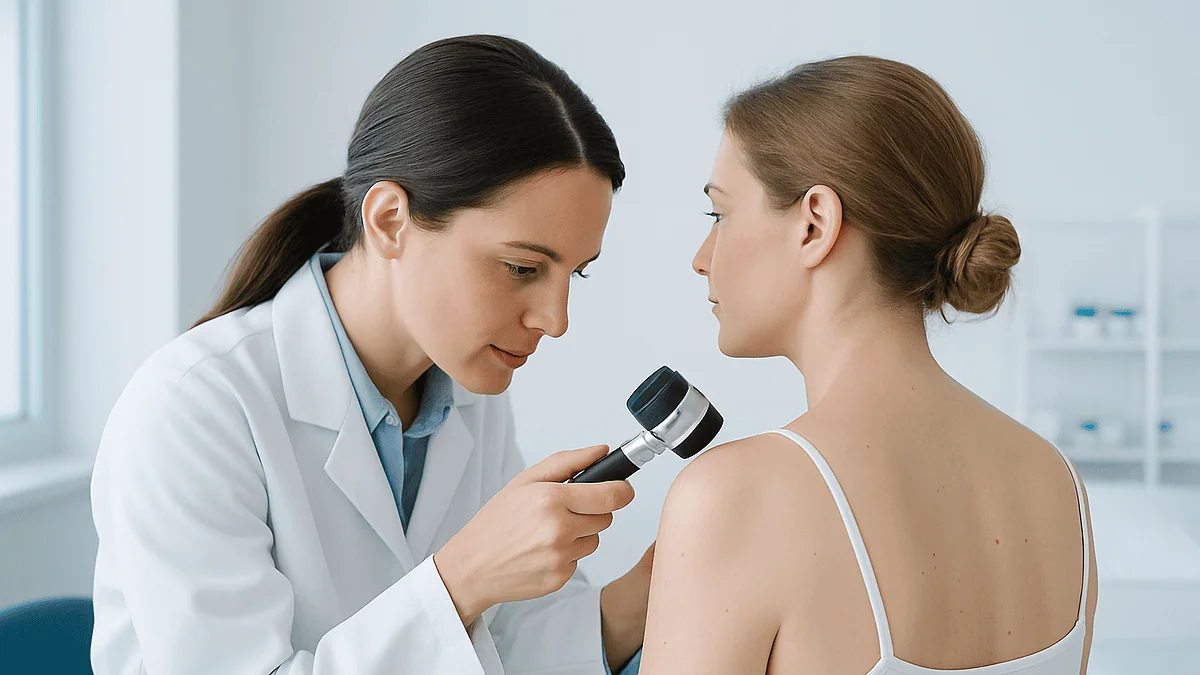
A simple test happens in almost every consultation. The surgeon asks you to relax your forehead completely, sometimes placing a hand there so you cannot lift it, and watches where the brows fall. Many people are startled by how much lower their natural position is; they have been holding their brows up out of habit for years. That gap between the held position and the resting position is a large part of what surgery can correct.
Candidates tend to share a few features:
- The outer brow has dropped more than the inner brow, producing a tired or sad appearance.
- Upper eyelid heaviness comes mostly from the brow, not from surplus lid skin.
- Deep vertical frown lines or horizontal forehead creases persist even at rest.
- Overall health is good and expectations are specific and modest.
Mayo Clinic frames the goal the same way: a brow lift is for people bothered by sagging brows or forehead furrows who want a more rested look, not a different face. If your brows already sit high, surgery can leave you looking permanently surprised, and a careful surgeon will say so.
Hairline height: why it decides which technique you can have
Every forehead lift needs somewhere to hide its incisions, and the hairline is the usual hiding place. That is why the distance from your brows to your hairline, measured in centimeters at the consultation, quietly steers the entire plan.
Consider two people with identical brow droop. The first has a low or average hairline. An incision placed a few centimeters behind the hairline, in the hair-bearing scalp, works well; when the forehead is lifted, the hairline moves up slightly, and that is acceptable because there is room to spare. The second has a naturally high forehead. The same incision would push the hairline even higher, elongating the face and drawing attention to exactly the area the person hoped to soften.
For that second person, surgeons often turn to a pretrichial incision, which means a cut placed right at the front edge of the hairline. Excess forehead skin is removed below the cut rather than above it, so the hairline stays where it is or even comes down a little. The scar sits at the hair edge and is designed to let hairs grow through it. Cleveland Clinic and Johns Hopkins both list this hairline approach alongside the endoscopic and coronal options as standard variations of the same operation.
Hair density and pattern matter too. A receding hairline, thinning at the temples or a family history of male-pattern hair loss can make any scalp incision harder to conceal over time. Some surgeons prefer a more limited temporal approach in these cases, lifting only the outer brow through small incisions above the ears. None of this rules a person out; it changes which technique is realistic and what the scars will look like in ten years.
Skin quality: elasticity, thickness and sun damage
Skin is the visible layer, yet it is the one a forehead lift changes least directly. What the surgeon needs from it is cooperation. Once the deeper tissue is anchored higher, the skin has to redrape smoothly and hold that position, and skin that has lost its elastic recoil does neither well.
Elasticity is easy to assess informally. Gently pinch the skin on the back of your hand and let go. Young skin snaps back at once; sun-damaged or thinner skin takes a beat to flatten. Forehead skin behaves similarly. The proteins responsible, collagen and elastin, decline with age and are broken down faster by ultraviolet light and by smoking.
Skin quality shapes candidacy in three practical ways:
- Very thin skin shows every irregularity underneath, so small contour changes or suture anchors may be more visible.
- Heavily creased skin may keep its horizontal lines even after the brows are raised, because the lines are etched into the skin itself rather than caused by position.
- Poor healing capacity, as seen in long-term smokers or after radiation, raises the risk of widened scars and delayed wound closure.
This is where honest counseling counts. A person with good brow position but deeply etched forehead lines is often better served by a skin-directed treatment, and a person with excellent skin but heavy brows gains far more from repositioning than from any cream or resurfacing. Many people fall in between, and surgeons frequently combine a lift with treatments aimed at the skin surface, staged over time. The NHS notes that any cosmetic operation should follow an in-person assessment of exactly these individual factors before a plan is agreed.
Who should not get a brow lift, or is usually asked to wait?
People searching for what disqualifies you from a facelift or brow lift are asking a fair question, and the answer is rarely a single hard barrier. More often it is a list of reasons to pause.
Smoking sits at the top. Nicotine narrows small blood vessels, and the forehead flap in this operation depends on a healthy blood supply through those very vessels. Mayo Clinic advises stopping smoking before and after brow lift surgery because it slows healing and raises the risk of tissue damage; how far in advance is a decision for the surgical team, not for this article.
Other common reasons a surgeon suggests waiting or declines:
- Uncontrolled high blood pressure or diabetes, both of which raise bleeding and healing risks.
- Bleeding disorders or medicines that thin the blood, where the prescribing clinician must weigh any change.
- Active skin infection or inflammatory skin disease on the forehead or scalp.
- A recent major life event, because decisions made in grief or crisis are more often regretted.
- Expectations the operation cannot meet, such as wanting a completely line-free forehead or a particular celebrity’s brows.
- Dry eye disease or a history of eyelid surgery that already limits full eye closure, since lifting the brows can worsen lid closure in some cases.
Body dysmorphic disorder deserves a separate sentence. Reputable surgeons screen for it, and a referral for psychological support is a sign of a careful practitioner rather than a rejection. Several of the items above are temporary. Blood pressure can be controlled, smoking can be stopped, and expectations can be reshaped by a frank conversation. The decision to proceed, wait or choose something else always rests with the treating team after that conversation.
Brow lift vs blepharoplasty: how surgeons decide which you need
This is the question that most often turns a consultation upside down. Someone arrives certain they need their upper eyelids done. The surgeon lifts the brow gently with a thumb, and the eyelid heaviness vanishes. The lid was never the main problem.
Blepharoplasty is surgery that removes excess skin, and sometimes fat, from the eyelids themselves. A brow lift moves the tissue above the eyelid. The two are often confused because a low brow and a heavy lid look almost identical in the mirror, and because they frequently coexist.
Surgeons separate them with a few observations. If the brow sits at or below the bony rim and the eyelid skin fold disappears when the brow is manually raised, the brow is the driver. If the brow sits in a normal position yet a fold of eyelid skin still hangs over the lashes, the eyelid is the driver. If both are true, which is common after the mid-fifties, a combined plan may be suggested, sometimes in one operation and sometimes staged.
Doing eyelid surgery alone when the brow is the real problem carries a specific hazard: removing eyelid skin can pull the already low brow down further, tethering it. The result is a flatter, heavier look that is hard to correct later. Johns Hopkins and Cleveland Clinic both describe the forehead lift as frequently performed alongside eyelid surgery for precisely this reason.
There is no universal answer to brow lift vs blepharoplasty, and any article that promises one is oversimplifying. The right choice depends on where the sagging originates, how much skin there is to spare, and what the person is willing to accept in scars and recovery. Photographs from ten or twenty years earlier are genuinely useful here; they show where your brows used to sit, which is usually the most natural target.
Types of forehead lift compared: which technique suits which face
Surgeons describe several approaches to the same goal, and the names can sound more different than the operations are. The table below summarizes the main options described by Johns Hopkins, Cleveland Clinic and Mayo Clinic. It is a map, not a menu; the choice belongs to the surgeon who has examined you.
| Technique | Where the incisions are | Usually considered when | Trade-offs to discuss |
|---|---|---|---|
| Endoscopic | Several short incisions behind the hairline; a small camera guides the work | Mild to moderate droop, average hairline, good skin recoil | Less numbness and shorter scars; may lift less in very heavy brows; relies on internal anchors |
| Coronal | One long incision across the top of the scalp, ear to ear, behind the hairline | Marked droop, low hairline, thick heavy forehead tissue | Strong lift and direct muscle access; raises hairline; more scalp numbness, longer scar |
| Pretrichial (hairline) | Along the front edge of the hairline | High forehead, wish to keep or lower the hairline | Scar at the hair edge; careful closure needed; avoids forehead lengthening |
| Temporal (lateral) | Small incisions in the hair above the temples | Outer brow droop only, early changes | Limited to the outer third; less effect on frown lines |
| Direct | Just above the eyebrow itself | Very heavy brows, deep existing creases, some men with sparse hairlines | Visible scar risk; most predictable lift; often used for functional cases |
Two patterns emerge from that table. First, hairline height drives more of the decision than most people expect, which is why surgeons measure it. Second, the smallest-incision option is not automatically the best; the endoscopic technique suits moderate problems and good tissue, and a heavier forehead may simply need more. Asking why a surgeon prefers one row over another for your face is one of the most revealing questions you can put to them.
Can people in their 30s, 40s, 60s or 70s be a forehead lift candidate?
Age is a poor proxy for candidacy, and the evidence-based sources agree. Mayo Clinic notes that brow lifts are most commonly sought between the forties and sixties, but the operation is chosen for the anatomy, not the birth year.
Younger adults sometimes have a genetically low or flat brow that has always given them a heavy-lidded look, and a limited lift can be appropriate even in the thirties. Others in that decade have early outer-brow descent that is more reasonably managed with non-surgical options first, keeping surgery in reserve. A responsible surgeon will often say that the time has not yet come, and that is worth hearing.
In the sixties and seventies, the questions shift toward safety and healing rather than whether the brow has dropped; by then it usually has. Anesthesia risk depends on heart, lung and kidney health more than on age itself, and many older adults with well-controlled conditions have uneventful outpatient surgery. Skin quality becomes the limiting factor more often than brow position: thinner skin, longer healing, and forehead lines that are etched rather than positional.
Practical points that come up at any age:
- Medical clearance from a primary care clinician is routine and not a sign of concern.
- Medicines that affect bleeding must be reviewed by the clinician who prescribes them; this article does not advise starting or stopping anything.
- Support at home for the first days matters more for people who live alone, regardless of age.
Age also shapes expectations. Someone in their seventies rarely wants the brows of a thirty-year-old, and lifting them that far would look wrong on the rest of the face. The most natural results tend to restore the brow to where it sat in that person’s own earlier photographs, nothing more.
Non-surgical alternatives and what the evidence shows
Not everyone who dislikes a low brow needs an operation, and surgery is not the first step for most people. The alternatives fall into two groups, and it is fair to be clear about how much each can do.
The first group relaxes the muscles that pull the brows down. Injections of botulinum toxin, a class of medicine that temporarily blocks the nerve signal to a muscle, can weaken the depressor muscles between and beneath the brows so the lifting frontalis muscle wins the tug of war by a few millimeters. The effect is real but modest, and it wears off over months as nerve endings recover. Who is suitable, how much is used and how often are decisions for the injecting clinician; the point here is mechanism. Cleveland Clinic lists these injections among the standard non-surgical options for forehead concerns.
The second group targets the skin rather than its position: resurfacing lasers, chemical peels, and prescription retinoid creams that increase collagen turnover. These can soften etched lines and improve texture. They do nothing for a brow that sits below the bony rim, because they do not move tissue.
A third, heavily marketed category deserves caution. Thread lifts, in which dissolvable barbed sutures are passed under the skin to hitch tissue upward, and energy-based skin tightening devices are widely promoted for the brow. Long-term comparative evidence for the brow region is limited, and the NHS advises people to be wary of any cosmetic treatment presented without clear information about what the evidence shows and who is delivering it. Describing them as unproven for durable brow elevation is accurate; describing them as ineffective for everyone is not. Ask what the practitioner has actually seen at two years, not two weeks.
What are the downsides of a brow lift? Risks in plain language
Every operation has a cost in risk, and the honest list for a forehead lift is longer than the marketing suggests. MedlinePlus, Mayo Clinic and Johns Hopkins describe the same core set.
Numbness or altered sensation of the scalp and forehead is the most common downside. The sensory nerves that supply the scalp run upward through the forehead, and any incision across their path interrupts them. Feeling usually returns over months, but MedlinePlus notes that some numbness or itching can persist longer, and a small proportion of people have a permanent patch of reduced feeling.
Other risks discussed at consent include:
- Hair loss along incisions, which is sometimes temporary and sometimes not.
- Asymmetry, where one brow ends up higher than the other; small differences are common, larger ones may need revision.
- Weakness of the forehead muscle on one side from injury to the motor nerve branch that runs near the temple, usually temporary.
- Bleeding under the skin (a hematoma) that may need draining.
- Infection, which is uncommon on the well-supplied scalp but not zero.
- Widened, thickened or visible scars, more likely in smokers and in people with a personal history of poor scarring.
- An over-lifted or surprised look if the brows are raised too far, a difficult problem to reverse.
- Difficulty fully closing the eyes in the early weeks, especially when combined with eyelid surgery.
General anesthetic risks apply as they do to any operation, including nausea, sore throat and, rarely, serious cardiovascular or breathing events. Blood clots in the legs are uncommon after short facial surgery but are still discussed, particularly for people with prior clots or reduced mobility.
No reliable, guideline-level figure exists for overall satisfaction after brow lift surgery, and published series vary in how they measure it. Be skeptical of any single percentage quoted without a named source.
How painful is a forehead lift? The first days and weeks
Most people are surprised that the forehead itself hurts less than they feared. The typical description is tightness, pressure and a dull ache rather than sharp pain, with the tightest feeling in the first two or three days as swelling peaks. Numbness in the scalp can make the area feel strange rather than sore, and an itchy or tingling sensation often arrives as nerves begin to recover.
Pain relief is arranged by the surgical team; this article does not discuss which medicines or how much. What can be said is that the need for prescription pain relief is usually short, and many people manage with what the team advises within the first week.
A typical, not guaranteed, timeline drawn from Mayo Clinic and MedlinePlus looks like this:
- Days 1–3: swelling and bruising increase, sometimes tracking down into the eyelids and cheeks; sleeping with the head raised helps drainage.
- Days 4–7: swelling starts to settle; light walking around the house is encouraged; hair washing is usually allowed once the team confirms.
- Days 7–10: sutures or clips in the scalp are commonly removed in this window.
- About 10 days to 2 weeks: most visible bruising fades enough for many people to feel comfortable in public and return to desk-based work.
- Weeks 3–6: residual swelling continues to fall; strenuous exercise and heavy lifting are usually held back until the team clears them.
- Several months: scalp sensation gradually returns, scars soften and fade, and the final brow position becomes clear as the last swelling resolves.
Endoscopic brow lift recovery tends to sit at the shorter end of these ranges because the incisions are small and fewer sensory nerves are crossed, though the difference is a matter of days rather than weeks. Coronal approaches produce more numbness and a longer stretch before the scalp feels normal. Whatever the technique, the forehead will look higher and tighter than the final result for the first few weeks; judging the outcome before swelling has left is a common source of unnecessary worry.
Preparing for surgery: what a forehead lift candidate is asked to do
Preparation is where a good candidate becomes a safer patient, and most of it is unglamorous.
The medical review comes first. Your surgeon or a preoperative clinic will go through your health history, current medicines and supplements, allergies and previous anesthetics. Herbal products and over-the-counter supplements matter here because some affect bleeding; bring the actual bottles rather than a list from memory. Any change to a prescribed medicine, including blood thinners, is made only by the clinician who prescribes it, in coordination with the surgical team.
Smoking cessation is the single most powerful thing a candidate can do for their own result. Mayo Clinic advises stopping before and after surgery; the exact interval is set by the team. Nicotine in any form, including patches and vaping, constricts the small vessels that keep the lifted forehead alive, so replacement products are usually discussed rather than assumed to be safe.
Practical steps most teams cover:
- Arrange a responsible adult to take you home and stay the first night; outpatient anesthesia means you cannot drive or be alone that evening.
- Prepare a sleeping setup with the head elevated on several pillows or in a recliner.
- Fill any prescriptions in advance so nothing is needed on the way home.
- Plan roughly two weeks of reduced social visibility if bruising would bother you at work.
- Take dated, unposed photographs of your face before surgery; they are the fairest yardstick afterward.
Expectation setting belongs in preparation as well. Write down, in your own words, what you hope will be different afterward, and bring it to the final preoperative visit. If the surgeon cannot map each item to something the operation can plausibly deliver, that is the moment to reconsider, not the morning of surgery. The NHS recommends a cooling-off period between consultation and any cosmetic operation for exactly this reason.
What people often get wrong about forehead lifts
Myths cluster around this operation more than most, partly because before-and-after photographs are so easy to stage. A few corrections, grounded in the same mainstream sources cited throughout.
“A brow lift will make me look surprised.” It can, if the brows are lifted too far or lifted evenly when only the outer third needed help. Modern planning aims to restore the brow to its own earlier position, and the inner brow is often left almost where it is. Over-lifting is a technical error, not an inherent feature of the operation.
“It gets rid of all forehead wrinkles.” Horizontal lines caused by years of muscle effort soften when that effort is no longer needed. Lines etched into sun-damaged skin remain, because the skin has not been changed. Frown lines between the brows improve most when the depressor muscles are addressed during surgery, and even then they rarely vanish.
“The result is permanent.” The lift is durable, but aging does not stop. Tissues continue to descend from their new position, and skin continues to lose elasticity. Johns Hopkins and Mayo Clinic both describe the results as long-lasting rather than permanent.
“Endoscopic means no scars and no recovery.” The incisions are shorter and hidden, and numbness is usually less, but swelling, bruising and activity restrictions still apply, and the scalp incisions are real.
“Eyelid surgery does the same thing.” It does not. Removing eyelid skin when the brow is the problem can drag the brow lower and make later correction harder.
“Any cosmetic practitioner can do it.” This is surgery near motor nerves and the eye. The NHS advises checking that any surgeon is registered with the relevant national regulator and trained in the specific procedure, and equivalent checks exist in every country.
Questions to ask your care team before deciding
A consultation is a two-way examination. You are assessing whether this surgeon, this plan and this moment are right, and the questions below tend to surface the most useful answers. Write down the replies; comparing them later is clarifying.
- Where do my brows sit relative to the bony rim when my forehead is fully relaxed, and how many millimeters of lift are you planning?
- Is my eyelid heaviness coming from the brow, the lid or both, and how did you decide?
- Which technique do you recommend for my hairline height and hair pattern, and why not the others?
- Where exactly will the incisions be, and what will the scars look like at one year? May I see photographs of your own patients’ healed scars, not just their brows?
- How will you avoid an over-lifted look, and what is your approach if one brow heals higher than the other?
- What numbness should I expect, for how long, and how often is it permanent in your experience?
- Which of my medicines and supplements need review, and who will coordinate that with my prescribing doctor?
- What does the first two weeks look like day by day, and when may I drive, exercise, wash my hair and return to work?
- What happens if there is a complication, including at night or on a weekend; who do I call and where would I be seen?
- How many of these operations do you perform each year, and what is your specific surgical training and registration?
- What would you recommend if I decided not to have surgery?
That last question is quietly the most important. A surgeon who can describe a reasonable non-surgical path, or simply the option of doing nothing, is showing that the recommendation for surgery is about your anatomy rather than their schedule. Bring someone with you if you can; a second pair of ears catches what nerves miss.
When to call your doctor after a forehead lift
Most recoveries are uneventful, and most concerns in the first week are ordinary swelling and bruising. A few signs are different and need prompt contact with the surgical team, or emergency care if the team cannot be reached. This paragraph is the one to bookmark.
Call the same day, or go to an emergency department, if you notice:
- Rapidly increasing swelling on one side, a tense or hard area under the skin, or new bulging, which may indicate bleeding under the flap.
- Bleeding from an incision that soaks through dressings and does not slow with gentle pressure.
- Severe or worsening pain that is not controlled by the plan your team gave you.
- Fever, spreading redness, warmth, or pus from any incision.
- Sudden loss of vision, double vision, or severe eye pain, which are emergencies.
- Inability to close one or both eyes, or an eye that feels increasingly dry, gritty or painful.
- New weakness of the forehead or face that was not present immediately after surgery.
- Chest pain, shortness of breath, or a swollen, painful calf, which may signal a blood clot.
- Persistent vomiting that prevents you from keeping fluids down.
Contact the team within a day or two for less urgent but still important changes: a patch of skin over the forehead or scalp that turns dusky, pale or dark; sutures that have come apart; numbness that spreads rather than shrinks after the first week; or a growing sense that the brows are markedly uneven once swelling has begun to fall.
Every surgical team gives written instructions and an out-of-hours contact. Keep them beside the bed. When in doubt, call; a phone conversation that turns out to be unnecessary is far cheaper in every sense than a complication caught late. All decisions about further treatment, revision or reassurance rest with the team that operated and knows the details of your surgery.
Frequently asked questions
What makes someone a forehead lift candidate rather than an eyelid surgery candidate?
The origin of the heaviness decides it. If the brow sits at or below the bony rim and the eyelid fold disappears when the brow is lifted by hand, the brow is the problem and a forehead lift is considered. If the brow sits normally yet eyelid skin still hangs over the lashes, eyelid surgery is the more likely recommendation. Many people have both, and a combined or staged plan is then discussed.
Who should not get a brow lift?
Common reasons to decline or delay include current smoking, uncontrolled blood pressure or diabetes, bleeding disorders, active infection on the scalp or forehead, unrealistic expectations, significant dry eye or incomplete eyelid closure, and untreated body dysmorphic disorder. Several of these are temporary and can be addressed before reconsidering. The decision rests with the surgical team after an in-person assessment.
What are the downsides of a brow lift?
The most frequent downside is numbness or altered sensation of the scalp, which usually fades over months but can persist in some people. Others include hair loss along incisions, visible or widened scars, asymmetry between the brows, temporary forehead muscle weakness, bleeding under the skin, infection, an over-lifted appearance, and the general risks of anesthesia. Reputable sources such as MedlinePlus and Mayo Clinic list these at consent.
How painful is a forehead lift?
Most people describe tightness, pressure and a dull ache rather than sharp pain, peaking in the first two to three days as swelling rises. Numbness often makes the area feel strange rather than sore, and itching or tingling appears as nerves recover. Pain relief is arranged by the surgical team, and the need for prescription medicine is typically short. Contact the team if pain worsens instead of easing.
What is the difference in endoscopic brow lift recovery compared with a coronal lift?
Endoscopic lifts use several short scalp incisions guided by a camera, so numbness is usually less and settles sooner, and the scars are shorter. Coronal lifts use one long ear-to-ear incision and produce more scalp numbness for longer, but allow a stronger lift for heavy brows. Swelling, bruising and activity limits are similar in the first two weeks for both approaches.
Does hairline height really change which forehead lift I can have?
Yes. Incisions placed behind the hairline raise it slightly when the forehead is lifted, which is acceptable for an average or low hairline but elongates an already high forehead. For high hairlines, surgeons often place the incision at the front hair edge so excess skin is removed below it and the hairline stays put or comes down. Hair density and any pattern of thinning also influence the choice.
Can a forehead lift remove all my forehead wrinkles?
No. Horizontal lines caused by years of lifting the brows soften once that effort is no longer needed, and frown lines improve when the muscles between the brows are addressed during surgery. Lines etched into sun-damaged skin remain, because the operation moves tissue rather than resurfacing skin. Skin-directed treatments such as lasers, peels or prescription retinoids are sometimes combined or staged for that reason.
What is the brow lift vs blepharoplasty risk if I choose the wrong one?
The main hazard is having eyelid skin removed when the brow was the real cause of heaviness. That can pull the low brow down further and tether it, producing a flatter, heavier look that is harder to correct later. A careful examination, including lifting the brow by hand and reviewing older photographs, is how surgeons avoid this. Ask how the recommendation was reached.
Why does this article not give a cost for a forehead lift?
Costs vary widely with technique, anesthesia, facility, region and whether other procedures are combined, so any figure quoted online is unreliable for your situation, and this magazine does not publish prices. The surgeon’s office will provide a written estimate after examining you. Cosmetic brow lifts are generally not covered by insurance, while lifts performed to correct brow position that blocks vision may be assessed differently by insurers.
How long do the results of a forehead lift last?
Mainstream sources describe the results as long-lasting rather than permanent. The tissue is anchored in a higher position, but aging continues from that new starting point, and skin keeps losing elasticity, so gradual descent over years is expected. Sun protection, not smoking and maintaining stable weight support the result. No reliable guideline figure exists for how many years the effect lasts, and individual variation is large.
References
This article is for general information only and is not a substitute for professional medical advice. Please consult a qualified doctor about your individual situation.

More from the Blog
Cartilage Grafts in Revision Rhinoplasty: Why Rib or Ear Cartilage Is Sometimes Needed
Revision rhinoplasty often needs extra cartilage because the nasal septum, the usual source, was used or weakened during the first operation. Surgeons then borrow…

Does the Compression Garment After Neck Contouring Matter? Wear Time, Fit and Sleep
Yes, most surgeons consider a compression garment after neck contouring a meaningful part of early recovery. It applies gentle, even pressure that limits swelling,…
Neck Contouring Options Compared: Liposuction, Muscle Tightening and Skin Removal
Neck contouring options fall into three surgical approaches. Liposuction removes fat beneath the chin through tiny incisions. Platysmaplasty tightens the platysma, the thin sheet…

Zygoma Reduction Recovery: Soft Diet, Swelling Stages and When the New Contour Appears
Zygoma reduction recovery usually unfolds in stages: swelling and bruising peak in the first two to three days, a soft or liquid diet is…

Facial Augmentation Recovery: Swelling, Head Elevation and When Contours Start to Show
Facial augmentation recovery usually means visible swelling that peaks around the second or third day, eases noticeably over two to three weeks, and settles…
Facial Aesthetic Surgery Preparation: Photographs, Blood Tests and the Smoking Question
Preparing for facial aesthetic surgery usually means three things in the weeks before the operation: standardized photographs so the surgeon can plan and later…