

Who Is a Candidate for Mohs Surgery? Skin Cancer Types, Locations and What Surgeons Consider
Key Takeaways
- Mohs surgery examines nearly the entire margin of the removed tissue under a microscope on the same day, whereas standard excision checks only representative slices days later.
- The typical Mohs candidate has a basal cell or squamous cell carcinoma on the central face, ears, hands, feet or genitals, or a tumor that is recurrent, large, ill-defined or aggressive under the microscope.
- Immunosuppression from transplant medicines, autoimmune therapy or blood cancers raises recurrence risk enough that otherwise low-risk tumors often qualify for Mohs.
- Small, well-defined basal or squamous cell carcinomas on the trunk and limbs, cancers that have already spread, and most melanomas are usually treated with other methods rather than Mohs.
- Each Mohs stage takes roughly an hour to process, most tumors clear in one to three stages, and the appointment including reconstruction can last much of a day.
- Stitches typically come out within about one to two weeks, scars often look worst around six to eight weeks, and final appearance keeps improving for up to a year.
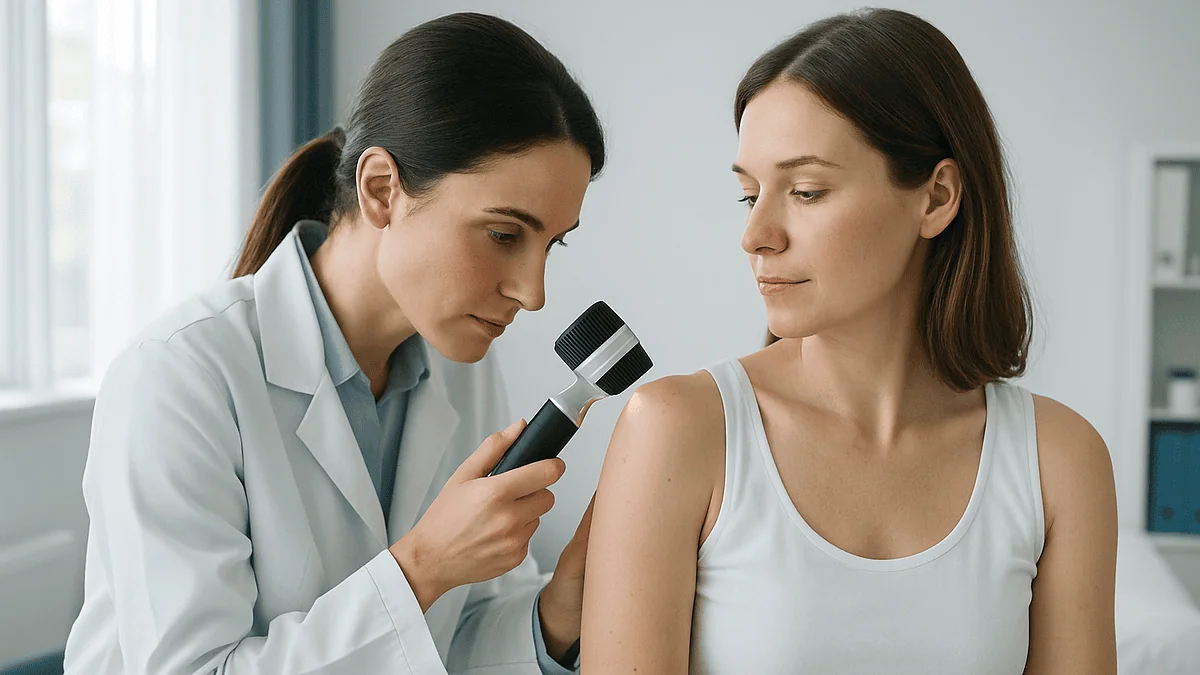
Candidates for Mohs surgery are usually people with basal cell or squamous cell skin cancer that sits in a high-risk or cosmetically sensitive area such as the face, ears, hands or genitals, has come back after earlier treatment, is large or has poorly defined edges, shows an aggressive growth pattern, or occurs in someone with a weakened immune system. A dermatologic surgeon makes the final call after reviewing the biopsy.
The biopsy result arrives as a few lines of text: basal cell carcinoma, nodular type, left nasal ala. You read it twice, then look in the mirror at a pink spot the size of a lentil that you had blamed on sunglasses. The dermatologist’s note ends with one more line, a referral for Mohs surgery, and suddenly you have a procedure name you have never heard of and a dozen questions.
The first question is usually the simplest to ask and the hardest to find a plain answer to: who is a candidate for Mohs surgery, and why this spot, when a friend’s skin cancer was scraped off in ten minutes? The answer is not about how serious your cancer is in the way most people fear. It is about geometry, location and tissue economy.
This explainer walks through what surgeons actually weigh, what the procedure involves hour by hour, where Mohs is usually not the right tool, and what the weeks afterward tend to look like. Every decision, as always, rests with the team treating you.
What Mohs surgery actually is, in plain language
Mohs micrographic surgery is a way of removing skin cancer one thin layer at a time, examining each layer under a microscope before deciding whether to take more. The name comes from the surgeon who developed the technique in the 1930s; the “micrographic” part refers to the mapping and microscopic checking that sets it apart from an ordinary excision.
Here is the sequence, as described by the Mayo Clinic. After numbing the area with a local anesthetic, the surgeon removes the visible tumor plus a very narrow rim of surrounding skin. That piece is inked with colored dyes, divided and drawn on a map that matches its exact position on your body. A technician freezes and slices the tissue, stains the slides, and the surgeon reads every edge and the underside under the microscope while you wait with a bandage on.
If cancer cells appear at any edge, the map shows precisely where. The surgeon then goes back and removes another sliver only from that spot, not from the whole wound. The cycle repeats until the margins are clear. Each round, often called a stage, typically takes about an hour of processing, which is why the Cleveland Clinic describes most Mohs appointments as lasting several hours and sometimes most of a day.
Two things make this approach unusual. First, the surgeon and the pathologist are the same person, so there is no lag of days between cutting and knowing. Second, the technique inspects close to 100 percent of the surgical margin, compared with the thin representative slices examined after a standard excision. That complete look at the edges is the whole reason the procedure exists, and it explains almost every candidacy rule that follows.
Who is a candidate for Mohs surgery? The short list surgeons use
Dermatologic surgeons in the United States commonly lean on published appropriate use criteria that score a tumor by its type, size, location and history. You do not need the scoring sheet, but it helps to know what it rewards. The Mayo Clinic summarizes the typical candidate as someone whose skin cancer meets one or more of these conditions:
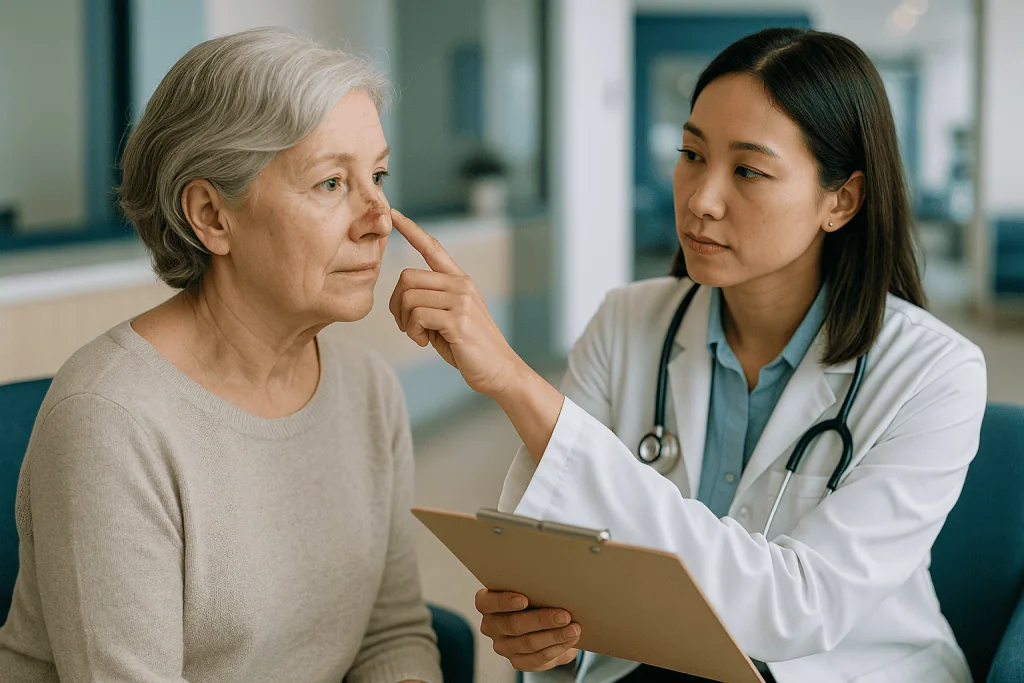
- It sits in an area where preserving healthy tissue matters a great deal: the nose, eyelids, lips, ears, scalp, fingers, toes or genitals.
- It has returned after a previous treatment.
- It is large, has edges that are hard to see, or is growing quickly.
- Its microscopic growth pattern is aggressive or infiltrative.
- The person has a weakened immune system, from medicines or illness, which raises the chance of recurrence and more aggressive behavior.
Notice what is not on the list. Mohs is not reserved for “bad” cancers in the sense of being life-threatening. The most common Mohs patient has a basal cell carcinoma, a slow-growing cancer that very rarely spreads elsewhere in the body, according to the NHS. The procedure is chosen because the cancer lives in a place where cutting a generous safety margin would cost a nostril rim, an eyelid edge or a strip of lip.
The flip side is equally important. A small, well-defined basal cell carcinoma on the back or thigh usually does not need Mohs; a standard excision with a measured margin treats it well and spares the long day in clinic. The decision is tumor by tumor, which is why one person’s referral and a neighbor’s quick office procedure can both be correct.
Mohs surgery for basal cell carcinoma, squamous cell carcinoma and other types
Skin cancer is not one disease, and candidacy differs by type. The two cancers that dominate Mohs practice are the two most common skin cancers overall.
Basal cell carcinoma (BCC) begins in the basal cells at the bottom of the epidermis, the skin’s outer layer. The NHS notes it accounts for the majority of non-melanoma skin cancers and almost never spreads to distant organs, but it can burrow locally, sometimes along nerves or under the skin surface far beyond the visible pink patch. Certain subtypes, described on pathology reports as morpheaform, infiltrative, micronodular or basosquamous, are known for this quiet spreading and are frequent Mohs candidates even when small.
Squamous cell carcinoma (SCC) arises in the flatter squamous cells higher in the epidermis. It carries a modest but real risk of spreading to lymph nodes, especially when it is thick, poorly differentiated, located on the ear or lip, or occurring in someone with a suppressed immune system, as MedlinePlus and the Mayo Clinic describe. Mohs is often chosen for these higher-risk SCCs because clear margins matter more.
Melanoma is a different conversation. Standard care for most melanomas remains wide excision with margins set by tumor thickness. Some surgeons use a modified Mohs technique with special stains for a specific situation: lentigo maligna, a slow, flat melanoma on sun-damaged facial skin where the edges fade invisibly into surrounding freckling. This remains a specialized, case-by-case choice rather than the default.
Rarer tumors such as dermatofibrosarcoma protuberans, a slow sarcoma of the deeper skin that sends out root-like extensions, are also sometimes treated with Mohs because of those extensions. If your report names something unfamiliar, ask the team specifically whether the technique is suited to that cell type.
Why the location on your body matters so much
Picture a cancer the size of a pencil eraser. On the upper back, a surgeon can remove it with a margin of several millimeters all around, close the oval wound with a line of stitches, and nobody will notice. Move that same tumor to the tip of the nose and the arithmetic changes. A few extra millimeters is the difference between a simple closure and a flap or graft to rebuild the shape of the nostril.

This is the core of location-based candidacy. The Mayo Clinic and the Cleveland Clinic both list the “H zone” of the face as the classic Mohs territory: the nose, eyelids, lips, ears and the skin around them, plus the temples and the hairline. These areas combine three problems at once.
- Tissue is scarce. There is no spare skin to sacrifice.
- Function is at stake. Eyelids must close, lips must seal, nostrils must stay open.
- Recurrence is more common. The embryonic fusion planes of the face, where facial structures joined during development, give tumors easy pathways to track deeper and wider than they look.
Hands, feet, ankles, shins and genitals join the list for similar reasons. The shin, for example, has tight skin over bone with a limited blood supply, so wounds there heal slowly and any extra width is costly.
Location also interacts with size. Guidelines generally treat a tumor on the trunk as high risk only once it reaches a larger diameter, whereas on the central face even a small tumor can qualify. That is why a dermatologist may refer a tiny spot beside the eye for Mohs while treating a larger one on the shoulder in the office. The cancers are similar; the real estate is not.
Size, borders, growth pattern and the problem of recurrence
Four features on a pathology report or in the clinic notes push a tumor toward Mohs, and they tend to travel together.
Size matters because larger tumors have more edge to clear and a higher chance of hidden extension. Borders matter even more. A nodular basal cell carcinoma often looks like a pearly dome with a clear rim; a surgeon can see where it ends. An infiltrative or morpheaform tumor can resemble a pale scar with no obvious margin at all, and the Mayo Clinic specifically lists cancers with “edges that are hard to define” among typical Mohs cases. When you cannot see the edge, inspecting the whole margin under the microscope is the only reliable way to find it.
Growth pattern is the microscopic version of the same idea. Pathologists describe how a tumor is built: in rounded nests that push tissue aside, or in thin strands that infiltrate between collagen bundles like roots through soil. Strand-like patterns, perineural invasion (cancer cells wrapping around a nerve) and poor differentiation (cells that have lost their normal appearance) all raise the chance that a standard margin will miss something.
Recurrence is the strongest single argument for Mohs. A cancer that has already come back after excision, curettage or radiation is sitting in scar tissue, which hides it and distorts its shape. Cleveland Clinic lists recurrent cancer as a core indication. The first treatment removed the visible part; the regrowth is usually the part that was never seen, which is exactly what micrographic mapping is designed to catch.
None of these features means the cancer is dangerous in the metastatic sense. They mean it is sneaky, and sneaky tumors reward a technique that refuses to guess where they stop.
Immune status, genetics and other health factors surgeons weigh
Beyond the tumor itself, a surgeon looks at the person it belongs to.
A weakened immune system changes skin cancer behavior. People taking anti-rejection medicines after an organ transplant, people on long-term immunosuppressive therapy for autoimmune disease, and people with blood cancers such as chronic lymphocytic leukemia develop more skin cancers, especially squamous cell carcinoma, and those cancers are more likely to recur or spread, as the Mayo Clinic notes in its Mohs overview. For this group, a tumor that would be low risk in someone else often qualifies for Mohs simply because the margin for error is smaller. This is a reason to tell your dermatologist about every medicine you take, including those prescribed by other specialists; it is not a reason to change any of them on your own.
Inherited conditions matter too. Basal cell nevus syndrome (Gorlin syndrome) causes dozens or hundreds of basal cell carcinomas over a lifetime, and tissue-sparing treatment becomes essential when the same face will be operated on repeatedly. Xeroderma pigmentosum, a rare disorder of DNA repair, has a similar effect.
Prior radiation to the area is another flag. Skin inside an old radiation field heals poorly and hosts tumors with unpredictable edges, and radiation usually cannot be repeated there, so surgeons prefer a technique that confirms clearance.
Finally, general health shapes the plan rather than ruling Mohs in or out. Because the procedure is done under local anesthesia with the patient awake, it is often suitable for older people and for those whose heart or lung conditions make general anesthesia unattractive. Blood-thinning medicines are usually continued, with the surgeon managing bleeding directly; stopping them without the prescribing clinician’s instruction carries its own risks and is never something to decide alone.
Who is not a candidate for Mohs surgery, and who is usually asked to wait
The honest answer to “who is not a candidate for Mohs surgery” is: most people with skin cancer. The technique is precise, slow and resource-heavy, and using it where it adds nothing is poor medicine.
Mohs is usually not the first choice when:
- The tumor is a small, well-defined, non-aggressive basal cell or squamous cell carcinoma on the trunk, arms or legs, where standard excision treats it well with less time in clinic.
- The lesion is a precancer such as actinic keratosis, or a very superficial cancer that responds to curettage, cryotherapy, topical therapy or photodynamic therapy.
- The cancer has already spread to lymph nodes or beyond. Mohs clears local margins; it does nothing for disease elsewhere, so systemic treatment and a multidisciplinary team take the lead.
- The tumor is a melanoma of a type and thickness for which wide excision with standard margins, sometimes with a sentinel lymph node biopsy, remains the guideline-backed approach.
- The person cannot safely sit through a procedure lasting several hours under local anesthesia, or cannot keep still enough for delicate work. Severe anxiety, certain movement disorders or advanced dementia may steer the team toward a different setting or technique.
Then there is the group asked to wait rather than refused. An active skin infection at the site, uncontrolled blood pressure, a recent heart attack or stroke, or an unstable medical condition can all lead a surgeon to postpone until things settle. Pregnancy is not an automatic barrier because local anesthesia is used, but timing is discussed case by case. Someone in the middle of chemotherapy may be scheduled around their treatment cycles.
If you have been told Mohs is not for you, that is rarely bad news. It usually means a simpler route exists. Ask what the alternative is and why it fits your tumor; the explanation should be specific to your pathology, not generic.
What actually happens on the day of Mohs surgery
Plan for a long, mostly boring day. That is the single most useful expectation to set.
You arrive in the morning, often having eaten breakfast, since local anesthesia does not require fasting; follow your team’s specific instructions. The surgeon marks the site, confirms it against your biopsy report and photographs, and injects numbing medicine. The injection stings briefly; after that, most people describe pressure and tugging rather than pain.
The first layer comes out within minutes. A pressure bandage goes on, and you return to the waiting area while the tissue is processed. The Cleveland Clinic puts each stage at roughly an hour, so bring a book, a charger and a snack. Some people bring a companion; others work on a laptop.
When the surgeon has read the slides, one of two things happens. Either the margins are clear and you move to reconstruction, or the map shows residual cancer at a specific edge and you return for a second, smaller layer. The Mayo Clinic notes that most cancers are cleared in one to three stages, though a tumor with extensive hidden roots can take more.
Reconstruction is the second half of the day. Options range from letting a small wound heal on its own, to a straight line of stitches, to a flap (nearby skin rotated into the defect) or a graft (skin borrowed from elsewhere, often behind the ear or the collarbone). The surgeon decides based on the final size and position of the wound, which is why this cannot be fully planned in advance. Occasionally repair is handed to a facial plastic or oculoplastic colleague, sometimes on a different day.
You leave with a bulky dressing, written wound-care instructions and a follow-up date. Someone else should drive if the site is near the eye or if a sedative was given.
How Mohs compares with other skin cancer treatments
No single treatment is best for every skin cancer. The table below summarizes how the main options differ in what they do and when surgeons usually reach for them, drawing on descriptions from the Mayo Clinic, the NHS and the National Cancer Institute. It is a map of the territory, not a ranking.
| Treatment | What happens | Margin checked? | Typically considered for |
|---|---|---|---|
| Mohs micrographic surgery | Layer-by-layer removal with immediate microscopic mapping, then same-day reconstruction | Nearly the entire edge and base | High-risk sites, recurrent, large, ill-defined or aggressive BCC and SCC; immunosuppressed patients |
| Standard surgical excision | Tumor removed with a preset margin, sent to a lab, results in days | Representative slices only | Well-defined tumors on trunk and limbs; most melanomas |
| Curettage and electrodesiccation | Tumor scraped away and base treated with heat | No | Small, superficial, low-risk BCC or SCC in situ on low-risk sites |
| Cryotherapy | Lesion frozen with liquid nitrogen | No | Precancers; selected very superficial lesions |
| Topical or photodynamic therapy | Creams that stimulate immune attack or disrupt cell growth; light-activated drug | No | Superficial BCC, SCC in situ, actinic keratosis |
| Radiation therapy | Focused X-rays over multiple visits | No | People who cannot have surgery; some sites; added after surgery for high-risk SCC |
| Systemic therapy | Oral targeted drugs or intravenous immunotherapy | Not applicable | Locally advanced or metastatic BCC or SCC |
The column that matters most for candidacy is the third one. Only Mohs and, to a lesser degree, standard excision give the surgeon evidence that the cancer is gone rather than an expectation. Where that evidence is worth a long day and a specialized team, Mohs wins. Where a simpler method reliably clears the lesion, the extra precision is not needed.
Alternatives to Mohs surgery, and what the "new alternative" really is
Search engines are full of claims about a new alternative to Mohs surgery. The reality is less dramatic and worth stating plainly.
Superficial radiation therapy, sometimes paired with ultrasound imaging of the tumor, is the option most often marketed this way. Radiation has treated skin cancer for decades, and the National Cancer Institute lists it as a standard option, particularly for people who cannot undergo surgery or for tumors in locations where surgery would be disfiguring. What is new is the equipment and the promotion, not the biology. Radiation requires multiple visits over weeks, provides no microscopic confirmation of clearance, and can leave skin changes that worsen over years, which is why guidelines generally favor surgery in younger patients and keep radiation as a second-line choice. Long-term comparative evidence against Mohs for high-risk facial tumors is limited; a claim that the two are equivalent goes beyond what the data show.
Other genuine alternatives exist for the right tumor. Topical immune-response modifiers and topical chemotherapy creams, photodynamic therapy and curettage all treat superficial basal cell carcinoma and squamous cell carcinoma in situ on low-risk sites. For basal cell carcinomas that are too advanced for surgery, oral drugs that block the hedgehog signaling pathway, the molecular switch that drives most BCCs, shrink tumors in many people but cause side effects and are generally continued only as long as they are working and tolerated. For advanced cutaneous squamous cell carcinoma, immunotherapy that releases the brakes on T cells is now a guideline-level option. These are medicines for specific situations, chosen by oncology teams, not substitutes for removing a small tumor.
Research continues on imaging that could map tumors without cutting, including optical coherence tomography and reflectance confocal microscopy. These are promising for diagnosis and for planning but have not replaced microscopic margin control. If someone offers you an alternative as proven equal to Mohs, ask which guideline says so.
What are the downsides of Mohs surgery? An honest accounting
Mohs is often described as the gold standard, which can make people feel there is no trade-off. There is, and a good surgeon will walk you through it.
Time is the first cost. The day is long and unpredictable, and you cannot know in advance whether you will be home by lunch or at dusk. For people with caregiving duties, limited sick leave or difficulty sitting for hours, that matters.
The wound may be larger than you expect. Patients often assume that “tissue-sparing” means a tiny scar. The technique spares tissue relative to what a standard excision of the same tumor would have removed, but if the cancer has roots extending a centimeter beyond the visible spot, the final wound reflects that. Seeing a defect three times the size of the original lesion is a common and unsettling moment.
Reconstruction carries its own risks, listed by the Mayo Clinic and the Cleveland Clinic: bleeding, infection, pain, temporary or occasionally permanent numbness if a sensory nerve runs through the area, weakness if a motor nerve is affected, and scarring that may be raised, depressed or discolored. Flaps and grafts can partially fail, especially in smokers or people with poor circulation. Scars continue to remodel for many months; the Cleveland Clinic notes the appearance keeps changing for up to a year, so early judgments are often wrong.
Mohs is also not a guarantee. Clear margins under the microscope reduce the chance of recurrence substantially, but no technique removes it entirely, and the NHS points out that anyone who has had one non-melanoma skin cancer has a higher chance of developing another somewhere else. Lifelong skin checks remain part of the deal.
Finally, access is uneven. Trained Mohs surgeons and their on-site labs are concentrated in larger centers, which can mean waiting or traveling. None of this argues against the procedure for the right tumor. It argues for choosing it deliberately.
What the following days and weeks usually look like
Recovery is quieter than the day itself, but it has a rhythm worth knowing.
The first 48 hours are about pressure and rest. The dressing usually stays on, the head stays elevated if the surgery was on the face, and heavy lifting, bending and exercise are off the table to reduce bleeding and swelling. Bruising around the eyes after surgery on the nose or forehead is common and looks worse than it feels. Pain is typically mild and managed with whatever the team advises; most people describe soreness rather than sharp pain.
Days three to fourteen involve wound care at home: gentle cleaning, a thin layer of ointment, a fresh dressing. If the wound was closed with stitches, the Mayo Clinic notes they are generally removed within about one to two weeks, sooner on the face and later on the legs or back where tension is higher. Wounds left to heal on their own take longer, often several weeks, but can give surprisingly good results in concave areas such as the inner corner of the eye or the ear.
Weeks three through twelve are the itchy, pink, lumpy phase. Scars are often at their worst around six to eight weeks, when collagen is being laid down in bulk. Sun protection over the site matters now, because new scar tissue darkens easily. Some surgeons suggest gentle massage once the wound is fully closed; follow your own team’s instructions.
Beyond three months, the scar softens and fades, with the Cleveland Clinic placing full maturation at up to a year. If the result troubles you after that point, options such as steroid injection, laser or minor revision exist and can be discussed, but patience usually does most of the work.
Throughout, the follow-up schedule is the one fixed item. A full-skin examination at regular intervals is standard after any skin cancer, and the interval is set by your dermatologist based on your history.
What people often get wrong about Mohs candidacy
Several durable myths shape how patients hear the word Mohs. Each one has a kernel of truth and a misleading shell.
“If I was referred for Mohs, my cancer must be the dangerous kind.” Usually the opposite. The most common Mohs patient has a basal cell carcinoma, which almost never spreads. The referral reflects where the tumor is and how its edges behave, not whether it threatens your life.
“Mohs leaves the smallest scar.” It leaves the smallest wound that still clears the cancer. If the roots are extensive, the wound is extensive. The scar depends far more on the final defect size and the reconstruction than on the technique that created the defect.
“Mohs means the cancer is gone for good.” Microscopic margin control is the most thorough check available, but recurrence remains possible, and new cancers elsewhere are likely over a lifetime. Mohs removes a tumor; it does not change the sun-damaged skin around it.
“Any skin cancer can be treated with Mohs.” It is designed for cancers that grow as a continuous mass from a single site. Tumors that have already spread, and some melanomas, call for different strategies. Being told you are not a candidate is often good news.
“Mohs is only for the face.” The face dominates because tissue is precious there, but recurrent tumors on the trunk, aggressive subtypes anywhere, and cancers on hands, feet, shins and genitals all qualify.
“I should stop my blood thinner before surgery.” Most Mohs surgeons prefer patients continue prescribed anticoagulants, managing bleeding directly, because stopping them risks clots and strokes. The decision belongs to your prescribing clinician and surgeon together, never to you alone the night before.
Clearing these up early makes the consultation more productive and the day itself less frightening.
Questions to ask your care team before Mohs surgery
A consultation goes better when you arrive with specifics. These questions draw out the reasoning behind your plan rather than a generic reassurance.
- What type and subtype of skin cancer does my biopsy show, and which feature of it, or of its location, makes Mohs the preferred technique for me?
- Was Mohs compared with standard excision or another method for this tumor, and what tipped the balance?
- Based on the biopsy and your examination, how many stages do you expect, and how long should I plan to be in clinic?
- How large might the final wound be, and what reconstruction options are realistic for this site? Will you repair it, or will another specialist be involved, possibly on a different day?
- Which of my medicines should I continue, and which, if any, need adjustment? Who coordinates that with the prescriber?
- Are there nerves, glands or structures near this site that could be affected, and what would that mean for sensation or movement?
- What will the first two weeks look like in terms of dressings, activity limits, work and driving?
- What signs after surgery should prompt a call, and who do I call after hours?
- How will the scar likely evolve, and at what point would you consider revision if I am unhappy?
- What follow-up skin checks do you recommend, and how often, given my history?
Bring a list of every medicine and supplement, a note of any prior skin cancers and their treatments, and a copy of the biopsy report if it was done elsewhere. If anxiety about the procedure is significant, say so; teams routinely accommodate it, and knowing in advance helps them plan the day.
Write the answers down or bring someone who will. The details that seem obvious in the room have a way of evaporating by the parking lot.
When to call your doctor after Mohs surgery
Most recovery questions can wait for the next scheduled visit. A few cannot. Contact your surgical team the same day, or seek urgent care, if you notice any of the following, which the Mayo Clinic and the Cleveland Clinic list as warning signs after skin surgery:
- Bleeding that soaks through the dressing and does not stop after 20 minutes of firm, continuous pressure.
- Rapidly increasing swelling, especially a tense, purple, painful bulge under the wound, which can signal a hematoma (a collection of blood) that may need draining.
- Spreading redness, warmth, pus, a foul smell or a fever, which suggest infection.
- Pain that gets worse after the first two days instead of better, or pain not controlled by what your team advised.
- A flap or graft that turns dark, dusky or black, or edges of the wound that pull apart.
- Any change in vision, inability to close the eye fully, or new drooping of the face after surgery near the eye, lip or forehead.
- An allergic reaction, such as hives, lip or tongue swelling or trouble breathing, which needs emergency care.
Call sooner rather than later if you are unsure. Surgical teams would rather hear about a false alarm than a wound that has been quietly deteriorating for three days.
In the months and years that follow, a different set of signs matters. A pink, pearly or scaly spot that returns within or next to the scar, a sore that bleeds and does not heal, or a new growth anywhere on sun-exposed skin should be examined, not watched. Having had one skin cancer is the strongest predictor of another, and early lesions are the easiest to treat. Your treating team sets the schedule; your job is to keep the appointments and to report anything that changes between them.
Frequently asked questions
Who is not a candidate for Mohs surgery?
People whose skin cancer is small, well defined and located on a low-risk area such as the back or thigh are usually treated with standard excision instead. Mohs is also not used when cancer has already spread to lymph nodes or distant organs, for most melanomas, or for precancers that respond to simpler treatments. Someone who cannot safely sit through several hours of awake surgery may be offered a different approach.
Is Mohs surgery for basal cell carcinoma always necessary?
No. Basal cell carcinoma is the most common Mohs indication, but only when the tumor sits in a high-risk site, has returned, is large, has unclear edges, or shows an infiltrative subtype on biopsy. A typical nodular basal cell carcinoma on the trunk or arm is usually removed by standard excision or, if superficial, by curettage or topical therapy. Your dermatologist matches the technique to the tumor’s pathology and location.
What are the main alternatives to Mohs surgery?
Standard surgical excision is the most common alternative and suits well-defined tumors away from the face. Curettage and electrodesiccation, cryotherapy, topical creams and photodynamic therapy treat superficial lesions on low-risk sites. Radiation therapy is an option for people who cannot have surgery. For locally advanced or metastatic cancers, oral targeted drugs or immunotherapy may be used by an oncology team. The right choice depends on tumor type, depth and position.
What are the downsides of Mohs surgery?
The main drawbacks are a long, unpredictable day in clinic, a wound that can be considerably larger than the visible lesion if the tumor had hidden roots, and the usual surgical risks of bleeding, infection, numbness, nerve injury and scarring. Flaps and grafts can partially fail, and scars take up to a year to settle. Mohs reduces recurrence risk but does not eliminate it, and new skin cancers elsewhere remain likely over time.
What do people wish they had known before Mohs surgery?
Most commonly, three things: that the day could last many hours, that the final wound might be several times bigger than the spot they could see, and that the scar would look worse at six weeks than at six months. People also often wish they had asked in advance who would do the reconstruction, whether to keep taking blood thinners, and how long they would need to avoid exercise and bending.
What is the new alternative to Mohs surgery that people talk about?
Usually superficial radiation therapy, sometimes combined with ultrasound imaging. Radiation is a long-established skin cancer treatment, not a new one, and guidelines generally reserve it for people who cannot have surgery or for specific sites. It requires multiple visits, gives no microscopic confirmation that the cancer is gone, and lacks strong long-term comparative evidence against Mohs for high-risk facial tumors. Ask any provider which guideline supports an alternative they propose.
How long does Mohs surgery take?
Plan for several hours and possibly most of a day. Each stage, meaning the removal of one layer and the processing and reading of its slides, takes about an hour according to the Cleveland Clinic. Many tumors clear in one to three stages, after which reconstruction adds further time. You cannot know the total in advance, so bring something to occupy the waits and avoid scheduling anything else that day.
Does Mohs surgery hurt?
The injection of local anesthetic stings for a few seconds; after that most people feel pressure and tugging rather than pain. If sensation returns during a long day, more anesthetic can be added. Afterward, soreness for a few days is typical and usually mild, managed with whatever your team recommends. Pain that worsens after the second day rather than easing is a reason to call the surgical team.
Can Mohs surgery be used for melanoma?
Only in selected situations. Standard treatment for most melanomas is wide excision with margins set by the tumor’s thickness, sometimes with a sentinel lymph node biopsy. Some surgeons use a modified Mohs technique with special immunostains for lentigo maligna, a slow, flat melanoma on sun-damaged facial skin whose edges are hard to see. Whether this applies to you is decided by your dermatologist or oncology team based on the biopsy.
How likely is skin cancer to come back after Mohs surgery?
Mohs offers the most thorough check of surgical margins available, which lowers the chance of the same tumor recurring, but no treatment removes that chance entirely. Separately, the NHS notes that anyone who has had one non-melanoma skin cancer has a higher likelihood of developing another somewhere else. Regular full-skin examinations on the schedule your dermatologist sets, plus daily sun protection, are the practical response to both risks.
References
This article is for general information only and is not a substitute for professional medical advice. Please consult a qualified doctor about your individual situation.

More from the Blog
Follow-Up After Thyroid Cancer: What Blood Tests and Ultrasound Track Over Time
After treatment for differentiated thyroid cancer, follow-up usually combines a blood test for thyroglobulin, a protein made only by thyroid tissue, with a check…
Does Surgery Come First or Chemotherapy? How Surgical Oncology Teams Sequence Cancer Treatment
Neither order is automatically better. Surgery first or chemotherapy first depends on the cancer type, its stage, how fast it tends to spread, and…
Can You Work and Travel During Immunotherapy? Planning Life Around Infusion Cycles
Many people can work during immunotherapy, often with reduced hours or flexible days around infusion cycles, because most checkpoint-inhibitor infusions take under a few…
How Remission Is Confirmed After Lymphoma Treatment and Then Monitored Over Time
Remission after lymphoma treatment is usually confirmed with an end-of-treatment PET-CT scan read against a standard scale, plus a physical examination and blood tests,…
Proton Therapy Planning: The Simulation CT, Your Immobilization Device and Bladder Prep
A proton therapy simulation is the planning appointment held before treatment starts. You lie in the exact position you will use for every session,…
What a Cancer Rehabilitation Program Includes: Physiotherapy, Occupational Therapy and Goals
Cancer rehabilitation is a coordinated program that helps people regain strength, movement, energy and everyday function before, during and after cancer treatment. It usually…