

Why Is the Gallbladder Removed After Gallstone Pancreatitis? Timing and Reasoning

Key Takeaways
- The gallbladder is removed after gallstone pancreatitis because it is the source of stones, and NHS data link around half of all acute pancreatitis cases to gallstones.
- In mild attacks, guidelines recommend same-admission surgery, and a Cochrane review found early operation did not increase complications while shortening total hospital stay.
- After severe pancreatitis with necrosis or fluid collections, surgery is usually delayed around six weeks or more because operating in inflamed tissue raises the risk of duct injury.
- ERCP clears stones from the bile duct but does not empty the gallbladder, so it replaces surgery only in people judged unfit for a general anesthetic.
- Most people return to normal activities within about two weeks of keyhole gallbladder removal, compared with six to eight weeks after open surgery, according to the NHS.
- Pain years after cholecystectomy is not normal adjustment; causes include a missed or new duct stone, sphincter of Oddi dysfunction, or a condition unrelated to the gallbladder.
After gallstone pancreatitis, the gallbladder is usually removed because it is the source of the stones that blocked the pancreatic duct, and leaving it in place means another stone can trigger a repeat attack. In mild cases, surgery typically happens during the same hospital stay. In severe cases, teams usually wait several weeks until inflammation and fluid collections settle.
The blood tests have come back, the ultrasound has found the culprit, and the doctor at the bedside says something that catches many people off guard: the pain was in the pancreas, but the organ that needs to come out is the gallbladder. It feels like blaming the neighbor for a fire in your own kitchen.
Yet the logic behind gallstone pancreatitis gallbladder removal is one of the more settled corners of digestive medicine. A small stone slipped out of the gallbladder, jammed the shared drainage channel near the pancreas, and set off a cascade of inflammation. The pancreas was the victim. The gallbladder was the factory.
What people actually want to know is less about the why and more about the when, the what-if-I-wait, and the quiet worry about life without a gallbladder. This explainer walks through all of it, with the evidence stated plainly, and every decision left where it belongs: with the team looking after you.
What gallstone pancreatitis actually is, and how a stone sets it off
Acute pancreatitis is sudden inflammation of the pancreas, the flat gland behind the stomach that makes digestive enzymes and insulin. Gallstones are hardened lumps, mostly of cholesterol or bile pigment, that form inside the gallbladder, the small pouch tucked under the liver that stores bile between meals.
The two organs are connected by plumbing. Bile leaves the gallbladder through the cystic duct, joins the common bile duct, and in most people meets the pancreatic duct just before both empty into the small intestine through a muscular valve called the sphincter of Oddi. That final shared stretch is the problem. A stone small enough to leave the gallbladder can be just large enough to lodge at the junction.
When that happens, pancreatic juice backs up. Enzymes that are normally activated only once they reach the intestine begin to activate inside the gland itself, and the pancreas, in effect, starts to digest its own tissue. The result is severe upper abdominal pain that often bores through to the back, nausea, vomiting, and a sharp rise in blood levels of the pancreatic enzymes amylase and lipase.
Gallstones are the most common single cause of acute pancreatitis. NHS figures attribute around half of all cases to them, with heavy alcohol use the other leading cause. The distinction matters because the treatment path diverges: alcohol-related pancreatitis is managed by stopping the trigger, while gallstone pancreatitis is managed by removing the organ that keeps producing triggers.
One detail surprises people: the stone that caused the attack has often already passed into the intestine by the time scans are done. The duct is clear, the pancreas is calming down, and it can look as though the problem has solved itself. It has not. The gallbladder that released one stone almost always contains more.
Why gallstone pancreatitis gallbladder removal is recommended rather than just watching
The central reason is recurrence. Pancreatitis does not make the gallbladder stop making stones, and a gallbladder that has already sent one stone down the duct has demonstrated that it can do so again. Removing it, an operation called cholecystectomy, removes the reservoir.

Research that followed people home after a mild attack without surgery found that a substantial share returned with another gallstone problem within weeks: a second bout of pancreatitis, a stone stuck in the bile duct causing jaundice, or infection of the bile ducts, known as cholangitis. A Cochrane systematic review of trial evidence concluded that early removal in mild cases did not increase complications and shortened the total time spent in hospital compared with sending people home to come back later.
This is why major guideline bodies, including NICE in the UK and the American College of Gastroenterology, treat cholecystectomy after gallstone pancreatitis as the expected default rather than an option to weigh at leisure. The question is almost never whether, but when.
Why not simply remove the stones and leave the gallbladder? Stone-dissolving medicines exist, but they work slowly, only on certain cholesterol stones, and stones tend to reform once the medicine stops. Sound-wave fragmentation, used for kidney stones, is not a standard treatment for gallstones in most countries. Neither approach addresses the underlying tendency of that particular gallbladder to form stones.
There is also an opportunity argument. During the admission for pancreatitis, the person is already in hospital, already fasting, already assessed by anesthesia, and already imaged. Doing the operation then avoids a second admission, a second round of waiting, and the window of risk in between. Surgeons describe this as index-admission or same-admission cholecystectomy, and in mild disease it has become the standard most teams aim for.
When is the gallbladder removed after mild gallstone pancreatitis?
Mild acute pancreatitis means the gland is inflamed but there is no organ failure and no dead tissue, which doctors call necrosis. According to the NHS, roughly four in five people with acute pancreatitis have this milder form and feel better within about a week.
For this group, the modern answer to timing is simple: before you go home. Guidelines from the International Association of Pancreatology, the American Gastroenterological Association and NICE all recommend removing the gallbladder during the same hospital admission once pain has settled, eating has restarted and blood tests are trending down. In practice that often means two to five days after arrival, though the exact day depends on how quickly the person recovers and on theater availability.
The older approach was to discharge, wait six to eight weeks for everything to cool off, and operate electively. That interval felt sensible, but it left people exposed. Randomized evidence summarized in the Cochrane review showed that early operation in mild disease was not associated with more surgical complications, more conversions to open surgery or more deaths, while the delayed approach was associated with avoidable readmissions.
Some practical points shape the day-to-day reality. The operation is usually scheduled once the person can tolerate a light diet, because that confirms the pancreas is settling. If a blood test suggests a stone may still be sitting in the bile duct, an MRI scan of the ducts, called MRCP, or an endoscopic procedure may come first. Minor delays for these steps are normal and are not the same thing as the old wait-and-see approach.
Where same-admission surgery is genuinely not possible, for instance because of pressure on operating lists, guidelines ask that the operation be done as soon as practicable afterward, typically within two weeks, with clear advice on what to do if symptoms return in the meantime. That advice is covered in the red-flag section below.
Why severe pancreatitis usually means waiting several weeks
Around one in five people with acute pancreatitis develop the severe form, according to the NHS. Here the inflammation spills beyond the gland, parts of the pancreas may lose their blood supply and die, and fluid can pool around it in pockets that later wall off into what are called pseudocysts. Organ failure, particularly of the lungs and kidneys, may require intensive care.
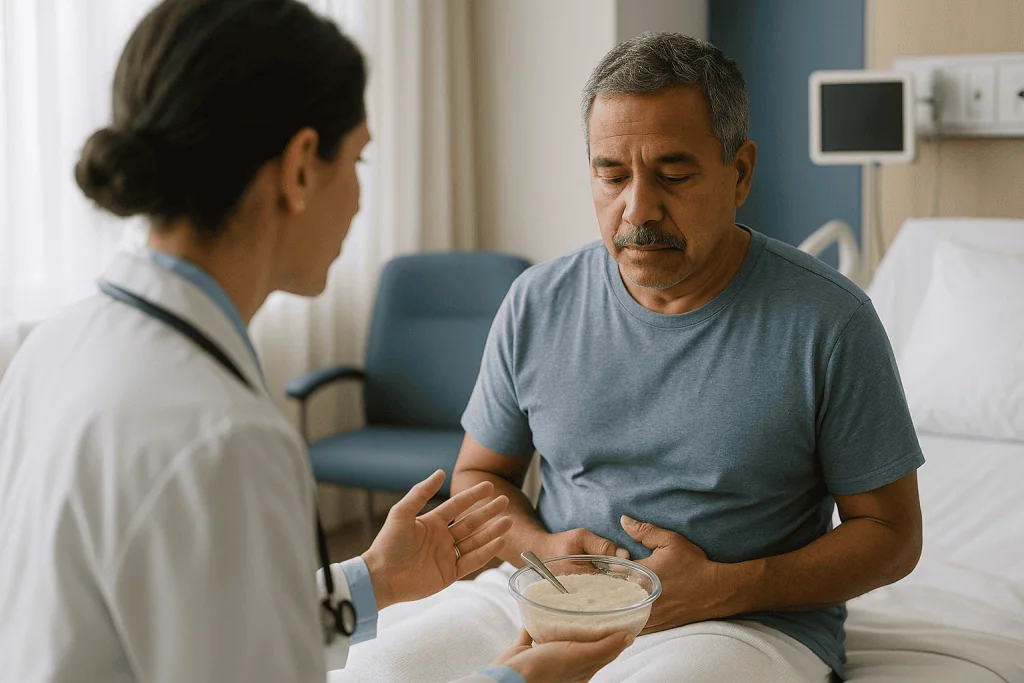
In this situation, operating early is not safer; it is riskier. The tissues around the gallbladder are swollen, friable and difficult to tell apart, which raises the chance of injuring the bile duct or bowel. Fluid collections sit in the surgical field. The person may be too unwell for a general anesthetic. For these reasons, guidelines advise delaying cholecystectomy until the collections have resolved or stabilized, which commonly takes around six weeks and sometimes longer.
The waiting period is not passive. The person is monitored with repeat scans, nutrition is supported, infected dead tissue may be drained through the skin or endoscopically, and if a stone is still blocking the duct or bile infection develops, an endoscopic procedure can clear the duct without an operation. The gallbladder stays where it is until the surroundings are calm enough to remove it cleanly.
This creates an uncomfortable middle ground: the person is at risk of another stone episode precisely during the weeks when surgery is unsafe. Teams manage that tension in a few ways. Where a persistent collection is going to be drained anyway, the gallbladder may be removed in the same session once that is feasible. Where recurrence risk is judged high and surgery is far off, an endoscopic sphincterotomy, a small cut in the valve at the bottom of the bile duct, can let future stones pass more easily. None of these steps is automatic; each is weighed against the individual picture by the surgical, gastroenterology and critical care teams together.
Gallstone pancreatitis gallbladder removal timing at a glance
Because the right moment depends so heavily on how severe the attack was and on what the bile duct is doing, it helps to see the common scenarios side by side. The timeframes below are typical ranges drawn from guideline positions and the trial evidence summarized in the Cochrane review and the NHS; they describe what teams usually aim for, not a promise for any individual.
| Situation | Usual timing of gallbladder removal | Why |
|---|---|---|
| Mild pancreatitis, duct clear, eating again | During the same admission, often within days | Lowest recurrence risk; no added surgical risk shown in trials |
| Mild pancreatitis, same-admission surgery not possible | As soon as practicable, commonly within two weeks | Shortens the window for another stone event |
| Mild pancreatitis with a stone still in the bile duct | After endoscopic duct clearance, usually same admission | Clearing the duct first prevents obstruction after surgery |
| Severe pancreatitis with necrosis or fluid collections | Delayed, typically six weeks or more, until collections settle | Early surgery in inflamed tissue raises injury risk |
| Severe pancreatitis with cholangitis or persistent obstruction | Urgent endoscopic duct clearance first; gallbladder later | Infection in the duct is a medical emergency |
| Person too frail for general anesthesia | May not be operated on at all | Endoscopic sphincterotomy can reduce recurrence instead |
Two things stand out from this table. First, there is no scenario in which the gallbladder is simply forgotten; even when surgery is deferred indefinitely, something is done to lower the chance of a repeat. Second, the bile duct and the gallbladder are managed as separate problems. A stone stuck in the duct needs clearing whatever the plan for the gallbladder, and clearing the duct does not remove the need to deal with the gallbladder.
If your situation does not seem to fit any row, that is worth raising with your team. Pregnancy, bleeding disorders, previous abdominal surgery and heart or lung disease all nudge the timing one way or the other.
Who is usually offered the operation, and who is usually asked to wait
The majority of adults who recover from a mild attack are offered keyhole gallbladder removal before discharge or shortly afterward. Age alone is not a barrier; many people in their seventies and eighties have the operation safely once the anesthetic assessment is reassuring.
Several groups are commonly asked to wait, or are managed differently.
- People recovering from severe pancreatitis, for the reasons described above, until fluid collections and inflammation have settled.
- People whose bile duct still contains a stone or whose liver blood tests keep rising, who usually have an endoscopic procedure first.
- People with significant heart or lung disease, where the anesthetic risk needs separate evaluation and sometimes optimization beforehand.
- People taking blood-thinning medicines, where the prescribing clinician decides whether and how to pause them; this is never a decision to make alone.
- Pregnant people, in whom the operation is often feasible, particularly in the second trimester, but is planned jointly with the obstetric team.
A smaller group may be advised against surgery altogether. Someone who is very frail, has advanced illness or has a prohibitive anesthetic risk may do better with endoscopic sphincterotomy, which widens the exit of the bile duct so that future stones are more likely to pass without lodging. Observational studies suggest this lowers the risk of repeat pancreatitis, though it does not prevent gallbladder inflammation itself, since the gallbladder remains.
Children can develop gallstone pancreatitis too, often in the context of blood disorders that break down red cells faster than usual. The pathway is broadly similar: settle the pancreas, clear the duct if needed, remove the gallbladder, with timing and preparation adapted by pediatric surgeons.
Whichever group you fall into, the recommendation is a team judgment that balances recurrence risk against procedural risk. If you are asked to wait, it is reasonable to ask what the plan is for the interval and what should prompt you to come back sooner.
What actually happens during laparoscopic cholecystectomy
Laparoscopic, or keyhole, cholecystectomy is the standard technique. It is done under general anesthesia, so you are fully asleep. The surgeon makes a small cut near the navel and usually three more, each a centimeter or so long, across the upper abdomen. Carbon dioxide gas gently inflates the abdomen to create working space, and a thin camera relays a magnified image to a screen.
The key step is identifying two structures: the cystic duct, which drains the gallbladder, and the cystic artery, which supplies it. Surgeons follow a safety standard called the critical view of safety, which means clearing the fatty tissue until both structures are unmistakably seen entering the gallbladder and nothing else is in the way. Only then are they clipped and divided. This discipline exists to protect the common bile duct, the main channel that must not be damaged.
With its connections sealed, the gallbladder is peeled away from the undersurface of the liver and lifted out through one of the small incisions, often inside a retrieval bag. Some surgeons inject contrast dye into the duct during the operation and take an X-ray, a step called intraoperative cholangiography, to check for any stone that has escaped notice.
The whole procedure typically takes around an hour, and most people go home the same day or the next, according to the NHS. After recent pancreatitis the tissues can be stickier than usual, so the surgeon may warn in advance that there is a somewhat higher chance of needing to switch to an open operation through a single larger incision under the ribs. That conversion is a safety decision, not a failure.
Known risks, in neutral terms, include bleeding, infection, bile leak from the small stump, injury to the bile duct or bowel, blood clots, and anesthetic complications. All are uncommon in experienced hands, and the consent discussion should put the figures for your situation in context.
Where ERCP fits: clearing the bile duct before or instead of surgery
ERCP stands for endoscopic retrograde cholangiopancreatography. In plain terms, a flexible camera is passed through the mouth to the small intestine, a fine tube is threaded into the opening of the bile duct, and any stone sitting there is pulled out with a tiny basket or balloon. The valve at the duct’s exit is often cut slightly to make this possible; that cut is the sphincterotomy mentioned earlier.
ERCP is not a substitute for gallbladder removal in most people. It deals with stones that have already left the gallbladder and lodged in the duct. It does nothing about the stones still inside. The two procedures therefore answer different questions.
Guidelines reserve urgent ERCP, usually within a day, for two situations: cholangitis, which is infection in a blocked bile duct and causes fever, jaundice and pain together, and persistent obstruction shown by rising bilirubin or a dilated duct on imaging. In those cases the blocked, infected duct is the emergency, and clearing it comes before anything else.
Outside those situations, routine ERCP for everyone with gallstone pancreatitis is not recommended, because the procedure carries its own risk of causing pancreatitis and offers no benefit when the stone has already passed. Instead, teams use MRCP, a non-invasive MRI of the ducts, or an ultrasound probe on an endoscope, to check whether a stone is present before deciding.
ERCP does become the main treatment for the frail group who cannot have surgery. By widening the duct’s exit, sphincterotomy makes it less likely that a future stone will jam at the junction. It is a reasonable compromise rather than an equivalent, because the gallbladder itself can still become inflamed or infected.
If you are told you need ERCP before your operation, expect a short additional wait and a separate consent process. The sequence, duct first and gallbladder second, is deliberate and is the safer order.
What the days and weeks after gallbladder removal usually look like
The first day is mostly about shaking off the anesthetic. Shoulder-tip pain is common and puzzling; it comes from residual gas irritating the diaphragm and usually fades within a day or two as the gas is absorbed. The incisions are sore rather than agonizing, and pain is generally managed with simple analgesics chosen by the prescribing team.
Eating restarts the same day with light meals. There is no evidence that a long-term special diet is needed after gallbladder removal, though many people find that very fatty meals sit less comfortably for the first few weeks and prefer smaller, more frequent portions while the gut adjusts to bile arriving in a steady trickle rather than in meal-timed squirts.
According to the NHS, most people return to normal activities, including desk work and driving once they can perform an emergency stop comfortably, within about two weeks of keyhole surgery. Open surgery takes longer, typically six to eight weeks, because the muscle wall has been divided. Lifting heavy weights is usually deferred for a few weeks in either case to protect the wounds.
Having had pancreatitis changes the picture slightly. The pancreas may still be settling, so fatigue can linger longer than after a routine cholecystectomy, and appetite may take time to return fully. Some people are sent home with a follow-up blood test to confirm that liver and pancreatic markers have normalized.
Movement matters. Walking from the first day reduces the risk of blood clots in the legs, which is why nurses encourage getting up early even when it feels counterintuitive. Compression stockings or a short course of injectable anticoagulant may be used for people at higher clot risk; that is a decision for the surgical team.
A review appointment, in person or by phone, usually happens a few weeks later. Persistent pain, fever or yellowing of the skin before then are reasons to make contact sooner rather than wait for it.
Digestive issues after gallbladder removal: what is common and what is not
The gallbladder is a storage tank, not a factory. The liver keeps making bile after it is gone; bile simply flows continuously into the intestine instead of being concentrated and released in response to meals. For most people the body adapts without fuss. A minority notice changes.
Looser or more frequent stools are the most common complaint, and they can appear within days of surgery. The likely mechanism is bile acids reaching the colon in larger amounts and drawing in water. In most people this settles over weeks to months. When it persists, doctors call it bile acid diarrhea; it is treatable with medicines in the bile acid sequestrant class, which bind bile in the gut. Whether that is appropriate is a decision for the clinician reviewing you, not a reason to self-medicate.
Bloating and discomfort after rich meals are also reported, especially early on, and tend to respond to spreading fat intake across the day rather than concentrating it in one large dinner. There is no strong evidence that a strict low-fat diet is necessary long term.
Less commonly, people report heartburn or a sense of fullness. Bile reflux, where bile washes back into the stomach, is one possible explanation but is not a universal consequence of the operation.
What is not expected is new, severe pain, fever, jaundice or weight loss. Those point away from ordinary post-surgical adjustment and toward something that needs assessment: a retained stone in the bile duct, a bile leak in the early days, or an unrelated condition that was there all along.
The honest summary is this: most people live entirely normally without a gallbladder, some have mild bowel changes that fade, and a small group have persistent symptoms that deserve a proper work-up rather than reassurance alone.
Can gallbladder removal itself cause pancreatitis?
The operation does not damage the pancreas directly, and removing the gallbladder reduces the main driver of gallstone pancreatitis. That said, pancreatitis after cholecystectomy does happen, and it is worth separating the explanations.
The most common cause is a stone that was already in the bile duct at the time of surgery and was not detected. Stones can hide in the lower duct, and even careful imaging misses some. If one later shifts and blocks the pancreatic opening, the result is a fresh episode of pancreatitis that looks exactly like the first. This is why persistent or rising liver blood tests before surgery prompt a duct check, and why surgeons weigh intraoperative cholangiography.
A second cause is ERCP itself. Instrumenting the papilla, the opening where the ducts enter the intestine, irritates the pancreatic duct in a proportion of people and can trigger inflammation, usually mild and short-lived. This is the main reason routine ERCP is avoided when it is not clearly needed.
A third possibility is that the pancreatitis was never, or not only, caused by gallstones. Alcohol, very high blood triglycerides, certain medicines, high calcium levels, genetic variants and anatomical quirks of the ducts can all cause pancreatitis, and a gallbladder full of stones can be an innocent bystander. When pancreatitis recurs after a technically sound cholecystectomy with a clean duct, doctors widen the search.
Finally, there is sphincter of Oddi dysfunction, in which the muscular valve at the base of the duct spasms or scars and intermittently obstructs flow. It is uncommon, difficult to prove, and discussed in the next section.
So the fair answer is: the operation does not cause pancreatitis as a direct effect, but a missed duct stone, an endoscopic procedure or an unrelated cause can produce an attack afterward, and each has its own path to diagnosis.
Pain years after gallbladder removal: post-cholecystectomy syndrome and sphincter of Oddi dysfunction
Right upper abdominal pain that appears or persists months or years after the operation is common enough to have a name: post-cholecystectomy syndrome. The term is a label for a cluster of symptoms, not a single diagnosis, and the useful work lies in finding out which of several explanations applies.
Sometimes the gallbladder was never the whole problem. Reflux, peptic ulcer, irritable bowel syndrome, functional dyspepsia and musculoskeletal pain under the ribs can all mimic gallbladder pain, and removing the gallbladder does not treat them. In other people a stone has formed in the bile duct itself or in a remnant of the cystic duct, which can happen even years later. Occasionally a narrowing, called a stricture, develops in the duct.
Sphincter of Oddi dysfunction is the explanation people most often read about online. The sphincter is the ring of muscle that controls flow from the bile and pancreatic ducts into the intestine. If it fails to relax properly, pressure builds behind it, producing episodes of pain that can resemble a gallbladder attack and, in some cases, mild pancreatitis. Cleveland Clinic describes it as more common in people who have had their gallbladder removed, and notes that it is diagnosed by excluding other causes and looking for abnormal liver or pancreatic blood tests during pain.
Treatment, where the diagnosis is secure, ranges from medicines that relax smooth muscle to endoscopic sphincterotomy. The evidence for cutting the sphincter is strongest when there are objective signs of obstruction and weakest when pain is the only feature; trials in that last group have been disappointing, so guidelines urge caution before intervening.
The practical point is that pain two years after surgery is not something to normalize. It warrants blood tests, an ultrasound and often MRCP, with the aim of either finding a treatable cause or confidently ruling the ducts out and redirecting attention elsewhere.
What people often get wrong about gallstone pancreatitis and gallbladder surgery
Misconceptions cluster around this topic, partly because the organ that hurts and the organ that is removed are different. A few deserve correcting.
“The stone passed, so the danger has passed.” The stone that caused the attack has usually gone, but the gallbladder that made it remains and typically contains others. Recurrence risk belongs to the gallbladder, not to the single stone.
“Waiting a couple of months to recover first is safer.” For mild attacks the evidence runs the other way: trials summarized in the Cochrane review found early surgery no riskier and fewer problems in the waiting period. The old six-week delay was tradition, not data.
“Surgery as soon as possible is always best.” Also wrong. After severe pancreatitis with necrosis or collections, early operation raises the risk of serious injury, and deferral is the safer course. Timing is severity-dependent.
“ERCP fixes it, so I don’t need the operation.” ERCP clears the duct; it does not empty the gallbladder. Only in people unfit for surgery is sphincterotomy used as the main strategy.
“I’ll need a low-fat diet for life.” There is no strong evidence for a permanent restrictive diet. Many people moderate fat for a few weeks and then eat normally.
“Any pain after surgery means the operation failed.” Early incision and shoulder pain are expected. Later pain has many possible causes, several unrelated to the surgery, and deserves investigation rather than assumption.
“Pancreatitis means I was drinking too much.” Gallstones account for roughly half of cases in NHS data. Pancreatitis is not evidence of anyone’s habits, and assuming otherwise adds shame to an already frightening illness.
Getting these right matters because they shape the questions people ask, and the decisions they feel comfortable with, at the bedside.
Questions to ask your care team before gallbladder removal
A good conversation before surgery does more for peace of mind than any article. These questions are a starting point; bring the ones that matter to you and write the answers down, because post-illness memory is unreliable.
- How severe was my pancreatitis, and is that why you are recommending surgery now or later?
- Has my bile duct been checked for a remaining stone, and how? Will I need MRCP or ERCP first?
- If the operation is being deferred, what is the plan for the interval, and what symptoms should bring me straight back?
- Will the surgery be keyhole, and what is the chance it might need to be converted to open in my case?
- Do I need to pause any of my regular medicines, and who will tell me exactly how? (Never change a prescribed medicine on your own.)
- What will be done to reduce my risk of blood clots during and after surgery?
- How long are you expecting me to stay, and what would prompt a longer stay?
- What follow-up tests or appointments are planned, and who do I contact if I have concerns before then?
- Are there any clues that something other than gallstones contributed to my pancreatitis?
- What bowel or digestive changes should I expect, and when would they become something to report?
If you are being offered endoscopic sphincterotomy instead of surgery, add: why is surgery not advised for me, what does sphincterotomy not protect against, and what would change the recommendation in the future?
Expect answers that include uncertainty. A clinician who says “usually” and “it depends” is being accurate, not evasive. The specific numbers for your risk will depend on your age, other conditions and how your pancreas has recovered, and those are exactly the things your team can see that a general article cannot.
When to call your doctor: red-flag signs after gallstone pancreatitis or gallbladder removal
Whether you are waiting for surgery, recovering from it, or living years down the line, some symptoms should not be sat on. Seek urgent care, or call emergency services if you are very unwell, for any of the following.
- Severe upper abdominal pain, especially pain boring through to the back, that does not ease with rest; this may signal another attack of pancreatitis.
- Fever or shaking chills, particularly together with pain or yellowing of the skin or eyes, which can indicate infection in the bile duct and is an emergency.
- New jaundice, dark urine or pale, clay-colored stools, suggesting a blocked duct.
- Persistent vomiting with inability to keep fluids down.
- A swollen, hard or increasingly tender abdomen.
- After surgery: spreading redness, pus or opening of a wound, or pain that is getting worse rather than better after the first few days.
- Breathlessness, chest pain, or a painful swollen calf, which can point to a blood clot.
- Confusion, drowsiness or passing very little urine, which can accompany severe illness.
Contact your care team within a day or two, rather than waiting for a routine appointment, if you notice ongoing diarrhea that is disrupting your life, unexplained weight loss, pain after eating that keeps returning, or any symptom that simply does not feel like normal recovery.
For people discharged to await surgery, the threshold should be lower, not higher. A repeat of the pain that brought you in the first time is reason enough to be reassessed. Teams would rather see you early with a false alarm than late with cholangitis.
None of this list is for self-diagnosis. It is a prompt to pick up the phone. The assessment, and every decision that follows from it, belongs with the clinicians who know your history and can examine you.
Frequently asked questions
What are the symptoms of gallstone pancreatitis?
The hallmark is sudden, severe pain in the upper abdomen that often spreads to the back and worsens after eating, usually with nausea and vomiting. Fever, a racing pulse and tenderness when the abdomen is pressed are common. Yellowing of the skin or eyes suggests a stone is still blocking the bile duct. Diagnosis rests on blood tests for pancreatic enzymes and imaging, so new pain of this kind needs urgent medical assessment rather than self-diagnosis.
Why remove the gallbladder when the pain was in the pancreas?
Because the gallbladder caused the problem even though the pancreas took the damage. A stone that left the gallbladder blocked the shared channel where bile and pancreatic ducts meet, trapping enzymes inside the gland. The stone has usually passed by the time of diagnosis, but the gallbladder that produced it remains and almost always holds more. Removing it addresses the source; treating the pancreas alone leaves the trigger in place.
How soon after gallstone pancreatitis is the gallbladder removed?
For mild attacks, guidelines recommend removal during the same hospital stay, typically within days once pain settles and eating resumes. If that is not possible, surgery is usually arranged within about two weeks. After severe pancreatitis with dead tissue or fluid collections, teams generally wait six weeks or longer for the inflammation to resolve. The exact timing is set by the treating team based on your recovery and imaging.
What happens if I decide not to have my gallbladder removed?
The main risk is recurrence: another episode of pancreatitis, a stone lodging in the bile duct causing jaundice, or infection of the ducts, which can be life-threatening. Studies that followed people home without surgery found a meaningful share returned with one of these within weeks. For people unfit for surgery, endoscopic sphincterotomy reduces, but does not remove, the risk. This decision should be made with your team, who can quantify your individual risk.
Can having your gallbladder removed cause pancreatitis?
The operation itself does not cause pancreatitis, but attacks can occur afterward for identifiable reasons. The most common is a stone that was already in the bile duct and went undetected. ERCP, sometimes used to clear the duct, can irritate the pancreas and trigger a usually mild episode. Pancreatitis may also have a separate cause, such as high triglycerides or certain medicines, with gallstones as a bystander. Recurrence after surgery prompts a wider search for causes.
What are the common digestive issues after gallbladder removal?
Looser or more frequent stools are the most frequent change, caused by bile flowing continuously into the gut rather than in meal-timed releases. Most people find this settles over weeks to months. Bloating or discomfort after very fatty meals is also reported early on. Persistent diarrhea can be assessed and treated, so it is worth mentioning at follow-up. Severe pain, fever, jaundice or weight loss are not expected adjustments and need prompt evaluation.
Is it normal to have pain in the right side two years after gallbladder removal?
No, late pain should be investigated rather than accepted. Possible causes include a stone that formed in the bile duct or a remnant of the cystic duct, a narrowing of the duct, sphincter of Oddi dysfunction, or a condition unrelated to the gallbladder such as reflux, ulcer or irritable bowel syndrome. Blood tests, ultrasound and often an MRI of the ducts help sort these out. Your doctor can decide which tests fit your symptoms.
What is sphincter of Oddi dysfunction and how is it linked to gallbladder surgery?
The sphincter of Oddi is the muscular valve where the bile and pancreatic ducts empty into the intestine. When it fails to relax properly, pressure builds behind it, causing episodes of pain that mimic a gallbladder attack and occasionally mild pancreatitis. It is uncommon and more often recognized in people who have had their gallbladder removed. Diagnosis involves excluding other causes and checking blood tests during pain; treatment ranges from muscle-relaxing medicines to endoscopic sphincterotomy in selected cases.
Do I need a special diet after gallbladder removal for gallstone pancreatitis?
There is no strong evidence that a permanent restrictive diet is necessary. Many people find smaller, more frequent meals with fat spread across the day are more comfortable for the first few weeks while the gut adapts to a steady trickle of bile. After pancreatitis specifically, your team may advise a gradual return to normal eating and limiting alcohol while the gland recovers. Individual dietary advice should come from your clinicians or a dietitian.
Will removing the gallbladder stop pancreatitis from ever happening again?
It removes the most common trigger, so repeat gallstone pancreatitis becomes much less likely, but it is not an absolute guarantee. Stones can occasionally form within the bile duct itself, a stone can be missed at the time of surgery, and pancreatitis has other causes entirely, including alcohol, high blood fats and certain medicines. If attacks recur after surgery, doctors look for these alternative explanations rather than assuming the operation did not work.
References
This article is for general information only and is not a substitute for professional medical advice. Please consult a qualified doctor about your individual situation.

More from the Blog

Living With a PEG Feeding Tube: Showering, Sleeping, Going Out and Staying Active
Most people living with a PEG tube can shower, sleep in their usual position, leave the house and stay physically active once the stoma…

Hepatitis A Myths: Does It Become Chronic and Can You Catch It Twice?
Hepatitis A does not become chronic. The infection is acute: the immune system clears the virus, and the liver typically heals without lasting damage,…

Bleeding Peptic Ulcer: The Warning Signs That Call for Emergency Care, Not a Wait-and-See
A bleeding peptic ulcer is an emergency when it causes vomiting of blood or material that looks like coffee grounds, black or tarry stools,…

Stool Tests, Blood Tests and Hydration Checks: How Gastroenteritis Is Assessed
Gastroenteritis is usually assessed by history and a hydration check rather than by laboratory tests, because most viral cases settle on their own within…

Celiac Follow-Up Blood Tests: What Antibody Levels Say About Your Gluten-Free Diet
After a celiac diagnosis, doctors usually repeat the tissue transglutaminase IgA (tTG-IgA) antibody test a few months into a gluten-free diet and then about…

Lactose Intolerance in Children and Teens: How the Pathway Differs From Adults
Lactose intolerance in children follows a different path than in adults. Young children most often develop it temporarily after a gut infection and usually…