

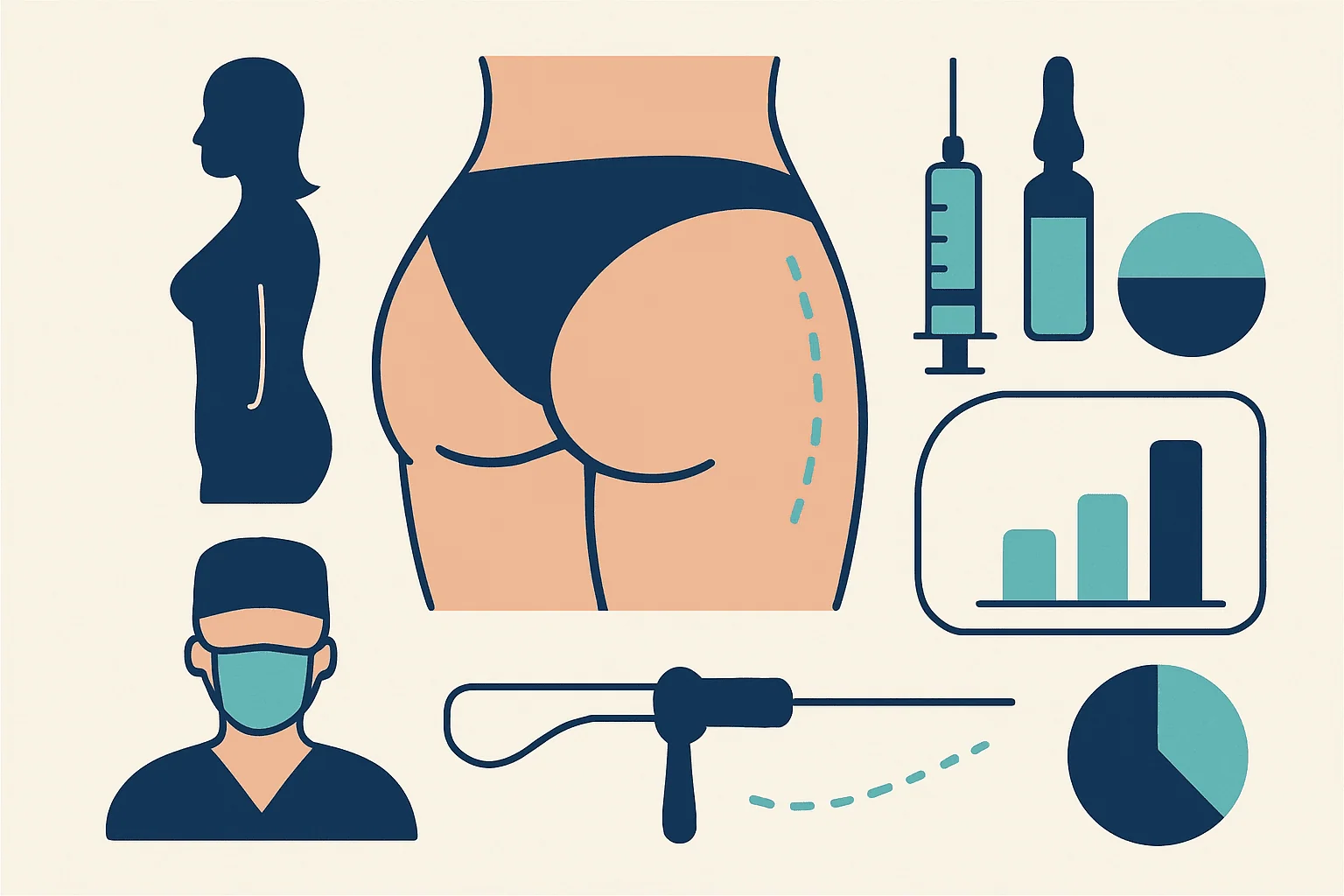
- A BBL usually refers to buttock enhancement using fat taken from another part of the body.
- The procedure is surgical and carries meaningful risks, including rare but serious complications.
- Results depend on anatomy, available donor fat, technique, healing, and long-term fat survival.
- Consultation and patient selection are central to safety, expectations, and planning.
- Revision or reversal-related care may be considered when goals change or complications occur.
Celebrities with bbl are often discussed online, but the most useful stories are the ones people choose to tell themselves. When public figures speak openly about cosmetic surgery, it can reduce stigma, correct rumors, and make conversations about body image more honest.
A Brazilian butt lift, commonly called a BBL, has been one of the most talked-about aesthetic procedures of the past decade. This roundup focuses only on celebrities who have publicly discussed their own experience, concern, or reversal in clear terms. The goal is not to judge anyone’s appearance, but to document how openness around elective procedures can help audiences think more critically about beauty standards, recovery, and informed decision-making.
Because cosmetic procedures can be surrounded by speculation, this list stays with widely reported, first-person disclosures. In each case below, the person has spoken publicly about her own body and choices, helping move the discussion from rumor toward transparency.
1. Cardi B
Cardi B has spoken openly about getting butt injections before she became widely famous, describing the experience in blunt, first-person terms. She has also publicly discussed cosmetic surgery more broadly, including the pressures that shaped her choices and the pain involved. Her comments mattered because they pushed beyond glamorized imagery and highlighted the risks and realities behind body-enhancement trends. By speaking candidly, she helped audiences understand that procedures affecting the buttocks are not always simple, safe, or emotionally straightforward.
2. K. Michelle
K. Michelle has publicly shared that she underwent butt enhancement and later sought to have material removed after health concerns and dissatisfaction. Across interviews and television appearances, she described complications and the emotional impact of living with a result she no longer wanted. Her openness became especially significant because she used her platform to warn others against chasing trends without understanding long-term consequences. She is one of the clearest examples of a public figure discussing both augmentation and reversal-related care in her own words.
3. Blac Chyna
Blac Chyna has spoken publicly about having cosmetic procedures including silicone in her buttocks and later documented having it reduced or removed. She shared that she wanted to reverse some earlier changes and was direct about the process being part of a broader reset in her life. That disclosure mattered because it showed that cosmetic decisions can evolve over time, and that not every procedure remains something a person wants indefinitely. Her comments also helped broaden public understanding that butt enhancement conversations may involve removal, correction, or revision as well as augmentation.
4. SZA
SZA has openly acknowledged getting a BBL and has discussed it in reflective terms, including saying she did not necessarily need to do it. In public conversation, she linked the choice to body image, attention, and the complicated feelings that can accompany cosmetic surgery even when someone is pleased with aspects of the result. Her candor stood out because she did not frame the procedure as either purely empowering or purely regrettable. Instead, she described a more nuanced reality that many patients and observers may recognize.
5. Summer Walker
Summer Walker has publicly said she had a BBL and later spoke about wanting to reverse it, framing the decision around her changing sense of self and comfort. Her comments were notable because they addressed how preferences can shift after a procedure, especially under public scrutiny. By discussing the possibility of undoing or downsizing prior cosmetic work, she added a layer often missing from celebrity beauty coverage. Her openness underscored that elective surgery choices can be revisited rather than treated as permanent identity statements.
6. Aubrey O’Day
Aubrey O’Day has addressed plastic surgery rumors over the years and has publicly acknowledged cosmetic work, including discussion around a BBL. In talking about her appearance, she has pushed back on outside speculation while also asserting her right to make choices about her own body. That matters in a media environment where people are often dissected without context or consent. Her public comments contributed to a broader conversation about ownership, transparency, and the pressure placed on women in entertainment to explain their looks.
7. DreamDoll
DreamDoll has spoken publicly about getting a BBL and later wanting changes, including discussing the procedure and its aftermath in a candid, personal way. She has also talked about body-image pressure and the influence of beauty ideals in shaping cosmetic choices. Her disclosure was meaningful because it came from someone closely associated with image-driven industries and social media culture. By speaking in first person, she added realism to a topic that is often filtered through rumors and edited visuals.
8. Azealia Banks
Azealia Banks has publicly discussed having a BBL and has referred to it in direct, self-authored comments. Her remarks were notable because they treated cosmetic surgery as something she could acknowledge plainly rather than dodge. In a culture where celebrity bodies are constantly scrutinized, that kind of straightforward disclosure can reduce speculation and normalize honest discussion. Her openness also reflected how public conversations about BBLs have expanded beyond tabloids into broader debates about beauty, agency, and self-presentation.
What a Brazilian butt lift is
A Brazilian butt lift, or BBL, is an aesthetic procedure designed to change the shape and contour of the buttocks using a person’s own fat. In general, the process involves liposuction to remove fat from areas such as the abdomen, flanks, back, or thighs. That fat is then processed and strategically reinjected to add volume and improve projection or symmetry in the buttock area. Unlike implants, a traditional BBL relies on fat transfer rather than a synthetic device.
People pursue a BBL for different reasons. Some want more fullness, some want to improve body proportions, and others are focused on contouring the waist and lower body together. Results can vary depending on anatomy, skin quality, how much donor fat is available, and the surgical technique used. Not all transferred fat survives long term, so the final result may differ from the immediate postoperative appearance.
Although the procedure is widely known, it also carries serious safety considerations. BBL safety has been the subject of sustained attention because improper fat injection technique can lead to life-threatening complications, including fat embolism. For that reason, modern standards emphasize careful patient selection, detailed preoperative planning, and adherence to current surgical safety guidance. Recovery also matters: swelling, bruising, activity restrictions, and pressure-avoidance instructions are common parts of the healing process.
As with any cosmetic procedure, motivations can be personal, cultural, or influenced by changing beauty norms. Public discussion often focuses on appearance, but the medical side is equally important. A BBL is surgery, not a casual beauty treatment, and it should be understood in that context.
Diagnosis, consultation, and treatment landscape
Because a BBL is an elective cosmetic procedure rather than treatment for a disease, there is no “diagnosis” in the traditional sense. Instead, the process begins with consultation and assessment. A surgeon typically evaluates body shape goals, fat distribution, skin elasticity, overall health, and whether the person is a reasonable candidate for surgery. Medical history, smoking status, past procedures, and recovery expectations all play a role in planning.
The treatment landscape includes several related options. One is fat-transfer BBL, which uses the patient’s own fat. Another is gluteal implant surgery, though that is a different procedure with its own benefits and risks. Some people also seek nonsurgical contouring approaches, but these do not replicate the structural volume change of a surgical BBL. Others may pursue revision procedures if they are dissatisfied with a prior result, experience asymmetry, or want reduction or removal after earlier enhancement.
Consultation quality is especially important because candidacy is not just about wanting a certain shape. Patients need clear discussion of realistic outcomes, scars from liposuction, possible need for future revision, and the fact that trends may change while surgery has lasting effects. Recovery planning is part of treatment too, including downtime, sitting restrictions, compression garments, and follow-up care. People considering revision or reversal after prior augmentation may need imaging, examination, and individualized planning depending on what was previously done.
Educationally, the key point is that cosmetic surgery conversations should include both aesthetics and safety. Celebrity disclosures can make the topic feel more familiar, but they should not replace individualized medical evaluation. Public stories may help reduce stigma, yet every case is unique in anatomy, goals, and risk profile.
Explore Brazilian Butt Lift (BBL) at Acibadem →
Frequently asked questions
What does BBL stand for?
In aesthetic medicine, BBL usually stands for Brazilian butt lift, a procedure that reshapes the buttocks using fat transfer.
Is a BBL the same as butt implants?
No. A classic BBL uses the patient’s own fat, while butt implants involve placing a synthetic implant. They are different procedures with different considerations.
Why is BBL safety discussed so often?
The procedure has received significant safety attention because poor technique can lead to severe complications. That is why surgeon expertise, planning, and adherence to current safety standards are important topics in patient education.
Can a BBL be revised or reversed?
In some cases, yes. Depending on what was originally done, patients may seek revision, reduction, removal of prior injected material, or other contour-correction procedures after specialist evaluation.
✔ Reviewed by the Acibadem medical team
This article is general health information inspired by publicly reported news. It is not a statement about any individual’s private medical care, nor medical advice. Always consult a qualified clinician.