

Celebrity Health Health News
Iggy Azalea and BBL: Why Searches Are Surging — and What It Really Involves
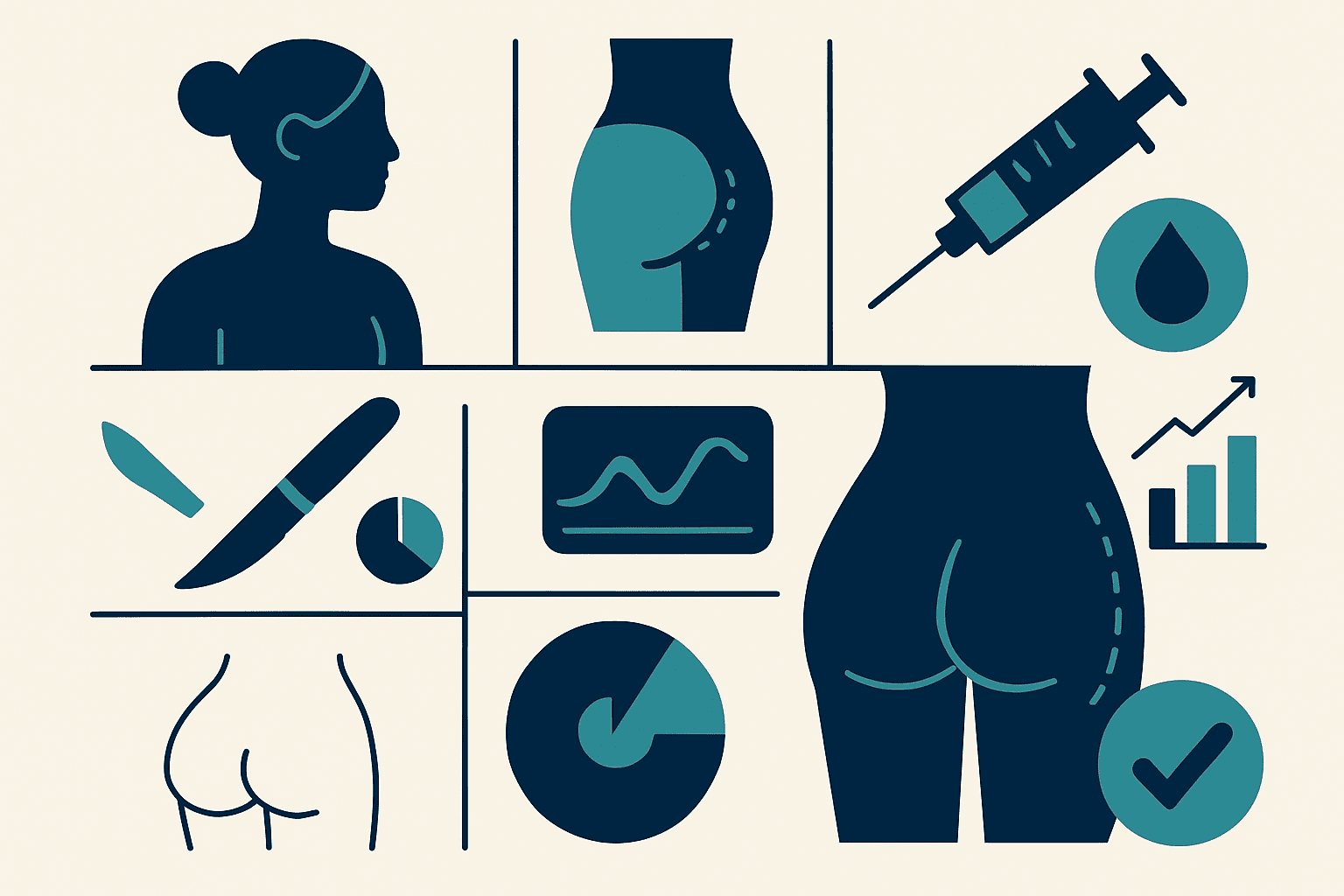
- A BBL uses a person’s own fat to reshape and enhance the buttocks.
- It combines liposuction with fat transfer, so it is more complex than it may seem.
- The most serious risk is fat embolism, making surgical technique crucial.
- Recovery involves healing in both donor areas and the buttocks over weeks to months.
- Results depend on anatomy, fat survival, and stable weight after surgery.
Searches for “Iggy Azalea BBL” have been climbing after recent headlines and online discussion drew attention to the term again. Whatever may or may not be true about any one public figure’s private medical choices, the sudden interest offers a useful chance to explain what a Brazilian butt lift, or BBL, actually is, why people consider it, and what doctors want patients to understand before making a decision.
A BBL is not an implant operation in the usual sense. It is a body-contouring procedure that uses a person’s own fat, typically taken from areas such as the abdomen, flanks, back, or thighs, and transfers that fat to the buttocks to change shape and volume. Because it involves both liposuction and fat grafting, it is more complex than many people realize. It also carries important safety considerations, which is why thoughtful evaluation and careful technique matter so much.
What a BBL is — and what it is not
A Brazilian butt lift is a cosmetic surgical procedure designed to enhance the contour of the buttocks using autologous fat, meaning fat from the patient’s own body. In simple terms, a surgeon removes fat from one area, processes it, and then reinjects selected fat into the buttocks to create fuller or more balanced proportions.
Many people assume a BBL is just “getting a bigger butt,” but the procedure is really about overall body contour. The liposuction portion can narrow or reshape surrounding areas, and the transferred fat can add projection, improve symmetry, or soften contour irregularities.
It is also helpful to distinguish a BBL from other procedures:
- BBL: Uses the patient’s own fat to reshape the buttocks.
- Buttock implants: Use synthetic implants rather than transferred fat.
- Liposuction alone: Removes fat but does not add volume to the buttocks.
- Non-surgical augmentation: May involve injectable fillers, though these have their own limitations and risks.
Not everyone is a good candidate for fat transfer. A person needs enough donor fat for harvesting, relatively stable health, and realistic expectations about what the procedure can and cannot achieve. Very slim individuals may not have enough available fat for the result they want, while others may have medical factors that make surgery less suitable.
Why people consider a BBL and how surgeons assess candidacy
People seek BBL surgery for different reasons. Some want a rounder shape, some hope to improve the balance between the waist and hips, and others want correction of volume loss or asymmetry. For many, the appeal lies in using their own tissue instead of an implant.
Still, a consultation should go far beyond appearance goals. Surgeons generally assess a number of factors before deciding whether someone is a suitable candidate:
- Overall health: Conditions affecting healing, anesthesia safety, or blood clot risk may change the plan.
- Body composition: Enough donor fat is needed for transfer.
- Skin quality: Elasticity can affect contour and final appearance.
- Weight stability: Significant weight changes after surgery can alter results.
- Smoking status: Tobacco and nicotine can interfere with blood flow and healing.
- Goals and expectations: Desired results should be achievable and safe.
Surgeons also look closely at proportionality. A dramatic increase in size may not be anatomically possible or advisable. Some of the transferred fat will not survive long term, so planning often includes conservative judgment rather than trying to maximize volume at all costs.
For some patients, alternatives may be more appropriate. Depending on anatomy and goals, liposuction alone, skin-tightening procedures, gluteal implants, exercise-focused body contouring, or simply choosing not to pursue surgery may be discussed. A careful consultation should explore the full range of options instead of presenting one procedure as the answer for everyone.
How the procedure is done
A BBL usually involves three main stages: fat harvesting, fat processing, and fat injection. Although the exact approach varies by surgeon and patient anatomy, the general process is similar.
1. Fat harvesting
Fat is removed through liposuction from donor areas such as the abdomen, lower back, flanks, or thighs. This is done through small incisions using a thin tube called a cannula. The liposuction step can itself significantly change body shape, which is one reason the final result depends on more than the buttocks alone.
2. Fat processing
The removed fat is then purified or prepared so that healthy fat cells can be selected for transfer. This may involve filtering, washing, or separating the material obtained during liposuction. The goal is to prepare viable fat for reinjection while removing excess fluid and damaged cells.
3. Fat injection
The processed fat is carefully injected into selected areas of the buttocks to create shape, projection, and symmetry. Placement technique is critical. Modern safety guidance emphasizes avoiding deep injection into muscle because of the risk of fat entering large blood vessels, which can lead to life-threatening complications.
This point is central to understanding why BBL safety has received so much attention. A BBL is not a routine beauty treatment. It is surgery, and it should be treated with the same seriousness as any operation requiring anesthesia, tissue manipulation, and recovery time.
Risks, complications, and why BBL safety matters
Every surgery carries risk, but the BBL has received particular scrutiny because severe complications can occur if fat is injected improperly. The most feared complication is fat embolism, in which fat enters the bloodstream and travels to the lungs or heart. This can be catastrophic and may be fatal.
That is why surgeon training, technique, and adherence to current safety recommendations are so important. In experienced hands, the goal is to place fat in safer tissue planes and avoid deep intramuscular injection. Careful patient selection and appropriate operating settings also matter.
Potential risks and complications include:
- Fat embolism: A rare but very serious emergency.
- Infection: Can occur at incision or injection sites.
- Bleeding or fluid collection: May require monitoring or treatment.
- Asymmetry: Results may not be perfectly even.
- Contour irregularities: Lumps, dips, or unevenness can occur.
- Fat necrosis: Some transferred fat may not survive, forming firm areas.
- Scarring: Usually small, but still possible.
- Anesthesia-related problems: As with other operations.
- Need for revision surgery: Sometimes necessary if healing or shape is not as expected.
Another key point is that not all transferred fat survives. Some of it is naturally reabsorbed by the body in the months after surgery. This is expected to a degree and is one reason surgeons plan results carefully and avoid making promises that sound overly certain.
Patients should also understand that safety is not just about the operating day. Preoperative assessment, postoperative monitoring, and clear follow-up plans are all part of reducing risk.
Recovery, healing, and what results can look like over time
Recovery from a BBL involves healing from both liposuction and fat transfer. Early swelling, bruising, soreness, and temporary numbness are common. The buttocks and the donor areas may each feel different during recovery, which can make the experience more involved than many expect.
One of the practical challenges after surgery is protecting the newly transferred fat. Pressure on the area may affect how much fat survives, so postoperative instructions often include guidance on sitting, sleeping position, garment use, and return to daily routines. The exact plan varies by surgeon and by the details of the procedure.
In broad terms, recovery may include:
- Early downtime: A period of rest while soreness and swelling are most noticeable.
- Compression for liposuction areas: Often used to support contour and swelling control.
- Activity limits: Strenuous exercise is usually delayed at first.
- Gradual shape changes: The body contour evolves as swelling improves.
- Final result over time: It can take months to see a more stable outcome.
The final look depends on several things: the surgeon’s technique, the patient’s anatomy, the quality of the skin, how much fat survives, and whether body weight stays relatively steady afterward. Weight gain can enlarge transferred fat cells, while weight loss can reduce the enhanced volume.
Some people are pleased with subtle enhancement; others may feel disappointed if they expected a very dramatic transformation. That is why realistic goal-setting is one of the most important parts of the process. Photos on social media or in entertainment coverage may not reflect anatomy, lighting, editing, or the full story of what surgery can realistically achieve.
When to seek specialist care and what questions matter most
Anyone considering a BBL should understand that a thorough consultation is not a formality. It is the foundation of safer decision-making. Board certification, experience with body-contouring surgery, operating facility standards, and a candid discussion of risks all matter.
Questions that often help patients better understand the process include:
- Am I a good candidate for fat transfer based on my anatomy and health?
- What are the alternatives if I do not have enough donor fat?
- How do you approach BBL safety and fat placement?
- What complications should I know about before deciding?
- What is the expected recovery timeline in my case?
- What results are realistic for my body shape?
It is also important to seek medical evaluation promptly after surgery if warning signs appear. Severe shortness of breath, chest pain, sudden confusion, fainting, heavy bleeding, rapidly worsening swelling, fever, or severe pain out of proportion to expectations can signal serious complications and should never be ignored.
For people who are simply curious because the term is trending, the main takeaway is straightforward: a BBL is a real surgical procedure, not a casual beauty shortcut. It combines liposuction and fat grafting, can produce meaningful body contour changes, and requires careful planning, trained surgical judgment, and respect for genuine risks. Public interest may rise and fall with celebrity headlines, but the health information that matters stays the same: informed choices, realistic expectations, and safety first.
Explore Brazilian Butt Lift (BBL) at Acibadem →
Who is Iggy Azalea?
Iggy Azalea is an Australian rapper, songwriter, and performer. She gained international attention with hits including “Fancy” and has been a prominent figure in pop and hip-hop culture.
Frequently asked questions
What does BBL stand for?
BBL stands for Brazilian butt lift, a cosmetic procedure that uses liposuctioned fat from one part of the body and transfers it to the buttocks for contour enhancement.
Is a BBL the same as butt implants?
No. A BBL uses the patient’s own fat, while butt implants use synthetic implants. The procedures differ in technique, risks, feel, and who may be a candidate.
Why is BBL safety discussed so often?
The procedure has drawn attention because improper fat injection can lead to fat embolism, a rare but potentially fatal complication. Safe technique and patient selection are essential.
How long does BBL recovery usually take?
Recovery varies, but swelling, bruising, and activity restrictions are common early on. The body contour continues to settle over weeks to months, and final results are not immediate.
Do BBL results last permanently?
Some transferred fat survives long term, but not all of it does. Final results depend on fat survival, surgical technique, anatomy, and whether body weight remains relatively stable.
Who may not be a good candidate for a BBL?
People without enough donor fat, those with certain health risks, or those seeking unrealistic changes may not be ideal candidates. A proper surgical evaluation is needed to assess suitability.
✔ Reviewed by the Acibadem medical team
This article is general health information inspired by publicly reported news. It is not a statement about any individual’s private medical care, nor medical advice. Always consult a qualified clinician.