Acne
Learn what acne is, common acne symptoms, causes and risk factors, how doctors diagnose it, and the treatment options that may help manage breakouts.
Quick answer
Acne is a common skin condition in which hair follicles become blocked with oil and dead skin cells, causing whiteheads, blackheads, pimples and sometimes painful deeper lumps. It is most common in teenagers but affects adults too. Doctors diagnose acne by examining the skin, and treatments range from gentle skin care to prescription creams, oral medicines and procedures.
What is acne?
Acne is a common skin condition that develops when hair follicles (the tiny openings in the skin that hairs grow from) become blocked with oil and dead skin cells. The blockage can lead to pimples, blackheads, whiteheads and, in some cases, deeper painful lumps. The medical name for the most common form is acne vulgaris. Acne most often appears on the face, forehead, chest, upper back and shoulders, because these areas have the highest number of oil glands.
Acne affects people of all ages, but it is most common during puberty and the teenage years, when hormone levels change and the skin produces more oil. Many adults also experience acne, and it can continue into the thirties, forties and beyond. Women may notice flares linked to the menstrual cycle, pregnancy or hormonal conditions. Acne is not caused by poor hygiene and it is not contagious, meaning it cannot be passed from one person to another.
Although acne is rarely dangerous, it can affect how a person feels about their appearance and, in more severe cases, can leave permanent scars. For this reason, understanding what acne is, what triggers it and which acne treatment options exist can help people make informed decisions with their doctor. In most hospitals, acne is managed by a dermatologist, a doctor who specializes in conditions of the skin, hair and nails. At Acibadem, this care is provided through the Dermatology department.
Acne symptoms
Acne symptoms vary from person to person and depend on how deep and how inflamed the blockage in the follicle is. Doctors often describe acne lesions (the individual spots) in two broad groups: non-inflammatory and inflammatory.
- Whiteheads: small, flesh-colored or white bumps where the blocked pore stays closed at the surface (also called closed comedones).
- Blackheads: blocked pores that are open at the surface; the dark color comes from oil and dead skin reacting with air, not from dirt (open comedones).
- Papules: small, red, tender bumps without a visible center.
- Pustules: red bumps with a white or yellow center of pus (commonly called pimples).
- Nodules: large, solid, painful lumps that form deep under the skin.
- Cysts: deep, pus-filled lumps that are often painful and carry a higher risk of scarring.
- Oily skin: a shiny appearance, especially on the forehead, nose and chin.
- Skin changes after healing: dark or red marks, and sometimes pitted or raised scars.
Mild acne usually consists mainly of whiteheads and blackheads with a few small pimples. Moderate acne includes more numerous papules and pustules that may cover larger areas. Severe acne involves many inflamed spots and often nodules or cysts, which can be painful to the touch and are more likely to leave scars. Some people also notice itching, tenderness or a feeling of tightness in affected areas.
Acne symptoms can come and go. Flares are common around hormonal changes, during periods of stress or when the skin is exposed to certain products or friction. Because acne looks similar to some other skin conditions, such as rosacea (a condition causing facial redness and small bumps) or folliculitis (inflammation of hair follicles caused by infection), it is helpful to have persistent or unusual spots examined by a doctor rather than assuming the cause.
Acne causes and risk factors
Acne develops through a combination of processes in and around the hair follicle. Understanding acne causes helps explain why several different treatments can be useful.
- Excess oil production: the sebaceous glands (oil glands attached to hair follicles) produce sebum, a natural oil. When they produce too much, the follicle is more likely to become blocked.
- Blocked follicles: dead skin cells that do not shed normally can mix with oil and clog the pore.
- Bacteria: a bacterium that normally lives on the skin, called Cutibacterium acnes (formerly Propionibacterium acnes), can multiply inside blocked follicles and contribute to inflammation.
- Inflammation: the body’s immune response to the blockage and bacteria causes the redness, swelling and pain seen in inflamed spots.
Several factors can make acne more likely or more severe:
- Hormonal changes: androgens, hormones that rise during puberty in both boys and girls, enlarge the oil glands and increase sebum. Hormonal shifts during menstrual cycles, pregnancy and menopause, as well as conditions such as polycystic ovary syndrome (PCOS, a hormonal disorder affecting the ovaries), can also trigger acne.
- Family history: acne often runs in families, suggesting that genetics plays a role.
- Certain medications: some drugs, including corticosteroids, certain hormonal treatments, lithium and some anti-seizure medicines, may cause or worsen acne.
- Skin and hair products: heavy, oily creams, cosmetics or hair products can block pores in some people.
- Friction and pressure: tight collars, helmets, backpack straps and phones pressed against the face can irritate the skin and contribute to breakouts.
- Diet: research is ongoing, but some studies suggest that diets high in refined carbohydrates or certain dairy products may worsen acne in some people. Chocolate and greasy foods have not been proven to cause acne.
- Stress: stress does not cause acne by itself, but it may make existing acne worse.
It is worth repeating that dirty skin does not cause acne. Scrubbing hard or washing too often can actually irritate the skin and make breakouts worse.
Acne diagnosis
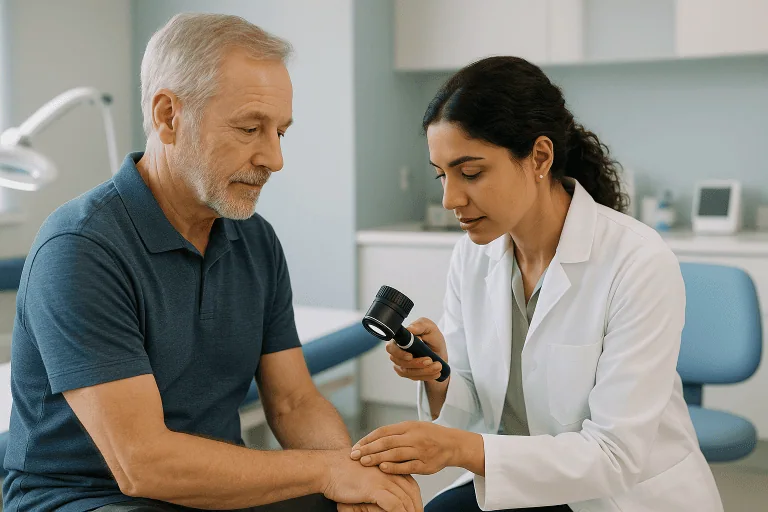
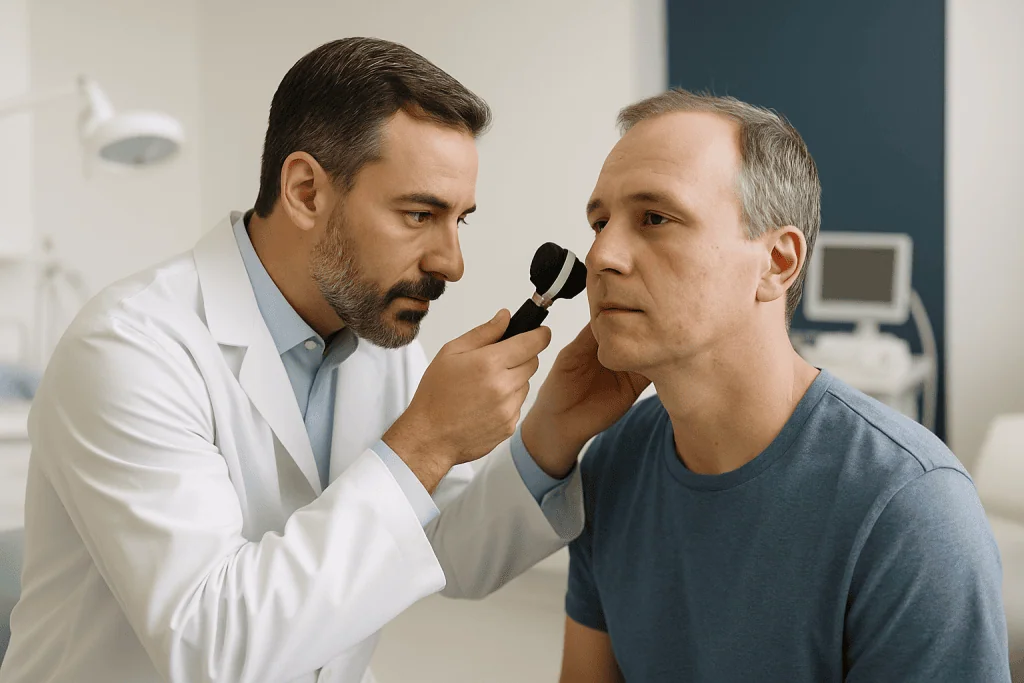
Acne diagnosis is usually straightforward and is based on a physical examination. A doctor, often a dermatologist, will look closely at the skin on the face, chest and back to identify the types of lesions present and to judge how widespread and inflamed they are. There is no single laboratory test that confirms acne; the appearance of the skin is normally enough.
During the visit, the doctor may ask questions such as:
- When the acne started and how it has changed over time.
- Whether anyone else in the family has had significant acne.
- Which skin care products, cosmetics and medications you use.
- For women, whether breakouts follow the menstrual cycle, and whether there are other signs of hormonal imbalance such as irregular periods or excess facial hair.
- What treatments have already been tried and how the skin responded.
Doctors often grade acne as mild, moderate or severe. This grading is important because it guides which acne treatment options are most appropriate. Several formal grading scales exist, but they all consider the number of lesions, the type of lesions and the areas of the body involved.
Blood tests or imaging are not needed for most people with acne. However, your doctor may order hormone blood tests or a pelvic ultrasound (a scan using sound waves) if there are signs suggesting an underlying hormonal condition such as PCOS. In rare cases where the diagnosis is uncertain, a skin swab or a small skin sample (biopsy) may be taken to rule out infection or another skin disease. Before starting certain prescription medicines, particularly oral isotretinoin, the doctor may also request baseline blood tests to check liver function and blood fats, and a pregnancy test where relevant, because these medicines require careful monitoring.
Acne treatment options
Acne treatment aims to reduce oil production, unclog pores, limit bacterial growth and calm inflammation. The right approach depends on the type and severity of acne, your age, your skin type, whether you are pregnant or planning pregnancy, and how much the acne affects your daily life. Most treatments take several weeks to show a visible effect, and improvement is often gradual rather than immediate.
Self-care and observation
For very mild acne, your doctor may suggest a simple, gentle skin care routine and a period of observation. This typically includes washing twice a day with a mild, non-abrasive cleanser, using non-comedogenic (labeled as not pore-blocking) moisturizers and cosmetics, avoiding picking or squeezing spots, and removing makeup before sleep. Sun protection is important, especially when using treatments that make the skin more sensitive to light.
Topical medications
Topical treatments are applied directly to the skin and are the usual first step for mild to moderate acne. Common options include:
- Benzoyl peroxide: reduces bacteria and helps unblock pores; it can bleach fabrics and may cause dryness.
- Topical retinoids: vitamin A-derived creams or gels (such as adapalene, tretinoin or tazarotene) that help normalize how skin cells shed and prevent new blockages. They can cause irritation at first and increase sun sensitivity.
- Topical antibiotics: such as clindamycin or erythromycin, usually combined with benzoyl peroxide to lower the risk of antibiotic resistance.
- Azelaic acid and salicylic acid: help exfoliate the skin and reduce inflammation; often used when other agents are not tolerated.
Oral medications
For moderate to severe acne, or acne that does not respond to topical treatment, your doctor may prescribe medicines taken by mouth:
- Oral antibiotics: such as doxycycline or minocycline, used for a limited period to reduce bacteria and inflammation, usually alongside a topical treatment.
- Combined oral contraceptives: for some women, certain birth control pills can help regulate hormones that drive oil production.
- Spironolactone: a medicine that blocks the effect of androgens on oil glands; it is sometimes used in adult women.
- Oral isotretinoin: a powerful vitamin A derivative reserved for severe, scarring or treatment-resistant acne. It can be very effective but carries significant risks, including serious birth defects if taken during pregnancy, and requires regular monitoring by a doctor.
Procedures
Some procedures may be offered in a dermatology clinic, usually alongside medication rather than instead of it. These include chemical peels (applying a solution that removes the outer skin layer), extraction of comedones with sterile instruments, light or laser-based therapies, and steroid injections into large, painful nodules or cysts to reduce swelling quickly. Evidence for some of these approaches is still developing, and your doctor can explain what may be suitable for you.
Treating acne scars
Once active acne is controlled, scars can be addressed if they cause concern. Options that a dermatologist may discuss include laser resurfacing, microneedling (tiny controlled punctures that stimulate collagen), chemical peels, dermal fillers for depressed scars and, less commonly, minor surgical techniques. Results vary, and several sessions are often needed. Surgery is not a treatment for active acne itself.
Living with acne and outlook
For most people, acne improves over time and often settles by the mid-twenties, although it can persist or first appear in adulthood. With consistent treatment, many people achieve good control of their symptoms, but acne tends to be a long-term condition that may need ongoing maintenance therapy, such as a topical retinoid, to prevent new breakouts. Stopping treatment early is a common reason for flares.
Patience is important. Most treatments need at least six to eight weeks before the effect can be judged, and the skin may look slightly worse in the first weeks with some products. Keeping a simple routine, using treatments exactly as prescribed and attending follow-up visits allow your doctor to adjust the plan if needed.
Acne can affect confidence, mood and social life, and these effects are real and worth discussing with a doctor. Some people find it helpful to talk with a counselor or support group, particularly if acne leads to anxiety, low mood or avoiding activities. Anyone experiencing persistent low mood while taking isotretinoin should tell their doctor promptly, as mood changes have been reported with this medicine.
Scarring is more likely with severe, inflamed acne and with picking or squeezing spots. Early treatment of moderate to severe acne is one of the main ways to reduce the risk of permanent marks. Dark spots left after spots heal (post-inflammatory hyperpigmentation) often fade slowly over months, and sun protection can help prevent them from darkening further.
Frequently asked questions
What is acne and why does it happen?
Acne is a skin condition in which hair follicles become blocked by oil and dead skin cells, leading to whiteheads, blackheads, pimples and sometimes deeper lumps. It happens mainly because of increased oil production driven by hormones, abnormal shedding of skin cells, growth of bacteria within the pore and the body’s inflammatory response. Genetics and certain medications or products can also contribute.
What are the most common acne symptoms?
The most common acne symptoms are whiteheads, blackheads and red pimples on the face, chest, shoulders or upper back, often with oily skin. In more severe cases, painful nodules and cysts form under the skin. Spots may leave temporary dark marks or, in some cases, permanent scars. Symptoms often fluctuate and can worsen around hormonal changes.
What are the main acne causes I can control?
Some acne causes, such as hormones and genetics, cannot be changed. Factors that may be within your control include using non-comedogenic skin and hair products, avoiding heavy or oily cosmetics, not picking or squeezing spots, reducing friction from helmets or straps, and reviewing medications with your doctor. Some people notice that certain foods worsen their skin, though evidence varies.
How is acne diagnosis made by a doctor?
Acne diagnosis is usually made by examining the skin. A doctor identifies the types of spots, estimates how many there are and where, and grades the acne as mild, moderate or severe. No routine tests are needed for most people. Blood tests or an ultrasound may be suggested only if a hormonal condition is suspected, and certain blood tests are done before some prescription treatments.
What acne treatment options work for adults?
Adults have many of the same acne treatment options as teenagers, including topical retinoids, benzoyl peroxide, azelaic acid and topical or oral antibiotics. In adult women with hormonally patterned acne, doctors may consider combined oral contraceptives or spironolactone. Severe or scarring acne may be treated with isotretinoin under medical supervision. Adult skin can be more sensitive, so gentle formulations are often preferred.
Can acne be cured permanently?
There is no guaranteed permanent cure for acne, but it can usually be controlled well, and it often settles naturally with age. Some people experience long-term clearance after a course of isotretinoin, while others need ongoing maintenance treatment to prevent recurrence. Your doctor can help set realistic expectations based on your type of acne and how it has responded so far.
Does diet or hygiene cause acne?
Acne is not caused by dirty skin, and aggressive washing can make it worse. Research on diet is ongoing; some studies suggest that high-glycemic foods (those that raise blood sugar quickly) and certain dairy products may worsen acne in some individuals, but no single food has been shown to cause acne in everyone. A balanced diet and gentle skin care are reasonable general measures.
When to see a doctor
Many people manage mild acne with over-the-counter products and simple skin care. However, it is sensible to see a doctor or dermatologist if acne is moderate to severe, is painful, is leaving scars or dark marks, has not improved after several weeks of consistent self-care, or is affecting your mood, confidence or daily activities. Early medical treatment can lower the risk of permanent scarring.
Seek prompt medical attention if you notice any of the following warning signs:
- A spot or area of skin that becomes rapidly more red, hot, swollen or extremely painful, which could indicate a spreading skin infection.
- Fever, chills or feeling generally unwell together with inflamed skin lesions.
- Large, deep, painful nodules or cysts that are increasing in number or size.
- Sudden severe acne appearing in adulthood, especially with irregular periods, excess facial or body hair or hair thinning, which may point to a hormonal condition.
- Acne that started or worsened soon after beginning a new medication.
- Any allergic reaction to a skin product or medicine, such as widespread rash, swelling of the face or lips, or difficulty breathing; this needs emergency care.
- Thoughts of self-harm, or a marked change in mood, particularly while taking isotretinoin or other prescription treatments.
A doctor can confirm whether your symptoms are due to acne or another skin condition and discuss which acne treatment options are appropriate for your situation.
Medically reviewed by the Acıbadem International Medical Board September 9, 2026
See our medical review board →
Update history
- PublishedSeptember 9, 2026
- Medical review approvedSeptember 9, 2026
- Last content updateSeptember 9, 2026