Barrett Esophagus
Learn what Barrett esophagus is, its possible symptoms and causes, how doctors diagnose it with endoscopy and biopsy, and the treatment options available.
Quick answer
Barrett esophagus is a condition in which the lining of the lower esophagus is replaced by intestinal-type cells, usually after years of acid reflux. It rarely causes symptoms of its own and is confirmed by endoscopy with biopsy. It is not cancer but slightly raises cancer risk, so doctors monitor it and treat any dysplasia.
What is Barrett esophagus?
Barrett esophagus is a condition in which the lining of the lower esophagus changes. The esophagus is the muscular tube that carries food and liquid from the mouth to the stomach. Normally it is lined with flat cells, similar to the skin inside the mouth. In Barrett esophagus, these cells are replaced by a different type of cell that looks more like the lining of the intestine. Doctors call this change intestinal metaplasia, which simply means one type of tissue has turned into another.
The change is thought to happen as a response to long-term irritation from stomach acid. In most people, the condition is linked to gastroesophageal reflux disease (GERD), a chronic condition in which stomach contents flow backward into the esophagus. Barrett esophagus itself is not cancer. However, it is considered a precancerous condition, meaning the altered cells carry a small increased risk of developing into esophageal adenocarcinoma, a type of cancer of the esophagus. For most people with Barrett esophagus, this progression never happens, but the risk is the main reason doctors monitor the condition.
Barrett esophagus is more often diagnosed in adults over the age of 50, in men more than in women, and in people with a long history of heartburn. It is uncommon in children. Because many people have no obvious symptoms, the condition is often discovered during an examination performed for another reason. In many hospital groups, including Acibadem, the condition is evaluated and followed within the gastroenterology department, which specializes in disorders of the digestive tract.
Barrett esophagus symptoms
Barrett esophagus does not usually cause symptoms of its own. The changed cells in the esophagus do not hurt or produce any sensation. When people do have symptoms, they are almost always the symptoms of the underlying acid reflux rather than of the Barrett tissue itself. Some people with Barrett esophagus have very few reflux symptoms, possibly because the altered lining is less sensitive to acid.
Symptoms commonly reported by people who are later found to have Barrett esophagus include:
- Heartburn: a burning feeling behind the breastbone, often after meals or when lying down
- Regurgitation: sour or bitter fluid, or partly digested food, coming back up into the throat or mouth
- Difficulty swallowing: a feeling that food is sticking on its way down, known medically as dysphagia
- Chest discomfort: a pressure or ache in the chest that may be mistaken for heart-related pain
- Chronic cough or hoarseness: caused by acid irritating the throat and voice box
- Sore throat or a feeling of a lump in the throat
- Nausea, particularly after eating
- Bad breath or an unpleasant taste in the mouth
Doctors describe Barrett esophagus in stages based on what the cells look like under a microscope, not on symptoms. The stages are Barrett esophagus without dysplasia (no abnormal-looking cells), with low-grade dysplasia (mildly abnormal cells), and with high-grade dysplasia (more markedly abnormal cells that are closer to becoming cancer). Dysplasia is the medical word for cells that have started to grow in a disordered way. Importantly, these stages generally do not produce different symptoms. A person with high-grade dysplasia may feel exactly the same as a person with no dysplasia at all, which is why regular examination is so important once the condition is identified.
New or worsening symptoms such as painful swallowing, unintentional weight loss, vomiting blood, or black stools are not typical of uncomplicated Barrett esophagus and should always be evaluated promptly, as they may signal a complication.
Causes and risk factors
The exact reason some people develop Barrett esophagus and others do not is not fully understood. The most widely accepted explanation is that repeated exposure to stomach acid, and possibly bile (a digestive fluid from the liver), damages the normal lining of the lower esophagus. As the tissue tries to heal, it may grow back as the more acid-resistant intestinal-type lining. Over years, this repair process can lead to the changes seen in Barrett esophagus.
Several factors are associated with a higher likelihood of developing the condition:
- Long-standing GERD: chronic acid reflux, especially symptoms lasting many years, is the strongest known association
- Age: the condition is more commonly diagnosed after age 50
- Male sex: men are affected more often than women
- White ethnicity: the condition appears to be diagnosed more frequently in people of European descent
- Central obesity: excess weight around the abdomen increases pressure on the stomach and may promote reflux
- Smoking: current or past tobacco use is linked to both reflux and Barrett esophagus
- Hiatal hernia: a condition in which part of the stomach pushes up through the diaphragm, which can worsen reflux
- Family history: having a close relative with Barrett esophagus or esophageal cancer may raise the risk
It is worth noting that not everyone with severe reflux develops Barrett esophagus, and some people with the condition report little or no heartburn. This suggests that individual factors, possibly including genetics, also play a role. Alcohol has not been clearly shown to cause Barrett esophagus, although heavy alcohol use is linked to other esophageal problems.
Barrett esophagus diagnosis
Barrett esophagus cannot be diagnosed from symptoms alone, and it does not show up on standard X-rays or blood tests. Confirming the diagnosis requires two steps: seeing the lining of the esophagus directly and examining a sample of the tissue under a microscope.
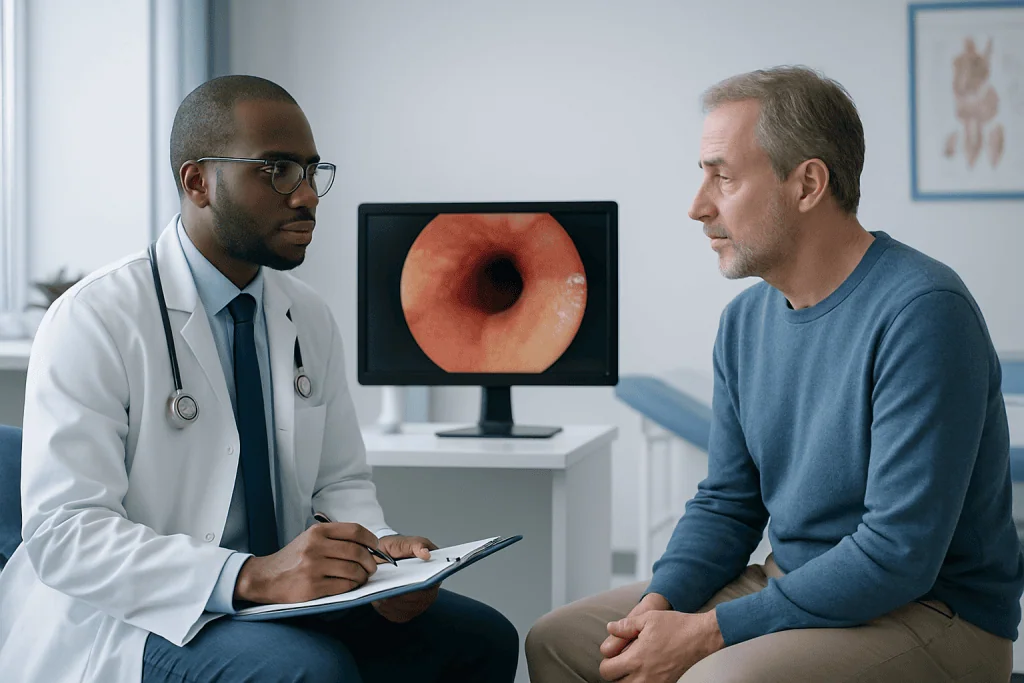
Upper endoscopy. The main test is an upper endoscopy, also called an esophagogastroduodenoscopy or EGD. A gastroenterologist, a doctor specializing in the digestive system, passes a thin, flexible tube with a light and camera through the mouth and down into the esophagus and stomach. The procedure is usually done with sedation and typically takes only a short time. Through the camera, the doctor looks for areas where the normally pale pink lining has been replaced by salmon-colored, velvety tissue extending upward from the junction with the stomach. The doctor also measures how far this tissue extends, which helps classify the condition as short-segment or long-segment Barrett esophagus.
Biopsy. Seeing the changed tissue is not enough on its own. During the endoscopy, the doctor takes small tissue samples, called biopsies, from several points along the affected area. A pathologist, a doctor who examines tissue in a laboratory, checks these samples for the intestinal-type cells that define Barrett esophagus and for any signs of dysplasia. The biopsy result is what confirms the diagnosis and determines the stage.
Additional techniques. Some centers use advanced imaging during endoscopy, such as high-definition cameras, special light filters, or dyes sprayed on the lining, to highlight abnormal areas and guide where biopsies are taken. If dysplasia is found, doctors often recommend a repeat endoscopy and review of the biopsy slides by a second pathologist, because distinguishing degrees of dysplasia can be difficult and the finding has important consequences for treatment.
Doctors generally do not recommend endoscopy for everyone with heartburn. Screening is more often considered for people with chronic reflux who also have several of the risk factors listed above. Your doctor can advise whether an endoscopy is appropriate in your situation.
Barrett esophagus treatment options
There is currently no medication that reliably reverses Barrett esophagus once it has developed. Treatment therefore focuses on three goals: controlling acid reflux, monitoring the tissue for changes, and, when dysplasia is present, removing or destroying the abnormal cells before cancer can develop. The approach depends largely on whether dysplasia has been found and how advanced it is.
Surveillance (regular monitoring). For Barrett esophagus without dysplasia, the usual recommendation is periodic endoscopy with biopsies to watch for any progression. The interval between examinations is set by your doctor and often ranges from a few years for people with no dysplasia to much shorter intervals for people with dysplasia. Surveillance does not treat the condition, but it aims to detect changes at an early, more treatable stage.
Medication. Most people with Barrett esophagus are treated with acid-reducing medicines, most commonly proton pump inhibitors (PPIs). These drugs lower the amount of acid the stomach produces, which relieves reflux symptoms and helps protect the esophagus from further injury. Whether PPIs reduce the risk of progression to cancer is still being studied, but they are widely used because they control symptoms and allow the lining to heal. Antacids and other reflux medicines may also be used. Any long-term medication should be reviewed regularly with your doctor.
Lifestyle measures. Alongside medication, doctors often recommend steps to reduce reflux: maintaining a healthy weight, avoiding large meals late in the evening, raising the head of the bed, stopping smoking, and limiting foods or drinks that trigger symptoms. These measures do not remove Barrett tissue but may reduce ongoing irritation.
Endoscopic therapy. When low-grade or high-grade dysplasia is confirmed, treatment through the endoscope is usually recommended. The main techniques include:
- Radiofrequency ablation (RFA): heat energy delivered through a special device is used to destroy the abnormal lining so that normal tissue can grow back in its place. It is often performed in several sessions.
- Endoscopic mucosal resection (EMR): visible raised or irregular areas are cut away through the endoscope, allowing the tissue to be examined in full and removing early cancer if present.
- Cryotherapy: extreme cold is applied to freeze and destroy the abnormal cells; this is used in some centers as an alternative to RFA.
These procedures are typically done as outpatient treatments under sedation. Common short-term side effects include chest discomfort and difficulty swallowing for a few days. A less common complication is narrowing of the esophagus, called a stricture, which may need to be stretched in a later procedure. After successful endoscopic therapy, continued surveillance is still needed because Barrett tissue can return.
Surgery. Removing part of the esophagus, an operation called esophagectomy, is a major surgery generally reserved for cases where cancer has developed and has grown beyond the reach of endoscopic treatment, or where endoscopic therapy has not succeeded. It is rarely needed for Barrett esophagus alone. Separately, some people with severe reflux may be offered anti-reflux surgery, such as fundoplication, in which the top of the stomach is wrapped around the lower esophagus to strengthen the valve. This surgery can control reflux but has not been proven to make Barrett tissue disappear or to eliminate the need for surveillance.
Living with Barrett esophagus and outlook
Being told you have a precancerous condition can be worrying, and it is natural to have questions about what the future holds. It may help to know that the majority of people with Barrett esophagus never develop esophageal cancer. The yearly risk of progression for people without dysplasia is considered low, and regular surveillance is designed to catch changes early, when endoscopic treatment is often effective. For people with dysplasia, the risk is higher, which is why more active treatment is recommended.
Day-to-day life with Barrett esophagus usually centers on managing reflux and keeping up with scheduled endoscopies. Many people find that consistent use of prescribed acid-reducing medicine, attention to weight, and avoiding personal trigger foods keep symptoms well controlled. Stopping smoking is strongly encouraged, as it is linked to both worsening reflux and cancer risk. It is also important to tell your doctor about any change in symptoms between appointments rather than waiting for the next scheduled visit.
Because Barrett esophagus is a long-term condition, follow-up typically continues for many years. Some people find it helpful to keep a record of their endoscopy dates and results. If anxiety about the diagnosis becomes distressing, discussing this with your care team can be useful; understanding the actual level of risk in your specific case is often reassuring. Outcomes vary from person to person, and no one can promise a particular result, but with appropriate monitoring the condition can usually be managed over the long term.
Frequently asked questions
What is Barrett esophagus in simple terms?
Barrett esophagus is a change in the lining of the lower esophagus, the tube that carries food to the stomach. After years of exposure to stomach acid, the normal cells are replaced by cells resembling those in the intestine. It is not cancer, but it slightly increases the chance of esophageal cancer developing later, so doctors monitor it with regular examinations.
What are the most common Barrett esophagus symptoms?
Barrett esophagus itself usually causes no symptoms. Most people notice symptoms of acid reflux instead, such as heartburn, regurgitation of sour fluid, chest discomfort, or a feeling of food sticking when swallowing. Some people with the condition have no reflux symptoms at all, which is one reason it is sometimes found unexpectedly during an endoscopy performed for another reason.
What causes Barrett esophagus?
The main cause is believed to be long-term acid reflux, in which stomach contents repeatedly flow back into the esophagus and damage its lining. Over time the tissue may heal into a more acid-resistant, intestinal-type lining. Risk factors include being older than 50, being male, central obesity, smoking, a hiatal hernia, and a family history of the condition, but not everyone with reflux develops it.
How is Barrett esophagus diagnosis confirmed?
Diagnosis requires an upper endoscopy, in which a doctor passes a thin camera through the mouth to view the esophagus, combined with biopsies, small tissue samples that a pathologist examines under a microscope. The biopsy confirms the presence of the changed cells and shows whether any dysplasia, meaning abnormal cell growth, is present. Symptoms, blood tests, and X-rays cannot confirm the diagnosis.
Can Barrett esophagus be cured or reversed?
Medication alone does not usually make Barrett tissue disappear, although acid-reducing drugs are important for controlling reflux. When dysplasia is present, endoscopic treatments such as radiofrequency ablation can destroy the abnormal lining and allow normal tissue to grow back, and in many cases this is successful. However, the tissue can return, so continued surveillance is generally recommended even after treatment.
What are the Barrett esophagus treatment options if there is no dysplasia?
When no dysplasia is found, treatment usually consists of acid-reducing medication, lifestyle changes to limit reflux, and periodic surveillance endoscopy to check for any change. Procedures to remove the tissue are not routinely recommended at this stage because the risk of progression is considered low and the procedures carry their own small risks. Your doctor will set an appropriate follow-up interval.
Does Barrett esophagus always lead to cancer?
No. Most people with Barrett esophagus never develop esophageal cancer. The condition increases the risk compared with the general population, but the yearly chance of progression is considered small, particularly when no dysplasia is present. Regular monitoring is intended to identify any early changes when they are most treatable, and treatment of dysplasia is aimed at preventing cancer from developing.
When to see a doctor
If you have had frequent heartburn or acid reflux for several years, especially if you are over 50, male, overweight, a smoker, or have a family history of esophageal problems, it is reasonable to discuss with your doctor whether an endoscopy is appropriate. If you have already been diagnosed with Barrett esophagus, keeping to your recommended surveillance schedule is important even when you feel well, since changes in the tissue do not cause symptoms.
Seek medical attention promptly if you experience any of the following warning signs, as they may indicate a complication that needs urgent evaluation:
- Difficulty or pain when swallowing, particularly if it is new or getting worse
- Food becoming stuck in the esophagus
- Unintentional weight loss
- Vomiting blood or material that looks like coffee grounds
- Black, tarry stools, which can indicate bleeding in the digestive tract
- Persistent vomiting or inability to keep food down
- Severe chest pain, which should always be assessed urgently because it may also have a heart-related cause
- Persistent hoarseness, cough, or a choking sensation that does not improve
These symptoms do not necessarily mean cancer has developed, but they should never be ignored. A doctor can determine whether further testing is needed and guide the next steps in your care.
Medically reviewed by the Acıbadem International Medical Board September 9, 2026
See our medical review board →
Update history
- PublishedSeptember 9, 2026
- Medical review approvedSeptember 9, 2026
- Last content updateSeptember 9, 2026