Quick answer
Breast cancer is a disease in which abnormal cells in the breast grow uncontrollably and may spread if not diagnosed and treated early. At Acibadem in Turkey, evaluation typically includes imaging and biopsy, and treatment is planned by a multidisciplinary team using options such as surgery, chemotherapy, radiotherapy, hormone therapy, and targeted therapies according to the cancer type and stage.
What is breast cancer?
Breast cancer is a disease in which cells in the breast begin to grow in an uncontrolled way and form a tumor, which is an abnormal mass of tissue. In most cases, the cancer starts in the milk ducts (the small tubes that carry milk to the nipple) or in the lobules (the glands that produce milk). When these abnormal cells stay in their original location, doctors call the condition non-invasive or “in situ” breast cancer. When the cells break through the surrounding tissue, the cancer is described as invasive, and it may spread to nearby lymph nodes (small bean-shaped structures that filter fluid in the body) or to other organs, a process called metastasis.
Understanding what is breast cancer begins with knowing who it affects. It is one of the most common cancers in women worldwide, and the risk increases with age, particularly after 50. Men can also develop breast cancer, although this is far less common. Because breast tissue is present in everyone, no adult is entirely without risk, which is why awareness of changes in the breast matters for all patients.
There are several types of breast cancer. The most common are invasive ductal carcinoma, which starts in the milk ducts, and invasive lobular carcinoma, which starts in the lobules. Some tumors are described by their biological features, such as hormone receptor–positive cancers (which grow in response to the hormones estrogen or progesterone), HER2-positive cancers (which have too much of a protein called HER2 that encourages growth), and triple-negative cancers (which lack all three of these markers). These distinctions matter because they guide breast cancer treatment decisions.
Symptoms of breast cancer
Breast cancer symptoms vary from person to person, and in the early stages many people have no symptoms at all. This is one reason screening programs, such as regular mammograms (X-ray images of the breast), are recommended for many age groups. When symptoms do appear, the most common is a lump or thickened area in the breast or underarm that feels different from the surrounding tissue.
Common breast cancer symptoms include:
- A new lump or mass in the breast or armpit, which is often painless but may sometimes be tender
- Change in breast size or shape, including swelling of all or part of one breast
- Skin changes, such as dimpling, puckering, redness, or a texture that resembles the skin of an orange
- Nipple changes, including a nipple that turns inward (inversion), scaling, or crusting
- Nipple discharge, especially if it is bloody or occurs without squeezing
- Persistent pain in one area of the breast that does not go away with the menstrual cycle
- Swollen lymph nodes under the arm or around the collarbone
Symptoms can differ depending on the stage and type of the disease. Early-stage breast cancer is often detected on imaging before any lump can be felt. In more advanced stages, the tumor may be larger, the skin over the breast may change visibly, and lymph nodes may become enlarged. A less common but aggressive form called inflammatory breast cancer may not cause a distinct lump at all; instead, the breast becomes red, swollen, and warm over a short period of time. If breast cancer has spread to other parts of the body, symptoms may include bone pain, shortness of breath, unexplained weight loss, or persistent fatigue, depending on where the cancer has traveled.
It is important to remember that most breast lumps are not cancer. Cysts (fluid-filled sacs) and fibroadenomas (benign, non-cancerous growths) are common. Even so, any new or persistent change should be evaluated by a doctor, because only medical testing can determine the cause.
Causes and risk factors
The exact breast cancer causes are not fully understood. The disease develops when changes, called mutations, occur in the DNA of breast cells and allow them to grow uncontrollably. Some of these mutations are inherited, but most happen during a person’s lifetime for reasons that are often unclear. What researchers have established is a set of risk factors, which are characteristics that make the disease more likely. Having one or more risk factors does not mean a person will develop breast cancer, and many people diagnosed with the disease have no obvious risk factors at all.
Recognized risk factors include:
- Being female: the large majority of cases occur in women
- Increasing age: risk rises steadily as people get older
- Family history: having a mother, sister, or daughter with breast cancer increases risk, especially if the relative was diagnosed at a young age
- Inherited gene mutations: changes in genes such as BRCA1 and BRCA2 significantly raise the lifetime risk of breast and ovarian cancer
- Personal history: a previous breast cancer or certain non-cancerous breast conditions can raise risk
- Hormonal factors: starting menstruation early, entering menopause late, having a first child after age 30, or never giving birth are all associated with modestly higher risk
- Hormone therapy: long-term use of combined hormone replacement therapy after menopause has been linked to increased risk
- Radiation exposure: radiation treatment to the chest at a young age raises risk later in life
- Lifestyle factors: alcohol consumption, obesity after menopause, and physical inactivity are associated with higher risk
- Dense breast tissue: breasts with more glandular than fatty tissue carry a somewhat higher risk and can also make mammograms harder to read
Some risk factors, such as age and genetics, cannot be changed. Others, such as alcohol use, weight, and exercise, can be influenced by lifestyle choices. Maintaining a healthy weight, limiting alcohol, and staying physically active may reduce risk, although no lifestyle change can eliminate it entirely.
Diagnosis
Breast cancer diagnosis usually follows a stepwise process. It often begins when a person or their doctor notices a change in the breast, or when a screening mammogram shows an abnormal area. From there, doctors use a combination of imaging, tissue sampling, and laboratory tests to confirm whether cancer is present and, if so, what type it is and how far it has spread.
Common steps in the diagnostic process include:
- Clinical breast examination: the doctor examines the breasts and lymph nodes for lumps or other changes.
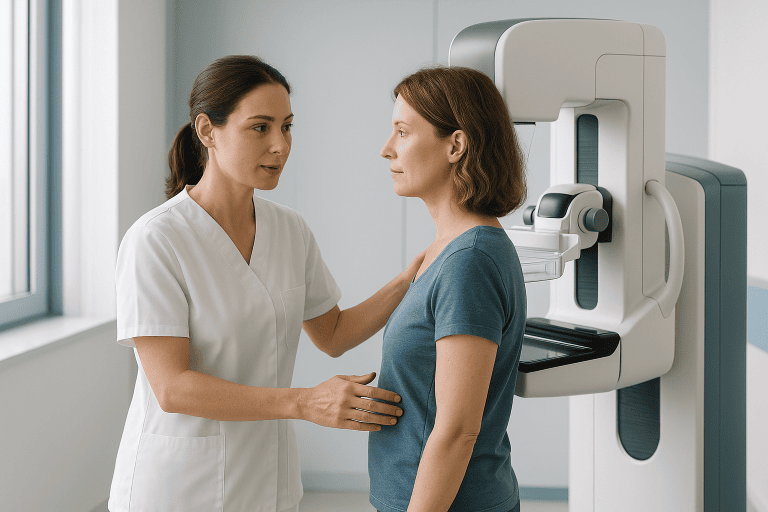
- Mammography: a low-dose X-ray of the breast that can reveal masses or tiny calcium deposits (microcalcifications) that may signal cancer. A diagnostic mammogram provides more detailed views than a routine screening one.
- Breast ultrasound: a scan that uses sound waves to determine whether a lump is solid or fluid-filled, and to guide biopsies.
- Breast MRI: magnetic resonance imaging, which uses magnets and radio waves to create detailed pictures, may be used in people at high risk or when other imaging is unclear.
- Biopsy: the only way to confirm breast cancer. A doctor removes a small sample of tissue, usually with a needle, and a pathologist (a doctor who examines tissue under a microscope) determines whether cancer cells are present.
If cancer is confirmed, the tissue is tested further to identify its features, including hormone receptor status and HER2 status. These results shape the treatment plan. Doctors also assign a stage, from 0 (non-invasive) to IV (spread to distant organs), based on the tumor’s size, whether lymph nodes are involved, and whether the cancer has spread. Staging may involve additional imaging, such as CT scans, bone scans, or PET-CT imaging, which combines two scanning technologies to show both the structure of the body and areas of unusual metabolic activity that can indicate cancer spread.
Blood tests do not diagnose breast cancer on their own, but they help doctors assess general health and organ function before treatment. In some cases, genetic testing for inherited mutations may be recommended, particularly for younger patients or those with a strong family history.
Treatment options
Breast cancer treatment is individualized. The plan depends on the type and stage of the cancer, its biological features, the patient’s age and overall health, and personal preferences. Care is typically coordinated by a multidisciplinary team, which means specialists in surgery, medical oncology (drug-based cancer treatment), radiation oncology, radiology, and pathology plan treatment together. At many centers, including the Medical Oncology Department at Acibadem, this team-based approach is the standard model for managing the disease. A general overview of how the condition is managed is also available on the breast cancer treatment page.
Surgery
Surgery is a cornerstone of treatment for most early-stage breast cancers. The two main approaches are breast-conserving surgery (also called lumpectomy), in which only the tumor and a margin of healthy tissue are removed, and mastectomy, in which the entire breast is removed. In many cases, breast-conserving surgery followed by radiation therapy is as effective as mastectomy for suitable patients. Surgeons often also remove one or more lymph nodes from the armpit, using a technique called sentinel lymph node biopsy, to check whether the cancer has spread. Breast reconstruction, which rebuilds the shape of the breast, may be performed at the same time as mastectomy or later.
Radiation therapy
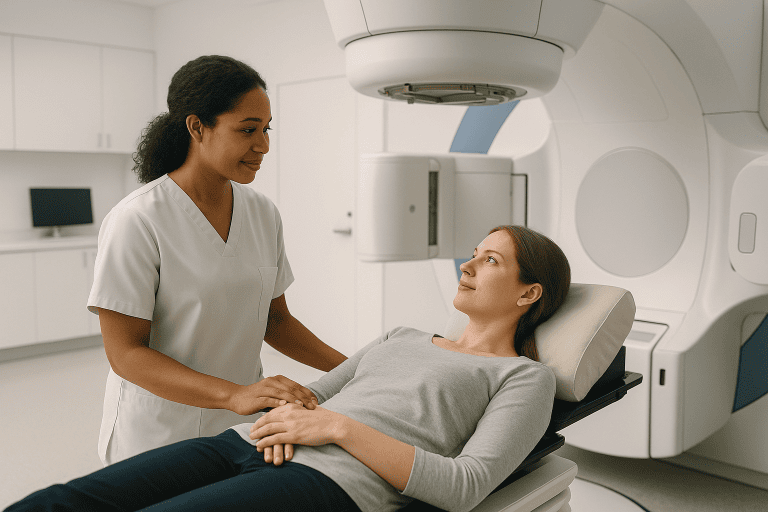
Radiation therapy uses high-energy beams to destroy cancer cells that may remain after surgery. It is commonly recommended after breast-conserving surgery and, in some situations, after mastectomy. Side effects, such as skin irritation and fatigue, are usually temporary, although your doctor will discuss the risks in your specific case.
Medication-based treatments
Several types of drug therapy are used, alone or in combination:
- Chemotherapy: drugs that kill fast-growing cells throughout the body. It may be given before surgery to shrink a tumor (neoadjuvant therapy) or after surgery to lower the risk of recurrence (adjuvant therapy).
- Hormone (endocrine) therapy: for hormone receptor–positive cancers, medications block the effect of estrogen or reduce its production. This treatment is often continued for several years after surgery.
- Targeted therapy: drugs designed to attack specific features of cancer cells, such as HER2-targeted medications for HER2-positive tumors.
- Immunotherapy: treatments that help the immune system recognize and attack cancer cells, used in selected cases such as certain triple-negative breast cancers.
Active surveillance and supportive care
For certain very low-risk, non-invasive conditions, doctors may in some cases discuss careful monitoring rather than immediate intervention, although this is not standard for invasive breast cancer. For advanced disease that has spread, treatment focuses on controlling the cancer, relieving symptoms, and preserving quality of life for as long as possible. Palliative care, which is specialized support for symptoms and comfort, can be provided alongside active treatment at any stage.
Throughout treatment, imaging is used to monitor how well the cancer is responding. Scans such as PET-CT imaging may help doctors assess whether a tumor is shrinking or whether disease has spread, particularly in more advanced cases.
Living with breast cancer and outlook
The outlook for breast cancer varies widely and depends on the stage at diagnosis, the biological type of the tumor, how well it responds to treatment, and the patient’s overall health. In general, cancers found at an early stage, before they have spread beyond the breast, are associated with better outcomes, and many people treated for early-stage breast cancer go on to live long lives. Cancers diagnosed at a later stage are harder to treat, although modern therapies can often control the disease for extended periods. No doctor can promise a specific outcome for an individual patient, and honest conversations with the care team are the best way to understand what a diagnosis means in your situation.
Life during and after treatment brings practical and emotional challenges. Fatigue, changes in body image, menopausal symptoms from hormone therapy, and anxiety about recurrence are all common. Many patients find that counseling, support groups, physical activity as approved by their doctor, and open communication with family help them cope. After treatment ends, regular follow-up visits and imaging are important, because they allow doctors to detect any recurrence early and to manage long-term side effects of therapy.
Survivors are usually advised to maintain a healthy lifestyle, attend all scheduled follow-up appointments, continue any prescribed long-term medications such as hormone therapy, and report new symptoms promptly. Rehabilitation services, including physical therapy for arm swelling (lymphedema) after lymph node surgery, can improve daily functioning.
Frequently asked questions
What is breast cancer in simple terms?
Breast cancer is a disease in which cells in the breast grow abnormally and form a tumor. It most often begins in the milk ducts or milk-producing glands. If left untreated, the abnormal cells can spread to lymph nodes and other parts of the body. It is one of the most common cancers in women, although men can develop it too.
Can breast cancer be cured?
Many breast cancers, particularly those found at an early stage, can be treated successfully, and a large number of patients remain free of the disease long after treatment. Doctors are often cautious with the word “cure” because a small risk of recurrence can persist for years, which is why long-term follow-up is recommended. Advanced breast cancer that has spread to other organs is generally not considered curable, but it can often be controlled for significant periods with ongoing treatment.
How serious is a breast cancer diagnosis?
The seriousness depends largely on the stage and type of the cancer. Early-stage, slow-growing tumors generally have a favorable outlook with appropriate treatment, while later-stage or aggressive types are more challenging. Only your medical team, after reviewing your imaging, biopsy results, and staging tests, can give you a realistic picture of what your diagnosis means.
What are the first signs of breast cancer?
The most common first sign is a new lump in the breast or underarm, which is often painless. Other early breast cancer symptoms can include changes in breast size or shape, skin dimpling, nipple discharge, or a nipple that turns inward. Some cancers cause no symptoms at all in the early stages and are found only on screening mammograms, which is why routine screening is important for many age groups.
What causes breast cancer?
Breast cancer develops when genetic changes in breast cells allow them to grow uncontrollably, but in most cases the exact trigger is unknown. Known risk factors include increasing age, family history, inherited mutations such as BRCA1 and BRCA2, hormonal factors, alcohol use, and obesity after menopause. Many people who develop breast cancer have no identifiable risk factors, and having risk factors does not mean the disease is inevitable.
How long does breast cancer treatment take?
Treatment length varies considerably. Surgery and recovery may take weeks, chemotherapy is often given over several months, and radiation therapy typically involves daily sessions for a number of weeks. Hormone therapy, when recommended, is usually taken for several years. Your care team will outline a personalized timeline based on your treatment plan.
Does a breast lump always mean cancer?
No. Most breast lumps are benign, meaning non-cancerous, and are caused by conditions such as cysts or fibroadenomas. However, there is no reliable way to tell the difference by touch alone, so any new or persistent lump should be examined by a doctor and evaluated with imaging and, if needed, a biopsy.
When to see a doctor
Make an appointment with a doctor promptly if you notice any persistent change in your breasts, even if you have recently had a normal mammogram. Early evaluation gives the best chance of detecting breast cancer at a treatable stage. Seek medical attention if you experience any of the following warning signs:
- A new lump or thickening in the breast or armpit that does not go away after your next menstrual cycle
- Bloody or spontaneous nipple discharge from one breast
- A nipple that has newly turned inward or developed scaling or crusting
- Skin changes on the breast, such as dimpling, puckering, redness, or an orange-peel texture
- Rapid swelling, warmth, or redness of one breast, which may suggest inflammatory breast cancer and needs urgent assessment
- A noticeable change in the size or shape of one breast
- Persistent, unexplained pain in one area of the breast
- Swollen lymph nodes under the arm or near the collarbone
If you have already been diagnosed with breast cancer and develop new symptoms such as bone pain, persistent headaches, shortness of breath, or unexplained weight loss, tell your care team without delay, as these may require further evaluation. Remember that most breast changes turn out to be benign, but only a medical assessment can determine the cause, and acting early is always the safest course.
Patient Guides for This Condition
Medically reviewed by the Acıbadem International Medical Board September 2, 2026
See our medical review board →
Update history
- PublishedJune 14, 2026
- Medical review approvedSeptember 2, 2026
- Last content updateSeptember 2, 2026