Childhood Brain Tumor
Childhood Brain Tumor explained: signs, causes, diagnosis, treatment options, recovery support, and when families should seek medical care.
Quick answer
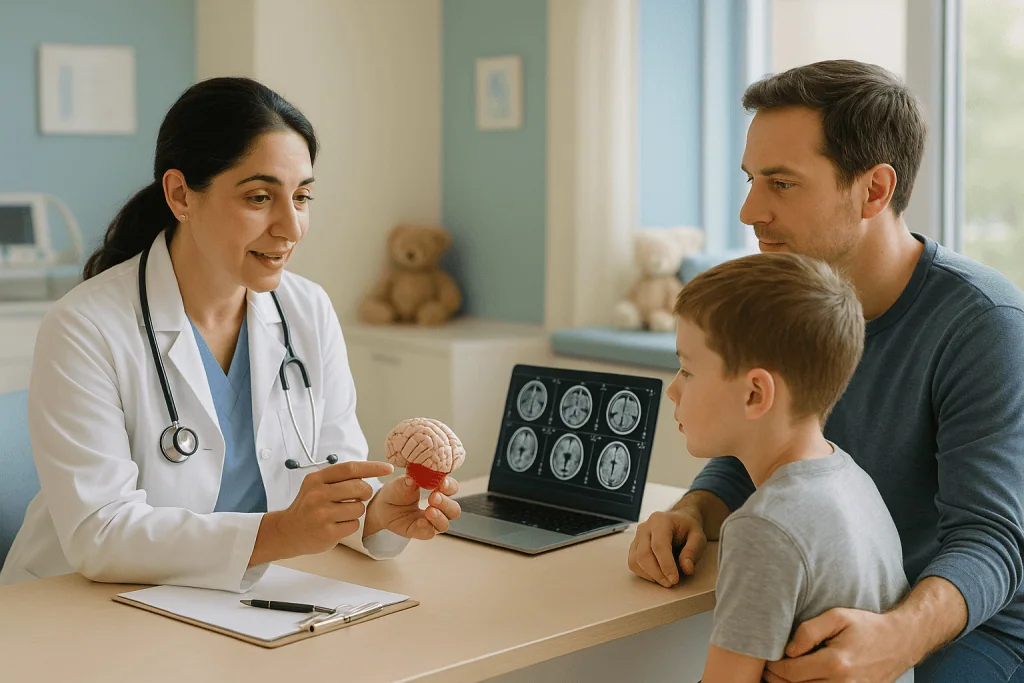
A childhood brain tumor is an abnormal growth in a child’s brain or nearby tissues that can affect movement, behavior, vision, learning, or other vital functions depending on its location and type. In Turkey, evaluation and treatment at Acibadem typically involve pediatric neurosurgery, imaging, pathology, and pediatric oncology, with care planned around options such as surgery, chemotherapy, radiation therapy, and…
A Childhood Brain Tumor is an abnormal growth of cells in or near a child’s brain, which may be benign or malignant and can affect movement, vision, learning, hormones, or other body functions. Early specialist evaluation helps identify the tumor type and choose the safest, most effective treatment approach for the child.
Overview
A Childhood Brain Tumor is an abnormal mass of cells that develops in the brain or in nearby structures such as the brainstem, cerebellum, pituitary region, optic pathways, or the fluid-filled spaces of the brain. Brain tumors in children can be benign, meaning they do not invade nearby tissue in the same way as cancer, or malignant, meaning they can grow more aggressively. Even a benign tumor can cause important symptoms if it presses on sensitive brain areas or blocks normal fluid flow.
Childhood brain tumors are not one single disease. They include many tumor types, and each behaves differently. Some grow slowly and may be monitored or treated with surgery alone, while others need a combination of treatments. The tumor’s location is often as important as its name because different brain areas control balance, speech, vision, hormones, breathing, movement, behavior, and learning.
Parents and caregivers may hear terms such as pediatric brain tumor, brain cancer in children, central nervous system tumor, or intracranial tumor. These terms can overlap, but a specialist will use imaging, pathology, and molecular testing when needed to define the exact diagnosis. This detailed classification helps doctors plan care more precisely and avoid unnecessary treatment when a less intensive approach is safe.
Symptoms
Childhood brain tumor symptoms vary widely. Some children have clear neurological changes, while others have subtle symptoms that develop gradually. The signs depend on the child’s age, the tumor’s location, whether it affects brain fluid circulation, and whether it irritates or compresses nearby nerves or brain tissue.
Possible symptoms of a brain tumor in children include persistent or worsening headaches, repeated vomiting, nausea that is worse in the morning, balance problems, clumsiness, changes in walking, new vision problems, double vision, abnormal eye movements, seizures, weakness on one side of the body, speech difficulties, hearing changes, or swallowing problems. Infants may show poor feeding, unusual sleepiness, irritability, delayed development, or a bulging soft spot on the head.
Other symptoms can involve school performance, mood, energy, or hormones. A child may become unusually tired, have changes in personality, lose previously learned skills, grow more slowly than expected, enter puberty too early or too late, or have excessive thirst and urination. These symptoms can have many causes, and most children with headaches or vomiting do not have a brain tumor; however, persistent, progressive, or unusual symptoms should be assessed by a qualified doctor.
Causes & Risk Factors
In most children, the exact cause of a childhood brain tumor is not known. Brain tumors develop when cells acquire changes that allow them to grow in an uncontrolled way. These changes usually happen within the tumor cells themselves and are not caused by anything the child or family did. Parents should be reassured that common childhood activities, diet, minor head injuries, or normal use of digital devices have not been proven to cause pediatric brain tumors.
A small number of childhood brain tumors are linked to inherited genetic conditions. These may include syndromes that increase the risk of tumors in the brain or other organs. A family history of certain tumor syndromes, multiple tumors, unusual skin findings, or tumors occurring at a very young age may prompt the medical team to recommend genetic counseling or genetic testing.
Previous exposure to therapeutic radiation to the head is a recognized risk factor, although this applies to only a minority of children. Doctors carefully balance the benefits and risks whenever radiation is used in childhood. Other possible risk factors are still being studied, but for most families, there is no identifiable preventable cause.
Risk factors do not mean a child will develop a tumor, and absence of risk factors does not rule one out. The most important step is not to search for blame, but to obtain a clear diagnosis and an individualized care plan from pediatric neurology, neurosurgery, oncology, radiology, pathology, rehabilitation, and other relevant specialists.
Diagnosis
Diagnosis begins with a careful medical history and physical examination. The doctor asks about the child’s symptoms, how long they have been present, whether they are worsening, and whether there are changes in growth, school performance, vision, balance, or behavior. A neurological examination may assess eye movements, reflexes, strength, coordination, sensation, walking, speech, and mental alertness.
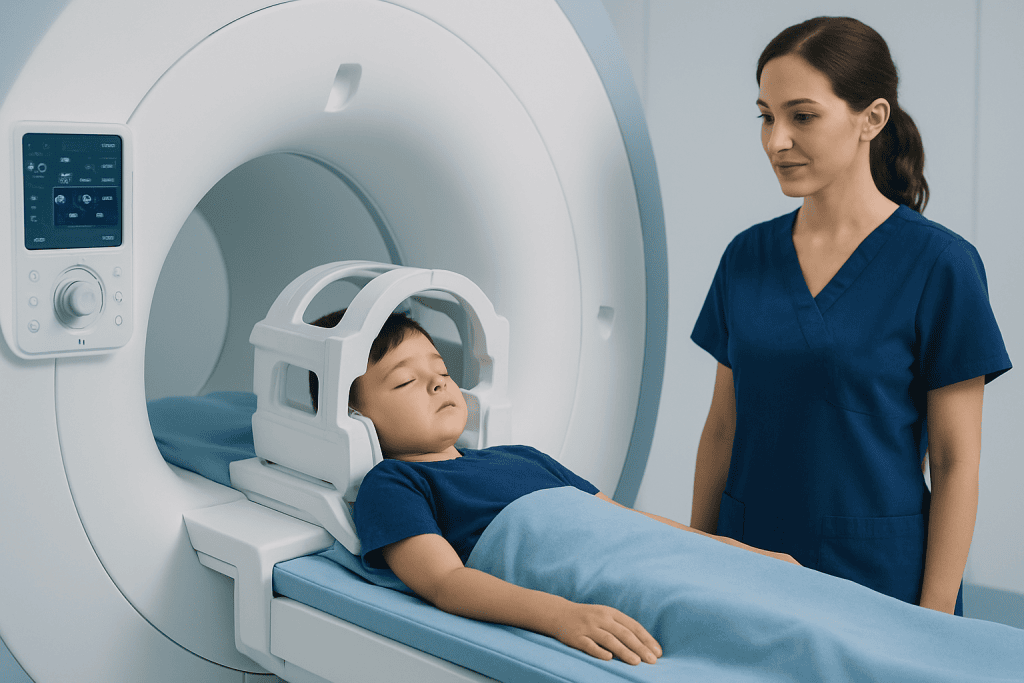
Magnetic resonance imaging, commonly called MRI, is the main imaging test used to evaluate suspected childhood brain tumors. MRI provides detailed images of the brain and can show the tumor’s size, location, relationship to vital structures, and whether there is swelling or blockage of fluid pathways. In some situations, computed tomography, known as CT, may be used urgently, especially when rapid assessment is needed, but MRI is usually preferred for detailed planning.
Additional tests may be needed depending on the suspected tumor type. These can include MRI of the spine, blood tests, hormone testing, eye examination, hearing tests, assessment of cerebrospinal fluid, neuropsychological evaluation, or functional imaging. These tests help determine whether the tumor has affected other parts of the nervous system or important body functions.
A definite diagnosis often requires examination of tumor tissue by a pathologist, obtained through biopsy or during surgery. Modern diagnosis may include molecular and genetic testing of the tumor cells. These results can help classify the tumor more accurately and guide decisions about surgery, chemotherapy, radiotherapy, targeted treatment, clinical trial suitability, and follow-up.
Treatment Options
Childhood brain tumor treatment is individualized. The right approach is decided by a specialist team after assessing the tumor type, grade, size, location, molecular features, the child’s age, symptoms, general health, and potential effects on development. Families should expect a treatment plan that balances tumor control with protection of the child’s brain, growth, learning, and quality of life.
Surgery is often considered when the tumor can be safely removed or sampled. The goals may be to remove as much tumor as possible, relieve pressure, restore fluid circulation, or obtain tissue for diagnosis. In some tumors, complete removal may be possible; in others, the safest operation is a partial removal or biopsy because the tumor is close to critical brain areas. Neurosurgical planning may use advanced imaging, navigation systems, neurophysiological monitoring, or specialized pediatric techniques.
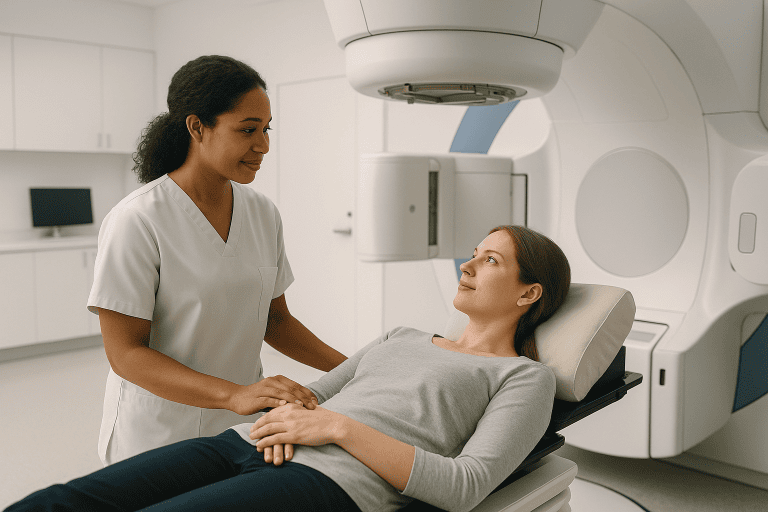
Non-surgical treatments may include chemotherapy, radiotherapy, targeted therapy, or immunotherapy in selected situations. Chemotherapy uses medicines that act against tumor cells and may be used before or after surgery, or when surgery is not the main option. Radiotherapy uses carefully planned radiation beams and may be recommended for certain tumor types or older children when benefits outweigh risks. Targeted therapies are considered when tumor testing identifies specific biological features that may respond to a more focused treatment.
Supportive and rehabilitation care is an essential part of treatment, not an afterthought. Children may need medicines to control swelling, seizures, nausea, pain, or hormone problems, as well as physiotherapy, occupational therapy, speech therapy, nutrition support, psychological care, educational planning, and social support. Regular follow-up imaging and clinical assessments help the team monitor response, manage side effects, and adjust care over time.
Living With / Prognosis
Living with a childhood brain tumor involves medical care, emotional support, school planning, and family adjustment. Prognosis depends on many factors, including tumor type, grade, location, how much tumor can be removed, whether it has spread within the nervous system, the child’s age, and response to treatment. Because outcomes vary greatly between tumor types, families should discuss the child’s specific situation with the treating specialists rather than relying on general information.
Many children need long-term follow-up after treatment. Follow-up visits may include MRI scans, neurological examinations, hormone checks, vision and hearing assessments, rehabilitation reviews, and learning or memory evaluations. This monitoring helps detect tumor changes early and supports the child’s development, school participation, physical function, and emotional wellbeing.
Families can help by keeping a symptom diary, bringing previous scans and reports to appointments, ensuring medicines are taken as instructed, and communicating changes promptly to the care team. Children may benefit from returning to normal routines when medically safe, including school, play, social activities, and age-appropriate independence. Teachers and school counselors can support learning adjustments, fatigue management, and gradual reintegration.
Emotional support is important for the child, siblings, and caregivers. Feelings of uncertainty are natural, and families should be encouraged to ask questions and seek clear explanations. Acibadem International’s multidisciplinary specialists and JCI-accredited hospitals provide diagnosis and treatment for childhood brain tumors for international patients, with care coordinated across pediatric oncology, neurosurgery, radiology, rehabilitation, and supportive services.
When to See a Doctor
A child should be evaluated by a doctor if they have persistent or worsening neurological symptoms, especially when symptoms are new, progressive, or do not fit a typical minor illness. Examples include headaches that become more frequent, repeated unexplained vomiting, new seizures, changes in walking or balance, weakness, double vision, abnormal eye movements, or a noticeable decline in school performance or behavior.
Urgent medical care is appropriate if a child has a first seizure, severe headache with repeated vomiting, confusion, unusual sleepiness, sudden weakness, loss of consciousness, breathing difficulty, or rapidly worsening symptoms. These signs do not always mean a brain tumor is present, but they require prompt assessment to identify and treat serious causes.
Parents should also seek medical advice if an infant has a bulging soft spot, increasing head size, persistent irritability, feeding problems, developmental regression, or abnormal eye position. Infants and very young children cannot always describe symptoms, so changes in behavior, growth, or movement deserve attention.
If a childhood brain tumor has already been diagnosed, families should follow the care team’s guidance about which symptoms require immediate contact. New or worsening headaches, vomiting, seizures, fever during treatment, wound problems after surgery, new weakness, vision changes, or significant changes in alertness should be reported promptly. A qualified medical team can decide whether observation, clinic review, imaging, or urgent treatment is needed.
Frequently asked questions
What is a Childhood Brain Tumor?
A Childhood Brain Tumor is an abnormal growth of cells in or near a child’s brain. It may be benign or malignant, and its effects depend on where it is located and how it grows. Specialist evaluation is needed to identify the tumor type and plan appropriate care.
Are all childhood brain tumors cancer?
No. Some childhood brain tumors are benign, while others are malignant. However, even benign tumors can cause symptoms if they press on important brain structures or block normal fluid flow, so medical assessment and follow-up are still important.
What are the early symptoms of a brain tumor in children?
Early symptoms can include persistent headaches, repeated vomiting, balance problems, vision changes, seizures, weakness, unusual tiredness, or changes in behavior and school performance. In infants, signs may include irritability, poor feeding, developmental delay, or a bulging soft spot. These symptoms can have many causes, but persistent or worsening signs should be checked by a doctor.
How is a pediatric brain tumor diagnosed?
Diagnosis usually includes a medical history, neurological examination, and brain imaging, most often MRI. Additional tests may assess vision, hearing, hormones, the spine, or cerebrospinal fluid. A biopsy or surgery may be needed to examine tumor tissue and confirm the exact diagnosis.
What treatments are used for childhood brain tumors?
Treatment may include surgery, chemotherapy, radiotherapy, targeted therapy, supportive medicines, and rehabilitation. The best approach depends on the tumor type, location, molecular features, and the child’s age and overall health. A multidisciplinary pediatric specialist team should decide the treatment plan after full assessment.
Can children recover after treatment for a brain tumor?
Many children continue to grow, learn, and participate in daily life after treatment, but recovery varies depending on the tumor and treatment required. Some children need ongoing rehabilitation, hormone care, learning support, or regular imaging. Long-term follow-up helps manage late effects and supports the child’s development.
When should parents seek urgent medical care?
Urgent care is needed for a first seizure, severe or worsening headache with repeated vomiting, sudden weakness, confusion, unusual sleepiness, loss of consciousness, or rapidly worsening neurological symptoms. These signs can have different causes, but they should be assessed promptly by medical professionals.
This article is for general information only and is not a substitute for professional medical advice. Please consult a qualified doctor about your individual situation.
Medically reviewed by the Acıbadem International Medical Board June 20, 2026
See our medical review board →
Update history
- PublishedJune 8, 2026
- Medical review approvedJune 20, 2026
- Last content updateJune 11, 2026