Quick answer
Conjunctivitis is inflammation of the conjunctiva, the thin membrane covering the white of the eye and inner eyelids, and it is commonly caused by viral or bacterial infection, allergies, or irritation. Treatment depends on the cause and may include supportive eye care, allergy control, or prescribed medication after ophthalmic evaluation at Acibadem in Turkey.
What is conjunctivitis?
Conjunctivitis is inflammation of the conjunctiva, the thin, clear membrane that covers the white part of the eye and lines the inside of the eyelids. When this membrane becomes irritated or infected, the small blood vessels inside it widen and become more visible, which gives the eye a pink or red appearance. This is why the condition is often called “pink eye.” In medical coding systems, unspecified conjunctivitis is listed under the ICD-10 code H10.9.
Understanding what is conjunctivitis begins with knowing that it is one of the most common eye conditions worldwide. It affects people of all ages, from newborns to older adults, although certain forms are more frequent in specific groups. Infectious conjunctivitis spreads easily in schools, daycare centers, and other close-contact settings, so children are commonly affected. Allergic conjunctivitis is more common in people who also have hay fever, asthma, or eczema.
In most people, conjunctivitis is uncomfortable but not dangerous, and it often improves on its own or with simple treatment. However, some forms can be more serious, and a small number of eye conditions that look similar to conjunctivitis need urgent medical care. This is why it is helpful to understand the typical symptoms, the different causes, and the warning signs that mean you should see a doctor.
Symptoms of conjunctivitis
Conjunctivitis symptoms can vary depending on the cause, but most forms share a core set of complaints. Common conjunctivitis symptoms include:
- Redness in the white of one or both eyes
- A gritty or sandy feeling, as if something is in the eye
- Itching or burning, especially with allergic forms
- Discharge from the eye, which may be watery, stringy, or thick and yellow-green
- Crusting of the eyelids or lashes, particularly after sleep, sometimes making it hard to open the eye in the morning
- Increased tearing (watery eyes)
- Mild sensitivity to light
- Swollen eyelids in some cases
The pattern of symptoms often gives a clue about the type of conjunctivitis. Viral conjunctivitis usually causes watery discharge and often starts in one eye before spreading to the other within a few days. It may accompany a cold or other upper respiratory infection. Bacterial conjunctivitis more often produces a thicker, yellow or green discharge that returns quickly after the eye is wiped, and it can also affect one or both eyes. Allergic conjunctivitis typically affects both eyes at the same time, causes intense itching, and often occurs alongside sneezing or a runny, itchy nose. Irritant conjunctivitis, caused by smoke, chlorine, or chemicals, usually produces watering and redness that begin soon after exposure.
Symptoms may also change over the course of the illness. In viral conjunctivitis, redness and watering often build over the first few days, peak, and then gradually settle over one to two weeks. In some viral cases, mild blurring or light sensitivity can persist for a while after the redness fades. Importantly, significant eye pain, marked light sensitivity, or reduced vision are not typical of ordinary conjunctivitis and should prompt a medical assessment, because these can signal a different, more serious eye problem.
Causes and risk factors
Conjunctivitis causes fall into several main categories:
- Viruses. Viral infection is the most common cause of infectious conjunctivitis in adults. Adenoviruses, a family of viruses that also cause colds and sore throats, are responsible for many cases. Less commonly, other viruses such as herpes simplex can involve the eye, and these cases may need specific antiviral treatment.
- Bacteria. Bacterial conjunctivitis is caused by germs such as staphylococci, streptococci, and Haemophilus species. It is relatively more common in children. Certain sexually transmitted bacteria, including chlamydia and gonorrhea, can also infect the eye and tend to cause more severe or persistent disease.
- Allergies. Allergic conjunctivitis occurs when the eye reacts to substances such as pollen, dust mites, mold, or animal dander. It is not contagious and often follows a seasonal pattern.
- Irritants. Smoke, air pollution, chlorine in swimming pools, cosmetics, and chemical splashes can inflame the conjunctiva without infection.
- Contact lens–related problems. Poor lens hygiene, overwearing lenses, or a reaction to lens solutions can cause or worsen conjunctivitis. Contact lens wearers with a red eye also need careful evaluation because they are at higher risk of corneal infection, an infection of the clear front window of the eye that can threaten sight.
- Newborn conjunctivitis. Babies can develop conjunctivitis in the first weeks of life, sometimes from bacteria acquired during birth or from a blocked tear duct. Conjunctivitis in a newborn always needs prompt medical attention.
Several factors raise the risk of developing conjunctivitis. Close contact with an infected person, sharing towels, pillowcases, or eye makeup, and touching the eyes with unwashed hands all make infectious forms more likely. A recent cold or respiratory infection increases the chance of viral conjunctivitis. People with allergic conditions, dry eyes, or a weakened immune system may also be more prone to eye surface inflammation. Both viral and bacterial conjunctivitis are contagious; viral forms in particular can spread easily for as long as the eye is red and watering.
Diagnosis
Conjunctivitis diagnosis is usually clinical, which means a doctor can often identify the condition from your history and a careful eye examination without laboratory tests. During the visit, the doctor will typically ask when the symptoms started, whether one or both eyes are affected, what the discharge looks like, whether you wear contact lenses, and whether you have allergies, a recent cold, or contact with someone who has a red eye.
The examination usually includes:
- Checking vision in each eye, because ordinary conjunctivitis should not significantly reduce sight.
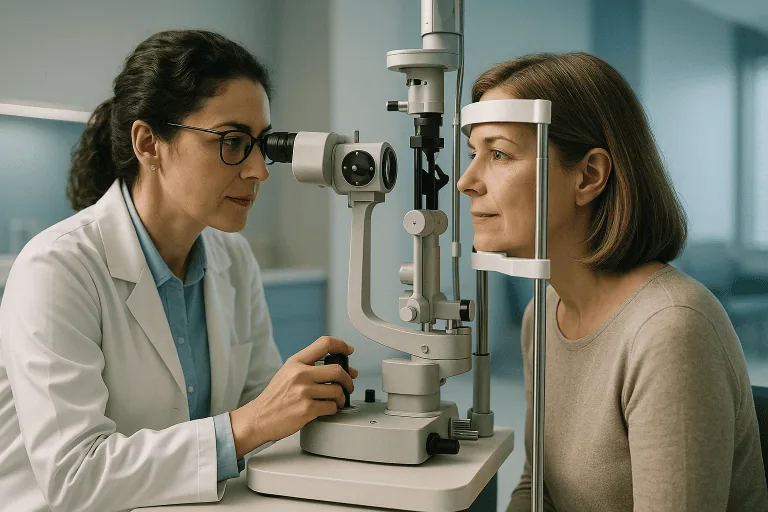
- Inspecting the eye and eyelids, often with a slit lamp, a special microscope with a bright light that lets the doctor examine the surface of the eye in detail.
- Fluorescein staining in some cases. This involves placing a harmless orange dye on the eye surface and viewing it under blue light to look for scratches or ulcers on the cornea, the clear front layer of the eye.
- Everting the eyelid (gently turning it) to check for a trapped foreign body or characteristic patterns of inflammation.
Laboratory tests are not needed for most cases. However, a doctor may take a swab of the eye discharge for culture (growing germs in a laboratory) or other testing when the conjunctivitis is severe, keeps coming back, does not respond to treatment, occurs in a newborn, or when infection with chlamydia or gonorrhea is suspected. Imaging tests such as scans are not part of routine conjunctivitis diagnosis; they are reserved for situations where the doctor suspects a different problem, such as infection spreading into the tissues around the eye.
An important part of the assessment is ruling out conditions that can mimic conjunctivitis, including uveitis (inflammation inside the eye), acute glaucoma (a sudden rise in eye pressure), keratitis (inflammation or infection of the cornea), and a foreign body on the eye surface. Features that point away from simple conjunctivitis include significant pain, marked light sensitivity, reduced vision, and redness concentrated in a ring around the colored part of the eye.
Treatment options for conjunctivitis
Conjunctivitis treatment depends on the cause, and in many cases the most appropriate approach is supportive care while the condition settles on its own. An overview of the condition and how it is managed is also available on the conjunctivitis treatment page.
Watchful waiting and supportive care
Many cases of conjunctivitis, especially viral ones, resolve without specific medication. Supportive measures can ease discomfort while the eye heals:
- Applying cool or warm compresses (a clean, damp cloth) over closed eyes several times a day
- Using lubricating eye drops (artificial tears) available without a prescription
- Gently cleaning crusts from the eyelids with a clean, moist cloth or cotton pad, wiping from the inner corner outward and using a fresh surface for each eye
- Stopping contact lens wear until the eye has fully recovered and, where appropriate, discarding the lenses and case that were used when symptoms began
- Avoiding eye makeup during the illness and replacing products used just before or during the infection
Medications
Viral conjunctivitis usually has no specific cure; antibiotics do not work against viruses, so treatment focuses on comfort while the immune system clears the infection, typically over one to two weeks. If herpes simplex virus is involved, the doctor may prescribe antiviral medication, and specialist follow-up is often needed.
Bacterial conjunctivitis is often mild and may improve on its own within a week. Your doctor may prescribe antibiotic eye drops or ointment, which can shorten the illness and reduce the risk of spreading it to others. Antibiotics are particularly important for severe bacterial infections, for contact lens wearers, for newborns, and when gonorrhea or chlamydia is suspected; in these last cases, treatment may include oral or injected antibiotics as well as drops.
Allergic conjunctivitis is managed by avoiding the trigger where possible and using antihistamine or mast cell stabilizer eye drops, which calm the allergic reaction. Oral antihistamines can help when eye symptoms occur together with nasal allergy symptoms. In more persistent cases, a doctor may consider short courses of other anti-inflammatory drops under supervision.
Steroid eye drops can reduce inflammation but are used cautiously and only under the direction of an eye specialist, because inappropriate use can worsen certain infections, raise eye pressure, or contribute to cataract formation over time. You should not use leftover steroid drops or another person’s drops for a red eye.
Procedures and surgery
Procedures are rarely needed for conjunctivitis itself. In some severe viral cases, an ophthalmologist (a doctor who specializes in eye care) may carefully remove inflammatory membranes that form on the inside of the eyelids. Surgery is not a treatment for ordinary conjunctivitis; it is only relevant for separate underlying problems, such as a blocked tear duct in infants that does not open on its own, or complications affecting other parts of the eye. Persistent, severe, or unusual cases are typically evaluated within an ophthalmology department, where specialists can examine the eye in detail and tailor treatment. At Acibadem, conjunctivitis and related eye surface conditions are managed by the ophthalmology specialty.
Living with conjunctivitis and outlook
For most people, the outlook with conjunctivitis is good. Viral conjunctivitis often improves within one to two weeks, although some cases take longer, and mild symptoms such as light sensitivity or blurring can occasionally linger for a few weeks after the redness resolves. Bacterial conjunctivitis usually clears within days to a week, especially with treatment. Allergic conjunctivitis tends to come and go with exposure to the trigger, so it may recur seasonally or whenever contact with the allergen occurs, but it does not damage the eye in most cases.
Complications are uncommon but possible. Certain viral infections can involve the cornea and temporarily affect vision, and untreated infections with gonorrhea or chlamydia can cause more serious eye damage. This is why persistent, severe, or worsening symptoms deserve medical review rather than continued self-treatment.
While you have infectious conjunctivitis, simple steps help protect the people around you:
- Wash your hands often with soap and water, especially after touching your eyes or face
- Avoid rubbing your eyes
- Do not share towels, washcloths, pillowcases, eye drops, or cosmetics
- Change pillowcases and towels frequently and wash them in warm water
- Follow local guidance on staying home from school or work, particularly for young children, while the eye is actively red and discharging
People who wear contact lenses should not resume lens wear until the eye is fully healed and, if in doubt, should confirm with their eye care professional first. No one can guarantee that conjunctivitis will not return, especially the allergic form, but good hygiene, careful lens care, and managing allergies all reduce the likelihood of repeated episodes.
Frequently asked questions
What is conjunctivitis in simple terms?
Conjunctivitis is inflammation of the thin, clear layer that covers the white of the eye and the inside of the eyelids. It makes the eye look pink or red and often causes watering, discharge, and a gritty or itchy feeling. It can be caused by viruses, bacteria, allergies, or irritants, and it is commonly known as pink eye.
Can conjunctivitis heal on its own?
In many cases, yes. Viral conjunctivitis usually clears on its own within one to two weeks, and mild bacterial conjunctivitis often improves without antibiotics. Supportive care such as lubricating drops, compresses, and gentle eyelid cleaning can ease symptoms in the meantime. However, severe, persistent, or worsening symptoms should be assessed by a doctor, because some cases need specific treatment.
How serious is conjunctivitis?
Most conjunctivitis is mild and does not threaten vision. That said, a few forms, such as infections caused by herpes viruses, gonorrhea, or chlamydia, can be more serious, and some sight-threatening eye conditions can look similar to conjunctivitis at first. Significant pain, marked light sensitivity, or any change in vision means the eye should be examined promptly rather than assumed to be simple pink eye.
How long is conjunctivitis contagious?
Viral and bacterial conjunctivitis can spread to others for as long as the eye is red, watery, or producing discharge. Viral forms are often contagious for the whole course of the illness, which may last one to two weeks. Bacterial conjunctivitis generally becomes much less contagious within about a day or two of starting effective antibiotic drops. Allergic and irritant conjunctivitis are not contagious at all.
What is the fastest conjunctivitis treatment?
There is no single fast cure that works for every type. The right conjunctivitis treatment depends on the cause: antibiotic drops can shorten bacterial infections, antihistamine drops help allergic cases, and viral cases mainly need time and supportive care. Using the wrong treatment, such as antibiotics for a viral infection or unsupervised steroid drops, does not speed recovery and can sometimes cause harm, so it is best to follow a doctor’s advice.
Can I wear contact lenses with conjunctivitis?
It is generally advised not to wear contact lenses while the eye is red or discharging. Lenses can worsen irritation, harbor germs, and increase the risk of corneal infection. Most doctors recommend switching to glasses until the eye has fully recovered, replacing disposable lenses and the lens case that were in use when symptoms began, and checking with an eye care professional before restarting lens wear.
How do doctors confirm conjunctivitis diagnosis?
Doctors usually confirm conjunctivitis by asking about your symptoms and examining the eye, often with a slit lamp microscope. They check vision, look at the pattern of redness and discharge, and may use a dye to make sure the cornea is not damaged. Swabs of the discharge for laboratory testing are reserved for severe, recurrent, or unusual cases and for newborns.
When to see a doctor
Most conjunctivitis is mild, but certain warning signs suggest a more serious problem that needs prompt medical attention. See a doctor urgently, or seek emergency care, if you notice any of the following:
- Moderate to severe eye pain, rather than mild irritation or grittiness
- Reduced or blurred vision that does not clear with blinking
- Intense sensitivity to light
- A red eye in a contact lens wearer, which can indicate a corneal infection
- Symptoms in a newborn baby or in the first month of life
- A very swollen, tender eyelid, especially with fever, or difficulty moving the eye, which may signal infection spreading around the eye
- Heavy pus-like discharge that rapidly returns after wiping, which can occur with severe bacterial infection
- Symptoms following a chemical splash or eye injurychemical exposure should be rinsed with clean water immediately and assessed as an emergency
- No improvement after about a week, or symptoms that worsen despite treatment
- A weakened immune system, for example due to illness or medication, together with a red eye
If you are unsure whether your symptoms are simple conjunctivitis or something more serious, it is safer to have the eye examined. A doctor can confirm the diagnosis, rule out conditions that threaten sight, and recommend the treatment that fits your situation.
Medically reviewed by the Acıbadem International Medical Board September 2, 2026
See our medical review board →
Update history
- PublishedJune 14, 2026
- Medical review approvedSeptember 2, 2026
- Last content updateSeptember 2, 2026