COPD Disease
Learn what COPD disease is, its common symptoms and causes, how doctors diagnose it with spirometry, and the treatment options that may help manage it.
Quick answer
COPD disease, or chronic obstructive pulmonary disease, is a long-term lung condition in which the airways become narrowed and inflamed and the air sacs are damaged, making breathing difficult. It includes chronic bronchitis and emphysema, is most often caused by smoking, cannot be cured, but can usually be managed with inhalers, rehabilitation, and lifestyle changes.
What is COPD disease?
Chronic obstructive pulmonary disease, usually shortened to COPD, is a long-term lung condition that makes it harder to move air in and out of the lungs. The word “chronic” means it lasts a long time, “obstructive” means the airways are partly blocked or narrowed, and “pulmonary” simply means related to the lungs. When people ask “what is COPD disease,” the short answer is that it is a group of progressive lung conditions that cause ongoing breathlessness, cough, and mucus production because the airways and air sacs have been damaged.
COPD disease is an umbrella term that covers two main problems that often occur together. The first is chronic bronchitis, which means long-lasting inflammation (swelling and irritation) of the bronchial tubes, the airways that carry air to the lungs. This inflammation causes the lining to thicken and produce extra mucus, which leads to a persistent cough. The second is emphysema, which means damage to the alveoli, the tiny air sacs at the end of the airways where oxygen passes into the blood. In emphysema, the walls of these sacs break down, so the lungs become less elastic and trap stale air, making it harder to breathe out fully.
COPD most often affects adults in middle age or older, and it develops slowly over many years. It is strongly linked to long-term exposure to irritants that damage the lungs, above all tobacco smoke. Because the early changes are gradual, many people do not notice symptoms until a significant amount of lung function has already been affected. COPD is a common condition worldwide, and although the damage it causes cannot be fully reversed, it can often be managed so that people breathe more comfortably and stay active for longer. At Acibadem, COPD is managed within the pulmonology department, which specializes in diseases of the lungs and airways.
COPD disease symptoms
COPD disease symptoms usually appear gradually and tend to become more noticeable over time. In the early stages, many people put their symptoms down to getting older, being out of shape, or having a “smoker’s cough.” The most common symptoms include:
- Shortness of breath, especially during physical activity such as climbing stairs or walking uphill
- A long-lasting cough that may or may not produce mucus (sputum)
- Coughing up mucus, which may be clear, white, yellow, or greenish
- Wheezing, a whistling or squeaky sound when breathing
- Chest tightness or a feeling of heaviness in the chest
- Frequent chest infections, such as colds that seem to linger or turn into bronchitis
- Tiredness and reduced ability to exercise
- In later stages, unintended weight loss and swelling in the ankles, feet, or legs
How symptoms show up can depend on which type of damage is more prominent. When chronic bronchitis is the dominant problem, cough and mucus production tend to be the most troublesome features, and infections may be frequent. When emphysema is the dominant problem, breathlessness is often the main complaint, sometimes with relatively little cough. Many people have a mix of both.
Symptoms also change with the stage of the disease. In mild COPD, a person may only feel breathless during heavy exertion. As the condition progresses, breathlessness may occur during everyday tasks such as dressing or walking around the house. People with COPD may also experience exacerbations, sometimes called flare-ups. An exacerbation is a period, often triggered by a chest infection or air pollution, when symptoms suddenly become much worse than usual and may last for days or weeks. Frequent exacerbations are associated with faster loss of lung function, so preventing and treating them is an important part of care.
Causes and risk factors of COPD disease
COPD disease causes are almost always related to long-term exposure to substances that irritate and inflame the lungs. Over years, this ongoing irritation damages the airways and air sacs in ways that do not fully heal.
- Tobacco smoking is by far the most common cause. This includes cigarettes, cigars, and pipes. The longer a person has smoked and the more they have smoked, the higher the risk. Former smokers remain at increased risk even after quitting, although stopping smoking slows further damage.
- Secondhand smoke, meaning regular exposure to other people’s smoke at home or work, can also contribute.
- Indoor air pollution, particularly smoke from burning wood, coal, crop waste, or other biomass fuels for cooking and heating in poorly ventilated homes, is an important cause in many parts of the world.
- Occupational exposure to dusts, chemical fumes, and vapors over many years, for example in mining, construction, farming, or certain manufacturing jobs.
- Outdoor air pollution may add to the risk, especially when combined with other exposures.
- Alpha-1 antitrypsin deficiency, a rare inherited condition. Alpha-1 antitrypsin is a protein that protects the lungs from damage; people who lack enough of it can develop emphysema at a younger age, even if they have never smoked.
Several other factors influence whether someone develops COPD and how severe it becomes. Age is one, since the disease usually appears after decades of exposure. A history of asthma or frequent respiratory infections in childhood may leave the lungs more vulnerable. Poor lung growth during childhood, for example because of prematurity or early exposure to smoke, may also raise the risk later in life. Not everyone who smokes develops COPD, and some people with no obvious exposure do, which suggests that genetics play a role in how the lungs respond to irritants.
COPD disease diagnosis
COPD disease diagnosis is based on a combination of a person’s symptoms, their history of exposure to risk factors, and objective tests of lung function. A doctor will usually begin by asking about breathlessness, cough, mucus, how symptoms affect daily life, smoking history, and any work or home exposures. A physical examination may include listening to the chest with a stethoscope for wheezing or reduced breath sounds and checking for signs such as swollen ankles or a bluish tint to the lips.
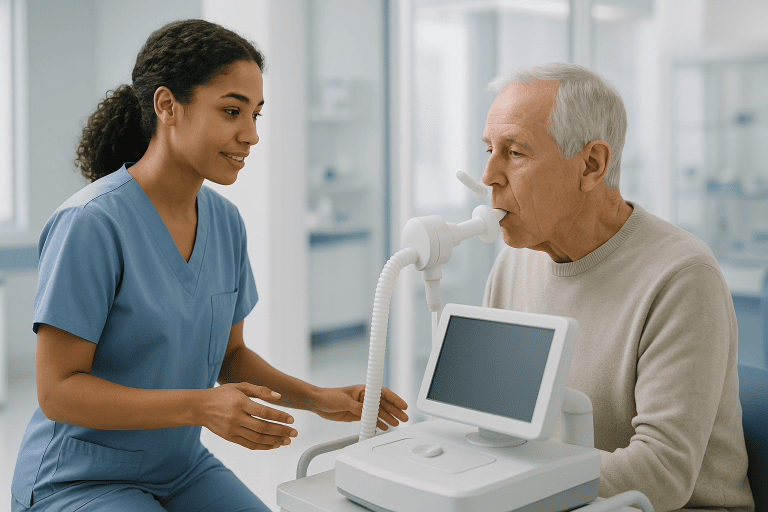
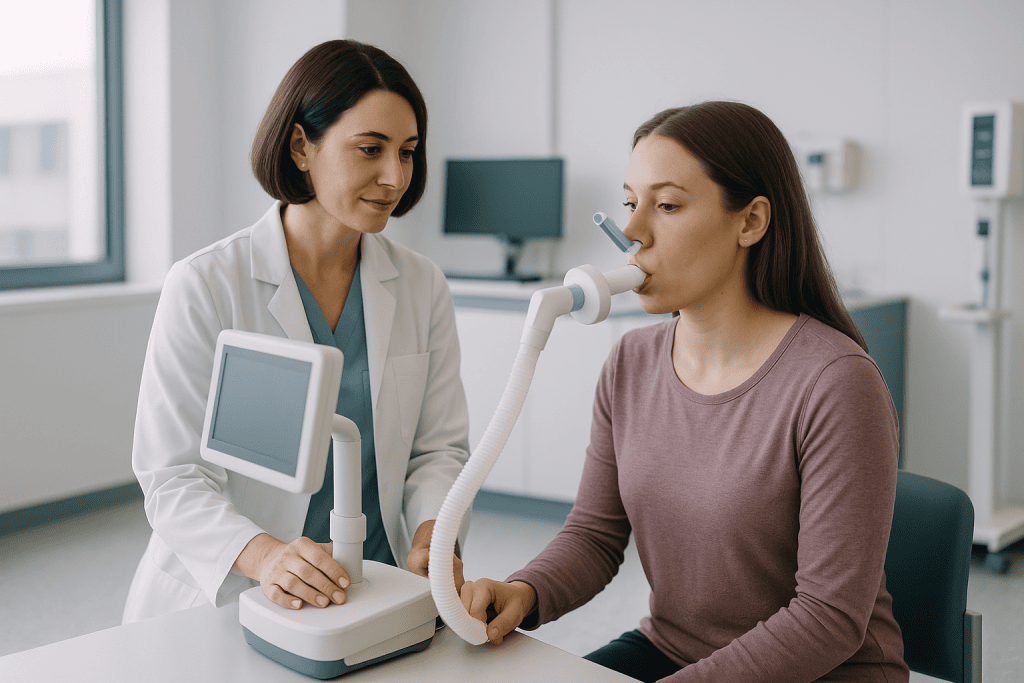
The key test for confirming COPD is spirometry. This is a simple, painless breathing test in which you take a deep breath in and then blow out as hard and fast as you can into a tube connected to a machine. Spirometry measures how much air you can breathe out and how quickly. Two values are especially important: FEV1, the amount of air you can force out in the first second, and FVC, the total amount of air you can force out. In COPD, the airways are narrowed, so air comes out more slowly, and the ratio of FEV1 to FVC is lower than expected. Doctors commonly use a reduced FEV1/FVC ratio, measured after taking a medication that opens the airways, as the main criterion for confirming that airflow obstruction is present and not fully reversible. The FEV1 result is then often used to grade how severe the obstruction is.
Other tests may be used to support the diagnosis, rule out other conditions, or assess the overall picture:
- Chest X-ray, which cannot confirm COPD on its own but can show signs of emphysema and help exclude other causes of symptoms such as heart failure or lung cancer.
- CT scan (computed tomography), a more detailed imaging test that can show the extent of emphysema and detect other lung problems.
- Pulse oximetry, a small clip placed on the finger that estimates the oxygen level in the blood.
- Arterial blood gas test, a blood sample usually taken from the wrist that measures oxygen and carbon dioxide levels more precisely, often used in more advanced disease.
- Blood tests, including a test for alpha-1 antitrypsin deficiency, which may be considered in younger patients, non-smokers, or those with a family history.
- Further lung function tests, such as measuring lung volumes or how well gases pass from the lungs into the blood, which give a fuller picture of lung health.
Because breathlessness and cough have many possible causes, doctors also consider conditions such as asthma, heart disease, bronchiectasis (permanently widened airways), and tuberculosis. Asthma in particular can look similar, but in asthma the airway narrowing usually improves much more completely with treatment. Some people have features of both conditions.
COPD disease treatment options
There is currently no cure for COPD, and the lung damage that has already occurred cannot be undone. However, COPD disease treatment options can relieve symptoms, reduce the frequency and severity of flare-ups, slow the decline in lung function, and improve quality of life. Treatment is usually tailored to how severe the symptoms are and how often exacerbations occur, and it is adjusted over time.
Stopping smoking. For people who smoke, quitting is the single most effective step at any stage of the disease. It does not restore lost lung function, but it slows further damage. Support may include counseling, nicotine replacement products, and prescription medications that reduce cravings. Avoiding secondhand smoke, dusts, and fumes is also important.
Medications. Most people with COPD are prescribed inhalers, devices that deliver medication directly into the lungs. The main groups are:
- Bronchodilators, which relax the muscles around the airways so they open wider. Short-acting bronchodilators are used for quick relief when needed, while long-acting bronchodilators are taken regularly, usually once or twice a day, to keep the airways open. Two types are often combined.
- Inhaled corticosteroids, anti-inflammatory medications that may be added for people who have frequent flare-ups, often in a combination inhaler with long-acting bronchodilators.
- Oral medications, such as certain anti-inflammatory tablets or long-term low-dose antibiotics, which a doctor may consider for people with frequent exacerbations despite inhaled treatment.
- Mucus-thinning medications, which may help some people who produce a lot of thick sputum.
Using an inhaler correctly is essential, and health professionals often check technique at each visit, since a poorly used inhaler delivers little medication to the lungs.
Treating flare-ups. Exacerbations are usually treated with a short course of oral corticosteroid tablets, antibiotics if a bacterial infection is suspected, and more frequent use of bronchodilators. Severe flare-ups may require hospital care with oxygen, breathing support through a mask (non-invasive ventilation), or, in critical cases, mechanical ventilation.
Vaccinations. Because infections are a major trigger for flare-ups, doctors generally recommend vaccination against influenza, pneumococcal pneumonia, COVID-19, and, where available, respiratory syncytial virus and whooping cough, following local guidance.
Pulmonary rehabilitation. This is a structured program that combines supervised exercise training, education about the disease, breathing techniques, and nutritional and psychological support. It is one of the most effective treatments for improving breathlessness, exercise capacity, and well-being, and it is often recommended for anyone whose symptoms limit daily activities.
Oxygen therapy. When blood oxygen levels are persistently low, long-term oxygen given through a small tube at the nose for many hours a day may be prescribed. Oxygen is a treatment for low oxygen levels rather than for breathlessness itself, so it is not helpful for everyone with COPD.
Procedures and surgery. For a small number of carefully selected people with severe emphysema, procedures that reduce the volume of the most damaged parts of the lung may be considered. These include bronchoscopic lung volume reduction, in which tiny one-way valves are placed in the airways through a flexible tube, and lung volume reduction surgery, in which damaged tissue is removed. Large air-filled spaces called bullae can sometimes be removed surgically. Lung transplantation may be an option for some people with very advanced disease who meet strict criteria. These interventions carry risks and are only suitable after thorough assessment by a specialist team.
Supportive and palliative care. In advanced COPD, care focused on comfort, including medications to ease breathlessness and anxiety, can be provided alongside other treatments. Discussing preferences for future care with the medical team and family is encouraged.
Living with COPD disease and outlook
COPD is a chronic, progressive condition, which means it tends to worsen gradually over time. How quickly this happens varies a great deal from person to person and depends on factors such as continued smoking, the frequency of flare-ups, other health conditions, and how consistently treatment is followed. Many people live for many years with COPD, and with good management some remain active and independent well into the disease. Others, particularly those with very severe disease, may experience significant limitations. Doctors are generally cautious about predicting the course of the disease for any individual because it is so variable.
Day-to-day self-management makes a real difference. This often includes taking inhalers exactly as prescribed, learning to recognize the early signs of a flare-up and having a written action plan for what to do, staying as physically active as possible, eating a balanced diet and maintaining a healthy weight, and keeping up with vaccinations. Breathing techniques, such as pursed-lip breathing (breathing in through the nose and out slowly through pursed lips), can help control breathlessness during activity. Avoiding smoke, strong fumes, and very cold or polluted air where possible may reduce symptoms.
COPD often coexists with other conditions, such as heart disease, osteoporosis (thinning of the bones), diabetes, anxiety, and depression, and these need attention as well. Feeling anxious or low is common when breathing is difficult, and support from health professionals, family, and patient groups can help. Regular follow-up with a pulmonologist or primary care doctor allows treatment to be adjusted as the condition changes.
Frequently asked questions
What is COPD disease in simple terms?
COPD disease is a long-term lung condition in which the airways become narrowed and inflamed and the tiny air sacs in the lungs are damaged, making it hard to breathe out fully. It includes chronic bronchitis and emphysema, which often occur together. It develops slowly, usually in adults who have been exposed to tobacco smoke or other lung irritants for many years, and it cannot be cured but can often be managed.
What are the first COPD disease symptoms?
Early COPD disease symptoms are often subtle. Many people first notice that they get out of breath more easily than they used to during exercise or when climbing stairs, or that they have a cough that does not go away, sometimes with mucus. Wheezing, chest tightness, and chest infections that seem to linger are also common early signs. Because these symptoms are easy to attribute to aging or smoking, they are frequently overlooked for years.
What are the main COPD disease causes?
The main cause of COPD is long-term tobacco smoking, including exposure to secondhand smoke. Other important causes include breathing smoke from indoor cooking or heating fires, long-term exposure to workplace dusts and chemical fumes, and outdoor air pollution. A rare inherited condition called alpha-1 antitrypsin deficiency can also cause COPD, sometimes in younger people who have never smoked.
How is COPD disease diagnosis confirmed?
COPD disease diagnosis is confirmed with spirometry, a breathing test that measures how much air you can blow out and how fast. A reduced ratio of air blown out in the first second to the total amount, measured after an airway-opening medication, indicates the airflow obstruction typical of COPD. Doctors also consider your symptoms and exposure history and may order a chest X-ray, CT scan, or blood tests to assess severity and rule out other conditions.
What are the most common COPD disease treatment options?
The most common COPD disease treatment options are stopping smoking, inhaled medications that open the airways and reduce inflammation, vaccinations to prevent infections, and pulmonary rehabilitation, an exercise and education program. People with low blood oxygen may need long-term oxygen therapy. For a small number of people with severe emphysema, procedures to reduce lung volume or, rarely, lung transplantation may be considered after careful specialist assessment.
Can COPD disease be reversed or cured?
At present, COPD cannot be cured, and the lung damage that has already happened cannot be reversed. However, treatment can ease symptoms, reduce flare-ups, and slow further decline, and stopping smoking is the most effective way to protect the remaining lung function. Many people find that their breathing and daily functioning improve considerably with the right combination of medication, rehabilitation, and self-management.
Is COPD disease the same as asthma?
No. Although both conditions cause narrowed airways, wheezing, and breathlessness, they differ in important ways. Asthma often starts in childhood, tends to come and go, and usually improves fully with treatment. COPD usually starts later in life after years of exposure to lung irritants, is persistent, and does not fully reverse with medication. Some people have features of both, and a doctor will use lung function tests and history to distinguish between them.
When to see a doctor
If you have a cough that has lasted for several weeks, bring up mucus regularly, or find yourself more breathless than people of a similar age during everyday activities, it is sensible to discuss this with a doctor, especially if you smoke or have smoked in the past or have been exposed to dusts and fumes at work. Early diagnosis allows treatment to begin before more lung function is lost. If you already have COPD, your doctor will usually advise how often to attend for review and what to do if symptoms change.
Seek urgent medical attention if you or someone you are with experiences any of the following red-flag warning signs:
- Severe shortness of breath that comes on suddenly or makes it hard to speak in full sentences
- Breathlessness that does not improve with your usual reliever inhaler
- Blue or gray color of the lips, face, or fingernails
- Chest pain, especially if it is new or severe
- Confusion, extreme drowsiness, or difficulty staying awake
- A rapid or irregular heartbeat with breathing difficulty
- High fever with worsening cough and mucus, or coughing up blood
- Sudden swelling of the legs or ankles together with breathlessness
These signs may indicate a severe exacerbation, a serious infection, a heart problem, or dangerously low oxygen levels, all of which require prompt assessment and treatment.
Medically reviewed by the Acıbadem International Medical Board September 9, 2026
See our medical review board →
Update history
- PublishedSeptember 9, 2026
- Medical review approvedSeptember 9, 2026
- Last content updateSeptember 9, 2026