Deafblindness
Deafblindness is combined vision and hearing loss that affects communication and daily life. Learn the symptoms, causes, diagnosis and treatment options.
Quick answer
Deafblindness is a combined loss of hearing and vision severe enough that neither sense can compensate for the other, affecting communication, information access, and mobility. It can be present from birth, often due to genetic conditions or infections in pregnancy, or acquired later through illness, injury, or aging. Care focuses on aids, communication methods, and rehabilitation.
What is deafblindness?
Deafblindness is a combined loss of hearing and vision that is severe enough to affect communication, access to information, and the ability to move around safely. The two losses do not have to be total. Many people described as deafblind have some remaining hearing, some remaining sight, or both. What matters is that neither sense can fully make up for the weakness of the other, so everyday tasks that most people manage with ease become much harder. For this reason, deafblindness is often called a dual sensory loss or dual sensory impairment.
Deafblindness is usually grouped into two broad types. Congenital deafblindness means that a person is born with the condition or develops it in early childhood, before spoken or signed language has been learned. Acquired deafblindness means that hearing and vision are lost later in life, sometimes many years apart. A person may be born deaf and later lose sight, be born blind and later lose hearing, or develop both losses gradually with age.
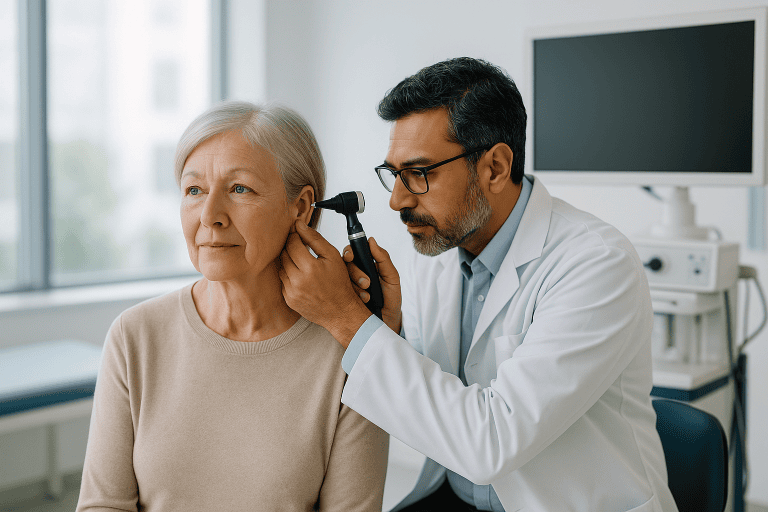
The condition can affect people of any age. In children it is most often linked to genetic conditions or to problems around the time of birth. In adults, the largest group is older people whose age-related hearing loss and age-related eye disease overlap. Because deafblindness sits at the border between eye care and ear care, it is usually managed by several specialists working together. At Acibadem, hearing-related aspects are assessed within the Otorhinolaryngology (ENT) department, which is the medical specialty dealing with the ear, nose, and throat.
Deafblindness symptoms
Deafblindness symptoms vary widely depending on how much hearing and sight remain, which sense was lost first, and when in life the losses occurred. Some people notice a gradual change over years; others experience a sudden change after illness or injury. Common signs include:
- Difficulty following conversations, especially in groups or noisy places
- Needing to be very close to see faces, lips, or written text
- Not responding to sounds, or asking people to repeat themselves often
- Trouble seeing in dim light or at night (night blindness)
- Loss of side vision, so that objects seem to appear suddenly
- Bumping into furniture, doorframes, or people
- Difficulty locating where a sound is coming from
- Problems with balance or unsteady walking
- Withdrawing from social activities, or appearing confused or inattentive
- Tiredness after tasks that require concentration, such as reading or listening
In babies and young children, the signs are different because the child cannot describe what they experience. Parents or caregivers may notice that a baby does not startle at loud sounds, does not turn toward a voice, does not follow a moving face or toy with the eyes, or is slow to reach milestones in babbling and speech. Some children also show unusual behavior, such as pressing on their eyes or rocking, which can be a response to limited sensory input.
In people with acquired deafblindness, the first change is often subtle. Someone who already wears hearing aids may find that they can no longer lip-read as well as before. Someone with long-standing sight loss may start to miss doorbells, alarms, or spoken instructions. Because each loss on its own may seem manageable, the combined effect is sometimes underestimated by both the person and those around them.
Causes and risk factors
Deafblindness causes fall into several groups. Understanding the cause matters because it often shapes the outlook and the type of support that will help most.
Genetic conditions. A number of inherited syndromes affect both hearing and vision. The best known is Usher syndrome, in which a person is born with hearing loss and later develops retinitis pigmentosa, a condition in which the light-sensing cells of the retina (the back layer of the eye) slowly break down, causing night blindness and gradual loss of side vision. Other genetic conditions, such as CHARGE syndrome, can also affect both senses along with other parts of the body.
Problems before or around birth. Certain infections during pregnancy can damage a baby’s developing eyes and ears. Congenital rubella (German measles) and congenital cytomegalovirus (CMV) are recognized examples. Very premature birth, lack of oxygen around the time of delivery, and severe jaundice in newborns are also associated with sensory loss.
Illness and injury later in life. Meningitis (inflammation of the membranes covering the brain), severe head injury, stroke, and some brain tumors can damage the nerves or brain areas that process sight and sound. Diabetes can damage the retina over time and is also linked with hearing loss.
Aging. The most common route to deafblindness in adults is the combination of age-related hearing loss with an age-related eye condition such as macular degeneration (damage to the central part of the retina), glaucoma (damage to the optic nerve, often from raised pressure inside the eye), diabetic eye disease, or cataracts that have not been treated.
Risk factors therefore include a family history of hearing or vision loss, maternal infection during pregnancy, premature birth, older age, diabetes, a history of meningitis or serious head injury, and long-term exposure to loud noise, which adds to hearing loss over time.
Deafblindness diagnosis
There is no single test for deafblindness. Instead, deafblindness diagnosis involves measuring hearing and vision separately, looking for an underlying cause, and then assessing how the two losses together affect daily functioning.
Hearing tests. An audiologist, a health professional who specializes in hearing, usually carries out pure-tone audiometry, in which the person listens to tones at different pitches and volumes. Speech audiometry checks how well words are understood. For babies and people who cannot respond to standard tests, doctors may use otoacoustic emissions, which measure sound echoes produced by the inner ear, or auditory brainstem response testing, which records the brain’s electrical response to sound through small sensors on the scalp.
Eye examinations. An ophthalmologist, a doctor who specializes in the eyes, measures visual acuity (sharpness of vision) and tests the visual field (the area a person can see while looking straight ahead). Examination of the retina, often with photographs or optical coherence tomography, a painless scan that produces detailed images of the layers of the retina, helps identify conditions such as retinitis pigmentosa or macular degeneration. An electroretinogram, which records the electrical activity of the retina, may be used when an inherited retinal condition is suspected.
Looking for the cause. Depending on the history, doctors may recommend genetic testing, blood tests for past infections, or imaging of the brain and inner ear with magnetic resonance imaging (MRI) or computed tomography (CT). In children, a pediatrician often coordinates these assessments.
Functional assessment. Because deafblindness is defined by its effect on daily life rather than by a fixed threshold, many services also carry out a functional assessment. This looks at how a person communicates, moves around, and accesses information in real situations. It helps decide what support, equipment, and training are most likely to help.
Deafblindness treatment options
Deafblindness treatment options depend on the cause, on how much hearing and vision remain, and on whether either loss is expected to progress. In many cases the underlying damage cannot be reversed, so care focuses on preserving remaining senses, using technology to make the most of them, and building skills for communication and independence. Treatment is usually a long-term partnership between the person, their family, ENT specialists, ophthalmologists, audiologists, and rehabilitation professionals.
Observation and monitoring. Some conditions progress slowly. Regular hearing tests and eye examinations allow changes to be detected early, so that aids and support can be adjusted before daily life is seriously disrupted.
Medication and medical management. There is no medicine that treats deafblindness as a whole, but some contributing conditions respond to treatment. Glaucoma is often managed with eye drops that lower pressure inside the eye. Certain forms of macular degeneration may be treated with injections into the eye. Good control of blood sugar in diabetes can slow damage to the retina. Prompt treatment of infections such as meningitis may limit further damage.
Procedures and surgery. Cataract surgery can restore useful vision when a cloudy lens is a major part of the sight loss. For hearing, a cochlear implant, a surgically placed device that stimulates the hearing nerve directly, may be considered when hearing aids no longer provide enough benefit. Whether an implant is suitable depends on the type of hearing loss and other individual factors, and outcomes vary from person to person. Some inherited retinal conditions have been the focus of gene-based treatments, but these are relevant to only a small number of specific genetic changes and are not available for most people.
Hearing and vision aids. Hearing aids, personal amplifiers, and hearing loops help many people use their remaining hearing. Magnifiers, high-contrast lighting, large-print or high-contrast screen settings, and screen-reading or braille display technology support remaining vision or replace it. Vibrating alarms and flashing or vibrating doorbells convert sound into signals a person can feel or see.
Communication support. People who are deafblind use many communication methods, and the best choice depends on their remaining senses and background. These include tactile sign language (signing received through the hands), the deafblind manual alphabet (spelling words onto a person’s hand), clear speech with good lighting for lip-reading, braille, and print on palm. Speech and language therapists and specialist teachers help children and adults develop these skills.
Rehabilitation and support services. Orientation and mobility training teaches safe ways to move around using a long cane, remaining vision, and sound cues. Occupational therapists can adapt the home and workplace. Trained intervenors or communicator guides act as a link between the person and the environment, helping with communication and getting around. Psychological support can also be important, because losing a second sense is often distressing.
Living with deafblindness and outlook
The outlook for a person with deafblindness depends largely on the cause. Some causes are stable, meaning the level of hearing and vision stays roughly the same over time. Others, such as Usher syndrome or age-related eye disease, tend to progress gradually, so a person’s needs may change over the years. Your doctor may be able to give you a general idea of what to expect, but exact predictions are rarely possible, and the pace of change varies from person to person.
Deafblindness does not affect intelligence, and with the right support many people study, work, raise families, and live independently or with adjustable levels of assistance. Children who receive early assessment and specialist teaching often develop strong communication skills, though progress depends on many individual factors. For adults who lose a second sense later in life, adjustment can take time, and it is common to experience grief, frustration, or anxiety before new routines feel natural.
Practical steps that often help include arranging regular reviews with the ENT and eye teams, keeping hearing aids and glasses well maintained, making the home safer with good lighting and clear pathways, and connecting with organizations that specialize in dual sensory loss. Family members and friends also benefit from learning how the person prefers to communicate, for example by approaching from the front, gaining attention with a light touch, and speaking clearly without shouting.
Frequently asked questions
What is deafblindness, and does it mean a person cannot see or hear at all?
Deafblindness is a combined hearing and vision loss severe enough that one sense cannot compensate for the other. It does not usually mean total loss of both. Many people who are deafblind have some useful hearing, some useful vision, or both, and the term describes the practical impact on communication and daily life rather than a specific test result.
What are the early deafblindness symptoms to watch for?
Early signs often include difficulty following conversation in groups, needing to sit closer to see faces or text, trouble seeing in dim light, bumping into objects, and asking for repetition more often. In babies, a lack of response to sounds or faces may be the first clue. These signs can have many causes, so an assessment by hearing and eye specialists is the usual next step.
What are the most common deafblindness causes?
In children, genetic conditions such as Usher syndrome and CHARGE syndrome, along with infections during pregnancy and complications of premature birth, are the leading causes. In adults, the most common cause is the combination of age-related hearing loss with an age-related eye condition such as macular degeneration or glaucoma. Injury, stroke, meningitis, and diabetes are other recognized causes.
How is deafblindness diagnosis made?
Doctors confirm deafblindness by testing hearing and vision separately, using audiometry for hearing and visual acuity, visual field, and retinal examinations for sight. They may add genetic tests, blood tests, or brain and inner-ear imaging to look for a cause. A functional assessment then considers how the two losses together affect communication, mobility, and access to information.
What deafblindness treatment options are available?
Treatment aims to preserve remaining senses and make the most of them. Options may include treating contributing eye or ear conditions, cataract surgery, hearing aids or cochlear implants, magnifiers and screen-access technology, tactile and other communication methods, and rehabilitation such as orientation and mobility training. The right combination depends on the cause and the individual’s needs, and your care team can help decide.
Can deafblindness be cured?
In most cases the underlying damage to the eye, ear, nerves, or brain cannot be reversed, so there is currently no cure for deafblindness itself. However, some contributing conditions can be treated, and aids, technology, and training often greatly improve communication and independence. Research into genetic and other therapies continues, but these apply to a limited number of specific conditions.
Is deafblindness inherited?
Some forms are inherited, most notably Usher syndrome, which is passed on when a child receives an altered gene from both parents. Many other cases are not inherited and result from infection, injury, illness, or aging. If a genetic cause is found or suspected, your doctor may suggest genetic counseling to explain what the finding means for the person and their relatives.
When to see a doctor
Anyone who notices a change in hearing or vision, particularly when the other sense is already reduced, should arrange an assessment. Early evaluation allows treatable causes to be addressed and support to be put in place. Parents who are concerned that a baby is not responding to sounds or faces should raise this with their pediatrician without waiting for a routine check.
Seek urgent medical care if any of the following occur, as they may signal a condition that needs immediate treatment:
- Sudden loss or sharp worsening of vision in one or both eyes
- Sudden hearing loss, especially in one ear, with or without ringing or dizziness
- Severe eye pain, a red eye, or seeing halos around lights
- A sudden increase in floaters, flashes of light, or a curtain or shadow across part of your vision
- Fever with a stiff neck, severe headache, or unusual drowsiness, which can indicate meningitis
- Hearing or vision changes after a head injury
- New weakness, numbness, slurred speech, or facial drooping alongside sensory changes, which can be signs of a stroke
- Discharge, bleeding, or intense pain from the ear
If you or someone you care for already lives with deafblindness, any new or rapid change in either sense should be reviewed promptly, since even small further losses can have a large effect on safety and communication.
Medically reviewed by the Acıbadem International Medical Board September 9, 2026
See our medical review board →
Update history
- PublishedSeptember 8, 2026
- Medical review approvedSeptember 9, 2026
- Last content updateSeptember 8, 2026