Esophageal Varices
Learn what esophageal varices are, their symptoms, causes and risk factors, how doctors diagnose them, treatment options, outlook and warning signs of bleeding.

Quick answer
Esophageal varices are swollen, fragile veins in the lower esophagus that form when scarring or blockage in the liver raises pressure in the portal vein. They usually cause no symptoms until they bleed, which is a medical emergency. Doctors diagnose them by endoscopy and treat them with beta blockers, endoscopic banding and, in some cases, TIPS or liver transplantation.
What is esophageal varices?
Esophageal varices are swollen, enlarged veins in the lower part of the esophagus, the muscular tube that carries food and liquid from the mouth to the stomach. They form when blood cannot flow normally through the liver and is forced to find other routes back to the heart. The small veins lining the esophagus are not built to carry this extra volume of blood under high pressure, so they stretch, bulge and become fragile. Because their walls are thin, they can tear and bleed, and this bleeding can be heavy and life-threatening.
To understand what esophageal varices are, it helps to know about the portal vein. This large vein collects blood from the stomach, intestines, spleen and pancreas and carries it into the liver for processing. When the liver is scarred or blocked, pressure in the portal vein rises. Doctors call this portal hypertension. Esophageal varices are one of the most common and most serious consequences of portal hypertension.
The condition most often affects adults who have advanced liver disease, especially cirrhosis, which is severe scarring of the liver. It can occur in men and women of any age, and in rare cases it develops in children who have liver or blood-vessel problems present from birth. Esophageal varices are usually managed by a gastroenterologist, a doctor who specializes in the digestive system, often working together with liver specialists (hepatologists). At Acibadem, this condition is managed within the Gastroenterology department.
Esophageal varices symptoms
In many cases, esophageal varices cause no symptoms at all until they bleed. This is one reason why people with known liver disease are often screened for varices before any problem appears. When bleeding does happen, the signs tend to be sudden and dramatic.
Common esophageal varices symptoms during a bleeding episode include:
- Vomiting blood, which may look bright red or resemble dark coffee grounds
- Black, tarry or very dark stools, caused by digested blood
- Bloody stools in the case of very fast bleeding
- Lightheadedness, dizziness or fainting
- Rapid heartbeat and a feeling of weakness
- Pale, cool or clammy skin
- Shortness of breath or confusion when blood loss is severe
Some people notice signs of the underlying liver disease rather than of the varices themselves. These can include yellowing of the skin and eyes (jaundice), swelling of the abdomen from fluid buildup (ascites), swelling in the legs and ankles, easy bruising or bleeding, and unusual tiredness. Confusion, sleepiness or personality changes may point to a condition called hepatic encephalopathy, in which toxins the liver can no longer clear build up in the brain.
Doctors often describe varices by size and appearance during an endoscopy. Small varices are less likely to bleed than large ones. Varices that show red spots or streaks on their surface, sometimes called red wale marks, are generally considered at higher risk of bleeding. A person with small varices and no bleeding may feel completely well, while a person with large varices may have the same lack of symptoms right up until a bleed occurs. This is why symptoms alone cannot tell you how advanced the condition is.
Causes and risk factors
The direct cause of esophageal varices is portal hypertension, meaning abnormally high pressure in the portal vein system. Anything that slows or blocks blood flow through the liver can raise this pressure. The most common esophageal varices causes include:
- Cirrhosis: severe, permanent scarring of the liver. This is by far the leading cause. Cirrhosis itself may result from long-term heavy alcohol use, chronic hepatitis B or C infection, fatty liver disease linked to obesity and diabetes, autoimmune liver conditions, or inherited disorders.
- Blood clots: a clot in the portal vein or in the splenic vein (which drains the spleen) can block flow and raise pressure.
- Schistosomiasis: a parasitic infection, found mainly in parts of Africa, South America and Asia, that can damage the liver and cause portal hypertension.
- Budd-Chiari syndrome: a rare condition in which the veins draining blood out of the liver become blocked.
- Congenital problems: in children, abnormal development of the portal vein or liver ducts can be responsible.
Not everyone with liver disease develops varices, and not everyone with varices will bleed. Certain factors are thought to increase the chance that varices form or rupture:
- More advanced liver damage and worsening liver function
- Large varices rather than small ones
- Red marks on the surface of the varices seen at endoscopy
- Continued alcohol use in people with alcohol-related liver disease
- A previous episode of variceal bleeding
- Ongoing infection or severe illness, which can strain the circulation
- Very high portal pressure measured during specialized testing
It is worth remembering that esophageal varices are a complication of another disease rather than a disease that arises on its own. Treating and monitoring the underlying liver condition is central to managing them.
Esophageal varices diagnosis
Because varices often produce no symptoms, esophageal varices diagnosis frequently happens through planned screening in people already known to have cirrhosis or portal hypertension. In other cases, the diagnosis is made urgently when someone arrives at a hospital with bleeding from the upper digestive tract.
The main tests doctors use include:
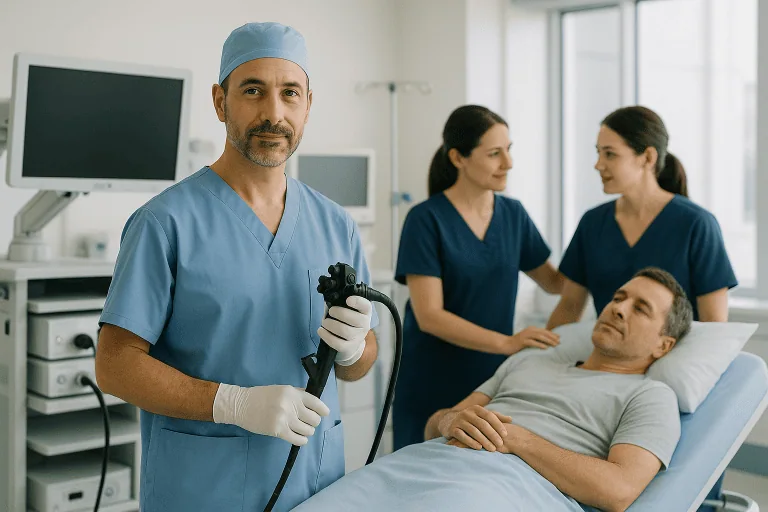
- Upper endoscopy (esophagogastroduodenoscopy or EGD): this is the standard test. A thin, flexible tube with a camera is passed through the mouth into the esophagus and stomach, usually under sedation. The doctor can see the varices directly, judge their size, look for red marks that suggest a higher bleeding risk, and treat active bleeding during the same procedure.
- Blood tests: these check liver function, blood clotting, blood count and platelet levels. A low platelet count combined with certain other findings can suggest portal hypertension.
- Imaging: ultrasound, CT (computed tomography) or MRI (magnetic resonance imaging) scans can show the liver, spleen and portal vein, detect clots and reveal an enlarged spleen, which is common in portal hypertension. Doppler ultrasound measures the direction and speed of blood flow in the portal vein.
- Liver stiffness measurement (elastography): a painless ultrasound-based test that estimates how scarred the liver is. Doctors may use the result, together with platelet counts, to decide whether an endoscopy is needed.
- Capsule endoscopy: a swallowed camera in a capsule can sometimes be used in people who cannot have a standard endoscopy, although it is less detailed.
- Hepatic venous pressure gradient (HVPG) measurement: a specialized procedure in which a catheter is passed through a vein to estimate the pressure difference across the liver. It is not routine but may be used in research settings or complex cases.
Once varices are found, the doctor typically records their size and any high-risk features, and this guides how often follow-up endoscopies are scheduled and whether preventive treatment should start. Your doctor may also look for varices in the stomach, since the same pressure problem can affect veins there.
Esophageal varices treatment options
Treatment has two main goals: to prevent a first bleed or a repeat bleed, and to stop bleeding quickly when it occurs. The right approach depends on whether the varices are bleeding now, how large they are, and how well the liver is working. Esophageal varices treatment options generally fall into the categories below.
Observation and monitoring
Small varices without high-risk features may not need immediate treatment. Instead, your doctor may recommend repeat endoscopies at set intervals to watch for growth. Managing the underlying liver disease, avoiding alcohol and keeping other conditions under control are important during this stage.
Medication
Nonselective beta blockers, such as propranolol, nadolol or carvedilol, are often prescribed to lower pressure in the portal vein and reduce the chance of bleeding. These medicines slow the heart rate and narrow certain blood vessels. Not everyone can take them, and side effects such as tiredness, low blood pressure or shortness of breath can limit their use. During an active bleed, hospital doctors typically give medicines through a vein, such as octreotide or terlipressin, that reduce blood flow to the varices, along with antibiotics, which have been shown to lower the risk of infection and other complications in people with cirrhosis who are bleeding.
Endoscopic procedures
Endoscopic variceal ligation, also called banding, is the most widely used procedure. During an endoscopy, the doctor places small rubber bands around each varix to cut off its blood flow. The banded tissue shrinks and falls away over the following days. Banding is used both to stop active bleeding and to prevent bleeding in people with medium or large varices. Several sessions, usually a few weeks apart, are often needed until the varices are gone, followed by surveillance endoscopies.
Sclerotherapy involves injecting a chemical solution into the varices to scar and close them. It is used less often today because banding tends to have fewer complications, but it remains an option in some situations.
Balloon tamponade and esophageal stents
When bleeding cannot be controlled with medication and endoscopy, doctors may temporarily insert a balloon that is inflated inside the esophagus to press on the bleeding veins, or place a removable covered stent (a mesh tube) to hold pressure against them. These are short-term bridging measures used in an intensive care setting until a more definitive treatment can be arranged.
TIPS procedure
A transjugular intrahepatic portosystemic shunt (TIPS) is a procedure performed by an interventional radiologist. A small tube is guided through a neck vein into the liver, where it creates a new channel that lets blood bypass the scarred liver tissue and reduces portal pressure. TIPS can be very effective at controlling bleeding that has not responded to other treatments and at preventing repeat bleeding. It is not suitable for everyone, and it carries risks, including worsening confusion (hepatic encephalopathy), because blood is no longer being filtered by the liver as fully as before.
Surgery and liver transplantation
Surgical shunts, in which a surgeon connects veins to redirect blood flow, are rarely performed today because TIPS can achieve a similar effect with less invasive methods. For people whose liver disease is advanced and no longer responds to other measures, liver transplantation may be considered. A transplant replaces the diseased liver and addresses the root cause of the portal hypertension. Eligibility depends on many factors, and waiting times vary widely.
Supportive care and rehabilitation
After a bleeding episode, recovery often involves blood transfusions, careful fluid management, nutritional support and treatment of any infection. Ongoing care focuses on the liver disease itself, alcohol cessation support where relevant, vaccination against hepatitis viruses when appropriate, and regular follow-up with a gastroenterology team.
Living with esophageal varices and outlook
Living with esophageal varices means living with a chronic liver condition and a known risk of bleeding. The outlook depends heavily on how well the liver is working, whether bleeding has already occurred, and how consistently preventive treatment and follow-up are maintained. Bleeding from varices is a serious medical emergency, and a first bleed carries a real risk of death even with modern care. Survival has improved over recent decades as endoscopic banding, medicines and TIPS have become widely available, but outcomes cannot be guaranteed for any individual.
People who do not bleed, or whose varices are successfully treated, can often live for years with careful management. Practical steps that doctors commonly recommend include stopping alcohol completely, taking prescribed medicines as directed, keeping every scheduled endoscopy, eating a balanced diet with adequate protein unless advised otherwise, avoiding medicines that irritate the stomach lining such as aspirin and other nonsteroidal anti-inflammatory drugs unless your doctor approves them, and reporting new symptoms promptly. Some people are also advised to avoid heavy lifting or straining, although the evidence on this is limited.
Emotional strain is common, both because of the underlying illness and because of the fear of sudden bleeding. Talking with the care team about what to expect, and knowing exactly what to do if bleeding starts, can make the situation feel more manageable. Family members may also find it helpful to learn the warning signs.
Frequently asked questions
What is esophageal varices in simple terms?
Esophageal varices are stretched, swollen veins at the bottom of the food pipe. They develop when blood has trouble passing through a damaged liver and backs up into smaller veins that were never meant to carry so much blood. The veins become thin-walled and fragile, so they can bleed heavily. In most cases, they are a sign of advanced liver disease rather than a separate illness.
What are the first esophageal varices symptoms I might notice?
Often there are none. Many people learn they have varices only through a screening endoscopy done because of known liver disease. When symptoms do appear, they are usually those of bleeding, such as vomiting blood, passing black or tarry stools, feeling faint or having a racing heart. Symptoms of liver disease itself, such as jaundice or a swollen abdomen, may be present beforehand.
What are the main esophageal varices causes?
The underlying problem is high pressure in the portal vein, the vessel that carries blood from the digestive organs to the liver. Cirrhosis, or severe liver scarring, is the most common cause, and it can result from alcohol, viral hepatitis, fatty liver disease and other conditions. Less often, blood clots in the portal or splenic veins, certain infections or rare vascular disorders are responsible.
How is esophageal varices diagnosis confirmed?
Upper endoscopy is the standard way to confirm the diagnosis. A doctor passes a thin camera tube down the throat to look at the esophagus directly, measure the varices and check for signs of high bleeding risk. Blood tests, ultrasound, CT or MRI scans and liver stiffness measurements support the assessment and help evaluate the underlying liver disease.
What are the most common esophageal varices treatment options?
Treatment usually combines medicines called nonselective beta blockers, which lower portal pressure, with endoscopic banding, which ties off the veins with small rubber bands. Active bleeding is treated urgently in hospital with intravenous medicines, antibiotics and endoscopy. If these measures do not control bleeding, a TIPS procedure may be considered, and liver transplantation may be an option for some people with advanced disease.
Can esophageal varices go away on their own?
Varices generally do not disappear without treatment, because the pressure that created them remains as long as the liver disease persists. Banding can eliminate existing varices, but new ones may form over time, which is why surveillance endoscopies continue afterward. Treating the cause, for example by stopping alcohol or controlling hepatitis, may slow progression in some cases.
Is it safe to exercise or travel with esophageal varices?
Many people with stable, treated varices continue with light to moderate activity and normal daily life. Your doctor may advise caution with very strenuous exertion or heavy lifting, and may suggest planning travel so that emergency care is reachable. Individual advice depends on how advanced the liver disease is and whether there has been previous bleeding, so it is best discussed with your care team.
When to see a doctor
Anyone diagnosed with cirrhosis or another cause of portal hypertension should have regular follow-up with a gastroenterologist or liver specialist, even when feeling well, because varices may need to be screened for and monitored over time. New or worsening tiredness, jaundice, abdominal swelling, leg swelling, confusion or easy bruising should prompt a timely medical review.
Bleeding from esophageal varices is an emergency. Seek emergency medical care immediately if you or someone you are with experiences any of the following:
- Vomiting blood or material that looks like coffee grounds
- Black, tarry, sticky stools or stools containing visible blood
- Sudden dizziness, fainting or near-fainting
- Rapid heartbeat, cold or clammy skin, or extreme weakness
- Severe or sudden confusion, drowsiness or difficulty staying awake
- Shortness of breath or chest discomfort alongside any sign of bleeding
Do not wait to see whether the bleeding stops on its own. Rapid treatment in a hospital setting gives the best chance of controlling variceal bleeding and preventing complications.
Medically reviewed by the Acıbadem International Medical Board September 9, 2026
See our medical review board →
Update history
- PublishedSeptember 9, 2026
- Medical review approvedSeptember 9, 2026
- Last content updateSeptember 9, 2026