Hand Injuries
Hand Injuries can affect bones, tendons, nerves, skin or blood vessels. Learn symptoms, diagnosis, treatment options and when to seek care.

Quick answer
Hand injuries are damage to the bones, joints, tendons, nerves, ligaments, or soft tissues of the hand, often causing pain, swelling, weakness, or loss of movement and grip. Treatment depends on the type and severity of the injury and may include imaging, splinting, medication, hand therapy, microsurgical repair, or reconstructive surgery to restore function.
Hand injuries are injuries to the skin, bones, joints, tendons, ligaments, nerves or blood vessels of the hand, wrist or fingers. Because the hand is complex and essential for daily function, timely assessment helps protect movement, sensation and healing.
Overview
Hand injuries are any traumatic or overuse injuries that affect the hand, fingers, thumb or wrist. They may involve the skin, nails, muscles, tendons, ligaments, joints, bones, nerves or blood vessels. A hand injury can be as simple as a small cut or bruise, or as complex as a fracture, tendon rupture, crush injury, burn or partial amputation.
The hand has many small structures working together to allow grip, pinch, touch and fine movements. Because these structures are close together, even a small wound can injure a tendon, nerve or blood vessel underneath the skin. For this reason, a wound that looks minor may still require careful medical evaluation if movement, sensation or circulation is affected.
Hand injuries are commonly caused by falls, sports accidents, workplace accidents, sharp tools, machinery, road traffic incidents, burns, bites and household activities. The main goals of care are to prevent infection, restore alignment and movement, protect sensation and circulation, and help the person return safely to daily tasks, work and hobbies.
Symptoms
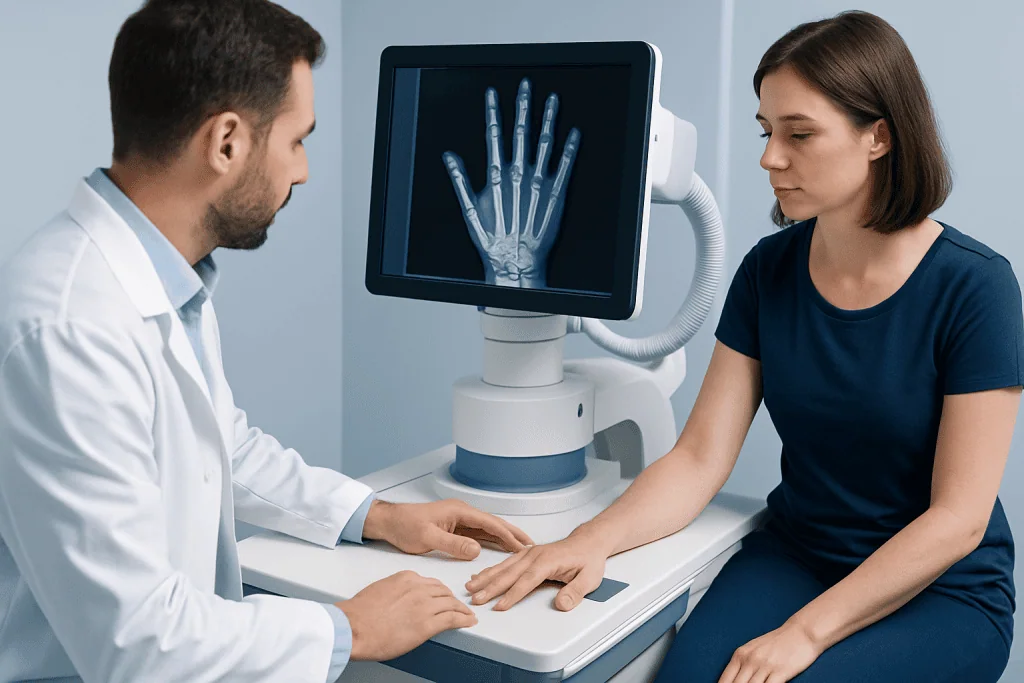
Symptoms of hand injuries depend on the type and severity of the damage. Common symptoms include pain, swelling, bruising, tenderness, stiffness, weakness, bleeding, cuts, nail damage, deformity or difficulty using the hand. A person may notice that they cannot bend or straighten a finger, cannot grip normally, or feel pain when trying to move the wrist, thumb or fingers.
Some symptoms suggest a deeper injury and should not be ignored. Numbness, tingling, loss of feeling, pale or blue fingers, coldness, severe swelling, increasing tightness, or inability to move a finger may indicate injury to nerves, blood vessels, tendons or deeper tissues. A finger that looks crooked, shortened or rotated may suggest a fracture or dislocation.
Signs of infection can develop after cuts, puncture wounds, bites, burns or contaminated injuries. These may include increasing redness, warmth, swelling, worsening pain, pus, red streaks, fever or reduced movement. Because infections in the hand can spread between tissue spaces and affect tendons or joints, early medical attention is important.
- Deep cuts, punctures and bites can hide important internal damage.
- Crush injuries may cause swelling, fractures and tissue damage even without a large open wound.
- Burns may affect skin, movement and sensation depending on depth and location.
- Nail-bed injuries can be associated with fingertip fractures and may need proper repair.
Causes & Risk Factors
Hand injuries are often caused by direct trauma. This includes falls onto an outstretched hand, twisting injuries, cuts from knives or glass, impact from sports equipment, contact with machinery, door-crush injuries, burns, animal or human bites, and road traffic accidents. Repetitive strain or overuse may also contribute to tendon irritation, ligament strain or nerve compression symptoms.
Different injury mechanisms tend to damage different structures. A sharp cut may divide a tendon, nerve or artery. A fall may cause a fracture of the fingers, metacarpals or wrist bones. A twisting injury may sprain ligaments or dislocate a joint. A crush injury may damage skin, bone, nail bed, nerves and circulation at the same time.
Risk factors include manual work, use of power tools or machinery, certain sports, cooking or craft activities, alcohol or distraction during risky tasks, and lack of protective equipment. People with diabetes, poor circulation, immune system problems or smoking history may have a higher risk of wound-healing problems or infection. Older adults may be more vulnerable to fractures after a fall, while children may injure fingertips in doors or play accidents.
Prevention cannot remove all risk, but it can reduce the chance of serious injury. Protective gloves, safe tool handling, machine guards, careful knife use, workplace training, sports protection and prompt cleaning of small wounds all help. However, if an injury occurs, the priority is safe first aid and professional assessment when symptoms suggest deeper damage.
Diagnosis
Diagnosis of hand injuries begins with a medical history and physical examination. The doctor asks how the injury happened, when it occurred, whether the wound was contaminated, and whether there is pain, numbness, weakness or loss of movement. Details such as animal bites, workplace injuries, high-pressure injection, burns or machinery accidents are important because they can change the urgency and type of care needed.
The examination usually checks skin wounds, swelling, tenderness, finger alignment, joint stability, tendon function, blood flow and nerve sensation. The doctor may ask the person to bend and straighten each finger, move the thumb, grip gently or identify light touch in different areas. Circulation can be assessed by skin color, temperature and capillary refill, and wounds may be examined carefully under appropriate conditions.
Imaging is often used when a fracture, dislocation, foreign body or deep structural injury is suspected. X-rays can show many bone injuries and some foreign materials. Ultrasound may help evaluate tendons, soft tissues or certain foreign bodies. In selected cases, CT or MRI may be recommended for complex fractures, ligament injuries or deeper soft-tissue assessment.
Some injuries require urgent evaluation by a hand surgeon, plastic and reconstructive surgeon, orthopedic trauma specialist or emergency physician. These include open fractures, tendon or nerve injuries, poor circulation, severe crush injuries, amputations, deep infections and complex wounds. Accurate diagnosis guides whether the safest approach is non-surgical treatment, wound repair, specialist surgery or rehabilitation.
Treatment Options
Treatment for hand injuries depends on the injured structures, severity, timing, contamination risk, overall health and functional needs of the patient. The right approach is decided by a qualified specialist after assessment. Early treatment aims to relieve pain, protect tissues, prevent infection, restore alignment and support the best possible function.
Initial care may include cleaning the wound, stopping bleeding, removing visible contamination, applying sterile dressings, pain relief, splinting or elevation. Some wounds may need careful closure, while others may need to be left open or treated in stages if contamination or infection risk is high. Vaccination status may be reviewed for certain wounds, and medication may be used when clinically indicated by the treating doctor.
Non-surgical treatment can be appropriate for many sprains, stable fractures, minor cuts and soft-tissue injuries. This may involve splints, casts, buddy taping, protective dressings, activity modification and follow-up visits to monitor healing. Hand therapy is often important to reduce stiffness, improve swelling, guide safe movement, rebuild strength and help the person return to daily activities.
Surgery may be needed for certain fractures, dislocations, tendon cuts, nerve injuries, blood vessel injuries, severe nail-bed injuries, deep infections, burns, crush injuries or amputations. Surgical care may involve repair or reconstruction of skin, tendons, nerves, vessels, bones or joints. In complex cases, staged procedures and rehabilitation may be necessary. Acibadem International’s multidisciplinary specialists and JCI-accredited hospitals diagnose and treat hand injuries for international patients, with care planned according to each person’s condition and needs.
Living With / Prognosis
The outlook after a hand injury varies widely. Many minor injuries heal well with appropriate wound care, protection and gradual return to use. More complex injuries can take weeks or months to recover, especially when tendons, nerves, joints, bones or multiple tissues are involved. Recovery may continue even after the wound has closed because strength, flexibility and sensation can take longer to improve.
Hand stiffness is a common challenge after injury because the fingers and wrist have many small joints and tendons. Swelling, scar tissue, pain and immobilization can all limit movement. Following the treatment plan and attending hand therapy when recommended can help maintain motion, reduce scar tightness, improve coordination and support safe strengthening.
Some people may have lasting changes such as sensitivity, reduced grip strength, mild stiffness, altered sensation or visible scarring. These outcomes are more likely after severe crush injuries, nerve injuries, burns, infections or delayed treatment. Even when full recovery is not possible, reconstructive treatment and rehabilitation can often improve comfort, appearance and function.
Daily self-care during recovery may include keeping dressings clean and dry as instructed, elevating the hand to reduce swelling, avoiding smoking, protecting splints, and not returning to heavy tasks until cleared by the doctor. Patients should ask their care team when it is safe to drive, work, play sports or use tools again, because returning too early can delay healing or worsen the injury.
When to See a Doctor
A doctor should assess any hand injury that is deep, painful, contaminated, caused by a bite, associated with numbness or weakness, or followed by reduced movement. Medical care is also important for wounds over joints, cuts from glass or metal, burns affecting the hand, nail-bed injuries, high-pressure injection injuries, and injuries caused by machinery or crushing.
Urgent medical attention is needed if there is heavy bleeding that does not stop with gentle pressure, an obvious deformity, exposed bone or tendon, a finger that is pale, blue or cold, severe swelling, loss of feeling, inability to bend or straighten a finger, or a partially or completely amputated part. If an amputated part is present, emergency services should be contacted and the part should be protected according to first-aid guidance, without placing it directly on ice.
People should also seek care if symptoms worsen after an injury. Increasing redness, warmth, swelling, pus, fever, red streaking, worsening pain or increasing stiffness can suggest infection or complications. Early evaluation is especially important for people with diabetes, immune system problems, poor circulation or conditions that affect wound healing.
For minor injuries, home first aid may include rinsing small cuts with clean running water, covering the area with a clean dressing, resting the hand and using elevation for swelling. However, if there is any doubt about depth, movement, sensation, circulation or infection risk, it is safer to consult a qualified doctor promptly.
Frequently asked questions
What is a hand injury?
A hand injury is damage to any part of the hand, fingers, thumb or wrist, including skin, bones, joints, tendons, ligaments, nerves or blood vessels. It can happen suddenly after trauma or develop from repeated strain. Because the hand has many small structures, even a small wound can affect movement or sensation.
How can someone tell if a hand injury is serious?
A hand injury may be serious if there is severe pain, deformity, numbness, tingling, heavy bleeding, deep cuts, exposed tissue, loss of movement or a finger that looks pale, blue or cold. Wounds from bites, machinery, glass, metal or crushing also need medical assessment. When in doubt, it is safer to have the hand examined by a doctor.
Do all hand fractures need surgery?
No. Some hand fractures can heal with splinting, casting or buddy taping if the bones are stable and well aligned. Surgery may be considered when a fracture is displaced, unstable, open, involves a joint or affects hand function. The decision is made by a specialist after examination and imaging.
Can a cut on the hand damage a tendon or nerve?
Yes. Tendons, nerves and blood vessels lie close under the skin in the hand and fingers. A person may have a tendon injury if they cannot bend or straighten a finger, and a nerve injury if there is numbness or altered feeling. Deep cuts should be assessed promptly, even if the bleeding has stopped.
Why is hand therapy important after some injuries?
Hand therapy helps reduce swelling, stiffness and scar tightness while guiding safe movement and strengthening. It is especially important after fractures, tendon repairs, nerve injuries, burns and surgery. Therapy should be followed as prescribed because moving too little or too much can both affect recovery.
What should be done immediately after a hand injury?
For a minor wound, the area can be rinsed with clean running water, covered with a clean dressing and elevated if swollen. Gentle pressure can help control bleeding, but tight bands should not be applied unless instructed by emergency professionals. Deep wounds, bites, deformity, numbness, severe pain or loss of movement require prompt medical care.
How long does recovery from a hand injury take?
Recovery time depends on the type and severity of injury and whether bones, tendons, nerves or joints are involved. Minor cuts and sprains may improve quickly, while fractures, tendon injuries, nerve injuries and crush injuries may take weeks to months. A doctor or hand therapist can give more specific guidance after assessment.
References
- American Society for Surgery of the Hand
- British Society for Surgery of the Hand
- American Academy of Orthopaedic Surgeons
- NHS
- Merck Manual Professional Edition
This article is for general information only and is not a substitute for professional medical advice. Please consult a qualified doctor about your individual situation.
Treatments for This Condition
Doctors Who Treat This Condition

Prof. Dr. Bülent Saçak
Aesthetic Plastic & Reconstructive Surgery
Prof. Dr. Ersin Ülkür
Aesthetic Plastic & Reconstructive Surgery
Prof. Dr. Hakan Ağır
Aesthetic Plastic & Reconstructive Surgery
Prof. Dr. Mehmet Veli Karaaltın
Aesthetic Plastic & Reconstructive Surgery
Prof. Dr. Çiğdem Ünal Gülmeden
Aesthetic Plastic & Reconstructive Surgery
Prof. Dr. Şükrü Yazar
Aesthetic Plastic and Reconstructive Surgery
Dr. Burak Sercan Erçin
Aesthetic Plastic & Reconstructive Surgery
Dr. Cem Öz
Aesthetic Plastic & Reconstructive Surgery
Dr. Mahmut Özyilmaz
Aesthetic Plastic & Reconstructive Surgery
Dr. Mehmet Severcan
Aesthetic Plastic & Reconstructive Surgery
Dr. Mithat Ulay
Aesthetic Plastic & Reconstructive Surgery
Dr. Mutluhan Temizsoy
Aesthetic Plastic & Reconstructive SurgeryRelated Articles

Aesthetic Foot Surgery Scars: Where Incisions Are Placed and What to Expect

Brow Lift Results: How Long They Last and What Affects Longevity

What Is Aesthetic Breast Surgery Recovery Really Like?

Breast Reconstruction: How to Prepare Physically and Emotionally for Surgery
Congenital Nevi: How Dermatologists and Surgeons Assess Size, Location, and Risk

Congenital Nevi: Causes, Types, and How They Can Change Over Time

Breast Prosthesis Removal: What Results Are Realistic Without Replacement?

Knee Surgery Price: Costs by Procedure and Treatment Plan

Cosmetic Surgery Cost: Common Procedures and Price Factors

How Much Does Bariatric Surgery Cost?

Cost of Plastic Surgery: What Affects the Total Price?