Hypertrophic Cardiomyopathy
Hypertrophic Cardiomyopathy explained: symptoms, causes, diagnosis, treatment options, and when to seek specialist heart care.

Quick answer
Hypertrophic cardiomyopathy is a disease in which the heart muscle becomes abnormally thick, making it harder for the heart to pump blood effectively and sometimes causing rhythm problems. Treatment depends on symptoms and the degree of obstruction, and at Acibadem it may include detailed cardiac evaluation, medication, rhythm monitoring, minimally invasive procedures, or surgery when needed.
What is hypertrophic cardiomyopathy?
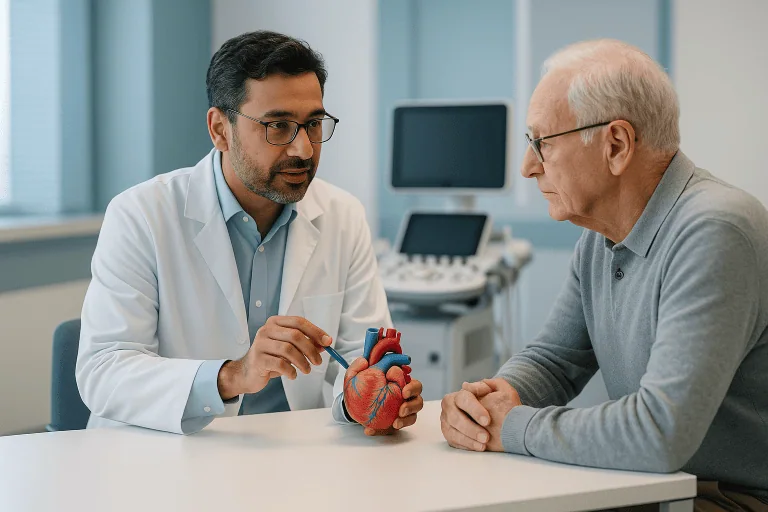
Hypertrophic cardiomyopathy is a condition in which the muscle of the heart becomes abnormally thick (the medical word for this thickening is hypertrophy). The thickening most often affects the septum, which is the muscular wall that separates the left and right sides of the heart. When the heart muscle thickens, the heart’s pumping chambers can become smaller and stiffer, which may make it harder for the heart to fill with blood and, in some people, harder for blood to leave the heart.
In many people with hypertrophic cardiomyopathy, the thickened septum partly blocks the path that blood takes as it leaves the main pumping chamber (the left ventricle). Doctors call this the obstructive form of the disease. In others, the muscle is thickened but blood flow out of the heart is not blocked; this is called the non-obstructive form. The two forms can cause similar symptoms, but they are sometimes treated differently.
Hypertrophic cardiomyopathy is one of the most common inherited heart muscle conditions. It affects people of all ages and both sexes, and it is found in every part of the world. Some people are diagnosed in childhood or adolescence, often during family screening or sports checks, while others are not diagnosed until middle age or later. A significant number of people with the condition have few or no symptoms and live a normal life span; others develop symptoms that need ongoing treatment. Because the condition can run in families, a diagnosis in one person often leads doctors to recommend checking close relatives as well.
Symptoms of hypertrophic cardiomyopathy
Hypertrophic cardiomyopathy symptoms vary widely from person to person. Some people never notice anything unusual and learn about the condition only after a routine test or family screening. Others develop symptoms gradually over years, and a small number experience sudden, serious events with little warning. Common symptoms include:
- Shortness of breath, especially during exercise or exertion, because the stiff heart has trouble filling with blood.
- Chest pain or pressure, which may appear during activity or, less often, at rest or after meals.
- Palpitationsa sensation of a racing, pounding, or irregular heartbeat, often caused by abnormal heart rhythms (arrhythmias).
- Dizziness or lightheadedness, particularly during or just after physical effort.
- Fainting (syncope), which can be a warning sign and always deserves medical attention.
- Fatigue or reduced ability to exercise compared with peers.
- Swelling in the legs or ankles in more advanced stages, when the heart’s pumping or filling function weakens.
Symptoms often depend on the type and stage of the disease. In the obstructive form, symptoms such as breathlessness, chest pain, and lightheadedness tend to be worse with exertion, because the blockage in the heart’s outflow path becomes more pronounced when the heart beats faster and harder. Some people notice that symptoms are worse after a heavy meal, when standing up quickly, or in hot weather, because these situations change blood flow in ways that can increase the obstruction.
In the non-obstructive form, symptoms are usually related to the stiffness of the heart muscle and to abnormal heart rhythms rather than to a physical blockage. A minority of people progress over many years to a stage where the heart muscle weakens and the features of heart failurepersistent breathlessness, fluid retention, and severe fatigue, become more prominent.
It is important to know that the severity of symptoms does not always match the severity of the disease. Some people with very thick heart muscle feel well, while others with milder thickening have troublesome symptoms. This is one reason why regular follow-up with a heart specialist is recommended even for people who feel fine.
Causes and risk factors
In most cases, hypertrophic cardiomyopathy causes can be traced to genetics. The condition is usually caused by changes (mutations) in genes that provide the instructions for building the proteins of the heart muscle: the tiny structures inside muscle cells that allow the heart to contract. When one of these genes is altered, the muscle fibers can grow in a disorganized, thickened way.
Key points about causes and risk factors include:
- Family inheritance: The condition is most often passed down in an autosomal dominant pattern, which means a child of an affected parent typically has about a one-in-two chance of inheriting the gene change. Inheriting the gene does not guarantee developing the disease, and the severity can differ greatly even within the same family.
- New gene changes: In some people, the gene change occurs for the first time in that individual, so there may be no known family history.
- Age of onset: The thickening often develops during adolescence or early adulthood, during periods of rapid growth, but it can appear at any age.
- Conditions that mimic it: Long-standing high blood pressure, intense athletic training, and certain rare metabolic or storage diseases can also thicken the heart muscle. Part of the diagnostic process is separating true hypertrophic cardiomyopathy from these look-alike conditions, because the treatments differ.
Lifestyle factors do not cause hypertrophic cardiomyopathy, and there is nothing a person could have done to prevent it. However, some factors can make symptoms worse or increase risk in people who already have the condition, including dehydration, very intense competitive exercise in certain cases, uncontrolled high blood pressure, and some medications that affect heart filling. Your doctor can advise you about which of these apply in your individual situation.
Diagnosis of hypertrophic cardiomyopathy
Hypertrophic cardiomyopathy diagnosis usually begins when a doctor notices a heart murmur (an unusual sound made by blood flow), an abnormal heart tracing, unexplained symptoms, or a family history of the disease or of sudden cardiac death. Confirming the diagnosis relies on imaging that shows the heart muscle is thickened without another clear cause, such as severe high blood pressure or valve disease.
Tests that doctors commonly use include:
- Echocardiogram: An ultrasound scan of the heart. This is the main test used to confirm the diagnosis. It shows how thick the heart walls are, whether blood flow out of the heart is obstructed, and how well the heart valves and chambers are working.
- Electrocardiogram (ECG): A recording of the heart’s electrical activity. It is often abnormal in hypertrophic cardiomyopathy and may be the first clue to the condition, although it cannot confirm the diagnosis on its own.
- Cardiac MRI: A detailed magnetic scan of the heart. It can measure wall thickness precisely, show parts of the heart that are hard to see on ultrasound, and detect scarring in the heart muscle, which helps doctors assess risk.
- Holter monitor or event monitor: A portable device worn for one or more days to record the heart rhythm during normal life. It helps detect arrhythmias such as atrial fibrillation (an irregular rhythm from the upper chambers) or ventricular arrhythmias (potentially dangerous rhythms from the pumping chambers).
- Exercise (stress) testing: Monitored exercise on a treadmill or bicycle to see how blood pressure, symptoms, and any obstruction change with effort.
- Genetic testing: A blood or saliva test that looks for known gene changes. It can help confirm the cause in some patients and, importantly, can be used to screen family members. A negative genetic test does not rule out the disease.
In general, doctors confirm the diagnosis when imaging shows a heart wall thickness above the accepted threshold for age and body size that cannot be explained by another condition. Because relatives may carry the same gene change, doctors usually recommend that first-degree relatives (parents, siblings, and children) have periodic heart checks, often with an ECG and echocardiogram, even if they feel completely well.
Treatment options for hypertrophic cardiomyopathy
Hypertrophic cardiomyopathy treatment is tailored to each person. There is currently no treatment that removes the underlying gene change, but there are effective ways to relieve symptoms, reduce obstruction, manage abnormal rhythms, and lower the risk of serious complications. Care is usually coordinated by a heart specialist; at Acibadem, for example, this condition is managed within the Cardiology Department, often together with cardiac surgeons and electrophysiologists (heart rhythm specialists) when needed.
Watchful waiting and lifestyle guidance
Many people with mild disease and no symptoms do not need medication right away. Instead, doctors monitor the heart with regular check-ups and imaging, usually every one to two years or sooner if anything changes. General advice often includes staying well hydrated, avoiding excessive alcohol, treating high blood pressure, and discussing exercise plans with the care team. Recommendations about sports have become more individualized in recent years; many people can stay active, but very intense competitive exercise may be restricted in some cases depending on individual risk.
Medications
When symptoms appear, medication is usually the first step. Options your doctor may consider include:
- Beta blockers: Medicines that slow the heart rate and reduce the force of contraction, giving the heart more time to fill and often easing breathlessness and chest pain.
- Calcium channel blockers (certain types): An alternative or addition when beta blockers are not enough or are not tolerated.
- Disopyramide: An older rhythm medicine that can also reduce obstruction in selected patients.
- Cardiac myosin inhibitors: A newer class of medicine designed specifically for hypertrophic cardiomyopathy. These drugs reduce the excessive force of contraction that drives obstruction and may relieve symptoms in suitable patients with the obstructive form. They require careful monitoring and are not appropriate for everyone.
- Blood thinners (anticoagulants): Often recommended if atrial fibrillation develops, because this rhythm increases the risk of stroke in people with this condition.
Procedures and surgery
If symptoms remain severe despite medication and there is significant obstruction, doctors may recommend a procedure to reduce the thickened muscle:
- Septal myectomy: Open-heart surgery in which the surgeon removes a small portion of the thickened septum to open the pathway for blood leaving the heart. In experienced centers, this operation often provides lasting relief of obstruction-related symptoms.
- Alcohol septal ablation: A catheter-based procedure (done through a blood vessel, without open surgery) in which a small amount of alcohol is injected into an artery supplying the thickened muscle, causing that area to shrink over time. It may be an option for patients who are not good candidates for surgery.
- Implantable cardioverter-defibrillator (ICD): A small device placed under the skin that continuously monitors the heart rhythm and delivers a corrective shock if a life-threatening rhythm occurs. Doctors recommend an ICD for people judged to be at higher risk of sudden cardiac arrest, based on factors such as prior cardiac arrest, certain fainting episodes, family history, degree of wall thickness, and scarring seen on MRI.
- Heart transplantation: Reserved for the small minority of patients who progress to advanced heart failure that no longer responds to other treatments.
The choice among these options depends on the type of disease, the severity of symptoms, individual risk factors, and personal preferences, and it is always a shared decision between the patient and the care team.
Living with hypertrophic cardiomyopathy and outlook
The outlook for people with hypertrophic cardiomyopathy has improved considerably as diagnosis, risk assessment, and treatment have advanced. Many people live long, active lives, and a large proportion have a life expectancy similar to that of the general population, particularly when the condition is monitored and managed appropriately. That said, the course of the disease is variable and cannot be predicted with certainty for any individual.
Living well with the condition usually involves a few ongoing habits:
- Regular follow-up: Periodic visits, imaging, and rhythm monitoring allow the care team to detect changes early and adjust treatment.
- Medication routine: Taking prescribed medicines consistently and reporting side effects rather than stopping them on your own.
- Sensible activity: Most people are encouraged to stay physically active within limits agreed with their doctor; complete inactivity is generally not recommended.
- Hydration and alcohol awareness: Dehydration and heavy alcohol use can worsen obstruction and trigger rhythm problems in some people.
- Family screening: Encouraging first-degree relatives to be checked, since early detection in family members allows monitoring before symptoms appear.
- Pregnancy planning: Many women with the condition have successful pregnancies, but pregnancy should be planned and followed with specialist input, because the heart works harder during pregnancy.
Emotionally, a diagnosis of an inherited heart condition can be difficult, both for the person affected and for their family. Discussing concerns openly with the care team, and asking about genetic counseling, can help families understand what the diagnosis means for them.
Frequently asked questions
What is hypertrophic cardiomyopathy in simple terms?
It is a condition in which the heart muscle grows thicker than normal, most often because of an inherited gene change. The thickened muscle can make the heart stiff and, in some people, can partly block the flow of blood leaving the heart. Some people have no symptoms at all, while others experience breathlessness, chest pain, palpitations, dizziness, or fainting.
Can hypertrophic cardiomyopathy be cured or heal on its own?
There is currently no cure that reverses the underlying gene change, and the thickened muscle does not heal on its own. However, this does not mean the condition cannot be managed. Medications, procedures such as septal myectomy or alcohol septal ablation, and devices such as implantable defibrillators can control symptoms and reduce the risk of serious complications in many patients. Ongoing research, including newer targeted medicines, continues to improve treatment options.
How serious is hypertrophic cardiomyopathy?
The seriousness varies greatly from person to person. Many people have mild disease, few symptoms, and a normal or near-normal life expectancy with appropriate follow-up. A smaller number develop significant symptoms, dangerous heart rhythms, or heart failure. Because a person’s own symptoms do not always reflect their actual risk, doctors use tests such as echocardiography, MRI, and rhythm monitoring to assess each patient individually and to decide who may benefit from protective measures such as a defibrillator.
Is hypertrophic cardiomyopathy always inherited?
Most cases are linked to inherited gene changes, and the condition frequently runs in families. However, in some people the gene change appears for the first time in that individual, so there is no known family history. In others, no gene change is found on current testing even though the disease is clearly present. Because inheritance is common, doctors usually recommend that parents, siblings, and children of an affected person have periodic heart checks.
Can I exercise if I have hypertrophic cardiomyopathy?
In many cases, yes, moderate, regular activity is often encouraged, because complete inactivity has its own health risks. Recommendations about intense or competitive sports are more individualized than they were in the past and depend on your specific risk profile. The safest approach is to agree on an exercise plan with your cardiologist rather than deciding on your own, and to avoid pushing through symptoms such as chest pain, severe breathlessness, or lightheadedness during activity.
What tests confirm a hypertrophic cardiomyopathy diagnosis?
The diagnosis is usually confirmed with an echocardiogram, an ultrasound scan that measures the thickness of the heart walls and checks for obstruction to blood flow. A cardiac MRI often adds detail, including detection of scarring in the muscle. An ECG, rhythm monitoring, exercise testing, and genetic testing help complete the picture, assess risk, and guide family screening. Doctors also rule out other causes of a thick heart muscle, such as long-standing high blood pressure.
Will I need surgery for hypertrophic cardiomyopathy?
Most people do not need surgery. Procedures such as septal myectomy or alcohol septal ablation are generally reserved for patients with significant obstruction whose symptoms remain severe despite medication. Whether a procedure is appropriate, and which one, depends on your anatomy, overall health, and preferences, and it is decided together with a specialized heart team.
When to see a doctor
If you have been diagnosed with hypertrophic cardiomyopathy, or if the condition runs in your family, keep your scheduled follow-up visits even when you feel well, and tell your doctor about any new or changing symptoms. Some warning signs need urgent medical attention. Seek emergency care right away if you or someone near you experiences any of the following:
- Fainting or near-fainting, especially during or shortly after exercise.
- Chest pain or pressure that is severe, lasts more than a few minutes, or occurs at rest.
- Sudden severe shortness of breath, or breathlessness that wakes you at night or occurs at rest.
- A very fast, pounding, or irregular heartbeat that does not settle, particularly if accompanied by dizziness or chest discomfort.
- Signs of stroke, such as sudden weakness on one side of the body, facial drooping, or difficulty speaking, which can occur if atrial fibrillation leads to a blood clot.
- Collapse or loss of consciousness in a family member with the condition, call emergency services immediately.
Also make a non-urgent appointment if you notice gradually worsening breathlessness, declining ability to exercise, new swelling in the legs or ankles, or new palpitations, or if a close relative has recently been diagnosed with hypertrophic cardiomyopathy or has died suddenly at a young age. Early evaluation allows doctors to adjust treatment before problems become serious.
Medically reviewed by the Acıbadem International Medical Board September 3, 2026
See our medical review board →
Update history
- PublishedJune 8, 2026
- Medical review approvedSeptember 3, 2026
- Last content updateSeptember 2, 2026