Ischemic Stroke
Ischemic Stroke is a blockage of blood flow to the brain. Learn symptoms, causes, diagnosis, treatment options and recovery guidance.
Quick answer
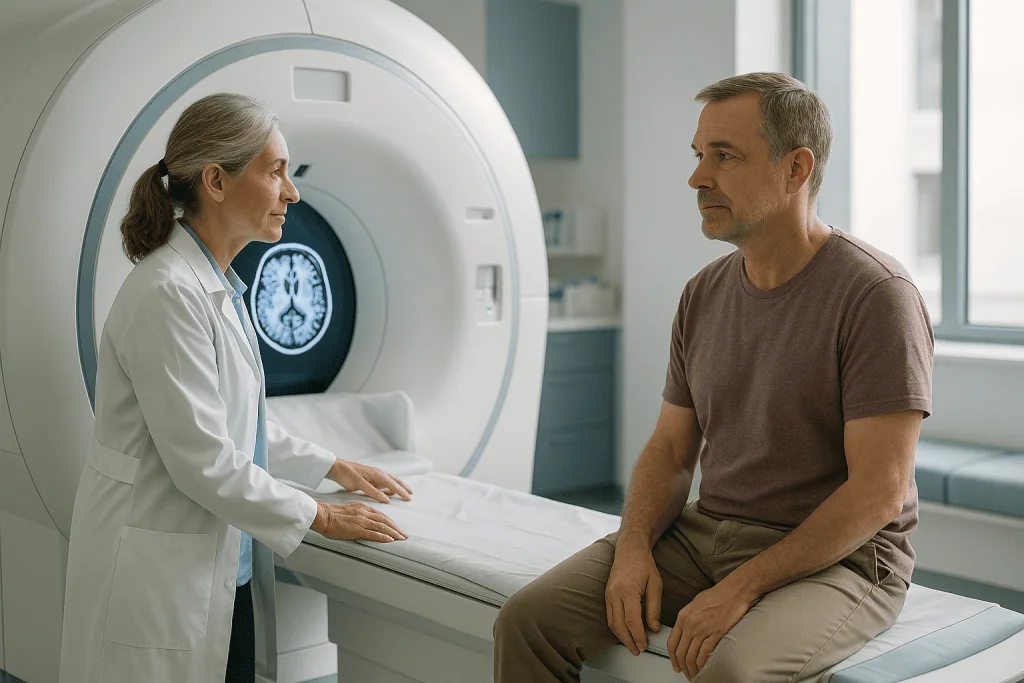
Ischemic stroke occurs when a blood vessel supplying the brain is blocked, reducing oxygen flow and causing sudden loss of brain function. Treatment focuses on restoring blood flow as quickly as possible and preventing further injury, using rapid evaluation, brain imaging, clot-dissolving medicines or catheter-based clot removal when appropriate, followed by rehabilitation and long-term stroke prevention.
What is ischemic stroke?
An ischemic stroke happens when a blood vessel that supplies blood to the brain becomes blocked, usually by a blood clot. When the blockage occurs, the part of the brain fed by that vessel no longer receives enough oxygen and nutrients. Brain cells begin to be injured within minutes, which is why a stroke is always a medical emergency. The word “ischemic” (pronounced iss-KEE-mik) simply means that blood flow has been reduced or cut off.
Ischemic stroke is the most common type of stroke. It is different from a hemorrhagic stroke, in which a blood vessel in or around the brain bleeds. Although the symptoms of the two types can look similar from the outside, the treatments are very different, so doctors must confirm which type has occurred before starting certain therapies.
People often ask what is ischemic stroke risk in terms of who it affects. Ischemic stroke can occur at any age, but it becomes much more common as people get older. It affects both men and women. People with high blood pressure, diabetes, heart rhythm problems, high cholesterol, or a history of smoking are at higher risk. A shorter, temporary version of the same problem, called a transient ischemic attack (TIA), sometimes described as a “mini-stroke”, causes stroke-like symptoms that resolve on their own, often within minutes to hours. A TIA is an important warning sign, because it signals a high risk of a full stroke in the near future.
Symptoms of ischemic stroke
Ischemic stroke symptoms usually begin suddenly. Because a stroke damages a specific area of the brain, the symptoms depend on which part of the brain is affected. In many cases, symptoms appear on one side of the body only.
Common warning signs include:
- Sudden weakness or numbness of the face, arm, or leg, especially on one side of the body
- Facial drooping, such as one side of the mouth sagging when the person tries to smile
- Trouble speaking or understanding speech, including slurred words or difficulty finding words
- Sudden vision problems in one or both eyes, such as blurring, double vision, or loss of part of the visual field
- Sudden dizziness, loss of balance, or difficulty walking
- Sudden confusion or difficulty following a conversation
- A sudden, severe headache with no known cause, in some cases
A widely used way to remember the main signs is the acronym FAST: Face drooping, Arm weakness, Speech difficulty, Time to call emergency services. If any of these signs appear, even briefly, emergency help should be called immediately.
Symptoms can differ depending on the stage and location of the stroke. In the very early phase, symptoms may fluctuate, improving and then worsening again, which can mislead people into waiting at home. In a transient ischemic attack, the same symptoms occur but then disappear completely, often within an hour. Even when symptoms fully resolve, urgent medical evaluation is still needed, because a TIA often precedes a larger stroke. Strokes affecting the back of the brain (the brainstem and cerebellum, which control balance and coordination) may cause dizziness, vomiting, double vision, and unsteadiness rather than the classic one-sided weakness, and these strokes are sometimes harder to recognize.
In the days and weeks after a stroke, some people develop additional problems such as difficulty swallowing, fatigue, changes in mood, or trouble with memory and attention. These later effects are part of the recovery phase rather than new warning signs, but they should always be discussed with the care team.
Causes and risk factors
Ischemic stroke causes generally fall into a few main groups, all of which end with a blocked artery in the brain:
- Large-artery atherosclerosis: Fatty deposits called plaque build up inside the arteries that supply the brain, such as the carotid arteries in the neck. Plaque can narrow the artery or break apart, triggering a clot that blocks blood flow.
- Cardioembolic stroke: A clot forms in the heart and travels to the brain. This is often related to atrial fibrillation, an irregular heart rhythm that allows blood to pool and clot inside the heart. Other heart conditions, such as certain valve problems or a recent heart attack, can also be sources of clots.
- Small-vessel disease (lacunar stroke): Tiny arteries deep inside the brain become damaged and blocked, often as a result of long-standing high blood pressure or diabetes.
- Other or undetermined causes: Less common causes include a tear in the wall of a neck artery (dissection), blood-clotting disorders, and certain inflammatory conditions. In some cases, despite thorough testing, no single cause is found; doctors call this a cryptogenic stroke.
Several risk factors make an ischemic stroke more likely. Some cannot be changed, such as older age, a family history of stroke, and a personal history of a previous stroke or TIA. Many others can be treated or improved:
- High blood pressure (hypertension)the most important treatable risk factor
- Atrial fibrillation and other heart disease
- Diabetes
- High cholesterol
- Smoking
- Obesity and physical inactivity
- Heavy alcohol use
- Obstructive sleep apnea, a condition in which breathing repeatedly stops during sleep
Managing these risk factors is the foundation of stroke prevention, both for people who have never had a stroke and for those who have already survived one.
Diagnosis
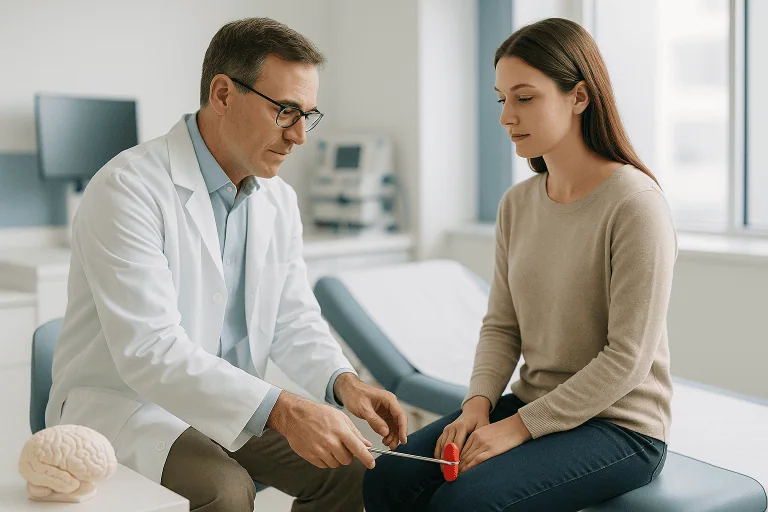
Ischemic stroke diagnosis begins the moment a person arrives at the hospital, because treatment decisions are extremely time-sensitive. The medical team first performs a rapid neurological examination, checking strength, sensation, speech, vision, coordination, and level of alertness. Doctors often use a standardized scoring tool called the NIH Stroke Scale to measure how severe the symptoms are and to track changes over time.
Imaging of the brain is essential and is done urgently:
- CT scan (computed tomography): A fast X-ray–based scan of the brain. Its most important early role is to rule out bleeding, because clot-dissolving medication cannot be given if the stroke is hemorrhagic. Early ischemic changes may or may not be visible on the first CT.
- CT angiography: A CT scan performed with contrast dye to show the blood vessels of the neck and brain. It helps doctors see whether a large artery is blocked, which affects treatment choices.
- MRI (magnetic resonance imaging): A scan that uses magnetic fields rather than X-rays. MRI is more sensitive than CT for detecting small or early ischemic strokes and helps define exactly which brain tissue is injured.
- Perfusion imaging: In selected cases, special CT or MRI techniques show which brain tissue is already permanently damaged and which is still salvageable, guiding decisions about later treatment windows.
Once the stroke is confirmed, doctors search for the underlying cause, because this determines how future strokes will be prevented. Common tests include:
- Electrocardiogram (ECG) and heart rhythm monitoring to look for atrial fibrillation, sometimes with a wearable monitor worn for days or weeks
- Echocardiogram, an ultrasound of the heart, to look for clots, valve disease, or other cardiac sources
- Ultrasound or angiography of the neck arteries to detect narrowing of the carotid arteries
- Blood tests to check blood sugar, cholesterol, clotting function, and other factors
This condition is typically evaluated and managed by stroke specialists within a neurology department, working together with emergency physicians, radiologists, and, when procedures are needed, interventional specialists and neurosurgeons.
Treatment options
Ischemic stroke treatment has two main goals: restoring blood flow to the brain as quickly as possible in the emergency phase, and preventing another stroke afterward. Watchful waiting is not an option during the acute event, every minute of delay can mean more brain injury, but careful monitoring does play a role in the days that follow.
Emergency treatment to restore blood flow
- Clot-dissolving medication (thrombolysis): A medicine given through a vein that breaks down the clot blocking the artery. It is effective only within a limited number of hours after symptoms begin, and only for patients who meet strict safety criteria, since it can cause bleeding. This is one reason immediate emergency care is so important.
- Mechanical thrombectomy: A procedure in which a specialist threads a thin tube (catheter) through an artery, usually from the groin or wrist, up to the blocked brain artery and physically removes the clot. It is used mainly for blockages of large arteries and, in carefully selected patients, may be performed within an extended time window based on advanced imaging.
Medication for prevention and recovery
- Antiplatelet drugs, such as aspirin, make the blood less likely to form clots and are commonly used after many ischemic strokes.
- Anticoagulants (stronger blood thinners) are often prescribed when the stroke was caused by a clot from the heart, especially in atrial fibrillation.
- Blood pressure medication to bring hypertension under long-term control.
- Statins, cholesterol-lowering drugs that also help stabilize plaque in the arteries.
- Diabetes management to keep blood sugar in a healthy range.
Procedures and surgery
- Carotid endarterectomy: A surgical operation to remove plaque from a significantly narrowed carotid artery in the neck, reducing the risk of a future stroke in appropriate patients.
- Carotid stenting: A less invasive alternative in which a small mesh tube (stent) is placed inside the narrowed artery to hold it open.
- Decompressive surgery: In rare, severe strokes that cause dangerous brain swelling, surgeons may temporarily remove part of the skull to relieve pressure. This is reserved for life-threatening situations.
Rehabilitation
Rehabilitation is a core part of stroke treatment, not an afterthought. Depending on the person’s needs, it may include physical therapy to rebuild strength and balance, occupational therapy to relearn daily tasks such as dressing and cooking, speech and language therapy for communication and swallowing problems, and psychological support for mood changes. Rehabilitation often begins in the hospital within days of the stroke and may continue for months. In hospital groups such as Acibadem, stroke care is coordinated across neurology, rehabilitation medicine, and cardiology teams so that acute treatment and long-term prevention are managed together.
Living with ischemic stroke and outlook
Recovery after an ischemic stroke varies widely from person to person. It depends on the size and location of the stroke, how quickly treatment was given, the person’s age and overall health, and how intensively rehabilitation is pursued. Some people recover most or all of their previous abilities; others live with lasting effects such as weakness on one side, speech difficulties, fatigue, or changes in thinking and memory. No doctor can guarantee a specific outcome, but meaningful improvement often continues for months after the stroke, with the fastest gains usually seen in the early weeks.
Living well after a stroke usually involves several ongoing efforts:
- Taking prescribed medications consistently, since stopping blood thinners or blood pressure drugs without medical advice can sharply raise the risk of another stroke
- Attending rehabilitation and follow-up appointments, where the care team can adjust therapy and monitor risk factors
- Adopting heart- and brain-healthy habits, such as not smoking, eating a balanced diet, staying physically active within the limits advised by the care team, and limiting alcohol
- Watching for mood changes: Depression and anxiety are common after stroke and are treatable; they should be mentioned to the doctor rather than endured silently
- Involving family and caregivers, who often benefit from education about what to expect and how to help safely
People who have had one ischemic stroke are at higher risk of another, which is why long-term prevention is taken so seriously. With good risk-factor control, that risk can often be reduced substantially, although it cannot be eliminated entirely.
Frequently asked questions
What is ischemic stroke in simple terms?
An ischemic stroke is a blockage of a blood vessel in the brain, usually caused by a blood clot. The blockage stops oxygen-rich blood from reaching part of the brain, and brain cells in that area begin to die within minutes. It is the most common type of stroke and is always a medical emergency, even if the symptoms seem mild or start to improve.
Can the brain heal after an ischemic stroke?
Brain cells that have died from lack of oxygen do not grow back, but the brain has a remarkable ability to adapt, a process called neuroplasticity. In many cases, surviving areas of the brain can gradually take over some of the functions of the damaged area, especially with consistent rehabilitation. Improvement is often greatest in the first weeks and months, though some people continue to make gains over a longer period. The degree of recovery varies from person to person and cannot be guaranteed.
How serious is an ischemic stroke?
Seriousness ranges widely. Some ischemic strokes are small and cause mild or temporary symptoms, while others are large and can cause lasting disability or be life-threatening. Key factors include which artery is blocked, how much brain tissue is affected, and how quickly blood flow is restored. Because early treatment can dramatically change the outcome, every suspected stroke should be treated as an emergency regardless of how mild the symptoms seem.
What are the first ischemic stroke symptoms to watch for?
The most common early signs are sudden weakness or numbness on one side of the body, drooping of one side of the face, and sudden trouble speaking or understanding speech. Sudden vision loss, severe dizziness with loss of balance, and sudden confusion can also be first symptoms. The key word is “sudden”, stroke symptoms typically appear abruptly rather than building up over days.
How is ischemic stroke different from a hemorrhagic stroke?
An ischemic stroke is caused by a blocked artery, while a hemorrhagic stroke is caused by a burst blood vessel that bleeds into or around the brain. The symptoms can look similar, so a brain scan is needed to tell them apart. The distinction matters greatly, because clot-dissolving medicines used for ischemic stroke would be dangerous in a bleeding stroke. This is one reason self-treatment at home, such as taking aspirin before evaluation, is not recommended without medical advice.
How long does recovery from an ischemic stroke take?
There is no single timeline. Some people with small strokes recover within days to weeks, while others need months or longer of rehabilitation and may have some permanent effects. The most rapid improvement often occurs in the first three months, but slower gains can continue afterward, particularly with ongoing therapy. Your care team can give a more individualized picture based on the size and location of the stroke and your progress in rehabilitation.
Can another ischemic stroke be prevented?
The risk of a second stroke can often be reduced significantly, though not eliminated. Prevention usually combines medications, such as antiplatelet drugs or anticoagulants, blood pressure medicines, and statins, with lifestyle changes like quitting smoking, eating a balanced diet, and staying active. In some patients, a procedure to open a narrowed neck artery is also recommended. Following the prevention plan agreed with your doctor is the most reliable step you can take.
When to see a doctor
A suspected stroke is a medical emergency. Do not wait to see whether symptoms improve, and do not drive yourself to the hospital, call your local emergency number immediately if you or someone near you develops any of the following sudden warning signs:
- Sudden weakness or numbness of the face, arm, or leg, especially on one side of the body
- Facial drooping or an uneven smile
- Sudden difficulty speaking, slurred speech, or trouble understanding others
- Sudden loss of vision or double vision in one or both eyes
- Sudden severe dizziness, loss of balance, or inability to walk
- Sudden severe headache unlike any headache experienced before
- Sudden confusion or unresponsiveness
Seek urgent evaluation even if the symptoms disappear within minutes, because a transient ischemic attack is often a warning of an impending stroke. After a stroke, contact your doctor promptly if you notice new or worsening weakness, new trouble swallowing, signs of unusual bleeding while taking blood thinners, or a significant change in mood or thinking. Acting quickly, both at the first sign of a stroke and during recovery, gives the brain the best possible chance.
Medically reviewed by the Acıbadem International Medical Board September 3, 2026
See our medical review board →
Update history
- PublishedJune 8, 2026
- Medical review approvedSeptember 3, 2026
- Last content updateSeptember 2, 2026