Labial Adhesions
Learn what labial adhesions are, common symptoms and causes, how doctors confirm the diagnosis, and treatment options from observation to creams and procedures.
Quick answer
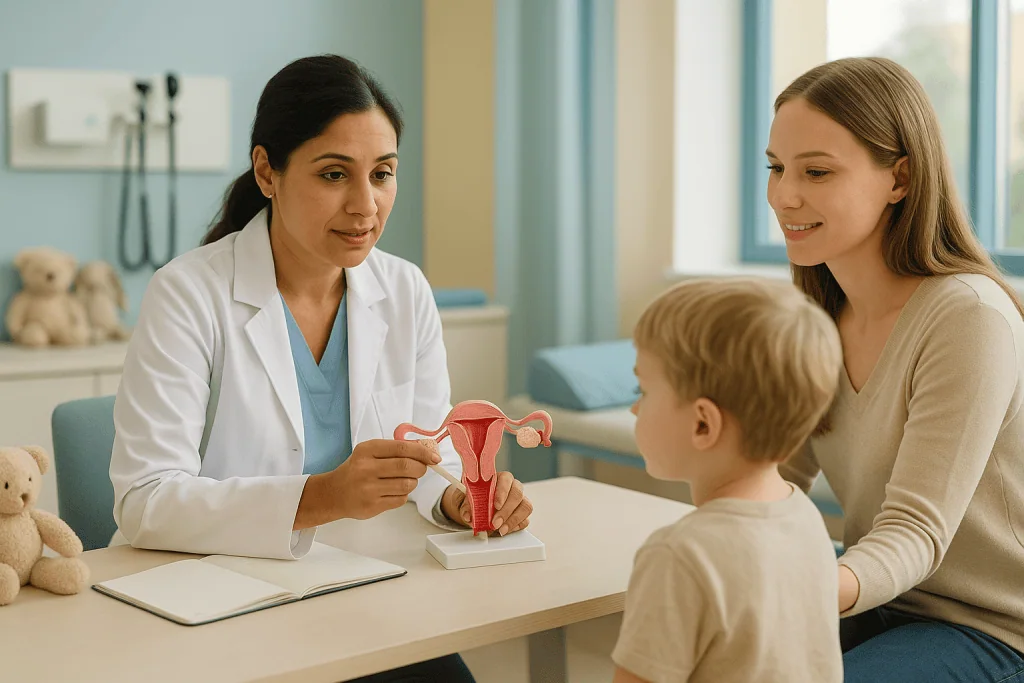
Labial adhesions occur when the inner folds of skin at the vaginal opening (labia minora) stick together, most often in girls between infancy and about six years. They are usually harmless, linked to low estrogen and skin irritation, and frequently resolve on their own. Treatment, when needed, typically involves topical estrogen or steroid cream.
What is labial adhesions?
Labial adhesions (also called labial fusion or labial agglutination) is a condition in which the two inner folds of skin at the opening of the vagina, called the labia minora, stick together. The joined skin can form a thin, pale line of tissue that partly or almost completely covers the vaginal opening. In most cases the urethra (the tube that carries urine out of the body) stays at least partly uncovered, so a child can still pass urine, although the stream may be altered.
Labial adhesions are most often seen in young girls, typically between a few months of age and about six or seven years. The condition is not something a child is born with in the vast majority of cases; it develops after birth. It is generally considered a benign (harmless) condition that often resolves on its own, particularly as a girl approaches puberty and her body begins to produce more estrogen. Adults, especially women after menopause, can occasionally develop labial adhesions too, usually because of low estrogen levels or chronic skin inflammation, but this is far less common.
Because the condition mainly affects young children, it is usually managed by a pediatrician or a pediatric gynecologist. At Acibadem, this care falls under the Pediatrics department, which coordinates examination, treatment decisions, and follow-up.
Labial adhesions symptoms
Many children with labial adhesions have no symptoms at all. Parents or caregivers often discover the condition by chance, for example while bathing the child or changing a diaper, or a doctor notices it during a routine check-up. When labial adhesions symptoms do occur, they are usually related to how urine flows past the fused tissue.
- Visible closure: the labia appear joined by a thin, pale or grayish line, and the vaginal opening looks partly or fully covered.
- Altered urine stream: urine may spray, dribble, or flow in an unusual direction.
- Post-void dribbling: a small amount of urine can pool behind the fused tissue and leak out after the child stands up, dampening underwear.
- Irritation or redness of the vulva (the outer genital area) from trapped moisture.
- Discomfort or stinging when passing urine.
- Frequent urinary tract infections (infections of the bladder or urethra), which may show up as fever, pain, or a strong-smelling urine.
- Difficulty passing urine or straining, which is uncommon and mainly seen when the adhesion covers most of the opening.
Doctors sometimes describe labial adhesions by how much of the opening is involved. A partial adhesion covers only part of the vaginal opening, usually starting at the back (toward the anus), and often causes no symptoms. A complete or near-complete adhesion covers most of the opening and is more likely to cause urine pooling, dribbling, irritation, or infections. Even a complete adhesion rarely blocks urine flow entirely, because a small opening usually remains near the front.
In adult women, symptoms can include difficulty with urination, discomfort during intercourse, recurrent urinary infections, or a feeling of tightness in the genital area.
Causes and risk factors
The exact reason some children develop labial adhesions and others do not is not fully understood, but two main factors are widely accepted as labial adhesions causes.
Low estrogen. Estrogen is a hormone that helps keep the skin and tissues of the vulva thick, moist, and resilient. Between infancy and puberty, girls naturally have very low estrogen levels. This makes the thin skin of the labia minora more delicate and more likely to stick together if it becomes irritated. As estrogen rises at puberty, the tissue changes and adhesions usually separate on their own. A similar drop in estrogen after menopause explains why the condition occasionally appears in older women.
Irritation or inflammation. When the delicate skin of the labia becomes inflamed, the surfaces can heal together as they recover, in the same way that two raw skin surfaces held in contact may stick. Common sources of irritation include:
- Diaper rash or prolonged contact with wet diapers.
- Vulvovaginitis, an inflammation of the vulva and vagina, which is common in young girls.
- Soaps, bubble baths, scented wipes, or detergents that irritate the skin.
- Poor or over-vigorous hygiene, including wiping from back to front.
- Skin conditions such as eczema or lichen sclerosus (a chronic inflammatory skin disorder that can affect the genital area).
- Minor injury or friction in the genital area.
Risk factors that make labial adhesions more likely include being between about three months and six years of age, ongoing exposure to irritants, a history of vulvovaginitis, and a previous episode of labial adhesions, because recurrence is common. It is important to note that labial adhesions are very common and are not, on their own, a sign of abuse. However, because injuries in the genital area can sometimes cause adhesions, a doctor will take a careful history as part of a normal, thorough examination.
Labial adhesions diagnosis
Labial adhesions diagnosis is almost always made by a simple physical examination. No blood tests, imaging, or invasive procedures are usually needed. A doctor gently examines the outer genital area, often while the child lies on her back with knees bent, or on a parent’s lap. The characteristic finding is a thin, translucent or pale line where the labia minora have joined, extending from the back of the opening toward the front.
During the examination the doctor will typically assess:
- How much of the vaginal opening is covered (partial versus complete).
- Whether the urethral opening is visible and free.
- Signs of redness, discharge, or skin disease that may be causing irritation.
- Whether there is any evidence of injury.
The main task in diagnosis is to distinguish labial adhesions from other, much rarer conditions that can make the vaginal opening look closed. These include an imperforate hymen (a hymen, the thin membrane at the vaginal entrance, that has no opening), vaginal agenesis (a congenital absence or underdevelopment of the vagina), and other differences in genital development. In labial adhesions, the fused tissue is the labia themselves, and the hymen and vagina behind it are normal. An experienced clinician can usually tell these apart on inspection.
Additional tests are reserved for specific situations. If the child has symptoms of a urinary infection, the doctor may request a urine test (urinalysis and culture). If the anatomy is unclear, or if there is concern about a congenital problem, a pelvic ultrasound, a painless scan using sound waves, may be arranged. An examination under anesthesia is rarely needed and is considered only when the diagnosis cannot be confirmed otherwise.
Labial adhesions treatment options
Labial adhesions treatment depends on whether the child has symptoms, how extensive the adhesion is, and the preferences of the family after discussion with the doctor. Because the condition often resolves without any intervention, treatment is not always necessary.
Observation (watchful waiting)
If a child has no symptoms and passes urine normally, many doctors recommend simply monitoring the condition. The adhesion frequently separates on its own over months or years, and most cases resolve by puberty as estrogen levels rise. During this time, the focus is on gentle hygiene and avoiding irritants so that the adhesion does not worsen. Periodic check-ups allow the doctor to confirm that the opening remains adequate and that no new symptoms have appeared.
Topical estrogen cream
When treatment is chosen, a low-dose estrogen cream applied directly to the line of fusion is a widely used first option. The cream is typically applied in a very small amount with a fingertip or cotton swab once or twice daily, often for a few weeks, with gentle pressure along the fused line. Estrogen helps the tissue thicken and separate. Your doctor will explain exactly how much to use and for how long, because using more than needed does not speed results and may increase side effects. Possible temporary side effects include mild darkening of the skin, slight breast budding, or spotting; these generally fade once the cream is stopped. The adhesion can return after treatment, so a moisturizing ointment is usually recommended afterward.
Topical corticosteroid cream
Some doctors use a mild steroid cream, such as betamethasone, either instead of or after estrogen cream. Steroids reduce inflammation and can help the tissue separate. The choice between estrogen and steroid cream depends on the individual case and the doctor’s judgment. As with any medicated cream, it should be used only as directed.
Emollients and barrier ointments
Plain petroleum jelly or a similar bland ointment is often recommended, both during treatment and for weeks afterward. It keeps the labia from sticking together again while the skin heals and also protects the area from urine and moisture. This simple step is considered an important part of reducing recurrence.
Manual separation
If cream treatment does not work or if the adhesion is causing significant urinary problems, a doctor may gently separate the labia in the clinic after applying a numbing (local anesthetic) cream. This is usually quick, but it can be uncomfortable or frightening for a young child, and adhesions that are pulled apart can re-form if the area is not kept lubricated afterward. For these reasons, manual separation is generally reserved for symptomatic cases that have not responded to creams.
Surgical separation
Surgery under general anesthesia is rarely needed. It may be considered when the adhesion is thick and dense, when it causes urinary retention or repeated infections, and when other treatments have failed. The procedure itself is brief, but the same aftercare with emollient ointment is essential to reduce the chance of the labia fusing again.
Treating the underlying irritation
Whatever approach is chosen, doctors usually also address the cause of irritation: treating vulvovaginitis or a skin condition, changing diapers promptly, avoiding scented products and bubble baths, using loose cotton underwear, and encouraging front-to-back wiping once a child is toilet trained.
Living with labial adhesions and outlook
For the great majority of children, labial adhesions are a temporary and harmless condition. Many resolve spontaneously, and those treated with creams often separate within weeks. However, recurrence is common, especially in younger children, and some families go through more than one episode before puberty. Recurrence does not mean something has been done wrong; it reflects the low-estrogen environment of childhood and the delicate nature of the skin.
Once puberty begins, the rising estrogen levels usually resolve the problem for good, and labial adhesions are not known to affect future fertility, sexual function, or menstruation. Complications such as urinary tract infections or difficulty urinating are uncommon and, when they occur, can generally be managed with appropriate treatment.
Day-to-day, the most helpful measures are gentle hygiene, keeping the genital area clean and dry, avoiding known irritants, and applying a bland ointment if a doctor has recommended it. Parents are often understandably anxious when they first notice the change, but the condition is common, and a calm, matter-of-fact approach helps the child feel comfortable during examinations and care. If a child has been treated, a follow-up visit lets the doctor check that the labia remain separated and that no further steps are needed.
Frequently asked questions
Are labial adhesions dangerous?
In most cases, no. Labial adhesions are usually a benign condition that causes no harm and often resolves by itself. The main potential problems are urine pooling behind the fused tissue, irritation, and an increased chance of urinary tract infections. Complete blockage of urine is rare. Your doctor can advise whether a particular child needs treatment or can simply be observed.
What are the first labial adhesions symptoms parents notice?
Often there are none, and the change is seen by chance during bathing or a diaper change. When symptoms are present, they commonly include a urine stream that sprays or dribbles, wet underwear shortly after using the toilet, redness in the genital area, or repeated urinary infections. Any of these findings is a reasonable reason to have a doctor take a look.
What causes labial adhesions in toddlers?
The most accepted labial adhesions causes are the naturally low estrogen levels of early childhood combined with irritation of the delicate genital skin, for example from diapers, soaps, or vulvovaginitis. When irritated skin surfaces heal while touching, they can stick together. Toddlers are in the peak age range because they are still in diapers or newly toilet trained and have very low estrogen.
How is labial adhesions diagnosis made?
Diagnosis is made by a doctor gently examining the genital area. The characteristic thin, pale line of fused tissue is usually enough to confirm the condition, and tests are not normally needed. A urine test may be requested if infection is suspected, and an ultrasound is used only occasionally if the anatomy is unclear or another condition needs to be ruled out.
What is the best labial adhesions treatment?
There is no single best treatment for every child. For symptom-free cases, watchful waiting with good hygiene is often appropriate. When treatment is needed, a short course of low-dose estrogen or mild steroid cream is commonly used first, followed by a bland ointment to prevent re-fusion. Manual or surgical separation is reserved for cases with significant symptoms that have not responded to creams.
Will labial adhesions come back after treatment?
They can. Recurrence is fairly common in young children because the underlying low-estrogen state persists until puberty. Applying a bland emollient to the area for several weeks after treatment, keeping the area clean and dry, and avoiding irritants may reduce the likelihood of recurrence, but it cannot guarantee that the adhesion will not return.
Can adults get labial adhesions?
Yes, although it is much less common. Adults, particularly women after menopause, can develop adhesions because estrogen levels fall again in later life, and chronic skin conditions such as lichen sclerosus can also contribute. Treatment in adults may involve topical estrogen, treatment of the underlying skin disease, and in some cases surgical separation.
When to see a doctor
It is reasonable to have any newly noticed change in a child’s genital area checked by a doctor, even when there are no symptoms, so that the diagnosis can be confirmed and a plan agreed. Routine follow-up is also advisable during and after any treatment. Seek medical attention promptly if any of the following occur:
- The child cannot pass urine or is straining and producing only a few drops.
- Fever together with pain on urination, foul-smelling urine, or vomiting, which may indicate a urinary tract infection spreading to the kidneys.
- Severe pain, swelling, or bleeding in the genital area.
- Visible pus or unusual discharge from the vaginal or urethral opening.
- A distended (swollen) lower abdomen in a child who has not urinated for many hours.
- Repeated urinary infections despite treatment.
- Signs of a reaction to treatment cream, such as marked skin changes, bleeding, or noticeable breast development.
These situations are uncommon, but they warrant a same-day assessment so that urine flow can be checked and any infection treated without delay.
Medically reviewed by the Acıbadem International Medical Board September 13, 2026
See our medical review board →
Update history
- PublishedSeptember 13, 2026
- Medical review approvedSeptember 13, 2026
- Last content updateSeptember 13, 2026