Quick answer
Liver cancer is a malignant tumor that starts in the liver or spreads there from another part of the body, and treatment depends on the cancer type, stage, and overall liver function. At Acibadem in Turkey, evaluation typically includes imaging, laboratory tests, and sometimes biopsy, with care planned by a multidisciplinary team using options such as surgery, ablation, embolization, systemic…
What is liver cancer?
Liver cancer is a disease in which abnormal cells grow out of control in the liver, the large organ in the upper right part of the abdomen that filters the blood, helps digest food, and stores energy. When doctors talk about primary liver cancer, they mean cancer that starts in the liver itself, rather than cancer that has spread to the liver from another organ (which is called secondary or metastatic liver cancer and is treated differently).
The most common type of primary liver cancer in adults is hepatocellular carcinoma, often shortened to HCC. It begins in hepatocytes, the main working cells of the liver. A less common type is cholangiocarcinoma, which starts in the bile ducts, the small tubes that carry bile (a digestive fluid) out of the liver. Rare forms also exist, including angiosarcoma and, in children, hepatoblastoma.
Liver cancer can affect anyone, but it occurs most often in people who have long-standing liver disease. Chronic infection with hepatitis B or hepatitis C viruses, heavy alcohol use over many years, and cirrhosis (permanent scarring of the liver) are the conditions most closely linked to it. It is generally more common in men than in women and usually appears in middle age or later, although this varies from person to person and by region of the world.
Understanding what is liver cancer, how it is found, and how it is treated can help you take part in decisions about your care. This page explains the basics in plain language, but it is general information only and cannot replace advice from your own medical team.
Symptoms of liver cancer
One of the most important things to know about liver cancer symptoms is that they often do not appear until the disease is advanced. In the early stages, many people feel entirely well. This is partly because the liver is a large organ with a lot of spare capacity, and partly because early tumors are usually small and painless. That is why doctors often recommend regular surveillance scans for people with cirrhosis or chronic hepatitis, even when they feel fine.
When symptoms do develop, they may include:
- Unintentional weight losslosing weight without trying, often noticeable over weeks or months.
- Loss of appetite or feeling full very quickly after eating only a small amount.
- Pain or discomfort in the upper right abdomen, sometimes felt near the right shoulder blade or in the back.
- A hard lump or swelling under the ribs on the right side.
- Jaundicea yellow tint to the skin and the whites of the eyes, caused by a buildup of bilirubin, a pigment the liver normally clears from the blood.
- Dark urine and pale, clay-colored stools, which can accompany jaundice.
- Abdominal swelling caused by ascites, a buildup of fluid in the belly.
- Nausea or vomiting.
- Ongoing fatigue and weakness that does not improve with rest.
- Itchy skin, which can occur when bile products build up in the body.
- Fever without an obvious infection, in some cases.
- Easy bruising or bleeding, because a damaged liver makes fewer of the proteins that help blood clot.
Symptoms can differ depending on the type and stage of the cancer. Hepatocellular carcinoma often develops in a liver that is already scarred, so early symptoms may be blamed on the underlying cirrhosis rather than a new tumor. A sudden worsening of previously stable liver disease, for example, new ascites, jaundice, or confusion, can sometimes be the first sign that a cancer has developed. Cholangiocarcinoma, which starts in the bile ducts, is more likely to cause jaundice and itching relatively early, because even a small tumor can block the flow of bile.
None of these symptoms proves that a person has liver cancer. Gallstones, hepatitis, and many other conditions can cause similar problems. However, because liver cancer symptoms tend to appear late, any of the changes above deserves prompt medical attention, especially in someone with known liver disease.
Causes and risk factors
Doctors do not always know exactly why a particular person develops liver cancer, but the main liver cancer causes and risk factors are well established. Most of them involve long-term injury and inflammation of the liver, which over years can lead to genetic changes in liver cells.
- Chronic hepatitis B infection. The hepatitis B virus can cause long-lasting liver inflammation and can raise cancer risk even before cirrhosis develops. A safe and effective vaccine against hepatitis B exists and is one of the most important tools for prevention.
- Chronic hepatitis C infection. Long-term hepatitis C infection can lead to cirrhosis and liver cancer. Modern antiviral medicines can cure most hepatitis C infections, which lowers, though does not completely eliminate, future cancer risk.
- Cirrhosis from any cause. Cirrhosis is severe, permanent scarring of the liver. Whatever its cause, viral hepatitis, alcohol, or fatty liver disease, cirrhosis substantially raises the risk of hepatocellular carcinoma.
- Heavy, long-term alcohol use. Alcohol damages liver cells directly and is a leading cause of cirrhosis.
- Non-alcoholic fatty liver disease. A buildup of fat in the liver, often linked to obesity and type 2 diabetes, can progress to inflammation, scarring, and in some cases cancer.
- Type 2 diabetes and obesity. Both are associated with a higher risk of liver cancer, partly through their link with fatty liver disease.
- Aflatoxin exposure. Aflatoxins are poisons produced by certain molds that can grow on improperly stored grains and nuts. Long-term exposure, more common in some regions of the world, increases liver cancer risk.
- Inherited liver conditions. Disorders such as hereditary hemochromatosis (a buildup of iron in the body) and, less commonly, other inherited metabolic diseases can raise risk.
- Smoking. Tobacco use is associated with an increased risk of liver cancer.
- Sex and age. Men develop liver cancer more often than women, and risk generally rises with age.
Having one or more risk factors does not mean a person will definitely develop liver cancer, and some people develop it with no obvious risk factor at all. Reducing risk where possible, through hepatitis B vaccination, treatment of hepatitis B and C, limiting alcohol, and managing weight and diabetes, is worthwhile, and people with cirrhosis or chronic hepatitis B are often advised to have regular surveillance, typically an ultrasound scan every six months, sometimes with a blood test.
Diagnosis
Liver cancer diagnosis usually begins when a scan shows an abnormal area in the liver, either during surveillance in a person with known liver disease or during tests done to investigate symptoms. To confirm the diagnosis and plan treatment, doctors typically use a combination of the following:
- Medical history and physical examination. Your doctor will ask about symptoms, alcohol use, hepatitis history, and family history, and will examine your abdomen for swelling, tenderness, or an enlarged liver.
- Blood tests. Liver function tests measure how well the liver is working. Doctors may also check for hepatitis B and C and measure alpha-fetoprotein (AFP), a protein that is elevated in many, but not all, people with hepatocellular carcinoma. A normal AFP result does not rule out cancer, and a raised result does not prove it, so this test is interpreted alongside imaging.
- Ultrasound. A painless scan that uses sound waves; it is often the first imaging test and the standard tool for surveillance.
- Contrast-enhanced CT or MRI. Computed tomography (CT) and magnetic resonance imaging (MRI) with an injected contrast dye show how blood flows through a liver lesion over time. Hepatocellular carcinoma often has a characteristic pattern on these scans. In a person with cirrhosis, this typical appearance can be enough to confirm the diagnosis without a biopsy: an unusual feature of liver cancer compared with most other cancers.
- Biopsy. In some situations, especially when imaging is not conclusive or when the person does not have cirrhosis, a doctor removes a small sample of the tumor with a needle so that it can be examined under a microscope.
- Staging tests. Additional scans, such as a chest CT or, in selected cases, a bone scan, help determine whether the cancer has spread beyond the liver.
Staging for liver cancer is somewhat different from staging for many other cancers, because the health of the rest of the liver matters as much as the size and spread of the tumor. Doctors assess the number and size of tumors, whether major blood vessels are involved, whether the cancer has spread, how well the liver is functioning, and the person’s overall fitness. All of these factors together guide the choice of treatment.
Treatment options
Liver cancer treatment is highly individualized. The best option depends on the type of cancer, its size and location, whether it has spread, how well the underlying liver is working, and your general health. Care is usually planned by a multidisciplinary team that may include liver specialists (hepatologists), surgeons, medical oncologists, interventional radiologists, and radiation oncologists. In hospital groups such as Acibadem, the medical oncology department typically coordinates the drug-based part of this care together with the other specialties involved. A general overview of how such centers approach liver cancer care can help you understand what to expect, but your own plan will be tailored to your situation.
Surgery
When the tumor is confined to one part of the liver and the rest of the liver is healthy enough, surgeons may remove the tumor along with a margin of surrounding tissue. This operation is called a partial hepatectomy or liver resection. The liver has a remarkable ability to regrow, but resection is generally only possible when liver function is well preserved, which is why many people with cirrhosis are not candidates.
Liver transplantation
For selected people whose cancer meets specific size and number criteria and has not spread, replacing the entire liver with a donor liver can treat both the cancer and the underlying cirrhosis at the same time. Transplantation depends on strict eligibility criteria and the availability of a suitable donor organ, and it requires lifelong medication to prevent rejection.
Ablation
Ablation destroys small tumors without removing them, usually by passing a thin needle through the skin into the tumor under image guidance. Radiofrequency ablation and microwave ablation use heat; other techniques exist. Ablation is often used for small tumors when surgery is not suitable, and in some cases it can be as effective as surgery for very small cancers.
Embolization procedures
Embolization treatments block the blood supply that feeds a liver tumor. In transarterial chemoembolization (TACE), a doctor threads a thin tube through the blood vessels to the tumor and delivers chemotherapy drugs together with particles that block the artery. Radioembolization delivers tiny radioactive beads in a similar way. These procedures are often used for tumors that cannot be removed but have not spread outside the liver, and sometimes to control the cancer while a person waits for a transplant.
Radiation therapy
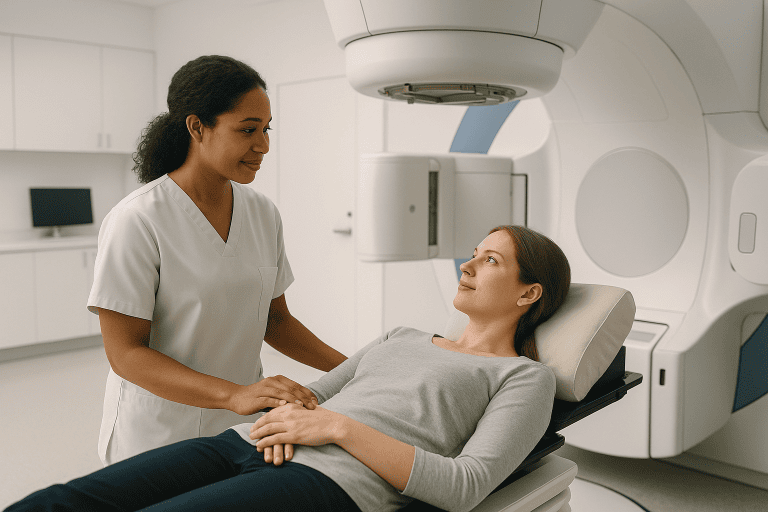
Modern, precisely targeted radiation techniques can treat some liver tumors when surgery and ablation are not options, while limiting the dose to healthy liver tissue.
Drug treatments
For liver cancer that has spread or cannot be treated with local methods, doctors may recommend systemic therapy, medicines that travel through the whole body. Options may include targeted therapy drugs, which block specific signals cancer cells use to grow, and immunotherapy drugs, which help the immune system recognize and attack cancer cells. Immunotherapy, often combined with a targeted drug, has become a standard option for advanced hepatocellular carcinoma in many settings. Traditional chemotherapy plays a smaller role in hepatocellular carcinoma but remains important for cholangiocarcinoma. Your medical team will explain which medicines may be appropriate for you and what side effects to expect.
Watchful waiting and supportive care
In some situations, for example, a very small lesion of uncertain significance, or when a person is too unwell for active treatment, doctors may recommend careful monitoring with regular scans rather than immediate intervention. Palliative care, which focuses on relieving symptoms such as pain, fluid buildup, and nausea, and on supporting quality of life, is an important part of care at any stage and can be provided alongside active treatment.
Living with liver cancer and outlook
The outlook for liver cancer varies widely. In general, small cancers found early, especially through surveillance in people with known liver disease, can often be treated with surgery, transplantation, or ablation with the aim of cure. Cancers found at a later stage, or in a liver that is severely scarred, are harder to treat, and the goal of care may shift toward controlling the disease, easing symptoms, and preserving quality of life for as long as possible. Because outcomes depend so much on individual factors, no one can promise a specific result, and general survival statistics may not reflect your personal situation. Your own doctors are best placed to discuss what your test results mean for you.
Living with liver cancer usually means ongoing follow-up, including regular scans and blood tests, even after successful treatment, because new tumors can develop in a liver that remains diseased. Caring for the underlying liver condition is just as important as treating the cancer: this may involve antiviral medicines for hepatitis, avoiding alcohol completely, eating a balanced diet, and reviewing all medicines and supplements with your doctor, since some can strain the liver. Fatigue, changes in appetite, and emotional distress are common; support from dietitians, palliative care teams, counselors, and patient support groups can make a real difference for many people and their families.
Frequently asked questions
What is liver cancer in simple terms?
Liver cancer is the uncontrolled growth of abnormal cells that starts in the liver. The most common form in adults, hepatocellular carcinoma, develops in the main liver cells, usually in a liver already damaged by hepatitis, alcohol, or fatty liver disease. It is different from cancer that spreads to the liver from elsewhere in the body, which is named after the organ where it started.
What are the first symptoms of liver cancer?
Often there are none at first, which is why surveillance scans matter for people at risk. When early liver cancer symptoms do occur, they are usually vague, mild discomfort in the upper right abdomen, tiredness, reduced appetite, or unexplained weight loss. More obvious signs such as jaundice or abdominal swelling tend to appear later. Anyone with these changes, especially with known liver disease, should see a doctor promptly.
Can liver cancer be cured?
In many cases, yes, when the cancer is found early and the rest of the liver is healthy enough, treatments such as surgery, liver transplantation, or ablation are given with the aim of cure. When the cancer is more advanced, cure is less likely, but treatments can often slow the disease and relieve symptoms. Outcomes vary greatly from person to person, so it is important to discuss your individual situation with your medical team.
How serious is liver cancer?
Liver cancer is a serious diagnosis, partly because it is often found late and partly because it usually occurs in a liver that is already damaged. However, seriousness depends heavily on the stage at diagnosis and on liver function. Early-stage disease treated promptly generally has a much better outlook than advanced disease, which is one reason regular checkups are recommended for people with cirrhosis or chronic hepatitis.
How is liver cancer diagnosed without a biopsy?
In people with cirrhosis, hepatocellular carcinoma often shows a characteristic pattern of blood flow on contrast-enhanced CT or MRI scans. When this typical pattern is present, doctors can usually confirm the liver cancer diagnosis from the imaging alone, without a needle biopsy. A biopsy is still used when the imaging is unclear or when the person does not have underlying cirrhosis.
What is the recovery like after liver cancer treatment?
Recovery depends on the treatment. After liver surgery, most people spend some days in the hospital and need several weeks to regain strength while the liver regrows. Ablation and embolization procedures usually involve shorter recoveries, though temporary pain, fever, or fatigue can occur. Transplantation involves a longer recovery and lifelong medication. Regardless of treatment, ongoing scans and blood tests are needed to watch for recurrence.
Can liver cancer be prevented?
Not always, but risk can be reduced. Hepatitis B vaccination, testing and treatment for hepatitis B and C, limiting or avoiding alcohol, maintaining a healthy weight, managing diabetes, and not smoking all lower the chance of developing liver cancer. People who already have cirrhosis or chronic hepatitis B benefit most from regular surveillance, which does not prevent cancer but helps find it at a treatable stage.
When to see a doctor
See a doctor promptly if you notice possible signs of liver disease or liver cancer, particularly if you have hepatitis, cirrhosis, heavy alcohol use, or fatty liver disease. Warning signs that need urgent medical assessment include:
- Yellowing of the skin or eyes (jaundice), especially if it appears or worsens quickly.
- Rapid swelling of the abdomen or sudden weight gain from fluid buildup.
- Severe or worsening pain in the upper right abdomen.
- Vomiting blood or passing black, tarry stools, which can signal internal bleeding and is a medical emergency.
- New confusion, extreme drowsiness, or personality changes, which can indicate that the liver is failing to clear toxins from the blood.
- Unexplained weight loss or loss of appetite that continues for more than a couple of weeks.
- A new lump or fullness under the ribs on the right side.
- Fever with jaundice or abdominal pain.
If you have a condition that raises your risk of liver cancer, ask your doctor whether regular surveillance is appropriate for you, and keep scheduled follow-up appointments even when you feel well. Finding liver cancer early gives the widest range of treatment options and the best chance of a good outcome.
Medically reviewed by the Acıbadem International Medical Board September 3, 2026
See our medical review board →
Update history
- PublishedJune 14, 2026
- Medical review approvedSeptember 3, 2026
- Last content updateSeptember 2, 2026