Liver Disease
Learn about liver disease: common symptoms, causes and risk factors, how doctors diagnose it, treatment options, and warning signs that need urgent care.
Quick answer
Liver disease is any condition that damages the liver or stops it working properly, including fatty liver disease, viral hepatitis, alcohol-related disease, autoimmune and inherited disorders, and liver cancer. Early stages often cause no symptoms; later signs include tiredness, jaundice, and swelling. Treatment targets the cause and may include lifestyle changes, medicines, procedures, or transplant.
What is liver disease?
Liver disease is a broad term for any condition that damages the liver or stops it from working properly. The liver is a large organ in the upper right part of the abdomen. It filters toxins from the blood, helps digest fat by making bile (a fluid that breaks down fats), stores energy, makes proteins that help blood clot, and processes medicines and alcohol. Because it does so many jobs, damage to the liver can affect the whole body.
When people ask what is liver disease, it helps to know that it is not a single illness. It includes many different conditions, such as fatty liver disease, viral hepatitis (inflammation of the liver caused by a virus), alcohol-related liver disease, autoimmune liver diseases (in which the immune system attacks the liver), inherited conditions such as hemochromatosis (too much iron) and Wilson disease (too much copper), and liver cancer. Over time, many of these conditions can lead to fibrosis (scar tissue in the liver) and eventually cirrhosis (widespread scarring that permanently changes the liver’s structure).
Liver disease affects people of all ages, including children, although some types are far more common in adults. Fatty liver disease is now one of the most common forms worldwide and is closely linked to excess weight, type 2 diabetes, and high cholesterol. The liver has a remarkable ability to repair itself, so early-stage disease can often be slowed or partly reversed if the cause is addressed. Advanced scarring is harder to reverse, which is why early recognition matters.
Liver disease symptoms
Liver disease symptoms are often mild or absent in the early stages. Many people learn they have a liver problem only after a routine blood test shows abnormal results. As damage progresses, symptoms tend to appear and become more noticeable.
Common liver disease symptoms include:
- Tiredness or weakness that does not improve with rest
- Jaundice (yellowing of the skin and the whites of the eyes)
- Pain or a feeling of fullness in the upper right side of the abdomen
- Nausea, loss of appetite, or unintended weight loss
- Dark urine and pale or clay-colored stools
- Itchy skin
- Swelling in the legs, ankles, or abdomen
- Easy bruising or bleeding
- Small spider-like blood vessels on the skin
- Confusion, drowsiness, or personality changes in advanced disease
Symptoms vary by type and stage. In acute hepatitis, for example from a viral infection, symptoms such as fever, nausea, abdominal pain, and jaundice may develop over days to weeks and then settle. In chronic conditions such as fatty liver disease, there may be no symptoms for many years. When cirrhosis develops, the liver can no longer keep up with its work, and fluid may build up in the abdomen (a condition called ascites), the blood may clot poorly, and toxins that the liver normally removes can affect the brain (called hepatic encephalopathy). These late symptoms are serious and need medical care.
Causes and risk factors
Liver disease causes fall into several groups. Understanding the cause is important because treatment often depends on it.
- Infections: Hepatitis A, B, C, D, and E viruses can inflame the liver. Hepatitis B and C can become long-term infections that slowly damage the liver over years.
- Alcohol: Drinking more alcohol than the liver can safely process, over a long period, leads to fatty change, inflammation, and scarring.
- Metabolic conditions: Excess body weight, insulin resistance, type 2 diabetes, and high blood fats can cause fat to build up in liver cells. This is called metabolic dysfunction-associated steatotic liver disease, previously known as non-alcoholic fatty liver disease.
- Immune system problems: In autoimmune hepatitis, primary biliary cholangitis, and primary sclerosing cholangitis, the body’s own immune system attacks liver cells or bile ducts.
- Inherited conditions: Hemochromatosis, Wilson disease, and alpha-1 antitrypsin deficiency are passed down in families and cause harmful substances to build up in the liver.
- Medicines and toxins: Some prescription drugs, over-the-counter pain relievers taken in excess, herbal supplements, and industrial chemicals can injure the liver.
- Bile duct and blood flow problems: Blockage of the bile ducts by gallstones or tumors, and conditions that reduce blood flow to the liver, can also cause damage.
- Cancer: Cancer can start in the liver or spread to it from other organs.
Risk factors that make liver disease more likely include heavy alcohol use, obesity, type 2 diabetes, high cholesterol or triglycerides, injecting drug use or sharing needles, unprotected sex with multiple partners, receiving a blood transfusion before widespread screening for hepatitis viruses, tattoos or piercings done with unsterile equipment, exposure to certain chemicals at work, and a family history of liver disease. Having more than one risk factor, such as both excess weight and regular alcohol use, tends to increase the risk further.
Liver disease diagnosis
Liver disease diagnosis usually begins with a conversation about symptoms, medical history, alcohol use, medicines and supplements, and family history, followed by a physical examination. The doctor may check for jaundice, tenderness or enlargement of the liver, swelling in the abdomen, and skin changes.
Tests that doctors commonly use to confirm and assess liver disease include:
- Blood tests: Liver function tests measure enzymes and proteins released or made by the liver, such as ALT, AST, alkaline phosphatase, bilirubin, and albumin. Abnormal levels suggest inflammation or reduced function. Clotting tests show how well the liver makes clotting proteins.
- Tests for specific causes: Viral hepatitis tests, iron and copper studies, autoimmune antibody tests, and genetic tests help identify the underlying condition.
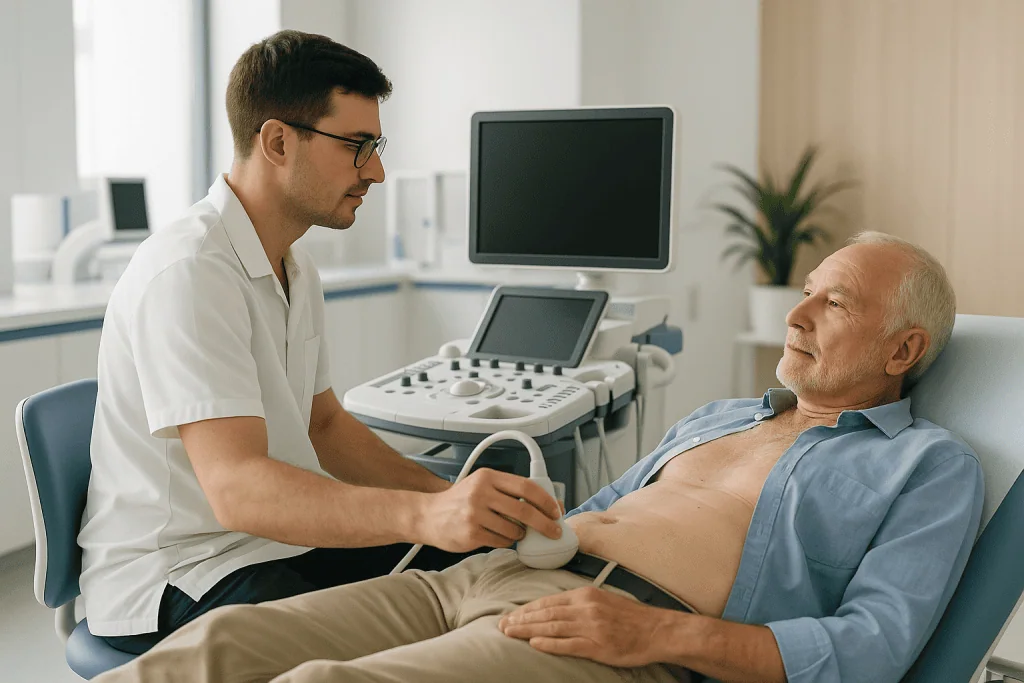
- Ultrasound: A painless scan that shows the size and texture of the liver, fat build-up, tumors, and problems in the bile ducts or blood vessels.
- Elastography: A specialized ultrasound or MRI technique that measures liver stiffness, which reflects the amount of scarring. It is often used to avoid or reduce the need for a biopsy.
- CT or MRI scans: Detailed imaging used to look more closely at masses, blood vessels, and the extent of disease.
- Liver biopsy: A small sample of liver tissue is removed with a thin needle and examined under a microscope. This remains the most direct way to confirm the type and stage of liver damage when other tests are not conclusive.
- Endoscopy: A flexible camera passed through the mouth may be used to look for enlarged veins in the esophagus (varices), a complication of cirrhosis.
Doctors often use scoring systems that combine blood results and clinical findings to estimate how advanced the disease is. This helps guide decisions about monitoring, treatment, and whether referral for a transplant assessment is needed. Liver disease is usually managed by specialists in gastroenterology and hepatology (the branch of medicine that focuses on the liver); at Acibadem, this care is coordinated through the gastroenterology department.
Liver disease treatment options
Liver disease treatment options depend on the cause, the stage of damage, and a person’s overall health. The main goals are to treat the underlying cause, slow or stop further damage, manage complications, and, where possible, allow the liver to recover.
Lifestyle changes and monitoring
For early fatty liver disease, the main treatment is lifestyle change: gradual weight loss, a balanced diet, regular physical activity, and good control of diabetes and cholesterol. For alcohol-related liver disease, stopping alcohol completely is the single most important step, and support programs may help. In many cases, mild disease is monitored with regular blood tests and scans rather than treated with medicines.
Medications
Medicines are chosen according to the cause. Antiviral drugs can control hepatitis B and, in most cases, cure hepatitis C. Autoimmune hepatitis is usually treated with medicines that calm the immune system, such as corticosteroids. Primary biliary cholangitis is treated with drugs that improve bile flow. Hemochromatosis is managed by regularly removing blood to reduce iron, and Wilson disease with medicines that remove copper. Vaccines are available to prevent hepatitis A and B. Some people with cirrhosis need medicines to reduce fluid build-up, lower the risk of bleeding from varices, or treat confusion caused by toxins.
Procedures
Fluid in the abdomen may be drained with a needle if it becomes uncomfortable. Enlarged veins in the esophagus can be treated during endoscopy with small bands to prevent bleeding. A procedure called TIPS (a small tube placed inside the liver to redirect blood flow) may be used in selected people to relieve pressure in the liver’s veins. Blocked bile ducts can sometimes be opened with a stent.
Surgery and transplant
Tumors confined to the liver may be removed surgically or treated with methods that destroy them using heat or targeted delivery of medicine. When the liver is failing and no longer able to support life, a liver transplant may be considered. Transplant involves replacing the diseased liver with a healthy one from a deceased or living donor. It is a major operation with a careful assessment process, and not everyone is a suitable candidate. Your doctor may discuss this option if other treatments are no longer enough.
Rehabilitation and supportive care
People with advanced disease often benefit from nutritional advice, as malnutrition and muscle loss are common. Physical activity, adjusted to a person’s ability, can help maintain strength. Mental health support is also important, since living with a long-term condition can be stressful.
Living with liver disease and outlook
The outlook for liver disease varies widely. Many early-stage conditions, particularly fatty liver disease and alcohol-related liver disease before cirrhosis develops, can improve substantially when the cause is removed. Hepatitis C can often be cured with modern medicines, and hepatitis B can usually be controlled. Once cirrhosis is established, the scarring is largely permanent, but treatment can still slow progression and reduce complications, and some people live for many years with stable disease.
Day-to-day, living well with liver disease often includes avoiding alcohol, eating a balanced diet with enough protein, maintaining a healthy weight, staying physically active, keeping vaccinations up to date, and checking with a doctor or pharmacist before taking any new medicine or supplement, since the liver processes most drugs. Regular follow-up is important, because people with cirrhosis need periodic scans to check for liver cancer and tests to monitor complications.
It is honest to say that advanced liver disease can be life-threatening, and that no treatment guarantees recovery. At the same time, care has improved considerably, and a coordinated plan with a liver specialist gives the best chance of a good outcome for an individual’s situation.
Frequently asked questions
What are the first signs of liver disease?
Early liver disease often has no signs at all, and many people are diagnosed through routine blood tests. When early symptoms do occur, they are usually vague, such as tiredness, mild discomfort under the right ribs, nausea, or loss of appetite. Jaundice, dark urine, itchy skin, and swelling tend to appear later. Because early signs are easy to miss, people with risk factors are often advised to have their liver checked during routine health visits.
What is liver disease caused by most often?
The most common liver disease causes worldwide are fat build-up linked to excess weight and diabetes, long-term heavy alcohol use, and chronic infection with hepatitis B or C viruses. Less common causes include autoimmune conditions, inherited disorders, and medicines or toxins. In many people, more than one factor contributes, which is why doctors ask detailed questions about lifestyle, medicines, and family history.
Can liver disease be reversed?
It depends on the type and stage. The liver can repair itself well when the damage is at the stage of fat build-up or mild inflammation, and removing the cause, for example stopping alcohol or losing weight, can allow significant recovery. Fibrosis may also partly improve over time once the cause is treated. Cirrhosis is generally considered permanent, although its progression can often be slowed. Your doctor may use elastography or a biopsy to assess how much scarring is present.
How is liver disease diagnosis confirmed?
Liver disease diagnosis usually combines blood tests that measure liver enzymes and function, tests for specific causes such as hepatitis viruses, and imaging such as ultrasound or elastography to look at the liver’s structure and stiffness. If the cause or stage is still unclear, a liver biopsy may be performed to examine tissue directly. No single test is enough on its own, so doctors interpret the results together.
What are the main liver disease treatment options?
Treatment targets the cause. This may mean lifestyle changes for fatty liver disease, complete avoidance of alcohol for alcohol-related disease, antiviral medicines for hepatitis B or C, immune-suppressing medicines for autoimmune hepatitis, or treatments to remove excess iron or copper in inherited conditions. Complications of cirrhosis are managed with medicines and procedures, and liver transplant may be considered when the liver is failing. The plan is tailored to each person.
Does liver disease cause pain?
The liver itself has few pain receptors, so many liver conditions cause no pain. Some people notice a dull ache or feeling of fullness in the upper right abdomen, especially when the liver is swollen or inflamed. Sharp or severe pain in this area is more often related to the gallbladder or bile ducts and should be evaluated promptly. The absence of pain does not mean the liver is healthy.
Is liver disease hereditary?
Some forms are inherited, including hemochromatosis, Wilson disease, and alpha-1 antitrypsin deficiency. Other forms are not directly inherited but can run in families because of shared risk factors such as body weight, diabetes, or alcohol use. Hepatitis B can also be passed from mother to baby at birth. If a close relative has liver disease, it may be worth discussing screening with a doctor.
When to see a doctor
See a doctor if you have ongoing tiredness, loss of appetite, unexplained weight loss, discomfort in the upper right abdomen, or if you have risk factors such as heavy alcohol use, diabetes, excess weight, or possible exposure to hepatitis viruses. A simple blood test can often detect liver problems before symptoms appear.
Seek urgent medical care if you or someone else has any of the following red-flag signs:
- Yellowing of the skin or eyes that develops quickly
- Vomiting blood or passing black, tarry, or bloody stools
- Sudden confusion, extreme drowsiness, or difficulty staying awake
- Severe abdominal pain, especially with fever or a rapidly swelling abdomen
- Severe shortness of breath or chest pain
- Bleeding that will not stop or widespread unexplained bruising
- Very little urine or no urine for many hours
- Suspected overdose of acetaminophen (paracetamol) or another medicine, even if there are no symptoms yet
These signs can indicate liver failure or serious complications of cirrhosis, which need emergency assessment and treatment.
Medically reviewed by the Acıbadem International Medical Board September 9, 2026
See our medical review board →
Update history
- PublishedSeptember 9, 2026
- Medical review approvedSeptember 9, 2026
- Last content updateSeptember 9, 2026