Neuroinfectious Diseases
Neuroinfectious diseases include meningitis, encephalitis and brain abscess. Learn common symptoms, causes, how doctors diagnose them, and treatment options.
Quick answer
Neuroinfectious diseases are infections of the brain, spinal cord, their protective membranes, or nerves caused by bacteria, viruses, fungi, or parasites. Common examples include meningitis, encephalitis, and brain abscess. Symptoms often include fever, headache, stiff neck, confusion, or seizures. Diagnosis usually involves a lumbar puncture, blood tests, and imaging, and treatment depends on the cause.
What is neuroinfectious diseases?
Neuroinfectious diseases are infections that affect the nervous system. The nervous system includes the brain, the spinal cord, the protective membranes that surround them (called the meninges), and the nerves that run out to the rest of the body. When bacteria, viruses, fungi, or parasites reach these structures, they can cause inflammation and damage that may be serious or life-threatening if not recognized and treated promptly.
People often ask, “what is neuroinfectious diseases” as a single condition. In reality, the term covers a group of related illnesses. The most common examples include:
- Meningitis – inflammation of the meninges, the thin layers of tissue that cover the brain and spinal cord.
- Encephalitis – inflammation of the brain tissue itself, most often caused by a virus.
- Brain abscess – a pocket of pus that forms inside the brain, usually from a bacterial or fungal infection.
- Myelitis – inflammation of the spinal cord.
- Neurological complications of body-wide infections – for example, nerve damage linked to HIV, Lyme disease, syphilis, or tuberculosis.
Neuroinfectious diseases can affect anyone, at any age. However, certain groups are more vulnerable, including newborns and young children, older adults, people whose immune systems are weakened by illness or medication, and people living in or traveling to regions where certain infections are common. In many hospital settings these conditions are managed by the neurology department, working closely with infectious disease specialists, intensive care teams, and, when needed, neurosurgeons. At Acibadem, this shared care model is the usual approach.
Neuroinfectious diseases symptoms
Neuroinfectious diseases symptoms depend on which part of the nervous system is involved, what type of organism is causing the infection, and how quickly the illness develops. Some infections come on over hours; others develop over days or weeks. Because early symptoms can look like a common viral illness, they are sometimes missed at first.
Common warning signs include:
- Fever, often with chills
- Severe or unusual headache
- Stiff neck or pain when bending the neck forward
- Sensitivity to light
- Nausea and vomiting
- Confusion, drowsiness, or difficulty staying awake
- Seizures (sudden episodes of abnormal electrical activity in the brain, which may cause shaking or loss of awareness)
- Changes in behavior, personality, or speech
- Weakness, numbness, or loss of coordination
- A new skin rash, particularly one that does not fade when pressed
How symptoms differ by type. Meningitis classically causes the combination of fever, headache, and stiff neck, sometimes with a rash. Encephalitis is more likely to cause confusion, altered consciousness, seizures, and changes in behavior, because the brain tissue itself is inflamed. A brain abscess may cause a gradually worsening headache, focal symptoms such as weakness on one side of the body, and fever, although fever is not always present. Myelitis tends to cause weakness, numbness, or problems with bladder and bowel control below the level of the spinal cord that is affected.
How symptoms differ by age. Babies and very young children may not show the typical signs. Instead, parents may notice poor feeding, unusual irritability or floppiness, a high-pitched cry, a bulging soft spot on the head, or a reluctance to be held. Older adults and people with weakened immune systems may have less fever and more confusion, which can delay recognition.
How symptoms differ by stage. Early symptoms are often vague and flu-like. As the infection progresses, neurological signs such as confusion, seizures, or weakness become more prominent. Rapid worsening over hours is a warning sign of a bacterial infection and needs emergency care.
Causes and risk factors
Neuroinfectious diseases causes fall into a few broad categories. Understanding them helps explain why treatment differs so much from one patient to another.
- Bacteria. Bacterial meningitis is a medical emergency. Common bacterial causes vary by age and vaccination status and include pneumococcus, meningococcus, group B streptococcus in newborns, and Listeria in older adults and pregnant women. Tuberculosis can also infect the meninges. Bacteria may also spread from a nearby infection, such as a sinus, ear, or dental infection, to form a brain abscess.
- Viruses. Viruses are the most common cause of meningitis and encephalitis overall. Examples include enteroviruses, herpes simplex virus, varicella-zoster virus (the virus that causes chickenpox and shingles), mumps, measles, HIV, and viruses carried by mosquitoes or ticks such as West Nile virus and Japanese encephalitis virus. Rabies is a rare but very serious viral infection of the nervous system, usually spread by animal bites.
- Fungi. Fungal infections such as cryptococcal meningitis mainly affect people with weakened immune systems, for example those with advanced HIV or people taking medications that suppress immunity.
- Parasites. Parasitic infections such as cerebral malaria, toxoplasmosis, and neurocysticercosis (caused by a pork tapeworm) are more common in certain regions of the world.
How does an infection reach the nervous system? Most often, the organism first enters the body through the airways, gut, skin, or bloodstream and then travels to the brain or spinal cord. Less commonly, infection spreads directly from a neighboring structure, follows a head injury or surgery, or enters through a medical device such as a shunt.
Risk factors that make a person more likely to develop a neuroinfectious disease include:
- Very young or older age
- A weakened immune system due to HIV, cancer treatment, organ transplant medications, long-term steroids, or removal of the spleen
- Missed or incomplete vaccinations
- Living in crowded settings such as dormitories or military barracks
- Recent head trauma, brain or spine surgery, or an implanted device in the nervous system
- Untreated infections of the ears, sinuses, or teeth
- Travel to or residence in areas where mosquito-borne, tick-borne, or parasitic infections are common
- Exposure to animals that may carry rabies
- Pregnancy, which raises the risk of Listeria infection
Having a risk factor does not mean a person will definitely develop an infection, and many patients have no obvious risk factor at all.
Neuroinfectious diseases diagnosis
Neuroinfectious diseases diagnosis needs to be both fast and accurate, because the treatment for a bacterial infection is very different from the treatment for a viral or fungal one. Doctors usually combine a careful history and physical examination with laboratory tests and imaging.
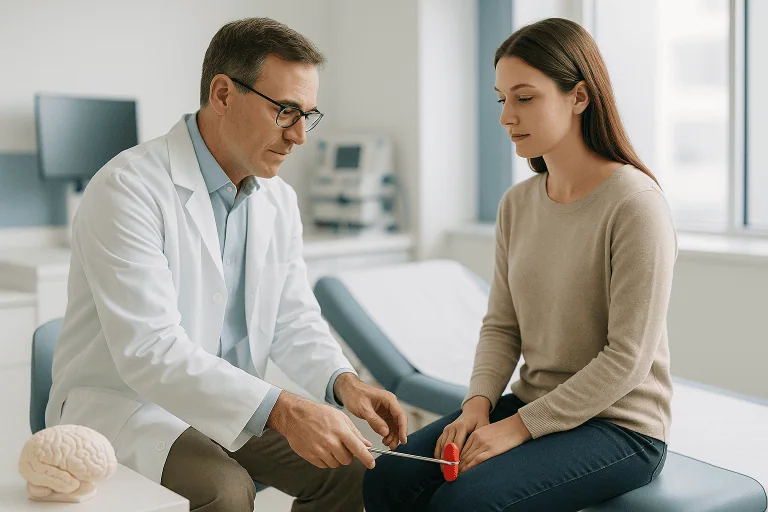
Medical history and examination. The doctor will ask about the timeline of symptoms, recent illnesses, travel, animal or insect exposures, vaccination status, and any conditions or medications that affect the immune system. The physical examination focuses on signs of neck stiffness, level of alertness, rash, and any weakness or abnormal reflexes.
Lumbar puncture (spinal tap). This is often the single most important test. A thin needle is inserted into the lower back to collect a small amount of cerebrospinal fluid, the clear fluid that surrounds the brain and spinal cord. The fluid is examined for white blood cells, protein, and sugar levels, and is tested for bacteria, viruses, and fungi using culture and molecular methods such as polymerase chain reaction (PCR), a technique that detects the genetic material of an organism. In some cases the doctor may order brain imaging before a lumbar puncture to make sure it is safe to perform.
Blood tests. Blood cultures can identify bacteria that have entered the bloodstream. Other blood tests look for signs of inflammation, check organ function, and may test for specific infections such as HIV, syphilis, or Lyme disease.
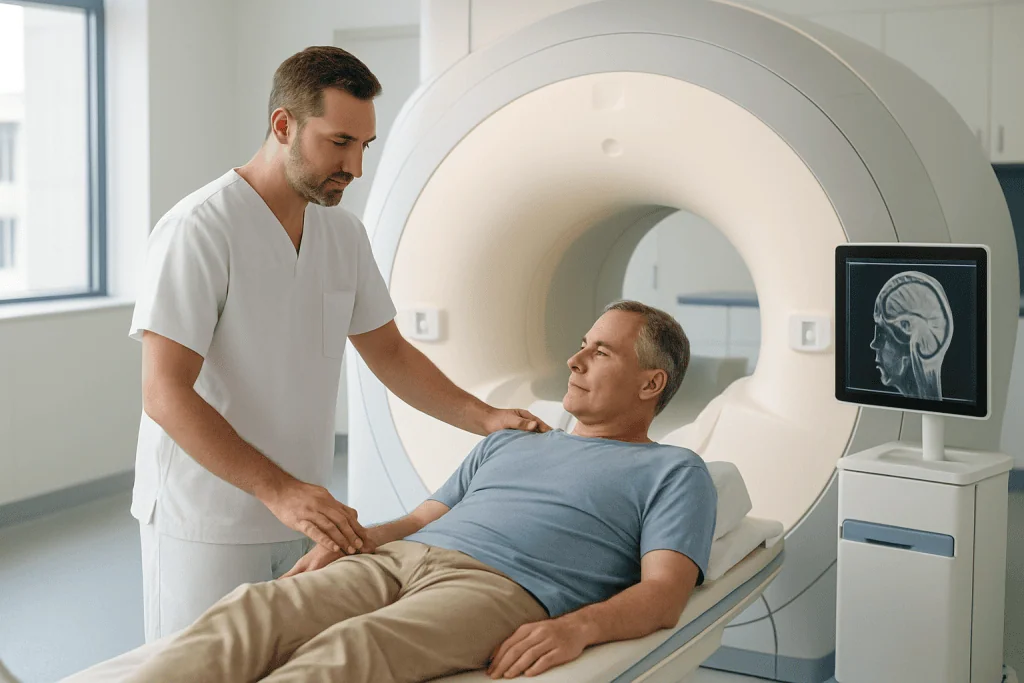
Imaging. A CT scan (computed tomography, an X-ray-based scan) or an MRI scan (magnetic resonance imaging, which uses magnetic fields rather than radiation) can show brain swelling, an abscess, areas of inflammation, or complications such as fluid buildup. MRI is generally more detailed for encephalitis and spinal cord infections.
Electroencephalogram (EEG). This test records the electrical activity of the brain using small sensors on the scalp. It may be used if seizures are suspected or if a patient is confused or unresponsive.
Other tests. Depending on the situation, doctors may take swabs from the throat or skin, test stool or urine, or, rarely, take a small tissue sample (biopsy) from the brain when other tests have not provided an answer.
In many cases doctors begin treatment before every result is back, because waiting could allow a bacterial infection to progress. Treatment is then adjusted as the diagnosis becomes clearer.
Neuroinfectious diseases treatment options
Neuroinfectious diseases treatment options depend on the cause, the severity, and the parts of the nervous system involved. Most patients are treated in the hospital, and the most serious cases are cared for in an intensive care unit.
Antibiotics. Suspected bacterial meningitis or a brain abscess is treated with antibiotics given through a vein, usually started immediately. Once the specific bacterium is identified, the antibiotic may be changed to one that targets it more precisely. Treatment typically continues for one to several weeks depending on the organism and the response.
Antiviral medications. Certain viral infections, especially herpes simplex encephalitis, are treated with antiviral drugs such as acyclovir, often started as soon as the diagnosis is suspected. Many other viral infections have no specific antiviral treatment; care then focuses on supporting the body while the immune system clears the virus.
Antifungal and antiparasitic medications. Fungal infections require antifungal drugs, sometimes for months. Parasitic infections are treated with medications aimed at the specific parasite, and in some cases with medicines to reduce inflammation caused by the treatment itself.
Corticosteroids. These anti-inflammatory medicines may be given in certain bacterial or tuberculous infections to reduce swelling and the risk of complications such as hearing loss. Their use is decided case by case.
Supportive care. This is a core part of treatment for every type of neuroinfectious disease. It may include intravenous fluids, oxygen, medicines to control fever and pain, anti-seizure medications, measures to lower pressure inside the skull, and breathing support in severe cases.
Procedures and surgery. Some patients need a procedure. A brain abscess may be drained through a small opening in the skull, guided by imaging. If infection causes fluid to build up in the brain (hydrocephalus), a drain or shunt may be placed to relieve pressure. Infected devices may need to be removed and replaced.
Observation. Mild viral meningitis in an otherwise healthy person sometimes improves on its own. In such cases, once dangerous causes have been ruled out, the doctor may recommend rest, fluids, pain relief, and close monitoring rather than intensive treatment.
Rehabilitation. After the infection is controlled, many people benefit from rehabilitation. Depending on the effects of the illness, this may involve physical therapy for weakness or balance problems, occupational therapy to regain daily skills, speech and language therapy, cognitive therapy for memory or concentration problems, and hearing assessment, since hearing loss is a known complication of meningitis.
Living with neuroinfectious diseases and outlook
The outlook after a neuroinfectious disease varies widely. Many people with mild viral meningitis recover fully within a few weeks. Bacterial meningitis, encephalitis, and brain abscess are more serious, and although many patients recover well with prompt treatment, some are left with lasting effects. The chance of a good recovery is generally better when treatment begins early, but no outcome can be guaranteed.
Possible long-term effects include hearing loss, memory or concentration difficulties, mood changes, fatigue, epilepsy (repeated seizures), weakness, coordination problems, and, in children, learning or developmental difficulties. Some of these improve over months; others may persist. Follow-up with a neurologist and, where appropriate, hearing specialists, rehabilitation therapists, and mental health professionals can help identify problems early and support recovery.
Recovery is often gradual. It is common to feel tired and to need more rest than usual for weeks or months after leaving the hospital. Family members and caregivers may also need support, particularly when the illness has changed a person’s memory, personality, or independence. Keeping a record of symptoms, attending scheduled follow-up visits, and taking any prescribed medications such as anti-seizure drugs as directed are practical steps that many patients find helpful.
Frequently asked questions
What is neuroinfectious diseases in simple terms?
Neuroinfectious diseases are infections caused by bacteria, viruses, fungi, or parasites that reach the brain, spinal cord, their protective coverings, or the nerves. The best-known examples are meningitis and encephalitis. They are not a single disease but a group of conditions that share the feature of infection affecting the nervous system.
What are the first neuroinfectious diseases symptoms to watch for?
Early symptoms are often similar to a flu-like illness: fever, headache, tiredness, and body aches. Warning signs that suggest the nervous system is involved include a stiff neck, sensitivity to light, confusion, unusual sleepiness, seizures, or a new rash. In babies, irritability, poor feeding, or a bulging soft spot may be the first clues. Because these symptoms can also have other causes, only a medical evaluation can determine what is happening.
What are the most common neuroinfectious diseases causes?
Viruses are the most frequent cause overall, and many viral infections are relatively mild. Bacteria cause fewer cases but tend to be more dangerous. Fungi and parasites are less common and mostly affect people with weakened immune systems or people in specific geographic regions. The cause is usually confirmed by testing the cerebrospinal fluid and blood.
How is neuroinfectious diseases diagnosis confirmed?
Doctors rely mainly on a lumbar puncture, in which a small sample of the fluid around the spinal cord is collected and analyzed, along with blood tests and brain imaging such as CT or MRI. An EEG may be used if seizures or altered consciousness are present. Results from these tests together usually identify both the type of infection and the organism responsible, although in some cases the exact cause is never found.
What are the main neuroinfectious diseases treatment options?
Treatment depends on the cause. Bacterial infections are treated with intravenous antibiotics, certain viral infections with antiviral drugs, and fungal or parasitic infections with medications targeting those organisms. Supportive care in the hospital is important for all types, and some patients need procedures such as drainage of an abscess. Rehabilitation is often part of recovery for those who develop lasting effects.
Are neuroinfectious diseases contagious?
It depends on the specific infection. Some causes of meningitis, particularly meningococcal bacteria and certain viruses, can spread from person to person through respiratory droplets or close contact. Others, such as brain abscess or mosquito-borne encephalitis, do not spread directly between people. When a contagious form is diagnosed, public health teams may recommend preventive antibiotics or vaccination for close contacts.
Can neuroinfectious diseases be prevented?
Not all cases can be prevented, but vaccines against several important causes, including meningococcus, pneumococcus, Haemophilus influenzae type b, measles, mumps, and, in some regions, Japanese encephalitis and rabies, reduce risk significantly. Good hand hygiene, protection against mosquito and tick bites, safe food handling during pregnancy, and prompt treatment of ear, sinus, and dental infections also help lower the chance of infection reaching the nervous system.
When to see a doctor
Neuroinfectious diseases can progress quickly, and early treatment makes an important difference. Anyone with a fever combined with new neurological symptoms should be assessed by a doctor without delay. Seek emergency medical care immediately if you or someone you are with has any of the following red-flag signs:
- Fever with a severe headache and a stiff neck
- Sudden confusion, unusual drowsiness, or difficulty waking
- A seizure, especially in someone who has never had one
- A new rash of small red or purple spots that do not fade when pressed with a glass
- Sudden weakness, numbness, or loss of coordination
- Difficulty speaking or understanding speech
- Persistent vomiting with headache
- In a baby: high-pitched crying, refusing feeds, floppiness, a bulging soft spot, or being very hard to wake
- Symptoms that are worsening rapidly over hours
People with weakened immune systems, recent brain or spine surgery, or recent travel to areas with known nervous system infections should have a lower threshold for seeking care, since their symptoms may be less typical. When in doubt, it is safer to be evaluated promptly.
Medically reviewed by the Acıbadem International Medical Board September 9, 2026
See our medical review board →
Update history
- PublishedSeptember 8, 2026
- Medical review approvedSeptember 9, 2026
- Last content updateSeptember 8, 2026