Quick answer
Ovarian cancer is a malignancy that begins in the ovaries or nearby tissues and is typically managed with a combination of surgery and, when needed, chemotherapy or targeted therapies based on the stage and tumor type. At Acibadem in Turkey, care focuses on detailed diagnostic evaluation, individualized treatment planning, and follow-up by a multidisciplinary oncology team.
What is ovarian cancer?
Ovarian cancer is a disease in which abnormal cells grow uncontrollably in or around the ovaries. The ovaries are two small, almond-shaped organs on either side of the uterus (womb). They store eggs and produce the female hormones estrogen and progesterone. When cells in this area begin to grow and divide in an abnormal way, they can form a tumor, which is a lump of tissue. If the tumor is malignant, meaning cancerous, it can invade nearby tissue and spread to other parts of the body.
Many people ask what is ovarian cancer and how it differs from other gynecologic cancers. In current medical understanding, the term often covers cancers that start in the ovary itself, in the fallopian tubes (the tubes that carry eggs from the ovaries to the uterus), or in the peritoneum (the thin lining of the abdomen). This is because many of these cancers behave in similar ways and are treated similarly. Research suggests that a large share of the most common type actually begins in the fallopian tubes.
There are several types of ovarian cancer. The most common type is epithelial ovarian cancer, which starts in the layer of cells covering the ovary. Less common types include germ cell tumors, which begin in the egg-producing cells and tend to affect younger women, and stromal tumors, which start in the hormone-producing tissue of the ovary.
Ovarian cancer can occur at any age, but it is most often diagnosed in women after menopause, typically in those over 50. It is less common than some other cancers, but it is often found at a later stage because early symptoms can be vague and easy to overlook. Anyone with ovaries, fallopian tubes, or a peritoneum can develop this disease, including women who have had a hysterectomy (removal of the uterus) if the ovaries were left in place.
Symptoms of ovarian cancer
Ovarian cancer symptoms are often subtle in the early stages, and many of them overlap with common, harmless conditions such as digestive upset. What tends to set them apart is that they are persistent, occur frequently, and represent a change from what is normal for you.
Commonly reported ovarian cancer symptoms include:
- Bloatinga persistent feeling of fullness or visible swelling of the abdomen (belly)
- Pelvic or abdominal painongoing discomfort in the lower belly or pelvis
- Feeling full quicklydifficulty eating a normal-sized meal, or loss of appetite
- Urinary changesneeding to urinate more often or more urgently than usual
- Changes in bowel habitssuch as new constipation or diarrhea
- Unexplained weight loss or, in some cases, weight gain from fluid buildup
- Unusual tiredness (fatigue) that does not improve with rest
- Back pain without an obvious cause
- Pain during sex
- Abnormal vaginal bleeding, especially bleeding after menopause
In the early stages, symptoms may be mild or absent, which is one reason ovarian cancer is often diagnosed later. As the disease advances, symptoms tend to become more noticeable. Advanced ovarian cancer can cause a buildup of fluid in the abdomen, called ascites, which leads to marked swelling, discomfort, and sometimes shortness of breath if fluid collects around the lungs.
Symptoms can also differ by tumor type. Stromal tumors, which produce hormones, may cause abnormal vaginal bleeding or, rarely, changes such as unusual hair growth. Germ cell tumors in younger women can sometimes cause a rapidly enlarging abdominal mass or sudden pelvic pain.
Having one or more of these symptoms does not mean you have ovarian cancer, as most people with these complaints have another, less serious cause. However, if symptoms are new, occur frequently (for example, more than 12 times a month), and persist for several weeks, it is sensible to discuss them with a doctor.
Causes and risk factors
The exact ovarian cancer causes are not fully understood. Like other cancers, it develops when changes (mutations) in the DNA of cells make them grow and divide abnormally. Why these changes happen in a particular person is often unclear, but researchers have identified several factors that can raise or lower the risk.
Factors that may increase the risk of ovarian cancer include:
- Agerisk rises with age, and most cases occur after menopause.
- Family historyhaving a close relative, such as a mother or sister, with ovarian or breast cancer increases risk.
- Inherited gene changesmutations in genes such as BRCA1 and BRCA2, and conditions such as Lynch syndrome (an inherited disorder that raises the risk of several cancers), account for a meaningful proportion of cases.
- Endometriosisa condition in which tissue similar to the uterine lining grows outside the uterus; it is linked to a modestly higher risk of certain types of ovarian cancer.
- Reproductive historynever having been pregnant, starting periods early, or reaching menopause late may slightly increase risk, possibly because of a greater number of ovulation cycles over a lifetime.
- Hormone replacement therapylong-term use of estrogen after menopause has been associated with a small increase in risk in some studies.
- Obesityexcess body weight may be linked to a higher risk of some types of ovarian cancer.
- Smokingassociated with an increased risk of certain subtypes.
Some factors appear to lower the risk. These include having been pregnant, breastfeeding, using combined oral contraceptive pills (birth control pills) for several years, and having had the fallopian tubes tied or removed. None of these guarantees protection, and decisions about medications or surgery should always be made with a doctor after weighing personal benefits and risks.
It is important to remember that having a risk factor does not mean you will develop ovarian cancer, and many people diagnosed with the disease have no known risk factors at all. If several relatives in your family have had ovarian, breast, or related cancers, your doctor may suggest genetic counseling, which is a service that helps assess inherited risk and discuss options such as gene testing.
Diagnosis
There is currently no reliable screening test for ovarian cancer in women at average risk, which means the disease is usually investigated when symptoms or an abnormal finding raise concern. Ovarian cancer diagnosis typically involves a combination of physical examination, blood tests, imaging, and, ultimately, examination of tissue under a microscope.
Steps your doctor may take include:
- Medical history and pelvic examinationthe doctor asks about your symptoms and family history and examines the pelvis to feel for masses or fluid.
- Transvaginal ultrasoundan imaging test in which a small probe is placed in the vagina to create pictures of the ovaries and uterus using sound waves. It helps show whether an ovarian mass is present and whether it looks solid, fluid-filled, or mixed.
- Blood teststhe most common is CA-125, a protein that is often, but not always, elevated in ovarian cancer. CA-125 can also rise in noncancerous conditions such as endometriosis, fibroids, or infection, so it is interpreted alongside other findings rather than on its own. In younger women or when certain tumor types are suspected, other markers may be checked as well.
- CT or MRI scanscomputed tomography (CT) uses X-rays and magnetic resonance imaging (MRI) uses magnetic fields to create detailed pictures of the abdomen and pelvis. These scans help doctors see how far any disease may have spread and plan treatment.
- Biopsy or surgerya definitive diagnosis requires examining tissue under a microscope. In many cases, this tissue is obtained during surgery to remove the tumor. Sometimes a sample of abdominal fluid or a needle biopsy (removal of a small piece of tissue) is taken first, particularly if surgery is not the initial step.
Once cancer is confirmed, doctors determine its stage, which describes how far it has spread. Staging usually ranges from stage I, where the cancer is confined to the ovaries or fallopian tubes, to stage IV, where it has spread to distant organs. Staging is often completed during surgery and guides all further treatment decisions. Doctors also identify the grade of the tumor, which describes how abnormal the cells look, and increasingly test the tumor for genetic changes that can influence which medications are likely to work.
Treatment options
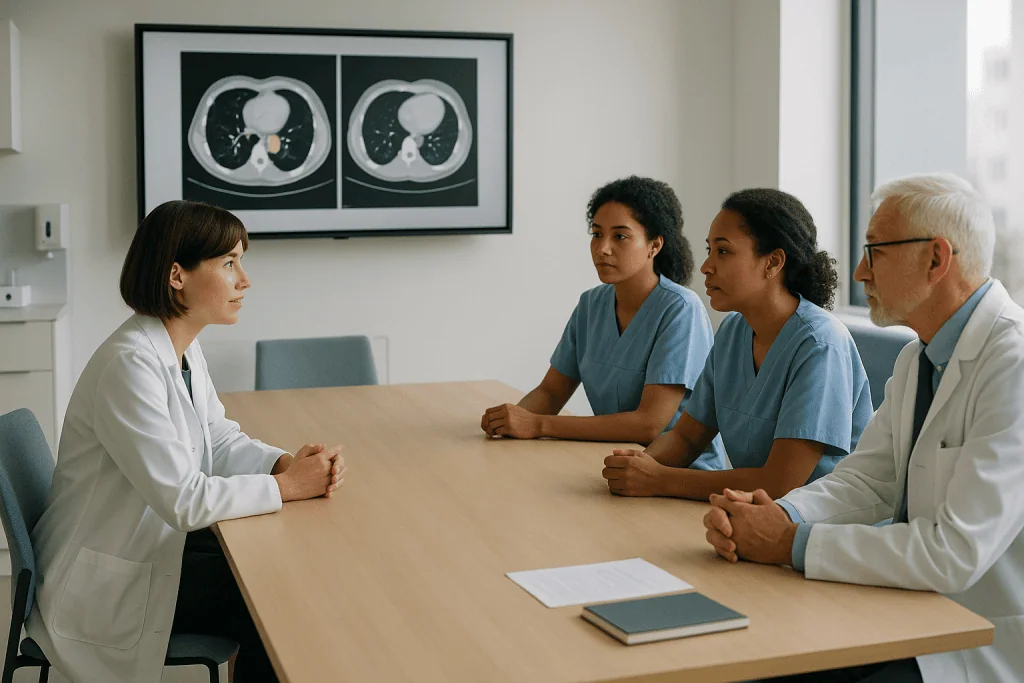
Ovarian cancer treatment depends on the type of tumor, its stage and grade, your overall health, and, in some cases, whether you wish to preserve fertility. Care is usually planned by a multidisciplinary team, which means specialists from different fields, such as gynecologic surgeons, medical oncologists (cancer medicine specialists), radiologists, and pathologists, work together on your plan. Detailed information about how this condition is managed is available on the ovarian cancer treatment page, and the drug-based portion of care is typically coordinated by a medical oncology department.
Surgery
Surgery is the cornerstone of ovarian cancer treatment for most patients. The goals are to confirm the diagnosis, establish the stage, and remove as much of the cancer as possible, a process called debulking or cytoreduction. Depending on the extent of disease, surgery may involve removing one or both ovaries and fallopian tubes, the uterus (hysterectomy), the omentum (a fatty apron of tissue in the abdomen), and nearby lymph nodes. In selected young women with very early-stage disease, surgeons may sometimes remove only the affected ovary to preserve fertility, though this is only appropriate in specific situations.
Chemotherapy
Chemotherapy is treatment with medications that kill fast-growing cells. It is used in most cases of ovarian cancer, either after surgery to destroy remaining cancer cells or, in some cases, before surgery to shrink the tumor first. Chemotherapy is usually given through a vein in repeated cycles, with rest periods in between. Side effects vary but can include tiredness, nausea, hair loss, and a temporary drop in blood counts; your care team can often manage these with supportive medications.
Targeted therapy
Targeted therapies are medications designed to act on specific features of cancer cells. Examples used in ovarian cancer include PARP inhibitors, which are drugs that block a protein cancer cells with certain gene changes rely on to repair their DNA, and drugs that limit the tumor’s blood supply. Whether these are suitable often depends on the results of genetic testing of the tumor or the patient.
Hormone therapy and radiation
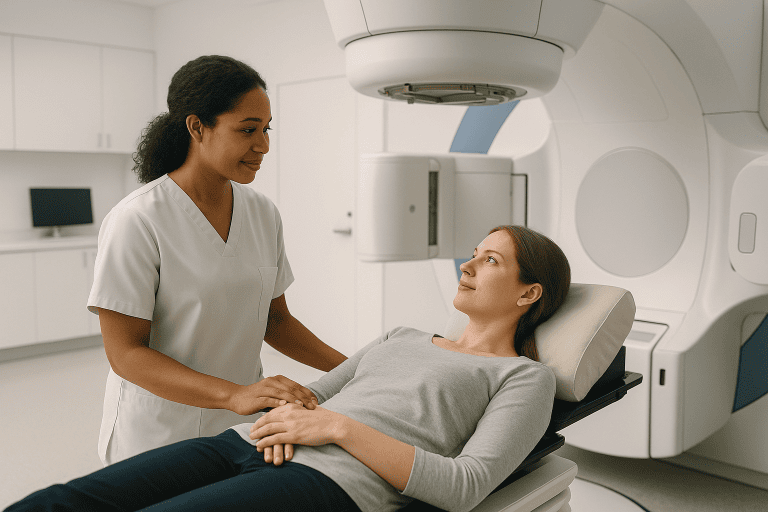
Hormone therapy, which blocks or lowers hormones that some tumors use to grow, may be an option for certain slow-growing types. Radiation therapy, which uses high-energy beams to destroy cancer cells, is not a routine part of ovarian cancer treatment but may occasionally be used to relieve symptoms in specific situations.
Watchful waiting and supportive care
For some low-risk or borderline tumors, or for patients who cannot tolerate active treatment, doctors may recommend careful monitoring with regular examinations and scans rather than immediate intervention. Alongside any treatment, supportive (palliative) care focuses on relieving symptoms such as pain, fluid buildup, and fatigue, and on maintaining quality of life. Supportive care can be provided at any stage of illness, not only at the end of life.
Living with ovarian cancer and outlook
The outlook for ovarian cancer varies widely from person to person. It depends on the type and stage of the cancer at diagnosis, how well the tumor responds to treatment, whether the cancer carries certain gene changes, and your general health. In general, cancers found at an early stage have a more favorable outlook than those found after they have spread, which is why paying attention to persistent symptoms matters.
Many people complete treatment and enter remission, meaning no cancer can be detected. Ovarian cancer can return, sometimes years later, so long-term follow-up with regular check-ups, symptom reviews, and sometimes blood tests or scans is a standard part of care. If the cancer does come back, further treatment is often possible, and newer medications have expanded the options available in recent years.
Living with ovarian cancer, or with the uncertainty that can follow treatment, is emotionally demanding. Anxiety, low mood, changes in body image, early menopause after surgery, and effects on sexuality and fertility are all common concerns. Support from counselors, patient support groups, and loved ones can help, and it is reasonable to raise these issues with your care team, who can direct you to appropriate services. Practical steps such as balanced nutrition, gentle physical activity as tolerated, and adequate rest may support recovery, though they are not substitutes for medical treatment. At institutions such as Acibadem, follow-up after ovarian cancer is generally coordinated between gynecologic oncology and medical oncology teams.
No doctor can promise a specific outcome, and statistics describe groups of people rather than any individual. Your own care team is the best source of honest, personalized information about what to expect in your situation.
Frequently asked questions
What is ovarian cancer in simple terms?
Ovarian cancer is a disease in which abnormal cells in or near the ovaries, the small organs that store eggs and make female hormones, grow out of control and form a tumor. The term often also covers similar cancers that begin in the fallopian tubes or the lining of the abdomen. If not treated, these cells can spread to other parts of the body.
What are the first warning signs of ovarian cancer?
Early ovarian cancer symptoms are often vague and can include persistent bloating, pelvic or abdominal pain, feeling full quickly after eating, and needing to urinate more often. These complaints are common and usually caused by less serious conditions, but when they are new, frequent, and last for several weeks, they should be evaluated by a doctor.
Can ovarian cancer be cured?
In many cases, especially when the disease is found at an early stage, treatment with surgery and chemotherapy can remove all detectable cancer, and some people remain cancer-free long term. In more advanced stages a cure is less likely, but treatment can often control the disease for extended periods and relieve symptoms. Outcomes vary considerably, and your doctor can discuss what is realistic in your specific situation.
How serious is ovarian cancer?
Ovarian cancer is a serious condition, in part because it is often diagnosed after it has already spread beyond the ovaries. However, seriousness depends heavily on the type and stage of the cancer and on how it responds to treatment. Early-stage disease generally has a much more favorable outlook, and treatments have continued to improve over time.
How is ovarian cancer diagnosed?
Ovarian cancer diagnosis usually begins with a pelvic examination, a transvaginal ultrasound, and blood tests such as CA-125, a protein that is often elevated in this disease. CT or MRI scans help show how far any cancer may have spread. A definite diagnosis requires examining tissue under a microscope, which is most often obtained during surgery.
What is recovery like after ovarian cancer surgery?
Recovery depends on the extent of the operation and your overall health. Many people spend several days in the hospital and need weeks of gradual recovery at home, with limits on heavy lifting and strenuous activity at first. If chemotherapy follows surgery, it is usually started once you have healed sufficiently. Your surgical team will give you individualized guidance on activity, wound care, and follow-up.
Can ovarian cancer come back after treatment?
Yes, ovarian cancer can return after treatment, sometimes months or years later, which is why regular follow-up visits are recommended. A recurrence does not necessarily mean treatment options are exhausted; further chemotherapy, targeted therapy, or in some cases additional surgery may be offered. Reporting new or returning symptoms promptly to your care team is important.
When to see a doctor
Make an appointment with a doctor if you notice symptoms that are new for you, happen frequently, and persist for more than two to three weeks, such as ongoing bloating, pelvic or abdominal pain, feeling full quickly, or changes in urinary or bowel habits. This is especially important if you are over 50, have been through menopause, or have a family history of ovarian or breast cancer.
Seek medical attention promptly if you experience any of the following red-flag warning signs:
- Vaginal bleeding after menopause, or any unexplained abnormal vaginal bleeding
- Rapid swelling of the abdomen or a lump you can feel in your belly or pelvis
- Severe or worsening abdominal or pelvic pain
- Persistent vomiting or inability to eat or drink
- Unexplained weight loss
- New shortness of breath together with abdominal swelling
- Inability to pass stool or gas with abdominal pain and bloating, which may signal a bowel blockage and needs urgent care
Most people with these symptoms will not have ovarian cancer, but only a medical evaluation can determine the cause. If ovarian cancer is present, finding it earlier generally allows more treatment options and a better chance of a favorable outcome, so it is always safer to have persistent symptoms checked than to wait.
Medically reviewed by the Acıbadem International Medical Board September 2, 2026
See our medical review board →
Update history
- PublishedJune 14, 2026
- Medical review approvedSeptember 2, 2026
- Last content updateSeptember 2, 2026