Pemphigus Vulgaris
Pemphigus Vulgaris is a rare autoimmune blistering disease affecting skin and mucous membranes. Learn symptoms, diagnosis and treatment options.

Quick answer
Pemphigus vulgaris is a rare autoimmune blistering disease in which the immune system attacks proteins that hold skin and mucous membrane cells together, causing fragile blisters and painful sores. Treatment focuses on controlling inflammation and suppressing the abnormal immune response with specialist evaluation, diagnosis support such as skin testing, and individualized medical therapy at Acibadem in Turkey.
What is pemphigus vulgaris?
Pemphigus vulgaris is a rare, long-term autoimmune disease that causes painful blisters and raw sores on the skin and on moist body surfaces called mucous membranes, such as the inside of the mouth. An autoimmune disease is a condition in which the body’s immune system, which normally fights infection, mistakenly attacks the body’s own healthy tissue. In pemphigus vulgaris, the immune system produces antibodies, protective proteins that usually target germs, against the “glue” that holds skin cells together. When this glue is damaged, the layers of the skin separate and fragile blisters form.
For many people searching for what is pemphigus vulgaris, the most important points are these: it is not contagious, it is not a form of cancer, and it is not caused by poor hygiene. It is a medical condition of the immune system that requires ongoing care from a doctor, most often a dermatologist (a doctor who specializes in skin diseases).
Pemphigus vulgaris can affect people of any age, but it is most often diagnosed in middle-aged and older adults, typically between the ages of 40 and 60. It affects both men and women. The condition appears to be more common in certain populations, including people of Mediterranean, Middle Eastern, South Asian, and Ashkenazi Jewish descent, although anyone can develop it. In the international coding system doctors use, pemphigus vulgaris is listed as ICD-10 code L10.0.
Before modern treatments existed, pemphigus vulgaris was frequently life-threatening because widespread open sores can lead to serious infections and fluid loss. Today, with early diagnosis and appropriate medication, most people can bring the disease under control, although treatment is often long-term.
Symptoms of pemphigus vulgaris
Pemphigus vulgaris symptoms usually develop gradually and, in many cases, begin in the mouth before the skin is affected. Because mouth sores are easy to mistake for common conditions such as canker sores or thrush, the diagnosis is sometimes delayed for months.
Common pemphigus vulgaris symptoms include:
- Painful mouth sores: raw, eroded areas on the gums, inner cheeks, tongue, roof of the mouth, or throat that make eating, drinking, and speaking uncomfortable.
- Soft, fragile skin blisters: blisters filled with clear fluid that break easily, often within hours or days, leaving open, weeping sores.
- Painful skin erosions: raw areas left behind after blisters rupture; these may crust over and heal slowly, and they can become infected.
- Sores on other moist surfaces: the nose, throat, eyes, genitals, or anus may also be affected in some people.
- Skin that shears easily: gentle rubbing of apparently normal skin near a blister may cause the top layer to slide off; doctors call this the Nikolsky sign.
- Pain rather than itching: unlike many blistering conditions, pemphigus vulgaris sores are usually painful rather than itchy, although some people do notice burning or stinging.
Symptoms often vary by stage. In the early stage, many people have only mouth ulcers, sometimes for weeks or months, with no skin involvement at all. As the disease progresses, blisters may appear on the scalp, face, chest, back, armpits, or groin, and can spread more widely if the condition is not treated. In severe, widespread disease, large areas of raw skin can lead to fluid loss, difficulty eating, weight loss, fatigue, and a high risk of infection.
It also helps to know that pemphigus vulgaris is one of several related conditions. A related but different disease called pemphigus foliaceus causes more superficial, crusted sores on the skin and usually spares the mouth. Another condition, bullous pemphigoid, causes firmer, tense blisters and mainly affects older adults; it is a separate disease with a different target in the skin. Your doctor uses specific tests, described below, to tell these conditions apart, because their treatment and outlook differ.
Causes and risk factors
The direct cause of pemphigus vulgaris is an autoimmune attack on proteins called desmogleins. Desmogleins act like anchors or glue between the cells in the outer layer of the skin (the epidermis) and the lining of the mouth. In pemphigus vulgaris, the immune system produces autoantibodies, antibodies directed against the body’s own tissue: that bind to these desmoglein proteins. When the anchors are disrupted, skin cells separate from one another, a process doctors call acantholysis, and fluid collects in the gap, forming a blister.
Why the immune system makes this mistake in a particular person is not fully understood. Research points to a combination of factors rather than a single cause. Recognized pemphigus vulgaris causes and risk factors include:
- Genetic predisposition: certain inherited immune-system gene variants (in the HLA gene family, which helps the immune system recognize what belongs to the body) are more common in people with pemphigus vulgaris. Having these genes does not mean a person will definitely develop the disease.
- Age: the condition most often appears in middle age, typically between 40 and 60 years, although younger and older people can be affected.
- Ancestry: the disease is reported more often in people of Mediterranean, Middle Eastern, South Asian, and Ashkenazi Jewish backgrounds.
- Certain medications: in rare cases, drugs such as penicillamine and some blood-pressure medicines in the ACE inhibitor group (for example, captopril) have been associated with pemphigus or pemphigus-like reactions. This is called drug-induced pemphigus and may improve when the medication is stopped under medical supervision.
- Other autoimmune conditions: people with one autoimmune disease may have a somewhat higher chance of developing another, such as myasthenia gravis or thymus gland disorders, in some reported cases.
It is important to repeat that pemphigus vulgaris is not infectious. You cannot catch it from another person, and you cannot pass it to family members through touch, shared meals, or close contact. It is also not caused by an allergy, by stress alone, or by anything the affected person did wrong, although some people notice that stress or illness seems to worsen their flares.
Diagnosis
Because its early signs can look like many other mouth and skin problems, pemphigus vulgaris diagnosis relies on a combination of a careful examination and specific laboratory tests. Doctors do not diagnose this condition on appearance alone.
The steps your doctor may take include:
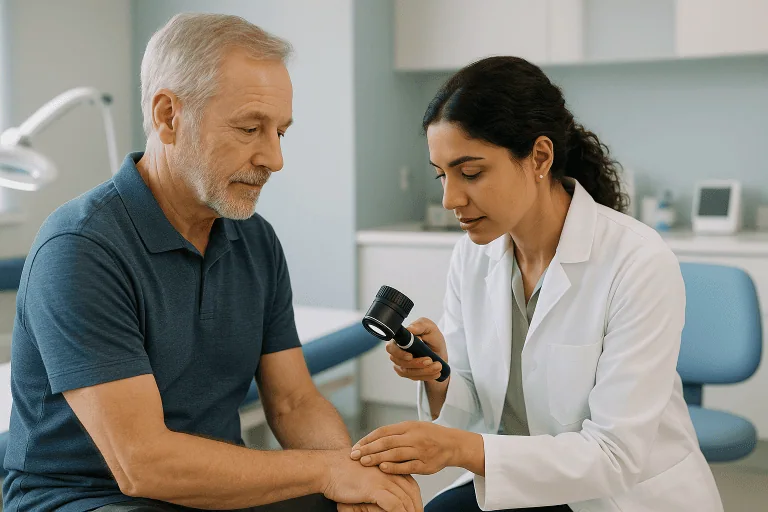
- Medical history and physical examination: the doctor asks how long the sores have been present, where they started, which medications you take, and examines the skin and mouth. The doctor may gently rub the skin near a blister to check for the Nikolsky sign, in which the top layer of skin shears away easily.
- Skin biopsy: a small sample of skin, usually taken from the edge of a fresh blister under local anesthetic (numbing medicine), is examined under a microscope. In pemphigus vulgaris, the pathologist typically sees skin cells separating from one another just above the deepest layer of the epidermis.
- Direct immunofluorescence: a second small biopsy, taken from normal-looking skin near a sore, is treated with special dyes that light up antibodies. In pemphigus vulgaris, antibodies are seen deposited between skin cells in a characteristic net-like pattern. This test is considered a key part of confirming the diagnosis.
- Blood tests: blood can be tested for circulating antibodies against desmoglein proteins, often using a laboratory method called ELISA (an enzyme-linked test that measures antibody levels). Antibody levels sometimes rise and fall with disease activity, so your doctor may repeat these tests over time to help guide treatment.
Imaging scans such as X-rays or MRI are not needed to diagnose pemphigus vulgaris itself, although your doctor may order other tests to check your general health before starting treatment, for example blood counts, kidney and liver tests, blood sugar, bone density scans, or screening for hidden infections such as tuberculosis or hepatitis, because some medications used for pemphigus can affect these areas.
Getting an accurate diagnosis matters, because related blistering diseases are treated differently. If your doctor suspects pemphigus vulgaris, referral to a dermatologist experienced in autoimmune blistering diseases is common practice.
Treatment options
The goals of pemphigus vulgaris treatment are to stop new blisters from forming, heal existing sores, prevent infection, and keep the disease in remission (a period with no or minimal disease activity) with the lowest possible dose of medication. Watchful waiting without treatment is generally not appropriate for active pemphigus vulgaris, because untreated disease tends to spread and can become dangerous. Treatment is usually managed by a dermatology team; in hospital groups such as Acibadem, this condition is typically handled within the dermatology department, often together with dentists, eye doctors, or other specialists when the mouth, eyes, or other areas are involved.
Medications
- Corticosteroids: steroid medicines such as prednisone, taken by mouth, are a mainstay of initial treatment because they calm the immune system quickly. Higher doses are often needed at first, and the dose is then reduced gradually under close medical supervision. Long-term steroid use carries risks, including weight gain, high blood sugar, high blood pressure, bone thinning, mood changes, and infections, so doctors aim to taper to the lowest effective dose.
- Rituximab: this is a biologic medicine given by intravenous infusion (a drip into a vein) that removes the B cells, the immune cells that produce the harmful antibodies. In many countries, rituximab is now considered a first-line treatment for moderate to severe pemphigus vulgaris, often combined with a shorter course of steroids. It can allow lower steroid doses and, in many cases, longer remissions, although repeat courses may be needed and it increases infection risk.
- Steroid-sparing immunosuppressants: medicines such as azathioprine or mycophenolate mofetil dampen the immune system more broadly and are often used alongside steroids to reduce the steroid dose needed. They require regular blood-test monitoring.
- Other options for difficult disease: when standard treatment does not control the condition, doctors may consider intravenous immunoglobulin (IVIG, a purified antibody product given by drip), plasmapheresis or immunoadsorption (procedures that filter harmful antibodies out of the blood), or other immune-modulating drugs. These are typically reserved for severe or resistant cases.
Wound and mouth care
- Gentle wound care: non-stick dressings, careful cleansing, and topical (applied to the skin) treatments help sores heal and lower infection risk. Antibiotics may be prescribed if a sore becomes infected.
- Mouth care: medicated mouth rinses, topical steroid gels, numbing rinses before meals, soft foods, and avoiding spicy, acidic, crunchy, or very hot foods can make eating more comfortable while mouth sores heal. Good but gentle dental hygiene remains important.
- Nutrition support: if mouth pain makes eating difficult, a dietitian can suggest soft, high-calorie, high-protein options to prevent weight loss.
Procedures and surgery
Surgery does not treat pemphigus vulgaris itself, because the problem lies in the immune system rather than in a structure that can be removed. Procedures such as plasmapheresis are occasionally used in severe disease, as noted above. In rare situations where pemphigus is linked to a thymus tumor or another underlying condition, treating that condition may be part of the plan. People with very extensive raw skin sometimes need hospital care, similar in some respects to burn care, to manage fluids, pain, and infection risk.
Whatever the regimen, treatment is usually adjusted over months. Your doctor may lower doses slowly as the disease quiets down and monitor you for medication side effects throughout. Stopping medicines suddenly on your own can trigger a flare, so any changes should be made with your care team.
Living with pemphigus vulgaris and outlook
Pemphigus vulgaris is a chronic condition, which means it tends to persist or come and go over years rather than disappearing quickly. That said, the outlook has improved dramatically with modern treatment. Many people achieve remission, and some are eventually able to reduce or, in a proportion of cases, stop medication under medical supervision. Others need low-dose, long-term treatment to keep the disease controlled. Relapses (flares) can occur, sometimes after infections, stress, or changes in medication, and are usually manageable when caught early.
Practical steps that often help day to day include:
- Protecting the skin: avoid harsh scrubbing, tight or rough clothing, contact sports during flares, and activities that cause friction on fragile skin.
- Caring for the mouth: use a soft toothbrush, keep up regular dental checkups, and tell your dentist about your diagnosis before any dental work.
- Reducing infection risk: practice good hand hygiene, keep sores clean and covered as advised, and ask your doctor which vaccinations are recommended and which should be avoided while on immune-suppressing medicines.
- Attending follow-up visits: regular monitoring lets your doctor track disease activity, watch for medication side effects, and adjust treatment early.
- Looking after mental health: living with a visible, painful, long-term condition can be emotionally difficult. Support groups for people with pemphigus and counseling can help many patients and families cope.
Honest prognosis language matters here: doctors cannot guarantee a permanent cure, and severe untreated disease remains dangerous. However, with early diagnosis, appropriate medication, and consistent follow-up, most people with pemphigus vulgaris can heal their sores, control the disease, and return to many of their normal activities.
Frequently asked questions
What is pemphigus vulgaris in simple terms?
Pemphigus vulgaris is an autoimmune disease in which the immune system attacks the natural “glue” holding skin cells together. This causes fragile blisters and painful raw sores on the skin and inside the mouth. It is not contagious and is not a form of cancer. It is usually managed long-term by a dermatologist with medicines that calm the immune system.
Is pemphigus vulgaris contagious?
No. Pemphigus vulgaris cannot be passed from person to person through touch, kissing, sharing utensils, or any other kind of contact. It is caused by the affected person’s own immune system attacking their skin, not by a germ. Family members and caregivers do not need to take isolation precautions, although keeping open sores clean helps prevent ordinary skin infections.
How serious is pemphigus vulgaris?
Untreated, widespread pemphigus vulgaris can be serious and even life-threatening, mainly because large areas of open skin can lead to infection and fluid loss. With modern treatment, however, the outlook is much better, and most people can bring the disease under control. Severity varies widely from person to person, so your own doctor is the best source of information about your individual situation.
Can pemphigus vulgaris heal or go away completely?
Individual blisters and sores usually heal with treatment, often without scarring on the skin, although darker or lighter patches may remain for a while. The underlying disease is chronic, meaning it can flare again, but many people achieve long remissions, and some are eventually able to stop medication under close medical supervision. There is no guaranteed permanent cure at present, so ongoing follow-up is recommended even when you feel well.
What are the first signs of pemphigus vulgaris?
In many people, the first pemphigus vulgaris symptoms are painful sores or raw patches in the mouth that do not heal within a couple of weeks. Because these can look like common mouth ulcers, the diagnosis is sometimes delayed. Skin blisters that break easily and leave raw, weeping areas often appear later. Any persistent, unexplained mouth or skin sores should be evaluated by a doctor.
How is pemphigus vulgaris diagnosed?
Doctors confirm pemphigus vulgaris with a skin biopsy examined under a microscope, a special antibody-staining test on a second small skin sample called direct immunofluorescence, and blood tests that measure antibodies against the desmoglein skin proteins. Appearance alone is not enough, because several other blistering conditions can look similar but need different treatment.
What is the difference between pemphigus vulgaris and bullous pemphigoid?
Both are autoimmune blistering diseases, but they attack different targets in the skin. Pemphigus vulgaris causes fragile blisters that rupture quickly, often starts in the mouth, and typically affects middle-aged adults. Bullous pemphigoid causes firmer, tense blisters, is usually itchy, mainly affects older adults, and less often involves the mouth. Biopsy and antibody tests allow doctors to tell them apart.
When to see a doctor
See a doctor promptly if you have mouth sores or skin blisters that do not heal within about two weeks, blisters that break easily and leave raw areas, or sores that keep appearing in new places. Early diagnosis of pemphigus vulgaris makes treatment easier and helps prevent complications. If you have already been diagnosed, contact your care team whenever new blisters appear, existing sores worsen, or you have concerns about medication side effects.
Seek urgent medical care if you notice any of the following red-flag warning signs:
- Signs of infection: fever, chills, spreading redness or warmth around a sore, pus, or a foul smell from a wound.
- Rapidly spreading blisters or raw skin covering large areas of the body.
- Inability to eat or drink because of mouth or throat pain, or signs of dehydration such as dizziness, very dark urine, or passing little urine.
- Difficulty swallowing or breathing, hoarseness, or sores affecting the throat or airway.
- Eye involvement: painful, red eyes, blurred vision, or sores on or around the eyes.
- Feeling generally very unwell, confused, or unusually weak, especially while taking immune-suppressing medication, since these drugs can mask or worsen infections.
These situations can become serious quickly, and prompt medical assessment, in an emergency department if necessary, is the safest course. For ongoing, non-urgent care, pemphigus vulgaris is generally managed by a dermatology specialist, together with other clinicians as needed, at centers such as Acibadem and other hospitals with experience in autoimmune skin diseases.
Medically reviewed by the Acıbadem International Medical Board September 3, 2026
See our medical review board →
Update history
- PublishedJune 8, 2026
- Medical review approvedSeptember 3, 2026
- Last content updateSeptember 2, 2026