Quick answer
Pulmonary embolism is a blockage in one of the lung arteries, usually caused by a blood clot that travels from the legs and can become a medical emergency. Treatment focuses on restoring blood flow and preventing new clots, using anticoagulant medicines and, in selected cases, clot-dissolving therapy or minimally invasive procedures, with diagnosis and care guided by imaging and specialist…
What is pulmonary embolism?
Pulmonary embolism is a blockage in one of the arteries that carry blood from the heart to the lungs. In most cases, the blockage is caused by a blood clot that formed elsewhere in the body, most often in a deep vein of the leg or pelvis, and then traveled through the bloodstream to the lungs. Doctors call the original clot a deep vein thrombosis (DVT), and the two conditions together are often described as venous thromboembolism (VTE), which simply means clotting disease of the veins.
When a clot lodges in a lung artery, it can reduce or completely block blood flow to part of the lung. This makes it harder for the body to take in oxygen and can strain the right side of the heart, which has to pump against the blockage. Depending on the size of the clot and the person’s overall health, a pulmonary embolism can range from a small event with mild symptoms to a life-threatening emergency.
Pulmonary embolism can affect people of any age, but the risk increases with older age, after surgery, during long periods of immobility, during pregnancy and the weeks after childbirth, with certain cancers, and in people with inherited clotting disorders. Understanding what is pulmonary embolism, how it presents, and how it is treated can help patients and families recognize warning signs early and seek care promptly.
Symptoms of pulmonary embolism
Pulmonary embolism symptoms vary widely from person to person. Some people develop sudden, dramatic symptoms, while others notice only vague breathlessness that develops over hours or days. Small clots may cause few or no symptoms, while large clots can cause collapse. Common symptoms include:
- Sudden shortness of breathoften the most noticeable symptom, appearing at rest or with mild activity
- Chest paintypically sharp or stabbing, and often worse when breathing in deeply, coughing, or bending over (doctors call this pleuritic pain)
- Rapid heartbeat (palpitations) or a racing pulse
- Cough, which in some cases brings up blood-streaked mucus
- Lightheadedness, dizziness, or fainting
- Feeling anxious or a sense that something is seriously wrong
- Pain, swelling, warmth, or redness in one leg, which may point to a deep vein thrombosis as the source of the clot
The pattern of symptoms often depends on the size and location of the clot. A small clot lodged in an outer branch of the lung arteries may cause mainly sharp chest pain and mild breathlessness, sometimes with a low-grade fever, because it irritates the lining of the lung. A large clot near the center of the lung circulation, sometimes called a massive or high-risk pulmonary embolism, can cause severe shortness of breath, very low blood pressure, fainting, bluish lips or skin, and shock. This form is a medical emergency.
Some people develop repeated small clots over time. In these cases, symptoms may be gradual and easy to mistake for asthma, anxiety, heart problems, or simple lack of fitness. Because pulmonary embolism symptoms overlap with many other conditions, doctors rely on testing rather than symptoms alone to confirm the diagnosis.
Causes and risk factors
Most cases of pulmonary embolism are caused by a blood clot that starts in the deep veins of the legs or pelvis and breaks free, traveling through the heart into the lung arteries. Less commonly, the blockage may be caused by other material, such as fat released after a major bone fracture, air that enters a vein, or fragments of tumor tissue. When people search for pulmonary embolism causes, however, blood clots are by far the most common answer.
Clots tend to form when one or more of three conditions is present: slowed blood flow, injury to a blood vessel wall, or blood that clots more easily than normal. Risk factors that reflect these conditions include:
- Prolonged immobilitylong hospital stays, bed rest after illness, paralysis, or long-haul travel where the legs stay still for many hours
- Recent surgery or major injuryespecially orthopedic operations such as hip or knee replacement, and fractures of the leg or pelvis
- Cancer and some cancer treatments, which can make the blood more likely to clot
- Pregnancy and the weeks after delivery
- Hormone-containing medications, such as some birth control pills and hormone replacement therapy, particularly in people who also smoke
- Inherited clotting disorders (thrombophilias), which are genetic conditions that make blood clot more easily
- Previous deep vein thrombosis or pulmonary embolism, which increases the risk of another event
- Obesity
- Smoking
- Older age
- Chronic medical conditions, including heart failure and some inflammatory and autoimmune diseases
- Serious infections and severe illness requiring intensive care
Many people who develop a pulmonary embolism have more than one risk factor at the same time, for example, an older adult recovering in bed after surgery. In some cases, however, a clot occurs without any clear trigger. Doctors call this an unprovoked pulmonary embolism, and it may prompt additional testing to look for an underlying cause.
Diagnosis
Pulmonary embolism diagnosis begins with a careful assessment of symptoms, medical history, and risk factors. Because the symptoms overlap with heart attacks, pneumonia, and other lung and heart conditions, doctors use structured tools and tests to decide how likely a clot is and to confirm or rule it out. The steps often include:
- Clinical probability scores. Doctors may use standardized checklists, such as the Wells score, that weigh symptoms and risk factors to estimate how likely a pulmonary embolism is before any imaging is done.
- D-dimer blood test. D-dimer is a protein fragment released when the body breaks down blood clots. A normal result in a person with low clinical probability can often rule out a clot. A raised result does not confirm a clot, because many other conditions, including infection, surgery, and pregnancy, can also raise D-dimer, so imaging is usually needed next.
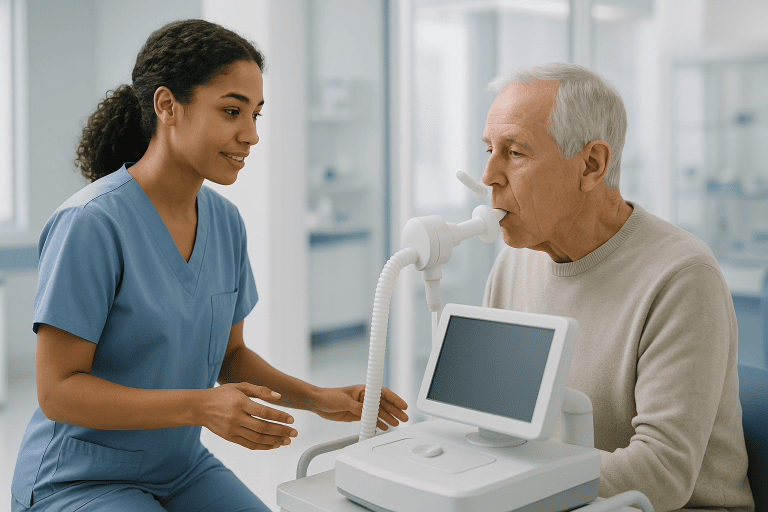
- CT pulmonary angiography (CTPA). This is the most commonly used confirmatory test. It is a special computed tomography (CT) scan in which contrast dye is injected into a vein so that the lung arteries show up clearly, allowing doctors to see clots directly.
- Ventilation-perfusion (V/Q) scan. This nuclear medicine scan compares airflow and blood flow in the lungs. It may be used when a CT scan is not suitable, for example, in people with an allergy to contrast dye, significant kidney problems, or in some pregnant patients.
- Ultrasound of the legs. A compression ultrasound can detect deep vein thrombosis. Finding a leg clot in a person with typical symptoms supports the diagnosis and guides treatment.
- Echocardiogram. An ultrasound of the heart can show whether the right side of the heart is under strain, which helps doctors judge how severe the embolism is, especially in unstable patients.
- Supporting tests. An electrocardiogram (ECG, a recording of the heart’s electrical activity), a chest X-ray, blood oxygen measurement, and blood tests for heart strain markers help rule out other conditions and assess severity.
Once a pulmonary embolism is confirmed, doctors classify it by severity, often described as low-risk, intermediate-risk, or high-risk, based on blood pressure, signs of heart strain, and blood test results. This classification guides where treatment takes place (at home, on a hospital ward, or in intensive care) and which treatments are used.
Treatment options for pulmonary embolism
Pulmonary embolism treatment aims to stop the existing clot from growing, prevent new clots from forming, and, in severe cases, remove or break down the clot to restore blood flow. The right approach depends on the size of the clot, its effect on the heart and circulation, bleeding risk, and the person’s overall health. Treatment for this condition is typically coordinated by specialists in lung medicine; at Acibadem, for example, it falls under the pulmonology department, often working together with cardiology, hematology, and emergency teams. A general overview of care for this condition is also available on the pulmonary embolism treatment page.
Anticoagulant medication
Anticoagulants, often called blood thinners, are the foundation of treatment for most patients. These medicines do not dissolve the existing clot directly; instead, they prevent it from growing and stop new clots from forming while the body gradually breaks the clot down on its own. Options include injectable medicines such as heparin or low-molecular-weight heparin, and oral medicines including direct oral anticoagulants (DOACs) and warfarin, a older tablet that requires regular blood monitoring. Treatment usually continues for at least three months; your doctor may recommend a longer course, or in some cases indefinite treatment, depending on what caused the clot and your risk of recurrence. The main risk of anticoagulants is bleeding, so doctors weigh benefits and risks carefully for each person.
Thrombolytic therapy (clot-dissolving medication)
For high-risk pulmonary embolism, typically when blood pressure is dangerously low, doctors may give thrombolytics, powerful medicines that actively dissolve clots. Because they carry a significant risk of serious bleeding, including bleeding in the brain, they are generally reserved for life-threatening situations or for selected patients whose condition is deteriorating despite standard treatment.
Catheter-based procedures
In some cases, specialists can thread a thin tube (catheter) through the blood vessels to the clot. The catheter can deliver clot-dissolving medicine directly to the blockage at lower doses, or mechanically break up or remove the clot. These procedures may be considered for patients with severe embolism who cannot safely receive full-dose thrombolytics.
Surgical removal of the clot
Surgical embolectomy, an open operation to remove the clot from the lung arteries, is uncommon and reserved for the most severe cases, usually when other treatments have failed or cannot be used. It is performed by cardiovascular surgeons in specialized centers.
Vena cava filters
A vena cava filter is a small device placed inside the large vein that returns blood from the legs to the heart. It catches clots before they can reach the lungs. Filters are generally used only when anticoagulants cannot be given, for example, because of active serious bleeding, or in selected cases of recurrent clots despite treatment. Many filters are designed to be removed once anticoagulation becomes possible.
Observation and supportive care
Very small clots in the outer branches of the lung arteries, found incidentally on scans done for other reasons, are sometimes managed with close monitoring rather than immediate anticoagulation, particularly in people with a high bleeding risk. This decision is individualized and made by a specialist. Supportive measures, such as oxygen therapy, fluids, and pain control, are used alongside the main treatments as needed.
Living with pulmonary embolism and outlook
Most people who receive prompt treatment for pulmonary embolism recover well, although recovery takes time. Breathlessness and fatigue often improve steadily over weeks to months as the body breaks down the clot and the lungs and heart recover. Some people notice lingering shortness of breath or reduced stamina for several months; if symptoms persist or worsen, doctors may look for complications such as chronic thromboembolic pulmonary hypertension (CTEPH), a rare condition in which old clot material causes lasting high pressure in the lung arteries.
During recovery, several practical points often matter:
- Take anticoagulants exactly as prescribed. Stopping early increases the risk of another clot; taking too much increases bleeding risk. Never adjust the dose without medical advice.
- Watch for bleeding. Report unusual bruising, blood in urine or stool, nosebleeds that will not stop, or heavy menstrual bleeding to your care team.
- Stay active as advised. Gentle, gradually increasing activity is usually encouraged; long periods of immobility raise the risk of new clots.
- Tell every healthcare providerincluding dentists and pharmacists: that you take a blood thinner before any procedure or new medication.
- Address risk factors where possible: stopping smoking, managing weight, and reviewing hormone-containing medications with your doctor.
- Plan for travel. On long journeys, moving regularly, staying hydrated, and, if your doctor advises, wearing compression stockings can help reduce risk.
The outlook depends on the severity of the initial event, how quickly treatment began, and underlying health conditions. A previous pulmonary embolism does increase the risk of a future clot, which is why follow-up appointments and, in some cases, longer-term anticoagulation are important. Your care team can give you a realistic picture based on your individual situation; no general article can predict the course for any single person.
Frequently asked questions
What is pulmonary embolism in simple terms?
A pulmonary embolism is a blockage in an artery in the lungs, most often caused by a blood clot that formed in a leg vein and traveled to the lungs. The blockage reduces blood flow through the lungs, which can cause breathlessness and chest pain and, in severe cases, strain the heart. It is treated as a serious condition that needs prompt medical care.
How serious is a pulmonary embolism?
Severity varies widely. Small clots may cause mild symptoms and respond well to medication, while large clots can be immediately life-threatening. Because it is difficult to judge severity from symptoms alone, any suspected pulmonary embolism should be assessed urgently by medical professionals, who classify the risk level using examinations, blood tests, and imaging.
Can a pulmonary embolism heal on its own?
The body’s natural clot-dissolving system does gradually break down most clots over weeks to months. However, without treatment, the clot can grow, new clots can form, and the risk of a fatal event is much higher. Anticoagulant medication supports the healing process by preventing clot growth and recurrence while the body clears the blockage. Untreated suspected pulmonary embolism should never be left to resolve on its own.
How is pulmonary embolism diagnosed?
Doctors combine an assessment of symptoms and risk factors with tests. A D-dimer blood test can help rule out a clot in low-risk patients, while a CT pulmonary angiography scan, a contrast-enhanced CT of the lung arteries, is the most common test used to confirm the diagnosis. Alternatives such as a ventilation-perfusion scan or leg ultrasound may be used in specific situations, such as pregnancy or contrast allergy.
How long does recovery from a pulmonary embolism take?
Many people start to feel better within days to weeks of beginning treatment, but full recovery often takes several months. Anticoagulant treatment usually lasts at least three months, and some people need it for longer. Lingering breathlessness or fatigue is common early on; if symptoms persist beyond a few months, your doctor may arrange further tests to check for complications.
What are the first warning signs of a pulmonary embolism?
The most common early pulmonary embolism symptoms are sudden shortness of breath, sharp chest pain that worsens with deep breathing, a rapid heartbeat, and sometimes coughing up blood or fainting. Pain or swelling in one leg beforehand can be a clue that a deep vein clot was the source. Because these signs overlap with other conditions, urgent medical assessment is the only reliable way to know the cause.
Can pulmonary embolism come back after treatment?
Yes, recurrence is possible, particularly if the first clot occurred without a clear trigger or if risk factors such as cancer or an inherited clotting disorder are present. This is why doctors carefully decide how long anticoagulation should continue and schedule follow-up. Taking medication as prescribed, attending follow-up visits, and managing risk factors all help reduce, though cannot eliminate, the chance of another clot.
When to see a doctor
Pulmonary embolism can become life-threatening quickly, so timing matters. Seek emergency medical care immediately, do not wait for symptoms to pass, if you or someone near you experiences:
- Sudden, unexplained shortness of breath, at rest or with minimal effort
- Sharp chest pain, especially pain that worsens with breathing or coughing
- Coughing up blood or blood-streaked mucus
- Fainting, severe dizziness, or near-collapse
- A very rapid or irregular heartbeat
- Bluish lips, face, or fingertips
- Signs of shock, such as cold clammy skin, confusion, or very low blood pressure
You should also contact a doctor promptly, the same day where possible, if you notice pain, swelling, warmth, or redness in one leg, particularly after surgery, a long journey, or a period of bed rest, as this may indicate a deep vein thrombosis that could travel to the lungs. If you are already being treated for a pulmonary embolism, report any signs of unusual bleeding, worsening breathlessness, or new chest pain to your care team without delay. Early recognition and treatment give the best chance of a full recovery.
Medically reviewed by the Acıbadem International Medical Board September 2, 2026
See our medical review board →
Update history
- PublishedJune 14, 2026
- Medical review approvedSeptember 2, 2026
- Last content updateSeptember 2, 2026