Stroke Medicine
Learn what stroke medicine is, how stroke symptoms and causes are recognized, how doctors confirm a diagnosis, and the treatment options that may be used.
Quick answer
Stroke medicine is the medical specialty that prevents, diagnoses, treats and rehabilitates stroke, a sudden loss of blood flow to part of the brain. Neurologists, emergency doctors, radiologists and therapists work together, using rapid brain scans to separate blocked from bleeding vessels, then offering clot-removing treatment, surgery, preventive medication and rehabilitation as appropriate.
What is stroke medicine?
Stroke medicine is the branch of medicine that focuses on preventing, diagnosing, treating and rehabilitating people who have had a stroke or are at high risk of one. A stroke happens when blood flow to part of the brain is cut off or reduced, so that brain cells are starved of oxygen and begin to die within minutes. Because the brain controls movement, speech, vision, sensation and thinking, a stroke can affect almost any function of the body depending on which area is damaged.
When people ask "what is stroke medicine," they are often asking about the team and the process behind stroke care. Stroke medicine brings together neurologists (doctors who specialize in the brain and nervous system), emergency physicians, radiologists (doctors who read scans), neurosurgeons, nurses, physical therapists, speech therapists and occupational therapists. Many hospitals run dedicated stroke units, and at Acibadem this care is coordinated through the Neurology department together with emergency and imaging services.
Stroke affects adults of all ages, although the risk rises with age. It is more common in people with high blood pressure, diabetes, heart rhythm problems, high cholesterol and a history of smoking. Strokes can also occur in younger adults and, less commonly, in children, usually because of a specific underlying cause such as a blood-clotting disorder or a heart condition.
There are two main types of stroke. An ischemic stroke (pronounced iss-KEE-mik) is caused by a blocked blood vessel and is the most common type. A hemorrhagic stroke (hem-or-RAJ-ik) is caused by a blood vessel that bursts and bleeds into or around the brain. A transient ischemic attack, or TIA, is sometimes called a "mini-stroke": it produces the same warning signs, but the blockage clears on its own and symptoms disappear, usually within an hour. A TIA is a medical emergency because it often signals that a full stroke may follow.
Stroke medicine symptoms: what to look for
Stroke symptoms come on suddenly. The word "sudden" is the most important clue, because most other conditions that affect the brain develop over hours, days or weeks. Doctors working in stroke medicine are trained to act on symptoms immediately rather than wait to see whether they improve.
Common warning signs include:
- Face drooping: one side of the face sags or feels numb; the smile looks uneven.
- Arm or leg weakness: one arm or leg becomes weak, heavy or numb, often on one side of the body.
- Speech difficulty: slurred speech, trouble finding words, or trouble understanding what others are saying.
- Vision problems: sudden loss of vision in one or both eyes, double vision or a blank area in the field of view.
- Loss of balance or coordination: sudden dizziness, unsteadiness or difficulty walking.
- Confusion: sudden trouble thinking clearly or responding appropriately.
- Severe headache: a sudden, intense headache with no obvious cause, sometimes described as the worst headache of a person’s life.
- Nausea or vomiting together with any of the above.
The letters F-A-S-T (Face, Arm, Speech, Time) are widely used to help people remember the main signs and the need to act quickly.
Symptoms differ somewhat by type of stroke. Ischemic strokes often cause weakness, numbness, speech or vision problems that begin abruptly and either stay the same or worsen in steps. Hemorrhagic strokes are more likely to begin with a severe headache, vomiting, a stiff neck or a rapid decline in alertness, and they may progress quickly. Strokes at the back of the brain (the brainstem or cerebellum) may cause dizziness, double vision, difficulty swallowing or poor coordination rather than obvious one-sided weakness, which can make them harder to recognize.
In the days and weeks after a stroke, other problems may appear. These can include difficulty swallowing, bladder or bowel problems, fatigue, changes in mood, trouble with memory or attention, and pain or stiffness in the affected limbs. These later symptoms are a major focus of stroke rehabilitation.
Causes and risk factors
Understanding stroke medicine causes means understanding why a blood vessel in the brain becomes blocked or bursts.
Ischemic stroke is usually caused by one of the following:
- Atherosclerosis: a buildup of fatty deposits (plaque) that narrows the arteries supplying the brain, most often the carotid arteries in the neck.
- Blood clots from the heart: an irregular heart rhythm called atrial fibrillation allows clots to form in the heart and travel to the brain. Heart valve disease and recent heart attack can also be sources.
- Small vessel disease: long-standing high blood pressure or diabetes damages the tiny arteries deep in the brain.
- Less common causes: a tear in the wall of a neck artery (dissection), blood-clotting disorders, inflammation of blood vessels, or certain drugs.
Hemorrhagic stroke is most often caused by:
- Uncontrolled high blood pressure, which weakens artery walls over time.
- Aneurysm: a weak, balloon-like bulge in an artery wall that ruptures.
- Arteriovenous malformation: an abnormal tangle of blood vessels present from birth.
- Blood-thinning medication or bleeding disorders that make bleeding harder to stop.
- Amyloid angiopathy: protein deposits that weaken small brain vessels, mainly in older adults.
Risk factors are conditions or habits that make a stroke more likely. Some can be changed and some cannot. Modifiable risk factors include high blood pressure, smoking, diabetes, high cholesterol, obesity, physical inactivity, heavy alcohol use, an unhealthy diet and untreated atrial fibrillation. Non-modifiable risk factors include older age, a family history of stroke, a previous stroke or TIA, and certain inherited conditions such as sickle cell disease. Men have a somewhat higher risk at younger ages, while women face additional risk related to pregnancy, some hormonal medications and migraine with aura.
Stroke medicine diagnosis: how doctors confirm a stroke
Diagnosis in stroke medicine has to be fast, because the treatments that can reopen a blocked artery only work within a limited time window. When a person with possible stroke symptoms arrives at a hospital, the team usually follows a rapid sequence.
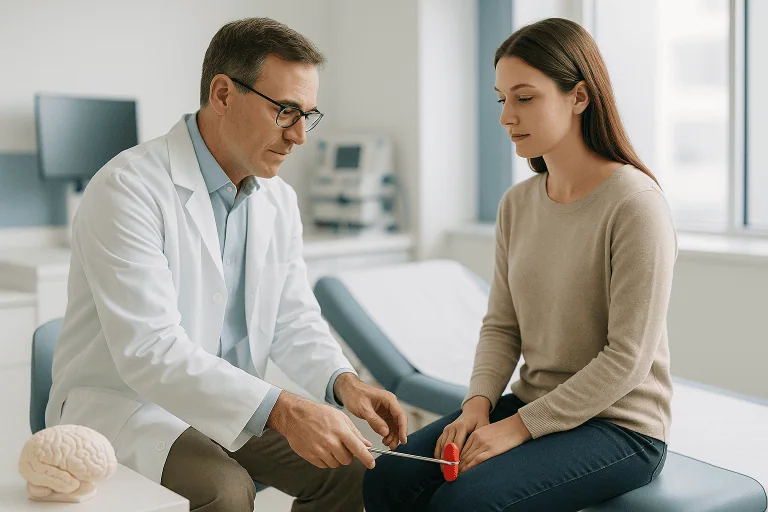
Clinical assessment. A doctor or nurse asks when the symptoms started (or when the person was last seen well), checks vital signs and performs a focused neurological examination. This looks at strength, sensation, speech, vision, eye movements, coordination and level of alertness. Standardized scoring systems are often used to record how severe the deficits are and to track change over time.
Brain imaging. A computed tomography (CT) scan of the head is usually the first test. It is quick and reliably shows bleeding, which allows doctors to separate hemorrhagic from ischemic stroke. This distinction is critical, because clot-dissolving drugs that help an ischemic stroke would be dangerous in a bleed. A CT angiogram, in which dye is injected into a vein to outline the blood vessels, may be done at the same time to look for a blocked artery. Magnetic resonance imaging (MRI) gives more detailed pictures of brain tissue and can detect very small or very early strokes; it may be used when the diagnosis is uncertain or to plan longer-term care.
Blood tests. These check blood sugar (low blood sugar can mimic a stroke), blood count, clotting function, kidney function and cholesterol. Results guide the safe use of medication.
Heart tests. An electrocardiogram (ECG) records the heart’s electrical activity and can reveal atrial fibrillation. Longer heart-rhythm monitoring and an echocardiogram (an ultrasound of the heart) may be arranged to search for a source of clots.
Vessel studies. Carotid ultrasound uses sound waves to measure narrowing in the neck arteries. In selected cases, a catheter angiogram, in which a thin tube is threaded through the blood vessels, gives the most detailed view and can be combined with treatment.
Doctors also consider conditions that can look like a stroke, such as seizures, migraine, low blood sugar, brain tumors or severe infection. Confirming the diagnosis means both recognizing the stroke and ruling out these "stroke mimics."
Stroke medicine treatment options
Treatment depends on the type of stroke, how much time has passed since symptoms began, the person’s overall health and the findings on imaging. Stroke medicine treatment options fall into several groups.
Emergency treatment for ischemic stroke. If a person reaches the hospital within a few hours of symptom onset and there is no bleeding, a clot-dissolving medication called a thrombolytic may be given through a vein. For a large clot in a major artery, a procedure called mechanical thrombectomy may be offered: a specialist threads a thin tube through an artery, usually from the groin, up to the brain and physically removes the clot. Not everyone is eligible for these treatments, and the decision is made by weighing the possible benefit against the risk of bleeding.
Emergency treatment for hemorrhagic stroke. Care focuses on controlling blood pressure, reversing the effect of any blood-thinning medication, and reducing pressure inside the skull. Surgery may be needed to remove a large collection of blood, relieve pressure, or repair a ruptured aneurysm using either open surgery (clipping) or a catheter-based technique (coiling).
Medication to prevent another stroke. After an ischemic stroke or TIA, most people are prescribed an antiplatelet medication such as aspirin or another agent that makes blood cells less likely to clump together. People with atrial fibrillation are often prescribed an anticoagulant (a stronger blood thinner). Blood pressure medication, cholesterol-lowering statins and diabetes treatment are commonly adjusted, because controlling these conditions lowers the chance of recurrence.
Procedures and surgery for prevention. If a carotid artery in the neck is significantly narrowed, a surgeon may recommend carotid endarterectomy, an operation to remove the plaque, or carotid stenting, in which a small mesh tube is placed to hold the artery open. Some people with a hole between the heart’s upper chambers may be considered for a closure device.
Supportive care and observation. On a stroke unit, staff monitor breathing, swallowing, blood pressure, blood sugar and temperature, and take steps to prevent complications such as pneumonia, blood clots in the legs and pressure sores. Swallowing is assessed before a person eats or drinks, because a weak swallow can allow food to enter the lungs.
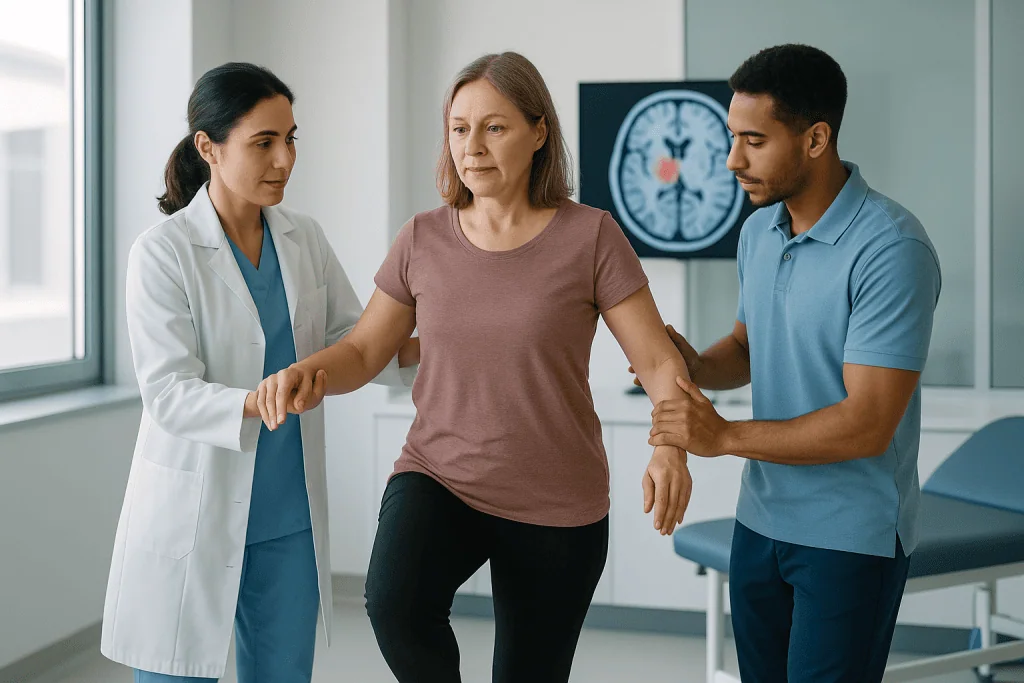
Rehabilitation. Rehabilitation often begins within a day or two of the stroke and may continue for months. Physical therapy works on strength, balance and walking; occupational therapy focuses on daily activities such as dressing and cooking; speech and language therapy addresses speaking, understanding and swallowing. Psychologists and social workers help with mood changes, memory problems and the practical adjustments that families face. The intensity and length of rehabilitation are tailored to each person.
Living with stroke and outlook
Recovery after a stroke varies widely. Some people regain nearly all of their previous abilities, while others live with lasting weakness, speech difficulty or changes in thinking. In general, the outlook depends on the size and location of the stroke, how quickly treatment began, the person’s age and overall health, and how much rehabilitation they are able to take part in. Most recovery happens in the first weeks and months, but gradual improvement can continue for a year or more, and many people keep gaining skills with continued practice.
A stroke raises the risk of having another one, which is why long-term stroke medicine focuses heavily on prevention. This usually means taking prescribed medication consistently, keeping blood pressure and blood sugar within target ranges, stopping smoking, staying physically active within one’s abilities, eating a balanced diet and limiting alcohol. Regular follow-up with a neurologist or family doctor allows treatment to be adjusted over time.
Emotional changes are common after stroke. Depression, anxiety, irritability and sudden tearfulness affect many people and are considered a medical part of recovery rather than a sign of weakness. Caregivers may also experience stress and fatigue. Support groups, counseling and clear information about what to expect can help both patients and families cope with the changes a stroke brings.
Frequently asked questions
What is stroke medicine and who provides it?
Stroke medicine is the area of health care that deals with the emergency treatment of stroke, the search for its cause, prevention of another stroke and rehabilitation afterward. It is usually led by neurologists working with emergency doctors, radiologists, neurosurgeons, specialist nurses and therapists. Care is often delivered in a dedicated stroke unit and continues in outpatient clinics after discharge.
What are the first stroke medicine symptoms people should recognize?
The earliest and most important signs are sudden facial drooping, sudden weakness or numbness in an arm or leg, and sudden trouble speaking or understanding speech. Sudden vision loss, dizziness with loss of balance, confusion or a severe unexplained headache are also warning signs. Because symptoms appear abruptly and every minute matters, they should be treated as an emergency even if they seem mild or start to fade.
What are the most common stroke medicine causes?
Most strokes are ischemic, caused by a clot or narrowing that blocks blood flow, often linked to atherosclerosis, atrial fibrillation or long-term high blood pressure and diabetes. Hemorrhagic strokes are caused by bleeding from a weakened or ruptured vessel, most commonly related to high blood pressure or an aneurysm. In many cases more than one factor contributes.
How is a stroke medicine diagnosis confirmed?
Doctors combine a neurological examination with urgent brain imaging, usually a CT scan, which distinguishes bleeding from a blockage. CT angiography, MRI, blood tests, an ECG and ultrasound of the neck arteries may be added to find the cause. The timing of symptom onset is a key part of the assessment because it affects which treatments can be used safely.
What are the main stroke medicine treatment options?
For ischemic stroke, options may include clot-dissolving medication, mechanical clot removal, antiplatelet or anticoagulant drugs, and procedures to open narrowed neck arteries. For hemorrhagic stroke, treatment centers on blood pressure control, reversing blood thinners and, in some cases, surgery. Rehabilitation and long-term management of risk factors are part of treatment for both types.
Can a stroke be prevented?
Not every stroke can be prevented, but the risk can often be lowered substantially. Controlling blood pressure, managing diabetes and cholesterol, not smoking, staying active, maintaining a healthy weight, limiting alcohol and treating atrial fibrillation with appropriate medication all reduce risk. People who have had a TIA or stroke are usually given a tailored prevention plan.
How long does recovery from a stroke take?
There is no single timeline. Many people see the greatest improvement in the first few months, and progress can continue more slowly for a year or longer. The pace depends on the severity and location of the stroke, the person’s general health and the amount of rehabilitation they receive. Some effects may be permanent, and a rehabilitation team can help set realistic goals.
When to see a doctor
A suspected stroke is always an emergency. Call your local emergency number immediately, and do not drive yourself, if you or someone near you develops any of the following suddenly:
- Drooping or numbness on one side of the face
- Weakness, numbness or paralysis of an arm or leg, especially on one side
- Slurred speech, difficulty finding words or trouble understanding others
- Sudden loss of vision or double vision
- Sudden severe headache, particularly with vomiting, a stiff neck or drowsiness
- Sudden dizziness, loss of balance or inability to walk
- Sudden confusion or loss of consciousness
- Any of these symptoms that appeared and then went away, which may indicate a TIA
Note the time the symptoms began, because this information guides emergency treatment. Outside of emergencies, a doctor should be seen for regular review of blood pressure, cholesterol, blood sugar and heart rhythm, especially in people with a family history of stroke, a previous TIA, or known heart disease. After a stroke, any new or worsening symptoms, falls, swallowing problems, low mood or side effects from medication should be reported promptly to the treating team.
Medically reviewed by the Acıbadem International Medical Board September 9, 2026
See our medical review board →
Update history
- PublishedSeptember 8, 2026
- Medical review approvedSeptember 9, 2026
- Last content updateSeptember 8, 2026