Stroke
Stroke is a medical emergency affecting blood flow to the brain. Learn stroke symptoms, causes, diagnosis, treatment and recovery.
Quick answer
Stroke is a sudden loss of brain function caused by blocked blood flow or bleeding in the brain, and treatment focuses on restoring circulation quickly or controlling the bleed while protecting brain tissue. At Acibadem in Turkey, stroke care includes rapid diagnosis with advanced imaging, close monitoring, and personalized treatment such as clot-dissolving medication, minimally invasive endovascular procedures, surgery when…
What is stroke?
A stroke happens when the blood supply to part of the brain is suddenly interrupted or reduced. Brain cells need a constant flow of oxygen and nutrients carried by the blood, and when that flow stops, cells in the affected area begin to lose function within minutes. If blood flow is not restored quickly, those brain cells can be permanently damaged. Because the brain controls movement, speech, vision, memory, and many other functions, a stroke can affect almost any part of how a person thinks, feels, or moves.
Doctors generally describe two main types of stroke. An ischemic stroke occurs when a blood vessel supplying the brain becomes blocked, most often by a blood clot. This is the most common type. A hemorrhagic stroke occurs when a blood vessel in or around the brain leaks or bursts, causing bleeding that damages surrounding brain tissue. There is also a related event called a transient ischemic attack (TIA), sometimes called a “mini-stroke,” in which blood flow is blocked only briefly and symptoms resolve, often within minutes to hours. A TIA does not usually cause lasting damage, but it is an important warning sign that a full stroke may follow.
Stroke can affect anyone, including younger adults and, rarely, children, but the risk rises considerably with age. It is more common in people with high blood pressure, diabetes, heart disease, or a history of smoking, and it remains one of the leading causes of death and long-term disability worldwide. Understanding what is stroke, how to recognize it, and why speed matters can make a meaningful difference in outcomes, because stroke treatment works best when it is started as soon as possible after symptoms begin.
Symptoms of stroke
Stroke symptoms usually appear suddenly, often over seconds to minutes. Which symptoms occur depends on which part of the brain is affected. A widely used way to remember the most common warning signs is the acronym FAST: Face drooping, Arm weakness, Speech difficulty, Time to call emergency services.
Common stroke symptoms include:
- Sudden weakness or numbness of the face, arm, or leg, especially on one side of the body
- Sudden confusion, trouble speaking, or difficulty understanding what others are saying
- Sudden trouble seeing in one or both eyes, or double vision
- Sudden difficulty walking, dizziness, loss of balance, or lack of coordination
- Sudden severe headache with no known cause, which may suggest bleeding in the brain
- Drooping of one side of the face, often noticeable when the person tries to smile
- Slurred or garbled speech, or an inability to find words
Symptoms can vary depending on the type of stroke. In an ischemic stroke, symptoms often reflect the specific brain region that has lost its blood supply, for example, weakness on one side of the body or loss of speech. In a hemorrhagic stroke, a sudden, intense headache is more common, sometimes described by patients as the worst headache of their life, and it may be accompanied by vomiting, neck stiffness, or a rapid decline in alertness. In a transient ischemic attack, the same symptoms appear but then fade, often within an hour. Even if symptoms disappear completely, a TIA should be treated as a medical emergency, because it signals a high short-term risk of a full stroke.
In the days and weeks after a stroke, people may notice additional problems as the full extent of the injury becomes clear. These can include difficulty swallowing, changes in memory or attention, emotional changes such as depression or sudden crying, fatigue, and problems with bladder control. These later effects vary widely from person to person and often improve with time and rehabilitation, although recovery is different for everyone.
Causes and risk factors
Stroke causes differ depending on the type of stroke, but most share underlying problems with the blood vessels or the heart.
Ischemic stroke is most often caused by:
- Atherosclerosisa buildup of fatty deposits, called plaque, inside the arteries. Plaque can narrow the vessels that supply the brain or break apart and trigger a clot.
- Blood clots from the heartcertain heart conditions, especially an irregular heartbeat called atrial fibrillation, can allow clots to form in the heart and travel to the brain.
- Small vessel diseasedamage to the tiny blood vessels deep in the brain, often related to long-standing high blood pressure or diabetes.
Hemorrhagic stroke is most often caused by:
- High blood pressure, which weakens vessel walls over time
- Aneurysmsweak, bulging spots on a blood vessel that can rupture
- Abnormal tangles of blood vessels present from birth, known as arteriovenous malformations
- Blood-thinning medications, which in some cases can increase the risk of bleeding
Many risk factors raise the chance of having a stroke of either type. Some can be changed or managed, while others cannot.
- High blood pressurethe single most important treatable risk factor
- Smoking, which damages blood vessels and promotes clotting
- Diabetes and high cholesterol
- Heart disease, including atrial fibrillation and heart valve problems
- Obesity and physical inactivity
- Heavy alcohol use and use of certain recreational drugs
- Older agerisk roughly increases with each decade after midlife
- Family history of stroke or a personal history of a previous stroke or TIA
- Certain blood-clotting disorders and, in some cases, pregnancy-related conditions
Having one or more risk factors does not mean a stroke is inevitable, and many strokes occur in people with no obvious warning. However, managing blood pressure, stopping smoking, staying physically active, and treating heart conditions can substantially lower risk in many cases. Your doctor can help you understand which factors apply to you and how to address them.
Diagnosis
Stroke diagnosis begins the moment a person arrives at the hospital, because the type of stroke must be identified before treatment can safely begin. Treatments that help an ischemic stroke, such as clot-dissolving medication, can be dangerous if the stroke is actually caused by bleeding, so brain imaging is an essential first step.
The evaluation typically includes:
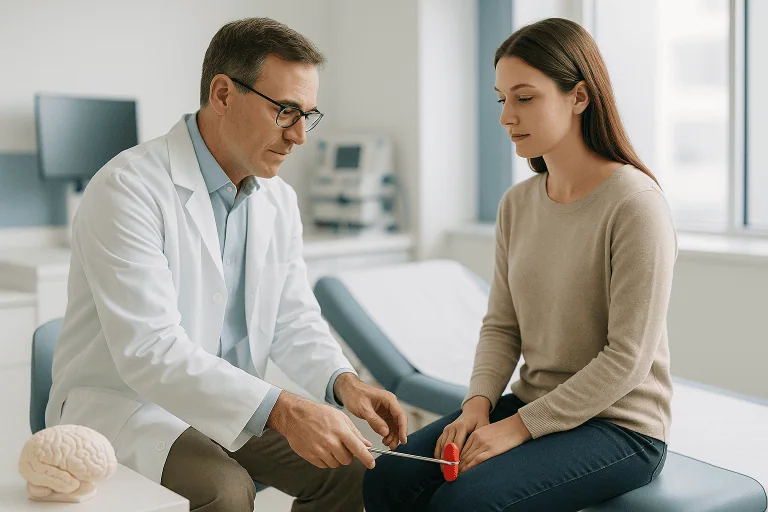
- A rapid neurological examination. Doctors check strength, sensation, speech, vision, coordination, and alertness, often using a standardized scoring tool to measure how severe the symptoms are. They also ask exactly when symptoms started, because this timing affects which treatments are possible.
- Computed tomography (CT) scan. A CT scan is an X-ray–based image of the brain that can be done quickly. It is very good at showing bleeding, which helps distinguish a hemorrhagic stroke from an ischemic one.
- Magnetic resonance imaging (MRI). An MRI uses magnetic fields rather than radiation and can show ischemic damage earlier and in more detail than CT. It may be used at the initial evaluation or later to confirm the diagnosis and map the affected area.
- Imaging of the blood vessels. Special CT or MRI scans of the arteries (called angiography), or an ultrasound of the neck arteries, can show blockages, narrowing, or aneurysms.
- Heart tests. An electrocardiogram (ECG, a recording of the heart’s electrical activity) and sometimes an echocardiogram (an ultrasound of the heart) look for heart rhythm problems or clots that could have caused the stroke. In some cases, longer-term heart rhythm monitoring is arranged after discharge.
- Blood tests. These check blood sugar, clotting function, cholesterol, and other factors that can mimic a stroke or contribute to one.
In some patients, the exact cause of an ischemic stroke is not found even after thorough testing; doctors call this a cryptogenic stroke. Even then, treatment to prevent a future stroke is usually started based on the most likely mechanisms. Identifying the cause where possible matters because it guides which preventive medications and procedures will be most effective.
Treatment options
Stroke treatment depends on the type of stroke, how much time has passed since symptoms began, and the person’s overall health. In all cases, the goal in the emergency phase is to limit brain damage, and the goal afterward is to prevent another stroke and support recovery. Stroke care is typically coordinated by a neurology department working together with emergency, imaging, and rehabilitation teams; at Acibadem, for example, stroke is managed within the neurology specialty.
Emergency treatment for ischemic stroke
- Clot-dissolving medication (thrombolysis). A medication given through a vein can dissolve the clot blocking blood flow. It is effective only within a limited window of time after symptoms begin, which is why arriving at the hospital quickly is so important. Doctors weigh the potential benefit against the risk of bleeding before giving it.
- Mechanical thrombectomy. For strokes caused by a blockage in a large brain artery, specialists may thread a thin tube (catheter) through the blood vessels to physically remove the clot. This procedure is also time-sensitive and is offered only when imaging shows it is likely to help.
Emergency treatment for hemorrhagic stroke
- Blood pressure control and reversal of blood thinners. Lowering dangerously high blood pressure and, if the patient takes anticoagulant medication, giving agents to reverse it can limit further bleeding.
- Surgery or catheter-based procedures. In selected cases, surgeons may remove pooled blood, relieve pressure on the brain, or repair a ruptured aneurysm or abnormal blood vessel. Not every hemorrhagic stroke requires surgery; the decision depends on the size and location of the bleed and the patient’s condition.
Preventing another stroke
After the emergency phase, treatment focuses on reducing the risk of a second stroke, which is often higher in the first weeks and months. Depending on the cause, your doctor may recommend:
- Antiplatelet medications, such as aspirin, which make blood cells called platelets less likely to form clots
- Anticoagulants (blood thinners) for people whose stroke was caused by atrial fibrillation or another clot source in the heart
- Blood pressure and cholesterol medications, which are among the most effective long-term protective treatments
- Procedures on narrowed neck arteries, such as surgical cleaning of the artery (carotid endarterectomy) or placement of a small mesh tube (stent), when a significantly narrowed carotid artery caused the stroke
- Lifestyle changes, including stopping smoking, healthy eating, regular physical activity, and limiting alcohol
Rehabilitation
Rehabilitation is a central part of stroke treatment, not an optional extra. It usually begins in the hospital and continues after discharge. Depending on the person’s needs, it may involve physical therapy to rebuild strength and balance, occupational therapy to relearn daily activities such as dressing and cooking, speech and language therapy for communication and swallowing problems, and psychological support for mood changes. The brain has some capacity to reorganize and form new connections after injury, a process called neuroplasticity, and structured rehabilitation helps make the most of it. Progress is often greatest in the first months but can continue for a year or longer in many cases.
There is no role for watchful waiting in an acute stroke: it is always an emergency. However, after recovery, ongoing care usually settles into regular follow-up visits, medication reviews, and monitoring of risk factors rather than active procedures.
Living with stroke and outlook
The outlook after a stroke varies widely. Some people recover almost completely, while others live with lasting effects on movement, speech, thinking, or mood. Outcome depends on many factors, including the type and size of the stroke, which part of the brain was affected, how quickly treatment was given, the person’s age and overall health, and how consistently rehabilitation and preventive treatment are followed. Because of this variability, no one can promise a specific result, and it is reasonable to be cautious about any source that does.
Many stroke survivors regain significant function, especially with early and sustained rehabilitation. Recovery is often fastest in the first three to six months, but meaningful improvement can continue well beyond that. Common long-term challenges include fatigue, weakness or stiffness on one side, difficulty with speech or swallowing, memory and concentration problems, and emotional changes such as depression or anxiety. These are recognized medical issues, not personal failings, and they can often be treated or managed.
Living well after a stroke usually involves several ongoing elements: taking preventive medications as prescribed, keeping blood pressure and blood sugar under control, attending follow-up appointments, staying as physically active as your abilities allow, and asking for help with mood changes when they occur. Family members and caregivers also play an important role, and many benefit from practical training and support of their own. Because the risk of a second stroke is real, learning the warning signs and acting on them immediately remains important for the rest of a survivor’s life.
Frequently asked questions
What is a stroke in simple terms?
A stroke is a sudden interruption of blood flow to part of the brain, either because a vessel is blocked by a clot (ischemic stroke) or because a vessel bleeds (hemorrhagic stroke). Without blood flow, brain cells in that area stop working and can die within minutes, which is why a stroke is always a medical emergency requiring immediate care.
What are the first signs of a stroke?
The most common early stroke symptoms are sudden weakness or numbness on one side of the body, drooping of one side of the face, slurred speech or trouble finding words, sudden vision problems, sudden severe headache, and sudden loss of balance. The FAST checklist, Face, Arm, Speech, Time, is a quick way to spot the most typical signs and act fast.
Can the brain heal after a stroke?
Brain cells that die during a stroke do not grow back, but the brain can often adapt by forming new connections and shifting tasks to healthy areas: a process called neuroplasticity. This is why rehabilitation matters: with therapy, many people regain part or, in some cases, most of their lost function. The extent of recovery varies from person to person and cannot be guaranteed in advance.
How serious is a stroke?
Stroke is a serious, potentially life-threatening condition and a leading cause of long-term disability. Severity depends on the size and location of the affected brain area and how quickly treatment begins. Some strokes are mild and leave few lasting effects, while others cause significant impairment. Rapid emergency treatment improves the chances of a better outcome in many cases.
What is the difference between a stroke and a TIA?
A transient ischemic attack (TIA) causes the same symptoms as a stroke, but the blockage is temporary and symptoms resolve, often within an hour, without permanent brain damage on imaging. A TIA should still be treated as an emergency, because it signals a high risk of a full stroke in the following days and weeks, and preventive treatment can reduce that risk.
How long does stroke recovery take?
Recovery timelines differ widely. The fastest gains often occur in the first weeks and months after a stroke, and many people continue to improve for a year or longer, especially with ongoing rehabilitation. Some effects may be permanent. Your care team can give you a more realistic picture based on the type of stroke, its severity, and your progress in therapy.
Can a stroke be prevented?
Not every stroke can be prevented, but the risk can often be lowered substantially. Controlling high blood pressure is the most important step, along with not smoking, managing diabetes and cholesterol, treating heart rhythm problems such as atrial fibrillation, staying physically active, and limiting alcohol. People who have already had a stroke or TIA usually also take preventive medications prescribed by their doctor.
When to see a doctor
A stroke is a medical emergency. Do not wait to see whether symptoms improve on their own, and do not drive yourself to the hospital, call your local emergency number immediately if you or someone near you has any of the following sudden symptoms:
- Sudden weakness or numbness of the face, arm, or leg, particularly on one side of the body
- Sudden drooping of one side of the face, especially when smiling
- Sudden slurred speech, inability to speak, or difficulty understanding others
- Sudden loss of vision in one or both eyes, or double vision
- Sudden severe headache unlike any experienced before, especially with vomiting or drowsiness
- Sudden dizziness, loss of balance, or trouble walking
- Sudden confusion or loss of consciousness
Note the time symptoms started, because this information directly affects which emergency treatments can be used. Seek urgent care even if symptoms fade or disappear, since a transient ischemic attack carries a high short-term risk of a full stroke. If you have had a stroke or TIA in the past, keep your scheduled follow-up visits and contact your doctor promptly about new or worsening symptoms, medication side effects, or difficulty managing risk factors such as blood pressure.
Blood Pressure Calculator
Check your own numbers in seconds, free, instant and doctor-reviewed ranges.
Medically reviewed by the Acıbadem International Medical Board September 2, 2026
See our medical review board →
Update history
- PublishedJune 9, 2026
- Medical review approvedSeptember 2, 2026
- Last content updateSeptember 2, 2026