10 Panel Drug Test — Explained by Medical Evidence, Not Myths

A 10 panel drug test usually screens for 10 common drug categories rather than every possible substance. Urine is the most common sample, but blood, saliva, and hair may be used in some settings.
Key Takeaways
- A 10 panel drug test usually screens for 10 common drug categories rather than every possible substance.
- Urine is the most common sample, but blood, saliva, and hair may be used in some settings.
- Screening results can be affected by timing, metabolism, prescription medicines, and laboratory cutoffs.
- A positive screening test may need a confirmatory laboratory test before final interpretation.
- Drug testing should be interpreted in medical context, especially when a person takes prescribed medication.
A 10 panel drug test is a screening test that looks for evidence of 10 common drug classes, most often in urine. It can be useful for workplace, legal, medical, or monitoring purposes, but the result does not always tell when a substance was used, how much was taken, or whether a person is impaired.
Overview: what a 10 panel drug test actually means
A 10 panel drug test is a laboratory screening tool used to check for the presence of metabolites from 10 commonly tested drug groups. In most cases, it is done on a urine sample, although other sample types may be used in specific situations. The test is designed to detect whether substances from certain categories are likely to have been used within a detectable time window.
This kind of test is widely used in employment screening, sports medicine, substance use monitoring, emergency evaluation, pain management, and legal settings. Its main purpose is to provide a structured screen for common substances, not to make a full diagnosis on its own. A result should always be interpreted alongside a person’s medications, health history, and the reason the test was ordered.
The phrase “10 panel” refers to the number of categories being screened, not to the severity of use or the exact amount in the body. Different laboratories and organizations may use slightly different panels, so the exact list can vary. That is why the report from the testing center matters more than assumptions based on the panel name alone.
Medical evidence also shows that screening tests have limits. A positive result does not automatically prove misuse, and a negative result does not always exclude recent use. Timing, hydration, laboratory thresholds, metabolism, and cross-reacting medicines can all influence what the test shows.
Which substances are usually included
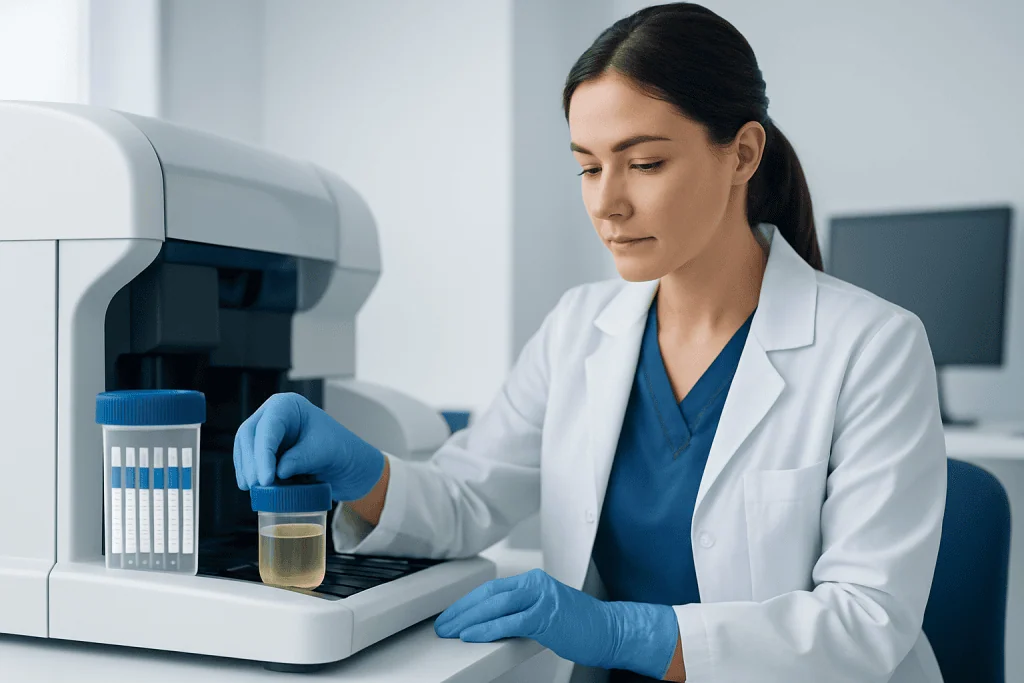
Although the exact panel may differ by laboratory, a 10 panel drug test often includes screening for common categories such as amphetamines, cannabis, cocaine, opioids, phencyclidine (PCP), and benzodiazepines. Many panels also include barbiturates, methadone, methaqualone, and propoxyphene, though some modern panels substitute or omit certain older drugs depending on local practice and testing standards.
The test usually looks for breakdown products, called metabolites, rather than the original substance itself. This helps laboratories identify whether a drug was likely used during the relevant detection window. However, a screening test generally does not determine the exact dose taken or whether a person is currently intoxicated.
Panels are often customized. For example, a workplace screen may differ from a hospital-based screen used in medical care, and pain management testing may include more detailed analysis of prescribed opioids. If a person needs a specific answer about one drug, the clinician may order targeted testing instead of relying only on a broad panel.
- Common sample type: urine
- Common purpose: screening, not diagnosis by itself
- Common output: negative, presumptive positive, or sometimes invalid
- Common next step after a positive screen: confirmatory laboratory testing
How the test is done and how results are interpreted
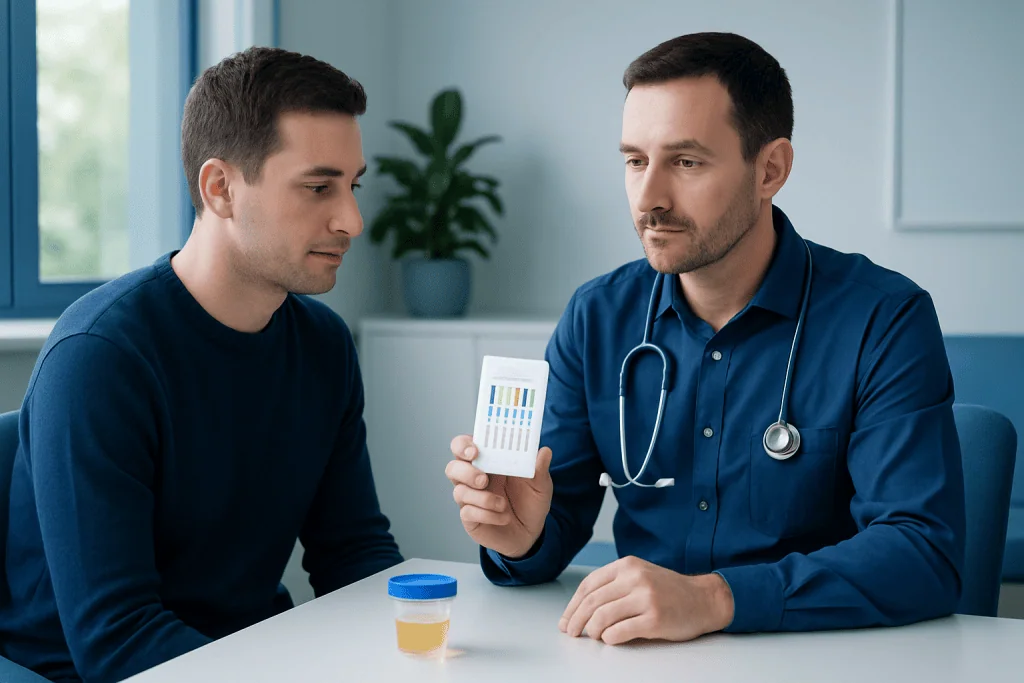
In routine practice, the person provides a urine sample in a controlled collection setting. The sample may first be checked for temperature, appearance, and other indicators that help the laboratory assess whether it is valid for testing. Some programs also follow chain-of-custody procedures, which are used to document how the sample was collected, stored, and transferred.
The first stage is often an immunoassay screen. This method is useful because it is fast and practical, but it can occasionally react with substances that are chemically similar to the target drug. For that reason, an initial positive result is often called a presumptive positive rather than a final answer.
If needed, the sample can then be tested with a more specific confirmatory method such as gas chromatography-mass spectrometry or liquid chromatography-tandem mass spectrometry. These methods are more accurate for identifying particular substances and can help distinguish true positives from false positives. In medical care, this step is especially important when the result may affect treatment decisions or have legal or occupational consequences.
Interpretation should be cautious. A drug screen usually indicates whether a substance or metabolite was present above a laboratory threshold, but it does not reliably show when the drug was taken, how often it was used, or whether someone is currently impaired. If symptoms suggest intoxication, overdose, or withdrawal, clinical assessment matters more than the screen alone.
Detection windows, false positives, and other limitations
One of the most common myths is that a 10 panel drug test can precisely date drug use. In reality, each substance has a general detection window that depends on the type of drug, dose, frequency of use, body composition, metabolism, kidney and liver function, and the type of sample collected. Urine testing often reflects recent past exposure, but the timing varies widely among individuals.
False positives can happen. Some prescription medicines, over-the-counter products, and even certain supplements may cross-react with an initial screening assay. Likewise, false negatives can occur if testing is done too early, too late, below the laboratory cutoff, or if the substance tested is not actually included in that specific panel.
Hydration and sample handling can also affect interpretation. Drinking large amounts of fluid may dilute urine, while improper storage or contamination can lead to an invalid sample. Because of these factors, a single result should not be overinterpreted without considering the full medical and practical context.
These limitations are one reason clinicians sometimes combine laboratory screening with assessment for related conditions such as substance use disorder or mental health concerns. In selected settings, more specific testing or specialist evaluation may be recommended to clarify the meaning of a result.
When a doctor may order one in medical care
Outside workplace or legal settings, doctors may order a 10 panel drug test when it can directly support patient care. This may happen in emergency evaluation, before certain procedures, during monitoring of long-term opioid or sedative treatment, or when symptoms could be related to substance exposure. The aim is to improve safety, not to rely on assumptions.
For example, a clinician may use drug testing when unexplained confusion, drowsiness, agitation, chest pain, or altered behavior raises concern about a substance-related cause. In other cases, the test may help guide prescribing decisions, especially when medications carry a risk of interaction, sedation, or misuse. If a person is being treated for chronic pain or a behavioral health condition, testing may be one part of a broader care plan.
Drug screening is also relevant when there is concern about poisoning, accidental ingestion, or overdose. In those situations, the patient may need broader emergency evaluation and supportive treatment rather than waiting for a routine screening result. Depending on symptoms, clinicians may consider toxicology review, cardiac monitoring, or imaging such as MRI when another medical cause needs to be excluded.
In more complex cases, care may involve multiple specialties. At centers such as Acibadem International, multidisciplinary specialists in internal medicine, emergency care, laboratory medicine, psychiatry, and related fields evaluate drug-related concerns for international patients in JCI-accredited hospitals.
What happens after a positive or negative result
A negative result usually means the tested substances were not detected above the laboratory threshold at that time. It does not always mean a person has never used the substance, and it does not exclude drugs that were not part of the panel. If concern remains high, a clinician may repeat testing, order a more targeted analysis, or look for another explanation for the symptoms.
A positive screening result should be reviewed carefully. The healthcare team will usually compare it with current prescriptions, recent treatments, and any over-the-counter medicines or supplements. If the result may affect employment, legal standing, or important medical decisions, confirmation with a more specific test is commonly recommended.
When the result points to a possible health problem, the next step depends on the situation. Someone with signs of acute intoxication may need urgent treatment, while a person with recurring nonmedical substance use may benefit from assessment, counseling, and longer-term follow-up. If related emotional symptoms are present, clinicians may also assess for conditions such as depression or anxiety because mental health and substance use can affect each other.
Care is individualized. Some people need reassurance and explanation of a false positive, while others may need structured evaluation, medication review, or referral for supportive treatment such as psychiatric care if substance use is affecting daily life or health.
When to seek medical care
Medical care should be sought promptly if a person has symptoms that suggest overdose, severe intoxication, or withdrawal. These may include trouble breathing, chest pain, seizures, fainting, severe confusion, extreme agitation, blue lips, or inability to wake normally. In these cases, emergency assessment is more important than interpreting a routine screening result at home or online.
A doctor should also be consulted if there is a surprising positive result, concern about a medication causing a false positive, or uncertainty about whether a prescribed medicine could affect testing. Professional review can help prevent misunderstanding and guide whether confirmatory testing is needed. This is especially important for people taking pain medicines, sedatives, stimulant treatment, or multiple prescriptions.
Non-urgent medical advice is also appropriate when substance use may be affecting mood, sleep, work, school, memory, or relationships. A clinician can review the result in context and discuss safe next steps, which may include laboratory follow-up, counseling, or other support. Depending on symptoms, further evaluation such as a medical check-up may be useful to look at general health, medication safety, and related conditions.
People should not stop prescribed medicines suddenly unless advised by a qualified clinician. Stopping certain medications without guidance can lead to withdrawal symptoms or worsening of the underlying condition.
Frequently asked questions
What does a 10 panel drug test test for?
It usually screens for 10 common drug categories, often including amphetamines, cannabis, cocaine, opioids, benzodiazepines, PCP, barbiturates, methadone, methaqualone, and propoxyphene. However, the exact list can vary by laboratory, employer, or medical setting.
Is a 10 panel drug test always done with urine?
Urine is the most common sample because it is practical and widely used for screening. In some situations, blood, saliva, or hair testing may be used instead, depending on the purpose of testing and the time window being assessed.
Can prescribed medicines cause a positive result?
Yes. Some prescription and over-the-counter medicines can affect an initial screening test, especially immunoassay-based screens. That is why clinicians often review medication history and may order confirmatory testing before making conclusions.
How long do drugs stay detectable on a 10 panel drug test?
There is no single answer because detection depends on the substance, dose, frequency of use, metabolism, and sample type. Urine testing often reflects recent use, but the time window can range from about a day to several days or longer for some substances.
Does a positive test mean someone is impaired?
Not necessarily. A drug test usually shows that a substance or its metabolite was detected above a set threshold, but it does not reliably measure current impairment. Clinical assessment is needed if there is concern about intoxication or unsafe functioning.
What is the difference between a screening test and a confirmatory test?
A screening test is a first-step check that is fast and useful but may occasionally give false positives. A confirmatory test is more specific and is used to verify what substance is actually present before important medical, legal, or occupational decisions are made.
References
- Substance Abuse and Mental Health Services Administration
- National Institute on Drug Abuse
- Centers for Disease Control and Prevention
- U.S. Food and Drug Administration
- Mayo Clinic Laboratories
This article is for general information only and is not a substitute for professional medical advice. Please consult a qualified doctor about your individual situation.
Explore treatments in Turkey — costs, top hospitals & a free quote
JCI-accredited · board-certified surgeons · reply within 24h
Add us as a Preferred Source to see more of our trusted health content across Google Search, AI Overviews and Discover.