1000 Grafts Hair Transplant: Coverage, Cost Factors, and What to Expect

1000 grafts generally covers a small, targeted area rather than the entire scalp. Hairline refinement and temple filling are among the most common uses for 1000 grafts.
Key Takeaways
- 1000 grafts generally covers a small, targeted area rather than the entire scalp.
- Hairline refinement and temple filling are among the most common uses for 1000 grafts.
- Results depend on hair characteristics, donor supply, and how densely grafts are placed.
- Cost factors vary by technique, surgical complexity, and the amount of planning and aftercare needed.
- A specialist assessment is important to confirm candidacy and set realistic expectations.
A 1000 grafts hair transplant usually treats a relatively small area, most often mild hairline recession, temple thinning, or added density in a focused zone. The final coverage depends on graft quality, hair thickness, curl, color contrast, and the design agreed between the patient and surgeon.
Overview: What 1000 Grafts Usually Means
A 1000 grafts hair transplant is usually designed for limited hair restoration rather than full scalp coverage. In practical terms, it is most often used to reshape a slightly receding hairline, fill the temples, or improve density in a small thinning area. Because each graft may contain one to several hairs, the visual outcome depends on both graft number and the natural composition of those grafts.
Patients often ask whether 1000 grafts is “enough.” The answer is that it can be enough for a carefully selected goal, but not for every pattern of hair loss. A small area with mild recession may respond well, while broader thinning across the front, mid-scalp, or crown usually requires more grafts or a staged treatment plan.
This is why graft count should not be viewed alone. Surgeons also consider facial proportions, the desired hairline shape, donor hair quality, scalp flexibility, and how much density is realistic in one session. For people exploring hair transplant treatment, a personalized consultation is the best way to estimate what 1000 grafts can achieve.
How Much Coverage Can 1000 Grafts Provide?
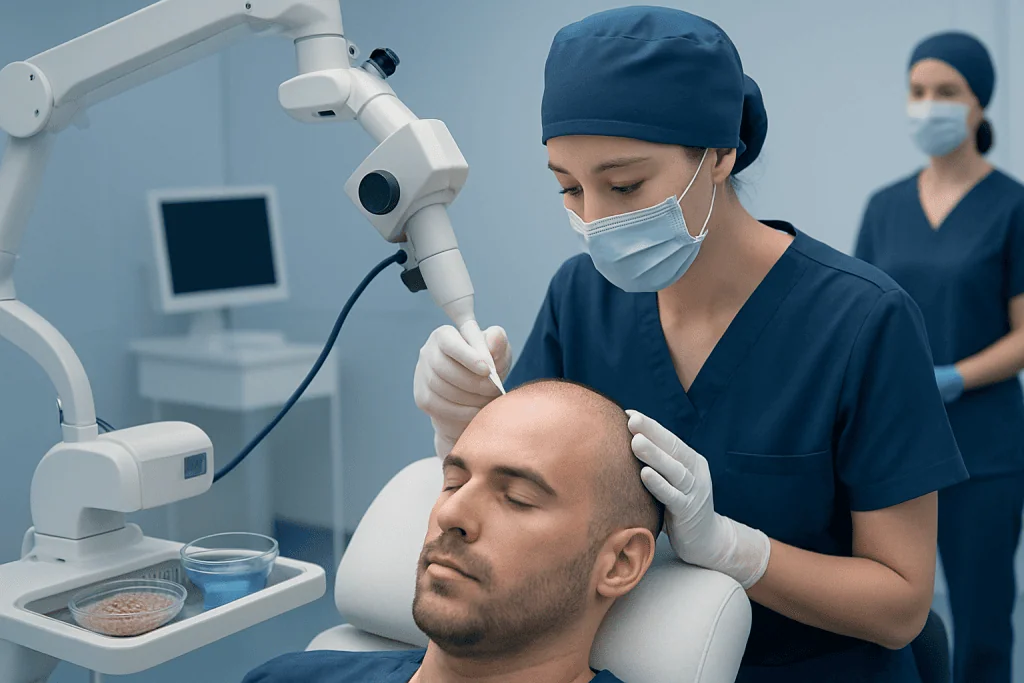
Coverage from 1000 grafts varies from person to person. In general, it suits a smaller treatment zone, such as early temple recession, a conservatively designed frontal hairline, a scar area, or a focused density boost behind the hairline. It is less likely to provide complete coverage for advanced hair loss or extensive diffuse thinning.
Several physical features affect how much “fullness” the result appears to have. Thick, wavy, or curly hair often creates more visual coverage than fine, straight hair. Dark hair on a light scalp may make thinning more noticeable, while lower color contrast may help the transplanted area look fuller with fewer grafts.
Hairline design also matters. A lower, flatter, or very dense hairline uses more grafts than a mature, natural-looking design. For this reason, experienced teams usually prioritize a balanced result that frames the face appropriately while preserving donor hair for possible future procedures.
- Common uses: mild hairline recession, temple points, small scars, localized thinning
- Less suitable for: large crown bald spots, advanced frontal loss, widespread thinning
- Best judged by: scalp examination, donor assessment, and long-term hair loss planning
Who May Be a Good Candidate

A person may be a good candidate for a 1000 grafts procedure if hair loss is limited, the donor area is healthy, and expectations are realistic. This approach is often considered for men with early pattern hair loss and for some women with localized thinning, although candidacy always depends on the underlying cause of shedding and the stability of hair loss over time.
Before planning surgery, doctors usually try to identify whether the person has male pattern baldness or another condition that could affect results. Some forms of thinning are temporary or medically treatable, and transplantation may not be the first step. A careful diagnosis helps avoid unnecessary procedures and supports better long-term planning.
Age alone does not determine candidacy, but future progression of hair loss is important. Someone with very early loss may benefit from waiting, using medical therapy first, or designing a conservative hairline that still looks natural if additional thinning occurs later. The goal is to create an outcome that remains balanced over time, not only immediately after surgery.
Techniques, Planning, and Cost Factors
The total price of a 1000 grafts hair transplant can vary for many reasons, so it is best understood as a planning question rather than a fixed number. One major factor is the surgical technique used. Many small-session procedures are performed with FUE hair transplant, which removes follicular units individually. In some cases, other approaches may be discussed depending on hair characteristics, scarring concerns, or broader treatment goals.
Complexity also affects cost. A straightforward density addition to a small area may require less design work than a detailed frontal hairline reconstruction. The skill needed to place single-hair grafts at the front, match natural angles, and preserve donor resources can influence planning, procedure time, and the level of surgical support involved.
Other factors include the quality and density of the donor area, the need for shaving or unshaven techniques, whether adjunctive treatments are recommended, and the type of follow-up care included. Travel, accommodation, and time away from work may also matter for international patients, even though they are separate from the medical procedure itself.
Rather than focusing only on graft count, patients benefit from asking what result the surgeon expects from 1000 grafts, how the donor area will be managed, and whether a future second session might be needed. Clear discussion of goals, limitations, and aftercare is just as important as the number of grafts planned.
What to Expect Before, During, and After the Procedure
Preparation begins with a consultation and scalp assessment. The doctor reviews the pattern of hair loss, the donor area, medical history, and any scalp conditions that may affect healing. Photos are often taken, and the surgeon maps the treatment zone to determine whether 1000 grafts fits the patient’s goals.
On the day of the procedure, the area is usually trimmed or prepared according to the chosen technique. Local anesthesia is commonly used to keep the scalp comfortable. Grafts are then removed from the donor area and carefully placed into tiny recipient sites that follow the planned direction, angle, and density of hair growth.
After the procedure, mild redness, tenderness, swelling, or crusting can occur for several days. Transplanted hairs usually shed in the early weeks, which is a normal part of the cycle. New growth generally appears gradually over the following months, with the final cosmetic result taking time to mature.
People comparing smaller-session planning articles may also find it useful to review related topics such as hair transplant recovery timeline and Norwood stages of hair loss, since both influence how a surgeon estimates coverage and future needs.
Results, Limits, and Long-Term Maintenance
A well-planned 1000 grafts procedure can create a noticeable improvement, especially when the treatment goal is focused and realistic. Even so, it is important to understand its limits. It may soften recession, improve framing of the face, and add density to a small area, but it is not usually intended to restore advanced baldness in one session.
Transplanted follicles are generally taken from areas that are more resistant to pattern hair loss, but the existing native hair around them may continue to thin over time. This is why doctors sometimes discuss medical treatment, supportive scalp care, or future transplantation as part of a broader long-term plan.
Maintenance may include monitoring for progressive hair loss, using doctor-recommended therapies when appropriate, and protecting scalp health. The best result is not simply immediate density; it is a natural-looking outcome that remains proportionate as hair changes with age.
At centers such as Acibadem International, multidisciplinary specialists in JCI-accredited hospitals assess hair loss patterns, donor supply, and treatment options for international patients so that surgery, if chosen, fits a broader medical plan.
When to Seek Medical Care
A medical consultation is useful before any hair transplant if the cause of hair loss is unclear, rapid, patchy, or accompanied by itching, scaling, pain, or inflammation. These signs can suggest a scalp disorder or another health condition that should be diagnosed first. It is also wise to seek care if there is a family history of progressive baldness and the person wants early guidance on prevention and treatment options.
After a transplant, patients should contact their care team if they develop increasing pain, spreading redness, fever, unusual discharge, or delayed healing. Medical advice is also appropriate if the donor area remains very uncomfortable, if swelling seems severe, or if there are concerns about scarring or unexpected shedding patterns.
Prompt assessment does not always mean a serious problem is present. In many cases, reassurance, wound-care guidance, or routine follow-up is all that is needed. Still, professional review helps protect both scalp health and the long-term cosmetic result.
Frequently asked questions
Is 1000 grafts enough for a hair transplant?
It can be enough for a small, well-defined area such as mild hairline recession or temple thinning. It is usually not enough for extensive frontal loss, a large crown area, or widespread thinning across the scalp.
How many hairs are in 1000 grafts?
A graft is a follicular unit, and each one may contain one to several hairs. Because of this, 1000 grafts does not equal exactly 1000 hairs, and the total hair count varies from person to person.
Will 1000 grafts look natural?
A natural result depends more on planning and placement than on graft number alone. Hairline design, the angle of implantation, and matching the pattern of natural growth are all important for a soft, realistic appearance.
Does 1000 grafts cover the crown?
It may improve a very small crown area, but the crown often needs more grafts because it covers a broad surface and has a swirling growth pattern. Many surgeons prioritize the frontal area first when donor hair is limited.
How long does it take to see results after 1000 grafts?
Initial healing happens over days to weeks, while visible growth develops gradually over several months. Final results usually take longer to mature, so patience is an important part of the process.
What affects the cost of a 1000 grafts hair transplant?
Cost can be influenced by the technique used, the complexity of hairline design, the surgeon’s assessment of donor and recipient areas, and the type of aftercare involved. Travel-related expenses may also matter for some patients, but these are separate from the medical fee.
References
- American Academy of Dermatology
- International Society of Hair Restoration Surgery
- British Association of Dermatologists
- National Health Service
- Mayo Clinic
This article is for general information only and is not a substitute for professional medical advice. Please consult a qualified doctor about your individual situation.
Hair transplant in Turkey — costs, graft counts & a free assessment
JCI-accredited · board-certified surgeons · reply within 24h
Add us as a Preferred Source to see more of our trusted health content across Google Search, AI Overviews and Discover.