1st Degree Av Block — Explained by Medical Evidence, Not Myths

1st degree av block means the electrical impulse from the atria to the ventricles is slowed, not completely blocked. Many people have no symptoms, and the condition is often discovered during a routine ECG.
Key Takeaways
- 1st degree av block means the electrical impulse from the atria to the ventricles is slowed, not completely blocked.
- Many people have no symptoms, and the condition is often discovered during a routine ECG.
- It can be related to normal variation, aging, athletic conditioning, medicines, or underlying heart disease.
- Treatment depends on the cause, symptoms, and whether other conduction problems are present.
- New dizziness, fainting, chest pain, or shortness of breath should be assessed by a doctor promptly.
1st degree av block is a mild delay in the heart’s electrical conduction between the upper and lower chambers. It often causes no symptoms and may be found incidentally on an electrocardiogram, but it still deserves medical interpretation in the right clinical context.
Overview: what 1st degree av block means
1st degree av block is the mildest form of atrioventricular conduction delay. In simple terms, the electrical signal that normally travels from the heart’s upper chambers (atria) to the lower chambers (ventricles) takes longer than usual to pass through the atrioventricular, or AV, node. The signal still gets through, so the heart usually continues to beat in a coordinated way.
On an electrocardiogram, or ECG, this appears as a prolonged PR interval. That finding alone does not automatically mean a person has dangerous heart disease. In many people, especially those without symptoms, it is a benign finding that simply needs to be interpreted alongside age, medications, fitness level, and overall heart health.
This evidence-based view helps separate 1st degree av block from common myths. It is not the same as the more serious forms of heart block in which some or all electrical signals fail to reach the ventricles. Even so, it should not be ignored, because in some cases it can be a clue to medication effects, electrolyte imbalance, or an underlying cardiac condition such as arrhythmia.
How the heart’s electrical system is involved
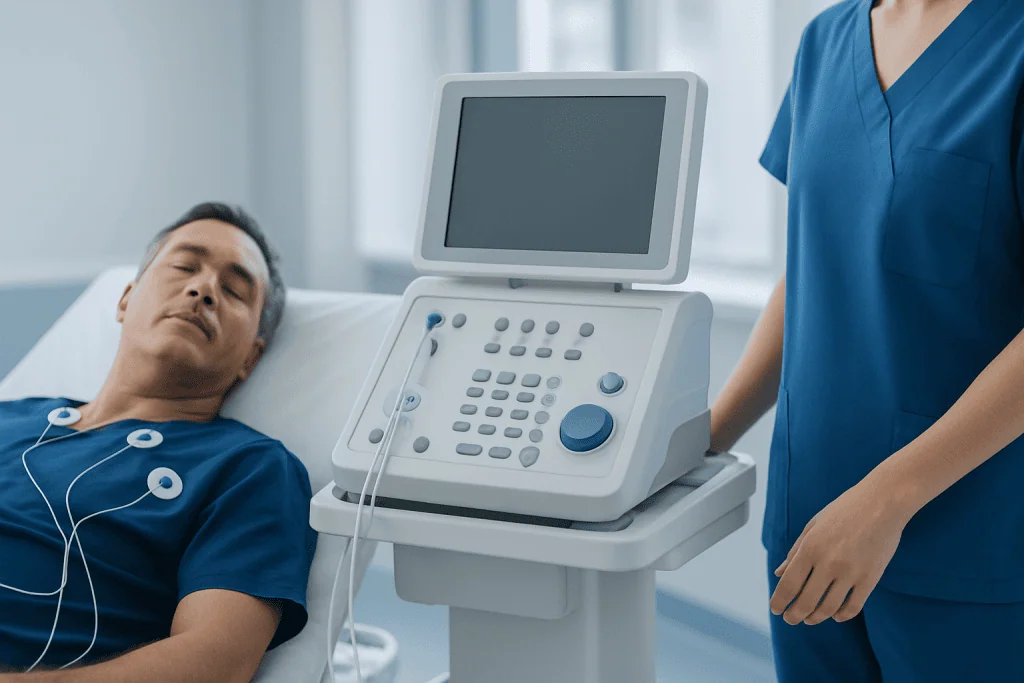
The heart has its own electrical system. A natural pacemaker in the right atrium starts each heartbeat, and the signal then travels to the AV node before moving into the ventricles. The AV node acts like a gatekeeper, briefly slowing the impulse so the ventricles have time to fill with blood before they contract.
In 1st degree av block, that delay becomes longer than expected. This usually happens within the AV node itself, although less commonly it may involve nearby conduction tissue. Because every impulse still reaches the ventricles, the heart rhythm can remain regular and effective.
Understanding this mechanism matters because it explains why many people feel completely well. It also explains why doctors focus not only on the ECG tracing, but also on whether the person has symptoms, structural heart disease, or evidence of more advanced conduction problems that may need closer evaluation.
Symptoms and what a person may notice

Most people with 1st degree av block do not notice any symptoms at all. The condition is often discovered during a routine health check, a preoperative assessment, sports screening, or evaluation for another issue. In these cases, the ECG finding may simply be monitored over time.
When symptoms do occur, they are usually related to the underlying cause rather than the mild conduction delay itself. A person may report fatigue, reduced exercise tolerance, a sensation of skipped beats, lightheadedness, or awareness of the heartbeat. These symptoms are not specific and can occur in many other conditions.
More concerning symptoms are uncommon but important. These include fainting, near-fainting, chest pain, shortness of breath, or significant weakness. If these are present, clinicians consider whether the ECG finding is part of a broader rhythm problem or another heart condition, such as heart rhythm disorders.
- Often no symptoms
- Possible fatigue or mild dizziness
- Palpitations may occur in some people
- Urgent assessment is needed for fainting, chest pain, or breathlessness
Causes and risk factors
1st degree av block can occur for several reasons. In some healthy individuals, especially younger adults and trained athletes, increased vagal tone can slow conduction through the AV node and produce a prolonged PR interval without indicating disease. Aging can also naturally affect the conduction system.
Medicines are another common explanation. Drugs that slow conduction through the AV node, such as certain beta-blockers, calcium channel blockers, digoxin, or some antiarrhythmic medicines, may contribute. This is one reason doctors review the full medication list, including supplements, when evaluating a new ECG change.
Underlying medical conditions can also play a role. These include coronary artery disease, prior heart attack, inflammation of the heart, structural heart disease, electrolyte disturbances, thyroid disorders, and infiltrative or degenerative conduction disease. In some settings, 1st degree av block may be seen alongside broader cardiovascular problems such as coronary artery disease, which changes the way the finding is interpreted.
Risk tends to be higher in older adults, people with known heart disease, and those taking AV-node–slowing medications. The overall significance depends on the whole clinical picture, not on the ECG number alone.
How doctors diagnose and evaluate it
The diagnosis of 1st degree av block is made with an ECG. The key feature is a PR interval that is longer than normal while every atrial impulse is still followed by a ventricular beat. A clinician then determines whether this is an isolated, stable finding or part of a more complex conduction issue.
Evaluation usually begins with a medical history and physical examination. Doctors ask about symptoms such as dizziness, fainting, exercise intolerance, chest discomfort, or shortness of breath. They also review medications, personal and family cardiac history, athletic training, and any recent illness that could affect the heart.
Additional testing may be appropriate in selected cases. Blood tests can help look for electrolyte or thyroid abnormalities. Ambulatory rhythm monitoring may be used if symptoms come and go. An echocardiogram may be recommended if structural heart disease is suspected, and in some patients doctors may advise more specialized electrocardiography evaluation or echocardiography to better understand the heart’s structure and rhythm context.
The goal is not simply to label the ECG finding, but to decide whether it is benign, medication-related, or associated with a condition that needs treatment or follow-up.
Treatment options and follow-up
Many people with 1st degree av block do not need specific treatment. If they have no symptoms and no evidence of significant heart disease, the main approach may be observation and periodic follow-up. Reassurance is often appropriate when a doctor confirms that the finding is isolated and stable.
When an underlying cause is identified, treatment is directed at that cause. For example, a clinician may adjust medications that slow AV conduction, correct electrolyte abnormalities, or manage associated cardiac disease. If there are symptoms or concern about progression to a more significant rhythm problem, closer monitoring is usually recommended.
Pacemaker treatment is not typically needed for isolated 1st degree av block. However, individual decisions can differ if the PR interval is markedly prolonged, symptoms strongly correlate with the conduction delay, or other conduction abnormalities are present. In a broader rhythm-care pathway, some people may need specialist assessment through cardiology care or, much less commonly, discussion of pacemaker treatment if more advanced conduction disease is found.
Near the end of the evaluation process, some international patients choose centers with multidisciplinary heart specialists. Acibadem International’s JCI-accredited hospitals diagnose and treat heart rhythm and conduction disorders for patients who need coordinated assessment.
Prevention and self-care
Not all cases of 1st degree av block can be prevented, especially when the finding reflects natural variation, aging, or inherited features of the conduction system. Still, general heart-healthy habits can reduce the chance of associated cardiovascular disease and support better long-term heart function.
Useful self-care steps include taking medicines exactly as prescribed, not stopping heart medications without medical advice, and attending follow-up appointments if an ECG abnormality has been identified. People should also tell their doctor about over-the-counter medicines, herbal products, and supplements, since some can affect heart rhythm or interact with prescribed treatment.
Heart-healthy lifestyle habits remain important: regular physical activity appropriate to the individual, balanced nutrition, blood pressure control, diabetes management, smoking cessation, limiting excess alcohol, and adequate sleep. If a person has palpitations, dizziness, or fainting, it can help to note when symptoms happen and what medications or activities were involved so the doctor has clearer information.
When to seek medical care
A person should arrange medical review if 1st degree av block is newly reported on an ECG, especially if there is no clear explanation such as athletic conditioning or a known medication effect. Evaluation is also important for anyone with a history of heart disease, previous heart surgery, or a family history of rhythm disorders or sudden cardiac death.
Prompt medical attention is recommended if the person develops fainting, near-fainting, ongoing dizziness, chest pain, shortness of breath, marked fatigue, or a slow pulse with symptoms. These features do not always mean 1st degree av block is dangerous, but they can signal a more significant conduction problem or another cardiac issue that should be assessed quickly.
People should also seek review if symptoms begin after starting or changing a heart-related medicine. Early evaluation can help determine whether monitoring, medication adjustment, or further testing is needed.
Frequently asked questions
Is 1st degree av block dangerous?
Often, no. In many people it is a mild ECG finding that does not cause symptoms or require treatment, but its meaning depends on age, medications, symptoms, and whether other heart disease is present.
Can 1st degree av block go away?
Sometimes it can improve if it is related to a temporary factor such as medication effects, increased vagal tone, or a reversible medical issue. In other people, it may remain stable for years without causing problems.
Does 1st degree av block always need a pacemaker?
No. A pacemaker is usually not needed for isolated 1st degree av block, especially when there are no symptoms. It may only be considered in unusual situations where there are significant symptoms or more advanced conduction abnormalities.
What is the difference between 1st degree av block and more serious heart block?
In 1st degree av block, every electrical signal still reaches the ventricles, but it is delayed. In second- or third-degree heart block, some or all signals fail to get through, which can cause slower heart rates and more serious symptoms.
Can exercise cause 1st degree av block?
Regular endurance training can increase vagal tone, which may slow AV nodal conduction and lead to a prolonged PR interval in some athletes. A doctor can help decide whether the ECG change is a normal training-related finding or needs further evaluation.
Should a person with 1st degree av block avoid normal activities?
Not necessarily. If a doctor has confirmed that the finding is isolated and the person has no symptoms, normal daily activity and exercise are often fine, but advice should be individualized based on overall heart health.
References
- American Heart Association
- National Heart, Lung, and Blood Institute
- European Society of Cardiology
- Mayo Clinic
- Merck Manual Consumer Version
This article is for general information only and is not a substitute for professional medical advice. Please consult a qualified doctor about your individual situation.
Explore treatments in Turkey — costs, top hospitals & a free quote
JCI-accredited · board-certified surgeons · reply within 24h
Add us as a Preferred Source to see more of our trusted health content across Google Search, AI Overviews and Discover.