2500 Grafts Hair Transplant: Coverage, Cost Factors, and What to Expect

A 2500 grafts hair transplant often suits frontal restoration, temple filling, or limited crown thinning rather than extensive baldness. Coverage is measured by visual density, not only by the number of grafts placed.
Key Takeaways
- A 2500 grafts hair transplant often suits frontal restoration, temple filling, or limited crown thinning rather than extensive baldness.
- Coverage is measured by visual density, not only by the number of grafts placed.
- Hair caliber, curl, color contrast, and donor-area quality strongly influence results.
- The treatment plan should balance current hair loss with future thinning to preserve donor hair.
- Results develop gradually over months, with shedding and regrowth being a normal part of recovery.
A 2500 grafts hair transplant usually provides enough follicles to restore a receding hairline, reinforce the frontal scalp, or treat a small-to-moderate thinning crown. The exact coverage varies from person to person because graft size, hair texture, scalp contrast, donor supply, and styling goals all affect the final visual result.
Overview: what 2500 grafts can usually cover
A 2500 grafts hair transplant is commonly used to rebuild a receding hairline, add density to the frontal scalp, improve the temples, or treat a smaller crown area. In practical terms, 2500 grafts means 2500 follicular units, not 2500 individual hairs. Because each graft may contain one to four hairs, the total number of transplanted hairs is usually higher than the graft count itself.
Coverage is not the same as density. Two people who receive 2500 grafts may look very different afterward because the appearance depends on hair thickness, curl, color contrast with the scalp, and how the grafts are distributed. A person with coarse, wavy hair may achieve fuller-looking coverage than someone with very fine, straight hair, even if both receive the same number of grafts.
For many patients, 2500 grafts is considered a moderate-sized session. It may be enough for focused restoration in one main zone, or for lighter distribution across more than one zone if the goal is soft, natural improvement rather than maximum density. A consultation helps determine whether that graft number matches the pattern of loss and the available donor hair.
Who may be a good candidate
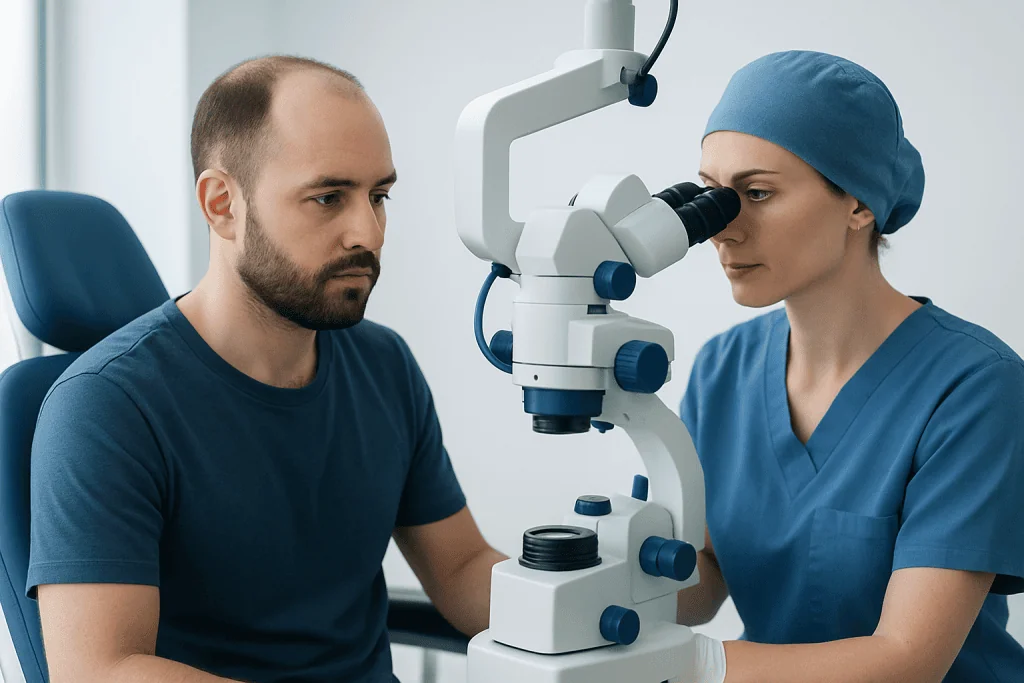
People who often benefit from a 2500 grafts hair transplant include those with a maturing or receding hairline, temple recession, thinning in the frontal third, or a limited crown area. It can also be suitable for selected patients who want to refine the shape of the hairline after earlier hair loss has stabilized. The best candidates usually have a healthy donor area at the back or sides of the scalp.
Hair transplantation is most effective when the cause of hair loss is understood. The most common reason is androgenetic alopecia, also called pattern hair loss. A doctor may also assess whether there are signs of other conditions, such as scalp inflammation or nutritional issues, that should be addressed before surgery is planned.
Not everyone with thinning hair is an immediate candidate. People with very diffuse shedding, active scalp disease, unrealistic density expectations, or limited donor reserves may need a different approach first. In some cases, medical treatment, observation over time, or a staged surgical plan is safer and more appropriate than trying to achieve too much in one session.
What affects coverage and visual fullness

The most important factor in coverage is how the grafts are allocated. Surgeons usually prioritize the most visible cosmetic areas, especially the hairline and frontal scalp, because these frame the face. If 2500 grafts are spread too widely, the result may look thin; if they are concentrated strategically, the improvement may look more natural and balanced.
Several physical features also affect the final appearance. Thick hair shafts create more coverage than thin shafts. Curly or wavy hair tends to mask the scalp better than very straight hair. Dark hair on a light scalp often reveals thinning more easily than hair and scalp colors that are closer together. Scalp laxity, donor density, and the proportion of one-hair versus multi-hair grafts also matter.
Doctors may also use established hair-loss patterns to guide planning. For example, someone with earlier frontal recession may achieve noticeable change with 2500 grafts, while more advanced loss may need a larger or staged approach. Related pattern-based planning is often discussed alongside Norwood scale hair loss staging and expectations around a 2000 grafts hair transplant or other graft-count ranges within the same treatment series.
- Hairline restoration usually requires careful design rather than simply high graft numbers.
- Frontal and mid-scalp areas often produce the greatest visible cosmetic benefit.
- Crown restoration usually requires wider distribution and may need more grafts over time.
- Preserving donor hair for future needs is an important part of long-term planning.
How doctors plan the procedure
Pre-procedure planning begins with a scalp and donor-area assessment. The doctor reviews the pattern of hair loss, family history, the rate of progression, previous treatments, and general health. A realistic plan should account not only for today’s thinning but also for possible future loss, so the transplanted hair continues to look natural as the patient ages.
The surgeon usually maps recipient zones and estimates how many grafts are needed in each area. Hairline design is individualized to face shape, age, and existing hair characteristics. In many cases, the aim is not to recreate an adolescent hairline but to create a mature, natural-looking frame that suits the person over time.
Most modern sessions are performed using follicular unit extraction. With hair transplant planning, the team also discusses donor management, expected density, healing, and the possibility that medical therapy may be recommended to help protect non-transplanted hair. This combination approach can be especially important in progressive pattern hair loss.
What to expect on the day and during recovery
A 2500 grafts hair transplant is usually done as a planned outpatient procedure under local anesthesia. The scalp is prepared, grafts are harvested from the donor area, and the surgeon creates recipient sites according to the planned angle, direction, and density. The grafts are then placed carefully to support a natural appearance.
After the procedure, mild swelling, tightness, redness, and small crusts are common for a short period. Most people are able to resume light daily activities relatively soon, although specific instructions vary. The medical team will provide guidance on washing, sleeping position, exercise limits, sun protection, and when to return to work.
One of the most important parts of recovery is understanding the timeline. Transplanted hairs often shed in the first weeks before entering a new growth cycle. Early regrowth is gradual, and fuller cosmetic improvement typically develops over several months. Patients who want a better sense of staging and healing often compare this with a hair transplant recovery timeline during counseling so expectations stay realistic.
Cost factors and treatment planning
The cost of a 2500 grafts hair transplant is not defined by graft count alone. It can vary according to the technique used, the complexity of the case, the surgeon’s assessment, donor characteristics, and whether additional planning or follow-up care is needed. Geographic location, operating standards, and the extent of preoperative evaluation can also influence the overall treatment plan.
It is helpful for patients to focus on value and suitability rather than only on the number of grafts. A lower graft count can produce a satisfying result when the design is thoughtful and the candidate is well chosen. On the other hand, trying to cover a large area with too few grafts may lead to disappointment and may not be the best long-term use of donor hair.
In consultation, patients can ask how many grafts are intended for the hairline, frontal scalp, mid-scalp, or crown; whether one or more sessions may be needed; and how ongoing hair loss may affect future planning. A clear discussion of expected coverage, not just price or graft number, usually leads to better-informed decisions.
Self-care, long-term maintenance, and when to seek medical care
Long-term success after a hair transplant depends not only on the procedure but also on scalp care and management of ongoing hair loss. Patients are often advised to follow postoperative washing instructions closely, avoid picking crusts, protect the scalp from excessive sun, and return for follow-up visits. If medical therapy is recommended to support existing hair, it should be used only under the guidance of a qualified doctor.
It is sensible to seek medical care if there is increasing pain, significant swelling that worsens rather than improves, fever, spreading redness, drainage, or any concern about infection or poor healing. Medical advice is also important if shedding seems unusually severe, if there are new patches of hair loss outside the treated area, or if expectations about growth are unclear.
For people considering treatment abroad or seeking multidisciplinary assessment, Acibadem International’s specialists in JCI-accredited hospitals diagnose and treat hair loss conditions for international patients. A careful consultation can help determine whether 2500 grafts is the right option, whether medical treatment should come first, or whether a staged plan is more appropriate.
Frequently asked questions
Is 2500 grafts enough for a hair transplant?
For many people, yes. A 2500 grafts hair transplant can be enough for a receding hairline, temple recession, frontal thinning, or a modest crown area, but it is usually not enough for extensive baldness. The right number depends on the size of the area, donor hair quality, and the density goal.
How much area can 2500 grafts cover?
There is no single area measurement that fits everyone because hair characteristics strongly affect visual coverage. In general, 2500 grafts can provide focused restoration in one main zone or lighter density across more than one zone. Surgeons usually prioritize the most visible areas to create a natural result.
How many hairs are in 2500 grafts?
A graft is a follicular unit, not a single hair. Because each graft may contain one to four hairs, 2500 grafts usually equals several thousand hairs in total. The exact number depends on the person’s natural follicular unit composition.
Can 2500 grafts restore both the hairline and crown?
Sometimes, but usually with compromise. If both areas are treated in the same session, the grafts may need to be spread more thinly, which can reduce density in each zone. Many surgeons recommend prioritizing the frontal scalp first because it tends to give the greatest cosmetic impact.
When will the results of a 2500 grafts hair transplant appear?
Transplanted hairs commonly shed during the first weeks, which is a normal part of the cycle. New growth usually starts gradually over the following months, and fuller visual improvement develops over time rather than immediately. Patients should discuss their individual timeline with their surgeon.
Will one session be enough?
Some patients achieve their goals with one session, especially when hair loss is limited and expectations are realistic. Others may need an additional procedure later because of larger bald areas or progressive future hair loss. Long-term planning is important so donor hair is used wisely.
References
- American Academy of Dermatology
- International Society of Hair Restoration Surgery
- British Association of Dermatologists
- National Institute for Health and Care Excellence
- Mayo Clinic
This article is for general information only and is not a substitute for professional medical advice. Please consult a qualified doctor about your individual situation.
Hair transplant in Turkey — costs, graft counts & a free assessment
JCI-accredited · board-certified surgeons · reply within 24h
Add us as a Preferred Source to see more of our trusted health content across Google Search, AI Overviews and Discover.

More from the Health Library



Related Specialists

Prof. Dr. İbrahim Tuncay
Orthopedic Surgery & Traumatology
Prof. Dr. Emine Nur Tozan
Treatment of Pain Algology
Dr. Aliye Sevil Sarıkaya
Pediatric Endocrinology
Prof. Dr. Agop Çıtak
Pediatrics